Loading video...

Video Failed to Load

Go Home

99% ๐‘œ๐‘“ ๐‘ก๐’‰๐‘’ ๐ผ๐‘›๐‘‘๐‘–๐‘Ž๐‘›๐‘  ๐‘Ž๐‘Ÿ๐‘’ ๐‘›๐‘œ๐‘ก ๐‘Ž๐‘ค๐‘Ž๐‘Ÿ๐‘’ ๐‘œ๐‘“ ๐‘ค๐’‰๐‘Ž๐‘ก ๐‘œ๐‘ข๐‘Ÿ ๐ผ๐‘›๐‘‘๐‘–๐‘Ž๐‘› ๐‘ ๐‘๐‘–๐‘’๐‘›๐‘ก๐‘–๐‘ ๐‘ก๐‘  ๐‘Ž๐‘›๐‘‘ ๐ผ๐‘›๐‘‘๐‘–๐‘Ž๐‘› ๐บ๐‘œ๐‘ฃ ๐’‰๐‘Ž๐‘  ๐‘Ž๐‘๐’‰๐‘–๐‘’๐‘ฃ๐‘’๐‘‘ ๐Ÿซก๐Ÿ‡ฎ๐Ÿ‡ณ. US spent 15 Billion USD but Failed Japan spent 12 Billion USD but Failed UK spent 8 Billion USD but Failed Germany spent 6 Billion USD but Failed & But Bharat...

17,708 views โ€ข 3 months ago โ€ขvia X (Twitter)

0 Comments

No comments available

Comments from the original post will appear here

Related Videos

Take a bow .Narendra Modi Ji ๐Ÿ™Œ. How can you even think so much? News- UPI is all set to launch in Japan as NPCI signs pact with Japan's NTT DATA. Looks new normal. IT'S NOT! Know the DEEP GAME! UPI in Japan: How It Quietly (But Sexily) Hurts the USD๐Ÿ”ฅ Bharat's UPI QR scans land in Japan this year. Japan sees 208K+ Bharatiya tourists annually. Bharat-Japan trade is $22 Billion. Once live, UPI will enable Bharatiya tourists & businesses to pay Japanese merchants directly in INR-JPY (via QR scans), bypassing USD intermediaries like Visa/Mastercard (US firms) or SWIFT (USD-heavy network). ๐Ÿ”ฅHow it stabs USD (with data): - ~Trade Flow Gut Punch 85% of Bharat-Japan $22 Billion settles in USD today. UPI boosts LCS to 50% by '27 โ†’ $10B less USD churn annually. (Like UAE: 15% drop post-UPI) ~Treasury Demand Killer Japan+Bharat buy $150B US bonds/yr from trade surpluses. โ†“35% USD needs = $30B less demand โ†’ US 10Y yields +2-5 bps. (Higher borrowing costs for Uncle Sam). Means US Economy screwed. ~Fee Vampire Drain Visa/MC/SWIFT suck $1.5 Billion/yr from this corridor. UPI diverts 20% โ†’ $300 Million revenue bleed to NPCI/NTT DATA. Net US Hurt: $5-10B annual drag by 2028 (0.02% GDP). Tiny? Sure. But symbolic! With this move, Japan (US ally, #2 Treasury holder) joins Bharat's multipolar game. Expected Timeline: 2026: Tourism $1B non-USD zap 2027-2030: 3% Asia payments flip โ†’ CIPS/mBridge domino Japan (a US ally) adopting UPI signals to China/Saudi Arabia that non-USD systems work, potentially:Cutting USD's 58% global payment share (SWIFT data) by 2-3% in Asia by 2030. Will also boost alternatives like China's CIPS or mBridge (with Japan as observer). ๐Ÿ”ฅBig Picture- ~Slow-burn de-dollarization ~Cracks open up in G-7 ~Fed watches nervously but helplessly USD hegemonyโ€”Still king, but bleeding fast with sexy cuts.

BhikuMhatre

79,327 views โ€ข 9 months ago

If MDP wants people with common sense to take its criticism of this government seriously, it should stop putting people like Ameer at the forefront of that conversation. Yes, PNC government has mismanaged public finances. Yes, there is waste, corruption, and poor economic decision-making. But letโ€™s not pretend Maldivesโ€™ current fiscal crisis began overnight in late 2023. Yameen administration borrowed heavily, but much of that borrowing went into infrastructure and projects intended to generate economic returns. Foreign investment also increased, helping ease the foreign currency pressures that had existed during the Nasheed/Waheed years. Thatโ€™s why there was no USD crisis during YAG administration. By the end of that administration, public debt stood at roughly USD 2 billion externally and MVR 20 billion domestically. Then came five years of MDP. In addition to issuing a USD 600 million sukuk to refinance the USD 250 million sovereign bond, billions of rufiyaa were printed and injected into the economy devaluing MVR. Hundreds of millions more were borrowed for projects with questionable financial viability ( ex: Thilamaleโ€™ bridge ) while external debt doubled to around USD 4 billion and domestic debt to around MVR 40 billion. At the same time, without creating anything of value, existing valuable state assets, including Hulhumale land worth billions, were given away through free allocations while several billions were given to companies as โ€œsettlementsโ€ Ameer was the Finance Minister driving many of those decisions. Now this government is repeating many of the same mistakes, printing money through different mechanisms, continuing giveaways, wasteful spending, and corruption. Thatโ€™s precisely why Ameer is one of the least convincing people to lecture the country on fiscal responsibility. Maldives doesnโ€™t need to keep replacing one failed economic approach with another that has already been tested. Thatโ€™s the cycle weโ€™ve been trapped in since the introduction of the multi-party system. Ameer speaking about fiscal responsibility is giving replace trash with tested trash vibe, not a reform vibe.

Midhuam Saud(็ฑณๆธก๏ผ‰๐Ÿ‡ฒ๐Ÿ‡ป

10,932 views โ€ข 25 days ago

In May 2014 the price of petrol was โ‚น 71.41 and now it is โ‚น101.94 Price of diesel was โ‚น 55.49 per litre in May 2014 and now it is โ‚น 87.98 per litre Crude Oil was at USD $105.71 per Barrel in May 2014 and now it costs USD$ 85.55 per Barrel. Price 14.2 kg LPG cylinder in May 2014 was โ‚น410/- Now it costs โ‚น1103/-(less 200 for Rakhi) In May 2014 1USD= โ‚น59.44 Now 1USD = โ‚น82.72 Total exports in 2022-23 USD $770.18 Billion Total exports in 2013-14 USD $651.22 Billion (at present dollar conversion rates) That is 18.26% growth in 10 years during #ModiGovt In contrast the growth in exports during the 10 years of #Congress led UPA Regime was a whopping 205.05% (from 2003-2004 to 2013-14) Take notice of this During 2 successive UPA Government 2004 -2009, 2009-2014 , exports grew by 205.05% Look at the dismal performance of #BJP led NDA Government during their 2 successive Governments- 2014-2019, 2019-2024(now) They managed an exports growth of a mere 18% during their tenure. Congress grew exports by 205.05% in comparison. (The total value of exports (FoB) was USD $ 317,545 million during 2003-04. ) Balance of Trade is the difference between value of Imports as against Exports during a Financial year. India trade balance for 2022 was USD $ (-)151.46B which is 82.18% increase from 2021. Our value of imports exceeded $151.46 Billion USD against horrible exports performance in FY 2022. This is 4.47% of India's GDP This gap increased by 82.18% signifying a bad performance by the Modi Govt. In the FY 2013-14 , which is the last year of #Congress_UPA regime the difference between exports and imports was just $60.89 Billion USD which was 2.99% of our GDP Dear INDIA, Please become aware of the facts. The #ModiGovt with support of #GodiMedia is hiding the truth from you. Crony Capitalists friends from the corporate World are financing the fake narratives to make Modi as some kind of Hero. Whereas in reality, he has failed in every single parameter that measures performance. Think. Please Think. And Reflect. Ask yourself, should this fraudsters be allowed to continue in power. Are they not destroying India? You get your chance in 2024. Use your intelligence and vote for INDIA. Not their enemies.

Paul Koshy

1,032,778 views โ€ข 2 years ago

OpenAI entered 2026 with the most insane revenue targets in corporate history. $30 billion in sales. Up from $13 billion in 2025. While LOSING $14 billion doing it. Let's understand this: OpenAI needed to convert from nonprofit to for-profit by December 31st, 2025 to unlock their $40 billion SoftBank funding. Miss that deadline? The round drops to $20 billion. And they made it. But here's the thing: The nonprofit STILL controls everything. They spent an entire year fighting to become for-profit, got sued by Elon Musk, pissed off California's attorney general, lost key employees over it. Then ended up basically right where they started. Except now the nonprofit has a $130 billion stake and Microsoft got $135 billion for 27% ownership. So OpenAI burned a year of political capital to give away $265 billion in equity while keeping the same power structure that almost destroyed them in 2023. The revenue math is absolutely deranged: To hit $30 billion in 2026, they need to more than double revenue in 12 months. No company in history has done this from a $13 billion base. Not even Nvidia. Not even ByteDance. OpenAI wants to go from $10B to $100B in 3 years. And the losses are worse: $14 billion in losses in 2026. Triple their 2025 burn. They've committed to: - $250 billion to Microsoft Azure - $38 billion to Amazon AWS - $1+ trillion in chip deals with Nvidia, AMD, and Broadcom They won't be profitable until 2029. Maybe. But here's the part that makes this whole thing insane... They're not just competing anymore. Anthropic: Fully for-profit. On track for $15 billion revenue in 2026. AI insiders surveyed in December said they'd invest in Anthropic over OpenAI. Meta's pouring billions into Llama. Chinese models eating market share. And OpenAI still has to answer to a nonprofit board that can shut down AGI research whenever they decide it's not "benefiting humanity." The same board that fired Sam Altman in November 2023. The investors know this. That's why the $40B was contingent on conversion. When OpenAI reversed course and kept nonprofit control, they had to give the nonprofit a $130B stake. Basically: "You can keep control, but you better make us whole." What happens if they miss targets? The Azure commitment becomes a liability. The AWS deal gets renegotiated. The nonprofit board starts asking why they're burning billions while people die of preventable diseases. Investors start wondering if that $300B valuation was justified. OpenAI is betting they can: 1. More than double revenue annually for 3 years straight 2. Burn $44 billion doing it 3. Keep a nonprofit board happy 4. Fend off Anthropic, Meta, and Chinese competitors 5. Avoid another Sam Altman situation 6. Actually build AGI 7. Convince everyone it was worth it Nobody in history has pulled this off. We're 1 day into 2026. By December 31st, we'll know if OpenAI is the most ambitious company ever built or the biggest AI bubble in history. What are you betting on?

Ricardo

97,607 views โ€ข 7 months ago

Elon Musk's biggest competitor is secretly paying him $1.25 BILLION per month. SpaceX just revealed its financials for the first time in 23 years of existence. And buried deep in the S-1 is a detail that changes how you should think about the entire AI race. Anthropic, the company building Claude, the company that positions itself as OpenAI's biggest threat, the company valued at over $100 billion, is paying SpaceX $1.25 billion EVERY SINGLE MONTH for compute capacity through May 2029. That is $15 billion a year flowing directly from Elon's top AI competitor into Elon's bank account. Think about what that means: Every time Anthropic trains a new model, improves Claude, or lands an enterprise customer, a massive chunk of that revenue goes straight to the guy who owns the competing AI product. Anthropic is literally funding the war against itself. And that's just the beginning of what this filing reveals... The entire SpaceX IPO is structured around a bet most people haven't figured out yet. In 2025, SpaceX spent $20 billion in capex. 60% of that, roughly $12 billion, went to AI infrastructure. Rockets and satellites got the leftovers. In Q1 2026 alone, $7.7 billion out of $10 billion in total capex went to AI. The "rocket company" is spending like an AI company. Meanwhile, xAI, the division that houses Grok, generated $3.2 billion in revenue for the full year of 2025. But its R&D costs TRIPLED to $5 billion. It's burning cash at a pace that would have destroyed it as a standalone company. Which is exactly why Elon merged it into SpaceX two months before filing the IPO. And Starlink is the engine that makes the whole thing work: $11.4 billion in revenue, $4.4 billion in operating profit, and 10.3 million subscribers across 164 countries. It's one of the most profitable subscription businesses on the planet right now. But the average revenue per user DROPPED from $99 per month in 2023 to $66 per month in March 2026. Subscribers quadrupled but each one is paying a third less. Starlink is growing by getting cheaper. SpaceX has lost $37 BILLION since it was founded. Net loss in 2025 was $4.9 billion. This is a company that has never turned an annual profit in 23 years of operation, and it is about to IPO at a $1.75 trillion valuation. And the total addressable market SpaceX claims in the filing is $28.5 trillion. That is a QUARTER of global GDP. So here is what investors are actually buying when this IPO prices: They are buying the most profitable satellite internet business in history, stapled to an AI lab that is burning cash, wrapped inside a Mars colonization pitch that requires building a permanent city on another planet, funded by monthly billion-dollar payments from a direct competitor who has no other option for compute at that scale. This is the kind of thing only Elon could pull off.

Ricardo

208,495 views โ€ข 2 months ago

When does the AI spending actually end? It's the question Wall Street doesn't want to answer. The Big Four hyperscalers are pouring $600+ billion into AI infrastructure this year alone. That's triple what they spent two years ago. Amazon just guided $200 billion in 2026 capex. The company is expected to go negative on free cash flow this year - somewhere between $17 billion and $28 billion in the red, depending on which bank you ask. Alphabet's free cash flow is projected to fall 90%. From $73 billion to $8 billion. These are the most profitable companies in history. And they're borrowing money to fund a buildout with no clear end date. The depreciation problem is what nobody wants to discuss: Nvidia chips run on a 2-3 year product cycle. Each new generation delivers 2-3x better performance. So the H100s shipping today will be economically obsolete by 2027. BUT the hyperscalers are depreciating these assets over 5-6 years. Meta extended its useful life estimates to five-and-a-half years. That single change cut $2.9 billion from their 2025 depreciation expense. Microsoft, Alphabet, Oracle - all made similar moves. Run the numbers and depreciation is understated by roughly $176 billion between 2026 and 2028. That means Oracle's earnings could be inflated by 27% and Meta's by 21%. This isn't fraud. GAAP allows it. But it's aggressive accounting that makes current earnings look far better than the underlying economics. The debt picture makes it even WORSE. The top five hyperscalers raised $108 billion in debt last year - more than 3x the prior nine-year average. JP Morgan projects $1.5 trillion in tech debt issuance ahead. They're even securitizing data center debt into asset-backed securities. $13.3 billion this year alone. Those structures have a history. This looks eerily similar to the data connectivity buildout circa 2000. In that cycle, telecoms built massive infrastructure on borrowed money chasing demand that never materialized. By 2002, less than 5% of capacity was in use. The pattern is familiar: Capex explodes. Returns don't materialize. Accounting flatters earnings. Debt bridges the gap. Then the music stops. I'm not making predictions about timing. But when free cash flow turns negative, when hyperscalers hold more debt than cash for the first time, when accounting changes are inflating earnings by double digits... The math changes. We've seen this play out before multiple times. AND IT DOESN'T END WELL

George Noble

37,067 views โ€ข 5 months ago

It ALWAYS comes back to Barack Obama and Hillary Clinton โ€œHow did Iran get so close to a nuclear weapon? Let's follow the money Hillary Clinton becomes Barack Obama's Secretary of State in 2009. During her tenure from 09-13, there were 4 companies that donated large amounts of money to the Clinton Foundation. Those companies are Boeing, Airbus Total and Siemens. Their donation amounts total up to $25 million, but no less than $5 million. There's not exact numbers. Perhaps. They were hoping to influence Obama and Hillary as they were negotiating with Iran trying to get the nuclear deal signed, which they eventually did In 2015. On July 14th, 2015, the JCPOA was signed lifting sanctions off of Iran and unfreezing 50 to $150 billion in cash assets. And then between January 17th and February 5th, 2016, Obama sent $1.7 billion in untraceable cash to Iran. This money presented an untraceable foreign currency was said to be a settlement for a 1979 arms deal with Iran. That was $400 million, but with $1.3 billion in interest, at least that's what the Obama administration said. It was later on that February, the Obama administration tried to secretly grant Iran access to U.S treasury payment system, which would have netted them $5.7 billion in currency conversion if it hadn't failed. (The banks were like, what the f*ck is this? Hell no.) Later on that year, in April of 2016, the Obama administration dropped charges to several Iranian arms dealers so they wouldn't derail the JCPOA. This really pissed off Obama's Department of Justice, but Obama had to maintain his legacy. And then between March and December of 2016 is when Airbus got an $18 billion contract because of the lifted sanctions in Iran. Boeing got a $16.6 billion contract total, got a $4.8 billion contract, and Siemens got a $1 billion contract with Iran, or I should say Iranian regime controlled companies. But then in November, the unthinkable happens and Hillary Clinton loses the 2016 election to Donald Trump, and suddenly these 4 companies no longer donate to the Clinton Foundation ever again. But they did give Obama a $1 million donation after he left the presidency. Huh? What was that for? And then Trump gets into office and he's like, what the fuck is this? He pulls out of the Iran deal, slaps the sanctions back on Iran. Those four companies lose their contracts, and it remains this way until Joe Biden, he tried to negotiate a deal with them, but he couldn't get it done. And then in 2023, inexplicably Biden gives $6 billion to Iran in a prisoner's spot. And even though the Trump sanctions are still in effect during the Biden presidency, he's pretty lax on enforcing them. Iran's profits from oil go up to $30 billion per year from $1.2 billion per year. The biggest buyer being China. It wasn't supposed to happen. They had sanctions, but Biden just let 'em do it anyway. And what a coincidence, once again, Iran is this close to reaching that nuclear capability. And the only question that I really have is, is this just purely greed or did they want Iran to get to this point? Both are bad, but one is much worse than the other.โ€

Wall Street Apes

148,515 views โ€ข 5 months ago

Big Tech is spending $700 BILLION on AI this year. But their cash flow is collapsing. Amazon is going into debt. Google's free cash flow is dropping 90%. And they're literally paying influencers $600,000 each to convince you AI is worth using. If this technology was as revolutionary as they claim, why are they spending half a million dollars per creator to sell it? Here's what's actually happening behind the scenes: This week, all four tech giants reported earnings at once and every single one dropped a spending number that made Wall Street lose its mind. Amazon: $200 billion in capex. The largest corporate capital expenditure in HISTORY. Stock dropped 9%. Google: $185 billion. Wall Street expected $120 billion. Stock dropped 5%. Meta: $135 billion. Double what they spent last year. Microsoft: down 17% this year, worst performer in the group. Combined 2026 AI infrastructure spend: almost $700 billion. But here's where it gets ugly. Amazon's free cash flow collapsed 71%. Morgan Stanley projects they'll burn through $17 billion in NEGATIVE free cash flow this year. Bank of America says the deficit could hit $28 billion. Amazon quietly filed with the SEC on Friday saying they might need to raise debt to keep building. Google's free cash flow is projected to crater 90%, from $73 billion down to $8.2 billion. They already did a $25 billion bond sale in November and their long-term debt QUADRUPLED last year. These companies are spending everything they have, then borrowing more, then spending that too. Now here's the part that got me thinking: CNBC just reported that Google, Microsoft, OpenAI, Anthropic, and Meta are paying influencers between $400,000 and $600,000 EACH to promote AI products on Instagram and YouTube. AI platforms spent over $1 BILLION on digital ads in 2025, a 126% jump year-over-year. Google and Microsoft's AI ad spending jumped 495% in January 2026 alone. Anthropic is running Super Bowl ads. OpenAI is flying creators to private events and covering all expenses. When was the last time a truly revolutionary technology needed a $1 billion ad campaign and $600K influencer deals to get adoption? Did the iPhone need influencer campaigns? Did Google Search need Super Bowl ads in 1998? Did email need a billion dollar marketing push? No. People just used them because the value was obvious. You know what DOES need massive paid promotions? Pharmaceutical drugs. Crypto exchanges. Online gambling apps. MLM companies. Products where adoption is driven by hype, not utility. And now, apparently, AI. So the pitch from Big Tech is: "This technology will eliminate your job. Also please use it. Here's $600K if you tell your followers it's cool." They need HUMANS to sell a product they designed to REPLACE humans. They need creators to promote a technology that will eventually make creators obsolete. They need influencers to build trust in a system that will eliminate the need for influencer marketing entirely. The question everyone should be asking: If $700 billion per year in spending can't produce a product that sells itself, when exactly does this start making money? Because right now the math is messed up. $700 billion in spending, cash flow crashing, stocks tanking, SEC filings about raising more capital, and the best growth strategy they've got is paying tiktokers to demo features. Either AI is about to deliver the greatest economic transformation in human history, or we're watching the most expensive corporate Hail Mary ever thrown. And the fact that they need to pay half a million dollars per influencer to convince you it's the first one isn't a good sign.

Ricardo

725,581 views โ€ข 5 months ago

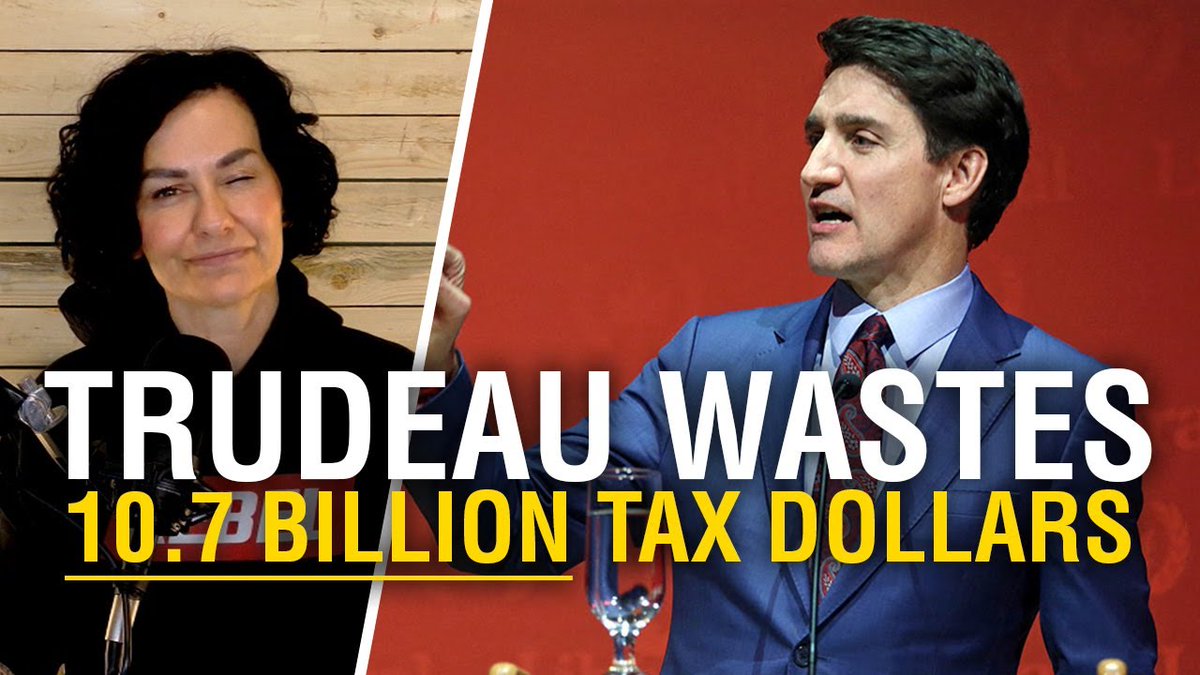
Trudeauโ€™s government is wasting $10.7 billionโ€”hereโ€™s exactly where your money is going You ever notice how Justin Trudeauโ€™s Liberals can never seem to find the money to give hardworking Canadians a break? They say thereโ€™s no cash to cut taxes, no relief for skyrocketing grocery bills, and no way to ease the burden of carbon taxes. But somehow, when it comes to throwing billions at pet projects, shady corporate handouts, and failed socialist experiments, the money never runs dry. A new report from the Fraser Institute exposes just how badly the Trudeau Liberals are wasting $10.7 billion this year alone on programs that donโ€™t work and never will. Thatโ€™s $10.7 billion in taxpayer money flushed down the drain while regular Canadians struggle to pay rent. So, whereโ€™s all this money going? Letโ€™s take a look at the worst of it: $1.5 billion โ€“ The Regional Development Agencies Slush Fund These agencies are supposed to stimulate local economies, but in reality, theyโ€™re just government bureaucrats handing out taxpayer dollars to businesses they think deserve it. There are seven of these agencies spread across the country, employing 1,977 bureaucrats whose job is to "support" the economy by deciding who gets free money. In 2024-25 alone, they will burn through $1.5 billion. Thereโ€™s zero proof that any of this actually helps businesses grow, but it sure does keep Liberal-aligned companies well-fed! $1.7 billion โ€“ Liberal Media Bailouts The federal government has been pouring $1.7 billion into propping up legacy media that nobody watches or reads anymore. That includes: โ€ข $1.4 billion straight into the CBCโ€”which, letโ€™s be honest, has become little more than Trudeauโ€™s personal propaganda arm. โ€ข $86.5 million for the Canada Periodical Fund, which props up dying newspapers. โ€ข $154.1 million for the Canada Media Fund, which funds โ€œdiverse voicesโ€ that all just happen to parrot Liberal talking points. โ€ข $65 million for the Journalism Labour Tax Credit, basically paying journalists' salaries so they can continue pushing Trudeauโ€™s agenda. And yet, despite these bailouts, newsrooms are still closing and journalists are still losing their jobs. Maybe because nobody wants to watch state-funded propaganda? $600 million โ€“ EV Rebates for the Rich Trudeau is using $600 million of your tax dollars to subsidize electric vehicle purchases for people who can already afford them. The reality? Most of these subsidies go to the wealthiest 20% of households. Meanwhile, everyday Canadians struggling to put gas in their vehicles get hit with a carbon tax instead. $340 million โ€“ The โ€œ2 Billion Treesโ€ Scam Trudeau promised two billion trees to fight climate change. Sounds nice, right? Well, surprise surpriseโ€”his government is nowhere near hitting the target. An audit found they had only planted 2.3% of the trees promisedโ€”despite already blowing $480.5 million on the program. Where did that money go? Bureaucrats, consultants, and failed contracts, of course. $3.5 billion โ€“ The Canada Infrastructure Bank Disaster Trudeau created the Canada Infrastructure Bank (CIB) in 2017, promising to "build" the countryโ€™s economy. Seven years later, theyโ€™ve only completed TWO projects worth a grand total of $93.2 millionโ€”out of $13.2 billion in approved investments. That means less than 1% of the money has actually gone to infrastructure, while CIB executives and bureaucrats pocket six-figure salaries. What a joke! $2.4 billion โ€“ The โ€œStrategic Innovation Fundโ€ Corporate Giveaway This fund is supposed to drive โ€œinnovation,โ€ but what it really does is pick winners and losers in the economy based on political connections. Since 2017, it has handed out $9.5 billion to 129 projectsโ€”most of which are non-repayable. Meaning: corporations get free money, while regular Canadians get stuck with the bill. $202 million โ€“ The โ€œGlobal Innovation Clustersโ€ Boondoggle Trudeauโ€™s government set up five โ€œinnovation clustersโ€ that were supposed to add $50 billion to Canadaโ€™s GDP. But even the Parliamentary Budget Officer admitted the real number is closer to $18 billionโ€”and thatโ€™s optimistic. Meanwhile, nearly $2 billion has been poured into these clusters since 2018, and thereโ€™s zero proof theyโ€™ve accomplished anything. $530 million โ€“ The Green Municipal Fund (GMF) โ€œClimate Griftโ€ This fund hands out money to municipalities to supposedly support โ€œgreen projects,โ€ but half of the money doesnโ€™t even go to projects that reduce emissions. The government has funded climate activism, diversity mentorships, and home tours of โ€œclimate-friendlyโ€ houses. This isnโ€™t about reducing carbonโ€”itโ€™s about funneling money to Liberal-friendly activist groups. The Bottom Line? Trudeauโ€™s Government is Burning Your Money. These eight programs alone waste $10.7 billion this year. And thatโ€™s just the tip of the iceberg. Meanwhile, the Liberals tell us thereโ€™s โ€œno moneyโ€ to lower taxes. โ€œNo moneyโ€ to scrap the carbon tax. โ€œNo moneyโ€ to stop inflation from driving families into food banks. REPORT by Sheila Gunn Reid:

Rebel News

35,452 views โ€ข 1 year ago

๐ŸšจA 25 YEAR OLD BUILT THE FASTEST GROWING SOFTWARE COMPANY IN HISTORY.. WITH ZERO MARKETING SPEND.. AND SPACEX JUST OFFERED $60 BILLION TO BUY IT.. His name is Michael Truell.. He started coding at 11.. Interned at Google at 18.. Dropped out of MIT to start a company that built AI tools for mechanical engineering.. That company failed.. So he pivoted.. And built Cursor.. An AI-powered code editor that writes software for you.. Here's how fast it grew.. $100 million in annual revenue in 12 months.. Fastest in SaaS history.. Broke every record ever set by Slack, Zoom, and Wiz.. $500 million by month 21.. $1 billion by November 2025.. $2 billion by February 2026.. Projected to hit $6 billion by end of year.. Zero marketing spend.. Not a single dollar.. Pure word of mouth from developers who couldn't stop talking about it.. Over 1 billion lines of code accepted per day.. Used by 70% of Fortune 1000 companies.. Every single one of Nvidia's 40,000 engineers uses it.. Coinbase hit 100% adoption among their developers.. And he did this with a team of four MIT co-founders.. One of them was a three-time International Math Olympiad competitor from Pakistan.. Another was a college squash captain with zero startup experience who built the entire product strategy.. They spent zero on sales.. Zero on ads.. Zero on growth hacking.. The product sold itself.. But here's where the story takes a turn nobody expected.. Even at $50 billion valuation.. Even generating billions in revenue.. They hit a wall.. Not a market wall.. A physics wall.. They couldn't get enough GPUs to train their next AI model.. The physical chips didn't exist in sufficient quantities for them to buy.. Money couldn't solve the problem.. Enter Elon Musk.. On April 21.. SpaceX announced a deal to potentially acquire Cursor for $60 billion.. The largest acquisition option in tech history.. The structure is insane.. SpaceX gives Cursor immediate access to Colossus.. xAI's supercomputer equivalent to one million Nvidia H100 GPUs.. For nine months of joint development.. At the end.. SpaceX can buy the company for $60 billion.. If they don't buy it.. They owe Cursor a $10 billion breakup fee.. The largest breakup fee in corporate history.. Think about what that means for Cursor.. Either they get acquired for $60 billion.. Or they walk away with $10 billion in cash and nine months of free training on the most powerful supercomputer on earth.. There is no losing scenario.. And here's why Musk wants it.. SpaceX is preparing for an IPO at $1.75 trillion.. The biggest IPO ever.. But aerospace alone can't justify that number.. By merging xAI into SpaceX.. And now acquiring Cursor.. Musk transforms SpaceX from a rocket company into an AI empire that owns the compute, the models, and the developer tools.. Cursor is the missing piece.. The application layer that puts xAI's models into the daily workflow of every Fortune 500 engineering team.. Oh and one more thing.. In 2022.. FTX's trading firm Alameda Research made a seed investment in Cursor.. During the FTX bankruptcy.. Liquidators sold that stake for $200,000.. That stake is now worth approximately $3 billion.. Sam Bankman-Fried called it the worst liquidation decision in venture capital history.. From a prison cell.. A failed mechanical engineering startup.. Pivoted by four kids from MIT.. Zero marketing.. Zero sales team.. Built the fastest growing software company in history.. And now SpaceX is writing a $60 billion check for it.. This is the most insane founder story in Silicon Valley history.. And most people haven't even heard of Michael Truell.

Evan Luthra

989,165 views โ€ข 3 months ago

Meta literally spent $72 BILLION building AI infrastructure that generates ZERO revenue. Then a Chinese company launches an AI agent in March, hits $125 million in revenue by December, and Zuck writes a $2 billion check in 10 days. But this isn't a strategic acquisition... It's panic. Here's what happened: Meta has been burning cash on AI for years. Building data centers. Hiring researchers. Training models. Claiming they're building "superintelligence." The problem: None of it makes money. Meta AI is free. Their models are open source. Their chatbots generate zero revenue. Meanwhile, investors are getting twitchy about the $72 billion infrastructure spending spree with no clear path to profitability. Enter Manus. A startup that launched 8 months ago. Founded in Beijing. Chinese founders. Moved to Singapore in June. March 2025: Manus launches with a viral demo video showing an AI agent that screens job candidates, plans vacations, analyzes stock portfolios. April 2025: Benchmark leads a $75M funding round at $500M valuation. US Senator John Cornyn immediately drags them for investing in a Chinese AI company, asking "who thought it was a good idea for American investors to subsidize our biggest adversary in AI?" December 2025: Manus announces $100M in annual recurring revenue. The fastest startup in HISTORY to hit that milestone. Revenue run rate: $125M. That's when Meta started negotiating. The deal closed in 10 days for ~$2 billion. Meta paid 4x the valuation from 8 months ago for a company that's ACTUALLY making money from AI. Here's why this matters: Manus hit $125M revenue in 8 months. Meta spent $72B on AI and has generated exactly $0 in AI-specific revenue. Zuck couldn't build profitability, so he bought it. But there's a problem. Manus has Chinese founders. Started in Beijing. Backed by Tencent and HongShan Capital (formerly Sequoia China). In the current geopolitical climate, that's radioactive. So Meta immediately issued a statement: "There will be no continuing Chinese ownership interests in Manus following the transaction, and Manus will discontinue its services and operations in China." Translation: We're buying your revenue and your team, cutting all Chinese ties, and pretending this was always an American company. This is geopolitical cleanup. The numbers tell the real story: Manus processed 147 trillion tokens in 8 months. Created 80 million virtual computers. Hit $100M ARR faster than any startup in history. Meta spent years and $72 billion trying to build this and failed. So they panic-bought the Chinese company that figured it out in 8 months. Meanwhile, this is Meta's third major AI acquisition THIS YEAR: June: Bought 49% of Scale AI for $14 billion to get CEO Alexandr Wang. Earlier this month: Acquired AI-wearables startup Limitless. Now: Manus for $2B. Meta's AI strategy is literally pay-to-win. Because after burning $72 billion, they still can't answer the one question investors keep asking: "When does AI make money?" Manus answered that question in 8 months. Meta couldn't answer it in 3 years. The craziest part: Manus charges $39-$199/month for subscriptions. That's it. No fancy enterprise deals. No complex pricing. Just a simple SaaS model that actually works. And it took a Chinese startup to figure out what Silicon Valley couldn't: people will pay for AI that actually does work instead of just answering questions. So Zuck wrote a $2 billion check, promised to cut all Chinese ownership, and is now claiming credit for "accelerating AI innovation." But everyone watching knows the truth... Meta spent $72B building infrastructure for a business they couldn't figure out how to monetize. Then they bought the company that cracked the code in 8 months. The AI race isn't about who builds the best models. It's about who builds a business that actually makes money. And right now, Meta just admitted they can't do it alone.

Ricardo

98,070 views โ€ข 7 months ago

Nvidia just spent $4 billion on a technology 99% of people have never heard of. But in 3 years, every AI data center on Earth will need it. And Nvidia just LOCKED UP the supply. Here's what happened: Nvidia invested $2 billion in Coherent and $2 billion in Lumentum. You probably never heard of these companies. They make photonics technology. Systems that transmit data using LIGHT instead of electricity. Sounds like sci-fi. But this is the most important infrastructure bet in AI right now. Here's the problem Nvidia just solved for itself: AI data centers are hitting a wall that has nothing to do with chips, energy, or money... Copper wiring is dying. Every data center on Earth moves data between GPUs using copper cables. But at the speeds AI now demands, copper physically cannot keep up. Signal degrades. Heat explodes. Power consumption skyrockets. Right now, 30% of the electricity in an AI data center is wasted just MOVING data from point A to point B. An MIT researcher said: "Copper's not going to cut it. It gets too hot. Too much power consumption and loss." Jensen Huang admitted it himself too: "We use copper as far as we can, about a meter or two. But where data centers are the size of a stadium, we need something else." That something else is photonics. Replacing copper with laser-powered fiber optics built directly into the chip. The numbers are insane: - 3.5x more power efficient - 10x better network reliability - Data moving at 102 terabits per second Wells Fargo estimates the photonics market will hit $10-12 billion by 2030. And Nvidia just bought privileged access to the two companies that make the advanced lasers every single one of these systems will need. This is the Nvidia playbook on repeat. They did this with CoreWeave. Invested $2 billion, locked up GPU capacity, created a dependent customer. They did this with memory suppliers. Secured HBM allocations years in advance while competitors scrambled. Now they're doing it with photonics. Invest early. Lock up supply. Make the entire ecosystem dependent on companies that are dependent on Nvidia. By the time competitors realize photonics is the bottleneck, Nvidia already OWNS the supply chain. Every data center, AI factory, and GPU cluster will need this technology to function at scale. Nvidia will become even more important.

Ricardo

640,736 views โ€ข 5 months ago