Sensitive content

This media may contain sensitive content.

正在加载视频...

视频加载失败

A memory that keeps updating itself.

15,705 次观看 • 2 个月前 •via X (Twitter)

0 条评论

暂无评论

原始帖子的评论将显示在这里

相关视频

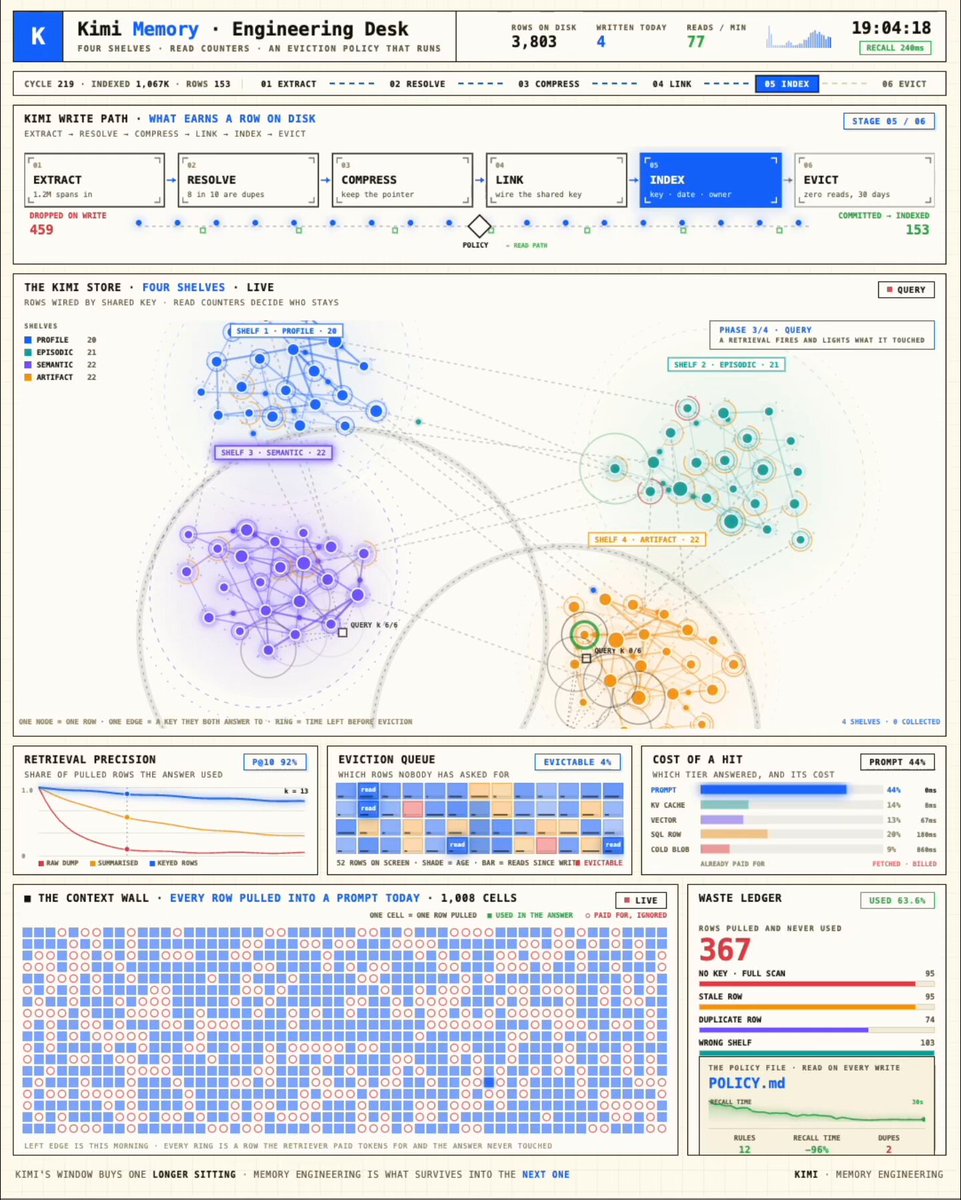
Engineer runs a Kimi K3 memory layer that costs $11 a month and remembers what a $500,000 vector database keeps losing. No embeddings. Four nodes and one rule about what's allowed to be forgotten. He published the whole schema. His version starts from the opposite idea. Memory is not a pile you search. It's a set of claims that expire unless something keeps paying to keep them. Four nodes. Every memory carries a clock someone has to reset: > WRITER - stores a fact with the reason it mattered, never raw text > DECAY - ages every memory down. Silence is deletion > RENEWER - only re-lifts a memory the model actually used again > GRAVE - holds what died, and why nobody reached for it Three nodes keep memory alive. One keeps the dead ones. Recall isn't storage here. It's rent a fact has to keep earning. That's the entire design. When everything is remembered forever, the useful and the stale retrieve identically. He replayed two months of agent context. 90,000 stored facts. 71,000 never retrieved once. The vector store returned all of them on similarity. Similarity graded closeness. Nobody graded whether the memory was ever right. Everyone else stuffs more into the context window and calls it memory. He built a layer that lets a fact die unless it keeps proving itself. The cost isn't storage. It's finding out how much of what your agent "knows" it has never once used. The article below is the full build - node prompts, the decay curve, the renewal rule. Save it. You'll want it open in the other tab.

wast3

64,039 次观看 • 5 天前