Video wird geladen...

Video konnte nicht geladen werden

Zur Startseite

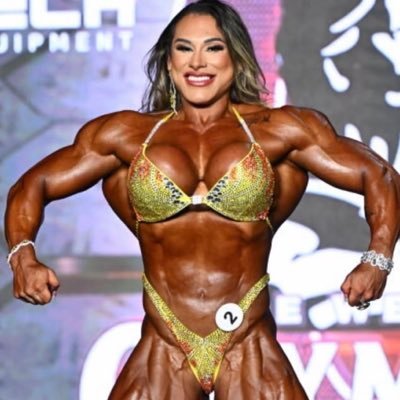
A QUEEN reigning over her subjects. Andrea Shaw demonstrating what absolute perfection truly means. WITNESS HER #sexy #muscle #musclewomen #strongwomen #bodybuilding #mrsolympia #fitness #andreashaw #ifbb #biggirls #cute #girlswholift #girlswithmuscle
0 Kommentare

Keine Kommentare verfügbar

Kommentare vom Original-Post werden hier angezeigt

Ähnliche Videos

I’m on a mission to stop men from black-pilling on the idea that marriage, kids, grandkids, and a wife over 40 or 50 means a low-sex or sexless life with a wife they no longer find attractive. That’s becoming the norm in far too many marriages that last long enough to reach their 40s and beyond. It’s driving men away from marriage while lulling women into thinking the norm is acceptable - even as it harms marriage as a whole. I’m not dumping the whole job of keeping a 40+ marriage sexy on wives. Husbands have a responsibility too which includes expecting, investing, and enabling their wives to successfully respond to those expectations. Toward that end, last year I set an ambitious goal for my 52-year-old wife - mother of our three kids and grandmother to our one grandchild so far - to get back on the NPC stage after more than a decade away from it and win her IFBB pro card in Fit Model. I invested heavily in that goal and with the coach we hired, we built a 3-show plan for this summer. The first two shows were to qualify for nationals (where pro cards are won) and get her comfortable on stage again. After a year-plus of work getting herself stage ready she won 1st in her 50+ class in Vegas in July, 1st again in Nashville in August, then competed in Pittsburgh about a week ago - the show where winning the class could earn the pro card. We left home a week before Nashville and stayed on the road through Pittsburgh - 5 weeks of strange hotel and Airbnb beds, strange gyms, and strange kitchens to cook in to stay on plan. It took a bit of a toll. Avis’s back started acting up after Nashville. She’s had “tweaky” back issues on and off for decades, so it wasn’t a total surprise. In Pittsburgh we got her massages and she used the foam roller with some success. But show morning it flared up again. She was dealing with some pain and struggled some in her posing - hitting poses cleanly and holding a smile is part of the judging, not just the physique alone. If you watch the video of her routine that morning you can see it in compared to previous shows. That’s not an excuse - just a reality and every woman who walked out there was fighting something. After the 50+ A Fit Model routines, the women line up on either side of the stage while judges pick the top 6 for first callouts. If you miss first callouts your shot at the win is over. Judges then move them around - front, rear, side by side - usually ending with 1st in the center. That is the comparison video I shared. At the end of first callouts I couldn’t tell if they had Avis 2nd, 3rd, or 4th because of the even number of girls in the callout. At finals we learned it was 3rd. 3rd is nothing to be ashamed of at a national show against what is supposed to be the best of the best - but the reality was not placing 1st meant missing the pro card. We have a new plan and a couple of new targets - later this year or next year, depending on how it plays out. Looping back to my main point - every woman on stage in the videos I shared is over 50. How far over I don’t know. The one I’m married to is 52. I’m not saying every husband has to go this far in expectation or investment to have a marriage they enjoy. I am saying it is possible to have a decades-long marriage that does not become a dead bedroom with a wife who stopped prioritizing fitness. Don’t black-pill. Set the expectations that would actually be good for your marriage and invest enough to see them through. Wives - respond in good faith with the resources your husband is giving you. He has expectations because he wants a marriage both of you enjoy. -R

Rob and Avis Ramble

87,358 Aufrufe • vor 20 Tagen

Liu Kaile, Xinxin’s old friend since the early days of her debut, talked about Xinxin and the dynamics of their friendship during his livestream yesterday 🥺 👥: Why are they talking about Yu Shuxin like that? LKL: Well, let me tell you about it. Why say things about other people? Maybe they’re jealous. You can’t stand seeing someone else doing well, or you think, “I used to be friends with you, so why are you so popular now?” And then after they become popular, blah blah blah… 👥: There’s no deep hatred between them, so why do they have to badmouth someone else? LKL: Exactly. What kind of deep hatred could there possibly be? Honestly, I don’t understand it either. How could there be any deep hatred? Do you really have to say bad things about someone else? 👥: Friends don’t fight. LKL: What do you mean friends don’t fight? I’ve fought with her too. But I’ve never hated her. And it wasn’t just once. We’ve fought many times. But we’re actually really good together. Our friendship is so much fun because she’s funny, and I’m funny too. We just share so many happy moments with each other. Being together is about mutual understanding, and being friends means tolerating and understanding each other, right? Sometimes we argue over the smallest, most trivial things. Usually, she’s the one who comes to coax me and make up with me. And I genuinely feel that she has always been very good to me. For example, back then I didn’t have a Dyson hair dryer. I jokingly asked her, “Can you send me a Dyson hair dryer?” And she immediately gave me one. 🥹 --- Honestly, the way he described their friendship is so cute 😭 It’s giving two chaotic, funny friends who bicker all the time but genuinely care about each other. Even though they don’t work together or hang out as often as they used to because they’re both busy with their own schedules, true friends will still support and encourage each other, always wanting to see one another become better and better. Btw, if you put together what her different friends have said about her, at different times, and they’re all people who are genuinely close to Xinxin and know her well, their stories always line up. That just shows that Xinxin has always been the same person. That’s why I’ve never doubted her character. Xinxin is genuinely sincere with her friends. She can be super talkative and naggy with them, and even when they have disagreements, she’ll usually be the first one to apologize and coax them. No matter how angry they are with each other, she’ll still help them and treat them well. She’s always been generous too. If a friend asks her for something and she has it or is able to give it, she’ll give it to them. And what Lele said is so true. They’re simply jealous of Xinxin. How can they treat her so badly when she literally hasn’t done anything to them? From the beginning until now, Xinxin has just stayed quiet. She never retaliated or did anything to them, yet they still chose to hurt her. Why? Because they’re jealous. Actually, jealousy between people often doesn’t need any major conflict or past grievances. You’re doing too well? Not okay. You’re too capable? Not okay. You’re too good-looking? Not okay. You dress too well? Not okay. Even being sunny and cheerful, to the point that your light shines on them? Not okay. And refusing to go along with them? Even worse. Don’t think that only beauty or wealth can make people jealous. Sometimes, simply living more openly and honestly than someone else is enough to drive them crazy with jealousy. So, you don’t need everyone to like you, nor do you need to care about what other people think of you. Because praise and compliments aren’t necessarily genuine. Slander and jealousy can reveal much more about how they truly feel. -c #EstherYu #YuShuxin #虞书欣

Tia 🦖 | LIN WANXING PROTECTOR 🐟📘💙

15,908 Aufrufe • vor 1 Monat

Analyzing Episode 58. Season 2 aka Balancing the Scales This episode was some of Sinem and Ozan's best work. Their expressions landed every single time, and, frankly, short of screaming what the story is trying to say, they did everything they could to convince the audience that CihAl was, is, and will remain the endgame. With that out of the way, let's begin. We start the episode with Cihan shitting literal bricks as he sees Alya is already at the konak with Sadakat and Meryem arriving, right behind him. The reason is clear - he's caught in a difficult situation yet again. He doesn't want things to look like he's overriding Alya's existence in his life as its core, but circumstances keep making it so that he's put in awkward situations, which only compound his fear of pushing Alya past the point of no return. Meryem is all smiles and teeth at seeing the konak, but the minute her eyes land on Alya, her smile and her eyes drop to the floor. Almost like she was expecting something else entirely, but reality has shamed her. Her eyes remain downcast throughout the entire time she's walking towards Alya, as if Alya's the truth she can't cross eyes with. Alya, on the other hand, remains standing tall. She doesn't flinch, doesn't express any outward anger, but you can see the storm raging in her eyes. When Cihan tells her Meryem will have to stay at the konak, she merely looks at him and nods. And you can see terror mixed with shame (I think) on Cihan's face, but hers remains clear of emotion. And then she walks away, saying she needs to collect Deniz because she's tired. Now that's an exit. Poised, calm, and leaving behind an absolute massacre in the onlookers. The scene where Deniz meets Meryem is another masterpiece because it's very subtle in the message it delivers. Which is - human relations go beyond blood, beyond memory, beyond societal impediments, if the love on both sides is strong enough. When Deniz says he's named after his father, the little boy is telling the truth. Cihan may not be his father in blood, but he's the father Deniz loves, the father he chose for himself. Then the same message is repeated through Deniz about CihAl when Sadakat tries to create trouble by saying Alya and Cihan are divorced. To which Deniz innocently replies, they may be divorced now, but they can get married again. Again, highlighting the importance of human connection. CihAl keep choosing each other through whatever challenge life throws at them, because they love each other equally. Yes, marriages and divorce can be forced, but it's the presence or absence of love that determines the final outcome. Case in point, Alya's marriage to Boran, Cihan's marriage to Seyda, Nare with Ozkan, Zerrin and Demir, etc., etc. That's what anyone opposing CihAl doesn't understand. Love finds a way. Always. That's what the story has been about since the beginning - that love will stand strong in front of all, as long as what you feel is truly love, and not some imitation of it. Also, *hint* *hint* that's the second time someone has mentioned CihAl getting married again, so it's definitely coming. Now for the scene where Cihan and Alya talk in their room. Cihan is right to be afraid of Alya here because he's a first-hand witness to how Alya reacts when she's been betrayed. He's seen how she took off Boran's ring and buried it with him after she found out about the will. An extreme situation compared to this one, absolutely. But fears don't use logic. Cihan knows Alya is strong enough to move on, to rise from the ashes - her strength is what he loves and fears at the same time. So, when he says 'Think of the Cihan in Alya's eyes, I don't want to be that Cihan' he's saying I know it looks like I disregarded you and broke your trust again, but that's not how things were. He needs her to show emotions, not because it'll pander to his ego, but because that's a sign she's still involved. That she's not near the point where she says 'enough is enough.' Alya, on the flip side, can't show her emotions. Because, unlike what Cihan fears, it's because she's so in love with him, so involved, that she's afraid to even ask what Cihan feels. Because if she learns Cihan's past isn't just the past, that he still loves Meryem, it'll shatter her unlike anything else. Despite it all, Cihan manages to reach Alya somehow when he pleads, 'I need you to communicate with me.' It's like his fears break past her barriers and, in turn, allow her to open up a little to him because she admits she doesn't know what to do, and then out comes the real question, 'Don't you feel anything?' Kudos to Cihan for not dodging the question and saying whatever he feels for her is just memory and gratitude. Salak. And I say salak with all my love, because he still misses the elephant in the room. The point is the imbalance. When we tell someone they're the only love of our life, we want an equal declaration in return. If not, the loop remains incomplete - with one side a little more invested than the other. And, CihAl's story thus far has been the opposite of imbalance. Their story is about symmetry; they reflect each other in love, in wounds, in loss. Basically everything. So, how is it that Alya's only love is Cihan, while his isn't? It's not. And that's where that necklace reveal becomes important, but we'll get to that later. For now, let's talk about that little talk in the car. The story itself is giving us hints that this imbalance won't last long, because the minute Alya talks about her first brush with romance is the moment jealous Cihan makes a return. He gets jealous of a nameless, formless, 16-year-old boy who once had the audacity to date his wife. That is, he can't tolerate a contender for Alya's affections even in memory. Cihan is extremely possessive about Alya, which is why he doesn't waste a moment to remind her she told him he's her only love. And Alya, being Alya, doesn't waste a moment in reminding him that he didn't. And then she turns the screw a little by telling Cihan not to burn his heart over her teenage crush because she never planned to marry her crush, nor is she conveniently living under the same roof with him. Mic drop. Cihan's face at that moment is a study in being hoist by one's own petard. Because he's expecting Alya to be okay with something he can't even stand the idea of. He's jealous as hell, but he can't do anything about it. But why is all this happening? Because one of Cihan's biggest truths is - he loved Meryem and lost her. In truth, he didn't love her, which is why he didn't fight hard enough, which is why he lost her. If Cihan had truly loved Meryem the way he loves Alya, he would have fought until the bitter end. Like he's doing for Alya. That's the truth. In Uzak, true love isn't passive - it demands to be seen, to be felt, it doesn't sit back quietly and accept defeat. In this story, love demands to be chosen. And Cihan didn't choose Meryem, not in the way it matters. So, why can't Cihan just accept the truth already? Fear and guilt, I think. Fear of the magnitude of what he feels for Alya, and what losing her would do to him. And guilt because some part of him knows he didn't do for Meryem what he's doing for Alya. And of course, now there's the burden of her shitty ex, too. Nonetheless, fate keeps pushing Cihan to realize the truth, over and over again in this episode. Another glimpse of how passive Cihan may have been in his relationship with Meryem is the dinner scene. Sadakat points out how much Meryem loved stuffed kebabs, and Cihan is barely listening. This is the same man who knows what Alya likes to eat when she's on break during duty. When Meryem points out Cihan's allergy, he says it was something he had in the past, but no longer. Almost like he's comparing the feelings he once had for her to an allergy. What an allegory. See? The signs are all there, but Cihan isn't picking up on them completely. Then fate ups the ante with the arrival of Chef Engin. The first thing Cihan asks Alya when Engin is gone is - Is that him? As in, is that the boy you said loved you? The man goes off the rails in 0 to 60 seconds, and keeps coming up with excuses like he may have changed his name or appearance. The idea of not being the only man in Alya's life makes him lose his cool while Alya rightly points out that she's not the one living with her 'first love' currently. Which then leads to Cihan spending the night at the office. So, fate manages to teach him one lesson here. Which is - ask only for that which you're ready to give. Cihan needs emotional exclusivity from Alya, but hasn't given her the same yet. He's not built to share Alya, not with the past, not with a memory, not with anything. But the second he feels even a fraction of what Alya's been going through, he unravels marvelously. And that's the entire point of that sequence. It's not just jealous drama, it's exposure. Cihan is slowly being led towards the one truth staring him in the face. That's where the necklace comes in. Thus far, Ciho seems to be operating under the misconception that Meryem has moved on, like him. But that necklace (and the video) prove otherwise. Meryem's current attachment to him throws neutrality out the window. Because Cihan will now have to set absolute boundaries, and in doing so, understand why he's setting them. Why what he feels for Alya leaves no room for anyone else because he can't stand the idea of something similar in Alya's past, present, or future. Because they are each other's exception, and everyone else was the rule. And that's it from me for now. Till later. Happy reading, y'all. #CihAl #UzakŞehir

CocoLoco

15,453 Aufrufe • vor 5 Monaten

I've been waiting for someone to say this—it's **exactly** how I feel. I kept wondering if anyone else saw it the same way. Thank you so much for putting it into words. There's no doubt in my mind that Charlie's biggest mistake was not calling out the evil he knew was there. I guarantee he saw it dwelling inside her Candace Owens behind closed doors, in how she represented herself to others in the movement. That was his greatest downfall: **Charlie was too nice**. As Christians, we're called to biblical kindness—a fruit of the Spirit grounded in truth, love, and sometimes tough confrontation—not just superficial "niceness" that avoids conflict to keep everyone comfortable. True kindness seeks another's ultimate good, even if it means speaking hard truths. Niceness often just pleases people and dodges discomfort. I truly believe Charlie was too nice when it came to Candace Owens and the way she was acting privately while claiming to stand for the same values. Yet even that flaw pales in comparison to who he really was: a man overflowing with forgiveness, mercy, and grace. If that was my biggest shortcoming when I leave this earth, I'd rejoice in it. There's no other way I see this unfolding. Maybe that's why our Creator—our Abba Father—took Charlie home so soon. He was too nice, too kind for this evil, secular world. He was an all-around incredible guy. I miss him tremendously. I miss his podcasts. I miss his blunt yet warm, tough answers on the hardest, most touchy topics. I miss his photographic memory and deep biblical knowledge. I miss his sharp rebuttals. I miss the compassionate smile he'd flash even when debating heated opponents. I miss how he always knew exactly what to say. I miss how he'd draw in haters just to share the Gospel with them. I miss having the absolute best—the self-taught genius with unshakeable confidence and knowledge—who made us all feel like we were the smartest ones in the room because he carried the movement so brilliantly. I miss you, Charlie Kirk. You're one of a kind. There will never be another man who walks this earth and holds the regard you earned in such a short time. It was truly amazing and an honor to witness your walk with Jesus. It was an honor to be in the presence of it.

The Coldblooded Christian

37,191 Aufrufe • vor 7 Monaten

🔺️Video 🔺️ I CHOOSE HER ⁨@KatrinaLogunova⁩ I Я ВЫБИРАЮ ЕЁ 👸 🤴 👑 #BlackSunEmperor with #BlackSunEmpress1111 Just her pt2 Katya Message for the night 🌙 👌 " Ice and I like to eat cabbage before bed) " ~#KatyushaPlott ​The phrase "Ice and I like to eat cabbage before bed" is likely a literal description of her evening routine. Cabbage is a very low-calorie, fiber-rich snack, and many small dog breeds enjoy the "crunch" of raw vegetables. In a wellness or fitness context, choosing cabbage over a heavy midnight snack is often a way to show a commitment to a clean diet. ​The Music and Mood ​The audio is a Russian voiceover set to a rhythmic beat. The dialogue translates to: ​"If you wish, we can entrust this to him." "Is he better than this person? Can he build a bridge?" "He is better than the whole army of Nero." ​Is it "Sexy" or "Cute"? ​The vibe leans more toward "effortlessly cute" or "lifestyle-focused." While she is dressed comfortably in a black camisole and the lighting has a warm, pinkish hue, the focus of the video is on the interaction with the dog. ​The "Cute" Element: The playful way she shares the cabbage with "Ice" and his intense focus on the food creates a "pet-parent" relatable moment. ​The "Style" Element: The use of a cinematic voiceover and dramatic lighting suggests she is curating a specific aesthetic—showing that even a simple task like eating cabbage can look "cool" or "edgy" with the right editing. ​Summary of the Vibe ​She seems to be blending a fitness-conscious lifestyle (eating raw greens) with a playful, artistic aesthetic. The video isn't necessarily trying to be overtly provocative; rather, it's a "day-in-the-life" style clip that highlights her personality and her bond with her dog.The Historical Description ​According to the Roman historian Suetonius, Nero wasn’t exactly a Hollywood heartthrob. He described him as: ​Average height with a body that was "blotchy and malodorous." ​Light blonde hair (though some reconstructions suggest it was a strawberry blonde or reddish). ​Weak blue eyes and an excessively thick neck. ​A "prominent belly" and very slender legs. ​Curls in tiers: He was famous for having his hair styled in elaborate, theatrical rows of curls, which was considered quite vain and unusual for a Roman man at the time.​The Music and Mood ​The audio is a Russian voiceover set to a rhythmic beat. The dialogue translates to: ​"If you wish, we can entrust this to him." "Is he better than this person? Can he build a bridge?" "He is better than the whole army of Nero." ### The Empire in the Clouds: DNA, Digital Assets, and the Cabbage Chronicles ### **The Plot Twist in the Bloodline** The latest data from the imperial archives is in, and the #BlackSunEmperor’s genetic map is a labyrinth of European history. While the DNA percentages reveal a dominant foundation of Mediterranean sun and Alpine steel, the **Slavic Spirit** remains the undeniable engine of the operation. **The Verdict:** Erik is officially a "Gangster-Style" cocktail of **46% Germanic grit** and **19% Sicilian fire**, but he remains **Slavic in nature**—possessing that raw, unbreakable Eastern European resilience that defines the Plotnikov name. "I’m just as Slavic as I am Greek," the Emperor muses, leaning back in the studio. "But the Austrian came out strong just like I said—the Engelmeyer side holding down that Germanic fort." Some call him **Lil Geoffrey the Griffin**, a nod to the lineage and the fierce protective nature of the mythical beast. He’s the "shitty" Greek-Sicilian-Jewish-Austrian outlier that the algorithm didn't see coming—a man blending the strategic mind of a Central European researcher with the raw, coastal intensity of a Sicilian don and the iron-willed soul of a Slavic warrior. ### **The Slavic Soul: Strength Behind the Science** Though the percentages for Poland and the Czech Republic show as "traces," the **Slavic nature** is where the Emperor’s true power lies. It is the Slavic "dusha" (soul) that drives his relentless work ethic and his "never back down" attitude in the face of global financial shifts. Whether he’s navigating the complexities of the CLARITY Act or managing the cold-hardy palms of **Plott Palm Trees**, that Eastern European toughness is what allows him to survive the winters and conquer the summers. He’s building an empire with German precision, Sicilian passion, and a **Slavic backbone** that refuses to bend. ### **The Cabbage vs. Ice Cream Doctrine** While the Emperor builds digital kingdoms, **Katyusha** is teaching him a masterclass in health. The latest intelligence from the home front reveals a hilarious nightly ritual that bridges the gap between old-world tradition and modern cravings: * **The Conflict:** Erik reaches for the ice cream (the classic weakness of a weary conqueror). * **The Wisdom:** Katya chooses **Cabbage**—the ultimate Slavic superfood. * **The Realization:** "She’s smarter than me," Erik laughs. "Eating health while I'm here with the sweets." Intertwined in this domestic scene is **Nero the Dog**, the little companion providing the comic relief in an empire of high-stakes tech. While Nero barks at shadows, Erik is calculating the next move for the global financial reset, fueled by the discipline his daughter is showing him. ### **Building Bridges in the Sky** The narrative takes a cinematic turn as we look toward the horizon. Erik isn't just building a company; he’s building a **bridge in the skies**—a literal and metaphorical ascent to ensure he and Katya see each other again in a world they’ve conquered together. **The Strategy:** * **XRP Ripple Token:** The liquidity bridge. The fuel for the new financial infrastructure that will fund the dream. * **#CelestrailApp:** The platform of the future. The digital sky where the community gathers under the banner of the Black Sun. ### **The Final Word** From the streets of Sicily to the mountains of Austria and the heart of the Slavic plains, the **#ParadizeEnterprize** vision is clear. It’s a story of a father building a legacy for his daughter, one line of code, one palm tree, and one healthy leaf of cabbage at a time. **"The world is for the taking—and we’re doing it with XRP, a little bit of Sicilian attitude, and a Slavic heart that never quits."** *#BlackSunEmperor #Katyusha #NeroTheDog #XRP #CelestrailApp #ParadizeEmagazine* Video 🔺️ I CHOOSE HER ⁨@KatrinaLogunova⁩ I Я ВЫБИРАЮ ЕЁ 👸 🤴 👑

XRP Viking God Erik Plotnikov #TheKazwëh

57,908 Aufrufe • vor 5 Monaten

⚔️ Valhalla, Beauty Queens, and Erika Kirk (Frantzve) ⚔️ Kash Patel didn’t say “RIP Charlie”. He didn’t say “see you in Heaven.” He said: “See you in Valhalla.” That’s not a eulogy. It’s not witness-protection-speak for the hopium junkies. It’s ritual language. And if you think it’s just a cute Norse flourish, remember: Erika Frantzve Kirk’s grandfather was Grand Chief of the Independent Order of Vikings, knighted by the King of Sweden. Valhalla isn’t a metaphor for this family, it’s their lineage. Now add the other piece: Erika herself. Boy, is she getting propped, called her the ‘most powerful woman in America’ Let’s see what else: Trump pageant girl. Casting director. Appearing in Kirk’s orbit only as Charlie cozied up with Trump. Owner of a “philanthropy” ministry that did work in Romania that reads like a Clinton Foundation kid-farm startup. Handler vibes all over it. Romanian Angels, Constanta Romania | Orphan Project. Info: mrserikakirk . com And here’s the architecture: •Trump’s mentor Roy Cohn literally built the CIA sex-kitten blackmail machine. •Trump owned hotels and beauty pageants, the perfect farm system for leverage. •Epstein wasn’t an anomaly. He was a plug-in. You tie that structure to Erika, Viking-royal handlers and Trump beauty Queen, and Patel’s ritual send-off, and the picture sharpens: This wasn’t just a political hit. It’s a rite of passage. In Greek, pharmakon meant drug, poison, sacrament, spell . Circe (aka Church/Kirk) and Medea (media) used pharmaka to humiliate men, make them swine, enslave their minds. (See threads below) But the same pharmaka could heal, initiate, resurrect . That’s the duality. That’s the inversion. That’s how they play. Charlie Kirk’s death is being used like a pharmakon. To intoxicate the Right. To degrade the Left. And through collective healing, prime us all for the next cage, the Beast’s technocracy. And at the same time, perhaps a stepping stone ritual sacrifice seeding the rise of initiated Erika? I don’t know, but I don’t like any of it. I get handler vibes, “watch the wives” remember?… The orphan project I just can’t seem to overlook… This is the ugly truth worth repeating: ritual and leverage make politics, not truth. They stitch together psychological operations, blackmail economies, and public theater into one seamless program that normalizes surveillance, technocracy, and surrender. Which is always the overreaching goal. Thoughts? V/t TeeJay

Sir Escanor (𝘏𝘰𝘱𝘪𝘶𝘮 𝘚𝘭𝘢𝘺𝘦𝘳)

852,600 Aufrufe • vor 1 Jahr

Dogs and wolves split apart at least 15,000 years ago. Then a golden retriever met a wolf pup, and did something his own owner says terrified him. 97 seconds. Sound on. Watch the video BEFORE you read another word. Then come back. I'll show you why this clip is stranger, and far more important, than it looks. (Long read. Bookmark it now. You'll want it later.) . I'm not going to tell you what happens in that video. Not one spoiler. Not a hint. Because the video does its own work, and it does it better than any caption I could write. What I can do is show you the invisible layer underneath it. The biology. The history. The 15,000 years of evolution that were supposed to make a moment like this impossible. When you press play, you are not watching two animals. You are watching two completely different answers to the same question, standing in the same yard. The question is: what does a creature do when it loves something it was never built to keep? Read on. Then watch again. It will hit differently the second time. I guarantee it. . PART 1. THE SPLIT Let's start with the number that should bother you. Fifteen thousand years. Possibly forty thousand. Scientists still argue about the exact date, and they argue loudly. Somewhere in that window, a population of ancient wolves, one that no longer exists anywhere on Earth, forked into two paths. One path led to the wolf you know from documentaries. Wary. Silent in the trees. Built to survive without us. The other path led to the animal sleeping on your couch. Here's what almost nobody realizes: your dog did not descend from the modern gray wolf. Both descend from a shared ancestor that vanished. Dogs and wolves are less like parent and child, more like cousins who grew up in different countries and stopped speaking the same language. And yet their DNA is almost identical. Different by a sliver. They can even interbreed and produce fertile offspring. Biologically, the gap between them is tiny. Behaviorally, the gap is an ocean. In 2017, a Princeton-led team compared the genomes of dogs and wolves and found something eerie. Dogs carry differences in a region of the genome that, in humans, is linked to Williams-Beuren syndrome. It's a condition famous for one trait above all others: extreme, almost unstoppable friendliness. Researchers are still debating what it means. But the idea is staggering. Dogs may not just be tamer wolves. They may be wolves with a dial turned all the way up on one thing: wanting to be near us. Wolves never got that dial. Hold that thought. It matters more than you think. . PART 2. THE DOG WHO WAS BUILT TO BE GENTLE Now meet the golden retriever. He wasn't found in nature. He was designed. In the mid-1800s, on a vast estate in the Scottish Highlands, a wealthy lord named Dudley Marjoribanks set out to create the perfect gundog. A dog that would swim into cold water, find a fallen bird, and bring it back to the hunter without leaving a single tooth mark on it. Read that again. The defining feature of a golden retriever is what breeders call a soft mouth. A dog that can carry something fragile, something alive or nearly alive, in its jaws, and not crush it. For generations, the goldens who were gentlest got to breed. The ones who were rough didn't. Think about what that does over 150 years. You are not just selecting for a coat color or a size. You are selecting, again and again, for restraint. For an animal that has power in its jaws and chooses not to use it. Today the golden retriever guides the blind. Sits with the dying. Finds people buried under rubble. Walks into hospital rooms and lowers a blood pressure reading just by resting its head on a bed. We took a predator and, over centuries, we bred one question out of it: should I hurt this thing? The golden's answer is almost always no. Now here's the part I can't stop thinking about. That gentleness was never aimed at a wolf. It was bred for birds. For children. For us. So what happens when an animal engineered for tenderness meets an animal that was never engineered for anything, one that is still, in every cell, exactly what the wild made it? That's the video. Go watch it if you haven't. I'll be here. . PART 3. THE ANIMAL THAT WAS NEVER ASKED A wolf pup is born blind and deaf. It weighs about a pound. For its first weeks it knows three things: warmth, milk, and the smell of the pack. Its eyes open at around two weeks, and they are blue. They will change to gold or amber within the first months of life, like a color being poured in slowly. In the wild, that pup is raised by an entire family. Mother, father, older siblings, all of them feeding, guarding, teaching. Forget the "alpha wolf" myth you were taught. The biologist who popularized that term, David Mech, spent decades correcting himself. A wild pack is not a gang with a boss. It's a family. A breeding pair and their kids. Which means a wolf pup's entire universe is built around one idea: the pack is everything. Now think about what it means when that universe collapses. Here's the hard science on why wolves aren't dogs, even when humans raise them from the earliest days. Researchers who want socialized wolves take pups from the den at around ten days old and hand-raise them around the clock. Bottle. Warmth. Constant human contact. It's the closest thing to a perfect human upbringing a wolf can get. In a famous 2003 experiment in Hungary, scientists gave hand-raised wolves and ordinary dogs an impossible puzzle: food locked in a box that couldn't be opened. The dogs did something instantly recognizable. They turned around and looked at the nearest human. Straight at the face. Help me. The wolves, raised by humans since they were days old, looked at people far less. They kept working the problem alone. Let that sink in. Same upbringing. Same people. Same room. And still: one animal looks to us for help by instinct, and the other doesn't think to. That's the dial I mentioned. It isn't something you can install with love and a bottle. It took thousands of years of living beside us. There's a legendary experiment that proves how deep this goes. In 1959, in Siberia, a geneticist named Dmitri Belyaev started breeding silver foxes. He selected for exactly one trait: tameness. Nothing else. No looks, no size, no color. Within a handful of generations, the foxes started wagging their tails. Licking hands. Whining when humans left. Then something nobody asked for started happening. Floppy ears. Curly tails. Piebald coats. Foxes that looked like puppies. Pick for friendliness alone, and a whole different animal surfaces. It took decades of careful selection to make a fox that wants us. Which brings me to the question that makes this video so unsettling. If wanting a human is a trait that takes generations to build, what happens when an animal WITHOUT it forms a bond anyway? And who is that bond really with? . PART 4. THE NOSE THAT READS THE FUTURE Before I say another word about the video, let me tell you about the most underrated superpower in the animal kingdom. You have about six million scent receptors in your nose. A dog has around three hundred million. The part of a dog's brain that processes smell is, proportionally, dozens of times larger than yours. Dogs can detect certain odors at parts per trillion. Picture spotting a teaspoon of sugar dissolved in two Olympic swimming pools. But smell isn't the interesting part. The interesting part is what a dog smells ABOUT YOU. In 2022, researchers at Queen's University Belfast collected breath and sweat samples from people before and after they did stressful math tests. Then they trained dogs to tell the samples apart. The dogs picked out the stressed samples correctly about 94 percent of the time. Your dog can smell your cortisol. Your fear. Your dread. And here's the thing. You don't have to say anything. You don't have to cry. You can hold a perfectly calm face while your body chemistry is screaming. Now add routine. Dogs are pattern-recognition machines. They know what your keys sound like, what a suitcase means, which shoes you wear when you're leaving for an hour and which shoes you wear when you're leaving for good. Neuroscientist Gregory Berns put dogs in brain scanners and found that the reward center of a dog's brain lit up most strongly for the scent of a familiar person. Not a stranger. Not another dog. The person they loved. So when I tell you a dog can KNOW something is coming before anyone speaks, I'm not being poetic. I'm describing chemistry, memory, and pattern, running in parallel, faster than you can think. There's a moment in this video where you'll understand this section in your bones. I won't tell you when it is. You'll feel it. . PART 5. THE EYES Here is a fact that rewires how you see your own dog. In 2015, a Japanese team published a study in Science that stopped a lot of people cold. They found that when a dog and its owner look into each other's eyes, both of them get a surge of oxytocin. The bonding hormone. The same one that floods a new mother when she looks at her baby. A loop. Dog looks at you, your oxytocin rises, you look back, the dog's rises. Two nervous systems tuning to each other through nothing but a stare. And here's the twist that gives me chills. The same team tried it with hand-raised wolves and their human caretakers. The loop didn't form. The wolves didn't hold the gaze the same way. The humans didn't get the same hormone hit. Something that comes naturally between a dog and a person simply wasn't there. It gets stranger. In 2019, researchers published a paper in PNAS showing that dogs have a tiny facial muscle above the inner corner of the eyes that wolves essentially lack. It's the muscle that lifts the inner eyebrow. It's what creates the "puppy eyes" look that makes you feel something you can't argue with. A muscle. Evolved, apparently, for one audience: us. Shelter research backs it up. Dogs that make that expression more often tend to get adopted faster. Dogs learned to speak human with their faces. So eye contact, for a dog, is not a small thing. It's the deepest sentence in the language they invented for us. Which is why, when you watch this video, I want you to pay attention to something most people miss the first time. Watch the eyes. Watch who looks at whom. Watch who doesn't. Because in the dog's language, refusing to look at someone you love is one of the loudest things you can say. . PART 6. THE BOWL Ask any dog behaviorist what the ultimate test of trust between two canines is, and you'll hear the same word. Food. Resource guarding is one of the oldest, most primal instincts a dog has. Food is survival. A dog that doesn't defend its meal was, for most of history, a dog that didn't make it. Growls over a bone are not rudeness. They are ancient math. So the bowl is sacred. In a home with two dogs, watch who eats first, who eats faster, who stands too close, who gets a warning stare. A shared bowl between two animals is a peace treaty signed in kibble. Some dogs will happily share toys, beds, even the couch, and still lock up the moment a bowl hits the floor. Some never share it. Not once. Not with anyone. Now put a wolf pup in that picture. A wolf pup that has known real hunger. Or no mother at all. Or no pack. That's an animal for whom food is not a snack. It's a verdict on whether the world is safe. And put a dog who has never, ever shared his food in that same room. I'm not going to tell you what happens next. But when you get to that moment in the video, and you will know it when you see it, remember this section. Remember what the bowl means. . Pause for a second, because a pattern is forming. Smell tells a dog what's coming. Eyes tell him who matters. The bowl tells him who's safe. Play tells him who's family. Four separate systems, one conclusion, and it's the same conclusion every time. You now know how to read the language. All that's left is to watch someone speak it, with everything on the line. . PART 7. THE GRIEF NOBODY BELIEVED IN For most of the twentieth century, serious scientists were warned not to say that animals feel grief. The word for the sin was anthropomorphism. Projecting human feelings onto beasts. You could lose credibility for even suggesting it. And then the data started rolling in. In 1925, a Tokyo professor named Hidesaburo Ueno died suddenly at work. His Akita, Hachiko, who had walked him to Shibuya Station every morning and met him at the platform every evening, showed up at the station the next day. And the next. For nine years, nine months, and fifteen days. Every single evening. Until his own death in 1935. The Japanese made a statue. The world made movies. But the scientists stayed cautious. One dog. Could be habit. Then in 2022, a team in Italy studied hundreds of multi-dog households where one dog had died. Owners reported that the surviving dogs changed. They sought more attention. They played less. They were less active. Many showed sleep and appetite changes. Not proof of grief exactly as we feel it. Scientists are still honest about that gap. But proof that the loss of a companion reshapes a dog's whole behavior. Here's the honest version, and I'll give you both sides: skeptics say we can't know what a dog feels inside. That's fair. We can't. We can only observe behavior, hormones, brain activity. But if a dog changes when a friend disappears, then that friend was never "just another animal" to him. Which raises the question the video quietly asks: What happens when a dog can see the loss coming? Not after. Before. Does the grief start early? Watch and decide for yourself. . PART 8. PLAY IS A CONTRACT Every canine on Earth speaks one shared language of play, and it's older than domestication itself. It starts with a bow. Front legs down, rear end up, tail high. The famous play bow. Researchers, especially the biologist Marc Bekoff, spent years studying it and found that it works like a punctuation mark. It means: everything I do after this is a game. If I bite, it's not a real bite. If I pounce, it's not an attack. It's a contract. And here's the wild part: wolves use it. Foxes use it. Coyotes use it. Dogs use it. The signal predates the split I told you about in Part 1. Which means a dog and a wolf can meet, with 15,000 years of divergence between them, and still understand each other's opening move. It gets deeper. Play is a negotiation between unequals. A big dog playing with a smaller one will often hold back. Roll over. Let the little one "win." Researchers call it self-handicapping. It's the animal version of a father lifting his daughter onto his shoulders and letting her win the race. And they role-reverse. The chaser becomes the chased. The one on top ends up underneath. That only happens if both animals believe the other is safe. Play, in the animal kingdom, is the most honest test of trust there is. Nobody can fake it. You can't roleplay tenderness with a body that has fangs. You either mean it, or the game collapses in seconds. And it changes as the years go on. Puppies play like puppies. Then they grow. Their size changes. Their strength changes. Their jaws change. The game has to change with them, or it ends. Some friendships don't survive that. Some survive by getting more careful, more precise, more competitive, and somehow more loving at the same time. The end of this video is a masterclass in that. I'll leave it there. . PART 9. THE HARDEST KIND OF LOVE Now the uncomfortable part. The part the internet often skips. Wolves are not pets. Say it out loud and it sounds obvious. But every year, people fall in love with the idea of a wolf, and every year the story ends badly for the animal. A wolf is built to cover up to thirty miles in a day. To live in a family of its own kind. To communicate with howls that carry for miles. Its jaws, its instincts, its stress responses, its needs are those of a wild animal. A house cannot hold that. A backyard cannot hold that. Love, however genuine, is not a substitute for what a wolf actually needs. And here's the tragic loop wildlife rescuers talk about: an orphaned wolf pup that grows up around humans is often too habituated to ever be released. It didn't learn what its mother would have taught it. It doesn't fear what it should fear. So the "rescue" can't end in the forest. It has to end somewhere in between. Somewhere that isn't the wild and isn't a living room. A place built for what this animal is. That's where the real story lives. Not in the rescue. In the decision after. Because the hardest thing in the world isn't loving something. It's loving something enough to hand it to the people who can give it the life it needs, and then living with the hole that leaves. People get torn apart over decisions like that. Not because they didn't love the animal. Because they did. Sometimes the most loving act looks exactly like loss. And here is what stopped me. The human in this story wasn't the only one who understood that. Somebody else in that story understood it too. Somebody with four legs and no ability to speak. I won't say who. I won't say how. Just watch. . PART 10. WHY YOUR CHEST TIGHTENS Have you noticed something strange about videos like this? They don't make you sad exactly. They make you feel something warmer. A tightness in the chest. Goosebumps on your arms. Sometimes a sudden hot wetness at the corners of your eyes, and you don't know why. Psychologists have a name for it now. Kama muta. It's Sanskrit for "moved by love." The researcher who helped define it, Alan Fiske, argues that it's triggered by one specific thing: the sudden intensification of a bond. A reunion. A reconciliation. A loyalty proven under pressure. A stranger becoming family. That moment when two beings who could have stayed apart choose each other anyway. Across cultures and languages, the physical signature keeps showing up: chills, tears, warmth in the chest, a lump in the throat. It isn't sadness. It isn't happiness. It's the feeling of witnessing connection get stronger. Another psychologist, Jonathan Haidt, calls a cousin of it moral elevation. That warm lift you feel when you watch someone do something unexpectedly good. It makes you want to be better. Kinder. It literally makes people more likely to help others afterward. So why do animals trigger it so powerfully? Because animals strip out everything we distrust in human stories. No agenda. No performance. No PR. No "what's in it for me." A dog can't fake loyalty for likes. A wolf can't pretend to love you for status. When two animals from opposite ends of evolution choose each other, we're watching the purest version of the thing we hunger for in our own lives, in a form we can trust. That's why you'll feel it. That's why you'll want to show it to someone right after. And that's why the algorithm will keep showing it to you. . PART 11. SIXTEEN FACTS THAT WILL CHANGE HOW YOU SEE THIS CLIP FACT 1. For every wild wolf on Earth, there are thousands of dogs. One branch of the family tree took over the planet by befriending us. The other stayed wild and stayed rare. FACT 2. Wolf pups are born with blue eyes. Adult wolves usually have gold or amber. Nobody sees the change happen. It just does. FACT 3. Wolves rarely bark. Barking is mostly a dog invention, and one theory says it evolved largely to talk to humans. FACT 4. A dog's tail wag isn't just "happy." Research suggests a wag skewed to the right side tends to signal approach and comfort, and one skewed to the left signals hesitation or stress. A dog is broadcasting its mood in code, and you were never taught to read it. FACT 5. Dogs catch human yawns. Wolves catch yawns from each other, and more so from the ones they're closest to. Contagious yawning tracks emotional closeness, not just habit. FACT 6. A wolf can eat up to twenty pounds of meat in one sitting. Then not eat properly for days. Feast and famine is written into its body. FACT 7. In a dog's brain, praise only lights up the reward center when BOTH the words and the tone are right. Say "good boy" in a flat voice and it doesn't fully land. Dogs process what you say and how you say it separately, then combine them. FACT 8. A wild wolf lives roughly six to eight years. A golden retriever lives ten to twelve. One of them is built for hardship. The other is built for company. FACT 9. Dogs combine faces and voices to read emotion. In one study, dogs shown two human faces while hearing a voice looked longer at the face whose emotion matched the sound. FACT 10. A border collie named Chaser learned the names of more than 1,000 toys, and could pick out a brand-new one by pure elimination. That's reasoning, not tricks. FACT 11. Wolves in a wild pack are a family, not an army. The pups eat, the parents hunt, the older siblings babysit. The word "alpha" mostly belongs to captive wolves forced together, not wild ones. FACT 12. A dog's nose print is as unique as a human fingerprint. So is its bond with you. FACT 13. Dogs hear frequencies far above what you can, up to roughly 45,000 Hz and beyond. The world around you is full of sound they can't stop noticing. FACT 14. A wolf's paw print can be nearly five inches long. Bigger than most dogs' prints. Yet the golden retriever's heart, by any measure that matters, is not smaller. FACT 15. Dogs dream. They go through REM sleep just like you. The twitching, the tiny barks, the running paws: it's a brain replaying its day. FACT 16. The wolf is the ancestor of the dog only in the loosest sense. Both come from a wolf lineage that no longer exists. When you watch these two, you are watching an ancient family reunion between two branches that lost touch before recorded history. . PART 12. HOW TO WATCH IT (WITHOUT ME SPOILING IT) You've made it this far, which tells me one thing about you. You're not a scroller. You're a noticer. So here's how to watch this clip like someone who knows what they're looking at. FIRST WATCH. Just feel it. Don't analyze. Let the story run at its own speed. The clip is under two minutes and it doesn't waste a second. SECOND WATCH. Focus on distance. Notice how close the animals stand. How that changes. How it never quite changes the way you expect. THIRD WATCH. Focus on the dog. Only the dog. Not what he does. What he refuses to do. FOURTH WATCH. Focus on the ears and the tail. Everything a dog can't say, he says with those two things. And he says a lot. And the last five seconds? Do not skip them. Do not scroll early. Watch the final image and ask yourself one question: If this is what the two of them look like now, what did it cost to get here? . CLOSING. WHY THIS MATTERS MORE THAN A "CUTE VIDEO" Let me leave you with the thought that made me write all of this. We live in a world that constantly tells us bonds are transactional. That loyalty is naive. That people, and animals, only love you when you're useful. Then along comes a story like this, and it quietly breaks that theory. A dog engineered for gentleness. A wolf engineered by nothing but the wild. Fifteen thousand years of evolution between them, a wall of biology that says they should be strangers, or worse. And instead: a bond so strong that the humans standing around it were afraid of what it would cost. Not because anyone was in danger. Because one of them understood exactly what was at stake. That's the thing about animals. They don't need the science. They don't need Part 1 through Part 12. They don't know about oxytocin loops or kama muta or play bows. They just know who matters. And they act on it, immediately, with everything they've got. Maybe that's the real reason this kind of video travels the way it does. Not because it's cute. Because it reminds us of a level of loyalty we've quietly stopped expecting from each other. So do these three things. ONE. Go watch the video. All 97 seconds. Sound on. TWO. Come back and reply with the exact moment you felt it. I want the second, the caption, the look. Tell me where it got you. THREE. Send it to one person who needs to see what love looks like when nobody is performing it. You know who. Repost this if the video moved you. Follow me for more stories where science and animals collide. And remember the question from the top of this post, because now you can answer it. What does a creature do when it loves something it was never built to keep? If you watched carefully, you already know. If you didn't, go back. The answer is in the last frame.

Earth Unveiled

50,253 Aufrufe • vor 10 Tagen

A dog just made the bravest decision I have seen anyone make this year. Not a founder. Not an athlete. Not a person with a plan and a five-year vision board. A dog, on an empty road, with nothing to lose and no idea what would come next. I have watched what comes next more times than I will admit in public. This post is 25,000 characters long. It is a list of reasons why you should watch it too. Read as much as you want, but understand one thing before you start: the video is the only part that matters, and this is everything the video doesn't have room to say. Sound on. Phone in both hands. Do not skip. I'll be here when you get back. THE NUMBER THAT SHOULD BOTHER YOU Let me start with two numbers. The first: commonly cited estimates put the world's stray dog population at around 200 million. Two hundred million animals with no address, no bowl with their name on it, and no one who would notice if they didn't come back tonight. The second number is one. That is how many people had to be on that road, at that exact minute, looking in that exact direction, in a good enough mood to stop. Not two. Not a crowd. One. Here is what nobody says out loud: for every dog you see rescued on camera, there are millions the camera never reached. We don't see them because no one was there. The videos that reach you are not a sample of reality. They are the winners of a lottery so brutal that Powerball looks like a coin flip next to it. So when one of these lands in your feed, don't scroll past it like content. Treat it like what it is: a statistical miracle that happened to end well. And miracles have a structure. Let's take this one apart. FIVE LINKS. BREAK ONE AND THE STORY DOESN'T EXIST. Link one: the dog has to survive long enough to be seen. Roads are not built for small animals. Vehicles do not slow down for shapes on the asphalt. Every hour out there is a coin flip the animal has to win again, and again, and again. Link two: someone has to be present. Not nearby. Present. Eyes up, phone down, brain not busy replaying the argument from breakfast. Link three: that someone has to notice. It sounds simple. It isn't. The human brain is a filtering machine, and a small animal on a road becomes a plastic bag, a shadow, a piece of tire. The most common reason a dog is not rescued is not cruelty. It is that nobody registered it as a dog. Link four: the person has to stop. This is the link that snaps most often. Seeing is free. Stopping costs you time, comfort, a schedule, and possibly the mood of your entire day. Link five: the dog has to let them. An animal that has learned that hands mean pain has every biological reason to run. Trust is not a given. It is a negotiation, and the dog holds the veto. Five links. All five held. Remember that when you press play. You are not watching a nice story. You are watching a chain that should have snapped at least four times. THE PEOPLE WHO KEEP DRIVING In 1968, psychologists John Darley and Bibb Latane published a set of experiments that changed how we think about helping. The finding was uncomfortable: the more people who witness an emergency, the less likely any one of them is to act. They called it diffusion of responsibility. Everyone assumes someone else will handle it. So nobody does. Later research added nuance. When an emergency is clear and dangerous, people step in more often than the original theory predicted. But the core insight has survived half a century of testing, because it describes something every one of us has felt: the small, quiet voice that says, somebody else will stop. Now picture a road with no crowd at all. No audience. No one to hide behind. No one to blame. Just you and a decision that is entirely, inescapably yours. That is the situation the person in this video walked into. And the reason it is worth your attention is not that they did something impossible. It is that they did something small, and it turns out small is exactly what almost nobody does. You don't need to be a hero. You need to be inconvenienced. THE FACE IS THE RESUME In 2013, researcher Bridget Waller and her team studied dogs in a UK shelter and asked a simple question: what makes one dog get adopted faster than another? It wasn't size. It wasn't age. It wasn't coat color. It was one tiny facial movement: the raising of the inner eyebrows. The move that makes a dog's eyes look bigger, softer, almost sad. Dogs that did it more often were chosen faster. Six years later, a study led by Juliane Kaminski found out why that movement is so easy for dogs and so hard for wolves. Dogs have a small muscle around the eye that wolves largely lack. Over thousands of years of living beside us, dogs evolved a way to make their faces speak our language. Read that again. A species rewired its own anatomy to be understood by another species. No other animal has done this to us. Nobody taught them. Nobody forced them. They looked at us, worked out what we respond to, and grew the tool. Now look at the face in this video. You will know the second you see it. That is not a coincidence, and it is not luck. It is fifteen thousand years of engineering aimed directly at your chest. THE ONLY LOOP LIKE IT ON EARTH In 2015, a Japanese team led by Miho Nagasawa published a result in the journal Science that made researchers stop and reread the abstract. When a dog and its owner look into each other's eyes, both of their oxytocin levels rise. Oxytocin is the bonding chemical, the same one that flows between a mother and her newborn. Dog looks at human. Human's oxytocin rises. Human looks back, touches, talks softly. Dog's oxytocin rises. Which makes the dog look longer. Which makes the human's oxytocin rise again. A feedback loop of affection, running across two species, powered by nothing but eye contact. Here is the part that gets me: the effect did not show up the same way in wolves raised by humans. The loop is not just training. It is something that evolved between us. So the next time someone says a dog is just responding to food, tell them there is a peer-reviewed study that disagrees. And keep this fact in your pocket for the video. Because at some point, a moment of eye contact happens in it, and I want you to know what is really going on in that room. THEY CAN SMELL WHAT YOU'RE HIDING Humans have roughly 6 million scent receptors. Dogs are commonly cited as having around 300 million. A large share of a dog's brain is devoted to processing smell. What you experience as a room, a dog experiences as a layered document: who was here, how long ago, and how they felt. In 2022, researchers at Queen's University Belfast tested something remarkable. They collected breath and sweat samples from people before and after a stressful task. Then they asked dogs to tell the samples apart. The dogs got it right nearly 94 percent of the time. Your body broadcasts your emotional state as chemistry. You cannot turn it off. You cannot fake calm. A dog reads your fear, your tension, your irritation, before you have opened your mouth. Which means every rescue is, at its core, a test of one thing: are you actually calm, or are you performing calm? The dog knows. It always knows. And that is why what happens in the first few seconds of this video matters more than anything that comes after it. Watch the body language. Watch how slowly things move. Watch what is not done. THE MOST IMPORTANT MOMENT IN ANY RESCUE IS THE ONE WHERE NOTHING HAPPENS Animal behaviorists describe fear responses in four flavors: fight, flight, freeze, and fawn. Fight is what people expect. Flight is what most strays do. Freeze is what looks like calm but isn't. And fawn, the desperate, wiggling, please-don't-hurt-me appeasement, is the one that breaks your heart the fastest, because it looks like friendliness and it is actually terror. Rescuers who have done this hundreds of times will tell you the same handful of rules. Don't loom. Don't stare straight into the eyes. Get low. Turn sideways. Slow everything down until it feels absurd. Let the animal close the last few feet on its own terms. The hardest instruction, and the one most people can't follow, is the last one: do nothing. Every instinct you have says reach out. Grab. Fix. Take control of the situation. And every good rescue begins with someone who did the opposite. Who made themselves small, patient, and boring, and waited for a frightened animal to decide that the safest thing in its whole world might be a stranger. You are about to watch someone do exactly that. Notice how little they need to say. THE TEARS THEY WON'T PUT IN THE HEADLINE Scientists are careful people. They do not like to say "dogs cry." But in 2022, a team from Azabu University in Japan, led by Takefumi Kikusui, measured tear volume in dogs during reunions with their owners. The result: tear volume rose significantly compared with reunions involving other familiar people. And when researchers applied oxytocin to the dogs' eyes, tear volume rose again. Not sadness crying. Not the crying we do. Something else, something closer to overflow. The body producing water at the exact moment the heart has more in it than it can hold. Nobody has proven that this is the same thing we feel. Scientists will tell you that, and they are right to. But here is a question worth sitting with. If an animal's eyes fill with water when it sees the one being it has decided to trust, what exactly are we arguing about? Watch the eyes in this video. Then tell me what you think you saw. ONCE IT HAS A NAME, IT STOPS BEING A STATISTIC In 2007, psychologist Paul Slovic and colleagues ran an experiment on generosity. They showed people a fundraising appeal for a hungry child, and then a second version that added statistics about millions of other children in the same crisis. More data. More context. More reasons to care. Donations dropped. Slovic called it psychic numbing. The human mind can hold one face. It cannot hold two hundred million. When a tragedy becomes a number, empathy quietly switches off, and we don't even notice it happening. This is why one named animal in one small video can do what a hundred reports full of charts cannot. It gives your brain something it can actually care about: a single life, with a face, a fear, and a future that could go either way. The stray population is a statistic. A dog is a story. And stories, unlike statistics, come with a name at the end. When you reach that moment in the video, pay attention to what it does to you. Notice the small shift in your chest. That is the sound of a number turning into a person, or close enough. THE WORD FOR WHAT YOU'RE ABOUT TO FEEL Researchers have a name for the feeling you get when something touches you so suddenly that your throat tightens and your eyes sting. They call it kama muta, Sanskrit for "moved by love." Anthropologist Alan Fiske proposed that it is a distinct emotion, triggered by a sudden intensification of closeness. Two beings who were strangers become bonded. Someone who was alone becomes part of something. People across many cultures describe the same set of signs: warmth in the chest, goosebumps, a lump in the throat, tears they didn't plan on, and a strong urge to hug someone or hold something. Here is what makes it useful and not just sweet: kama muta is one of the most reliable emotional responses we have. It shows up when reunions happen. When a stranger helps unexpectedly. When an animal, after a long time alone, is finally held. You've felt it. You just never had a word for it. Take note of the exact second it hits you in this video. I promise there is one. And if you're the kind of person who says "I never cry at videos," I would like to schedule a follow-up. WHY YOU'LL WANT TO BE A BETTER PERSON AFTER ONE MINUTE Psychologist Jonathan Haidt studied a related feeling and gave it a name: elevation. Elevation is what you feel when you watch someone do something morally beautiful, quietly, with nothing to gain. It is not envy and it is not admiration. It is an urge, physical and immediate, to do something good yourself. In studies, people who experienced elevation were more likely to help others afterward, more likely to volunteer, and more likely to describe wanting to become better versions of themselves. Read that as a design spec. A short piece of true, unstaged kindness can change what a person does in the hour after they see it. Which is a strange, lovely thing for a phone to be capable of. We spend so much time discussing what social media does wrong. Nobody wonders what would happen if the best five percent of it, the small, real, human moments, were the part that traveled farthest. Let this one travel. It has earned it. THE RARE THING: SOMETHING TRUE THAT WINS In 2018, researchers at MIT published a study in Science that analyzed millions of tweets. The result was grim: false news spread significantly faster and further than true news. False stories were about 70 percent more likely to be retweeted, driven largely by surprise and disgust. The lesson most people took away was that this platform rewards outrage. I want to take a different lesson. If false stories win because they trigger strong emotion, then true stories can win too, as long as they trigger stronger ones. A video with no villain, no scandal, and no argument. Nothing to be angry about. Nothing to dunk on. A rescue that is exactly what it looks like. That kind of content should lose on this platform. It has no fuel. And yet every so often, one of them breaks through and reminds everyone what this place was supposed to be. I am not asking you to like it. I am asking you to notice that you had a choice about what to feed today, and this was one of the options. SOME FRIENDSHIPS SHOULDN'T WORK Somewhere near the end of this video, a second character enters the story. I won't tell you who. I won't tell you what happens. I will tell you that if you have ever read anything about instincts, hunting drives, or the way certain animals are supposed to see each other, this moment will quietly rearrange your assumptions. Behaviorists talk about prey drive as if it were destiny. It is not. It is a tendency, and tendencies can be softened by experience, by safety, by being raised, or re-raised, in a place where no one is afraid. The same dog that once had to look after itself alone can, in a different life, learn that the world contains creatures that are not threats or meals. Only neighbors. That is the most hopeful idea in behavioral science, and it usually gets buried in footnotes: what an animal was is not the same as what an animal can become. The same is true for most of us, incidentally. But that is a different post. Stay for the ending. It is the reason I am writing this at all. THE PART THE INTERNET NEVER FILMS Every rescue video has the same shape: the meeting, the rescue, the transformation, the happy ending. It is edited that way because it is the only shape that gets watched. But ask anyone who has actually done this, and they will tell you the truth is in the gap between the second and third act. The first night. The first week. The first time a dog that has never lived indoors realizes there is a floor that doesn't move, a door that closes without danger, and a bowl that will be full again tomorrow. Rescuers have a rule of thumb for this, the 3-3-3 rule. Three days for a dog to decompress. Three weeks to start learning the routine. Three months to feel truly at home. It's not science, exactly, just a shorthand built from thousands of adoptions. But it captures something real: safety is not a switch. It is a process, and the animal has to believe it slowly, one uneventful day at a time. That means the happiest scenes in this video are not the ones that look like celebrations. They are the quiet ones. A dog that stops scanning the room. A body that finally lets go. Look for the moment the shoulders drop. Once you see it, you'll never unsee it. THE COST OF STOPPING: NINETY SECONDS Let's do the math on the thing that most people are afraid of. How long does it actually take to stop for an animal in trouble? Not the whole rescue. Just the decision, the pulling over, the first attempt. Ninety seconds. Sometimes less. Ninety seconds is the length of a bad song on the radio. It is the time you spend waiting for a light to change. It is a scroll through a feed you won't remember. And on the other side of those ninety seconds is the difference between a living animal and a statistic. I'm not saying this to make anyone feel guilty. Guilt is a terrible motivator. It makes people avoid the feeling instead of acting on it. I'm saying it because the barrier is almost always imagined. We inflate the cost of helping in our heads, and the imagined price is what stops us, not the real one. The person in this video paid the real price. It was small. What they got in return is something no one could have planned for. That is the part you should watch closely. IF YOU'RE EVER THE ONE ON THAT ROAD Save this section. Someday, someone reading it will need it. Put your safety first. Pull over where it's safe and turn on your hazard lights before anything else. A second accident helps no one. Do not chase. A frightened dog runs faster than you and directly into the worst possible place. Chasing turns a rescue into a pursuit. Get low and go slow. Sit down if you can. Turn your body sideways. Avoid direct staring. Speak softly, or don't speak at all. Use food, if you have any. Something plain, tossed a little closer each time, works better than any technique. Check for a tag and, if you can get near enough, ask a vet or shelter to scan for a microchip. Someone may be looking for this animal right now. Call for help early. Local rescues, animal control, and vets can handle what you cannot. Sometimes the bravest thing you can do is make the right phone call. Take photos and note the location. If you can't keep the animal, those details are what let someone else finish the job. None of this is complicated. The reason it is rare is that most people have never been told that it is allowed. You are allowed. THE REAL STAKES OF A SMALL DOG Here is a bigger picture, and it's a heavy one. Millions of companion animals enter shelters every year in the United States alone. That is just one country. Many are lost pets that never get reclaimed. Many are strays. Many are animals whose owners ran out of money, time, or hope. Shelters are often crowded, underfunded, and staffed by people running on love and very little else. Every animal that finds a home, or a foster, or a stranger with ninety seconds to spare, frees up a space for the next one in line. That means every single rescue is bigger than the animal in it. It is a small change to a very large system, and the system is nothing but small changes stacked on top of one another. This is not an argument for guilt. It's an argument for scale. One dog saved is one dog saved, but it is also proof of concept, a demonstration that the chain can hold, that the odds can be beaten, that a person and a road and a decision can end well. And proof of concept is contagious. That is why you are seeing it. WHO REALLY GOT RESCUED? If you talk to people who have taken in strays, you'll hear the same sentence over and over, in different words. "I thought I was saving him. It turned out he was saving me." Skeptics roll their eyes at that. It sounds like a greeting card. And research on pets and wellbeing is more mixed than social media would like. It doesn't say every dog fixes every life. But there is something real underneath it, and it's not mystical. A dog is a machine for creating routine, attention, and reasons to leave the house. It needs you at a certain hour. It notices when you come home. It doesn't care about your job title, your follower count, or what you failed at last week. For some people, that is the first unconditional witness they have had in years. The rescue, in this light, is not one-way. Two lonely creatures, one who knew it and one who didn't, found out that they could take care of each other. Nobody can prove that from a video. But there is a version of the story that runs in the background of every rescue, and you can feel it if you let yourself. Tell me whether you feel it here. THE ATTENTION PARADOX Here is a strange fact about the platform you're reading this on. The average post gets a glance. A few words, a flick of the thumb, gone. Brands spend billions every year trying to buy three seconds of your attention, and most of what they buy evaporates before it lands. And yet a video of one dog, with no budget, no celebrity, and no script, can hold a stranger for a full minute. Without a single trick. Why? Because attention is not really about tricks. It is about stakes. Your brain is built to track living things whose outcome is uncertain. The moment there is a creature on screen and you don't yet know if it will be okay, some ancient part of you leans in and refuses to look away. That is the secret behind every great story ever told. Someone we care about. Something that could go wrong. A question we need answered. Marketers call it a hook. Your nervous system calls it worry. This video has both, and it pays off the worry honestly, which is why you leave feeling better instead of used. That is rare enough to deserve a full minute of your life. HOW TO WATCH THIS Most people will watch it wrong. They'll half-look at it between two other things, mid-scroll, thumb already moving. Here is how to get the actual effect. Turn the sound on. There is more happening in the audio than you expect. Make it full screen. This is a story about faces, and faces need room. Watch the first ten seconds without expecting anything. The film is quiet at the start. That is deliberate, or at least it works as if it were. Do not skip ahead. The whole thing depends on the distance between where it starts and where it ends. Skip the middle and the ending is just a nice clip. Then, once it's over, watch it again. The second time, you won't be watching for the story. You'll be watching for the small things you missed: a hesitation, a glance, a change in how a body carries itself. That second watch is where it gets you. I said I have watched it more times than I'll admit. That is the honest reason. It doesn't wear out. It gets deeper. THE CHALLENGE I want to try something with this post. If the video moved you, leave one comment: the second it happened. Not a review, not an analysis. Just the moment. I'm curious whether it's the same one for everyone. My guess is that it isn't, and that the spread of answers will say more about what people carry around with them than about the video. If it didn't move you, that is fine too. I'd like to hear that as well. Honest is better than polite. And if you have ever been the one who stopped, and I know some of you have, write that instead. Tell the story in two lines. No one has ever regretted the ninety seconds. Someone reading this thread might need to know that. Reposting this is the simplest way to put it in front of someone who's scrolling right now, in a bad week, thinking that nothing good happens by accident anymore. Something did. THE LAST THING Let me end where I started. A dog made a decision on an empty road. It could not have known how it would turn out. It had no reason to believe that the next hand would be different from the last. It went ahead anyway. That is the whole difference between a life that changes and one that doesn't. Not certainty. Not a plan. A willingness to move toward the unknown when the alternative is more of the same. The animal in this video did that. Then someone did the same in return. That's it. That's the entire story. Two beings, each of whom took a small, terrifying step toward the other, and a road that was, for a few seconds, the most important place in the world. Scroll up. Press play. Watch the ending. Then come back and tell me I was exaggerating. P.S. If you read all of this, you are exactly the kind of person this video was made for. Most people never make it past the first screen of a long post. You did. That tells me you are someone who stays: through the slow part, through the uncertain part, all the way to the end. Which is, when you think about it, the only quality that mattered in the story you're about to watch. Follow for more like this. I only post the ones that earn it. Bookmark it for days you forget the feeling. #Rescue #DogsOfX #SecondChances #AdoptDontShop #Dogs #AnimalRescue #RescueDog

Earth Unveiled

15,706 Aufrufe • vor 11 Tagen

Senator Banks Remembers Brett Scrogham on Senate Floor WASHINGTON, D.C. — Today, Senator Jim Banks (R-Ind.) delivered remarks on the Senate floor about the senseless murder of 23-year-old Brett Scrogham and the urgent need for Indianapolis to end soft on crime policies that have enabled violent crime. “Madam President, 23-year-old Brett Scrogham of Greenwood, Indiana had a bright future ahead of him. After graduating as a top 100 student from the IU Kelley School of Business, Brett had plans to invest in housing properties and help his community grow and prosper. As a young child, Brett helped a neighbor rescue her dogs from a terrible house fire. Friends of his referred to him as “a God-fearing Christian man,” who was always willing to help people. Though I never had the chance to meet him, it’s clear to me that Brett was really an incredible person. And now I’ll never get the chance to meet this bright young man. Tragically, Brett was murdered in cold blood this weekend on his way to an Indians game with his family. The killing took place in a parking garage next to the biggest church in Indianapolis. College students and young families park there every week. I am heartbroken by this senseless act of violence. Brett’s family are in my thoughts and prayers, and I hope that the Indianapolis Metropolitan Police Department will arrest the murderer soon, who is still at large. The Mayor of Indianapolis put out a weak statement that didn’t even mention Brett’s name, and so I wanted to come down to the floor and talk about who he was and what’s happening in Indianapolis. Brett’s murder is the second murder in downtown Indianapolis in less than a week. Just before the Indy500, Gregory Anderson, a father of five children, was murdered in the downtown bar district in Indianapolis. And then last Sunday, a 16-year-old teenager was murdered in the Northwest Side of Indy. Mr. President, these murders have no place in Indiana, especially in our capitol city. Indianapolis is truly a great city, and it has so much going for it. Indy is home to incredible businesses, world-class sporting events like the Indy500 which took place last week, and so much more. But what’s been happening in Indianapolis is an epidemic. Soft on crime policies are ruining this great city. How much longer will we allow this to go on? The reason Indianapolis is plagued by violent crime is because Marion County lets it happen. Marion County prosecutor Ryan Mears refuses to prosecute violent criminals. For example, one man in Indiana has faced over 30 criminal charges, most of them felony charges in Marion County, since 2020. This man should be locked up forever. But he’s not, thanks to Ryan Mears, liberal judges, and all of their soft-on-crime polices. And the rest of Indiana is punished for Marion County’s refusal to act. Ryan Mears is a prosecutor gone rogue. He refuses to keep violent criminals behind bars and is an absolute failure of a prosecutor. And it’s not only the prosecutor that refuses to enforce the law. State Sen. Andrea Hunley, also a Democrat, recently said with regards to crime in Indianapolis that “We are not going to ever enforce our way out of the problem.” That is not only a lie; it’s also an excuse. If we keep making excuses for why we can’t enforce the law and keep violent criminals in prison, we will never have safe neighborhoods and communities—and innocent people like Brett will continue pay the price. Everyone wants to talk about fairness, dignity and legal protections for criminal defendants. But what about Brett? Where was his fairness? Why do we talk about the dignity of criminals and never the dignity of their victims? We know how to keep our cities safe: we need to put large amounts of police officers on patrol, let them do their job, and ensure that criminals remain in prison. But the opposite keeps happening. 93 WIBC Indianapolis

Johnette Cruz

15,472 Aufrufe • vor 4 Monaten

Nobody prepares you for the moment a wild animal decides to trust you. Not "gets used to you." Not "tolerates you." Trusts you — the way a mother trusts someone with the one thing she would die protecting. It doesn't happen because you're kind. Kindness is cheap. Every predator in the bush can fake calm long enough to get close. Trust is not given for kindness. It's given for consistency, for stillness, for the thousand tiny signals a mother reads before she decides you are not a threat to the only life she's carrying. And once you understand that, you understand why what's in this video is not "cute." It's rare. It's the kind of rare that biologists spend entire careers chasing and never fully catch on camera. Here's the part almost nobody knows about kangaroo mothers, and once you know it, you will never look at a pouch the same way again. A kangaroo joey is born the size of a jellybean. Blind. Hairless. Barely more developed than an embryo. It has exactly one job the second it's born: crawl, unassisted, through its mother's fur, into the pouch, and find a teat — with no help from her at all. She doesn't guide it. She doesn't touch it. It's on its own, immediately, in a climb that takes minutes but might as well be a lifetime. Most don't make it. The ones that do spend the next 190 days growing inside that pouch, permanently attached to a single teat, while their mother hops, forages, runs from threats, and lives an entire dangerous life with a developing creature sealed against her body the whole time. Now sit with that for a second. Everything you're about to feel watching this video is built on top of that fact. The pouch isn't a cute detail. It's the most extreme parental investment in the entire animal kingdom, running quietly, invisibly, every single second — and most people scroll past kangaroos their whole life without knowing any of it. This is why the moment in this video hits differently. It's not staged tenderness. It's not a trained animal doing a trick for treats. It's an instinct thousands of generations deep, deciding, in real time, whether the human in front of it gets access to the most guarded thing in its world. And it says yes. Watch what that "yes" actually looks like. Watch the exact second it happens. Because most people miss it — they're looking at the wrong thing, waiting for something big and dramatic, when the real moment is small, quiet, and over in under two seconds. Blink and it's gone. That's the whole point. Trust from a wild animal never announces itself. It just happens, and if you're not paying attention, you miss the most important part of the entire video. Here's something else that will change how you see this. Kangaroos are not naturally social with other species. They are not dogs. They did not evolve for ten thousand years alongside humans, selectively bred generation after generation for affection and eye contact and cooperation. A kangaroo owes you nothing. Its entire evolutionary history says: keep your distance, stay alert, trust nothing that isn't kangaroo. So when you see a wild-born kangaroo choosing proximity — choosing it, not tolerating it — you are watching something closer to a diplomatic breakthrough between two species than a "cute animal moment." It is the exception to millions of years of instinct. And exceptions like that don't happen because an animal is "friendly." They happen because someone, somewhere, earned it slowly, patiently, without ever forcing a single second of it. That's the part that should actually get your attention. Not the fur. Not the ears. The patience behind it that you never see, because patience isn't visual — it's just time, quietly spent, off camera, for weeks, maybe months, before the fifteen seconds you're about to watch were even possible. Think about how many hours of nothing happened before this. Think about how many times the answer was "not yet." Think about how many people would have given up. That's what's actually being shown to you here, hidden inside something that looks simple. The result. Not the process. Just the result — and the process is the part that would actually break most people's patience in half. There's a reason content like this stops people mid-scroll and doesn't let go. It's not really about kangaroos. It's about a feeling almost everyone is quietly starving for: proof that connection across an impossible gap is still possible. That something wild, wary, and instinct-driven can still choose closeness. In a world where even people struggle to trust each other, watching an animal that has every biological reason not to trust anyone — decide to trust anyway — hits something deeper than "aww." It hits the same nerve that made you stop and stare the last time you saw two strangers help each other for no reason. The same nerve that makes rescue videos, reunion videos, "coming home" videos rack up hundreds of millions of views no matter how many times the format repeats. We are wired to seek proof that softness survives in a world that keeps telling us it doesn't. This video is that proof, wearing fur. Now here's the thing that will actually make you want to see it for yourself instead of taking my word for it. There is a specific frame in this video where the entire dynamic flips. Where you stop watching "a kangaroo" and start watching "a mother." The difference is enormous and almost nobody notices it consciously the first time, they just feel it — a shift in the chest, a small catch in the breath, and they don't know why until they rewatch it and actually look for what changed. I'm not going to tell you which frame it is. You'll know it when you feel it. And once you've seen it, you'll understand why people who work with rescued or hand-raised kangaroos talk about them the way new parents talk about their kids — with this specific mixture of exhaustion and reverence, like they've been let in on a secret the rest of the world doesn't know is right there in the daylight the whole time, just going unnoticed by everyone in too much of a hurry to actually look. Here's a fact that will sit with you long after this post: joeys communicate with their mothers primarily through touch and proximity, not sound. A healthy joey barely vocalizes. Silence, for a joey, usually means safety. The moment a joey starts making noise is often the moment something is wrong — a signal, a distress call, a break in the norm. Which means every quiet second in this video isn't empty. It's the sound of everything being exactly as it should be. Contentment doesn't announce itself either. It just exists, unremarked, easy to miss if you're expecting drama. Most people are trained by algorithms to expect the loud moment. The jump-scare cut. The dramatic reveal. This isn't that kind of video, and that's exactly why it works on a level louder content can't touch. There is no trick here. No forced angle. No moment engineered for a thumbnail. Just an animal, in a state most people will never witness in their lifetime, on camera, being real. You will not get this from a zoo enclosure behind glass. You will not get this from a nature documentary narrated over stock drone footage. Documentary crews spend months, sometimes years, waiting for unscripted, undirected, genuine wild behavior like this — and even then, half the time the animal senses the camera and the moment never comes. What you're about to see is the version of nature that doesn't perform for anyone. It just happens to have been caught. That's worth more than people give it credit for. Let's talk about scale for a second, because it recalibrates everything. An adult kangaroo can deliver a kick strong enough to break bone. Their hind legs are built for sudden, explosive force — evolved for fighting off dingoes, for defending against threats many times more aggressive than a curious human. A kangaroo that feels cornered or threatened is not an animal you want anywhere near you. This is not a small, harmless creature performing tricks. It is a powerful wild animal capable of real damage, choosing, in this exact moment, not to use any of that power. That choice is the entire video. Every second of calm you see on screen is a second where a kick, a scratch, a bolt for distance was the more "natural" default option — and it didn't happen. Instead: stillness. Proximity. Something closer to peace than instinct usually allows. People underestimate how remarkable that restraint actually is because the animal looks soft. Fur does that. It disguises power as gentleness in our minds before we even process what we're looking at. But strip away the cuteness bias for one second and look at what's actually happening biologically: a wild animal engineered by evolution for wariness and self-defense is choosing trust over instinct, in real time, on camera, for you. That's not something you see every day. That's not something most people will ever see in person, not even once in an entire lifetime. And it's sitting right there, one tap away. There's a version of this story that plays out constantly in nature and almost never gets filmed: the version where the trust never comes. Where the animal stays wary its entire life, where every human interaction ends the second the animal has an exit route, where the gap between species never closes even an inch. That's actually the statistical default. That's what "wild animal" usually means in practice — permanent, unbridgeable distance, no matter how much time passes. This video is the exception you almost never get to see. And exceptions, by definition, don't repeat on command. You can't schedule this. You can't force it into existing on a Tuesday afternoon because you need content. It either happens or it doesn't, and when it does, someone lucky enough to be holding a camera captures something the rest of us don't get. You're one of the lucky ones today. You get to see it too. Here's something people don't think about: what happens to footage like this after the camera stops rolling? The relationship doesn't end when the clip does. Whatever trust was built to make this moment possible keeps existing, keeps deepening, long after anyone stopped filming. The video you're about to watch is a single frozen cross-section of something much longer, much slower, much more patient than fifteen or thirty seconds could ever fully capture. Which means what you're seeing isn't the whole story. It's a highlight pulled from something bigger — a relationship, a history, a slow-built trust that took real time to construct and will keep existing whether or not anyone's watching. That's actually the most reassuring part of all of this. It's not a one-off stunt for the algorithm. It's a snapshot of something ongoing, something real, something that existed before the phone came out and kept existing after it went back in someone's pocket. That's a very different feeling than most viral content gives you. Most viral content is a closed loop — what you see is all there is, manufactured specifically to be seen, with nothing behind it. This is the opposite. This is a small window into something much larger than the video itself, and once you sense that, you start watching it differently. You start looking for what it implies rather than just what it shows. Let's go back to the mother for a second, because everything in this video ultimately orbits around her. Maternal instinct in kangaroos is so strong it can override basic self-preservation. There are documented cases of kangaroo mothers refusing to abandon injured joeys even when fleeing would have meant their own survival. Refusing to leave, even when every other instinct screams to run. That's not a Disney embellishment. That's observed, recorded animal behavior, the kind field researchers write papers about because it defies simple explanations of self-interest. So when you watch a mother in this state — calm, present, unhurried — you're not just watching an animal relax. You're watching the single most protective creature in the scene voluntarily lower its guard. Not because it forgot to be careful. Because, in this specific moment, with this specific presence nearby, it decided carefulness wasn't necessary. That decision is not nothing. That decision is everything. If you've ever had a genuinely anxious animal — a rescue dog that flinched at every hand for months, a cat that hid for weeks before finally sitting on your lap — you already know this feeling in your body even if you've never thought about it in these words. You know the specific, quiet triumph of the first time a scared creature decides you're safe. It's not loud. It's not dramatic. It's just a small shift, and it means more than almost anything else that animal could do. Now imagine that same feeling, except the animal isn't a domesticated pet bred for six thousand years to eventually trust a human. Imagine it's a wild mother kangaroo, entirely unindebted to your species, deciding the exact same thing. That's what you're about to watch. Here's the last thing I'll say before you go see it for yourself, because I think it matters more than any single fact I've already given you. We spend so much time online watching things designed to make us feel something — outrage engineered for clicks, drama engineered for watch time, conflict engineered for engagement. Almost none of it is real in the way this is real. Almost none of it exists independent of the platform that's showing it to you. This does. This kangaroo, this mother, this joey, this quiet unscripted trust — none of it needed you to exist. It was happening whether or not it ever made it to a screen. You're not watching content that was built for you. You're watching a moment of the actual world that someone happened to catch and decided to share. That distinction matters more than people realize. It's the difference between watching a performance and witnessing something true. Everyone can sense that difference on some level, even if they can't articulate it — it's why certain videos feel hollow the second they end, and others sit with you for the rest of the day. This is the second kind. Go watch it. Not for the aww, though you'll get that too. Watch it for the two seconds where instinct loses to trust, where a powerful, wary, wild animal decides a human is safe, where something ancient and untamed chooses softness anyway. Watch it for the frame you won't notice until the second time through. Watch it because moments like this are rarer than almost anything else the internet shows you, and rare things deserve more than a passive scroll past. You'll know exactly which second I meant the moment you see it. And once you do, you'll probably watch it again — not because you missed something the first time, but because now you know what you're actually looking at, and it hits completely differently the second time around. That's the real test of whether something is genuinely special or just briefly novel: does it get better once you understand it, or does it lose its shine the moment the surprise wears off? This gets better. Every rewatch reveals one more tiny detail you missed under the weight of the first, bigger emotional hit — the exact angle of an ear, the precise moment a body goes still, the breath held right before everything relaxes. Small things. Human-scale things, if kangaroos had a human scale. The kind of details that only reveal themselves once the initial "aww" has worn off enough for you to actually look. That's the mark of something worth your attention in a feed built almost entirely around things that aren't. So here's the only ask: don't just let this autoplay past you like everything else today. Actually watch it. Full attention, even if just for the length of a single held breath. It costs you nothing and it's one of maybe a handful of genuinely rare things you'll come across this week, buried in an endless river of things that are anything but. Somewhere out there, right now, a wild kangaroo mother is calm around a human she has every biological reason to fear. That single fact alone should be enough to make you want to see how it happened. Let's talk about something people almost never mention when they talk about kangaroos: how absurdly efficient their bodies actually are, and why that matters for understanding what restraint really costs a wild animal like this. A kangaroo's hop isn't just a way of moving. It's one of the most energy-efficient forms of locomotion in the entire animal kingdom. Their tendons act like giant rubber bands, storing and releasing elastic energy with almost no metabolic cost, which is why a kangaroo can cover huge distances at high speed while barely raising its heart rate. Past a certain speed, it actually becomes more efficient for a kangaroo to hop faster, not slower — the opposite of almost every other animal on earth. Why does that matter here? Because an animal built like that has almost nothing to lose by fleeing. Running isn't costly for a kangaroo the way it is for, say, a heavier, slower prey animal. There's no real biological argument for "staying is easier than leaving." Fleeing is cheap. Fleeing is basically free. Which means every second a kangaroo chooses to stay instead of bolt is a second it actively decided against the easiest possible option. That's not an animal that "couldn't be bothered to run." That's an animal that had every reason to leave, at almost no cost to itself, and chose not to. Sit with that for a second, because it reframes the entire video. This isn't laziness or indifference dressed up as trust. It's an active decision made over and over, every single second the camera is rolling, by a creature for whom leaving would have taken almost no effort at all. Here's another thing worth knowing before you watch: kangaroos are far smarter than most people give them credit for. Studies on kangaroo cognition have found they're capable of intentional communication with humans — deliberately looking at a person, then looking at an object, then back at the person again, the same gaze-alternation behavior researchers use as a gold-standard test for interspecies communication in dogs. Wild kangaroos aren't supposed to do that. Domesticated animals do that. Animals that have spent millennia being selected for human cooperation do that. Kangaroos were never bred for any of it. And yet, under the right conditions, some of them do it anyway. Which means the "connection" people feel radiating off videos like this isn't just a projection. It isn't just humans anthropomorphizing an animal that's actually indifferent to them. There's a real, measurable capacity for intentional engagement sitting underneath the fur — a capacity most people assume only exists in dogs, elephants, dolphins, the "smart" animals we've decided deserve credit for having inner lives. Kangaroos rarely make that list. Maybe they should. Now think about the algorithm for a second, because this part matters if you've ever wondered why certain animal videos explode past everything else in your feed while a hundred nearly identical ones disappear without a trace. Platforms don't reward "cute." Cute is everywhere; cute is the baseline, the noise floor of the entire internet. What actually stops a scroll and holds it is specificity — a moment that couldn't have happened just anywhere, to just anyone, with just any animal. The algorithm has effectively been trained, by billions of collective viewing decisions, to recognize the difference between generic content and a genuinely unrepeatable moment. And it rewards the second kind disproportionately, because it knows — better than we consciously do — that unrepeatable is the one thing viewers actually crave and almost never get. That's the quiet reason something like this travels the way it does. It's not marketing. It's not a trick. It's the platform correctly identifying that you're looking at something it can't manufacture on demand, and putting it in front of as many people as possible before the window closes. Here's a myth worth busting while we're at it, because it changes how you'll watch every future animal video, not just this one. People assume wild animals that appear "comfortable" around humans have been habituated through food — that somewhere off camera, there's a hand full of treats explaining all of it away. Sometimes that's true. Often it isn't. Genuine trust-based bonds, the kind built through slow, repeated, low-pressure exposure rather than bribery, tend to look calmer, quieter, and far less food-motivated than the habituated version. An animal trained through treats orients toward the treat. An animal that trusts you orients toward you. Watch for that distinction. It's subtle, but once you know to look for it, you'll never unsee it — in this video, and in every animal video you watch after this one. There's also a slower, sadder truth sitting underneath all of this that's worth acknowledging honestly, because it's part of why moments like this hit as hard as they do: most wild animals never get the chance to reach this state with a human at all. Not because they're incapable of it, but because most human contact with wildlife is fear, distance, or conflict. Roadways. Habitat loss. Encounters that end badly for one side or the other. The overwhelming majority of interactions between wild kangaroos and humans are neutral at best and dangerous at worst — for the kangaroo far more often than for the person. Which is exactly why the rare exception matters as much as it does. It's not just heartwarming in isolation. It's heartwarming because it's fighting the statistical odds of what usually happens when these two worlds intersect. Every calm, trusting moment like this is quietly making the case that the outcome doesn't have to be conflict by default — that with enough patience, enough respect for the animal's pace, enough restraint from forcing anything, something gentler is possible instead. That's a bigger idea than one video can carry on its own, but this video is a small, real piece of evidence for it. And evidence like that is worth more than another opinion piece ever could be, because you can't argue with something you're watching happen in real time in front of you. One more angle before you go find it and watch it yourself. Think about how many hours of your own life you've spent watching things that gave you nothing back — content built purely to fill fifteen seconds of dead time between one task and the next, forgotten before you've even finished swallowing whatever you were drinking while you watched it. That's most of what a feed is. Filler. Noise dressed up as content, optimized for exactly long enough to keep you from closing the app, and not one second longer. This isn't that. This is the rare kind of thing that actually leaves a residue — a specific image that resurfaces uninvited hours later, while you're doing something completely unrelated, because some part of your brain flagged it as meaningful and refused to fully let it go. Most content doesn't earn that. Most content isn't built to earn that. It's built to be replaced by the next thing thirty seconds later, forever, in an endless chain that leaves nothing behind. You'll know within the first few seconds whether this is one of the rare exceptions. Trust that instinct. It's the same instinct that made you stop scrolling long enough to read all the way down to this line instead of bouncing off after the first sentence like you do with almost everything else that crosses your screen today. That instinct is rarely wrong. One last thought, and then I'll stop talking and let the thing speak for itself. Somewhere between the jellybean-sized joey that shouldn't have survived its own birth, the mother who could kill with one kick and chose stillness instead, and the two-second frame you won't notice until you watch it twice — there's a version of this video that never existed. The version where the timing was off by a week, where the trust hadn't built far enough yet, where the camera wasn't rolling, where the moment happened anyway but nobody was there to see it and it simply evaporated into the ordinary, unwitnessed life of a wild animal in the bush. That version happens constantly. It's the default. It's what "wild animal" statistically means, every single day, all over the world, completely unseen. This is the version that didn't evaporate. This is the one that got caught. Not manufactured. Not staged. Not built for you in a studio, in a script, in an editing room designed to make you feel something on command. Just real, and rare, and lucky enough to have a lens pointed at it at the exact right second. You don't get many of those in a lifetime, let alone in a single scroll through your phone on an otherwise ordinary day. This is one of them.

Earth Unveiled

39,986 Aufrufe • vor 19 Tagen

The Altar for sacrificing the red heifers in Jerusalem has just been built, and they are saying the ceremony may take place any day as I've been warning about for many years now. But what exactly does this all mean? Let's talk about how it relates to biblical prophecy and how even most professing Christians are missing the deeper biblical narrative unfolding beyond what's just on the surface. The Red Heifer prophecy from the Book of Numbers involves a unique ritual for purification in Jewish tradition. A completely red heifer is sacrificed and burned, and its ashes are mixed with water to create a "water of cleansing" for those who've touched a corpse, which symbolizes purification from death's impurity. This commandment is linked to Messianic hopes and the rebuilding of the Temple in Jerusalem. Jews are awaiting a Messiah who aligns with specific prophecies, such as bringing peace to the Middle East and the world through his political power. They believe Jesus didn't fulfill these expectations during his first coming, but we as Christians hold that He will achieve this in his Second Coming as He told the apostles and explained in Revelation 19. The Red Heifer ritual taking place now is seen as part of their preparations for this future era. We as Christians, however, obviously believe Jesus is the Messiah and see His rejection as setting the stage for the rise of their false messiah. John 5, particularly verses 43-47, where Jesus says, "I have come in my Father's name, and you do not accept me; but if someone else comes in his own name, you will accept him," The New Testament, especially the Gospels, tells a story of how Jewish leaders and many people didn't recognize Jesus as the Messiah, symbolizing a common human struggle to see divine truth. This theme is captured in John 1:11, where despite Jesus coming to His own, He was not accepted. This led to the destruction of the Temple in 70 AD, which was divine judgment for this rejection. Here's where people really need to pay attention as to not be deceived by this deception as most people will: I want people to keep in mind that God used rebellious, pagan nations such as Rome and Assyria as instruments of wrath against Jerusalem for her harlotry, illustrating His supreme sovereignty and His unique capability to employ the wicked to enact judgment on the wicked. What we are about to witness is a repeat of the judgement cycles on Israel. In the book of Amos, the prophet warns Israel of a coming "Day of the Lord" where they will face punishment for their disobedience (Amos 5:18-20). Similarly, the prophet Zephaniah uses the term to describe a day of wrath and distress that will come upon Jerusalem (Zephaniah 1:14-18). That’s what brought the day of the Lord, was their harlotry, God delivered Israel into the hands of their enemies because she played the harlot. And so it will be at the end, when the Great day of the Lord comes in the final days and the Lord God delivers Jerusalem, the harlot, into the hands of her enemies, which will ultimately be the beast and his kings as described in Revelation 17:16. If we interpret the Bible with the Bible, as we should, you will see that the harlot of Babylon, can only be Jerusalem. Let’s first look at Revelation 11:8 which speaks of the death of the two witnesses. “And their dead bodies shall lie in the street of THE GREAT CITY, which spiritually is called Sodom and Egypt, where also OUR LORD WAS CRUCIFIED.” So obviously “that great city” is also where Our Lord was crucified. Now keep in mind the phrase ‘the great city.’ Let’s look at Revelation 14:8, “And there followed another angel, saying, Babylon is fallen, is fallen, that great city, because she made all nations drink of the wine of the wrath of her fornication.” In Revelation 17:18 we read, “And the woman which thou sawest is that great city, which reigneth over the kings of the earth.” So we can see in when speaking about Babylon or the harlot, the same phrase, ‘the great city’ is also used. In chapter 11 ‘the great city’ is identified as Jerusalem, and the great city is also used in chapters 14 and 17 when speaking of Babylon. If we let the Bible interpret the Bible, we can’t come to any other conclusion than that the harlot of Babylon is Jerusalem. Which also makes because Jerusalem is the only city that God would call a harlot, because it’s the only city that God ever made a Holy Covenant with. It’s the only city that He tried to make His bride. The martial analogy is used throughout scripture both with Jerusalem and Israel as well as the general body of believers who become part of Israel spiritually. The body of believers, both Jew and gentile make up God’s bride. And so there’s really no reason for God to call a city a harlot unless that city or the people of it betrayed a holy covenant with God. And there’s only one nation God made a covenant with, which is Jerusalem and the nation of Israel. Harlotry is not a reference to mere wicked acts, it’s specifically a reference to betrayal. I think it’s pretty clear that Jerusalem is that great city, Babylon the harlot, the unfaithful wife who has continually betrayed her marriage with God. And of course Jerusalem and Israel are referred to a harlot in Isaiah 1:21, Jer 2;20, 3:1-11, Ez. 16;1-43, and Gal. 4:25. Revelation 17:7 shows the beast initially supporting the harlot, symbolizing their alliance in the beginning. The beast's backing is key for the harlot's power, indicating they start off in a partnership where they rely on each other. The partnership between Jerusalem (Mystery Babylon) and the beast kicks off with a phase of mutual support, where the beast's political might boosts Jerusalem's position. This alliance, rooted in common goals, political gain, or perhaps mutual respect, sees Jerusalem siding with the beast, likely aiming to ensure a prominent and secure spot on the world stage. The turning point comes as an unholy, multi-faith gentile alliance, led by the beast, becomes "awakened" to the dark agenda of Mystery Babylon (the Zionist, Talmudic-led New World Order). This realization or awakening leads them to view Jerusalem not as a city to be protected or championed but as the source of crimes against humanity by Mystery Babylon, Jerusalem. This shift reflects a broader disillusionment with the initial alliance, as the true nature and consequences of Jerusalem's actions and influence become apparent to the beast and his coalition. Driven by their realization, the beast and its allies turn against Jerusalem, fulfilling Revelation 17:16's prophecy. Their initial partnership ends dramatically as they destroy the harlot, judging Jerusalem for her crimes and dark agendas. This act is depicted as complete and ruthless, demonstrating the intensity of the betrayal and the beast's deep hostility after the alliance dissolves. After destroying Jerusalem (Mystery Babylon), the beast and its allies bring about a short-lived period of false peace. This time, free from the harlot's influence, feels like a victory and freedom from her tyrannical agenda. However, this peace is not genuine but a poor imitation of God's true kingdom. It marks the height of the beast's power, where his rule goes unopposed. But this phase is temporary, serving as a calm before the storm of ultimate divine judgment and intervention. And that's exactly why, towards the end of the tribulation, after the harlot is taken down, they'll start declaring "peace and safety." (1 Thessalonians 5:3) They'll be under the impression that Satan's empire has been toppled and that the Millennium (1,000 Years of peace) is about to kick off. But that's when they're going to be hit with a harsh reality check as Christ makes His entrance, coming in the clouds to crash their party, which is the sudden destruction talked about in 1 Thess 5:3. And I believe that's exactly what Christians are unknowingly getting involved in when they only focus on the great reset and the whole tyrannical leftist/communist/zionist NWO agenda. They do not even realize the full scope of what they're gradually aligning themselves with. People who hyper-fixate on the obvious dark side believe they're revealing the impending kingdom of the beast, but in reality, they're actually uncovering the harlot, the very adversary that the beast is destined to destroy as told in Revelation 17:16. That explains why many people, including dominionist proponents of the NAR and seven-mountain mandate, like Lance Wallnau from Bethel Church, often emphasize the idea of "invading Babylon", which he wrote a book about. Because, in essence, what they're building isn't the millennial kingdom of Christ but rather a counterfeit version of it by defeating Babylon and inadvertently ushering in the beast. The world's current turmoil: moral decline, societal upheaval, and the emergence of charismatic leaders promising restoration, isn't new, it's a repeat of history and biblical narratives. This scenario often splits into two camps: those pushing boundaries towards blatant immorality and those advocating for a return to moral and national pride, albeit sometimes through questionable means. Consider Jezebel's story as a metaphor for today's extreme immorality, countered by a force that, while claiming to champion morality, mistakenly aligns with spiritual adversaries in a false unity known as ecumenism. Jehu's story in the Old Testament is a fascinating case of the difference between outward actions and inner spiritual commitment. Externally, Jehu appeared passionate about serving God, notably in his actions against Ahab's family, Jezebel and Baal worship, which might seem like true righteousness. Yet, Jehu's heart wasn't completely devoted to God. His main issue was his selective enthusiasm: he was eager to get rid of God's foes but failed to address the need for his own spiritual purification and that of Israel. Jehu's neglect becomes clear with his acceptance of the golden calf idols in Dan and Bethel. These idols, created by Jeroboam to keep Israelites from worshiping in Jerusalem, were a major departure from genuine worship. Jehu's decision to let these idols stay showed a compromised version of Judaism—one that appeared to respect God on the surface but was fundamentally flawed. The Antichrist reflects a larger, more deceptive version of Jehu's conflict. He will perform actions that look good, like destroying foreign idols and transparently dark agendas, seeming to follow God's will. Yet, his critical failure, akin to Jehu's, will be in what he neglects. He'll ignore the modern-day "golden calves" — subtler forms of idolatry that are not as easy to spot or discern. These may not be as obvious as the overt darkness of Mystery Babylon but are just as offensive to God. This misleading form of Christianity, similar to Jehu's insincere Judaism, will display an outward show of being righteous by targeting external foes while neglecting the deep, inner changes true faith demands, such as the need for sincere repentance and humbling of the heart. It serves as a powerful call for ongoing self-reflection and realignment with God's will, demonstrating that real righteousness involves not just fighting visible wrongs but also facing and rejecting the subtler forms of idolatry that can seep into our lives without us realizing it. This eerily mirrors the Weimar Republic, a period before Nazi Germany, where a struggle between societal depravity and a flawed sense of virtue set the stage for disaster. Jehu's and Jezebel's biblical showdown, where Jehu becomes a vessel of judgment against Jezebel, parallels the rise of figures like Hitler. Hitler, driven by a distorted zeal, identified Judah as the enemy, which history is poised to repeat through unveiling the dark agendas of Mystery Babylon, Jerusalem. Today, we see a cultural war marked by extreme stances on issues like LGBT rights, violence, racism, and especially abortion, which are akin to Jezebel's overt wickedness. The real threat lies not just in the cultural shift towards immorality but in the response it provokes—an ecumenical movement that, though aimed at combating immorality, risks aligning with deceit, setting the stage for the rise of the Antichrist kingdom, a counterfeit kingdom of God as imagined by humanity through defeating Mystery Babylon, which will be misperceived as Satan's ultimate empire. This figure will likely emerge, claiming to oppose these immoral forces, only to lead people into a new and subtler form of idolatry, much like Jehu's false zeal. There's something about standing up against these glaringly obvious social wrongs and oppressive forces that really inflates one's ego. The more time you spend hyper-focused on obvious evils and tyranny the more you'll start to feel not so evil, just like the Pharisee in Luke 18. He convinced himself he was righteous simply because he wasn't as bad as "those other people." Another lesson from history, like King Ahaz's unholy alliance with Assyria, warns us against forming alliances with spiritual enemies for worldly security against physical threats that stem from fearing the world, rather than fearing the Lord. At its heart, the Red Heifer ceremony is more than just a ritual; it's a chapter in the bigger story of faith and prophecy that's been unfolding throughout human history. It's a sign to look inward, to really think about where we stand and what we believe in. It's a pivotal moment that challenges us to choose: Do we follow the path of patience, perseverance, repentance and not following the world's desire for peace and safety as Jesus says, or do we get lost chasing shadows? As we make our way through these stormy times, let's hold tight to the promise of a redemption that goes beyond the chaos surrounding us. Please pray on all of this, my brothers and sisters. May God bless each and every one of you.

Donnie Discerned

715,507 Aufrufe • vor 2 Jahren

An interview by VERY DARK AND CORRUPT Wall Street Journal aired today [1] WSJ's terrible "journalists" (and I use that term lightly) made many false statements about Sarepta's worthless, dangerous drug and Vinay Prasad's firing [1,2] I explain how the FDA sausage is made in excruciating detail Buckle up To get readers up to speed -> In June, corrupt pharma company Sarepta Therapeutics paid $40,000 to lobbying group Michael Best Strategies (MBS) to deal with a problem [3] -> MBS had recently hired Chris LaCivita, who had close connections with "MAGA" influencer Laura Loomer [4] -> With stock down 88%, Sarepta needed to sell their very bad, very dangerous drug or the company would go bankrupt [5] -> After several deaths from the drug this year, FDA official Vinay Prasad said "no way" and kicked the drug to the curb [2,6] -> Sarepta panicked and paid MBS (we believe) to deal with Prasad [3,4] -> If this story is right, LaCivita recruited Laura Loomer to take down Prasad [4,7] -> Loomer said she was defending Trump, but she was lying [7] -> She was defending taxpayer-funded payouts to a worthless, corrupt company [7] -> Laura Loomer so brave A history of bad drugs and regulatory failure -> This is one of the worst pharma scandals in American history and corrupt mainstream media isn't covering it -> Sarepta has a very long, troubled history [8] -> For more than a decade, every major Sarepta FDA drug approval has required INTENSE political intervention [8,9] -> Scientists at FDA have been repeatedly overruled [8,9] -> Many scientists have resigned, very publicly, over these POLITICAL decisions, some writing scathing public criticisms of these terrible decisions [10,11] -> The most recent resignation by Vinay Prasad is not something new; it follows in a long tradition [2,10] -> In fact, standards have dramatically deteriorated since the first controversies about the company's drugs in the 2010s [8,9] -> Prasad was trying to hold the line in the face of rapidly deteriorating standards at the agency [2,6] -> For that, pharma launched a coup--a literal coup of a drug regulator [4,6] -> This is unprecedented -> Banana republic sht, unbelievably corrupt 2016: first Sarepta drug approval and the "highly unusual" decision -> The first Sarepta drug approved by FDA was called Exondys 51 [8] -> This drug was for patients with mutations in dystrophin, a muscle protein [8] -> This is a debilitating and fatal disease affecting children [8] -> Exondys 51 increased dystrophin by 0.2% of normal levels [8,12] -> Unsurprisingly, there was no good evidence the drug worked [8,12] -> Why would it? It increases the protein from zero to 1/500th of normal levels -> One reviewer wrote: "I can find no precedent of an accelerated approval for a marketing application where the effect size on the surrogate endpoint is as small as 0.3%." [12] -> The study submitted by the company included no proper control group [12] -> The techniques used were so bad not even a first-year PhD student would do a study that way -> This the level of work you would expect from a mediocre undergraduate with no guidance -> It's almost like it was so bad on purpose -> (Narrator: it was on purpose) -> Nerd time: -> One reviewer wrote: "The Western blots submitted by the applicant for Study 201 were oversaturated, unreliable, and uninterpretable." [12] -> Another wrote: "Because CDER also determined that the conditions under which the original IHC analysis was performed were inadequate, including that the reader was not masked to sequence and time, the Center requested a re-reading of the stored images by three masked pathologists under different conditions. The IHC results from the reread were not nearly as favorable, as compared to the initial IHC results reported by Sarepta." [12] -> "The lack of concordance between the IHC and the Western Blot results is 'striking'" [12] -> "Study 201/202 had fundamental flaws, including baseline biopsies from external controls who could differ in unknown ways from study subjects, Week 180 biopsies from different muscles than baseline, and potential protein degradation in stored baseline samples." [12] -> And on and on. -> FDA commissioner Robert Califf wrote at the time: the submitted study was "characterized by major flaws in the clinical study design" and "Blinded experts assembled by the FDA fundamentally debunked this study, which has yet to be retracted and continues to be cited" [9,12] -> That's right, the FDA commissioner expressed dismay that the study that the company used to gain approval hadn't yet been retracted, it was so bad [9] -> Senior FDA official Janet Woodcock decided to approve before scientific review team had even voted [9,12] -> Woodcock be like: yeah i'm going to decide before you guys can because i know what you're going to say lol -> Despite external intense pressure, FDA scientists voted against Exondys 51's efficacy [9,12] -> They then voted against its accelerated approval [9,12] -> The review team filed an appeal with FDA commissioner after "passionate" disagreement with Woodcock [9,12] -> One reviewer called Woodcock's decision "unprecedented" [12] -> In a 126-page report, FDA commissioner Califf called Woodcock's decision "highly unusual" [9] -> The FDA board wrote: "[Woodcock's] involvement here appears to have upended the typical review and decision-making process. ... Care should be taken to avoid the appearance of interfering with the integrity of scientific reviews at the lower levels of a Center." [9] -> Again, the data were unbelievably bad, literally every technique in the study was inappropriately used [12] -> I would fire an undergraduate student who did science like this, immediately -> FDA's chief scientist accused Sarepta of "serious irresponsibility" for selectively publishing only some of the data [9] -> Even Woodcock, who approved the drug, called the research "seriously deficient" [12] -> Yes, even the person who approved the drug over the heads of FDA's scientists said the research was horrible [12] -> Still, FDA tried to bury their heads in the sand and beg that, basically, Sarepta pretty please do a better job next time -> FDA commissioner: "The utmost attention should be paid to optimizing the methodological rigor of [future] trial[s]" [9] -> FDA also demanded a clinical trial "to verify the benefit" of the drug [8] -> Welp, this was in 2016 [8] -> The trial results are supposed to be available in 2026, maybe [13] -> Or maybe later, depending on how much money needs to be made first -> As an article published in Nature three years later despaired of the decision: "The approval was conditional on the company agreeing to conduct a two-year post-approval trial to show Exondys 51’s efficacy. But by August 2019, the company had yet to begin such a trial and in the meantime had profited from sales of $300 million in 2018." [13] -> If it sounds like Sarepta used political pressure to get its drug approved and then tried to avoid actually publishing the study showing it didn't work, it sounds that way because that's exactly what happened [13] -> FDA commissioner after deferring to Woodcock: "I am confident this unique situation will not set a general precedent for drug approvals under the accelerated approval pathway, as the statute and regulations are clear each situation must be evaluated on its own merits based on the totality of data and information." [9] -> This statement was profoundly naive, and the historical record bears this out [8,14] -> Three FDA scientists resigned, including the lead reviewer of the drug, understanding the grave implications of the collapse of scientific standards and where they would lead [10,11] -> One was John K. Jenkins, M.D. Director, Office of New Drugs Center for Drug Evaluation and Research/FDA [10] -> In a presentation given just before his resignation, he wrote: -> "Path taken by Sarepta NOT a good model for other development programs" [10] -> Crucially: -> "Upholding statutory standards for approval in face of hopes and desires of patients, families, sponsors, and investors is a very difficult job" [10] -> "Personal attacks on FDA reviewers creates an atmosphere of distrust and isolation rather than collaboration" [10] This brings us to WHY Sarepta's drug was approved Facebook FDA -> So why did the drug get approved? -> Basically, Sarepta propagandized extremely desperate patients [9,15] -> They used miraculous snake oil promises and patients believed them -> Remember that this is life or death for patients, and they are extremely vulnerable -> Sarepta also professionally trained some patients to give testimonials to FDA and congress [15] -> The patients then went to congressmen who don't have time to understand the science [15] -> They gave emotional stories to congressmen [15] -> The result: -> Letter from 109 House members [15] -> Letter from 24 Senate members [15] -> And a media circus documented in the New York Times [16] -> Patients screaming at scientists during meetings [9] -> 2,792 emails written to FDA urging approval [12] -> One of them: "Dear Dr. califf: How is it that everyone in and around DMD understands this simple Idea and the science geniuses at FDA don't? You stupid fckers are costing each and every DMD kids days of their lives with your Moronic Dystrophin dance. Time to get a fcking clue" [12] -> Upon approval, a journalist for Reuters wrote: "owing to pressure from patient advocates, the U.S. Food and Drug Administration on Monday approved a treatment for Duchenne muscular dystrophy even though an outside panel of experts and the agency's own reviewers questioned the drug's efficacy" [17] -> A commentary in Nature Medicine was also published called "Railroading at the FDA" [9] -> Its author wrote: "In the words of one FDA committee member, Exondys lowers the agency's evidentiary standard for drug effectiveness 'to an unprecedented nadir.'" [9] -> A highly critical commentary was also published in Science, titled "Sarepta gets an approval - Unfortunately" [18] -> The article's author pharma veteran Derek Lowe wrote: "The company... called up Duchenne-affected boys and their families to plead with the FDA, and won over Janet Woodcock, and that appears to be enough. Is this going to be the new way to get a drug approved? Run a trial in a dozen people, generate unconvincing data, and then lobby Janet Woodcock? I share the worries that this might open the floodgates, because after all, Sarepta got their drug through." [18] -> One FDA reviewer ended in an equally grim note: ". Approval of this NDA would send the signal that political pressure and even intimidation – not science – guides FDA decisions, with extremely negative consequences. The public is well aware of this development program: the meager size of the study population, the marginal (at best) effect size, the Division’s dim view of the efficacy data, and the robust activism of some members of the DMD community. Many would be amazed at an approval action, because other DMD drugs, recently turned down for approval, appeared to provide stronger evidence of efficacy. ...The ramifications here are profound. The public will perceive that it was their unprecedented lobbying efforts that made the difference and earned eteplirsen its accelerated approval. For the future, this will have the effect of strongly encouraging public activism and intimidation as a substitute for data, which is one of the worst possible consequences for communities with rare diseases. This type of activism is not what was envisioned for patient-focused drug development." [12] -> A new era was born -> Activism had replaced data -> Facebook had fried people's brains -> And now Facebook-fried brains had fried FDA too -> FDA's credibility as a regulatory agency would now be hollowed out -> FDA's Facebook age had begun -> But the worst was yet to come Sarepta approvals: 2016 to present -> Three more drugs were approved from Sarepta on the same shoddy basis, proving Califf's promises that Exondys 51 was an isolated case empty [8,14] -> But things would take a turn for the worse with Sarepta's newest drug Elevidys in 2024 [19] -> At last a rigorous clinical trial looking at actual clinical outcomes was published [19,20] -> All would be put to rest -> At long last the issue could be resolved with HARD CLINICAL DATA -> There was only one problem -> The trial failed to show any benefit according to the primary outcome [19,20] -> The surrogate biomarker of micro-dystrophin meant absolutely nothing; it wasn't actually helping patients [19,20] -> What did FDA scientists do? They voted against approval. Of course [19] -> How could they not? The drug didn't actually work in the clinical trial [19] -> It's the only thing that made sense, since FDA is a scientific agency -> AND THEY WERE OVERRULED AGAIN BY PETER MARKS [19] -> YES THAT'S RIGHT, OVERRULED YET AGAIN -> PHARMA WINS AGAIN -> HAHAHAHAHAHA PHARMA ALWAYS WINS YOU FOOLS -> What happened is that Marks crossed his eyes somewhat, trying to make the words on the page blurry -> He prayed really hard, "my god please give me a sign, something, anything, I need this for my career" -> lzzosolsolzzolzozlslzolosllslozllzlzl -> Marks was trying really hard to see SOMETHING, come on come on, give me SOMETHIGN he said -> And he said: wait, look, there are these secondary, exploratory endpoints and a two of them look pretty good, I'LL APPROVE [19,20] -> AHAHAHHAHAHA YES PHAMRA WINS AGAIN -> And Marks said, "Thank you pharma go- I mean god, not pharma god, why did I just say that, FCK" -> The trial was explicitly designed for what Marks did NOT to happen [20] -> Once the primary endpoint was not met, the secondary endpoints couldn't even be statistically tested [20] -> And the trial explicitly said that they could not be interpreted the way Marks interpreted them [20] -> They were not adjusted for multiplicity and they were, like expression of dystrophin, simply bad endpoints [20] -> These two secondary endpoints were time to rise from lying on the floor and the 10-meter walk/run tests [20] -> Subjects who received the Elevidys performed, on average, about 0.5 seconds better than placebo recipients on these tasks [20] -> However several facts must be borne in mind when interpreting these: -> 1. At the time of testing, patients receiving the drug were receiving more corticosteroids than placebo patients, biasing the results [20] -> 2. Blinding might have been broken because those receiving the drug experienced lots of nausea and vomiting from the drug (~70%) [20] -> 3. These differences were tiny and may be attributable to chance, since the natural course of the disease varies widely [20] -> Marks knows this but who cares? Pharma I mean Facebook needed to be placated Elevidys: the drug -> To understand why this is so messed up, one must understand a few things -> On a Bayesian basis, one must assume that Elevidys is harmful until proven otherwise, for two reasons: -> 1. All drugs are potentially "toxic", but some toxins heal: by default you must assume it is a toxin that does not heal because this is what is actually usually the case; you need evidence that it actually heals -> 2. Elevidys IN PARTICULAR must be assumed to be harmful until proven otherwise because of the very nature of the drug -> Let's do a breakdown of the basic science of Elevidys that supports this (Bayesian) hypothesis: -> Gene therapy that permanently integrates into human genome [21] -> Meant to replace dystrophin, the protein that these patients cannot produce themselves [21] -> Preferentially targets muscle but gets expressed everywhere [21] -> Killed three people this year [6,21] -> Costs $3.2 million per injection [21] -> Truncated version of the protein it is supposed to replace [21] -> 3X shorter than the real protein [21] -> Has to be truncated because the technology cannot create the full protein [21] -> Because it's an abnormal protein, it's foreign, so immune system attacks it [21] -> Patients injected with drug are basically given an autoimmune disease [21] -> Patients have to be given anti-inflammatories to fight the disease that the drug causes [21] -> Causes terrible muscle inflammation [21] -> Inflames the heart, heart walls thicken because of the inflammation [21] -> Blows up the liver, causes acute liver injury and death [21] Drug should actually be assumed harmful, not beneficial -> Given all of the above, since the drug failed to meet its primary endpoint, it should actually be considered harmful by default, not beneficial [19,20] -> In other words, what we would actually expect if we added more patients and did an even larger study... -> Is that the drug would do worse than placebo, i.e., patients taking the drug would do worse than those taking placebo -> Why isn't this the default interpretation? -> They are reading the study with an intervention bias -> An intervention bias is natural, which is why "do no harm" is such a central tenet of medicine -> If I may put forward a thesis: most of Vinay Prasad's 500+-paper body of work has been dedicated to demonstrating the "do no harm" principle empirically [22] -> Rose-colored glasses study interpreters are simply not applying this principle properly and are thus failing scientifically in the most fundamental way -> Incomprehensible -> Back in 2016, scientists were adamant that the approval of Sarepta's first drug indicated the profound deterioration of scientific standards [8,9] -> But this latest approval is even worse: actual clinical data is now being overruled -> No standards at all are being enforced anymore; anything can now be approved based on any evidence whatsoever -> What Vinay was trying to do was simply to stop the unrelenting downslide -> And his firing punctuated that downslide for what it was The WSJ segment -> When Elevidys was approved, former FDA chief scientist and one of the original reviewers of Sarepta's first drug Luciana Borio said: -> "I don’t know what to say. Peter Marks makes a mockery of scientific reasoning and approval standards that have served patients well over decades. This type of action also promotes the growing mistrust in scientific institutions like the FDA." [23] -> To return to this video, these two WSJ reporters show an incredible level of ignorance and arrogance -> Finley says that the drug is "clearly" beneficial by misreading the secondary endpoints, just like Marks did -> An FDA memo from last year says about these endpoints: "Under these circumstances, they are misleading and cannot guide any stakeholders—including patients, family members and caregivers, and prescribers—in making informed decisions about the potential benefit of treatment with ELEVIDYS." [20] -> It really doesn't get any clearer than that -> But these two journalists are overruling the actual scientists, just like Marks did -> One of the most incredible comments during this interview was the complaint that "90% of clinical trials fail", as if that's bad thing [1] -> It's actually a good thing; most drugs suck; failing in clinical trial actually allows us to use only the drugs that don't suck -> These people don't understand the most fundamental purpose of the clinical trial -> They think clinical trials failing is a bad thing, as if it means that patients now won't get to use a useful drug -> No, it's a good thing, because it means that patients won't be exposed unnecessarily to a useless drug that might harm them -> The level of ignorance really is unbelievable -> What's worse is that these "journalists" defend their decision -> But what they did is exploit social media hysteria caused by Laura Loomer [1,7] -> Following up on her heels with editorials, using her as pharma attack dog [1,4] -> This is a huge blow to WSJ's credibility, and they know it -> Unbelievably shameful Where do we go from here? -> The Vinay Prasad firing creates a serious crisis of credibility at FDA [2,6] -> Up to this point, we could call these approvals a difference of opinion, but as we've seen, that's a huge stretch -> But any illusion of that is now shattered: the firing shows that drug regulation is explicitly political -> Janet Woodcock: approve, keep job -> Peter Marks: approve, keep job -> Vinay Prasad: block, transparently fired -> Make a decision that is anti-pharma and lose your job: that's the message -> Who can trust any decision at FDA anymore? -> RFK Jr. and Marty Makary both stand behind Vinay Prasad [24] -> Trump went along with lockdowns, he went along with mask mandates, he went along with all of the Covid pseudoscience that he now decries -> He should reverse course and not go along with this -> Trump has created a profound crisis of credibility at FDA and needs to fix it

Kevin Bass

80,314 Aufrufe • vor 1 Jahr