Video yükleniyor...

Video Yüklenemedi

Ana Sayfaya Dön

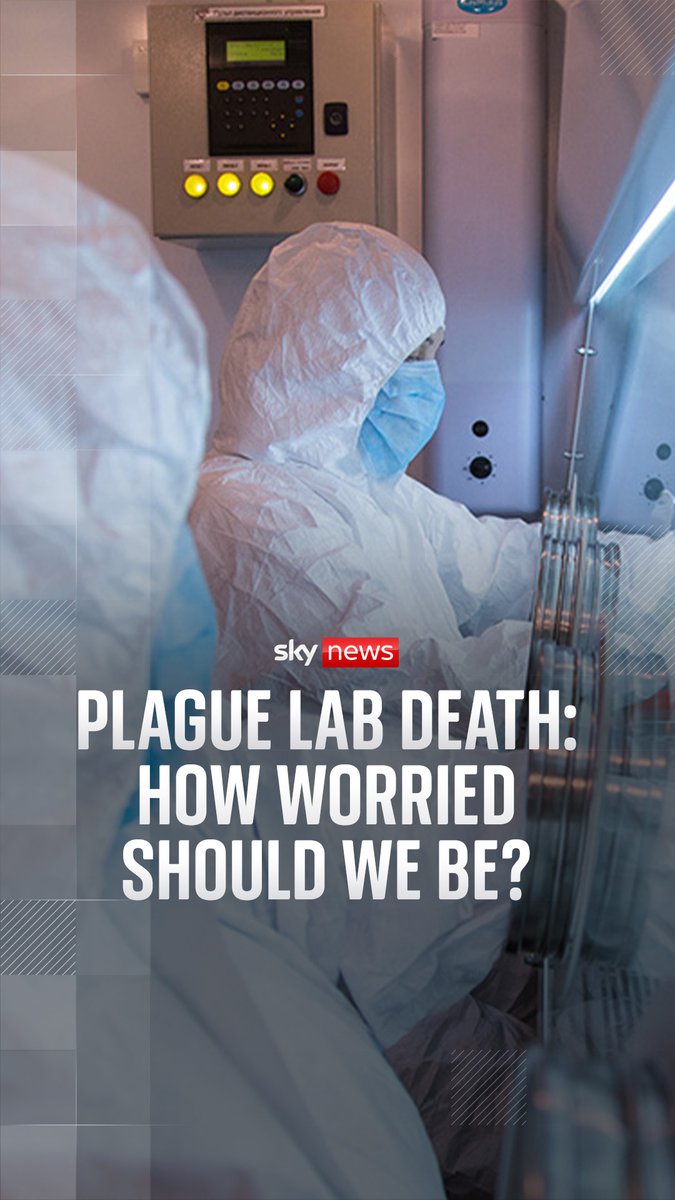
🇷🇺 A Russian lab worker is dead from a suspected plague case in Siberia, and Moscow still hasn't released the test results that would settle it A 28-year-old technician at a plague lab in Siberia died of a fast-moving pneumonia, and about 200 people were quarantined, yet Russia still...

206,898 görüntüleme • 1 gün önce •via X (Twitter)

7 Yorum

Rio profil fotoğrafı
Rio1 gün önce

Hmm, if they can ID a pathogen in hours, why the silence? That part bugs me

NatsarimTheWatchman profil fotoğrafı
NatsarimTheWatchman1 gün önce

Actually there are other cases reported but they are being sequestered by the Kremlin

psalm_blaq. SALMONCALLS 📈 profil fotoğrafı
psalm_blaq. SALMONCALLS 📈1 gün önce

Sarcastic much? Totally normal to lose a lab worker and just skip the paperwork 🤣

Chem Chem profil fotoğrafı
Chem Chem1 gün önce

Honestly 200 people quarantined tells me somebody was worried. Quiet and quarantined don't really go together

🕵️‍♀️Thinkologist 💎✨💫✨ profil fotoğrafı
🕵️‍♀️Thinkologist 💎✨💫✨1 gün önce

Losing credibility rapidly with Malone. Everyone knows he’s a simp who cashed in on covid

Big Bull profil fotoğrafı
Big Bull1 gün önce

A plague lab worker dies of fast-moving pneumonia in Siberia with 200 people in quarantine. And Moscow is somehow still deciding whether the test results are classified, casual, or inconvenient.

syam.eth 🧠 profil fotoğrafı
syam.eth 🧠1 gün önce

Release the sequence

Benzer Videolar

🇷🇺 The Russia plague story is serious, but the internet may be getting way ahead of the evidence. Robert Malone has looked closely at reports of a possible pneumonic plague incident near Irkutsk. And his first conclusion is important: “Calling it an outbreak at this point is a little premature.” According to the information Malone reviewed, a laboratory worker in her twenties appears to have been accidentally infected while working with Yersinia pestis, the bacterium that causes plague. She later died after several days in medical care, potentially exposing others. Malone says roughly 200 hospital workers have reportedly been quarantined. That sounds terrifying. But he thinks the evidence currently points much more strongly toward a laboratory accident than a biological weapons event. There are still things he wants explained. Was the researcher vaccinated? Why did someone known to work with plague not receive appropriate antibiotics sooner? And most importantly, what does sequencing show about the strain? “The honest truth is, no, we don't” know whether it was natural or engineered, Malone says. He says the U.S. State Department is seeking more information from Russia and has not yet received a response. But Malone also sees something reassuring. So far, he says Russia appears to be doing what should happen after a suspected exposure: contact tracing, quarantine and containment. He sees no evidence yet of coordinated suppression or disinformation that would make him substantially more suspicious. Plague is also treatable with antibiotics and considerably harder to transmit than the word itself tends to suggest. So Malone’s message is basically the opposite of the internet’s instinct whenever Russia, laboratory and plague appear in the same sentence: Watch it carefully. But don’t manufacture the apocalypse before the evidence arrives. “The biggest thing you have to fear is fear itself at this moment. It's not pneumonic plague.” Robert W Malone, MD

Mario Nawfal

307,866 görüntüleme • 4 gün önce

🚨IN RUSSIA, A PLANE INTO MOSCOW IS HELD FOR A TEMPERATURE CHECK — THE CAPTION SAYS PLAGUE, THE SCREENS SAY BANGKOK, THE LAB SAYS PNEUMONIA OF UNKNOWN CAUSE, AND ST PETERSBURG IS NOT LOCKING DOWN The clip is a cabin. Passengers still in their seats. A man in a yellow vest and a mask walks the aisle with a camera. The Russian text says the check is on arrival in Moscow. The seat-back screens say welcome to Moscow. The passenger says they are not being let off, that temperatures will be taken, that these are the health authorities. That is what is on the frames. The caption says a pneumonic plague outbreak. Masks. Infrared thermometers. “It is happening again.” The frames do not show a diagnosis. Trackers put the aircraft as Aeroflot SU273, Bangkok to Moscow Sheremetyevo, on the ground on 5 October. Thailand has been reporting rises in flu, COVID and dengue. A temperature check on a flight out of Bangkok is a border rule. The death the posts weld to this cabin is a different city. Irkutsk is in Siberia, thousands of kilometres east. Darya Shipilova, 28, worked at the anti-plague institute. She went into hospital in Shelekhov on 29 September. She died on the night of 1–2 October. Rospotrebnadzor calls it pneumonia of unknown cause. No germ tied to her work was found. No lab accident was recorded. Her contacts showed two cases of COVID and two of a cold virus. No plague. The governor says they are under watch and not ill. The Kremlin says read that line and ignore the rumours. The other version is a report, not a diagnosis. Outlets say a test tube broke. The head of neighbouring Buryatia wrote plague, then edited it to “possibly.” About 200 contacts were held. The Shelekhov hospital stopped admissions. A “do not travel” post was published and deleted. That is a local hold around one death. It is not an outbreak, and it is not this plane. St Petersburg does not lock down on 6 October. No order exists. On 1 October it cancelled the last COVID rules. Kazakhstan raised checks on its Russian border and rates the risk low. Kyrgyzstan and Uzbekistan raised checkpoint alerts. They do not border Russia. The caption made the outbreak. The screens made the route. If the check in Moscow is for Bangkok, who is the plague line for?

Slavic Networks

32,831 görüntüleme • 3 gün önce