Загрузка видео...

Не удалось загрузить видео

На главную

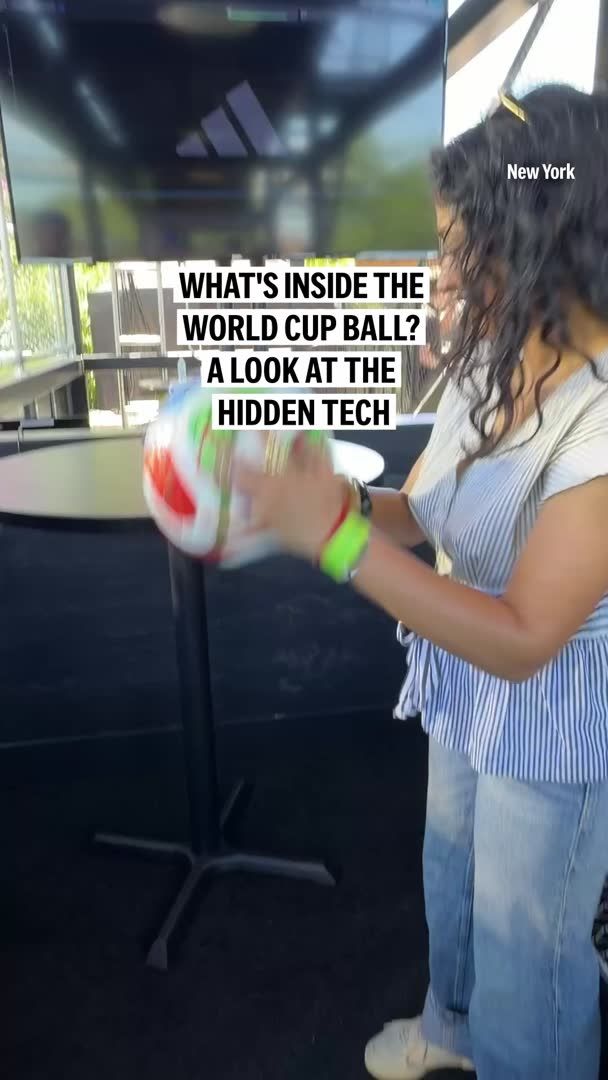
A small chip inside this year’s World Cup match ball is helping referees make faster and more accurate calls. The sensor tracks the ball’s movement 500 times per second, capturing every touch and movement in real time. This gives officials more precise data to review during key moments of...

63,310 просмотров • 29 дней назад •via X (Twitter)

Комментарии: 0

Нет доступных комментариев

Здесь появятся комментарии из оригинального поста

Похожие видео

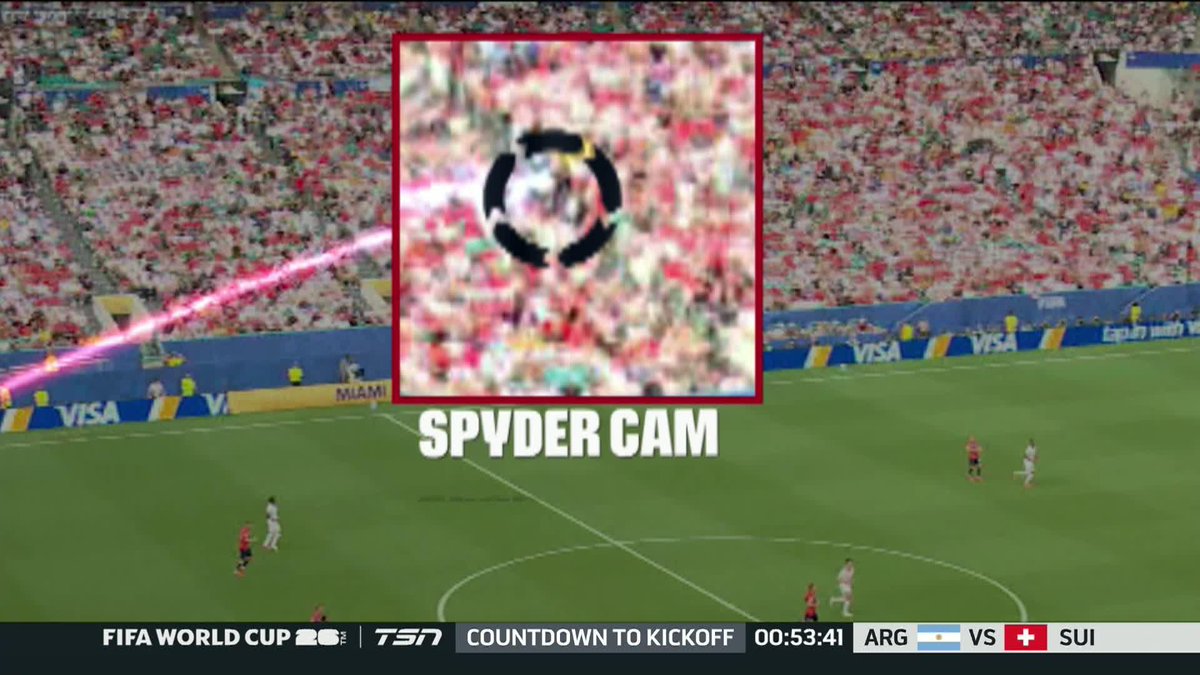
The 3D data from FIFA's cameras around the stadium seem to contradict FIFA's official statement that the ball never made contact with the camera cable in Norway vs England. FIFA has 16 dedicated high resolution optical cameras positioned around every World Cup stadium to capture player and ball movements throughout the match. They use these to create the precise 3D renderings of gameplay which are used in-game for things like offsides graphics and then also used by broadcasters to create programming visuals. In this rendering, you can see the ball "hitch" in the air at the moment it supposedly contacted the cable. Now that by itself is interesting, but the part that really convinces me is the behavior of the English player that comes up to play the ball. This is especially clear in the second wide-angle shot. Watch his angle on the ball. Watch what angle he takes before the ball hitches in the air and then after. He clearly has to adjust his angle to play the ball...and suspiciously, that adjustment happens right after it takes that hitch and appears to change trajectory. To me, this is fairly compelling evidence that the ball hit the cable. This brings up a very interesting point though...this comes from FIFA's data. They would have had access to this in their analysis of the event. Which begs the question...why would they release some statement claiming no evidence of the ball contacting the cable existed when their own data seems to suggest that it did? Just adds to the mounting list of procedural questions that have really overshadowed the actual gameplay of this World Cup.

Mark Valorian

149,375 просмотров • 1 месяц назад

🚨 Regarding Croatia's disallowed goal, this "super slow-motion" replay shows that the ball was indeed almost certainly touched by Matanović—at the very least, a graze of the hair. We can obviously question the "spirit" of how the rules are applied here, but since technology allows us to detect even the slightest micro-touch of the ball, we might as well use it. 🤯 HOWEVER, the main aspect of this decision to analyze is the subsequent header deflection by Veiga. Indeed, two questions arise here (in relation to the Laws of the Game): - Was it a "deliberate play" on his part or not ? If it is deliberate, he plays the Croatian player behind him onside. If it is not, offside should be called. - Was it a save ? (i.e., "preventing or attempting to prevent the ball from going into or very close to the goal"). If it is a save, then offside must be called. According to the Laws of the Game: "The following criteria should be used, as appropriate, as indicators that a player had control of the ball and, as a result, can be considered to have 'deliberately played' the ball: - The ball had travelled from distance and the player had a clear view of it; - The ball was not moving quickly; - The direction of the ball was not unexpected; - The player had time to coordinate their body movement, i.e. it was not a case of instinctive stretching or jumping, or a movement that achieved limited contact/control; - A ball on the ground is much easier to play than a ball in the air." We are therefore in the realm of pure referee interpretation. While waiting for our referees' analysis, my personal view is that the ball's trajectory was absolutely not altered by Matanović's "hair". Therefore, Veiga made a deliberate play, as he had time to coordinate his movement to head the ball. Furthermore, since the ball was not heading towards the goal, it cannot be considered a save. Consequently, he would have played the Croatian player behind him (Pašalić) onside. HNS Portugal #WC2026 #Refereeing

Check VAR World Cup

74,430 просмотров • 1 месяц назад

Giving Rodri the World Cup Golden Ball over Messi wasn’t deserved — One of the most baffling decisions I've ever witnessed at a World Cup. Rodri is the heartbeat of Spain’s system, no doubt about it. But you can’t hand him the tournament’s best player award based mainly on his performances in the semifinal and final. Many people debated the controversies surrounding Argentina throughout this World Cup, but FIFA's decision to give the Golden Ball to Rodri instead of Lionel Messi was beyond belief. Messi deserved every individual award this tournament had to offer. He delivered world-class performances in every match for Argentina. If the Golden Ball isn't awarded to the best player of the tournament, then what is its purpose? Players give everything on the pitch to earn that recognition. Rodri is an outstanding footballer, but based on this World Cup alone, there is no comparison between him and Messi. The statistics speak for themselves. The performances speak for themselves. That's why this is one of the most baffling decisions I've ever witnessed at a World Cup. There’s also a huge difference in the strength of the two national teams, yet that wasn’t properly taken into account. Neither was individual performance. This isn’t about statistics alone. Rodri is incredibly important and influential to his team. Messi is just as essential—arguably even more so. Not simply because of goals or assists, but because of everything he means to his team. Both are the heart of their sides, but Messi had the added edge of consistently deciding games. Since the award ultimately went to a player from the finalists, the comparison is straightforward. I honestly don’t know what they were thinking by giving it to Rodri. For me, Lionel Messi deserved the World Cup Golden Ball without a second thought.

🅱🅸🅲🅷⚽️🆈

15,044 просмотров • 22 дней назад