正在加载视频...

视频加载失败

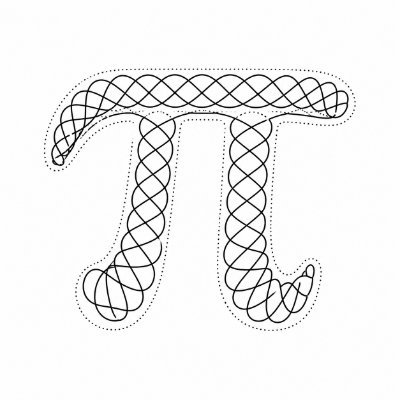
A square wave jumps between two values and stays flat. Fourier showed it is built from sine waves alone: add the odd harmonics 3, 5, 7 and so on, each one that many times faster and that many times smaller. Every circle here is one harmonic and the last...

11,179 次观看 • 13 天前 •via X (Twitter)

3 条评论

Sid the Argent 的头像
Sid the Argent13 天前

The slice is not the object nor the true objective motion.

Devil Anse Hatfield 的头像
Devil Anse Hatfield13 天前

Tremolo

AftCowl 的头像
AftCowl13 天前

diodes

相关视频

In this incredible demonstration from the Maritime Technical and Safety Institute in Japan, a large wave tank uses many synchronized wave-generating devices to create visible symbols and patterns on the surface of the water. Each paddle produces a small wave, but when many waves are emitted at specific timings, amplitudes, and phases, they begin to overlap. Where the wave crests reinforce one another, the water rises. Where a crest meets a trough, the motion cancels out. This is called interference, and it is one of the most fundamental principles of wave physics. By controlling the phase relationship between many individual wave sources, researchers can shape the surface of the water into temporary patterns, symbols, and directional flows. In other words, the visible image is not “drawn” onto the water. It emerges from the mathematics of waves interacting with one another. This is the same underlying principle behind acoustics, cymatics, ocean modeling, signal processing, holography, and even the way complex field patterns arise throughout nature. A single wave carries motion, but many waves, when organized in relationship, create structure. This is why water is such a powerful medium for understanding resonance. It makes invisible dynamics visible and shows us that form can emerge from rhythm, timing, frequency, and relational coherence. At a deeper level, this demonstration reveals something profound about reality itself… Patterns appear when many small movements become synchronized enough to behave as one field. The ocean, sound, light, and even the nervous system all do this, because life is vibrational in nature… Did this expand your perception?

🧬Maxpein🧬

31,782 次观看 • 6 个月前

Discrete Fourier Transform by hand ✍️ ~ 12 steps walkthrough below Here is a little-known secret about the DFT and the inverse DFT: it is just matrix multiplication in both directions, one the transpose of the other, exactly like the forward pass and backpropagation I drew in other examples. Goal: recover which cosine waves a signal is made of, using nothing but multiplication and addition. = 1. Given = Three signals written as sums of cosines, and a fourth, X, that we do not know yet. = 2. Frequency matrix F = Let us write the coefficients as a matrix. Each signal is a row, each frequency a column, so A = cos(w) + 2cos(2w) becomes [1, 2, 0, 0]. = 3. Sample the waves = We read the four cosine waves at ten discrete time points. That word "discrete" is the whole difference between this and the continuous transform. = 4. Cosine matrix W = Let us write those samples as a matrix: each frequency a row, each time point a column. = 5. Frequency to time = We multiply F by W. That combines the four cosine waves in the proportions F specifies, and the result T is the three signals as they would look in time. = 6. Transpose = Let us stand each signal up as a column. = 7. Time to frequency = We multiply W by that transpose. Every cell is the dot product of one signal with one cosine wave, which measures how much of that wave the signal contains. Zero means none of it. = 8. Scale = Let us multiply by 2/n, with n = 10. The projections come out five times too large, and this is the correction. = 9. Transpose back = We turn it back around, and it is F again, exactly. That is the check: the transform recovered the coefficients we started from. = 10. Now solve for X = Let us run the same multiplication on the one signal whose recipe we never knew. = 11. Scale = We divide by 5 again. = 12. Transpose back = And X reads [0, 0, 3, 2], which says X = 3cos(3w) + 2cos(4w). Note: I originally drew this to show that the DFT is a special case of a convolution layer, its filters fixed to sine and cosine waves rather than learned. No wonder, then, that a convolution layer free to learn its own filters can be trained to process signals. 💾 Save this post!

Tom Yeh

25,684 次观看 • 3 个月前

Discrete Fourier Transform by hand ✍️ ~ 12 steps walkthrough below Here is a little-known secret about the DFT and the inverse DFT: it is just matrix multiplication in both directions, one the transpose of the other, exactly like the forward pass and backpropagation I drew in other examples. Goal: recover which cosine waves a signal is made of, using nothing but multiplication and addition. = 1. Given = Three signals written as sums of cosines, and a fourth, X, that we do not know yet. = 2. Frequency matrix F = Let us write the coefficients as a matrix. Each signal is a row, each frequency a column, so A = cos(w) + 2cos(2w) becomes [1, 2, 0, 0]. = 3. Sample the waves = We read the four cosine waves at ten discrete time points. That word "discrete" is the whole difference between this and the continuous transform. = 4. Cosine matrix W = Let us write those samples as a matrix: each frequency a row, each time point a column. = 5. Frequency to time = We multiply F by W. That combines the four cosine waves in the proportions F specifies, and the result T is the three signals as they would look in time. = 6. Transpose = Let us stand each signal up as a column. = 7. Time to frequency = We multiply W by that transpose. Every cell is the dot product of one signal with one cosine wave, which measures how much of that wave the signal contains. Zero means none of it. = 8. Scale = Let us multiply by 2/n, with n = 10. The projections come out five times too large, and this is the correction. = 9. Transpose back = We turn it back around, and it is F again, exactly. That is the check: the transform recovered the coefficients we started from. = 10. Now solve for X = Let us run the same multiplication on the one signal whose recipe we never knew. = 11. Scale = We divide by 5 again. = 12. Transpose back = And X reads [0, 0, 3, 2], which says X = 3cos(3w) + 2cos(4w). Note: I originally drew this to show that the DFT is a special case of a convolution layer, its filters fixed to sine and cosine waves rather than learned. No wonder, then, that a convolution layer free to learn its own filters can be trained to process signals. 💾 Save this post!

Tom Yeh

13,644 次观看 • 2 个月前