Video yükleniyor...

Video Yüklenemedi

Ana Sayfaya Dön

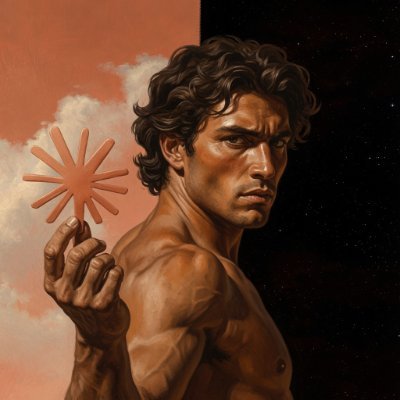
A STANFORD GUY POINTED CLAUDE CODE AT 11,400 OBSIDIAN NOTES AND FOUND 214 ARGUMENTS HE'D HAD WITH HIMSELF 7 years of notes, 340MB of markdown, and a graph view that looked like a brain but never once thought. Every Sunday he opened the vault and every Sunday he closed...

18,386 görüntüleme • 1 ay önce •via X (Twitter)

0 Yorum

Yorum bulunmuyor

Orijinal gönderinin yorumları burada görünecek

Benzer Videolar

An OpenAI engineer stopped me at a hackathon in Hayes Valley I had my terminal open on a table. Three panels. Live trades scrolling. He was walking past and froze. "That's not a demo. That's a live scoring engine. What model is that" I told him. Claude Opus 4.7. Four repos. $25 a month. He pulled up a chair without asking. "We benchmarked Opus 4.7 internally. It beat o3 on structured reasoning across every eval we ran. And you're telling me you're using it to trade" I told him it does more than trade. It reads 86 million trades and finds who wins and why. No fine-tuning. No prompting chains. Just raw context. He leaned back. "Show me the data source" I opened one link. 86 million trades. Every wallet. Every entry. Every exit. "You point Opus 4.7 at this and it reverse-engineers the strategy. It finds the wallets that win. Then it finds why they win. Then it copies the pattern" His team spent 14 months building something similar. 10 engineers. Custom infra. Still in staging. "The part that killed us was exit timing. Every model we trained nailed entries. But the best traders exit before the crowd. We never figured out the threshold" I told him my bot cuts at 85% of expected move. Or on a 3x volume spike. Whichever comes first. He stopped talking. "How did you find that" Opus 4.7 found it in poly_data. Top wallets exit before resolution 86% of the time. Losers hold to 58%. Exits are the entire game. I opened another tab. "Three commands. 500 markets. Opus scores them in 20 minutes" "That's our internal eval pipeline. Except it took us a year and you did it in a weekend with our competitor's model" My setup: Claude Opus 4.7 - $20/mo VPS - $5/mo poly_data - free polymarket-cli - free 214 trades. 74% win rate. +$9,400 in 19 days. Copytrade here: I showed him the article where I broke down every repo and every command. He read it twice. Then looked up. "You just published what we've been trying to ship for six months. Using the other team's model" He texted me the next day. "My manager found your thread. Delete it" Too late.

Lunar

136,719 görüntüleme • 5 ay önce

1 Neural Network + Obsidian + Karpathy’s 1-file method = the most unhinged second brain build of 2026. It remembers everything you’ve ever done, and it costs $0 on top of what you already pay. The base is Karpathy’s append and review: 1 giant note, new thoughts stack on top, old ones sink, every few days you reread and pull the survivors back up. No folders, no tags, no plugins the rereading IS the system, because review is what turns storage into thinking. The flaw: past 10,000 lines, no human rereads anything. That’s where the neural network takes over. You keep the note in Obsidian 1 vault, everything dumps to the top: ideas, links, meeting fragments, half-thoughts. You never organize, you only dump. It all lives as plain markdown on your own disk, and that detail is the whole trick. Because now you point Claude Code at the vault folder, and it reads every line you’ve ever written. “What did I think about pricing in March.” “Find the 3 ideas I keep circling.” “What did I drop that deserves a second look.” It answers from YOUR notes, with quotes, in 15 seconds. Then once a week, 1 prompt closes the loop: read the last 7 days, surface the 5 entries worth pulling back up, flag anything that contradicts what I wrote a month ago. The model does the sinking and surfacing Karpathy did by hand, and the note stays alive instead of turning into a graveyard. Week 1 feels like nothing. Week 4 you hit the first “I already solved this in January.” Month 3 you consult your past self more than Google. Most second brains die in 11 days under 40 plugins and 200 folders. This one is 1 file and a loop, and it compounds because dumping takes 0 discipline. Notion stores what you thought. This thing argues back.

West Lord

24,679 görüntüleme • 2 ay önce

Winston had been returned to the shelter three times before the Abbotts came for him. He was an old shar-pei, all wrinkles and gray whiskers, about 11 years old. Every family that took him home brought him back within a month. He was too old, too slow, and too set in his ways for most people. One family even said he was depressing to have around. By the time the Abbotts saw his photo online, the shelter staff had almost given up hope that anyone would choose him. Ray and Carol Abbott were in their late 60s and had just lost their own dog after 14 years together. Friends told them to get a puppy. Something young. Something with plenty of years ahead. Instead, they drove an hour to meet the old shar-pei nobody wanted. Carol says she knew the moment she saw him sitting quietly in the back of his kennel. That first night, Winston couldn't settle. He kept getting up to make sure Ray and Carol were still there. He'd walk to the bedroom, look at them sleeping, lie back down, then twenty minutes later he'd do it all again, as if he was waiting for someone to tell him it was over. Finally, Carol patted the foot of the bed. "Come on up, Winston. You're home now." He stood there for a long moment, almost like he couldn't believe she was talking to him. Then he climbed up slowly, turned around twice, and eased himself down against Ray's legs with a long groan that sounded more like relief than exhaustion. For the first time in months, Winston slept through the entire night. The Abbotts say he isn't going anywhere this time. And after being returned three times, Winston finally seems to believe them. Have you ever seen a dog realize it was finally home?

Gabriele Corno

37,073 görüntüleme • 2 ay önce

MY GROK BOT / OBSIDIAN MESH SYNCS 20 AGENTS ACROSS A LIVE KNOWLEDGE GRAPH. NOT ONE OF THEM REPORTS TO ME. I FIXED THAT BY HIRING A 21ST BOT WHO DOES NOTHING BUT ROUTE. i watched the mesh light up this morning. vector, canvas, oracle, extract, all 20 of them syncing notes. writing backlinks, healthy status, 190 edges active. it looked like a team. it was a graph. a graph has no chain of command, it just has connections. i had been treating 20 well-wired agents as oversight. they were routing information, not decisions. nobody in that mesh could tell me what mattered first. so i hired one more bot and gave him a different job. not indexing notes, holding the account. 1. Reports-to line in the charter › names me as the human above him, closes the drift where a bot starts acting like the principal instead of the agent. 2. no source, no number › if he can't cite where a figure came from, he leaves it out. the 20-agent mesh never needed this line. › Chief can't run without it. 3. stop list written as verbs › "sending anything to a person" instead of "communications." a verb he can match, not a category he can talk around. 4. Rule 6, approval belongs to the human › he never signs off on another bot's irreversible action, only i do. the mesh has no equivalent rule. › it was never built to approve anything, only to sync. 5. STOP ALL, the kill switch › one message halts every routine and every task he's running, reports what was in flight, and waits. the mesh will keep syncing whether i watch it or not. Chief is the only bot in the account who stops the second i tell him to. that's the difference between a graph that moves information and a bot that's actually accountable for it.

kocer

21,984 görüntüleme • 29 gün önce

Sold 32 coins. Bought 1,550. 48 times more, at a 15% discount, into the crash the market blamed on the sale. Strategy disclosed today that while everyone panicked over its $2.5 million Bitcoin sale, it was quietly buying the dip that panic created. 1,550 Bitcoin for $101 million, at $65,332 a coin, far below the $77,135 it sold for and below its own cost basis. The bears called the sale the first crack, a forced liquidation, the start of the death spiral. The answer was a buy 48 times the size of the sale that scared them. This is the machine we described: a state-contingent allocator. Above its funding line, it turns market access into Bitcoin. The sale was the exception. The buy is the rule. It also closed the question the sale opened. The cash reserve behind the preferred dividends had thinned to $900 million, about six months of cover. He rebuilt it to $1 billion in the same week. But watch how, because that is the real story. He funded none of it with coins. He funded it with $181 million of freshly issued stock, then spent it on Bitcoin and the reserve. The coins were never the funding source. The equity is. That is the flywheel working exactly as built, and the cost of it surfacing at the same time. Every turn now runs on issuing shares, and the premium that once made each share buy more Bitcoin than it diluted has compressed hard. He bought low. He sold his own stock low to do it. So the question quietly turns. It was never whether Saylor sells his Bitcoin. He just proved again that he buys far more than he sells. It is what each turn of the engine now costs in dilution, and how long the market keeps paying a premium worth that cost. He bought the dip. The dip was partly his own making. And he paid for it in equity, not coins.

Shanaka Anslem Perera ⚡

142,587 görüntüleme • 4 ay önce

Elon Musk gave the entire entertainment industry its expiration date, and he is the one building the thing that kills it. Musk: “My guess is that we see the first compelling half hour, pure AI show next year.” Next year. A complete show generated entirely by AI. No writers. No actors. No cameras. No sets. No crew. No studio. Just a prompt and enough compute to render a reality that never physically existed. And shows are the easy part. Musk: “I say probably we’re maybe three years away from AI does the whole video game.” A show plays the same way every time. A game has to generate a living world that reacts to every decision in real time across every single frame. That is a fundamentally harder class of problem. And Musk put three years on it. Right now a single AAA title takes seven years and half a billion dollars across thousands of engineers and artists just to ship it. Musk is describing a world where one person types a paragraph and gets something comparable. The entire value proposition of a multi-billion dollar industry lives inside that gap. And it closes in thirty-six months. But the prediction is not the story. The person making it is. This is not an analyst speculating from the sidelines. This is the man building the largest AI compute clusters on the planet. The man who built xAI from zero in under two years. The man stacking hundreds of thousands of GPUs into facilities designed to do exactly what he is describing. When Musk says three years, he is not guessing about what someone else might eventually ship. He is reading you a delivery date off his own roadmap. Every media company on Earth is valued on a single assumption. That quality content is expensive and difficult to produce at scale. That one assumption is the structural foundation underneath every studio, every network, and every publisher in existence. Musk is dismantling it with raw compute. The studios still parading thousand-person production teams are not demonstrating strength. They are advertising the exact cost structure that one person with a prompt and a GPU allocation is about to make irrelevant. And it does not stop at entertainment. If AI can generate an interactive world that responds to human input in real time, it can generate anything. Advertising. Architecture. Training simulations. Product design. Every industry built on humans manually constructing visual experiences frame by frame is sitting on the same countdown Musk just read out loud. Now zoom out. Because this is not just an industry story. For the entire history of human civilization, the distance between imagining a world and actually creating one required thousands of people, millions of hours, and billions of dollars. That distance built Hollywood. That distance built the gaming industry. That distance made content scarce and studios powerful. Musk is collapsing that distance to zero. When the gap between imagining something and it existing disappears, every business model built on the difficulty of creation disappears with it. That is not disruption. That is a full inversion of how human beings create. Musk did not make a casual prediction on that podcast. He told you what he is building. He told you the timeline. And he told you which industries do not survive it. The entertainment industry is still debating whether this future is real. Musk is not part of that debate. He is building. And he just told you the delivery date.

Dustin

22,458 görüntüleme • 2 ay önce