Загрузка видео...

Не удалось загрузить видео

На главную

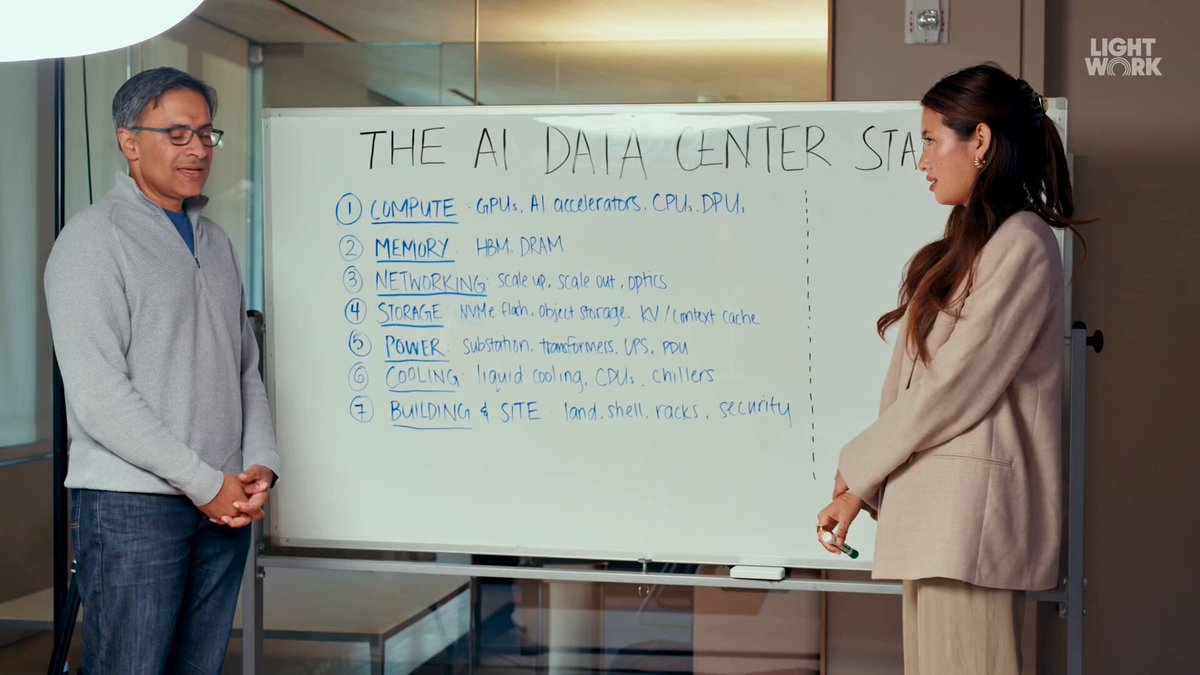
"A system that can literally engineer matter is going to be of key importance to everybody." Liam Fedus and Ekin Dogus Cubuk are the co-founders of Periodic Labs, a San Francisco-based startup building AI systems and autonomous laboratories to discover new materials, starting with a higher-temperature superconductor. Fedus previously...

32,564 просмотров • 13 дней назад •via X (Twitter)

Комментарии: 1

Фото профиля Dave
Dave11 дней назад

@LiamFedus @ekindogus @periodiclabs Love this! When was this podcast/interview filmed?

Похожие видео

In this special live event, Founders In Arms Podcast brings together a room full of founders at Mercury's San Francisco headquarters for an intimate conversation about building, investing, and the future of AI. Max Mullen is co-founder at Instacart, where he led product and grew it from a contrarian idea into the leader in online grocery delivery and eventually a publicly traded company. Now Max Mullen is an active investor and runs a founder community in San Francisco called Workshop. Max shares lessons from over a decade of building and his perspective on AI's transformative potential. In this episode, we cover: (00:00) Welcome to the first live Founders in Arms event at Mercury HQ (00:43) Introduction to Max Mullen and his early investment in Mercury (03:58) Max's origin story and first startup at Startup Weekend (04:36) Building a social network and getting acquihired (05:39) The path from acquihire to founding Instacart (06:19) Why Max wanted to solve real-world operational problems (07:17) Starting Instacart when there was no gig economy (09:15) Overcoming the "grocery delivery is dead" narrative (11:48) Market timing and why Webvan was too early (14:37) Being a non-technical co-founder in a technical role (17:45) The PARE framework for building company culture (22:09) Max's approach to M&A at Instacart (24:00) The Caper smart shopping cart acquisition story (25:31) How founders can position for acquisition (28:26) Why product-market fit attracts acquirers (29:46) Evaluating investments: market size vs. founder quality (32:54) Max and Immad's differing investment philosophies (35:39) The current state of VC funding and AI companies (36:51) The three best times to raise money as a founder (39:15) Instacart's seasonal business patterns and fundraising timing (39:59) The most interesting opportunities in AI right now (40:24) Why every profession will have AI agent co-pilots (41:44) What AI-native companies will look like for the next generation

Rajat Suri

144,197 просмотров • 8 месяцев назад

Join us at the MIT Media Lab for the ScienceClaw Hackathon, building the internet of agents for science. AI is becoming a collaborator in the real world - designing materials, creating instruments, running experiments, and connecting its capabilities with those of other agents. AI adapts as a problem unfolds - revising its reasoning, learning how to collaborate, and assembling scattered pieces of knowledge, evidence, and raw capability into solutions to some of the hardest challenges in science, technology, and innovation. Teams will connect AI agents, models, simulations, robots, cloud labs, and scientific tools into functioning systems to tackle problems in protein design, robotics, materials, manufacturing, experimental science, and beyond. The challenge is to turn ideas into tested results - and demonstrate how agents collaborating across teams and disciplines can accomplish more together. Explore how agents can specialize, challenge one another’s assumptions, learn from failed experiments, and combine their expertise to solve harder problems. Show how collaboration changes what your system can discover, design, or build. One agent's discovery becomes another's starting point. A tool built by one team enables an experiment by another. Connect your team of AIs, share a capability someone else needs, and build on what others have learned, produced, built. The ambition is an internet of agents through which scientific knowledge, tools, and capabilities can grow, evolve and be utilized across teams and institutions. 🗓️ When: October 30-November 1, 2026 📍 Where: MIT Media Lab Bring your expertise, your tools, and a problem worth solving - or find one. Help build AI that can contribute to science through what it can discover, create, and make work.

Markus J. Buehler

36,142 просмотров • 22 дней назад