Video wird geladen...

Video konnte nicht geladen werden

Zur Startseite

💳 A transaction hash proves that value moved. But commerce needs more. 🧾 📦 Order records. 🧾 Receipt data. 🔄 Refund status. 💰 Settlement history. ✅ Merchant verification. 🛠️ KONET is building toward a Proof-of-Commerce layer for on-chain payment infrastructure. Because payments need context. 🔍 #KONET #ProofOfCommerce #OnchainData

38,363 Aufrufe • vor 1 Monat •via X (Twitter)

0 Kommentare

Keine Kommentare verfügbar

Kommentare vom Original-Post werden hier angezeigt

Ähnliche Videos

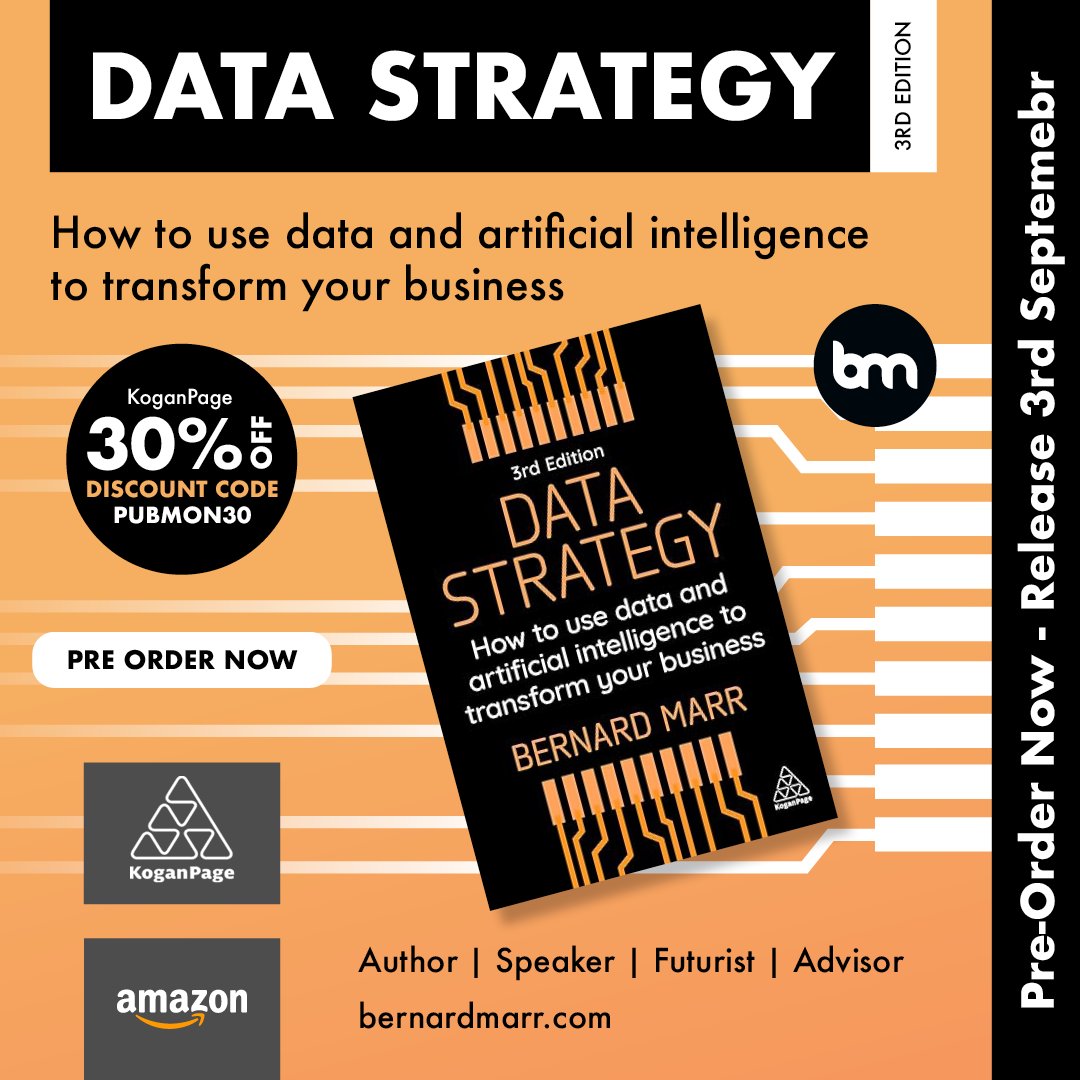
🚀 My New Book is Here: Data Strategy (3rd Edition) 🚀 I’m thrilled to share the release of my latest bestselling book, Data Strategy: How to Use Data and Artificial Intelligence to Transform Your Business. Every business today needs data to survive - but simply having data is not enough. What matters is how you use it. A well-designed data strategy is the key to unlocking value, driving insights, and giving your organisation the competitive edge it needs to thrive in the digital economy. From small organisations to global enterprises, I’ve seen first-hand how a data-driven approach can transform operations, improve decision-making, and unlock entirely new opportunities. That’s why I’ve poured my experience into this book — to help leaders and teams build strategies that don’t just talk about data, but actually deliver measurable impact. 🔍 In this third edition, I’ve expanded the book to reflect the latest developments in data and AI, including: ✅ Generative AI and its role in shaping business innovation. ✅ Synthetic data and how it can accelerate AI adoption. ✅ The potential of quantum computing and what it means for the future of data. ✅ Expanded guidance on cybersecurity, regulations, and ethics in a data-driven world. This isn’t just a theoretical framework - it’s a practical guide to collecting, managing, and using data effectively in order to drive growth, innovation, and long-term success. Whether you’re leading a start-up or a multinational, Data Strategy will equip you with the tools you need to stay ahead in a rapidly evolving landscape. 📖 Pre-order your copy today: 👉 Amazon - 👉 Kogan Page - I can’t wait to hear how this book helps you craft your own data-driven strategy and transform your business for the future.

Bernard Marr

10,980 Aufrufe • vor 11 Monaten

In 2025, demand for blockchain applications with genuine real-world utility has collided with a technical barrier that leaves developers questioning what they can realistically build. Anyone building things like tokenized assets, supply chains, AI agents, or prediction markets still juggle a mess of middleware, and somehow end up spending more time stitching than innovating. How so? Every: - Bridges to move assets, - oracles to fetch data, - indexers to make that data searchable, - relayers and bots to keep everything on schedule— is necessary, but each layer also adds cost, latency, and new risks. The end result is an application that’s expensive to run, fragile under stress, and slower than the Web2 software it’s trying to replace. This is the problem Rialo says it wants to solve. Built by Subzero Labs and backed by $20 million from investors like Pantera Capital and Coinbase Ventures 🛡️, Rialo’s pitch is simple: instead of accepting the middleware tower as an unavoidable cost of doing business, compress it into the base chain itself. But Rialo doesn’t describe itself as another Layer 1, its very name, Rialo Isn’t a Layer One, makes that clear. The team frames it instead as a unified real-world network: a protocol rebuilt from the ground up with the assumption that external connectivity is not an afterthought but a core design principle. To understand what this means, consider how today’s dApps are typically assembled. A typical RWA dApp stack involves: - Oracle providers (Chainlink, Pyth, Band) for asset pricing and event settlement - Bridges (Wormhole, Multichain, custodians) for cross-chain asset movement - Indexers (The Graph, Aleph, Stacks API) for querying and preprocessing chain data - Schedulers/relayers for automated tasks and monitoring - Web2 integrations via cloud services, centralized APIs, and off-chain pipelines Each of these steps adds another vendor, another trust boundary, and another operational layer to monitor. By the time the application is live, it resembles a patchwork of loosely coupled services, each carrying its own risks. You don’t have to look far for proof: - Base went dark for 29-43 minutes in August 2025 when its sequencer misfired, freezing every DeFi app on it. - A few months earlier, an AWS outage rippled through Binance and KuCoin, stalling withdrawals because even “decentralized” systems leaned on centralized middleware. - When Infura has faltered, Ethereum dApps have gone offline in sync, not because Ethereum broke, but because the middleware holding it together did. What should feel like building an application instead feels like maintaining a fragile machine. Rialo architecture embeds the primitives that normally live in middleware directly into the protocol. Smart contracts on Rialo can: - be event-driven, able to respond not just to blockchain state changes but also to external events through built-in webhook and API triggers. - fetch data from the web natively, without relying on external oracles or relayers. - include privacy and identity management—KYC hooks and two-factor authentication, at the protocol level rather than as add-ons. - handle cross-chain communication without wrapped assets or third-party bridges. - run on a virtual machine that is compatible with ecosystems like Solana but extended with RISC-V to support modern programming concepts such as async/await and event loops. If these features work as intended, the implications are significant. Today, much of a team’s energy goes into building and maintaining infrastructure: fullnodes, indexers, monitoring scripts, oracle integrations, relayer logic, bridge infrastructure. Each requires engineering headcount and ongoing maintenance. With Rialo, much of this is absorbed by the protocol, freeing developers to concentrate on business logic. Projects can deliver production-grade dApps with smaller, leaner groups focused directly on product design and execution. Operational costs also shrink: indexing and oracle services can run into thousands of dollars a month; collapsing those into built-in functions reduces recurring expenses while simplifying onboarding for new developers. But folding middleware into the chain doesn’t erase complexity, it reshapes it. Some of the problems to be encountered include: - Scale and complexity: Rialo’s validators won’t just be securing transactions; they’ll also be securing APIs, cross-chain data, and scheduled triggers. Any failure in one subsystem could ripple across the entire network. - Performance vs. decentralization: Richer indexing, scheduling, and data ingress could make nodes heavier to run, narrowing who can realistically participate as a validator. That risks reducing the decentralization blockchains depend on for resilience. - Governance pressures: Disputes or failures involving real-world data feeds, external APIs, or cross-chain actions will arise more often, requiring not just technical fixes but robust social infrastructure, clear rules for voting, transparent arbitration, and mechanisms for community trust. Without them, Rialo risks re-centralizing decision-making around a handful of operators. Where, then, does this model make the most sense? That would be in sectors where external connectivity is indispensable and middleware bloat has consistently been a blocker: - Real-world assets: settling tokenized securities or commodities against off-chain events. - Supply chains: triggering a payment the moment a shipment clears customs, without relying on a third-party oracle. - Agent systems: AI agents interacting with real-world APIs and on-chain contracts simultaneously. - Real-time markets: prediction markets or insurance contracts that must resolve immediately against external data. For purely on-chain domains like DeFi primitives or NFTs, where composability matters more than external triggers, the advantages may be less pronounced. This shift is familiar to anyone who remembers the rise of Web2 platform services. Just as Heroku and Firebase abstracted away server maintenance so developers could focus on building products, Rialo is betting that a unified real-world network can let blockchain developers do the same. Adoption will ultimately depend on: - whether its protocol primitives mature quickly, - whether the ecosystem builds out SDKs and tooling that make them usable, - whether compliance features can adapt to changing regulations, - and whether governance proves resilient under adversarial conditions. The first applications will be the test case. If they show that Rialo can replace a fragile patchwork of middleware with a secure, auditable, and cost-effective base layer, it could set a new standard for real-world connectivity in blockchains. If not, it risks simply moving complexity from one part of the stack to another. But at a minimum, Rialo has forced the question: should real-world connectivity in blockchains continue to depend on layers of external vendors, or should it be built into the chain itself? That’s the question Rialo has put on the table — and it’s why I got interested in Rialo .

Jen

12,178 Aufrufe • vor 10 Monaten

Why is the market selling off today? (Save this). The semi selloff right now is being driven by a mix of macro fear, profit taking and investors questioning how quickly all of this AI spending will actually pay off, not because demand for AI infrastructure suddenly disappeared. The market is basically trading this chain reaction, the ongoing US Iran escalation pushes oil higher, higher oil keeps inflation elevated, sticky inflation keeps Treasury yields high and that increases the risk of the Fed staying hawkish or even hiking again. That is a terrible setup for semis because many of these companies are valued on the massive earnings investors expect them to generate years from now. When yields rise, those future earnings become worth less today which is why the highest multiple AI and semiconductor names usually get hit first. (I don't think there will be a hike this year). This is also why everything is moving together right now. Nvidia, Micron, Nebius, SanDisk, Broadcom and Applied Optoelectronics are all completely different businesses, but institutions are not separating memory, networking, optics, compute and cloud infrastructure at the moment. They are reducing exposure to the entire AI trade, taking profits in the names that have already run the most and moving into a more defensive position potentially ahead of the Fed. There is also growing pressure around hyperscaler capex. Microsoft, Meta, Amazon and Google are still spending enormous amounts on GPUs, data centers, networking and power but the market is starting to ask when all of that spending will actually turn into revenue and free cash flow. Investors are no longer satisfied with hearing that AI capex is growing. They want proof that the returns are arriving fast enough to justify the valuations already priced into the entire AI ecosystem. That creates a weird situation where hyperscaler capex can continue rising while semiconductor stocks still fall. The market is not asking whether AI spending is growing anymore but rather asking whether it is growing fast enough to beat the expectations already baked into these stocks. Crowded positioning is another major factor. Semis and AI infrastructure stocks have been some of the biggest winners in the market so institutions are sitting on huge profits and many funds own the exact same names. When macro risk increases, investors usually sell the most liquid winners first. That does not mean demand for memory, optics or custom chips suddenly collapsed but rather means investors are locking in gains and reducing risk. Tariffs add another layer because even when they are not directly placed on chips, they can still raise the cost of servers, electrical equipment, cooling systems, construction materials and the overall data center buildout. That makes AI infrastructure more expensive while also adding another source of inflation. Then you have Jensen Huang’s letter to the White House this morning about open weight AI models, which I think is one of the most important long term developments here. Nvidia, Meta, Microsoft, Palantir and several other companies are pushing Washington not to place broad restrictions on open weight AI. OpenAI and Anthropic were notably absent because open models are much more of a threat to their business models. OpenAI and Anthropic benefit from a world where a few closed frontier labs control the best models and companies have to pay them through subscriptions and APIs. Open weight models weaken that advantage because businesses can download a model, customize it for their own use and run it on their own infrastructure or through a neocloud. That is bad for OpenAI and Anthropic because it puts pressure on pricing, margins and the idea that they will control the intelligence layer of the economy but it is very good for the AI ecosystem as a whole over the long run. But the question is what does this mean for all the OpenAI and Anthropic commitments? so that's adding to the fear as well. But with that being said open models make AI cheaper and more accessible. Instead of AI being controlled by a few giant labs, thousands of startups, universities, governments and regular businesses can deploy models themselves. That spreads AI adoption across the entire economy and creates a much larger infrastructure opportunity and that is exactly why Jensen cares. Nvidia does not need OpenAI or Anthropic to win. Nvidia just needs more people using AI. Whether the model comes from OpenAI, Anthropic, Meta, Mistral, Kimi or some startup nobody has heard of yet, it still needs GPUs, memory, networking, data centers and electricity. So open weight AI could actually weaken the model companies while making the infrastructure layer much bigger. More open models mean more companies running inference. More inference means more GPUs. More GPUs mean more HBM, optical transceivers, switches, data centers and power. That is bullish for Nvidia Nebius, Micron, Broadcom , Marvell and Applied Optoelectronics over the long run. So my take is that the current semi selloff is being driven mostly by macro uncertainty, higher oil, rising yields, Fed fears, tariffs, crowded positioning and questions around the return on hyperscaler capex. The underlying AI infrastructure thesis has not suddenly broken. We are not broadly seeing hyperscalers cancel GPU orders, slash capex, abandon data center projects or report that AI demand has collapsed. What has changed is the valuation investors are willing to pay while the macro environment remains unstable. The market is lowering the price it is willing to pay for semiconductor growth but is not necessarily saying that growth is gone. And while Jensen’s open weight push may be bad for OpenAI and Anthropic, it could be one of the best things possible for the AI ecosystem over the long run because it creates more models, more developers, more competition and ultimately much more demand for the infrastructure underneath all of it. Nothing about the AI thesis has changed for me, so I will be going shopping and taking advantage of this sale while the market is selling everything together. I am an analyst at Milk Road Pro, and if you want to see exactly what I am buying, you can join for just $1 using the link below.

Melvin

179,508 Aufrufe • vor 14 Tagen

TOPIC #106: What Is a “Free Market”? Clarifying the Misconceptions in the Pi Ecosystem I’ve noticed a narrative spreading within parts of the Pi Network community: the idea that Pi’s value in Dapps or ecosystem should fluctuate freely with the exchange market, and that this is what defines a “free market.” They use this "free market" to deny GCV. Let me be clear: this misconception is not only misleading, but it threatens the foundation of the Pi ecosystem we’ve worked so hard to build. It’s time to clarify the truth, not only for our pioneers today but for the economic legacy we’re building for generations to come. What Is a Free Market Really? According to Britannica, a free market is an economic system characterized by minimal government intervention, where prices are determined by the interplay of supply and demand. But even Britannica admits: > “The free market represents a benchmark that does not actually exist… Modern societies only approach this ideal along a spectrum.” — value in relation to In short, a 100% free market is a myth. Every successful economy has rules and frameworks to maintain stability. Without these, markets descend into chaos, not freedom. In Pi Network, “free market” cannot mean price anarchy. And “decentralization” does not mean “do whatever you want.” Let’s break this down: What Pi Network Decentralization Actually Means Pi Network’s decentralization is built on the Stellar Consensus Protocol (SCP) and reflects a healthy distribution of power and particip,ation — not a lack of structure. Key principles of Pi's decentralization: No Single Point of Control No central entity dominates the network. User Participation Pioneers validate transactions and contribute to governance. Resilience The network can survive attacks or failures due to its distributed nature. Censorship Resistance It’s harder for one party to silence or manipulate the system. None of this means that Pi's value can operate in a free market. Any currency must have a fixed value; this is a fundamental concept in economics. Have you ever seen the values of currencies like the USD, CAD, or RMB fluctuate freely based on individual opinions? On the contrary, a fixed value emphasizes the need to protect the economy we are building together. The community-driven GCV illustrates that the value of Pi should derive from its pioneers and merchants, demonstrating the spirit of decentralization. It should not depend on PCT, any government, large corporations, or investors. Furthermore, this structure ensures that no entity can shut down the Pi Network once it becomes fully decentralized, which I believe will occur when it is fully operational and mature. The Danger of Currency Risk: Why Price or Value Chaos Is Destructive In global finance, currency risk refers to the potential loss of value resulting from unstable exchange rates. As the Corporate Finance Institute explains: > “Currency risk refers to the exposure faced by investors or companies operating across different countries due to changes in the value of one currency versus another.” Let’s apply this to Pi. Imagine a Pi Network Dapp marketplace mall merchant collecting a large amount of 10,000 Pi after the Open Mainnet (OM). Customers pay with Pi, but at a value $1. The merchants must know the Pi value because they need to calculate the FIAT cost. Then, when the merchant tries to use that Pi to buy a car, only to be told the accepted rate is $0.1 for one Pi, the merchant total Then, when the merchant tries to use that Pi to buy a car, only to be told the accepted rate is $0.1 for one Pi, the merchant has a total of 10,000 Pi, which is only $1,000, but the cost of investing in products is $9,000 (Sales $10,000 with $1,000 as profit). That’s a massive loss for the merchant $8,000. If you were the merchant, would you feel it was unfair? Will you still support "free market"? Now, imagine the exchange market drops Pi to $0.40. You will lose $5,000. Would you still want to run your business in Pi? Likely not. And neither would other developers or merchants. Unstable value leads to fear. Fear leads to exit. Exit leads to collapse. This is why we must support Global Consensus Value (GCV) — to ensure a unified, trusted economy. Why GCV Exists — and Why $314,159 Matters GCV is not a fantasy. It’s an economic strategy. It functions much like the gold standard once did: England pioneered it. The U.S. adopted it under the Bretton Woods system, fixing the dollar to gold at $35/oz. This standard enabled global trade and trust until 1971. If the free market can work, why did the US adopt the Bretton Woods system at that time to fix the USD's rate with gold? Because if they didn't promise a fixed rate, no country would give its gold to the US. The gold is trust! Here in Pi Network, GCV is a trust! Pi’s GCV of $314,159 per Pi is not random. It’s based on utility, scarcity, and long-term vision. It reflects Pi’s potential as a foundational currency for a real digital economy. Misusing “Free Market” Is Cheating to Ignorant Pioneers Let’s be blunt. Some individuals abuse the term “free market” to justify undervaluing Pi for personal short-term gain, hoarding more Pi, and undermining long-term stability. However, a true economy isn’t built on confusion. Consider the Cayman Islands — a country with no income tax — yet it only accepts USD for settlement. Why? Because multiple currencies lead to confusion, which undermines investor trust. If Pi has no unified value, we will lose merchants, DApps, developers, and the entire vision, except that they just come to hoard Pi, not for the long-term economy, or they really don't understand the economy. The Way Forward: Unity, Strategy, and Patience Here’s how we build the future together for the following strategies before fully OM Strategy #1: Offline Partial GCV Adoption -Fix Pi Value at GCV in Ecosystem for OM GCV Ambassadors around the world are guiding merchants to accept partial GCV, benefiting both sides: Pioneers buy low-cost goods. Merchants enjoy more sales and earn a small profit in FIAT. The ecosystem produces GCV transaction data, creating the real basis for Pi’s future fixed value at OM. Strategy # 2: Online DApps with Utility — at Any Value to Increase Exchange Pi price for OM We support ALL DApps — regardless of the Pi value they use ($1, $100, or floating): As long as the pioneers and merchants are satisfied. As long as real usage is created. As long as the utility grows. As long as more good-quality Dapps are created It will protect and attract more merchants and developers, driving up Pi demand while reducing supply and organically pushing Pi’s market price toward GCV. Strategy #3: Build up GCV Infrastructure The Head of GCV Ambassador builds up your countrywide GCV infrastructure in all provinces, cities, counties, and villages. Strategy #4: Education and Protection of Pi Network Mission and GCV GCV Education Ambassadors: Educate pioneers to HOLD Pi and support GCV usage. GCV Army: Defend GCV and Pi Network on social media, building public trust and global participation. Online Non-GCV pioneers and merchants, or DApp owners, can still enjoy DApps, even if they use low Pi values. They are reducing selling pressure and strengthening the Pi economy. It is said that a person's wealth is closely linked to their knowledge, cognitive abilities, and moral character. We respect and appreciate all DApp owners, merchants, service providers, and pioneers, regardless of whether they share our beliefs in GCV. We are currently in a chaotic period. Before fully transitioning to OM, pioneers, merchants, and DApps will undergo a screening process based on their own judgment and understanding. Those who strongly believe in GCV will become champions and accumulate substantial wealth. Conversely, those who do not believe in GCV may risk losing their wealth by abandoning Pi. This is because if you have a strong belief, you are more likely to hold onto your Pi. If you oppose GCV, it is often due to a lack of long-term confidence in Pi or a current need to accumulate more Pi. It's important to recognize that once you have accumulated enough Pi, you will want to support GCV because no one wishes to hold onto a worthless coin. This approach is fair to everyone. GCV is akin to Noah's Ark, carrying those who have a strong belief in GCV to safety on the mountains of Ararat. A fixed GCV: Attracts real investors Encourages developers and merchants Reduces currency risk Builds global trust and reputation Let’s stop spreading confusion. Let’s stop begging the old system. We are builders. We are visionaries. We are the future. Final Words Together, we build — not beg. Together, we lead, not mislead. Together, we protect Pi for a future that lasts not for years, but centuries. Doris Yin 🪷🪷🪷 July 20th, 2025

Doris Yin 东方紫莲🪷

30,299 Aufrufe • vor 1 Jahr

In 2025, the AgentFlayer exploit highlighted a new category of risk in AI systems. It was not a traditional breach involving stolen credentials or broken encryption. Instead, it demonstrated how an autonomous AI agent could be manipulated into executing unintended actions by processing malicious instructions embedded inside content it automatically processes. The incident did not expose a flaw in one specific integration. It revealed a structural weakness in how many modern AI agents are built. Today’s agents are no longer passive language models. They read documents automatically, scan emails, connect to SaaS tools, access cloud storage, and execute actions across multiple systems. To be useful, they are granted meaningful permissions. That capability creates value, but it also expands the attack surface. Most agent environments operate in a trusted, plaintext execution model. Data is encrypted at rest and in transit, but it is typically decrypted during inference so the model can process it. That runtime visibility is where potential risk lies. In a zero-click scenario like AgentFlayer, an attacker can embed hidden instructions inside a document that the AI processes automatically. Because the agent may have access to connected systems such as Google Drive, Slack, or GitHub, it can potentially be influenced to retrieve sensitive information or perform unintended actions. The user does not need to click a malicious link or approve a suspicious request. Therefore, the core issue is that during execution, the system may have access to sensitive data and broad privileges, meaning whoever controls the execution environment ultimately controls access to that data. Now consider a different architectural approach. If a system is designed so that data remains protected during execution, the risk profile changes. On Nesa, privacy is enforced at the execution layer through Equivariant Encryption. Computation can occur on encrypted data, reducing the visibility surface during runtime. Sensitive inputs and models do not need to be exposed in plain text to infrastructure operators for inference to occur. This does not eliminate prompt injection, logic manipulation, or tool misuse. Encryption alone cannot prevent an agent from being instructed to take an unintended action if it has been granted that permission. What it does do is materially reduce confidentiality risk. By limiting access to readable sensitive data during execution and reducing unilateral visibility at the infrastructure layer, the potential blast radius of a successful manipulation attempt is constrained. As AI agents become more autonomous and embedded into enterprise workflows, security must move deeper into architecture. The goal is not to claim invulnerability. It is to reduce trust concentration and contain systemic exposure when failures occur. AgentFlayer was not simply a one-off exploit. It was a reminder that in autonomous systems, execution-layer design determines how risk propagates.

Nesa

17,038 Aufrufe • vor 5 Monaten

Welcome to the world’s first On-chain vehicle Reservation System & Marketplace! But what does that mean to consumers and the automotive industry as a whole? 🚘🌎 As with all new tech, there is an education process. The internet made people’s lives easier... our Marketplace will do the same for automotive buyers. It offers numerous benefits for car buyers that until now, did not exist. Top 10 benefits of using the DeLorean Marketplace and why it will change how you purchase your next vehicle: 1. Peer-to-Peer Ownership Transfer 👥 Unlike traditional manufacturers, DeLorean enables fully transparent, peer-to-peer trading of reservation slots via NFTs - no dealers, no middlemen, and no hidden fees. 2. Real-Time Liquidity for Build Slots 🏦 Most car brands treat reservations as non-transferable or refundable only under strict conditions. The DeLorean Marketplace allows users to resell their build slots at market-driven prices, creating real liquidity. 3. Blockchain-Verified Ownership & History Build slot ownership, transfer history, and transaction details are recorded immutably on the Sui blockchain, drastically reducing fraud and improving trust ✅ 4. Staking Incentives for Holders💰 By staking $DMC with their build slot NFT, users earn rewards while in queue … an unheard-of incentive in traditional car reservation systems. 5. Flexible Exit for Buyers Under Financial Pressure😌Traditional reservation holders have no options if their financial situation changes. DeLorean enables resale on-chain, allowing owners to recover value if they can’t follow through with the purchase. 6. Collector & Speculator-Friendly📈 Buyers can trade their reservation multiple times without ever taking delivery of the vehicle, making it attractive for collectors, investors, and Web3-native users. 7. Transparent Pricing and Offers⚡️ Through features like bidding, collection offers, and open listings, users engage in a dynamic, transparent marketplace - unlike opaque dealer pricing or pre-order queues. 8. First-of-Its-Kind On-Chain Vehicle Marketplace DeLorean is the first automotive brand to offer an end-to-end on-chain reservation and commerce experience, giving it a significant technological advantage over legacy automakers👍 9. Fiat or crypto payment options 🪙 Over 560M people around the world hold or trade crypto currency. For those looking for an alternative payment option to fiat, DeLorean now provides that option. The digital asset community is far too big to be overlooked by traditional automakers. 10. It’s the DeLorean way to be ahead of its time and to change norms🦾 What may be a small education process now, may just be the future of the way vehicles are sold. Today marks the beginning of a fresh, transparent and community driven approach to how automakers should treat their loyal customers. Welcome to the DeLorean Reservation System & Marketplace DeLorean Motor Company powered by DeLorean Labs built on Sui "Web3 isn’t the obstacle—it’s the upgrade. DeLorean is simply the first to drive us there."

DeLorean Labs

126,913 Aufrufe • vor 1 Jahr

What struck me about this video of “fake virginity blood” being sold in Northern Nigeria is not the product itself, but the moral education that makes such a product necessary. Deception does not appear out of nowhere. It is learned. And as bell hooks reminds us, patriarchy is one of the most effective schools of deception we have. When a society places impossible and one-sided moral demands on women, while demanding almost nothing from men, it does not produce virtue. It produces performance. Virginity here is not really about sex. It is about proof. About a woman’s body being turned into evidence. The hymen becomes a certificate of value. Blood becomes currency. Honour becomes something that must be staged convincingly enough to satisfy male judgment. Growing up in Northern Nigeria, many of us heard the stories in whispers. Rumours about the lengths people went to preserve the myth of virginity. Women avoiding vaginal penetration entirely. Anal sex used as a workaround, so that on the wedding night the illusion could be completed. Blood shown. Husband reassured. Honour “intact.” Everyone colluding in a lie that everyone knows is a lie. This is not moral decay. It is moral absolutism doing what it always does. It teaches people how to deceive in order to survive. bell hooks writes that patriarchy teaches men and women to lie in different ways. Men learn to lie about vulnerability. They are trained to suppress fear, tenderness, emotional need, because honesty would cost them power or status. Women, on the other hand, learn to lie to stay safe. They learn that telling the truth about their bodies, desires, or histories can bring punishment, abandonment, or violence. So women learn concealment. Performance. Strategic silence. Seen this way, fake virginity blood is not shocking. It is logical. It is a market solution to a moral contradiction. If a woman’s worth is reduced to an anatomical fiction, she will find a way to manufacture that fiction. And we must ask the obvious question: where is the demand for virginity from men? Where is the obsession with their bodies as proof of moral worth? Where are the rituals, the products, the inspections? Men are assumed whole by default. Women must prove themselves worthy. The tragedy is not that women deceive. The tragedy is that honesty is made dangerous for them. A society that truly cared about morality would start with symmetry. It would care less about blood on bedsheets and more about kindness, responsibility, and mutual respect. Until then, deception will continue to flourish. Not because women are immoral, but because patriarchy demands purity while rewarding power. And whenever purity is demanded without justice, lies will follow.
0:13

Sensitive content

What struck me about this video of “fake virginity blood” being sold in Northern Nigeria is not the product itself, but the moral education that makes such a product necessary. Deception does not appear out of nowhere. It is learned. And as bell hooks reminds us, patriarchy is one of the most effective schools of deception we have. When a society places impossible and one-sided moral demands on women, while demanding almost nothing from men, it does not produce virtue. It produces performance. Virginity here is not really about sex. It is about proof. About a woman’s body being turned into evidence. The hymen becomes a certificate of value. Blood becomes currency. Honour becomes something that must be staged convincingly enough to satisfy male judgment. Growing up in Northern Nigeria, many of us heard the stories in whispers. Rumours about the lengths people went to preserve the myth of virginity. Women avoiding vaginal penetration entirely. Anal sex used as a workaround, so that on the wedding night the illusion could be completed. Blood shown. Husband reassured. Honour “intact.” Everyone colluding in a lie that everyone knows is a lie. This is not moral decay. It is moral absolutism doing what it always does. It teaches people how to deceive in order to survive. bell hooks writes that patriarchy teaches men and women to lie in different ways. Men learn to lie about vulnerability. They are trained to suppress fear, tenderness, emotional need, because honesty would cost them power or status. Women, on the other hand, learn to lie to stay safe. They learn that telling the truth about their bodies, desires, or histories can bring punishment, abandonment, or violence. So women learn concealment. Performance. Strategic silence. Seen this way, fake virginity blood is not shocking. It is logical. It is a market solution to a moral contradiction. If a woman’s worth is reduced to an anatomical fiction, she will find a way to manufacture that fiction. And we must ask the obvious question: where is the demand for virginity from men? Where is the obsession with their bodies as proof of moral worth? Where are the rituals, the products, the inspections? Men are assumed whole by default. Women must prove themselves worthy. The tragedy is not that women deceive. The tragedy is that honesty is made dangerous for them. A society that truly cared about morality would start with symmetry. It would care less about blood on bedsheets and more about kindness, responsibility, and mutual respect. Until then, deception will continue to flourish. Not because women are immoral, but because patriarchy demands purity while rewarding power. And whenever purity is demanded without justice, lies will follow.

Elnathan John

318,389 Aufrufe • vor 7 Monaten

Respect according to Trump: when hegemony becomes a mirage By Brainless Partisans 🏴‍☠️☢️☣️🪆 "We are a country that is more respected than we have ever been respected before." This is Donald Trump's solemn proclamation about the war against Iran. A phrase that sounds like a declaration of imperial self-satisfaction... except that on the ground in the Middle East, "respect" increasingly resembles a mixture of anxiety, mistrust, and strategic calculation. Because if we listen to the Gulf capitals, the problem is no longer Iran. The problem is America. First, there is the question of protection. For decades, the oil monarchies have lived under the American security umbrella. Military bases, a fleet in the Gulf, missile defense: the implicit contract was simple, Washington protects, the oil monarchies align their interests. But the current war has cracked that pact. Iranian strikes against facilities in the region, including sites linked to the American military presence, have been a brutal reminder that these states remain exposed despite the American arsenal. As a result, even the most loyal allies are beginning to have doubts. According to several analyses cited by Foreign Policy, the Gulf monarchies are "questioning Washington's ability and willingness to guarantee their security" after the Iranian attacks. Diplomatic translation: the American bodyguard may not be as reliable as its press conference claims. Then there is the geopolitical reality that no one is saying too loudly: this war increasingly looks like a war waged by Israel with US military power. The Gulf states do not want to participate in a prolonged campaign against Tehran or serve as a platform for escalation. Several governments have made it clear that they do not want their territory or airspace to be used to attack Iran. In other words: thanks for the military bases, but you're on your own when it comes to war. Finally, there is the factor that is most damaging to the American image: the unintended demonstration of vulnerability. Iran obviously cannot compete with American military power. But it can strike where it hurts: scattered bases, energy infrastructure, the Strait of Hormuz. Since the escalation began, drone and missile attacks and the disruption of maritime traffic have shown that even the world's most powerful military empire cannot completely secure the region. It is precisely this type of asymmetric warfare that erodes the influence of a superpower. Iran does not need to win militarily; it only needs to demonstrate that American hegemony is no longer unchallenged. And this is where Trump's statement becomes almost comical. Because in the history of international relations, respect is not proclaimed. It is observed. When allies start looking for assurances elsewhere, towards China, Russia, or regional arrangements, that is not respect. It is a survival strategy in an international system where the Pax Americana increasingly resembles a museum relic. Trump believes that war proves American power. In much of the Middle East, it proves something else: that even empires have cracks. And that sometimes, the adversary does not even need to widen them. It is enough that they are visible.

Brainless Partisans 🏴‍☠️☢️☣️🪆

19,501 Aufrufe • vor 5 Monaten

This weekend a Ukrainian crew pushed the Wovkulaka Spitfire FPV interceptor out to 84.7 km before it smoked a SuperCam whose operators thought they were safely parked somewhere in the south. Manufacturer's previous record was 69 km. That is not a incremental upgrade. That is the kind of leap that rewrites operational math on the entire theater. Every extra kilometer we add to the reach of cheap, mass-produced Ukrainian drones is another chunk of Russian rear area that stops being a safe haven. It is not glamorous. It is not the kind of thing that gets NATO generals excited in PowerPoint slides. But it is exactly the asymmetric grind that turns Moscow's quantitative advantage into an unaffordable liability. They lose more meat trying to take villages that had fewer residents before the war than the monthly body count we are stacking with systems like this. Their "meat is cheap" doctrine only works until the bill comes due in rubles, barrels, and replacement pilots they no longer have. This is why the endless Western hand-wringing about "escalation" and "negotiated settlement" sounds so hollow from Kyiv. Every new Ukrainian long-range strike capability demonstrated on the battlefield is proof that the cheaper European security architecture is the one where we keep handing Ukraine the tools to finish the job, not the one where we let Moscow consolidate gains and then face the same threat again in five years at triple the cost. Arming Ukraine is not charity. It is the discount bin on continental defense. Moscow wins and the price tag for Poland, the Baltics, and everyone behind them goes vertical. Their hybrid war, their information sewage, their axis with Tehran and Pyongyang, all of it gets oxygen as long as the Kremlin believes it can outlast Western attention spans. The crew that just set this record does not need lectures about "peace processes" from people who still cannot name a single Ukrainian city on a map. They need scaled production, components that do not get slow-walked by bureaucratic cowardice, and the political cover to keep pushing the frontier of what cheap autonomous systems can do. Because every additional kilometer we own is another square kilometer of Ukrainian sky that Russian recon birds no longer fly with impunity, another logistics node that burns at night, another data point proving that imperial projects die when the math no longer works. Ukraine is not waiting for permission to exist. We are building the future European defense model in real time while half the continent still debates whether it is polite to admit that. The Spitfire record is just the latest receipt. Moscow keeps pretending it is winning by capturing ruins at grotesque cost. We keep extending the kill chain until their empire runs out of both ruins and the bodies required to take them. The trajectory is clear to anyone not paid to look away.

medoyid_ua

39,573 Aufrufe • vor 1 Monat

Israel Has Hit Nearly Everything It Planned To. Now What?... 🚨 OPERATIONAL UPDATE: ISRAEL U.S. WAR WITH IRAN - Reporting Window: Last 24 Hours Israel has now largely completed its preplanned strategic strike package inside Iran, while Iran’s response continues to degrade in scale but not in intent. At the same time, the northern front is heating back up, and regional actors are positioning for what comes next rather than what comes now. ✈️ STRATEGIC AIR CAMPAIGN OVER IRAN Israel has effectively finished its target list. The IDF now confirms that nearly all “vital and strategic” targets have been struck. Over the past 24 hours, operations focused on depth and completeness rather than expansion. Strikes hit a wide geographic spread including Tehran, Shiraz, Kermanshah, and Ahvaz, with particular emphasis on military-industrial infrastructure. Key targets included: *⃣ Approximately 20 weapons production and R&D fa cilities in Tehran *⃣ Mehrabad Airport and adjacent regime-linked infrastructure *⃣ A chemical supply node tied to SPND, Iran’s weapons development apparatus At the same time, Israel continued its shift into economic warfare. The destruction of major components of Mobarakeh Steel, Iran’s largest industrial complex, is not tactical. It is strategic degradation of long-term national capacity. What changed here is straightforward. This is no longer a shaping campaign. This is a completion phase. Israel has moved from identifying targets to executing them, and now toward locking in the strategic outcome. 🚀 IRANIAN MISSILE ACTIVITY Iran is still responding, but the character of that response has changed. In the latest barrage, roughly 10 ballistic missiles were launched in the opening wave. That makes it one of the larger salvos in recent weeks, but still far below earlier peak volumes. Most were intercepted, and physical damage was limited, though civilian impact remains real, particularly through panic, injuries, and indirect casualties. The important distinction is this: Iran still has the stockpile, but not the operational tempo. Its retaliation doctrine remains intact. It continues to mirror categories of targets struck inside Iran, expanding at times to civilian and economic infrastructure in Israel and across the Gulf. But the scale is no longer overwhelming. It is calibrated. 🔥 NORTHERN FRONT: LEBANON ESCALATION While Iran slows, the northern front is doing the opposite. Hezbollah resumed intense rocket fire into northern Israel, including a direct hit in Kiryat Shmona that caused multiple injuries. In response, Israeli operations intensified significantly. In the last 24 hours: *⃣ Over 40 Hezbollah fighters were killed *⃣ A senior Hezbollah commander was eliminated in Beirut *⃣ The IDF began systematically destroying homes used for launch positions and surveillance This marks a clear doctrinal shift. Israel is no longer just responding to fire. It is shaping the battlefield, likely toward a buffer-zone model similar to early phases of Gaza operations. 🌍 REGIONAL AND GLOBAL DIPLOMATIC MOVEMENT Diplomatic activity is accelerating for one reason. The military phase is stabilizing. President Trump again stated that the war is nearing completion, though notably without offering a clear timeline or exit structure. That ambiguity is now a central feature of the conflict’s political layer. At the same time: *⃣ Pakistan has emerged as a potential mediator between the U.S. and Iran *⃣ Gulf and European states are pushing for de-escalation frameworks *⃣ Discussions are increasingly focused on maritime security and the Strait of Hormuz The UAE, in particular, has highlighted the scale of Iranian regional attacks, reporting hundreds of intercepted missiles and drones while framing Iran’s actions as violations of sovereignty and international law. This is no longer just about the battlefield. It is about shaping the post-war order. ⚠️ INTERNAL IRAN PRESSURE Inside Iran, pressure is building across multiple fronts. The economy is entering a wartime shock phase, with inflation rising sharply and essential goods becoming harder to access. At the same time, the regime continues internal crackdowns, including executions tied to earlier protests. There are also signs of instability at higher levels. The reported assassination attempt on former foreign minister Kamal Kharazi adds another layer of uncertainty, whether internal or externally driven. Public trust is eroding. Information control is weakening. The internal environment is becoming more volatile, not less. 🧭 THE BIG PICTURE What changed in the last 24 hours is not the scale of the war. It is the clarity of its trajectory. Israel has largely completed its strategic objectives inside Iran. Iran continues to respond, but at a reduced and more controlled pace. The center of gravity is shifting away from large-scale strikes and toward political positioning. At the same time, the Lebanon front is emerging as the most active and unpredictable theater. 🧠 MY ASSESSMENT This is the phase most observers misread. The war is not ending because Iran has collapsed or because stability has been achieved. It is moving toward an endpoint because the core objectives have been demonstrated. Israel and the United States have shown that they can penetrate Iran at will, dismantle critical infrastructure, and do so without being pulled into a prolonged ground conflict. That changes the strategic equation. Even if the regime remains in place, the message is now unmistakable. Military dominance does not require occupation. Deterrence no longer depends on long wars. And that lesson will not be lost on Iran, Hezbollah, the Houthis, or any actor watching how this conflict unfolded.

Inside_Israel_Intel

129,155 Aufrufe • vor 4 Monaten

With the DeFi sector being in constant evolution, striking the right balance between stability and adaptability is essential. It's important to be agile and responsive, adjusting strategies to meet new challenges as they arise. However, while maintaining adaptability, it's essential to uphold a steady approach, emphasizing careful and calculated decisions that minimize risk and ensure each move aligns positively with a long-term strategic vision. At Hatom, synergies and sustainability are top priorities. This approach involves carefully considering how each decision benefits individual goals and contributes to the overall health and growth of the entire ecosystem. By focusing on sustainable protocols that mutually empower each other, we aim to create a robust and resilient environment that benefits all users, ensuring long-term success and stability. A prime example of this strategy is the introduction of the Booster and Accumulator, two unique products that did not exist elsewhere and were developed in response to the need to enhance the intrinsic utility of $HTM. These products not only reconcile the interests of investors with those of users engaged in our ecosystem but also leverage our TVL to build a robust economy for our token, $HTM, which will continue to add value as the ecosystem grows over time. Our initial plans were foundational, but what's coming will be monumental. As we delved deeper into this space over the years, our vision became increasingly sharp; today, we're excited to share our refined plans with you. What we aim to achieve would not only transform the #MultiversX DeFi landscape but also have a drastic impact on the entire DeFi space. At Hatom, we're building an entire omni-chain ecosystem, and with Soul Labs, we're crafting the interoperability infrastructure layer that will connect Hatom with other established liquidity protocols, breaking barriers without the need for bridging, thus immediately unlocking tremendous liquidity and opening endless new DeFi opportunities. Subsequently, we aim to extend this in a second phase to tokenized real-world assets, potentially creating one of the largest DeFi primitives ever to exist. That being said, let's take a deep dive into our vision for the future, where we'll explore various initiatives, from Hatom's evolution to an Omni-Chain Protocol to the release of Soul Labs, and our integration efforts with #Bittensor and their token $TAO, among other key developments. Please note that while the order of product releases is displayed chronologically, it could change if we deem it necessary. 1/3 👇

Hatom Labs

132,378 Aufrufe • vor 2 Jahren

Saylor’s Bitcoin Machine Meets the Cash Reality The real story is not that Strategy may sell up to $1.25B of Bitcoin. The bigger story is that it has moved from a simple accumulation narrative into a complex capital markets machine. The old pitch was buy Bitcoin, never sell, increase Bitcoin per share. The new structure has preferred stock, convertible debt, reserves, buybacks, dividend obligations, and now a BTC monetization plan. That shift matters because Bitcoin does not produce cash flow. Preferred dividends and interest expense do. Strategy says it has about $2.55B in USD reserves and roughly $1.76B in annual preferred dividend and interest obligations. That sounds like about 17 months of coverage, but that number is static. It assumes no future dividend increases, no stress, no buybacks, no taxes, no transaction costs, and no deterioration in capital market access. If they keep raising the STRC dividend to defend the price near par, the cash burn rises and the runway gets shorter. The Digital Credit Problem STRC is marketed as digital credit, but economically it behaves like a high yield perpetual preferred stock tied to confidence in a Bitcoin balance sheet. It is not normal debt because there is no traditional maturity. It is not common equity because it sits ahead of common shareholders and carries a large cash distribution expectation. The design is clever but circular. STRC’s dividend can be adjusted to keep the security near $99 to $100. The dividend was raised to 12%, which may support the price, but it also raises cash burn. If STRC trades below par, Strategy may raise the dividend again. If the dividend rises, the reserve coverage shrinks. If cash gets tight, Strategy needs new issuance, reserves, or Bitcoin sales. The compounding issue makes the structure even more fragile. If dividends are paid on time, they do not compound against the company. But if payments are deferred or missed, unpaid dividends can accumulate and compound monthly until paid. That means a liquidity problem does not just sit there. It can grow on itself. Where The Fragility Lives Strategy owns a volatile, non cash flowing asset and has layered cash obligations on top of it. That works when Bitcoin rises, MSTR trades at a premium, and investors are hungry for yield. It gets harder when Bitcoin falls, spreads widen, or investors demand higher returns. Selling Bitcoin now changes the narrative. Bitcoin is no longer just the sacred reserve asset. It is now a liquidity backstop for dividends, reserves, interest, and buybacks. The $1.25B monetization program adds runway, but it also proves the point. Cash promises need cash sources. That creates the feedback loop. If Bitcoin falls, asset coverage weakens. If STRC trades lower, required yields rise. If yields rise, Strategy may need to raise the dividend. If the dividend rises, cash burn accelerates. If issuance slows, reserves get used. If reserves fall, Bitcoin sales become more likely. If those sales look defensive, confidence weakens further. My Take Common shareholders own the upside, but they sit below debt and preferred claims. Preferred holders get high yield, but they rely on Strategy’s ability to maintain reserves, issue securities, monetize Bitcoin, and keep market confidence intact. This is no longer just a Bitcoin bet. It is a Bitcoin liquidity bet, a capital markets access bet, and a confidence bet. Strategy can survive if Bitcoin rises, MSTR keeps a premium, and yield investors keep funding the machine. If two fail at once, the model becomes fragile. The key red flags are STRC below par, dividend hikes that fail to restore the price, reserve coverage under 12 months, unpaid dividends compounding, visible Bitcoin sales, MSTR near or below NAV, and preferred yields widening. The structure can work, but not forever on narrative alone. Eventually, cash obligations meet cash sources. That is where the risk lives.

EndGame Macro

33,374 Aufrufe • vor 1 Monat

Monthly WINR Protocol Development Update: To begin with, the WINR Protocol has distributed $900,000 to token holders, generated more than $500,000 in pure profit for liquidity providers on WLP, acquired more than 5,000 users, and has almost 9% of the supply burned. In the upcoming months, the WINR Protocol, which has been in production for years, will introduce a range of new products and deployments. These developments will represent the practical and technical evolution to V2 of the protocol. Here are the latest updates and further details as they progress: Progress on WINR Bonanza, Casino Hold'em, and Blackjack is nearing completion. These games are in the final stages of testing. Additional games, including a new type of crash game, have been finalized and are set to debut with the JustBet v2 launch. Take a look at the gameplay videos for a preview. These games achieve the long-term goal of providing a full-suite WINR Game Engine SDK, which can be used to build games with complex logic on-chain with modular smart contract infrastructure. For example, any grid slot game that dominates the iGaming industry could easily be developed on-chain using the WINR Bonanza SDK. - Permissionless Frontend Operator SDK Dashboard Release: March is poised to be a milestone month with the launch of the Frontend Operator SDK dashboards. These dashboards will enable any WINR Labs game to be seamlessly deployed on frontends, marking a significant advancement in protocol accessibility and integration for future games developed by independent iGaming developers. The frontend operator can deploy any game they choose through a few simple steps while utilizing 10,000 WINR per game via the WINR Game Factory smart contract. Each operator is assigned a unique smart contract address(es) for every game they deploy, allowing their revenue to be tracked independently. The deployment process includes instructions on integrating the game as a package into the operator's frontend. In subsequent phases, the games will transition through WINR Chain, streamlining user onboarding steps like wallet connection and token bridging to Arbitrum. This abstraction will make it easy for any web2/web3 platform on any chain to seamlessly integrate WINR-based games with just a few clicks. The new budget system changes how the revenue is calculated on the protocol and will see daylight with frontend operator, Solana, and Fantom deployments. This model was first tested with a lightweight version on and gave a lot of actionable feedback. Shifting from the existing bribe model, which in practice distributes almost half of the edge of the games in volume to WINR holders, the brand-new budget system checks the profitability of WLP. It distributes a larger part of the profit to game providers, frontend operators, and, most importantly, WINR holders. Any time a game's budget is in profit, a part of every loss is distributed to stakeholders. Here is an example: 1. The WINR Bonanza Game has a 10,000 budget for a frontend operator. 2. Let's assume the bet amount was $50, and Bonanza paid back $10 on that spin. That leaves $40 of pure profit. 3. This is distributed amongst 50% to WLP, 20% to frontend operators, 20% to WINR holders, and 10% to game providers. 4. To achieve this, V2 of WINR Liquidity Engine (WLP) will have a buffer for purchasing and selling, working in epochs to determine the above distribution and math. - Solana Deployment and Expansions: Solana audits are in their final phase, and frontend tests are ongoing. Solana launch will be alongside the V2 launch of @JustBetOfficial, with a chain switch available on the top bar. The VRF system WINR developed already is seeing requests from builders around the Solana ecosystem, and this will over time add an extra layer of income to the protocol. Solana's bankroll, at first, will be a lighter version of WLP but will inherit the above-mentioned budgeting system to generate income immediately upon launch. - Fantom Deployment and Expansions: Fantom's upcoming Sonic upgrade, with its 200ms finality and fast block production is a perfect chain for WINR Protocol to expand. Through the partnership with WINR Protocol will tap into a brand new user base on Fantom. The bankroll on Fantom will consist of FTM and stables. The launch is planned for late March or early April. This expansion aims to open up new markets and collaborations with fresh teams. which operates independently, will integrate a broad spectrum of WINR technologies, including WINR Account Abstraction, WINR VRF, and WINR games, marking a pivotal step in WINR Protocol’s journey of horizontal expansion. - XAI VRF Deployment Progress Update: The WINR Account Abstraction Wallet and WINR Verifiable Random Function (VRF) deployment on the XAI 🎮⛓️ is well underway, with the majority of the work completed. This step forward showcases WINR's expansion beyond gambling and trading, highlighting the protocol's adaptability and commitment to broadening decentralized services. The process to automize and permissionlessly let game developers start using WINR VRF by paying (and burning) fees in WINR will launch alongside WINR VRF deployment on XAI and expand to further chains to help DApp builders with the tooling they need. This process will work very similarly to frontend operators, where DApp builders will be able to easily deploy their VRF contract, pay the WINR fees, and enjoy the fastest random number generation transaction, as showcased on @JustBetOfficial for some time. - JustBet v2 Development Update: Set to launch in March, the last testing phase with long-time community members of JustBet V2 is underway. Boasting a completely refreshed look, JustBet v2 aims to captivate more users with its modern features, a significant upgrade from the classic JustBet designed in 2019. Expect dynamic animations and a user experience that rivals traditional web2 casinos, setting a new standard for online gambling platforms and serving once again as proof of concept for all the new WINR features and infrastructure set to launch over the coming months. As always, WINR Labs simultaneously develops protocol infrastructure and platform to best address the needs of one and only goal: horizontal expansion. Easter eggs: Upcoming Gitbook update with all the technical information of WINR V2. CEX listing. Detailed product pages on WINR web. Pyth competitions. WIP-4 and WIP-5 are ready to deploy. And an 🪂

WINR

37,891 Aufrufe • vor 2 Jahren

🚨 IQD Revaluation: The Stars Are Aligning for a Global Financial Shift! 🌟 The Iraqi Dinar (IQD) revaluation (RV) is gaining momentum, with mounting evidence suggesting it’s not just a possibility but a necessity already being planned behind closed doors. Investors are buzzing with anticipation, waiting for the Central Bank of Iraq (CBI) to drop the official rate announcement. Here’s why the IQD RV is poised to happen, backed by the latest developments and geopolitical moves, including Iran’s nuclear deal progress with Trump. 🤑💸 Iraq’s Economic Reforms Signal RV Readiness Iraq’s economy is on the cusp of transformation. The CBI has tightened dollar access, stabilizing the dinar’s value, with recent exchange rates in Baghdad and Erbil dropping to ~1,416–1,427 per 100 USD from April’s high of 1,453. This shows confidence in the dinar’s strength. The Digital Dinar pilot is expanding, modernizing Iraq’s banking system, while oil exports are booming, boosting foreign reserves. These reforms lay the groundwork for a revalued dinar to re-enter global forex markets with a managed float, potentially in the $3.85–$11 range. 🏦📈 Geopolitical Shifts Clear the Path Recent diplomatic moves are paving the way for Iraq’s economic rise. Talks between the U.S. and Iran, mediated in Oman, have progressed, with a fourth round concluding on May 11, 2025. These negotiations aim to curb Iran’s nuclear program in exchange for sanctions relief, reducing its regional influence, including over Iraq’s militias. A weakened Iran strengthens Iraq’s sovereignty, enabling it to lead Middle East trade. Trump’s push for a “fair and binding” deal aligns with his goal of a level financial playing field, which could support a stable IQD RV. 🕊️🌍 XRP’s Role as Financial Rails The integration of blockchain technology, particularly XRP, is a game-changer. Recent meetings between Ripple and UAE officials signal a push for digital payment infrastructure in the region. XRP futures launching on May 19, 2025, on CME Group point to growing institutional trust in XRP as a bridge for international transactions. Iraq’s adoption of RippleNet for cross-border payments could facilitate a revalued dinar, making XRP the “rails” for a seamless global reset. This aligns with speculation of a gold-backed financial system, reducing currency manipulation. 💻🔗 Trump’s Vision and Global Support As the 47th U.S. President, Trump’s policies are driving economic fairness. His Middle East trip and negotiations with Saudi Arabia and the UAE bolster Iraq’s trade potential. Posts on X highlight Trump’s executive orders on digital assets and tariff reductions as catalysts for a financial realignment, with the IQD at the forefront. The IMF and CBI collaboration further supports Iraq’s forex reinstatement, with trade MOUs and Kurdish oil exports adding liquidity to back a higher dinar value. 🇺🇸🛢️ Why the RV Is Inevitable The IQD RV is seen as essential to restore Iraq’s economic prestige, leveraging its vast oil and gold reserves. Speculative rates of $3.22 or higher (adjusted for inflation) are fueled by Iraq’s pre-1991 dinar value and current economic growth. The CBI’s reforms, including anti-fraud measures in dollar auctions, signal a controlled transition to a revalued currency. Behind closed doors, sources suggest the rate is already factored in, with global powers aligning for a synchronized currency reset to stabilize markets. 🏛️💰 The Wait for CBI’s Announcement Investors are holding their breath for the CBI’s official statement, expected to confirm the RV rate. The groundwork—banking reforms, oil revenue, reduced Iranian influence, and blockchain adoption—points to a calculated move. Posts on X describe this as the “final window,” with Iraq’s economic metrics and diplomatic wins making the RV not just likely but imminent. The global financial system is watching, and Iraq is ready to lead. 🕰️🔥 Proof in the Pudding Economic Data: Iraq’s oil production and reserves provide the financial muscle for a revaluation. Diplomatic Wins: Iran’s nuclear talks and sanctions relief reduce regional tensions, empowering Iraq. Tech Integration: XRP’s adoption signals a modernized financial system ready for a revalued dinar. Global Alignment: Trump’s trade policies and IMF support create a conducive environment for the RV. The IQD RV isn’t a dream—it’s a plan unfolding. Stay ready, investors, because when Baghdad moves, it’ll move FAST! 🚀💪

MoonSoon

14,953 Aufrufe • vor 1 Jahr

So why we need open mainnet and when it's the good time to open and can we make it faster? I think Yes! WE build up Pi public blockchain is like we are building a highway. When the highway complete, all drivers need this highway because it can bring them benefit. And the highway can charge them fees every time when they pass. Pi is similar like a highway. The drivers are outside eco and different organization. We all know Pi WEB 3.0 blockchain has great value. This will attract outside eco come. When they come, they don't have Pi to pledge to use our blockchain. So they need to use their FIAT to buy our Pi. However, if our inner community has difference on price, it's like the highway has been controlled by different groups. These groups charge different fees. It will confuse outside eco and make them hesitate to come. That's why I believe open mainnet need united price for outside eco. Of course united price can help inner eco develop grow fast too. There are two options regarding price: 1. Let the pioneers and merchants slowly reach the agreement and we do nothing . This is let it go naturally. I do know some pioneers advocate this way. But I am sure it will take long journey because more than 45 million pioneers or maybe will never reach agreement. They will use from $0.01 to 1 million $ different price. 2. Our pioneers community advocate GCV because it has been accepted by a lot pioneers and merchants already. If all pioneers can understand this GCV price logic and if they hold Pi, they will support it. The reason is so simple. It relate to their self interest. This can be done very fast if we all united together. Another reason is based on a business accounting system. All business has tax reporting system even crypto currency. From 2019, USA IRS has the tax regulation on individual crypto currency capital gain. Currently most merchants are pioneers, they use their individual Pi Wallet. I see recently there is developer/merchant business wallet come out. Then they should use business Pi wallet. So it's easier for them to track crypto business profit and loss. As an accountant I know all capital gain or loss are calculated by using USD in USA. So accountant need a unified price. If not, the company will hesitate to join Pi eco system. Based the above reason, i call on Pi Community to support GCV price so that eco can satisfied prosperous condition to open mainnet. As for KYC and migration, the technology part has been mature or almost mature. And we believe CT and all pioneers can follow very fast. During close mainnet all merchants should do barter according to your availability. Please don't put all your products now! Close mainnet period is for cultivate the Pi Payment environment! If you have inventory and small items, you can put maybe 10% or less of your products to barter. All business owners should realize before opening mainnet there is risk of loss. Why many Chinese merchant do it? Because they are pioneers too ! They want to realize Pi GCV price so they do it volunteering to use inventory and small items with limit supply. Therefore it won't have much risk. And if open mainnet can reach GCV, they will not incur loss. So please all merchants do it wisely. Close mainnet small items and use inventory. Of course if you want to put big items, this is your choice and pioneers will be appreciated. But my suggestion is to be Rationalism. If everyone can do a little, it will create big influence. As a pioneer close mainnet it's not a time to get profit for yourself. So please don't expect cross border or big items because merchant has business risk. I see some cross border barter incur which is based on individual merchant. When open mainnet, you can realize all of it. But now it's time to help GCV price as a trend from my opinion. The above analysis is only my personal analysis. Reference only. It is not Business Advice! #WhatIDoForPi #PiGCV

Doris Yin 东方紫莲🪷

28,979 Aufrufe • vor 3 Jahren