Video yükleniyor...

Video Yüklenemedi

Ana Sayfaya Dön

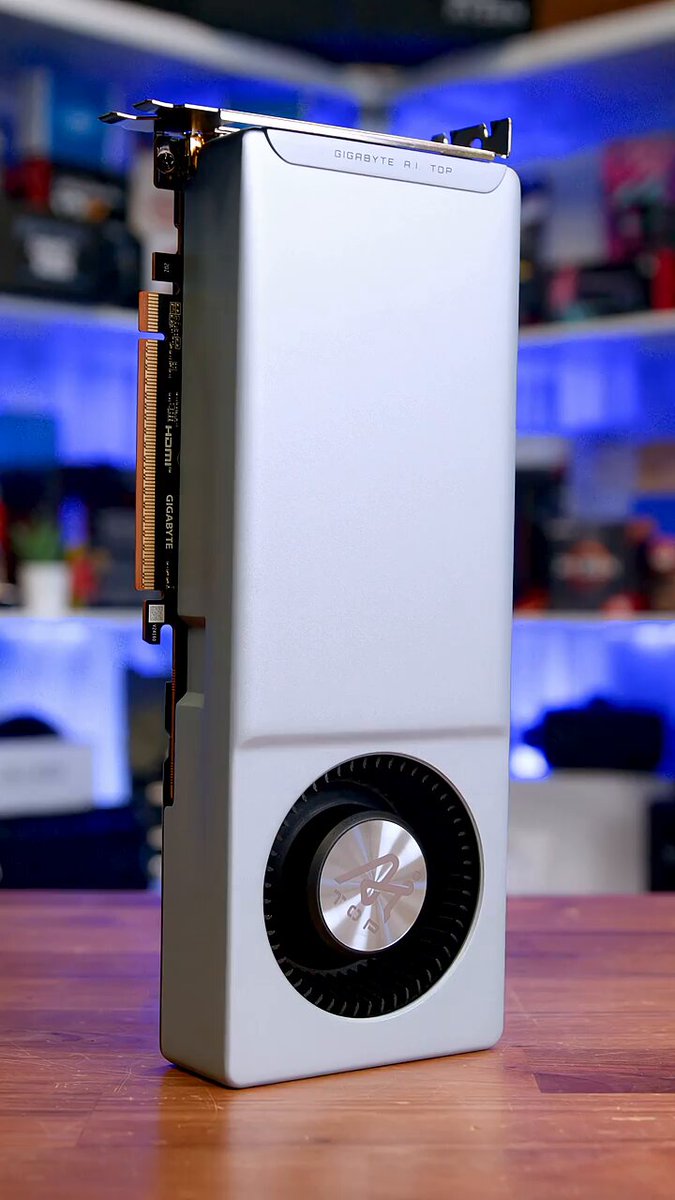
A TWO FLOOR BITCOIN ASIC FACILITY WITH AN ON SITE TECH FIXING DEAD HASHBOARDS 24/7 STILL PRINTS LESS PER KILOWATT THAN AN 8 CARD RTX 4090 CLOSET ON VAST AI WITH ZERO REPAIR STAFF 01:48 the narrator stops between the racks, "this is the sound of money printing machine,...

18,281 görüntüleme • 3 ay önce •via X (Twitter)

14 Yorum

Gipp 🦅 profil fotoğrafı
Gipp 🦅3 ay önce

used video cards will win anyway

starmex profil fotoğrafı
starmex3 ay önce

fr the secondary market is where the real margins live

Philomena Harry profil fotoğrafı
Philomena Harry3 ay önce

i've never been described so accurately by a stranger on the internet...

Virexontic profil fotoğrafı
Virexontic3 ay önce

$400,000 facility. Full-time repair tech. Two floors of hardware. Gets outprinted by 8 GPUs in a residential closet with zero staff. 😅 ASICs can only do one thing. The moment that one thing stopped paying — $400,000 became a very expensive space heater. Flexibility is the moat now. Not hashrate.

wladwtf profil fotoğrafı
wladwtf3 ay önce

wonder what the power bill looks like for a setup that size ?

starmex profil fotoğrafı
starmex3 ay önce

bro the kw efficiency is the whole point, way lower than asics for the same output

アキラ profil fotoğrafı
アキラ3 ay önce

Two floors of Bitcoin ASICs print less than RTX 4090s.

Primee32 profil fotoğrafı
Primee323 ay önce

$400k in asics that can't serve a single openai customer. the pivot happened and they missed it

アキラ profil fotoğrafı
アキラ3 ay önce

An interesting look at the efficiency of different mining setups.

SirNastynate profil fotoğrafı
SirNastynate3 ay önce

@FBIDirectorKash

Virexontic profil fotoğrafı
Virexontic3 ay önce

$400,000 facility with a full-time repair tech. Prints less per kilowatt than 8 used GPUs in a residential closet. 😅 "This machine just prints money" he says. Standing next to hardware that can't serve a single AI customer. The sound of money printing is now coming from the basement three blocks away. 👀

Ora profil fotoğrafı
Ora3 ay önce

the efficiency delta here is actually crazy to think about

SITA profil fotoğrafı
SITA3 ay önce

flexibility is becoming more valuable than raw hash rate

。˚ ☁️ ˚。⋆Bᚱand❃₦⋆。˚ ☁️ ˚。 profil fotoğrafı
。˚ ☁️ ˚。⋆Bᚱand❃₦⋆。˚ ☁️ ˚。3 ay önce

$BTC is so uneconomical, adopt $kas FTW

Benzer Videolar

AMD CEO Lisa Su just killed Nvidia’s $4,000 AI box with a $1,499 lunchbox. She walked on stage, held it in one hand, and ran a 235 billion parameter model live. No data center. No cloud. No rented GPU. The chip inside is something nobody saw coming. AMD’s Ryzen AI Max+ 395 is the first x86 silicon where CPU and GPU share the same 128GB of memory. That single trick lets a desktop run models that used to need a server rack. Out of those 128GB, Linux hands the GPU 110GB to play with. For context, an RTX 5090 gives you 32GB. A 4090 gives you 24. This box gives you more than three times either of them, in a chassis the size of a thick paperback. The benchmark that broke the room: this chip beat an Nvidia RTX 5080 by more than 3x on DeepSeek R1 inference. A $1,499 lunchbox outrunning a $1,000 discrete graphics card on a real AI workload. Nvidia spent a decade convincing the world you needed their hardware for serious AI. AMD just put that on a desk for half the price. Here is what nobody is telling you. A heavy AI user right now pays $200 for Claude Code Max, $200 for ChatGPT Pro, $20 for Cursor, $20 for Gemini. That is $5,280 a year leaving your account. The box pays itself off in 9 months and then runs free for the rest of its life. Install Ollama. Pull Qwen3 235B. Point Claude Code at localhost. Same interface you already use, except now nothing leaves your machine, nothing costs per request, and no company throttles your usage at 3am when you finally have time to build. This is the moment every AI subscription becomes optional. Lawyers stop fearing OpenAI leaks. Developers stop watching the token meter. Founders stop renting H100s for prototypes that never ship because the bill scared them. The first thousand people to figure this out will own the next two years of private AI consulting. Save this, and read the full breakdown article below you are watching the next shift hit before everyone else does.

AdiiX

3,397,308 görüntüleme • 3 ay önce

A finance professor manages $200M with AI agents, and he told everyone why: "Large language models are at the level of a fourth-year PhD student in every field" Alejandro Lopez-Lira's AI fund, Autopilot, returned 56% last year. The S&P did 16%. There are 52,000 people with money in it, and most of them just watch the machine work. What he automated is the same six-step loop every fund on earth runs: find an idea, code it, backtest it, deploy it, read the autopsy, learn from it. A quant at Two Sigma runs that loop once a month, and the salary time alone costs around $50,000 per hypothesis. All steps from this loop now fit in AI trading text box. Plain English in, executable strategy out, five-year backtest in 12 seconds, live on a broker 90 seconds after you typed the sentence. He runs $200M with AI. You can run same AI fund in two clicks, free to try: Step 6 on this loop is where everyone is stuck. Your agent has no memory. Every strategy it kills goes into a log nobody reads, and the next one starts from zero. Nobody keeps negative results. Not Citadel, not Man Group, not a single repo on GitHub. Fix that and the agent remembers every hypothesis it killed and the regime it died in. It stops burning cycles on your old mistakes. Jane Street pays 3,500 people to run this cycle and made $39.6 billion doing it. Five sixths of it is now free. Bookmark & read full map of this loop in the article below. Most people still think AI trading is out of reach for them - it isn't. Don't want to spend a dollar for testing this? Kalshi just opened a perps exchange and gives US users $25 free to start ->

cvxv666

83,045 görüntüleme • 1 ay önce

THIS GUY IS WALKING INTO LOCAL SHOPS WITH A MAC MINI IN A HARD CASE AND WALKING OUT WITH $1,200 CHECKS FOR INSTALLING AI THAT RUNS WITHOUT THE INTERNET I had to rewatch this twice because the business model is so stupidly simple my brain kept looking for the catch. He shows up. Plugs in a Mac Mini. Installs a private AI network running entirely on Ollama. The whole thing is done in under an hour. Zero cloud dependency. No API bills. No monthly charges bleeding the client dry. The shop owner gets a local AI system that works even if the WiFi dies, and this guy walks out with $1,200 for an installation that takes less time than a long lunch. The hardware costs $1,300. One deployment and the machine is paid for. Then he locks in a $149 monthly retainer for support, which means every client after the first is pure margin stacking on top of recurring revenue that compounds every single month. Most people hear "AI business" and think they need to build a SaaS platform or learn to code or raise funding from someone. This guy skipped all of that and went straight to walking into physical stores with a box under his arm. This is not going to scale to a billion dollar company. Obviously. But a solo operator clearing $5-10K a month from local installs while everyone else is still arguing about which LLM is best on Twitter is the kind of quiet hustle that does not make headlines until someone does a breakdown of their year-end numbers. The surface area of what AI can do right now is expanding faster than anyone can map it. One guy is doing local hardware installs. Another is generating AI personas that pull five figures a month. Someone else is running AI video pipelines off a laptop. Same wave of tools. None of them competing with each other. Hit play. Watch him unbox the setup and walk through the numbers. Then tell me you could not do this in your city by next Friday.

Framez

932,332 görüntüleme • 2 ay önce

dude runs a private AI host out of his basement on 8 stacked 3090s an accounting firm signed the moment they realized their client financials would physically never touch a third party the rig pays his mortgage now the setup is eight RTX 3090s lined up on an open frame down in his basement - fans roaring, yellow zip ties holding cables, a little monitor blinking stats beside a cheap keyboard. it was built as a mining rig and the dashboard still looks the part the accounting firm didn’t care that it looked like a crypto leftover they cared about one promise no cloud provider could make them - that their clients’ financial records would never leave a machine the firm could physically point to that promise closed the deal here’s the corner they were backed into: accounting firms hold the most sensitive data imaginable - tax filings, payroll, full financial histories. they wanted AI to speed up the tedious work, but routing that data through a cloud model was a liability their partners would never sign. so they sat frozen while the tech moved on without them he handed them the one version that cleared legal: a private model running on hardware in a basement, not a server farm they’d never see the build behind the rig: eight 3090s stack up to 192GB of combined vram - enough to run a 70B model with real context through vLLM. the firm’s documents get indexed into an isolated vector database, so every answer pulls only from their own files. queries hit a local endpoint, replies come back, nothing ever leaves the basement. used 3090s were the quiet genius move - around $700 a card instead of triple that for new silicon the rig that once mined coins for pennies now serves inference that bills like a service the contract that covers his house: → managing partner came down for an in-person demo → asked the only question that mattered: where does the data live → he pointed at the rig and said “right here, nowhere else” → they signed a monthly deal before leaving the basement the economics underneath: → 8 used 3090s: ~$5,600, paid off in the first two months → electricity: a few hundred a month under load → what the firm pays: enough to clear his mortgage every month → margin: almost all of it, because the data center is under his own house real firms burn a fortune on compliant cloud infrastructure he does the same job in a basement, and the data is safer for the dumbest reason possible - it has nowhere else it can go the rig that looks one loose cable from death is quietly the most trusted machine his client has ever touched

regent0x

13,334 görüntüleme • 3 ay önce

A finance professor manages $200M with AI agents, and he told everyone why: "Large language models are at the level of a fourth-year PhD student in every field" Alejandro Lopez-Lira's AI fund, Autopilot, returned 56% last year. The S&P did 16%. There are 52,000 people with money in it, and most of them just watch the machine work. What he automated is the same six-step loop every fund on earth runs: find an idea, code it, backtest it, deploy it, read the autopsy, learn from it. A quant at Two Sigma runs that loop once a month, and the salary time alone costs around $50,000 per hypothesis. All steps from this loop now fit in AI trading text box. Plain English in, executable strategy out, five-year backtest in 12 seconds, live on a broker 90 seconds after you typed the sentence. He runs $200M with AI. You can run same AI fund in two clicks, free to try: Step 6 on this loop is where everyone is stuck. Your agent has no memory. Every strategy it kills goes into a log nobody reads, and the next one starts from zero. Nobody keeps negative results. Not Citadel, not Man Group, not a single repo on GitHub. Fix that and the agent remembers every hypothesis it killed and the regime it died in. It stops burning cycles on your old mistakes. Jane Street pays 3,500 people to run this cycle and made $39.6 billion doing it. Five sixths of it is now free. Bookmark & read full map of this loop in the article below. Most people still think AI trading is out of reach for them - it isn't.

sopersone

48,482 görüntüleme • 21 gün önce