Video wird geladen...

Video konnte nicht geladen werden

Zur Startseite

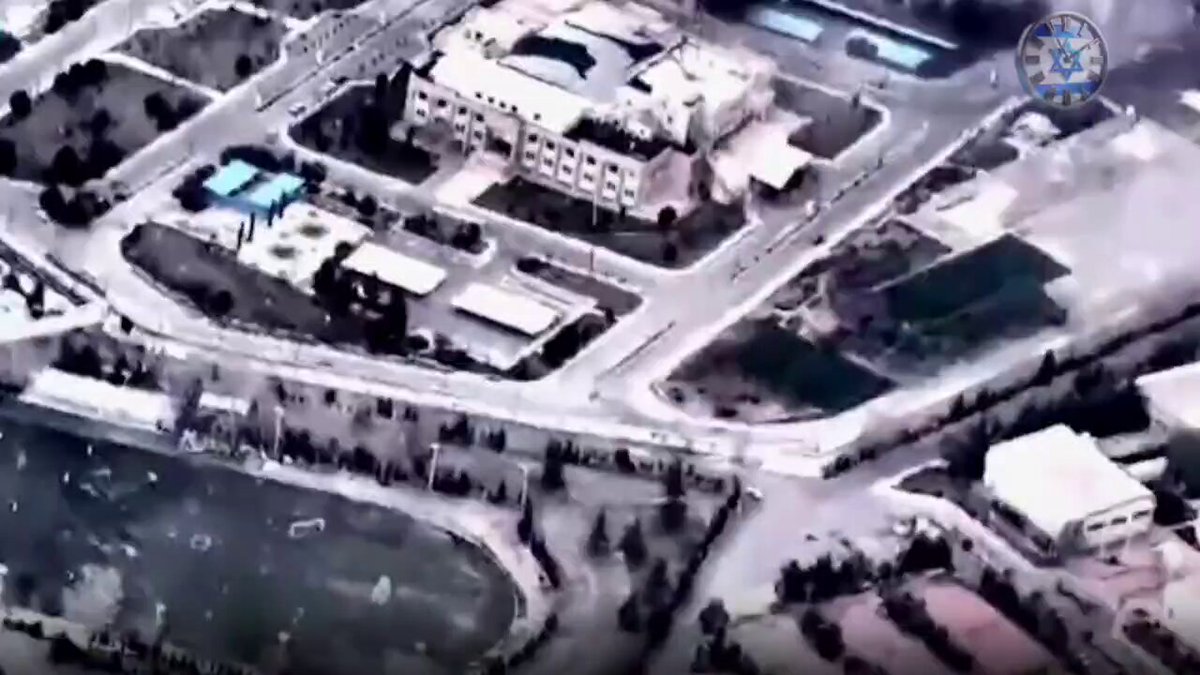
❗️❗️🇺🇸🇮🇷A wave of massive, coordinated explosions has ripped through southern Iran’s most critical maritime and military hubs, plunging the Persian Gulf into a state of total, unmitigated chaos. Iranian state media and local reports confirmed multiple detonations across a string of highly strategic coastal cities, including Chabahar, Konarak, Ahvaz,...

202,109 Aufrufe • vor 6 Tagen •via X (Twitter)

0 Kommentare

Keine Kommentare verfügbar

Kommentare vom Original-Post werden hier angezeigt

Ähnliche Videos

‼️🇺🇸🇮🇷 Ceasefire on Paper, Airstrikes in Reality. Is the Gulf Heading Toward Another Crisis? The latest escalation between the United States and Iran shows just how fragile the current ceasefire has become. According to Washington, an Iranian drone strike damaged a commercial cargo ship transiting the Strait of Hormuz, while additional drones were intercepted before reaching their targets. The U.S. described the incident as a direct violation of the ceasefire agreement and responded with precision airstrikes targeting Iranian missile depots, drone storage facilities, coastal radar sites, and military infrastructure. Iran, however, rejects the U.S. narrative and accuses Washington of breaching the ceasefire first. Tehran argues that the American strikes undermine ongoing diplomatic efforts and violate the understandings reached during recent negotiations. Iranian officials have also maintained that they reserve the right to defend their strategic interests in and around the Strait of Hormuz. What makes this situation even more significant is that military escalation and diplomacy are happening at the same time. On one side, American aircraft are striking Iranian military targets while U.S. forces continue intercepting drones over the Gulf. On the other, diplomatic channels have not completely collapsed. Negotiations remain active, suggesting that neither Washington nor Tehran currently appears willing to abandon dialogue despite the ongoing military exchanges. The Strait of Hormuz remains the center of gravity. Nearly one fifth of the world's seaborne oil trade passes through this narrow waterway. Even limited military activity increases insurance costs, shipping risks, and uncertainty across global energy markets. Every drone launch, interception, or retaliatory strike raises concerns far beyond the Middle East. The biggest question now is whether these strikes are intended as a limited show of force or the beginning of another cycle of retaliation. History has shown that both the United States and Iran often combine military pressure with diplomatic engagement. The challenge is preventing isolated incidents from growing into a broader regional conflict. For now, the ceasefire technically exists. On the ground and in the skies over the Gulf, it is being tested almost every day. Do you believe diplomacy will eventually prevail, or are the U.S. and Iran moving toward another major confrontation in the Strait of Hormuz?

Defense Intelligence

14,848 Aufrufe • vor 17 Tagen

Quick recap of today’s sequence of events: via Brodie K. - Analyze & Educate “Summary: Resumption of Iranian strikes - Yesterday, UKMTO reported that a vessel off the coast of the UAE was struck by a projectile. Subsequently, the government of the UAE released a statement saying thag the targeted vessel was an ANDOC national tanker and condemned the Iranian strikes. - Early Morning: Likely in reaction to the declaration of the U.S.-led Project Freedom, the IRGC-N announced the creation of a new control area in the Strait of Hormuz and threatened to strike violating parties. - Iran claimed to have targeted and struck an unspecified U.S. destroyer that was in the Strait of Hormuz. CENTCOM subsequently denied that a vessel was struck, but stopped short of clarifying whether or not any vessels were targeted. -Mid-morning: Iran resumed ballistic missile and drone strikes against the UAE, targeting the UAE’s primary oil and gas export location of Fujairah. - In response to the Iranian uptempo in strikes and offensive action the U.S. struck 6-7 Iranian fast-craft operating in the locality of the Strait of Hormuz. - Iran continued strikes against the UAE. At the time of writing, per the UAE Ministry of Defense, since the resumption of Iranian strikes, Iran has launched 4 UAVs, 12 ballistic missiles, and 3 cruise missiles at the UAE. 3 Indian nationals have been moderately injured as a result. - Gulf nations, including Kuwait, Qatar, and Saudi Arabia, have condemned Iran’s actions.”

OSINTdefender

169,309 Aufrufe • vor 2 Monaten

Dear Mr. President President Donald J. Trump, The crackdown has begun. As of now, at least seven people have been confirmed killed by direct gunfire from security forces, including a 15 year old minor, Mostafa Fallahi. More than one hundred people have been arrested, with reports increasing by the hour. Young men are being killed in the streets; minors are being detained and forcibly disappeared. This is not merely a human rights crisis. It is a national security issue for the United States. The Islamic Republic of Iran has American blood on its hands. Through its direct actions and proxy forces, it has been responsible for the deaths of hundreds of U.S. service members across the Middle East. It has plotted terrorist attacks on U.S. soil, attempted assassinations of American officials, and repeatedly worked to destabilize American society through intimidation, espionage, and proxy violence. Its leadership openly calls the United States “the Great Satan” and treats hostility toward America not as rhetoric, but as a religious obligation. As long as the Islamic Republic remains in power, no American, at home or abroad, is truly safe. The regime’s survival depends on regional chaos, anti-Americanism, and the export of terrorism. That makes it a permanent and escalating threat to U.S. national security. The people of Iran are not this regime. They are its primary victims. History shows that when the United States supports peoples fighting tyranny, it strengthens its own security. During the American Revolution, foreign assistance from France helped a struggling revolutionary force survive against a brutal empire. That support was not charity; it was strategic. It reshaped the global balance of power in favor of liberty and stability. Iranians have been resisting a violent theocracy for decades. They face live ammunition, mass arrests, torture, and executions. Unarmed civilians cannot defeat a terrorist state alone. When democratic nations draw clear red lines against mass repression, they set global norms and deter future atrocities. Any meaningful support for the Iranian people, will be welcomed and remembered. A free Iran would not be an adversary of the United States. It would be a natural ally, a stabilizing force in the Middle East, and a partner against terrorism, much as Iran was prior to 1979. Iranians do not forget their allies. And they will not forgive the regime that has terrorized them, or the world, for over four decades. Donald J. Trump JD Vance Vice President JD Vance CNN Fox News CBS News Piers Morgan PBD Podcast

ثنا ابراهیمی | Sana Ebrahimi

219,763 Aufrufe • vor 6 Monaten

🚨OPERATIONAL UPDATE: ISRAEL U.S. WAR WITH THE ISLAMIC REPUBLIC - Reporting Window: 3/11 to 3/12 • Iran widened pressure on the Gulf energy system, with tankers hit near Basra, a container vessel struck near the UAE, and fuel infrastructure targeted in Bahrain and Oman, sending oil back above $100. • Israel expanded its campaign inside Iran, striking IRGC command infrastructure, missile production sites, and drone launch networks in and around Tehran. • Hezbollah launched one of its largest rocket barrages of the war, triggering heavy Israeli strikes on command centers and weapons infrastructure in Beirut’s southern suburbs. • Iranian proxies and aligned forces continued attacks on U.S. positions across the region, bringing the total number of incidents targeting American sites or personnel to at least 25 since the war began. The central story of the last 24 hours is that the conflict is increasingly moving beyond the battlefield and into the systems that keep the region functioning. Iran continues to pressure shipping, energy infrastructure, and U.S. positions across the Middle East, while Israel is pushing deeper into the regime’s military and security architecture. The result is a war that now looks less like a contained exchange of strikes and more like a widening struggle over the region’s economic stability, military balance, and internal political control. ━━━━━━━━━━━━━━━━━━ *⃣ PERSIAN GULF: IRAN CONTINUES TO PRESSURE THE ENERGY SYSTEM The Persian Gulf remained the most strategically significant theater over the last 24 hours. Multiple reports confirmed additional attacks affecting shipping and energy infrastructure across the region. Two oil tankers were reported burning in Iraqi waters near Basra after earlier strikes on vessels in the Gulf, while another container ship was reportedly hit near the UAE. Fuel and logistics infrastructure also came under pressure. Bahraini authorities reported that Iranian aggression targeted fuel tanks at a facility in Muharraq near Bahrain International Airport, while additional reports indicated that oil storage facilities at Oman’s Port of Salalah were struck. These attacks reinforce a clear pattern: Iran may not be able to fully close the Strait of Hormuz, but it is demonstrating that it can disrupt the broader logistical network surrounding the Gulf’s energy system. The market reaction was immediate. Oil prices moved back above $100 despite coordinated moves by the United States and its partners to release large volumes from strategic petroleum reserves. The International Energy Agency and several governments have moved to inject supply into the market, but these measures are temporary buffers. As long as shipping through the Gulf remains at risk, the global energy market will continue to price in disruption. ━━━━━━━━━━━━━━━━━━ *⃣ TEHRAN: THE CAMPAIGN IS NOW HITTING THE REGIME’S CORE SECURITY NETWORK The latest strike waves inside Iran appear to be moving beyond general bombardment and toward a systematic dismantling of the regime’s security infrastructure. Israeli strikes reportedly targeted the IRGC Air Force headquarters in Tehran, ballistic missile storage and production facilities, Basij paramilitary command centers, and a compound at Imam Hossein University that functions as an operational hub for the Revolutionary Guards. Additional strikes were reported against Iranian intelligence ministry facilities and internal security infrastructure, indicating that the campaign is beginning to focus not only on missile capability but on the regime’s ability to control events inside the country. Separate strikes in western Iran reportedly hit drone launch teams preparing attacks toward Israel, suggesting that launch infrastructure is now being targeted dynamically as it emerges rather than only through preplanned strikes against fixed installations. Satellite imagery also confirmed damage to Iranian F-14 fighter aircraft at Isfahan’s 8th Tactical Air Base, further degrading an already aging Iranian air force that has struggled to contest Israeli and U.S. air superiority throughout the conflict. Taken together, the targeting pattern suggests that the coalition is increasingly focusing on the regime’s operational nervous system: command networks, launch infrastructure, and internal security forces that allow the government to coordinate and sustain military operations. ━━━━━━━━━━━━━━━━━━ *⃣ LEBANON: ISRAEL IS NOW TARGETING HEZBOLLAH’S OPERATIONAL COMMAND STRUCTURE The northern front also escalated sharply over the last 24 hours. Hezbollah launched one of its largest barrages of the war, firing large numbers of rockets and drones toward northern Israel in coordinated strikes linked to Iran’s broader regional campaign. Israel’s response focused heavily on Hezbollah’s command and operational infrastructure rather than simply retaliating against launch sites. Israeli aircraft struck multiple facilities in Beirut’s southern suburbs (Dahieh), including command centers, operational headquarters, and weapons storage sites linked to Hezbollah’s Radwan forces, the elite unit responsible for cross-border operations against Israel. Additional strikes targeted missile launch infrastructure and militant positions across southern Lebanon, as well as logistical sites used to support ongoing rocket attacks. The concentration of strikes in Dahieh is significant. The area functions as Hezbollah’s central military and intelligence hub, and repeated attacks there suggest Israel is attempting to disrupt the group’s command-and-control structure rather than merely suppress individual launch cells. This shift indicates that the northern theater may be entering a new phase where Israel seeks to systematically degrade Hezbollah’s operational leadership and coordination networks, not just reduce the immediate rocket threat. ━━━━━━━━━━━━━━━━━━ *⃣ REGIONAL SPILLOVER: U.S. POSITIONS AND GLOBAL SECURITY CONCERNS Regional spillover continues to grow. Iranian proxies and aligned groups have carried out repeated attacks targeting American facilities or sites hosting U.S. personnel across the Middle East. Analysts now count at least 25 attacks targeting U.S. sites or locations housing American personnel since the war began. One of the most significant recent incidents involved a drone strike on a large U.S. diplomatic facility near Baghdad International Airport. The attack caused damage but did not produce casualties, and U.S. officials suspect it was carried out by Iranian-aligned militias operating in Iraq. Beyond the Middle East itself, intelligence warnings suggest the conflict could reach further. U.S. authorities have warned about potential Iranian retaliation targeting American interests abroad, including scenarios involving drone launches from maritime platforms. Cyber activity linked to Iran has also been detected in Europe, including an attempted attack on a nuclear research facility in Poland that officials say bears multiple indicators of Iranian involvement. These developments show that while the war’s kinetic center remains in the Middle East, the broader confrontation between Iran and its adversaries is beginning to manifest across multiple domains: military, cyber, and economic. ━━━━━━━━━━━━━━━━━━ *⃣ WHAT MATTERS MOST RIGHT NOW The key takeaway from the past 24 hours is that the war is continuing to widen in practice even as some political messaging suggests it could be nearing a conclusion. Iran is still capable of imposing meaningful costs through attacks on shipping, energy infrastructure, and proxy operations across the region. Israel, meanwhile, is expanding its strike campaign into deeper layers of Iran’s military and security architecture while escalating pressure on Hezbollah in Lebanon. Neither side appears close to a decisive breakthrough. Iran’s leadership structure remains intact despite heavy strikes, and its network of proxies continues to generate pressure across multiple fronts. At the same time, Israel and the United States retain overwhelming military superiority and appear committed to degrading Iran’s ability to sustain a prolonged conflict. For now, the trajectory remains clear: the war is evolving from a direct exchange of strikes into a broader contest over the region’s economic stability, military balance, and political future. --------------------------------- END REPORT

Inside_Israel_Intel

30,124 Aufrufe • vor 4 Monaten

🚨 OPERATIONAL UPDATE: ISRAEL U.S. WAR WITH THE ISLAMIC REPUBLIC - Reporting Window: Last 24 Hours ✳️The war is entering its final phase, but the battlefield is becoming more dangerous, not less. For the first time since the conflict began, the United States has signaled that its objectives against Iran have largely been achieved and that military operations could conclude within 2 to 3 weeks. At the same time, the operational picture tells a more complex story. Strikes inside Iran are intensifying, not slowing. Iran’s responses are becoming less concentrated but more geographically expansive. And across the region, the risk of broader escalation remains very real. This is no longer an open-ended war. It is a race between final military objectives and the risk of wider regional destabilization. ━━━━━━━━━━━━━━━━━━ 🏁 POLITICAL ENDGAME SIGNAL EMERGES President Donald Trump stated that the war could end within weeks, indicating that core objectives have been achieved, including the degradation of Iran’s strategic capabilities and the disruption of its leadership structure. He also signaled that the United States does not intend to remain indefinitely engaged, suggesting that responsibility for securing critical global nfrastructure, particularly the Strait of Hormuz, may shift to regional and international stakeholders. At the same time, tensions with NATO allies are surfacing. Frustration over limited allied participation in the war has raised the possibility of a broader fracture within the Western alliance structure. Parallel reporting indicates that elements within Iran are signaling openness to a ceasefire framework, particularly if maritime access through Hormuz is restored. Taken together, this marks a clear transition: the war now has a defined political end state, even as military operations continue. ━━━━━━━━━━━━━━━━━━ ✈️ FINAL PHASE STRIKE CAMPAIGN INSIDE IRAN The intensity of strikes over the past 24 hours reflects what appears to be end-stage shaping operations. Israeli and US-aligned strikes targeted a wide range of sites across Iran, including weapons production facilities, research and development centers, and critical infrastructure nodes tied to the regime’s military capabilities. Tehran remains a central focus. Approximately twenty military-industrial sites were struck, along with infrastructure at Mehrabad Airport and locations linked to Basij coordination. A senior Quds Force engineering figure, Mahdi Vafaei, was eliminated in a precision strike. His role in developing underground weapons infrastructure across Lebanon and Syria made him a key long-term asset for Iran’s regional military network. Additional strikes hit industrial targets, including steel production facilities and a site identified as supporting materials linked to Iran’s chemical weapons development pipeline. This is not a campaign aimed at symbolic damage. It is a systematic effort to dismantle Iran’s ability to produce, coordinate, and sustain war over time. ━━━━━━━━━━━━━━━━━━ 🎯 IRANIAN RESPONSE AND CIVILIAN IMPACT Iran continues to launch missiles toward Israel, but at a reduced scale compared to earlier phases of the war. Limited salvos were recorded over the past 24 hours, causing injuries and localized damage. One of the most significant developments was the reported use of cluster munitions in central Israel, critically injuring a child and causing multiple casualties. At the same time, Iran appears to be adapting operationally. Rather than attempting large-scale saturation attacks, it is increasingly relying on smaller strikes, drones, and diversified targeting strategies. This does not indicate de-escalation. It reflects an effort to remain operational under sustained pressure. ━━━━━━━━━━━━━━━━━━ 🌍 REGIONAL EXPANSION: THE WAR SPREADS While direct attacks on Israel have become more limited in scale, Iran is expanding the conflict across the region. In the Gulf, infrastructure in Kuwait and Bahrain was struck, including fuel storage facilities at Kuwait International Airport. Fires and damage were reported, adding to a growing pattern of attacks on energy and logistical nodes. A commercial tanker was also struck near Qatar, further extending the conflict into maritime space. These developments mark a continued shift where Iran is targeting not just Israel, but the broader economic and energy architecture of the region. ━━━━━━━━━━━━━━━━━━ 🚢 THE STRAIT OF HORMUZ The strategic center of gravity in this war is now unmistakable. The Strait of Hormuz remains contested, with ongoing disruption to global shipping and energy flows. The United States is actively evaluating options to reopen and secure the waterway, including potential direct military action against Iranian coastal capabilities. At the same time, Gulf states, particularly the UAE, are pushing for a coordinated military effort to ensure the strait is reopened. However, regional positioning remains complex, with some actors balancing public caution and private pressure. Notably, the United States has signaled that it may not take long-term responsibility for securing Hormuz, instead shifting that burden to global stakeholders. The implication is clear: control of Hormuz will determine not only the outcome of the war, but its aftermath. ━━━━━━━━━━━━━━━━━━ 🔥 NORTHERN AND PROXY FRONTS Iran’s proxy network remains active, but increasingly strained. In Lebanon, Israeli strikes continue to target Hezbollah leadership and infrastructure, including the reported elimination of a senior commander in Beirut. Rocket fire persists, but Israeli operations are steadily degrading launch capabilities. In Yemen, the Houthis have formally entered the fight against Israel and are likely contributing to the expanding pattern of regional attacks, including those affecting Gulf infrastructure. Across Iraq and Syria, Iranian-aligned militias remain engaged, while underlying instability continues to create openings for additional actors. This is now a multi-front conflict, but one in which Iran’s network is under pressure across every axis. ━━━━━━━━━━━━━━━━━━ 🧠 WARFARE EVOLUTION A critical and often overlooked development is the role of advanced targeting systems. Israel is employing AI-assisted capabilities to identify threats, prioritize targets, and synchronize strikes across multiple theaters in near real time. This has significantly compressed the operational cycle, allowing for rapid follow-up strikes and reduced recovery time for Iranian forces. The result is a battlefield environment where Iran has less time to act, less time to adapt, and fewer opportunities to rebuild degraded capabilities. ━━━━━━━━━━━━━━━━━━ 📊 THE BIG PICTURE The trajectory of the war is now coming into focus. The United States and Israel are executing a campaign designed to dismantle Iran’s ability to function as a coherent military actor. Iran, in response, is expanding the conflict geographically in an attempt to impose broader costs. At the same time, political signals indicate that the war is approaching a defined end state. Markets are already reacting to this expectation, with oil prices declining and global indices rising on the assumption that the conflict may soon conclude. However, the final phase carries its own risks. As Iran’s conventional capabilities degrade, its reliance on asymmetric and regional tactics is increasing. The decisive question is no longer how the war is fought day to day. It is whether the final objectives can be secured before broader escalation overtakes them. ━━━━━━━━━━━━━━━━━━ 📘 BOOK RECOMMENDATION If you want a deeper understanding of the history, narratives, and strategic realities behind this conflict: Contested Land, Uncontested Truth This book breaks down the ideological, geopolitical, and historical forces that led directly to moments like this, with clarity and evidence. 👉 If you found this report valuable, share it. Follow for daily operational updates.

Inside_Israel_Intel

60,835 Aufrufe • vor 3 Monaten

The silent Gulf: local monarchies paralyzed under Iran’s shadow Since Iran launched strikes on US bases within their borders, the Gulf monarchies have failed to muster even a coherent diplomatic response. As Tehran raised the stakes—targeting the region’s strategic oil and gas infrastructure—the sheikhdoms have remained utterly passive. Here's why they are powerless to push back: 🔴 The failed American umbrella: the Gulf states outsourced their security to the US, hosting foreign bases because their own militaries were no match for their neighbors. That bet has now backfired spectacularly. 🔴Trapped between giants: Washington’s failures have not only jeopardized critical energy facilities but have left the monarchies exposed. Iran has made it clear: any US attack launched from Arab soil will be met with retaliation against them. They are hostages in their own territory. 🔴 The only leverage is de-escalation: with no military option and no diplomatic card to play, their only move is to plead with Iran and demand Washington stand down. An attack on Gulf oil—or Qatar’s gas—is an attack on their economic survival. Strikes on Dubai’s airport or its superport can paralyze logistics across one of Asia’s most vital hubs. 🔴 The high cost of bluster: the monarchies understand that any public bravado against Tehran will only invite more attacks. Already powerless, they cannot afford further escalation. For them, silence isn’t a choice but the only thing standing between the current crisis and total chaos. © Geoprime

Sprinter Press

19,618 Aufrufe • vor 4 Monaten

The Ghatkopar-Mankhurd demolition drive reveals that is a highly strategic, high-stakes battle over land, local politics, and national security.​ The primary flashpoint was an 14-acre chunk of prime revenue department land located along the Ghatkopar-Mankhurd Link Road (GMLR), specifically around Annabhau Sathe nagar. ​For years, land mafias rapidly built out structures while the state was looking away. ​To bypass local ground-level interference, the Mumbai Suburban Collector’s office deployed used historical satellite mapping to track the physical growth of the slums. By comparing images from 2011 to the present day, they proved that a massive wave of construction occurred post-2011. Over a single 24-hour window, a force of 400 government personnel and 200 heavy labourers swept the site. Supported by a massive fleet of JCBs, excavators, dumpers, and drone surveillance cameras, they completely flattened over 1,200 illegal structures. ​ To prevent the land from being re-occupied, the Public Works Department (PWD) immediately deployed teams behind the bulldozers to construct tin-sheet barricades by nightfall, transitioning into a permanent concrete compound wall within two weeks. Govt sources allege that local land mafias have intentionally built these colonies to settle and shield undocumented Bangladeshi and Rohingya migrants. State intelligence and local police highlighted that these dense, unregulated pockets had transformed into functional hubs for the illegal narcotics trade and cross-border black market network.​ Good riddance.

Smita Deshmukh🇮🇳

28,323 Aufrufe • vor 1 Monat

🇺🇸🇮🇷 WHY THE UNITED STATES HALTED A PLANNED STRIKE ON IRAN United States prepared and then halted a military strike on Iran point to a calculated decision rooted in U.S. national interest, risk management, and strategic restraint rather than weakness. 1. Avoiding a Wider War That Would Hurt U.S. Interests U.S. defense planners assessed that a direct strike on Iran could rapidly escalate into a regional conflict. Iran has the ability to retaliate through missile attacks, proxy forces, and disruption of global energy routes. Such an escalation would place U.S. troops, allies, and global markets at serious risk. From a U.S. perspective, a controlled environment is preferable to an open ended war. 2. No Clear Strategic Gain from Immediate Military Action Senior U.S. officials reportedly questioned whether a strike would achieve a decisive outcome. Without a clear path to degrading Iran’s long term capabilities or changing its behavior, a limited attack risked becoming symbolic rather than strategically effective. U.S. military doctrine prioritizes actions that deliver measurable and lasting advantages. 3. Protection of U.S. Forces and Bases in the Region Iran and its aligned groups have demonstrated the capability to strike U.S. bases across the Middle East. Intelligence assessments likely warned that even a limited U.S. strike would trigger retaliation against American personnel. Preventing American casualties remains a top political and military priority in Washington. 4. Pressure from U.S. Partners and Allies Key U.S. partners in the Middle East reportedly urged caution. Gulf states and European allies warned that a strike could destabilize the region, threaten shipping lanes, and damage energy security. The United States weighed these concerns heavily, recognizing that alliance stability is a core pillar of American global power. 5. Strategic Signaling Without Pulling the Trigger By preparing a strike and then halting it, Washington still sent a clear deterrence message. The U.S. demonstrated readiness, capability, and resolve while retaining escalation control. This approach aligns with U.S. strategy of applying pressure without rushing into irreversible military action. The halt was not a retreat. It was a deliberate choice to protect American lives, preserve strategic leverage, and avoid a conflict that could spiral beyond control. The United States kept military options on the table while choosing a timing and method that best serves long term U.S. security interests.

Defense Intelligence

52,246 Aufrufe • vor 6 Monaten

❗️❗️🇷🇺🇺🇦Ukrainian President Volodymyr Zelensky has issued a definitive, chilling declaration to the Kremlin, announcing that Ukraine’s long-range arsenal has achieved total reach over Russia’s entire industrial landscape, leaving absolutely no oil refinery safe from devastation. In a landmark address highlighting the roaring success of what Kyiv calls its physical "long-range sanctions," Zelensky confirmed an unprecedented, record-shattering drone strike on the Omsk oil refinery—a critical processing hub located an astonishing 2,530+ kilometers deep inside Russian territory. The operation completely shatters all previous distance records, proving that Ukraine can now project precision kinetic power across the Urals and directly into western Siberia. Zelensky detailed a massive, systematic air campaign that simultaneously set Russia’s strategic rear ablaze. Over the past week, Ukrainian deep-strike assets successfully battered oil refining infrastructure across an immense geographic arc, including Saratov, Rostov, Tver, Stavropol, Krasnodar Krai, Tatarstan, and Bashkortostan. Beyond the energy grid, the relentless aerial offensive liquidated a military airfield in the Voronezh region, neutralized a strategic industrial enterprise in Tver, and struck high-value targets across the Moscow, Leningrad, and Bryansk regions. By erasing the tyranny of distance, Ukraine has fundamentally rewritten the rules of engagement, turning Russia's vast geographic depth from a defensive shield into an unprotected, sprawling target zone.

NSTRIKE

74,782 Aufrufe • vor 6 Tagen

🚨🇺🇸🇮🇷 U.S-ISRAELI STRIKES ON IRAN: MAJOR COMBAT, MAJOR CONSEQUENCES The Middle East just crossed a line it may not be able to uncross. After coordinated strikes by the United States and Israel on Iranian targets, including the compound of Supreme Leader Ali Khamenei, Trump declared the start of “major combat operations” and openly urged Iranians to “take over your government.” Iran answered within hours, launching missiles toward Israel and U.S. military installations in Qatar, Kuwait, Bahrain, and the UAE. Airspace across the region shut down. Hundreds of flights were grounded. Sirens wailed throughout Israel. Smoke rose near the U.S. Navy’s Fifth Fleet base in Bahrain. Even Dubai, usually insulated from frontline chaos, felt the spillover. Netanyahu framed the assault as removing an “existential threat.” Washington insists Iran cannot be allowed to develop a nuclear weapon. Tehran denies pursuing one and now vows “crushing retaliation,” declaring all U.S. bases in the region legitimate targets. And just like that, deterrence becomes escalation. Calling on Iranians to overthrow their government may sound bold, but history is littered with examples of foreign pressure strengthening the very regimes it seeks to topple. Nationalism hardens. Hardliners consolidate. Internal dissent gets crushed under the banner of resisting outside aggression. Meanwhile, regional allies are uneasy. The UK has distanced itself from the strikes. European leaders condemn Iranian retaliation but stop short of endorsing Washington’s escalation. Gulf states now face direct missile threats on their soil. This is how regional conflicts become global crises. The stated goal is to stop a nuclear Iran. The risk is a multi-front war stretching from Israel to the Gulf, pulling in proxy forces, global powers, and energy markets already on edge. While “major combat operations” are easy to announce, they’re much harder to contain.

Mario Nawfal

438,747 Aufrufe • vor 4 Monaten