Loading video...

Video Failed to Load

Go Home

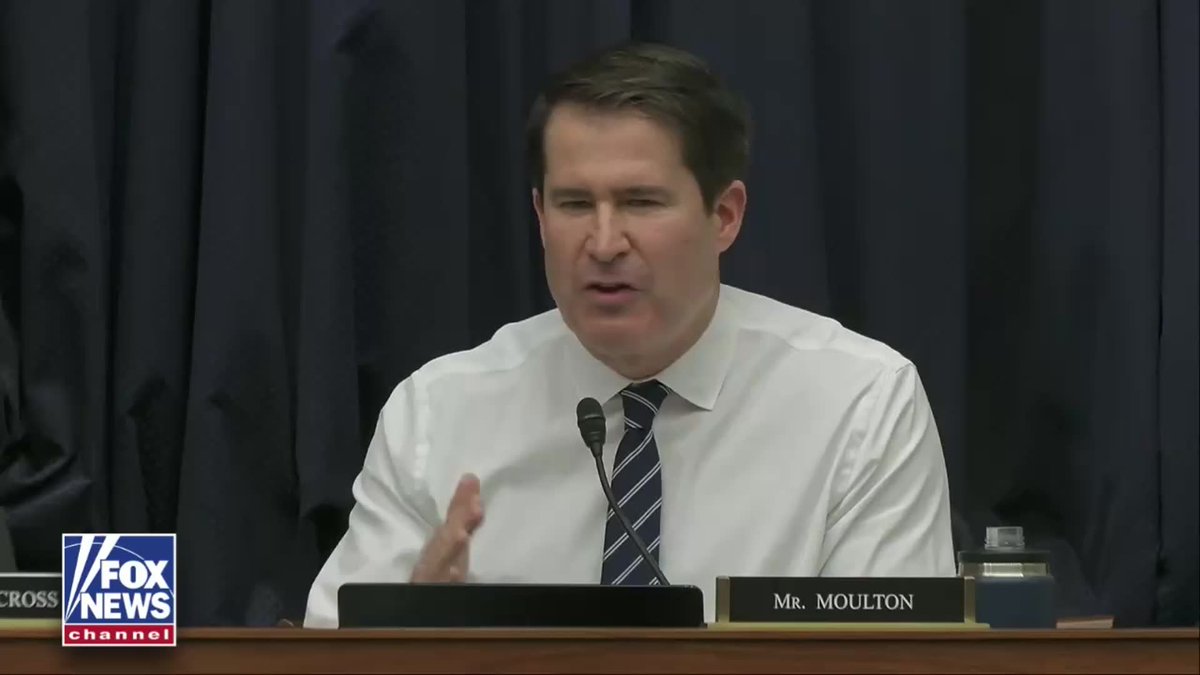
Admiral Brad Cooper, U.S. Central Command Commander: It's an honor to address conference attendees on the historic opportunity presented by Syria's ongoing transition. The United States and Syria share an interest in preserving peace and stability across the Middle East. Since assuming command of CENTCOM in August, I've had...

17,630 views • 8 months ago •via X (Twitter)

0 Comments

No comments available

Comments from the original post will appear here

Related Videos

President Ahmad Al-Sharaa in an Interview with Al Jazeera. Saudi Arabia and Türkiye mediated last year to secure the lifting of U.S. sanctions on Syria. Lifting economic sanctions will not be sufficient unless Syria is also removed from the U.S. list of State Sponsors of Terrorism. Syria is an important country with a strategic location and has been the focus of global attention throughout history. The policies of the former regime led to Syria's isolation from the rest of the world. We have significant interests with Russia, which was quick to open a new chapter in its relations with us. There are major economic and commercial interests between Syria and Western countries, which also host large numbers of Syrian refugees. What affects Lebanon affects Syria, as the two countries are linked by strategic interests. We are discussing solutions with the Lebanese government that will help lead Lebanon to safety and stability. Any state of chaos in Lebanon will have a direct impact on Syria. We support the Lebanese state's exclusive control over weapons and its sole authority over decisions of war and peace. Hezbollah took part alongside the former regime in its war against the Syrian people and was responsible for the displacement of millions of Syrians. Addressing Lebanon's crisis requires more than a security approach; it demands a comprehensive solution that addresses all dimensions of the crisis. The Syrian state is working to enable the Lebanese state to fulfill the commitments it has undertaken. We support the Lebanese state in strengthening its executive institutions and implementing the Taif Agreement as a comprehensive framework for Lebanon. We have no intention of carrying out any military intervention in Lebanon. The agreement between Lebanon and Israel contains many loopholes. The Arab region should have its own independent policy, free from the influence of Israeli or Iranian policies. We are working toward reaching a security agreement with Israel with the participation of a group of countries. We seek to avoid any confrontation with Israel, as it is not in our interest. If the security agreement with Israel succeeds, it will pave the way for comprehensive peace without compromising Syria's rightful claim to the occupied Golan Heights. The future of relations with Israel depends on the proper implementation of each stage of the agreement. We support the Arab path toward the establishment of a Palestinian state. Iran's Islamic Revolutionary Guard Corps had significant involvement in Syria and believes it has a legitimate role in the countries of the region. We are concerned about the expansion of the war in the region and the regional consequences that may result. Over the past year and a half, Syria has sought to avoid becoming involved in any conflict in the region. Relations with the Republic of Iraq continue to improve. We are taking measures to address any potential threats from armed factions along our border with Iraq. A mentality of revenge does not build nations, and our policy is clearly focused on reconstruction and stability. Our foreign policy is based on credibility, strengthening trust with all parties. Syria was once a destination for the Gulf states and enjoyed strong relations and shared interests with them. Investments are already underway on the ground, but they will require time before their impact becomes visible. We are committed to ensuring the success of Gulf and international investments in Syria. Gulf investments in Syria are concentrated in the energy sector, airports, real estate, and urban development. The former regime ran the drug trade in Syria and spread corruption across all sectors. The Syrian economy is expected to grow, and its results will become evident over time. From the very first moment of Syria's liberation, we began building state institutions. We are not able to solve all problems at once, and reforming state institutions requires time. We established an authority to manage the missing persons file in accordance with international standards and in cooperation with countries that have relevant expertise. The state operates according to laws and regulations in pursuit of justice. The SDF is an organization that emerged under specific circumstances and bore arms; it is not linked to the Kurdish community. The positive effects of the course Syria has followed over the past year and a half are beginning to emerge.

Qusay Noor

11,994 views • 26 days ago

The visit of President Zelenskyy to Syria on April 5, 2026, is, without exaggeration, historic. It is the first visit by a President of Ukraine to Damascus - the capital of a country that until recently was a key Russian ally in the Middle East. In June 2022, after Syria recognized the "independence" of the Russian-occupied territories of the so-called "DPR" and "LPR" and supported Russia’s military aggression against Ukraine, Ukraine severed diplomatic relations with Syria and imposed an embargo. Following the fall of Bashar al-Assad’s regime in September 2025, Ukraine and Syria signed a joint communiqué on restoring diplomatic relations. President Zelenskyy’s visit to Syria on April 5, 2026, demonstrates the final loss of Russian influence in the region after the collapse of Assad’s regime. This is not just a bilateral visit, but the final stage of a regional tour that began in late March. President Zelenskyy visited Saudi Arabia, the UAE, Qatar, and Jordan - reaching concrete agreements in both defense and economic spheres. Visits to Turkey, and then Syria, logically complete this arc. The sequence Ankara-Damascus is highly symbolic. President Erdoğan is the key external patron of Syria’s new authorities. President Zelenskyy effectively arrived in Damascus with Turkish backing, significantly increasing the status and credibility of the visit. A Ukraine-Turkey-Syria axis is now taking shape. Turkey acts as the central mediator in this trilateral format, strengthening stability in both the Black Sea and Mediterranean regions. ◾️ Security dimension Syria seeks stability. Ukraine is a unique partner: it has real experience countering Russian and Iranian expansion, while not being a NATO member. ◾️ Energy dimension In particular, discussions include a Qatar-Turkey-Europe gas pipeline project aimed at diversifying Europe’s gas supplies and reducing dependence on Russia. ◾️ Diplomatic dimension vis-à-vis Russia While trilateral talks between Ukraine, the United States, and Russia are on hold due to hostilities in the Middle East, Ukraine is building an alternative architecture of influence - regional partners capable of exerting economic and diplomatic pressure on Moscow. ◾️ Food security and reconstruction Ukraine has reaffirmed its role as a reliable grain supplier to Syria under the Grain from Ukraine and Food from Ukraine initiatives. Discussions also include the reconstruction of Syrian infrastructure, particularly in the energy and industrial sectors. 📹: Apro-Ukraine rally in Idlib, Syria, opposing Syrian normalization with Russia, October 2025/ Thomas van Linge

Anton Gerashchenko

82,888 views • 4 months ago

Syrian “President” Ahmed al-Sharaa, better known as Abu Mohammed al-Julani was branded an ISIS terrorist with a $10 million U.S. bounty on his head until May of 2025 for jihadist atrocities against religious minorities. He just touched down in Washington DC this weekend, marking the first bilateral visit by a Syrian leader outside of the UN General Assembly. Julani, whose forces have been accused of systematic killings of Christians, Druze, and other minorities in Syria, is meeting with President Trump at the White House on Monday. In a disturbing video, Syria’s jihadist leader was filmed casually playing basketball with U.S. Central Command chief Gen. Brad Cooper, the person in charge of overseeing American military operations against ISIS. Eleven months ago, al-Sharaa was America’s most-wanted man in Syria; today, he’s an honored White House guest despite ongoing religious persecution and ISIS led violence in Syria at the direction of Julani. I traveled to the Syrian border this week and met with some of Julani’s victims, including family members of victims who have been killed or are suffering at the hands of Julani’s forces in Suwayda, Southern Syria. Julani is a mass murderer and he will NEVER stop being a mass murderer. History will not remember this visit by Julani to the White House as a positive for our country, or the Trump administration. Innocent people are being killed and I would like to see the Trump administration condemn Julani’s massacre of Druze, Christians and Alawites, and stop entertaining jihadists in suits. We need to be tough on Islamic terrorism, and that’s one of the main reasons why I voted for President Trump! What is it they say about putting lipstick on a pig? A blood thirsty jihadist in a suit is still a blood thirsty jihadist. Donald J. Trump Secretary Marco Rubio Stephen Miller

Laura Loomer

387,944 views • 9 months ago