Video wird geladen...

Video konnte nicht geladen werden

Zur Startseite

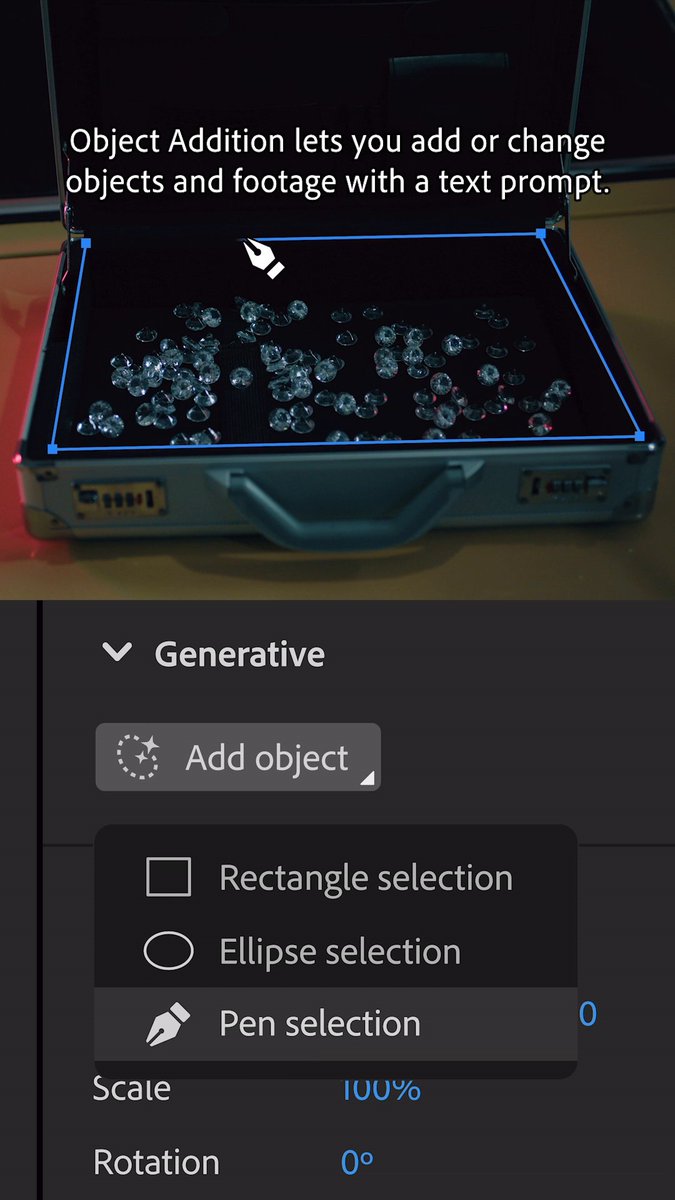
🚀🚨🤖Adobe revealed the integration of four innovative generative AI features: Object Addition, Object Removal, Generative Extend, and Text Video Supporting an AI open ecosystem for third-party plugins, such as OpenAI Pika and Runway Highlighting commitment to responsible AI, focusing on ethically guided training for commercial applications. Video: Adobe Creative Cloud

13,659 Aufrufe • vor 2 Jahren •via X (Twitter)

3 Kommentare

Profilbild von Teodora P L
Teodora P Lvor 2 Jahren

Thanks for sharing @GFMwrites 🤗

Profilbild von AIBony
AIBonyvor 2 Jahren

@Adobe @OpenAI @pika_labs @runwayml Great news

Profilbild von 拆墙者
拆墙者vor 2 Jahren

@Adobe @OpenAI @pika_labs @runwayml 多钱?
Ähnliche Videos

Make Art Not War: The Battle for Creativity It's Adobe's annual Max event in London today and scott belsky's spotlight on AI paints a clear picture: AI isn't just on Adobe's agenda, it is the agenda. Adobe has already scored a home run with generative fill in Photoshop, a feature now spawning entire categories of memes - including my own video, which surprisingly garnered a million views. However, Adobe's ambitions extend beyond still imagery. The Tanker Charges Towards Video At Max, Adobe's Chief Product Officer put an emphasis on AI video generation with Firefly Video. The tech tanker is charging full steam ahead to the next obvious modality for creation, leaving a wake of disruption for any upstarts bold enough to challenge it. The announcement isn't new, but it showcases the emphasis on new product development with a marked increase in the velocity we can expect from the creative tech behemoth. The company that defined the norms of video editing with Premiere, and motion graphics with After Effects, has now entered the realm of AI-powered creation. The wake-up call is clear - the tankers are moving fast. Goliath vs. The Upstarts This development spells a daunting challenge for the numerous start-ups that dared to dethrone Adobe in recent years. For plenty of use cases people have been asking: Why use Photoshop when you have MidJourney? Why use Premiere when you have Descript? Why use After Effects when you have Runway? These aspiring disruptors sought to chip away at Adobe's dominance by offering more specialized, user-friendly solutions - a process that can be characterized as the 'unbundling' of Adobe. Now, they face a head-to-head collision with the very Goliath they sought to topple. Creators' Toolkit: A New Addition But this imminent clash isn't just a tale of corporate competition. This is a story about the tools of creation and their impact on creators themselves and the very canvas of creation. The advent of Firefly, Adobe's AI-driven offering, reflects a broadening recognition of artificial intelligence as an integral part of the creator's toolkit. In other words, Adobe's massive ecosystem of creators needn't wade out into new waters to acquire AI capabilities -- they will simply be infused into the products they already know and (mostly) love, but more critically -- need to use every day to get creative stuff done. The Increasing Stickiness of Adobe's Tools The intersection of AI and creative tools like Photoshop's generative fill is transforming how creators perceive and interact with AI. When they encounter the innovative features of generative fill, they're not primarily thinking about the AI technology that powers it. Instead, they're marveling at the cool new tool that's now part of their beloved Photoshop. This immediate affinity for "Photoshop" masks the sophisticated technology behind it, essentially furthering Adobe's stronghold on the creative industry. Layer in Adobe's stance to training their AI models with sources like Adobe Stock that promise rock-solid data provenance, and you can see Adobe clearly wants to seem like the responsible adults in the room. After all Adobe elected not to put the Behance catalog to work, perhaps rightly so given the ethical backlash to the scraping Artstation imagery. Adobe's Thirty Something Conundrum But it's not all rainbows and sunshine. While Adobe sails ahead full steam, there's an intriguing conundrum waiting in the wings. With 30-year-old codebases forming the foundation of its most popular tools, Adobe faces a significant challenge: its software has back pain. But it's not just a technical problem -- it's also a philosophical one, akin to the ship of Theseus. Can Adobe modernize and refactor its code bases without sacrificing the essence that made these tools indispensable to creators? Can they innovate without alienating their long-time users who've grown accustomed to the 'Adobe way' of doing things? An Unexpected Solution? Interestingly, solutions might emerge from unexpected quarters. Perhaps it'll take an army of developers armed with GitHub Co-Pilot to alleviate Adobe's refactoring nightmare. By automating parts of the refactoring process, it could accelerate the evolution of Adobe's legacy tools, making them more adaptable to the rapidly progressing tech landscape while preserving their core functionality. In a twist of irony, the AI that's reshaping Adobe's offerings might just come to the rescue of its own legacy. As Adobe navigates these murky waters, opportunities are emerging for new entrants in the field. Startups might also find their moment to shine in the midst of Adobe's strategic and technological shifts. With their innovative approaches and less-encumbered platforms, they have the chance to offer alternative solutions to creators seeking novel, efficient, and intuitive tools. The Battle for Creativity The tech giant's journey through a massive transformation at a previously unfathomable speed will set the course for the next era of creative technology. Given the sheer ubiquity of Adobe tools today, it's by far the most common way creators will experience AI. But let's be honest -- this transformation will not be easy. The future of creative tech isn't written yet and as a growing line up of new entrants vie for the prize, one thing's for sure: it's going to be a darn good fight. Make Art Not War In the end, it is the creators who stand to gain the most. As Adobe and its competitors lock horns, they'll strive to deliver increasingly powerful, intuitive, and efficient tools. But, it's up to the creators themselves to harness these innovations. Only by embracing and mastering these new tools can they unlock their full creative potential. So what are you waiting for? Wield these new tools at your disposal and turn your imagination into reality. We are the architects of a new era of creative self expression. If you enjoyed this, drop a like and retweet. Follow Bilawal Sidhu for more writing on creative tech and AI.

Bilawal Sidhu

72,192 Aufrufe • vor 3 Jahren

We are excited to unveil 𝗦𝗸𝘆𝗡𝗲𝘁 𝗔𝗜 𝗠𝗮𝗿𝗸𝗲𝘁𝗽𝗹𝗮𝗰𝗲, an open platform that enables various leading AI apps and platforms on the market to integrate into the SkyNet AI Compute Layer. This means accelerated growth for Phoenix’s AI App Ecosystem by deploying unique AI capabilities and features of each partner into SkyNet. The Phoenix AI Ecosystem and SkyNet users will now be able to access various AI features and products provided by AI Marketplace partners via SkyNet, on top of the existing suite of technology provided by SkyNet, GenAI, PhoenixLLM and AlphaNet. The first partner to be integrated with SkyNet AI Marketplace and deployed on SkyNet is 𝗹𝗲𝗮𝗱𝗶𝗻𝗴 𝗔𝗜-𝘁𝗼-𝟯𝗗 𝗽𝗿𝗼𝘃𝗶𝗱𝗲𝗿 𝗧𝗿𝗶𝗽𝗼. This integration enables Phoenix AI Ecosystem, SkyNet, and Phoenix GenAI users to create 3D models from text prompts or 2D images. These 3D models are then able to be inserted into Unreal Engine 5 game environments, 3D animations, or 3D content assets such as NFTs. This partnership, first of its kind, 𝗲𝗻𝗮𝗯𝗹𝗲𝘀 𝗣𝗵𝗼𝗲𝗻𝗶𝘅 𝗔𝗜 𝗘𝗰𝗼𝘀𝘆𝘀𝘁𝗲𝗺 𝘁𝗼 𝗽𝗿𝗼𝘃𝗶𝗱𝗲 𝘃𝗮𝗹𝘂𝗮𝗯𝗹𝗲 𝘀𝗼𝗹𝘂𝘁𝗶𝗼𝗻𝘀 for verticals such as Web 3 gaming, animation rendering, content & NFT, and metaverse. For more information regarding this particular partner, visit: More details and release information to follow. $PHB

Phoenix AI Labs

38,154 Aufrufe • vor 2 Jahren