正在加载视频...

视频加载失败

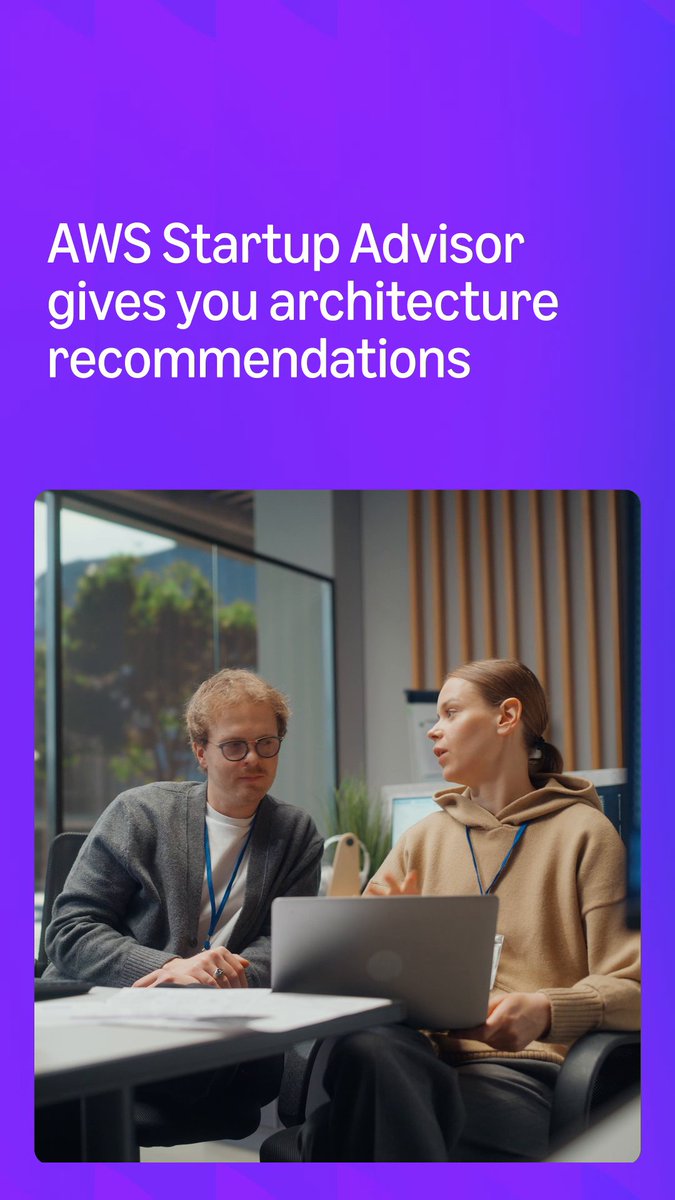
Agent Toolkit for AWS gives AI coding agents the tools, knowledge, and guardrails they need to work effectively with AWS services. Instead of relying on agents' general knowledge of AWS, which can be outdated or incomplete, it provides access to up-to-date documentation, best practices, and tested procedures that improve...

22,757 次观看 • 3 个月前 •via X (Twitter)

21 条评论

SecureAI 的头像
SecureAI3 个月前

Good guardrail to start with — most agent mistakes on AWS trace back to stale or guessed knowledge. The next one, as coding agents move from suggesting to running things: authority. What an agent is allowed to touch in a live account, and with what spend and blast-radius limits. Up-to-date docs keep it correct. Scoped permissions keep a wrong call from becoming an expensive one.

Brooke Jamieson 的头像
Brooke Jamieson3 个月前

Please try out the agent toolkit and let me know what you think!

Andrew 的头像
Andrew3 个月前

🫵Revenge is certain🚀

Inflectiv AI ⧉ 的头像
Inflectiv AI ⧉3 个月前

Standardizing cloud infrastructure deployment through the Model Context Protocol ensures that autonomous developers stop guessing static API endpoints.

Mcmamby 🦊 的头像
Mcmamby 🦊3 个月前

Europe girl as Amazon spokesperson?

NAZZY 的头像
NAZZY3 个月前

AI agents just got a major upgrade on AWS ⚡☁️

Kazi Humayun Rashid(Tanveer) 的头像
Kazi Humayun Rashid(Tanveer)3 个月前

URGENT - Hackathon deadline June 30, 2026 at 6:00 AM BST. I need immediate human support. Please reset my payment attempt limit NOW so I can add my card. My card is valid, bank confirmed international transactions are enabled. The block happened on my VERY FIRST attempt.

🅱🆄🅲🅺🆂💲🇲🇾 的头像
🅱🆄🅲🅺🆂💲🇲🇾3 个月前

Perfect fur a starter

安叫兽|Bird🕊️ 🔶 BNB 的头像
安叫兽|Bird🕊️ 🔶 BNB3 个月前

MCP 这块终于不用全靠模型记忆了

THC Humor 💹🧲 的头像
THC Humor 💹🧲3 个月前

The future belongs to agents that actually know the documentation

Milton Yan 的头像
Milton Yan3 个月前

documentation and best practices cover the knowledge gap, but guardrails that stop the wrong API call in real-time are a different layer. knowing the correct way to configure an S3 bucket and not doing it anyway are different failure modes.

NAZZY 的头像
NAZZY3 个月前

Outdated knowledge is the problem… this is the fix 🧠☁️

NAZZY 的头像
NAZZY3 个月前

Better tools, better guardrails, better AWS workflows for AI agents 🤖🔥

EurosHub 的头像
EurosHub3 个月前

Equipping agents with curated procedures and live references mitigates outdated knowledge and accelerates deployment in production grade workloads.

AI Mastery Guide 的头像
AI Mastery Guide3 个月前

Giving agents up to date docs instead of relying on outdated training knowledge is exactly the gap that needed fixing

Cheryl Tibbs 的头像
Cheryl Tibbs3 个月前

This is the real unlock. Agents guessing at your cloud setup is how you burn money and trust. Give them real tools, current docs, and guardrails and you go from a cute demo to something you can actually run in production. We build this way at EmergeStack and it matters.

NAZZY 的头像
NAZZY3 个月前

AWS Agent Toolkit brings real-time docs, best practices, and guardrails to AI coding agents ⚡🤖 Less guessing. More building. ☁️🔥

Subramanya N 的头像
Subramanya N3 个月前

does it show the IAM diff before an agent runs a command, or only after failure?

KnowDirect 的头像
KnowDirect3 个月前

I like the direction here. AI agents can move fast, but pairing that speed with AWS-specific guidance is what makes them actually useful.

Back LLM Radar|Syl 的头像
Back LLM Radar|Syl3 个月前

This is the right direction. Up-to-date docs + MCP tools reduce agent guesswork. The next guardrail is runtime evidence: tool version, IAM/resource diff, command log, allowed/blocked reason, and rollback path. Otherwise success rate improves, but governance remains hard.

Arzoo Ai 的头像
Arzoo Ai3 个月前

Agent Toolkit for AWS helps AI agents stay updated with accurate docs, best practices, and secure workflows for better AWS development. 🚀

相关视频

New Course: ACP: Agent Communication Protocol Learn to build agents that communicate and collaborate across different frameworks using ACP in this short course built with IBM Research's BeeAI, and taught by Sandi Besen, AI Research Engineer & Ecosystem Lead at IBM, and Nicholas Renotte, Head of AI Developer Advocacy at IBM. Building a multi-agent system with agents built or used by different teams and organizations can become challenging. You may need to write custom integrations each time a team updates their agent design or changes their choice of agentic orchestration framework. The Agent Communication Protocol (ACP) is an open protocol that addresses this challenge by standardizing how agents communicate, using a unified RESTful interface that works across frameworks. In this protocol, you host an agent inside an ACP server, which handles requests from an ACP client and passes them to the appropriate agent. Using a standardized client-server interface allows multiple teams to reuse agents across projects. It also makes it easier to switch between frameworks, replace an agent with a new version, or update a multi-agent system without refactoring the entire system. In this course, you’ll learn to connect agents through ACP. You’ll understand the lifecycle of an ACP Agent and how it compares to other protocols, such as MCP (Model Context Protocol) and A2A (Agent-to-Agent). You’ll build ACP-compliant agents and implement both sequential and hierarchical workflows of multiple agents collaborating using ACP. Through hands-on exercises, you’ll build: - A RAG agent with CrewAI and wrap it inside an ACP server. - An ACP Client to make calls to the ACP server you created. - A sequential workflow that chains an ACP server, created with Smolagents, to the RAG agent. - A hierarchical workflow using a router agent that transforms user queries into tasks, delegated to agents available through ACP servers. - An agent that uses MCP to access tools and ACP to communicate with other agents. You’ll finish up by importing your ACP agents into the BeeAI platform, an open-source registry for discovering and sharing agents. ACP enables collaboration between agents across teams and organizations. By the end of this course, you’ll be able to build ACP agents and workflows that communicate and collaborate regardless of framework. Please sign up here:

Andrew Ng

105,758 次观看 • 1 年前

Everyone wants agent swarms. Very few people are talking seriously enough about the context layer that makes swarms useful. Even with one agent, context is fragile. Too little context and the agent guesses. Too much context and it wastes tokens, loses focus, or reasons over irrelevant noise. The sweet spot is precise context: the right knowledge, in the right structure, at the right moment. With many agents, that challenge explodes. Each agent produces decisions, assumptions, findings, summaries, risks, and partial conclusions. Unless that knowledge becomes shared, structured, and reusable, every new agent is forced to rediscover what another agent already learned. That is not a swarm. That is a crowd. Shared context graphs are what turn agent activity into agent collaboration, and OriginTrail DKG V10 brings them to life. Was just playing with some final polishing for the V10 release, and it is really powerful to see shared context graphs where multiple agents contribute knowledge into the same connected memory, with attribution visible directly in the graph ui. That matters for three reasons. First, agents can access and build on one shared memory instead of staying trapped in isolated sessions. Second, the graph structure helps them retrieve the exact context they need, instead of stuffing everything into a prompt and hoping the model sorts it out. Third, verifiability of provenance. You can see which agent contributed each piece of knowledge, trace the source, and decide what to trust. Tokenmaxxing starts with fewer tokens, but the deeper story is coordination - agents stop reloading the world and start building on shared, verifiable context. That is the foundation for serious multi-agent work across software engineering, research, finance, operations, project management, and far beyond. The future is not more agents, it is agents working from shared, verifiable context. But the more the merrier, of course.

Jurij Skornik

11,180 次观看 • 4 个月前