Loading video...

Video Failed to Load

Go Home

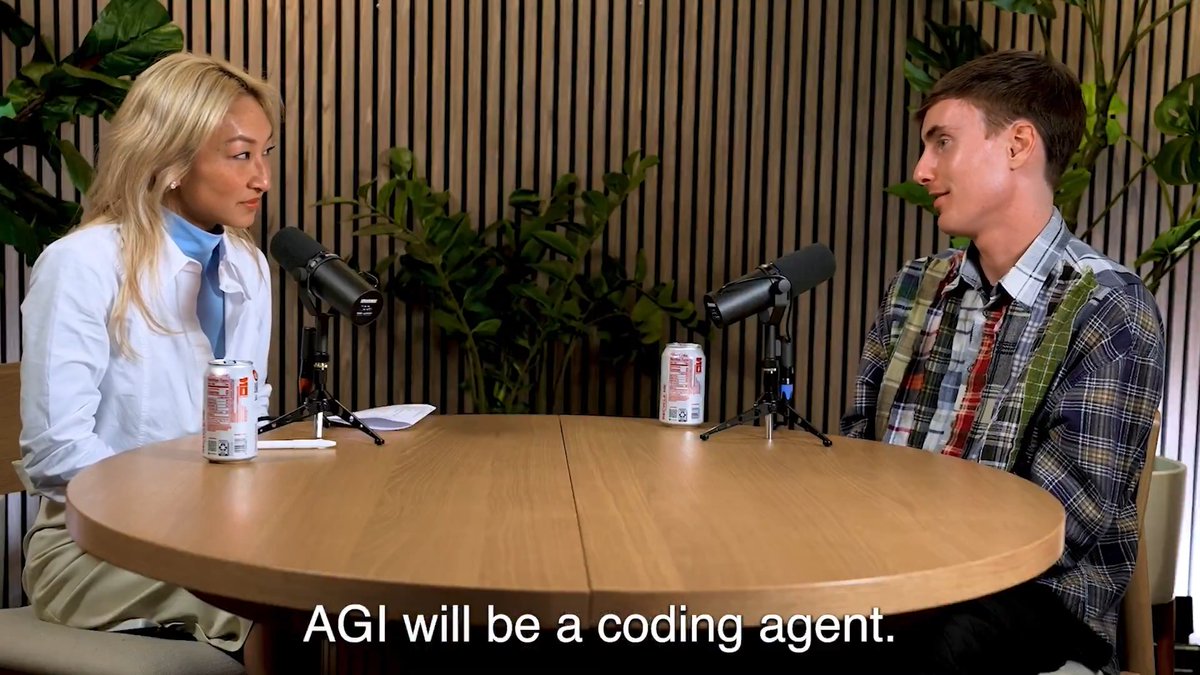
Agents are getting complex to manage: models, skills, automations, permissions, cloud environments, orchestration patterns... So, we built the Terraform for agents: one repository that configures all of your agents as code. The Warp Factories configuration spec defines: - Agents and orchestration: how work gets routed and which models agents...

248,660 views • 5 days ago •via X (Twitter)

5 Comments

Warp's profile picture
Warp5 days ago

Check out the interactive guide and clone the example templates to learn more about how it works. We'll help you deploy with $10k in usage for qualified companies 🔖

WIK's profile picture
WIK5 days ago

What happens to work already running when a config PR merges? Does each task stay pinned to the old definition, including its child agents? “Reproduce this run” gets interesting if the factory changed halfway through it.

catman's profile picture
catman5 days ago

The spec covers the whole factory: routing and models, automations, permissions and environments, plus scorers and benchmarks. That gives teams a place to test configuration changes before rolling them out.

MintScope's profile picture
MintScope4 days ago

Agents-as-code is the right shape when permissions ship with the factory. Operator twin: every agent config should name the finish artifact and the revoke path — otherwise Terraform just codifies open-ended burn.

Rudra Satani's profile picture
Rudra Satani5 days ago

managing agents is becoming its own discipline. we went from 'just prompt it' to needing a whole platform in like a year

Related Videos

Today we’re launching the first and only human-like AI agents in the world. Super Agents™ are the first agents with human‑level skills – they DM you, take @ mentions, send emails, manage docs, tasks, and more. Not just tools or API calls, but real skills fine‑tuned for how teams actually work. The first agents with 100% context – fully native in ClickUp and fully synced from other apps. Super Agents see your work the same way that humans do: tasks, docs, schedules, and conversations all in one place. The first agents that learn from human interactions automatically, without any setup or configuration – when you give feedback, they listen and improve how they work. The first agents with human‑level memory for custom agents – historical memory for every interaction, short-term working memory, and even long‑term memory stored in docs you can literally open, inspect, and edit. The first agents that are literally the same as users – our agentic user model is the same as our user data model. This gives you permissions and capabilities that you and your systems are already familiar with. The first infinite agent catalog – where anyone can create and customize agents in minutes, for literally any type of work imaginable. It's the most intuitive way to build agents on the planet. 95% of companies are failing in AI adoption. The reality is that AI isn't meant to be adopted, it's meant to be adapted – to you. Super Agents are automatically personalized to you and your company using proprietary state-of-the-art agent architecture, orchestration, and tooling. Today is the largest step forward we've ever made towards our mission of making people more productive. Maximize human productivity, with ClickUp Super Agents. Available NOW. For everyone.

Zeb Evans

320,989 views • 9 months ago

New short course: Building Code Agents with Hugging Face smolagents! Learn how to build code agents in this course, created in collaboration with Hugging Face, and taught by Thomas Wolf, its co-founder and CSO, and m_ric, Hugging Face’s Project Lead on Agents. Tool-calling agents use LLMs to generate multiple function calls sequentially to complete a complex sequence of tasks. They generate one function call, execute it, observe, reason, and decide what to do next. Code agents take a different approach. They consolidate all these calls into a single block of code, letting the LLM lay out an entire action plan at once, which can be executed efficiently to provide more reliable results. You’ll learn how to code agents using smolagents, a lightweight agentic framework from Hugging Face. Along the way, you’ll learn how to run LLM-generated code safely and develop an evaluation system to optimize your code agent for production. In detail, you’ll learn: - How agentic systems have evolved, gaining greater levels of agency over time—and why code agents are a next step. - How code agents write their actions in code. - When code agents outperform function-calling agents. - How to run code agents safely in your system using a constrained Python interpreter and sandboxing using E2B. - To trace, debug, and assess the code agent to optimize its behaviours for complex requests. - How to build a research multi-agent system that can find information online and organize it into an interactive report. By the end of this course, you’ll know how to build and run code agents using smolagents, and deploy them safely with a structured evaluation system in your projects. Please sign up here!

Andrew Ng

127,724 views • 1 year ago