正在加载视频...

视频加载失败

AI needs data to grow. But accessing high-quality datasets is becoming harder than ever. · Data collection is increasingly centralized in the hands of a few large players. · Platforms are locking content behind expensive APIs and private data deals. · Specialized datasets (medical, legal, code) can cost 20–40×...

73,709 次观看 • 3 个月前 •via X (Twitter)

0 条评论

暂无评论

原始帖子的评论将显示在这里

相关视频

Something big is happening in robotics - and it’s hiding in plain sight. This post is not about dancing robots but in the data that powers them. Open robotics datasets have exploded this year, turning the field into a more scalable and collaborative ecosystem. In just two years, Hugging Face datasets grew from 11k to over 600k - and robotics is by far the fastest-growing segment. We went from 1k robotics datasets in 2024 to 27k in 2025! For comparison, text generation, the second-largest category, has only around 5k datasets in 2025. That gap is massive. Open datasets are important because robotics lives and dies by real-world robot data - video, actions, sensors, failures. By making this data easy to upload, reuse, and benchmark, researchers, startups, and large players are now releasing real-robot datasets that would have stayed locked inside labs just a few years ago. Major contributors include NVIDIA, LeRobot initiative, and a rapidly growing maker community. This surge is also enabled by cheaper video storage, better tooling, and an open-source AI culture now spilling into the physical world. And it really matters: open robotics data dramatically lowers entry barriers, accelerates learning-by-doing, and speeds up progress toward generalist and humanoid robots. Robotics won’t scale through hardware alone - but to a large extent through shared data. Viz below from AI World - link to the story and more viz/filters in comment.

Pierre-Alexandre Balland

185,895 次观看 • 6 个月前

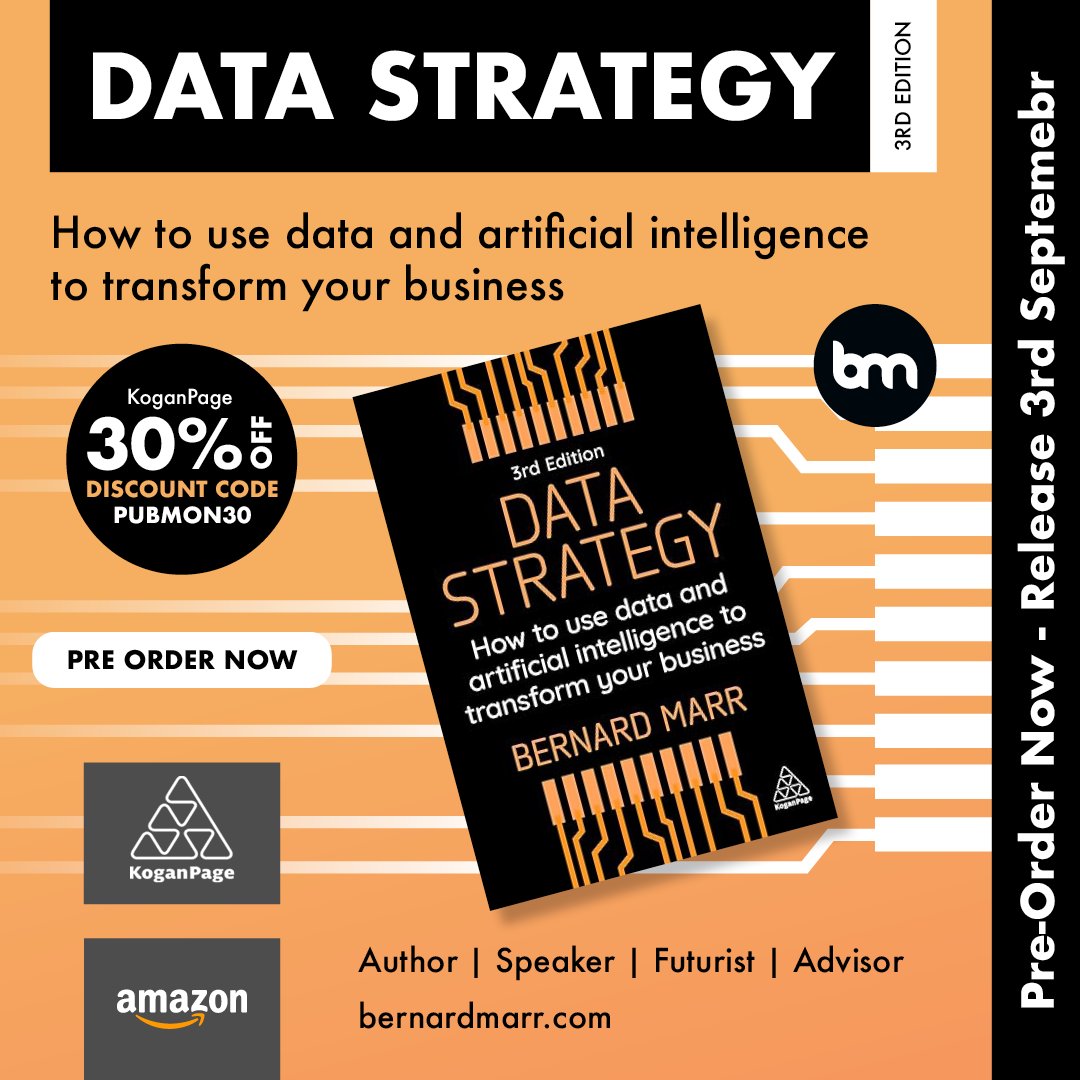
🚀 My New Book is Here: Data Strategy (3rd Edition) 🚀 I’m thrilled to share the release of my latest bestselling book, Data Strategy: How to Use Data and Artificial Intelligence to Transform Your Business. Every business today needs data to survive - but simply having data is not enough. What matters is how you use it. A well-designed data strategy is the key to unlocking value, driving insights, and giving your organisation the competitive edge it needs to thrive in the digital economy. From small organisations to global enterprises, I’ve seen first-hand how a data-driven approach can transform operations, improve decision-making, and unlock entirely new opportunities. That’s why I’ve poured my experience into this book — to help leaders and teams build strategies that don’t just talk about data, but actually deliver measurable impact. 🔍 In this third edition, I’ve expanded the book to reflect the latest developments in data and AI, including: ✅ Generative AI and its role in shaping business innovation. ✅ Synthetic data and how it can accelerate AI adoption. ✅ The potential of quantum computing and what it means for the future of data. ✅ Expanded guidance on cybersecurity, regulations, and ethics in a data-driven world. This isn’t just a theoretical framework - it’s a practical guide to collecting, managing, and using data effectively in order to drive growth, innovation, and long-term success. Whether you’re leading a start-up or a multinational, Data Strategy will equip you with the tools you need to stay ahead in a rapidly evolving landscape. 📖 Pre-order your copy today: 👉 Amazon - 👉 Kogan Page - I can’t wait to hear how this book helps you craft your own data-driven strategy and transform your business for the future.

Bernard Marr

10,980 次观看 • 10 个月前

🚨 THE BIGGEST BOTTLENECK IN AI ISN'T COMPUTING POWER ANYMORE IT'S MOVING DATA. Instead of laying new cables, Chinese researchers have upgraded existing fiber infrastructure by doing two things at once: Using three wavelength bands (C + L + S) instead of the usual two. Using four cores inside each fiber instead of one. Each core acts like an independent highway, and each band acts like an extra lane on that highway. Together, they’ve reportedly increased transmission capacity per core by nearly 50% and overall data throughput by up to 5×. This matters enormously for AI. Modern AI clusters move terabits of data per second between thousands of GPUs. The biggest bottleneck is often not the chips themselves, but moving data fast enough between them. If you can push 5× more data through the same physical cables, you can train bigger models faster and reduce network congestion. Why this is significant: • It shows multi-core + extended spectrum technology moving from labs into real-world commercial use • The system has already run over 35 km of existing telecom network • It could be especially useful for submarine cables and large-scale data center interconnects • China is also eyeing it for its “Eastern Data, Western Computing” project The deeper implication: We’re reaching the physical limits of how much data we can push through single-core fibers using traditional methods. By combining spatial multiplexing (multiple cores) with spectral multiplexing (more wavelength bands), engineers are finding new ways to keep scaling bandwidth without having to dig up the planet to lay new cables. This kind of breakthrough is quiet but foundational it’s the kind of infrastructure upgrade that will determine how fast AI and cloud computing can actually grow in the coming years. The future of data movement might not require more cables. It might just require smarter ones. How important do you think multi-core and multi-band fiber will be for keeping up with AI’s exploding data demands? Follow for more frontier networking, photonics, and infrastructure technology.

TheNewPhysics

20,485 次观看 • 1 个月前