Loading video...

Video Failed to Load

Go Home

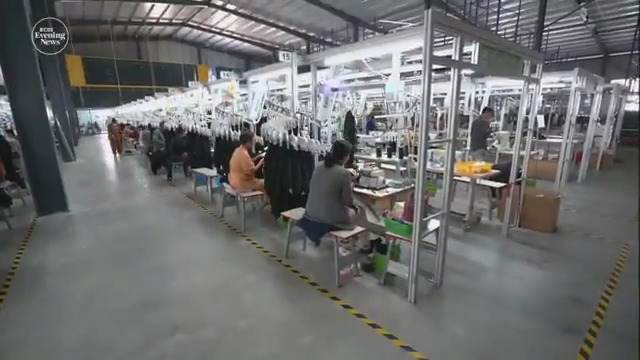
"All Russian refineries run on Chinese equipment, and old Soviet scrap barely working" A former employee of a Russian oil refinery exposed deep corruption in the sector When German specialists offered high-quality pumps with a warranty, the director chose cheap Chinese ones that break quickly, to steal the rest...

88,875 views • 17 days ago •via X (Twitter)

0 Comments

No comments available

Comments from the original post will appear here

Related Videos

China Invests in Absorbing Russian Knowledge Over the past few years, various Chinese officers have visited the front lines in Ukraine to learn from the conflict, according to a CNN article from September. China has been doing this long before officers from Vietnam and Laos, who have also been near the front lines to learn. The same thing is happening on the Ukrainian side, with various NATO officers accompanying and learning from the conflict. However, the cooperation between Russians and Chinese is much deeper. Russian instructors are involved in Chinese training on trenches and drone usage, bringing modern assault and shelter tactics. Some time ago, I wrote this post: It discussed the great technological advances of the Chinese army, but how they occurred in a very accelerated manner and without field experience. The Chinese seem to be investing in Ukraine's experience and intense training to compensate for all that. Although the Chinese have become a powerhouse in missiles and drones, and have good radars, there is an excessive dependence on technology that is capable of weakening rather than strengthening. War is still defined by the quality of armor, innovations learned from the battlefield, and trust in one's own equipment, which must withstand sun, rain, desert, and snow. The Chinese will continue investing in absorbing this real-world learning in the coming years, but they face major challenges in improving their equipment for conventional warfare, treating technology as an additive rather than the main foundation.

Patricia Marins

81,769 views • 5 months ago

An 82-year-old Cuban pilot went viral on Chinese social media after recounting his friendship with and studies in China during the 1960s and asking about the cost of a flight from Havana to Beijing to a Chinese tourist. Living in a cramped room with just one bed in Cuba, the 82-year-old is known as "Tito" on Chinese social media. When a Chinese female tourist walked by his door, he tried to converse with her despite her language barrier and initial shock. The girl later discovered that Tito was a Cuban pilot who studied aviation in Shanxi Province, China, from 1961 to 1963. Tito showed her his Chinese PLA graduation certificate and told her that he missed China and that most of his pilot friends had already died. After that, he asked how much a plane ticket from Havana to Beijing would cost. The girl later shared the video on Chinese social media, describing Tito as "the lonely grandfather in Cuba." She mentioned that Tito kept a little notebook in which he planned to jot down his inquiries for the Chinese and his wish lists for sites to visit in China. It appears that he had made repeated attempts to strike up conversations with Asian tourists who passed his door, but they all thought he was strange and quickly left. In Tito's notebook, you can still see Chinese expressions like "How are you?" "When will you leave?" and "When are you planning to return?" Tito's story has moved many Chinese internet users, who are rallying to help him get a plane ticket to China or locate his Chinese friends. In September 1961, the Cuban Air Force chose 223 young pilots (average age less than 20) to study in China. They were among the first international students to come to China, as the Chinese netizens learnt later. A Chinese netizen later claimed on social media that his grandfather was Tito's teacher at the time. The story of Tito has gone viral on Chinese social media. The official account of the Chinese PLA Air Force left a comment under Tito’s video, stating that they had been attempting to get in touch with Tito. The comment said that the Chinese PLA will never forget a friend like Tito and that their friendship will transcend space and time. Today is the Lantern Festival in China, a time for family reunions. The Chinese embassy in Cuba invited Tito and other Cuban pilots who had studied in China for their youth to attend the festival feast, where they reminisced and sang many Chinese songs together. The Chinese have an old proverb: "滴水之恩当涌泉相报" (A drop of water shall be returned with a burst of spring), being grateful is a virtue in Chinese culture; we always give back when someone helps us. The life and work of Canadian surgeon Norman Bethune is a topic included in Chinese school curricula; his heroic contributions to our cause during World War II are emphasized in our textbooks, and his legacy lives on in China. John Rabe, a German merchant who rescued some 250,000 Chinese people from the Nanjing Massacre, and his family are still very much loved and respected by the Chinese people. Thomas Rabe, a doctor at the medicinal Faculty of Heidelberg University in Heidelberg, southwest Germany, and grandson of John Rabe, sent a plea to the Chinese embassy in Germany in March 2020 for medicinal supplies to help his hospital battle the COVID-19 pandemic. In April 2020, with all of the necessary assistance and coordination, medical supplies given from various sources, including medicines, protective suits, and masks, arrived in Germany from China. Chinese embassy staff raced from Berlin to Heidelberg, a distance of 700 kilometers, to expedite the delivery of supplies to the Heidelberg administration, the Medical Faculty of Heidelberg University, and Dr. Thomas Rabe.

Eivor

251,988 views • 1 year ago