正在加载视频...

视频加载失败

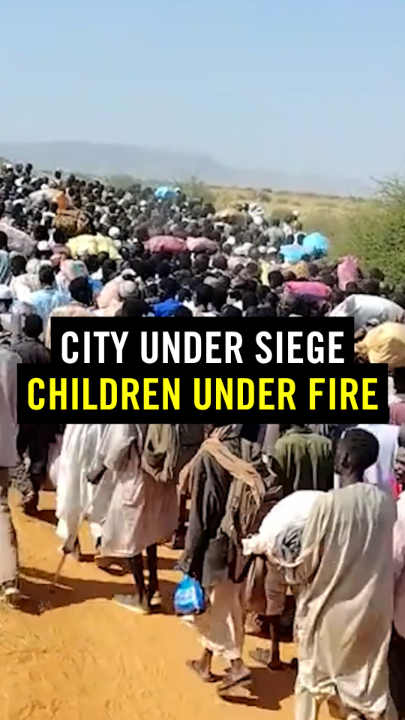
Al-Rahad Abu Dakkana: Another Chapter in the Rapid Support Forces Terrorist Militia’s Crimes Against Civilians Using UAE-Supplied Death Drones Eight civilians were killed and 27 others injured, including women, after the Rapid Support Forces terrorist militia launched a drone attack on the city of Al-Rahad Abu Dakkana in North...

15,768 次观看 • 22 天前 •via X (Twitter)

0 条评论

暂无评论

原始帖子的评论将显示在这里

相关视频

More Than 1,300 Tons of Weapons Reveal the Scale of UAE Support for the Genocidal Rapid Support Militia in North Kordofan The enormous military stockpiles discovered by the Sudanese Armed Forces and allied forces following the liberation of several areas in North Kordofan reveal the scale of the military, financial, and logistical support provided by the United Arab Emirates to the Rapid Support Militia. This support enabled the militia to occupy towns and villages and carry out killings, torture, forced displacement, and widespread looting against the Sudanese people. Military sources reported that approximately 480 tons of various weapons were documented in the city of Bara, while the quantity of weapons and ammunition found in Jabra Al-Sheikh had exceeded 850 tons by Thursday. The preliminary total from the two areas has therefore surpassed 1,300 tons. Specialized military committees are continuing to document and inventory the captured equipment, and the total is expected to rise as additional weapons and ammunition are discovered inside civilian homes that the militia seized and converted into military storage facilities. According to the preliminary inventory of equipment captured during the battles to liberate areas of North Kordofan, the forces recovered more than 240 combat and armored vehicles, eight weapons and ammunition warehouses, ten medical supply warehouses, and thousands of barrels filled with fuel. The sheer volume of these supplies demonstrates the level of resources the UAE provided to prolong the war and keep the militia’s killing machine operational. The same militia supplied with these weapons invaded cities, tortured Sudanese civilians, killed residents, forced communities to flee, looted markets and homes, and converted civilian property into military bases and storage sites. The discovery of weapons inside residential homes also exposes the militia’s systematic seizure of civilian neighborhoods for military purposes. Sudanese homes were used to store ammunition, fuel, and other supplies delivered through the UAE-backed logistical network. International investigations have documented the delivery of advanced weapons to the militia with support from the UAE, alongside the recruitment and transportation of foreign mercenaries and the operation of air and land supply networks that enabled the militia to continue its war against the Sudanese people. The arsenal uncovered in Bara and Jabra Al-Sheikh represents only part of the resources Abu Dhabi has committed to enabling a militia responsible for massacres, rape, torture, and mass displacement. Each area liberated by the Sudanese army reveals further evidence of the scale of the UAE project that turned Sudan into a battlefield for financing and arming a militia engaged in genocide and terror against civilians. #Sudan #RSFisTerroristOrganization #UAEKillsSudanesePeople #UAESponsorsTerrorism

Sudanese Echo

12,146 次观看 • 10 天前

Circulating Footage Shows One of the UAE-Supplied “Drones of Death” Used by the Rapid Support Forces Militia Crashing in North Kordofan Footage circulating on social media appears to show a Chinese-made armed drone operated by the Rapid Support Forces militia after it crashed in the Al-Goweiz area of Badiyat Dar Al-Reih in North Kordofan State. No casualties have been reported. The footage shows the aircraft largely intact, with several air-to-ground munitions still mounted beneath its wings. The weapons appear to belong to a class of guided munitions used to strike ground targets. Preliminary information circulating alongside the footage suggests that the drone may have crashed because of a technical malfunction. A visual comparison with known Chinese drone models suggests that the aircraft could be a CH-95, based on its twin-tail configuration, rear-mounted pusher propeller, wing design and raised wingtips. This type of drone can be used for surveillance, reconnaissance and precision strikes with guided weapons. It may also belong to the FH-95 family, given the strong visual similarities between the two designs. A definitive identification cannot be made from the available footage alone and would require an examination of the wreckage, serial numbers and internal components. The munitions mounted beneath the wings indicate that the drone had been prepared for a combat mission. Its crash prevented it from reaching its intended target, where the strike could have killed civilians or destroyed homes and essential infrastructure. The aircraft forms part of a wider system of advanced Chinese-made drones and weapons delivered to the Rapid Support Forces militia through UAE-linked supply networks. These weapons have expanded the militia’s ability to conduct long-range aerial attacks against towns, villages and civilian infrastructure. The militia has previously been documented using Chinese-made GB50A guided bombs, while Chinese drones including the Wing Loong II and FeiHong-95 have also appeared in its arsenal. International investigations have linked the transfer of these weapons to the United Arab Emirates, despite Abu Dhabi’s repeated denial that it provides military support to the militia. These aircraft have become “drones of death”, killing civilians and striking markets, hospitals, water facilities, power stations and fuel depots. The Office of the United Nations High Commissioner for Human Rights, led by Volker Türk, documented 15 drone strikes on El Obeid and surrounding areas between 6 and 28 June. The attacks killed at least 45 civilians and injured 41 others. Türk also warned about the escalating attacks across North Kordofan and the targeting of facilities that civilians depend on for food, water, fuel and essential services. He said another human rights catastrophe was unfolding in the state. The wreckage in Al-Goweiz provides further evidence of the scale of external military support reaching the Rapid Support Forces militia and of the UAE’s role in prolonging the war and expanding aerial attacks against populated areas. Every drone delivered to the militia represents a direct threat to civilian life and creates another opportunity for a massacre. The continued failure to take decisive international action against the UAE-linked supply networks allows Sudan’s machinery of war and civilian killing to remain in operation. #Sudan #RSFisTerroristOrganization #UAEKillsSudanesePeople #UAESponsorsTerrorism

Sudanese Echo

35,172 次观看 • 1 个月前

Swedish-Made Medical Coolers Found at UAE-Backed Rapid Support Forces Militia Sites in Khartoum Deepen Allegations of Organ Harvesting and Link Secret Detention Centres, Mass Graves and Thousands of Missing Civilians The Sudanese army has found Swedish-made medical coolers produced by Dometic Medical Systems in areas of Khartoum recaptured from the UAE-backed Rapid Support Forces militia. The equipment is designed to preserve and transport temperature-sensitive medical and biological materials. The discovery strengthens serious allegations that the militia harvested organs from civilians it killed or detained inside the network of secret prisons it established across Khartoum and Darfur, using specialised cooling equipment to preserve and transport the organs through an organised trafficking network. In a letter dated 12 June 2026, the Sudanese government informed the United Nations Security Council that the Rapid Support Forces militia operated mass detention centres where prisoners were subjected to torture, starvation and killing. The letter also stated that foreign medical personnel had participated in removing organs from detainees at Dagris Prison in Nyala as part of a cross-border organ trafficking network. According to the letter, around 20,000 people were being held at Dagris Prison in Nyala, while hundreds of others, including children, were detained at Shalla Prison in El Fasher. The discovery of medical coolers at militia sites in Khartoum adds a physical dimension to these claims and raises direct questions about the fate of thousands of civilians who disappeared after being detained, the recipients of the organs and the routes used to transport them outside Sudan. The equipment was found amid a wider landscape of secret detention centres, torture rooms, mass graves and bodies discovered inside wells, buildings and other locations abandoned by the militia across Khartoum and Omdurman. In Qari, north of Khartoum, an investigation published by The Guardian documented a detention centre operated by the Rapid Support Forces militia, with hundreds of unmarked graves nearby. Survivors described beatings, torture, starvation and executions. Estimates cited in the investigation indicated that more than 500 people may have died from torture or deprivation of food before being buried around the prison. Images from inside the facility showed bloodstained rooms, iron restraints and areas prepared for the punishment and torture of detainees. Survivors also described repeated killings and the abandonment of sick and wounded prisoners without treatment as hunger and disease spread through overcrowded cells. Photographs and videos of prisoners released from militia detention centres provided further evidence of the conditions inside. Several survivors appeared severely emaciated, with their bodies reduced to skin and bone by starvation, torture and the denial of water and medical care. One of the most widely documented cases was that of businessman and community activist Al-Waleed Abdeen, who emerged from a militia detention centre in Jebel Aulia after losing so much weight that some relatives struggled to recognise him. Images showed his bones protruding beneath his skin after months of detention, torture and starvation. He later died from the consequences of the abuse he had suffered. In Khartoum’s Al-Fayhaa neighbourhood, authorities found the bodies of 11 people, including women and children, inside a deep well after the militia withdrew from the area. Police said the victims had been killed during the Rapid Support Forces militia’s control of the neighbourhood and their bodies thrown into the well in an attempt to conceal the crime. Authorities also announced the discovery of mass graves in the Al-Riyadh district and other parts of Khartoum containing the remains of people killed while the militia controlled the capital. These sites add to the unidentified graves and bodies found inside homes, civilian buildings and former detention facilities. These findings connect thousands of missing civilians whose whereabouts became unknown after their arrest, detainees who died under torture and starvation, mass graves uncovered after the militia’s withdrawal and specialised medical coolers found inside its positions. Together, they strengthen allegations that the militia’s detention system extended from torture, killing and enforced disappearance to the exploitation of victims’ bodies, the removal of their organs and their transfer through an organised criminal network. The allegations are consistent with the broader pattern of crimes committed by the militia since the war began. In El Geneina, the Rapid Support Forces militia and allied forces carried out mass killings, sexual violence, torture, looting, the burning of neighbourhoods and forced displacement, targeting the Masalit and other non-Arab communities in particular. Human rights organisations described the campaign as ethnic cleansing involving war crimes and crimes against humanity. In Al Jazira State, the militia attacked dozens of villages and towns, killed civilians inside homes, markets and roads, committed sexual violence, kidnappings and unlawful detention, looted hospitals, farms and private property, and forced large numbers of residents to flee. In El Fasher, the United Nations Independent International Fact-Finding Mission said the evidence revealed a campaign bearing the hallmarks of genocide. The documented acts included ethnically motivated killings, attacks on non-Arab communities, widespread sexual violence, forced displacement and the deliberate denial of food, water and medical care. International reports also documented field executions, torture, mass killings, the organised abduction of women and girls, gang rape, sexual slavery and attacks on children and civilians attempting to flee the city. In recent weeks, the militia’s attacks on civilians have expanded to markets, schools, water sources, power stations and fuel facilities through the use of drones. The strikes included attacks in El Obeid on markets, service facilities, fuel stations and water points, as well as the market and surrounding residential areas in Al-Rahad Abu Dukhna. A drone also struck the only water well in the Andro area of North Darfur, killing and injuring dozens of civilians who had gathered to obtain water. The medical coolers were found at the centre of a wider record involving secret prisons, survivors reduced to skeletal figures, mass graves, bodies dumped in wells and thousands of civilians who disappeared after detention, alongside official information submitted to the Security Council concerning the harvesting and trafficking of detainees’ organs. The growing body of evidence points to an organised system of killing, torture, starvation and enforced disappearance in areas controlled by the Rapid Support Forces militia. The allegations now extend to the trafficking of victims’ bodies and organs, amid the military, financial and logistical support the militia has continued to receive from the United Arab Emirates. Video source: X account العــــالمي ♛🦅 💙|🇸🇩 #Sudan #RSFisTerroristOrganization #UAEKillsSudanesePeople #UAESponsorsTerrorism

Sudanese Echo

27,626 次观看 • 20 天前

A Circulated Video as Further Evidence of the Terrorist Nature of the Rapid Support Militia, and Why What Is Happening in Sudan Is Not a Civil War A recently circulated video has spread widely across Sudanese social media platforms, adding to an accumulating body of evidence documenting the violence and threats endured by Sudanese civilians for more than three years at the hands of the Rapid Support Militia (Janjaweed), which is backed by the United Arab Emirates. The footage shows three individuals. One of them, wearing the uniform of the Rapid Support Militia, is speaking to a well-known figure within the militia known by the nickname “Yajooj and Majooj.” This exchange is marked by explicit threats directed at the city of Omdurman. It begins with repeated statements about their intention to “enter on asphalt,” accompanied by assertions that they will not back down, followed by talk of “returning” to Omdurman as they had entered it before. This rhetoric, with its direct threats against civilians, clearly reflects the terrorist mindset prevailing within the militia. Within this exchange, the speaker addresses the people of Omdurman directly, stating that they have heard that residents “have gained weight, put on fat, rebuilt the city, and made it flourish again.” This statement constitutes an explicit admission that the Rapid Support Militia had previously destroyed the city, and that subsequent recovery came as a result of civilians returning and rebuilding after liberation by the Sudanese Armed Forces. This admission is immediately weaponized within a provocative threat, through the claim that the militia withdrew and deliberately allowed residents to “grow their feathers,” in preparation for returning to cut those feathers. It is widely known that the Rapid Support Militia left Khartoum and Omdurman after suffering a crushing defeat at the hands of the Sudanese Armed Forces. Nevertheless, this rhetoric is used to terrorize civilians, by threatening return, destruction, and revenge, and by transforming a military withdrawal into a tool of psychological intimidation directed at the population. The discourse then escalates to an even more explicit and dangerous level, as Yajooj and Majooj openly embraces looting, stating, “If you call us shafshafa, then we are shafshafa.” The term shafshafa is a colloquial expression referring to thugs and highway robbers who carry out violent looting outside any legal framework. This is followed by a direct threat of total destruction, as he declares that they will leave nothing behind, not even the bricks of Omdurman itself, expressing a clear intent to physically erase the city. The threats extend further to include historical and religious landmarks, with talk of removing them and taking them to Nyala. This rhetoric reflects a consistent pattern in the militia’s behavior, in which looting is presented as a deliberate choice, destruction is framed as an objective, cities are treated as spoils of war, and civilians are addressed as targets for collective punishment. These statements align with what has been documented on the ground across Sudan. Omdurman, Khartoum, Wad Madani, and large parts of Darfur have been subjected to systematic looting, arson, killings, sexual violence, and campaigns of intimidation that directly targeted civilians. What is said in this video corresponds closely with survivor testimonies, journalistic investigations, satellite imagery, and reports by humanitarian organizations. This video, along with many others, confirms that what is happening in Sudan is not a “civil war” between equal parties. Rather, it is organized violence carried out by an armed terrorist militia against civilian populations. This violence would not have reached its scale or persistence without direct external support from the authorities in Abu Dhabi, which enabled the militia to continue killing, looting, and terrorizing civilians. This support has manifested through funding, logistical assistance, the provision of weapons and mobility, as well as political and media cover, effectively prolonging the violence, turning cities into zones of systematic abuse, and forcing civilians to pay the price for this empowerment. This context further underscores that there is no moral, legal, or factual equivalence between the Sudanese Armed Forces and the Rapid Support Militia. The former is a state institution, while the latter is built on looting, intimidation, and destruction. For Sudanese people, this video is not shocking. However, it adds yet another documented piece of evidence to a long and well-established record of violations. #Sudan #RSFisTerroristOrganization #UAEKillsSudanesePeople #UAESponsorsTerrorism

Sudanese Echo

19,343 次观看 • 6 个月前

UAE-Backed Rapid Support Militia (Janjaweed) Circulates New Video Humiliating Civilians The UAE-backed Rapid Support Militia (Janjaweed) circulated a new video this morning showing its fighters insulting and humiliating a large group of unarmed civilians, forcing them to sit on the ground while being made to chant slogans under threat. The militiamen can be heard shouting racist and degrading insults, calling the victims “slaves,” and boasting about entering areas that once belonged to the Sudanese Armed Forces’ 6th Infantry Division. It is still unclear what happened to these civilians after the video was recorded, raising serious fears that they may have been tortured or executed by the militia. This footage reflects the militia’s deeply rooted culture of violence and humiliation, a scene that has been repeated in every city or village it has entered across Darfur and beyond. It also explains why El Fasher, the capital of North Darfur, has stood firm for more than 550 days, because its people know that wherever the Rapid Support Militia (Janjaweed) advances, it tortures, humiliates, and terrorizes the residents of that land. According to military sources, the Sudanese Armed Forces confirmed that some units had tactically repositioned from limited areas around the city while continuing to engage the enemy on other fronts and maintain defensive lines to protect civilians under extremely difficult humanitarian conditions. Meanwhile, the militia released new footage this morning from inside the army garrison in El Fasher in an attempt to create a false image of victory and instill fear among the population. At the same time, hundreds of civilians fled the city toward the Golo area in search of safety, before the terrorist militia deployed a force from the north and surrounded them in the open desert, where gunfire was later heard. This new display of brutality and false propaganda once again exposes the true nature of the UAE-backed Rapid Support Militia (Janjaweed). It is a terrorist organization that thrives on spreading fear and humiliation, targeting innocent people to intimidate and subdue them. Despite this, the protection of civilians remains an urgent priority and a moral responsibility for the entire international community in the face of the ongoing atrocities in Darfur. #Sudan #RSFisTerroristOrganization #UAEKillsSudanesePeople #UAESponsorsTerrorism

Sudanese Echo

37,283 次观看 • 9 个月前

UK Hosts Sudan Conference Inviting UAE and Excluding Sudan: Protesters in London Chant “One Army, One People” and “UAE to ICJ” A large demonstration took place in London, organized by members of the Sudanese community, to protest the UK-hosted conference on Sudan that excluded the Sudanese Armed Forces while inviting the UAE—a country widely known for arming and funding the Rapid Support Militia (Janjaweed). Protesters held signs reading “Zamzam Refugee Camps Are Bleeding,” “One Army, One Nation,” and “UAE to ICJ,” denouncing the event as a betrayal of Sudan’s sovereignty and the suffering of its people. The chant “UAE to ICJ” referred to the case Sudan recently filed at the International Court of Justice (ICJ), accusing the UAE of violating the Genocide Convention by providing military and financial support to the Rapid Support Militia, enabling atrocities such as mass killings, ethnic cleansing, and systematic rape in Darfur. Protesters also condemned political factions participating in the “SOMOD” and “Ta’sees” initiatives, accusing them of siding with the UAE-backed militia in exchange for foreign support and political deals. The crowd erupted in a powerful chant: “How much? How much? How much? Did the FFC sell our blood for?” — a furious rejection of any compromise at the expense of Sudanese lives. This is not a civil war between equals—it is a war of national defense against a foreign-backed militia committing crimes against humanity. Sudan knows its enemy, and it knows who is defending the nation. #Sudan #UAEKillsSudanesePeople #RSFisTerroristOrganization

Sudanese Echo

14,111 次观看 • 1 年前

In Al-Kurmuk, the UAE-Backed Rapid Support Militia Continues Its Pattern of Destruction: Looting the Health Insurance Center, Leaving Civilians to Rebuild, as the Army and the People Confront the Impact of Destruction Sponsored by One of the World’s Richest Countries At the Health Insurance Center in the city of Al-Kurmuk, another familiar face of the crimes committed by the Rapid Support Forces militia appeared in the towns and villages it entered. Looted rooms, scattered papers, an empty pharmacy, and a medical laboratory stripped of its contents. The scene sums up what has happened in many parts of Sudan, where the militia enters public service institutions, leaves them in ruins, and forces civilians to confront the aftermath of destruction once the fighting stops. The man’s voice in the video carries clear pain as he walks through the center. He speaks with the bitterness of someone seeing a public effort lost before his eyes, and a health facility that once served people turned into a place of loss and looting. He speaks as someone who knows the center, its people, and its value, as if every destroyed room reminds him of those who worked there and those who once waited there for treatment and medicine. The Health Insurance Center in Al-Kurmuk was one of the city’s important health facilities. The Health Insurance administration had made major efforts to establish and equip it, providing medical equipment and devices, along with a fully equipped dental clinic, so it could offer healthcare and treatment services to the people of Al-Kurmuk and the surrounding areas. The center had also received praise from the senior administration of the fund because of the standard of services it provided and the quality of care it offered to patients. Then the militia came, extended its hand toward that effort, looted what it could, and destroyed what it left behind. Years of work and construction were lost in moments of recklessness, and the citizen was left to pay the price. A looted pharmacy means a patient searching for medicine and finding nothing. An empty laboratory means a medical service has stopped. A destroyed center means that a city and its surrounding areas have lost a facility that supported people in times of illness and need. This behavior is familiar from the Rapid Support Forces militia. In every city and village it entered, the same scene was repeated in different forms: homes looted, facilities vandalized, institutions destroyed, and the daily lives of civilians targeted. Schools, health centers, markets, and service facilities became targets of looting and destruction, as if the aim was to break society and strip it of the foundations of life. In Al-Kurmuk, the video reveals part of the cost that awaits Sudanese people after the militia leaves any area. Liberation opens the road for life to return, while also exposing the scale of destruction that requires difficult work. Civilians need more than security. They need medicine to return, laboratories to function again, pharmacies to be restored, facilities to be repaired, and trust in public service institutions to be rebuilt. At this stage, the responsibility of the army and the people moves along the same path. The Sudanese army, after fighting the battle of liberation and paying with the blood of its soldiers to recover towns and villages from the militia’s grip, opens the way for civilians to return and protects what remains of state institutions. Along that same path, the Sudanese people stand with patience and determination, each contributing what they can to rebuild what has been destroyed, clean public facilities, revive essential services, and repair the damage the war has left behind in healthcare, education, markets, and daily life. As Sudanese people try to rise from beneath the rubble, with limited resources and an unbreakable will, the world stands witness to the catastrophic impact of the support provided by the UAE to this militia. One of the richest countries in the world is, through that support, contributing to the destruction of a country exhausted by war and poverty. Yet this destruction has failed to break the will of the Sudanese people or take away their ability to endure, rebuild, and rise again. #Sudan #RSFIsATerroristOrganization #UAEKillsSudanese #UAESponsorsTerrorism

Sudanese Echo

36,781 次观看 • 1 个月前

How Many Massacres and Condemnations Before the World Holds the UAE Accountable? The Rapid Support Militia (Janjaweed), armed and backed by the UAE, continues its campaign of terror against civilians in Sudan. On January 24, the militia shelled the Saudi Teaching Maternal Hospital in El Fasher, North Darfur, killing over 70 critically ill patients and their relatives. This was the only functioning hospital in the city, making the attack a deliberate assault on Sudan’s fragile healthcare system. As expected, international condemnations poured in, including a statement from the UN Security Council calling for an end to the Janjaweed siege and warning of an impending humanitarian catastrophe. Yet in less than 24 hours, the Janjaweed struck again—this time targeting Sabreen Market in Omdurman’s Karari locality. According to the Sudanese Federal Ministry of Health, the attack resulted in 158 casualties, including 54 civilians killed and over 100 wounded. These massacres are not isolated incidents; they are part of a systematic pattern of violence that exposes a grim reality: condemnations do not save lives. While the Security Council calls for adherence to the arms embargo, weapons continue to flow freely to the militia, fueling further atrocities. The world is avoiding the truth. Leaders speak of massacres, humanitarian suffering, and ceasefires, yet they refuse to name the real enabler of this war: the UAE. Despite overwhelming evidence that the UAE supplies arms to the Janjaweed and facilitates the flow of military equipment, the international community remains silent. Instead of holding Abu Dhabi accountable, world powers issue vague statements that sidestep the role of the very state financing this slaughter. In the United States, discussions about halting arms sales to the UAE have surfaced, yet no action has been taken. The weapons continue to flow, the killings persist, and Sudanese civilians are left to face genocide alone. The question is no longer about condemnation—it is about action. How many more massacres must take place before the world stops shielding the perpetrators and finally acts to stop them? #Sudan #RSFisTerroristOrganization #UAEKillsSudanesePeople

Sudanese Echo

18,931 次观看 • 1 年前

Australian Senator Lidia Thorpe Condemns Western and UAE Complicity in Sudan’s Genocide: “Sudan Is Burning, and the West Is Driving the Flames” In a powerful speech, Hon. Lidia Alma Thorpe, the first Aboriginal Senator for Victoria, delivered a blistering condemnation of Western governments’ inaction and complicity in the ongoing atrocities in Sudan. Thorpe described the situation in Sudan as a genocide actively fueled by foreign interests, particularly the United Arab Emirates (UAE), which she accused of backing the Rapid Support Militia (Janjaweed) in their assault on the city of El-Fasher. “Like most genocides, the West is not only complicit but an active driver of the conflict,” Thorpe said. “Sudan is burning, blood stains can be seen from space. Hundreds of mothers have been murdered in a maternity hospital, and thousands of civilians killed and displaced as UAE-backed paramilitary forces stormed El-Fasher.” The senator drew a haunting parallel between the current genocide in Darfur and the atrocities committed there twenty years ago, emphasizing that despite clear warnings from Sudanese advocates, the international community once again turned away. “We were warned,” she said. “The nightmare we are seeing was repeatedly predicted by Sudanese advocates on the ground who begged for urgent action from the international community to prevent a massacre.” Thorpe directly accused Western powers of prioritizing political and economic ties with the UAE over the lives of Sudanese civilians. “For Western powers, maintaining good relations with the UAE and their stranglehold over Sudan’s resources has taken priority over the people of Darfur,” she continued. She also called out the Australian government, particularly the Labour government, for failing to take moral action, urging immediate sanctions against the UAE and the opening of humanitarian corridors for Sudanese refugees. “This is indefensible. The Labour government must immediately cut trade ties and impose sanctions on the UAE. Open humanitarian pathways for refugees and provide support to our Sudanese community,” Thorpe urged. Closing her speech with solidarity, Senator Thorpe reaffirmed her commitment to the Sudanese people: “I stand with the people of Sudan. Our struggle is one struggle, and their fate is our own.” Her speech echoes growing international outrage over the UAE’s involvement in arming and funding the Rapid Support Militia (Janjaweed), a group accused of carrying out mass killings, ethnic cleansing, and atrocities across Darfur and El-Fasher. #Sudan #RSFisTerroristOrganization #UAEKillsSudanesePeople #UAESponsorsTerrorism

Sudanese Echo

21,886 次观看 • 9 个月前

Sudan Tells UN Security Council UAE Support for Rapid Support Militia Is Prolonging War and Enabling Abuses Against Women and Children Sudan’s representative to the United Nations, Asrar Ahmed Al-Siddig, stated that the Rapid Support militia has systematically used conflict-related sexual violence as a weapon of war, while foreign support for the rebel militia, particularly from the United Arab Emirates, has prolonged the conflict and deepened the suffering of Sudanese women and children. She made the remarks during Sudan’s address to the UN Security Council’s 10190th meeting, held under the theme “Honouring the Promise of International Law to Survivors of Conflict-Related Sexual Violence.” Speaking on behalf of millions of Sudanese women, whom she described as the Kandakat, Al-Siddig highlighted their strength, resilience and unwavering commitment to their families and communities throughout one of the most difficult periods in Sudan’s history. She explained that the sexual violence committed by the militia was neither isolated nor incidental. It was deliberate, organised and intended to terrorise Sudanese communities, humiliate victims and destroy the country’s social fabric. According to the figures presented by Sudan, 2,250 incidents of conflict-related sexual violence have been documented since the war began. Among the identified survivors were 2,200 children, while a further 190 documented cases involved sexual slavery. Al-Siddig stressed that these figures represent only a fraction of the true scale of the crimes. Social stigma, fear of retaliation and the lack of access to areas under militia control continue to prevent many women and girls from reporting what they have endured. She stated that the war of aggression has continued and intensified because of the sustained flow of weapons, military equipment, financing and political cover from the militia’s foreign backers, most notably the United Arab Emirates. She added that this external support has prolonged the suffering of Sudanese women and children and enabled the militia to continue committing grave violations against civilians. Sudan called on the Security Council to firmly condemn these violations, hold accountable the states and actors enabling them, and designate the Rapid Support Forces militia as a terrorist organisation. The Sudanese representative also reaffirmed the country’s commitment to its comprehensive national plan for the protection of women and girls. The plan includes strengthening prevention and early-warning mechanisms, providing dignified survivor-centred services, improving survivors’ access to justice, advancing gender-responsive security-sector reform, and supporting child protection and reintegration. She concluded by stressing that sustainable peace cannot be achieved without protecting women and children, and that genuine recovery requires justice, accountability and an end to impunity for crimes of conflict-related sexual violence. #Sudan #RSFisTerroristOrganization #UAEKillsSudanesePeople #UAESponsorsTerrorism

Sudanese Echo

31,530 次观看 • 1 个月前

Al-Harith Idriss Exposes UAE’s Role in Fueling War and Atrocities in Sudan Before the UN Security Council In a powerful and unprecedented right of reply before the United Nations Security Council, Sudan’s Permanent Representative, Ambassador Al-Harith Idriss, directly accused the United Arab Emirates of waging a proxy war against Sudan through its sponsorship of the Rapid Support Militia (Janjaweed). His address came as a firm rebuttal to the statement made earlier by the UAE’s representative and laid bare the full extent of Abu Dhabi’s involvement in arming, funding, and coordinating attacks that have led to mass killings across Sudan, particularly in El Fasher. Al-Harith Idriss began his reply with a sharp assertion: “There is no civil war in Sudan. It is a war and aggression waged by the UAE through its regional proxy, the Rapid Support Militia.” He emphasized that attempts to frame the conflict as an internal power struggle between two sides are a deliberate distortion meant to conceal external aggression. The ambassador expressed astonishment that “a representative of a state whose hands are stained with the blood of innocents in Sudan” could address the Security Council as if speaking on behalf of peace and stability. “Hearing that representative talk about Sudan as though it were under Abu Dhabi’s guardianship is an insult to this Council and a mockery of the blood of the children, women, and orphans killed daily with Emirati money and weapons,” he said. Citing investigative reports by The Wall Street Journal, The Guardian, and Yale University’s Humanitarian Research Lab, Idriss detailed the UAE’s direct coordination with the militia. He described a sophisticated network linking military experts in eastern Libya with a satellite command center in Abu Dhabi, responsible for directing operations on Sudanese soil. According to these reports, shipments of weapons, armored vehicle engines, and advanced targeting systems—some manufactured in member states of the Security Council—have been transferred to the militia. Idriss noted that “Libyan television channels confirmed the presence of more than ten military aircraft flying daily between the UAE and eastern Libya between October 25 and 26, just before the militia’s latest assault on El Fasher.” The ambassador also referenced Yale’s Humanitarian Research Lab, which confirmed, through satellite imagery, that mass executions took place between October 26 and 28 at El Fasher’s Saudi Hospital. “All patients and staff were executed in horrific ways by the militia, and doctors and medical workers were abducted,” he said. Al-Harith Idriss condemned the UAE’s actions as “a blatant violation of the UN Charter, the Charter of the Arab League, and this Council’s resolutions, which prohibit support for terrorist and unlawful armed groups.” He questioned the hypocrisy of a state that “speaks of peace in this chamber while filling Sudan’s skies with planes and ammunition sent to those who kill women and children, loot cities, and rape girls.” The ambassador went further, accusing the UAE of attempting to fragment Sudan and control parts of its territory to plunder its resources and gold, warning that such ambitions would fail. “Sudan, which stood by the Emirati people since the founding of their state, will never forget that Abu Dhabi was among the first to betray that goodwill and conspire against Sudan’s unity and stability,” he declared. Defending the honor of the Sudanese Armed Forces, Idriss reminded the Council that Sudanese soldiers fought alongside the Allies and Britain in the battles of Eritrea, Ethiopia, and North Africa during both World Wars. “Is this proud institution now to be replaced by barbaric militias you have condemned this evening?” he asked. He concluded by warning that the UAE will be remembered in Sudan’s collective memory as a symbol of political treachery and moral decay. “The UAE’s representative should have been seated not under this dome, but among the ranks of the criminal militia his country has financed,” he said. Despite the devastation, Idriss reaffirmed the resilience of the Sudanese people, asserting that no money, weapons, or political complicity can break their will. “Sudan has faced colonialism, tyranny, and oppression—and triumphed over them all. Today, it will defeat the Emirati aggression just as it defeated every invader before,” he vowed. Al-Harith Idriss closed with words that echoed across the chamber: “Before this Emirati aggression, Sudan stands with one motto left — the honor of the rifle.” His statement was a reminder that Sudan’s struggle is one of sovereignty, dignity, and survival. #Sudan #RSFisTerroristOrganization #UAEKillsSudanesePeople #UAESponsorsTerrorism

Sudanese Echo

28,412 次观看 • 9 个月前

A Tragic Video Documenting the Atrocities in Zuruq - December 21 A heartbreaking video dated December 21 shows soldiers from the Joint Forces and the Sudanese Army, many of whom belong to Minawi and Jibril Ibrahim’s factions operating under the command of Al-Burhan and the de facto government in Port Sudan, launching a brutal attack on the rural area of Zuruq. These forces burned homes and markets, looted civilian properties, and destroyed water supplies. These attacks resulted in the deaths and injuries of numerous civilians, including women, children, and the elderly. Such actions constitute full-fledged war crimes and crimes against humanity, necessitating an urgent international investigation to hold the perpetrators accountable and prevent future occurrences. These violations fall under the category of international crimes as outlined in the Rome Statute of 2002 and represent a blatant breach of international human rights law and international criminal law, which explicitly prohibit targeting civilians and protected civilian objects. The continued attacks on civilian populations in Darfur and across Sudan, combined with the destruction of infrastructure and livelihoods without clear condemnation or calls for cessation, represent a stain on the conscience of the civilized world and a failure of international, regional, and national institutions tasked with protecting and promoting human rights. The actions of the Joint Forces and Sudanese Army under the command of the extremist Muslim Brotherhood (the “Kizan”) demand a strong response from the international community and humanitarian organizations. The people of Sudan deserve justice. #ZuruqMassacre #JusticeForZuruq #WarCrimes #EthnicCleansing #KeepEyesOnSudan #انقذوا_الزرق UN Human Rights Council UN Peacekeeping UN Human Rights Int'l Criminal Court Human Rights Watch

Yousif Mohammed Awad

14,505 次观看 • 1 年前

Sudan Confronts the UAE at the UN: Al-Harith Idriss Exposes Abu Dhabi’s Role in Fueling War At today’s United Nations session, Sudan’s Permanent Representative to the UN, Al-Harith Idriss, delivered a forceful response to the UAE’s attempts to manipulate the narrative surrounding the war in Sudan. The session saw repeated exchanges between the two delegations, with Sudan directly accusing the UAE of fueling the war by funding and arming the Rapid Support Militia (Janjaweed), while the UAE scrambled to deflect responsibility. The UAE’s Opening Statement: A False Show of Neutrality The UAE representative began by expressing concern over the suffering of the Sudanese people, highlighting the urgent need for humanitarian aid and calling for stronger mechanisms to protect civilians. The speech was carefully crafted to present the UAE as a neutral party, advocating for a ceasefire and negotiations between both sides of the conflict. However, while Abu Dhabi attempted to position itself as a peace broker, the entire world knew that it was a key player in the war, not merely an external observer. Rather than addressing its well-documented role in fueling the war, the UAE attempted to shift the blame entirely onto "two warring generals." The representative condemned the violence, called for unrestricted humanitarian access, and even suggested adding conflict-related sexual violence as an independent criterion in the UN sanctions system. Yet, the very crimes the UAE claimed to denounce were being committed by the militia it continues to support. Al-Harith Idriss Responds: Exposing the UAE’s Criminal Role Al-Harith Idriss, Sudan’s Permanent Representative to the UN, wasted no time in dismantling the UAE’s façade of neutrality. Addressing the council, he delivered an unfiltered truth: the UAE is not a bystander in this war—it is an instigator. He accused Abu Dhabi of igniting and prolonging the war in Sudan, not out of any genuine concern for peace, but to occupy Sudan, seize its resources, and establish control through its proxies. His response was clear and backed by evidence. Idriss pointed to UN reports, congressional testimonies, and investigative findings that confirm the UAE’s support for the Rapid Support Militia (Janjaweed). He detailed how Emirati drones and weapons have been used in at least 188 bombing raids in Darfur, how UAE aircraft have landed on dirt runways in Nyala to supply arms, and how Abu Dhabi has been using Chad as a staging ground for further attacks. He also exposed the fact that while the UAE claimed to be offering humanitarian assistance, its financial support was in fact being funneled into purchasing weapons for the militia. Sudan’s representative did not stop there. He called out the UAE for attempting to whitewash its involvement by referring vaguely to "foreign elements" in Sudan, when the only foreign actor arming and funding the militia is the UAE itself. He challenged the UN Security Council to explicitly name the UAE and hold it accountable for the destruction it has caused. The UAE’s Retaliation: Deflection and Denial In response, the UAE representative took the floor again, this time resorting to outright dismissal of Sudan’s accusations. The UAE accused Sudan of spreading "misinformation" and of using the UN platform to deflect from its own role in the conflict. With feigned indignation, the UAE insisted it was not involved in the war and was not taking sides, repeating the claim that "lies remain lies, no matter how often they are repeated." The UAE also sought to put the blame back on Sudan, questioning why the Sudanese Armed Forces had not agreed to a ceasefire and suggesting that the real obstacle to peace was Sudan’s refusal to engage in negotiations. It was a predictable attempt to divert attention from the core issue—Abu Dhabi’s direct role in sustaining the war. Al-Harith Idriss Strikes Back: The War Will Not End While the UAE Arms the Militia Unmoved by the UAE’s deflections, Al-Harith Idriss took the floor once again. He reiterated that Sudan was not making baseless allegations but presenting documented evidence that the UAE has fueled the war by equipping and financing the Rapid Support Militia (Janjaweed). He reminded the council that Sudan had submitted a 74-page official complaint detailing the UAE’s role, citing reports from neutral institutions and testimony presented to the U.S. Congress. Idriss made it clear that the war would not stop while the UAE continued to support the militia. The Sudanese Armed Forces were fighting to reclaim the country from an armed group backed by a foreign power, not engaging in a meaningless internal dispute. He called on the UN to stop pretending this was a conflict between internal factions and recognize it for what it truly is: a foreign-backed attempt to destabilize Sudan and seize control of its resources. The UAE’s Last Word: A Desperate Attempt to Save Face Despite the overwhelming evidence against it, the UAE insisted on having the final word. Its representative once again accused Sudan of misrepresenting the situation, claiming that if Sudan’s leadership truly wanted peace, it would agree to a ceasefire and engage in dialogue rather than continuing military operations. The UAE accused Sudan of blocking humanitarian aid and attempting to spread "disinformation" to shift blame. Sudan’s Stand: No Peace While the UAE Fuels War The message from Sudan was clear: this war is not about two generals—it is about a nation resisting a foreign-backed occupation. The UAE has spent billions funding and arming a terrorist militia while pretending to call for peace. But Sudan sees through the deception. Sudan left no room for doubt—the war will only end when the UAE ceases its support for the Rapid Support Militia (Janjaweed). Until then, Sudan will continue to fight, not just for its land, but for its sovereignty, its people, and its future. #Sudan #UAEKillsSudanesePeople

Sudanese Echo

20,604 次观看 • 1 年前