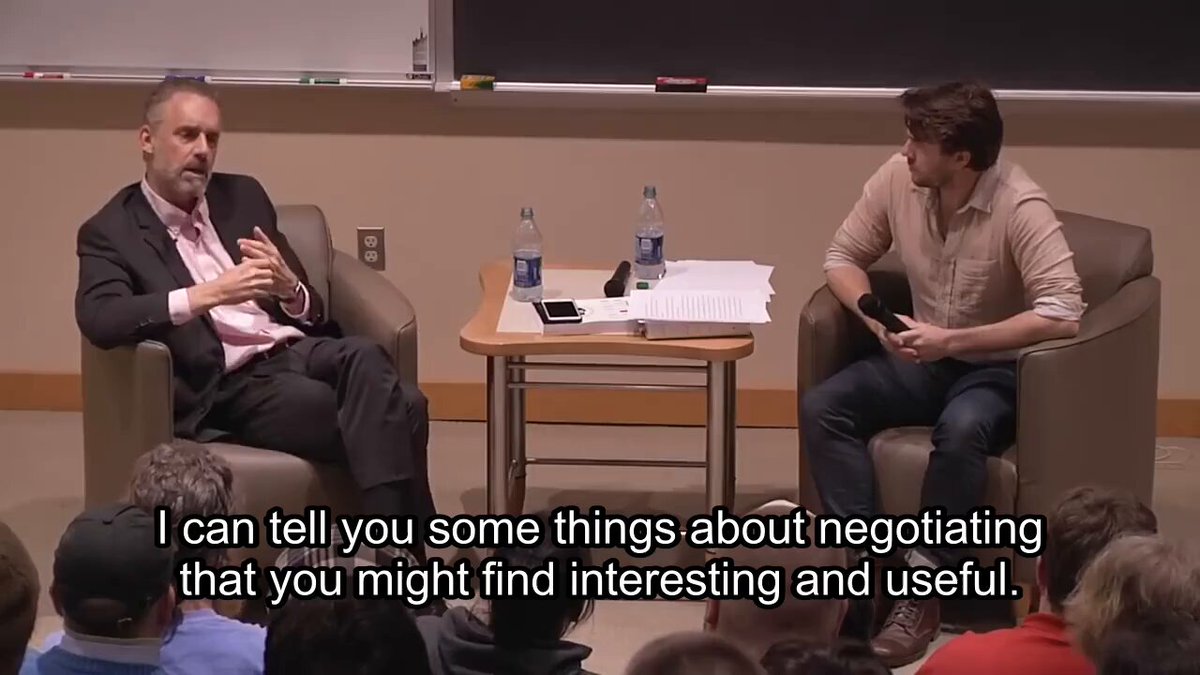
Video wird geladen...
Video konnte nicht geladen werden
Also Capital Founder Mike Annunziata: Too many startups vertically integrate without any real strategic reason. "You should not vertically integrate just for vertical integration's sake. It's a poor use of capital to take a bunch of equity and put it into a commodity machine, which you could instead not... show more

572,990 Aufrufe • vor 7 Monaten •via X (Twitter)
21 Kommentare

@nunzi46 This is gibberish, yall need to have me on, I have an actual counterpoint that will be useful to your audience building actual real shit

@nunzi46 Try and build anything quickly and it becomes immediately obvious that there aren’t vendors that will operate at the pace and (small) scale necessary for a startup to create something before running out of runway. It’s the difference between prototyping and manufacturing.

This is a misunderstanding of what "the factory is the product" actually means. Building a factory is expensive and incredibly hard. That’s the point. In hardware, if you aren’t building the factory, you’re just a marketing layer on someone else’s engineering. Outsourcing is a survival strategy, not a long-term strategy. Why even sell a physical product if you plan to outsource the actual creation of it? The true economic value isn't the CAD file; it’s the efficiency of the process that turns raw materials into a finished good. When you outsource, you’re a toddler in a car seat with a plastic steering wheel. You think you’re driving, but the manufacturer is making the real decisions. They own the "embodied design" which are the thousands of tiny, informal worker insights that actually make the product work. Owning the factory "insources the pain." It gives you the granular knowledge to pull the only three levers that matter: quality, speed, and cost. Any efficiency you find there is raw value that belongs to you, not a middleman. It’s not as "sexy" as a marketing campaign, but it’s the fundamental driver of the economy. Every physical product company should be trying to build a factory as soon as humanly possible.

@nunzi46 China is doing this successfully in like all of manufacturing. why does anyone listen to these guys

@nunzi46 also @elonmusk talks about getting around the bad culture of many parts of our domestic supply chain - sometimes building in-house to shorten lead time is necessary even if that item already exists

Actually, SpaceX went to vertical integration long before they were manufacturing at the current rate. Why? 1) Lower cost. There were third parties available to make space-qualified parts. But the prices and lead times were insane. This drove Elon to drive his people to find better and cheaper ways to do things, like using 3 dual-core modern CPUs to control rockets, rather than old, slow, radiation-hardened ones. 2) Faster decision making. As mentioned by @dansgoldin at if a part needs a redesign or total replacement, that job goes much faster if the ability to build it is nearby (and "in house" is the closest "nearby" you can get) 3) Higher quality. When you are directly responsible for parts quality, you have an incentive to build them that way to begin with. Note that the CRS-7 launch failed because of an understrength part that came from an outside vendor.

@nunzi46 "Factory good" "Yes, factory good, but what about stuff factory make?" "Yes, stuff good." "Yes, factory good too" "Factory make stuff" "Oh, interesting. I hear of factory that build stuff FAST. Not SLOW. FAST." "OOOH, wow. Facatry"

@nunzi46 This is so true, and something one of my previous companies, Luminar learned the hard way! Vertical integration is a tool to multiply your moat, core and reach.

@nunzi46 Or maybe try not using venture to build factories … too many founders are illiterate on cost of capital.

the SpaceX example nails it. they literally had no choice because suppliers couldn't deliver what they needed at scale. most startups build factories when they could just find better suppliers or negotiate harder. vertical integration eats capital that should go into product or distribution. only makes sense when you're creating entirely new demand that existing supply chains can't handle

@nunzi46 This is so true, and something one of my previous companies, Luminar learned the hard way! Vertical integration is a tool to multiply your moat, core and reach.
@nunzi46 @grok brief

@nunzi46 Being horizontal and efficient IS a superpower

Venture-backed startups optimize for speed to market. In electronics, the bottleneck isn’t design, it’s small-batch PCB assembly. Teams spin up in-house SMT lines and quickly learn: modern equipment is built for throughput, not fast prototype turns. Then their line fills with production orders. That’s why most CMs hand-assemble early runs. We’ve built vertically integrated systems specifically to solve that problem, and we routinely cut calendar time in half.

@nunzi46 So true, but decisive vertical integration is one of the cornerstones of the best businesses in the world. For example, Apple has such a good hold on their supply chain and manufacturing they are able to release new products every year to HUNDREDS of millions of people

@nunzi46 this advice made sense when building custom was expensive. agentic coding collapsed that cost → the calculus flipped. now the question isn't "can you afford to build it" it's "is owning this layer a competitive advantage"

@nunzi46 💯. Tought trade off for scaling co's... how long vertical integration is an advantage v a risk is highly dependent on capital availability and external factors.

@nunzi46 "I'm gonna put out a contrarían take on an industry I don't understand."

@nunzi46 AI's crushin' it tho: feels like vertical integration needs mad strategy. What's the next play?

@nunzi46 Vertical is great because margin but only “if the factory is the product” becomes a product for new verticals

Also Capital & Hard Tech Investing — Mike Annunziata (@nunzi46 ) - Also Capital started as backyard angel investing with Will Bruy and Colin Smith in 2019. Raised a $22M Fund 1 in 2023, post-ZIRP — hard time to raise a new fund, but they'd already written first checks into Radiant Nuclear, Varda, K2, and AnySignal. - Their edge: Mike ran a hard tech food manufacturing company for 7 years (through Series B), so he knows what good engineers sound like and how they execute across product, go-to-market, and operations. - They invest in people who've done the thing before. Varda's team built Dragon at SpaceX. Mesh Optical's team did lasers at SpaceX. Northwood's team did ground stations. Same skillset, new market opportunity. - HALO = Heavy Assets, Low Obsolescence. JPMorgan term. Chemical plants, aerospace production capacity — things that are very hard to replicate and won't be obsoleted by AI. Much more resilient than B2B SaaS that Claude Code could rebuild. - "Novel in the aggregate": The moat isn't one breakthrough — it's 32 things that have to come together at the right moment. If they do, you have a company that's extremely hard to replicate. - Don't vertically integrate for its own sake. SpaceX built factories because no third party could meet their spec at the unit price needed. The strategic question: does owning manufacturing give you speed and the ability to deliver at rate? If not, it's a poor use of equity capital. - Right amount of debt at Series A: zero. Debt works when tied to long-lived assets backed by contracted revenue. Pandora example: borrow at 18% implied cost to buy servers, bridge to a higher revenue multiple at next equity raise — cheaper than dilution because cost of equity was declining as milestones hit. The trap is using debt to extend runway as a crutch. - Reindustrialization doesn't mean back to coal mines. Best portfolio companies start internship programs at seed stage — create a talent funnel where someone comes in for a forklift cert and ends up writing CAD automation software. Corporate-driven retraining, not government programs. - What founders they look for: "Have fun, play to win." The Varda team names their capsule Winnebago and does LK99 side projects — that's the culture. But you also need the competitive edge. Over-indexing on fun without the drive to win is a problem.