Video wird geladen...

Video konnte nicht geladen werden

Zur Startseite

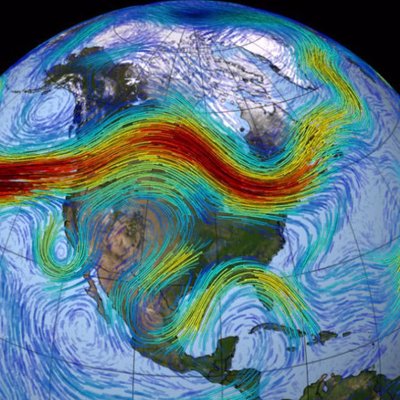
Another polar vortex disruption is forecast for early February, linked to a developing sudden stratospheric warming event. If it couples downward, it could drive yet more cold Arctic air into the mid-latitudes. Vortex disruptions only redistribute existing cold, however. They do not adequately explain the broader signal we're currently...

14,413 Aufrufe • vor 7 Monaten •via X (Twitter)

0 Kommentare

Keine Kommentare verfügbar

Kommentare vom Original-Post werden hier angezeigt

Ähnliche Videos

The cold is British. They just never told you. ❄️🇬🇧 Every air conditioner, every fridge, every freezer on earth, the cold inside all of it was first made by a Scotsman. In 1756. ❄️🏴󠁧󠁢󠁳󠁣󠁴󠁿 His name was William Cullen, a doctor in Edinburgh. In a warm room, with no ice and no winter, he drew the air from a glass of ether until it boiled cold and drank the heat from the water around it, until the water froze. No one had ever done it before. Then he wrote it down and walked away. No machine, no patent, no fortune. Just the proof, on a bench. It sat there the better part of a century. A British bench built the first machine that worked, and a Scot carried it across the world to Australia, where it froze meat and cooled beer. But cold was only half the story. ❄️📖 To master the air itself took another Scot. When the Houses of Parliament burned down in 1834, David Boswell Reid made the new building breathe, its gothic spires its lungs. At St George's Hall in Liverpool in 1851 he built what is often called the first air-conditioned building on earth. It should have made him. He died forgotten in America instead. 40 years on, Willis Carrier built the machine and earned his name as the father of modern air conditioning. He earned every bit of it. But he did not make the cold. The cold was British. America took that inheritance and cooled the world with it, and that is no theft. That is what an inheritance is for. We are the home of British heroes. Not built by ads, not by the government, built by us. There's a place for you with us. Be part of us. ☝️🇬🇧 Be Proud Of Us. 🙏🇬🇧

Proudofus.uk

56,349 Aufrufe • vor 2 Monaten

Bitcoin hashrate dropped ~20% in just a few days. Because extreme winter weather across the US punished weak mining operations. Here’s what actually breaks miners during a polar vortex (and how operators prepare) 👇 HOW WINTER BREAKS MINERS Cold doesn’t usually kill miners while they’re running. It kills them when: • machines cool down too fast • airflow isn’t controlled • miners restart while still cold Most damage happens during restarts and boot-ups, not steady-state hashing. HOW OPERATORS PROTECT HASHRATE 1️⃣ Control temperature swings (not just temperature) Rapid changes are the enemy. • Insulate containers and buildings to slow heat loss • Limit cold air intake until miners are hashing and warming themselves • Keep container lids closed during startup • Use hot-air feedback to warm machines gradually Goal: warm up slowly, cool down slowly. 2️⃣ Don’t let airflow work against you Airflow that’s great in summer can kill you in winter. Watch out for: • External fans pushing freezing air inside • Chimney effects that pull heat out too fast • Wide-open intakes during startup Common fixes: • Slow or pause intake fans during warm-up • Disrupt chimney effects temporarily • Use finer dust filters to reduce cold airflow Once machines are stable, airflow can come back. 3️⃣ Be careful when rebooting hashing miners Reboots in freezing temperatures are where most costly mistakes happen. Safer approach: • Reboot during the warmest part of the day • Do it one rack at a time • Keep lower shelves running so rising heat protects upper ones Rushing reboots saves minutes now and costs days later. 4️⃣ Booting miners that were offline is different For curtailment, demand response, or long downtime: ⚠️ Do NOT boot if boards are below 0°C What to do instead: • Warm machines gradually • Monitor ambient temperature inside the facility • Physically check miners if possible Cold hardware doesn’t fail immediately. It fails later. 5️⃣ Use firmware to avoid cold-start mistakes With Braiins OS, operators rely on: • Pre-heat to bring chips closer to target temperature before hashing • Fan speed vs chip temperature to confirm miners are actually warming up If fans are low and chip temperature isn’t rising, stop and warm miners more. Booting too early is the fastest way to lose hardware. 6️⃣ Network outages can freeze miners fast When internet drops, miners stop hashing and cool down quickly. Two common safeguards: • Multiple pool fallback URLs • A drain pool as a last resort to keep miners hashing and warm Drain pools burn power, but they can prevent far more expensive cold restarts. ❄️ THE COLD TRUTH Winter punishes poor preparation and rushed decisions. We’ve been running 2+ GW of live hashpower on Braiins OS through harsh winters. The patterns repeat every year. For the full deep dive, read the complete Polar Vortex guide on our blog. Mining is hard. Braiins OS is built for this.

Braiins

12,141 Aufrufe • vor 7 Monaten

So many people—myself included—are drawn to the climate movement because they want to help people. They care, want to help the poor, and save the planet. But what they don't understand is that the climate movement is doing the exact opposite of what these well-meaning activists want to accomplish. The movement vilifies reliable energy—the single biggest driver of getting people out of poverty. Over the past several decades, we’ve spent trillions on an energy transition away from fossil fuels. The result? We’ve made our energy system less reliable and more expensive. Western countries have also practiced climate colonialism by preventing Africa from developing with natural gas, coal, and oil. (This goes against everything climate activists claim to stand for!) This is the most morally inverted movement ever. Right now, a billion people don't have access to reliable energy. That means women are spending their entire day figuring out how to get fuel to cook their food. Children in these settings are not going to school, they’re spending hours collecting wood or walking to get water. All of that is a symptom of energy poverty. This is when climate activists will say “but the planet is burning!” Just no. The planet is not burning. Yes, we've added CO2 to the atmosphere and seen about ~1°C of warming over 150 years. But 95% of CO2 is naturally occurring and historically, warming periods are when humans flourish. The Medieval Warm Period (900–1300 AD) is a great example. It was 0.7-1°C warmer and populations boomed. They then collapsed during the Little Ice Age. Takeaway the climate hysteria and objectively you would choose to live during a warming period over a cooling period. The rest of the data is reassuring: ✅Globally hurricanes rates are slightly declining ✅Tornadoes are down ✅Sea level rise is a manageable ~3mm/year ✅Global greening is up 15–40% since the 1980s ✅10x people still die from cold than from heat In the West the first time students hear about our energy system is within the context of “fossil fuels are burning the planet.” They’re never taught that it’s an amazing technology that has lifted billions out of poverty. I considered this a huge injustice. We need to pivot away from climate hysteria toward one goal: ending energy poverty and expanding access to energy. If you’re still gripped by climate fear and anxiety, I’m sorry you are a victim of this fear narrative. But it's time to get out.

Lucy Biggers

31,642 Aufrufe • vor 2 Monaten

There is a major concern about Data Centers that are using closed loop cooling systems that’s not being talked about There are a lot of chemicals being put into the water used in these systems. That water has to be flushed out every couple years Whistleblowers say that chemical water is being pushed into our streams and waterways and may have extremely limited cleaning requirements depending on state “I'm getting whistleblowers on the inside saying that they're taking all that waste and they're just running it down into the sewers. They're wanting to go to more closed cooling systems, and in those closed cooling systems, you still are gonna be using chemicals. There's no regulations about every 2 years when you have to clean out a cooling closed system, where are you gonna throw all of those chemicals?” “Taking polluted water and running it through system and dumping it into a river and it flows downstream, that will have a natural dilution, would resolve the issue, and it's not. Even if it's a closed cooling system, that water that's recycling in there, eventually they have to clean those systems. They have to release that water. And are there any regulations to look at what chemicals aren't in that water before we release it into the environment and just create another pollution issue?” “Right now it's a free-for-all out there.” It’s not a complete free for all, it depends on the states and general federal regulations. Discharges from cleaning, blowdown or maintenance are subject to environmental rules There should be compliance reporting but whistleblowers are saying none of this is being followed, they’re saying it’s a “free for all” and the data centers are just planning on the chemicals being diluted as they flow down our waterways We need investigations

Wall Street Apes

69,889 Aufrufe • vor 2 Monaten

The biggest improvement ever made to the most complex machine in human history came from a guy holding a camera. Not a propulsion engineer. Not a systems architect. Not anyone on the SpaceX payroll. A YouTuber named Tim Dodd. Dodd was touring Starbase when Musk explained how they eliminated the entire cold gas thruster system on the Super Heavy booster. Instead of a separate mechanism with its own weight and its own failure points, they just vented hot gas straight from the propellant tanks. Zero added weight. Zero extra parts. Dodd asked one question. “But this is only for the booster, right?” Musk stopped. Musk: “Although, arguably, now you mentioned it, it might be wise to do this for the ship too. We’re gonna fix that.” Seven months later, Musk confirmed it was one of the biggest improvements ever made to the vehicle. That moment should have been impossible. Thousands of the most brilliant aerospace minds alive work at SpaceX. They designed this system. Reviewed it. Tested it. Shipped it. Defended it in rooms where challenging the architecture has a cost. None of them asked the question. Not because they were stupid. Because they were expert. We worship expertise. We hire for it. We pay for it. We promote for it. We have built entire civilizations on the assumption that the person who understands a problem most deeply is the one most qualified to solve it. But depth is not the same thing as sight. Expertise is not a straight line toward truth. It is a circle. You learn enough to solve the problem. Then you learn enough to justify the solution. Then you learn enough to defend the justification. And eventually you know so much about why things are the way they are that you lose the ability to ask whether they should be. The SpaceX engineers understood exactly why the cold gas thrusters existed on the ship. Thermal constraints. Attitude control requirements. Heritage design logic. They had context and history and institutional memory and ten perfectly valid reasons the ship was different from the booster. Every single one of those reasons was a wall between them and the obvious. Dodd had none of it. No history telling him the question was already answered. No career incentive to leave the architecture alone. No knowledge of why things were the way they were. He just had the question. And the question was right. The cold gas system on the ship was not a mistake anyone was hiding. It was a mistake nobody could see. Because the only way to see it was to know less. Not more. Now think about your own expertise. The thing you have built or maintained or defended longer than anyone around you. The system you understand so deeply that nobody questions your judgment on it anymore. What is the question nobody around you is asking? Not because it is hard. Because it is so simple it feels beneath the room. That question is probably worth more than everything your smartest people have produced this quarter. And right now it is sitting in the mouth of someone you would never think to invite to the meeting. The rocket got lighter because someone didn’t know he wasn’t supposed to ask. Most expertise will spend its entire life making sure no one does.

Dustin

75,672 Aufrufe • vor 3 Monaten