Loading video...

Video Failed to Load

Go Home

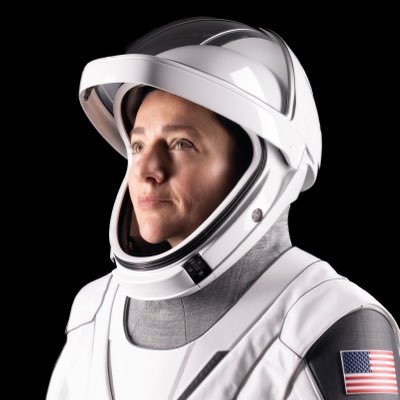
Another timelapse view into our beloved International Space Station Lifesciences Glovebox – this time to harvest the stem cells and conclude the experiment (May 28 post). This goal of this experiment was to produce stem cells in large numbers, using the innovative microgravity bioreactor seen inside the glovebox. Stem...

16,979 views • 3 months ago •via X (Twitter)

15 Comments

Jim Mills's profile picture
Jim Mills3 months ago

@Space_Station Looks like the gloves on the glovebox aren’t integral as they would be in an isolator here on earth. I’m still intrigued how the inside gets sanitised in the ISS environment?

Aurora Sky's profile picture
Aurora Sky3 months ago

@Space_Station Stem cells thriving in space—game-changing for medicine🤩

XiondeXionde's profile picture
XiondeXionde3 months ago

@Space_Station where has this been all my life?

Sean Morgan's profile picture
Sean Morgan3 months ago

@Space_Station Don't forget to clean your room, Jess!

Spoiled brat of God/الله/शिव/玉皇大帝/神/יהוה/etc.बुद्ध's profile picture
Spoiled brat of God/الله/शिव/玉皇大帝/神/יהוה/etc.बुद्ध3 months ago

@Space_Station Wishing you all and your family great health, happiness and peace of mind. God/الله/शिव/玉皇大帝/神/יהוה/etc. BLESS YOU ALL AND YOUR FAMILY.

hakan güner's profile picture
hakan güner3 months ago

@Space_Station 👍👏👏🙌

fabricio-carrazco's profile picture
fabricio-carrazco3 months ago

@Space_Station 🚀😻🚀

Michael Berard's profile picture
Michael Berard3 months ago

@Space_Station Thank you 👍👍🙏

Jie's profile picture
Jie3 months ago

@Space_Station The astronaut completed the mission alone in space.🛰️🗣️👍

Jason傑森 🇭🇰 | 🛠️'s profile picture
Jason傑森 🇭🇰 | 🛠️3 months ago

@Space_Station 国际空间杵那群人有点东西也有点疯

top style's profile picture
top style3 months ago

@Space_Station hahahah, prova a dirmi di no> noi come le cellule mettiamo le zampette (ciglia) addirittura ( scuola lavoro), poi andiamo al supermarket (esempio tipico) hahahah, e vediamo se troviamo un partner per fare un nuovo nucleo, come ossigeno e idrogeno fanno acqua hahah, siamo uguali

Terrence's profile picture
Terrence3 months ago

@Space_Station .

Shane McGrath's profile picture
Shane McGrath3 months ago

@Space_Station

Hector i.r.a-ola's profile picture
Hector i.r.a-ola3 months ago

@Space_Station

Dipanjana Maulik's profile picture
Dipanjana Maulik3 months ago

@Space_Station Great

Related Videos

🚨Here's what a lot of people misunderstand about cancer treatment, says drpaulmarik: "Cancer is not homogeneous. The somatic mutation theory—which is the current theory in which treatment is based—posits that you have a mutation in a single cell, and that gives rise to a whole population of cells that look the same and have the same mutation. But the Cancer Genome Atlas has shown that that theory is completely wrong. The cancer cells are very heterogeneous, so they're made up of very different populations of cells with different mutations, and one of the populations is the cancer stem cell. It's a sub-population of the cancer. These are generally slow-growing, but they're distinct in that they have the ability to divide indefinitely and grow indefinitely, and can change their characteristics. Basically, if you get rid of the fast-dividing cells, which is the cancer, you're left with the stem cells, which then become the roots, which grow back to form the tumor" sometimes years later. Conventional chemotherapy gets rid of the fast-dividing regular cancer cells but *NOT* the stem cells. So the key question is: how do you get rid of the stem cells? “There are a number of repurposed drugs that do it, and this has been well-established in scientific medical literature. One of the most effective treatments to knock out the stem cell is the famous horse deworming medicine," says drpaulmarik. Yes, ivermectin. Independent Medical Alliance

Jan Jekielek

96,002 views • 1 year ago

Scientists just figured out how to reverse aging using AI. And this is a massive breakthrough. We can now reprogram any human cell back to age 20. Heart cells, brain cells, skin cells, all reset to their biological prime. And here’s the wildest part…the technology to do this, has already existed since 2012 (it won the Nobel Prize). But the real breakthrough wasn’t possible until this year, when they supercharged it with AI. It’s a wild story. So in 2006, scientists discovered Yamanaka factors. They’re proteins that can basically convert any normal cell into a universal stem cell. Now this was a huge deal, because these stem cells are basically like magic healers. If you have torn muscle tissue, you could inject these stem cells into the area and they will turn into the youthful muscle cells you need. So Yamanaka factors were this insane breakthrough, because they allowed any human to turn any cell you already have into these magic healers. But, there was one big problem… It turns out, the original Yamanaka factors weren’t very good at this stem cell conversion. They could do it, but they just weren’t very reliable. Enter OpenAI...and this is where things get crazy. OpenAI designed a special AI model built specifically to create new proteins. Think of it like ChatGPT but for protein engineering. So they took all the Yamanaka research and asked this new AI to go ham on improving it. And get this… Their version was 50x more effective than the original. They tested it on 50 year old cells and it successfully started repairing 30% of their cells in just 7 days. This is just science fiction…it actually happened. And it sounds crazy, but in a few years, humans will be able to take a shot that will literally reverse the age of their cells.

Whiplash347

68,643 views • 11 months ago

The Chemotherapy Paradox – A "Cure" That Preserves the Root of Cancer? You've been told chemotherapy is a cornerstone of cancer care. But what if the standard of care is fundamentally flawed, suppressing the very system designed to heal you while protecting the engine that drives the disease? In a stunning exposition, Dr. Paul Marik pulls back the curtain on oncology's biggest dilemma. Here's the shocking truth: - Chemotherapy annihilates your immune army. It wipes out your natural killer cells and T-cells—the very soldiers your body needs to fight cancer. You are immune-suppressed, allowing the tumor a clearer path to proliferate. - Chemotherapy preserves the cancer stem cell. This is the root of the tumor. While chemo kills rapidly dividing cells, it often leaves the stem cell—the queen bee—untouched. From this root, the cancer indefinitely divides, mutates, and regrows. - Some chemo drugs may even STIMULATE the stem cell. That's right. The very treatment intended to kill cancer can, in some cases, fuel its source. "So you can't cure the patient unless you get rid of the cancer stem cell," states Dr. Marik. "Interestingly, chemotherapy doesn't kill the stem cell." This explains why "remission" is not a "cure." The cancer can return 7, 8, or 10 years later because the root was never addressed. You are in remission, not cured. The conclusion? The high-dose, "burn-and-cut" approach of traditional oncology is not holistic. It weakens the host and empowers the enemy's most resilient forces. Dr. Marik confirms: The efficacy depends on the tumor type. Cancers with a low percentage of stem cells can see long-term remission. But for many, it's a ticking time bomb. This isn't an opinion; it's a biological reality. It’s time for a paradigm shift. Share this to spark a crucial conversation. The future of oncology depends on it.

Camus

69,662 views • 11 months ago

🚨 WHY ARE THERE OVER 400 PUBLISHED PAPERS ON IVERMECTIN AND CANCER? Because researchers discovered something unexpected. Ivermectin doesn't just target parasites. According to preclinical research, it appears to interact with cancer cells through multiple biological pathways. One of the most discussed? 📌 Cancer Stem Cells These are the cells believed to survive treatment, remain dormant for years, and potentially contribute to recurrence and spread. According to Dr. William Makis: 💊 Chemotherapy primarily targets rapidly dividing cancer cells. 💊 Ivermectin has been studied for its potential effects on cancer stem cells. That's why some researchers believe the combination deserves attention. But that's only part of the story. Researchers have also investigated ivermectin's potential ability to: ✅ Target cancer stem cells ✅ Influence tumor signaling pathways ✅ Alter cancer cell behavior ✅ Reverse chemotherapy resistance One of the most fascinating findings involves chemotherapy resistance. Over time, some cancer cells develop the ability to push chemotherapy drugs back out of the cell. Researchers have reported that ivermectin may interfere with these resistance mechanisms, potentially making cancer cells susceptible again. And then there's Fenbendazole and Mebendazole. While Ivermectin is being studied for one set of mechanisms, Fenbendazole and Mebendazole appear to work differently. Researchers have investigated their potential ability to: 📌 Block glucose transporters on cancer cells 📌 Reduce the cell's ability to use glucose as fuel 📌 Interfere with pathways associated with tumor growth Think about that. Different compounds. Different mechanisms. The same goal. That's why scientists continue publishing study after study. Not because these compounds are a fad. Because researchers keep uncovering new biological pathways worth investigating. And that's why the conversation around Ivermectin, Fenbendazole, and Mebendazole continues to grow. 💊 If you’re looking into these drugs, check out Ivermectin, Fenbendazole, and Mebendazole from RXMEDS.STORE. #Ivermectin #Fenbendazole #Mebendazole #CancerResearch #CancerStemCells #RepurposedDrugs #CancerBiology #RxMeds

RXMEDS.STORE

16,612 views • 4 months ago

Joe Rogan and NFL legend Terry Bradshaw get into a serious debate over stem cells. Bradshaw argues stem cells “don’t work” because people go back for them “again and again.” Then Rogan fires back that he healed his fully torn rotator cuff in just 6 months using stem cells, and it sounds so insane to Bradshaw that he can barely believe it. BRADSHAW: “I got a bad hip right now. I’m telling you, Joe, it’s killing me. And I got it injected.” ROGAN: “With stem cells?” BRADSHAW: “No, no, I don’t do stem cells.” ROGAN: “Why not?” BRADSHAW: “I don’t believe in stem cells.” ROGAN: “You don’t believe in them?” BRADSHAW: “No. I [know] too many people… They went back and did it again [and again].” ROGAN: “Why’d they keep going back?” BRADSHAW: “Because it didn’t work.” ROGAN: “What’s wrong with them?” BRADSHAW: “Mostly knees and ankles.” ROGAN: “Okay, so you’re probably talking about arthritis, probably talking about degenerative knee conditions, ankle conditions. So the amount of damage that you’re trying to repair with stem cells, you’re going to get a little bit of benefit in something like that if it’s that far gone. But stem cells work.” BRADSHAW: “You do stem cells?” ROGAN: “100%.” BRADSHAW: “What hurts?” ROGAN: “I had a rotator cuff tear that completely went away.” BRADSHAW: “Now, that’s at least a year.” ROGAN: “That’s what you say.” BRADSHAW: “At least a year.” ROGAN: “I had a full-length rotator cuff tear. I got stem cells shot into it.” BRADSHAW: “A full tear?” ROGAN: “Full tear. My doctor told me I 100% was going to need surgery… [Instead], I get this stem cell treatment in Vegas. Dr. Roddy McGee hooks me up with the stem cell treatment. And then six months later, he gives me an MRI and he says, ‘The rotator cuff tear is completely gone.’ Literally, the tear doesn’t exist anymore.” [Bradshaw’s skepticism starts to fade]

The Vigilant Fox 🦊

1,032,478 views • 4 months ago

🚨 “THEY CALLED IT HORSE PASTE… WHILE SCIENTISTS WERE STUDYING IT FOR CANCER AND CHEMO RESISTANCE.” That’s why the Ivermectin conversation refuses to die. According to researchers studying repurposed medicine, Ivermectin is one of the most fascinating molecules ever discovered because it appears to interact with completely different biological pathways depending on the disease being studied. In parasites, researchers found it affects chloride channels. In viruses, studies explored how it may interfere with replication pathways. And in cancer research, scientists have investigated how Ivermectin may interact with tumor proliferation pathways, cancer stem like cells, and chemotherapy resistance mechanisms. Researchers believe cancer stem cells may play a major role in: • Recurrence • Metastasis • Treatment resistance Traditional chemotherapy mainly targets rapidly dividing cells, but scientists are now studying whether Ivermectin may affect more resistant stem like cancer cells differently in laboratory settings. There are also preclinical studies investigating how Ivermectin may help restore chemotherapy sensitivity in resistant tumor cells at the molecular level. And then there’s another reason people keep talking about it: Some researchers have explored whether the same pathways involved in abnormal tumor growth may also be involved in conditions like fibroids, lipomas, and endometriosis. That’s why the repurposed medicine conversation has exploded far beyond COVID. If you’re researching Ivermectin, Fenbendazole, or Mebendazole, many choose PharmacyinUSA for worldwide and discreet delivery. #Ivermectin #HorseDewormer #CancerCure

PharmacyinUSA

15,939 views • 4 months ago