Загрузка видео...

Не удалось загрузить видео

На главную

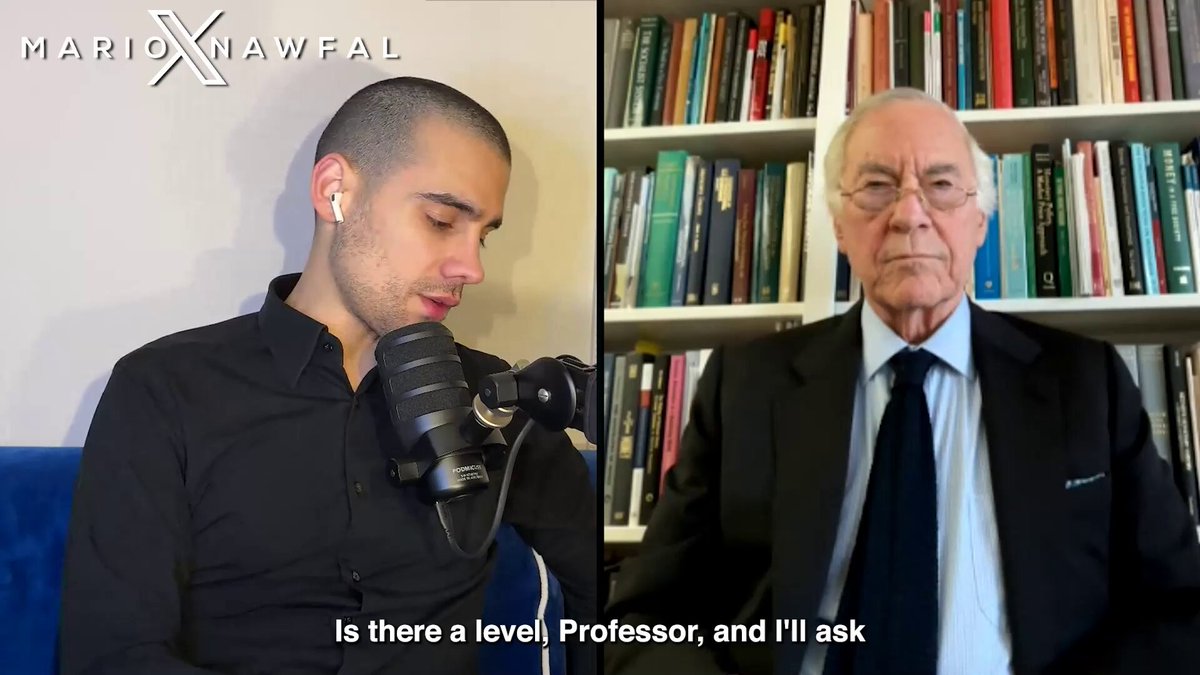
🚨🇺🇸 Anyone celebrating that the stock market didn't completely implode after the recent oil shock needs a serious history lesson. Financial educator and founder of Minority Mindset Jaspreet Singh warns that during the crisis of the 1970s, the real market crash didn't hit until 6 months after the oil...

58,198 просмотров • 1 месяц назад •via X (Twitter)

Комментарии: 0

Нет доступных комментариев

Здесь появятся комментарии из оригинального поста

Похожие видео

The media thinks the Iran war could trigger a financial apocalypse, but the markets are pricing a temporary oil spike. Lance Roberts says one of them is going to be badly wrong. Most people assume that if missiles are flying across the Middle East, financial markets must be screaming that disaster is coming. Lance says they're doing almost the opposite. Yes, oil has climbed, but not to panic levels. More importantly, the futures market is still pricing oil back down into the $60-$70 range over the next six to twelve months. In other words, investors are making a very specific bet: the war remains contained, oil flows will eventually normalise, and the current price spike is temporary. That doesn't mean they're right; it simply means the market is dismissing many of the worst-case scenario headlines. The reason for that confidence is that the world has already started adapting; countries are building alternative pipelines and shipping routes are changing. Every lesson learned from previous Hormuz disruptions makes the next one slightly less economically devastating. That's why Lance believes there's now a third scenario people often ignore: The war could continue without triggering the kind of oil shock many assume is inevitable. If supply keeps flowing through alternative routes, stockpiles hold up, and markets believe the disruption is temporary, oil prices may stay far more contained than the headlines suggest. But he isn't dismissing the danger; he's warning the markets may be making a very optimistic assumption. History is full of regional conflicts that everyone believed would stay contained... until they didn't. Lance Roberts

Mario Nawfal

255,697 просмотров • 10 дней назад

Technical Analyst and Market Strategist Michael Oliver says everyone is watching the Iran war, but the real crisis is already forming inside the U.S. bond market, and when it breaks, it could hit everything. For decades, investors have treated U.S. government bonds as the safest asset on Earth. Michael says that assumption is beginning to crack. He argues the real crisis isn't inflation, it isn't recession, it isn't even the Middle East. It's the growing possibility that confidence in government debt starts to break down. If that happens, the Federal Reserve will have to create even more money to support the bond market. And he believes investors are already starting to prepare for that shift by quietly moving into real assets: gold, oil, industrial commodities, and agriculture. Assets that can't simply be created with another round of monetary expansion. He also pointed to something that rarely gets discussed. The biggest bubble is the belief that government debt will always remain the world's safest investment. If that confidence disappears, the consequences won't stay inside the bond market; it will ripple through virtually every corner of the financial system. Most of the world is focused on the next missile strike on Iran, but he's watching the next Treasury auction. Because in his view, history won't remember the Iran war as the event that changed the markets. It'll remember it as the distraction that kept everyone looking in the wrong direction while the real crisis was gathering underneath their feet. Momentum Structural Analysis

Mario Nawfal

355,044 просмотров • 21 дней назад

Macroeconomist Philip Pilkington thinks Trump didn't prevent an oil crisis, he hid it long enough to make it worse. For weeks, we were told the Strait of Hormuz disruption wasn't really affecting global supply, and that the market had plenty of breathing room. Philip says almost all of it was fiction. His argument is that the real stress never disappeared; it was simply hidden in the parts of the market almost nobody was paying attention to: strategic petroleum reserves, Chinese refinery policy, Russian diesel restrictions, and physical oil versus paper oil. Then everything started moving at once. China lifted restrictions on its refiners, Russia tightened diesel exports, and oil prices jumped. That wasn't a new crisis beginning; it was the old one finally breaking through. Philip says the Trump administration became so focused on keeping oil prices low that it distorted the market instead of allowing it to adjust naturally. Policymakers chose to give the market cheap energy today by borrowing stability from tomorrow, and now the bill is starting to arrive. He also made a broader point that goes far beyond oil. Markets can absorb bad news, but what they struggle with is pretending reality has changed when it hasn't. Trump may think he bought the economy more time, but Philip thinks he simply delayed the reckoning. And if he's right, the real energy crisis is still waiting around the corner. Philip Pilkington

Mario Nawfal

314,155 просмотров • 23 дней назад

🇺🇸 Everyone is watching Iran for the next market crash, but the real danger is that investors are recreating the leverage, speculation, and blind confidence that led to the Great Depression. Gareth Soloway says that financial markets have become so addicted to easy money, leverage, and central bank rescues that they're now far more dangerous than the war. Investors have spent years learning exactly the wrong lesson. Every correction, panic, and sell-off has been followed by another rally to new highs. An entire generation of investors now believes one thing: Just buy the dip. They've never lived through a prolonged bear market, and they've never experienced a 1929-style collapse. Many weren't even investing during the dot-com crash or the 2008 financial crisis. As far as they're concerned, markets only move in one direction over time. That psychology worries Gareth far more than the headlines coming out of the Middle East, and he pointed to South Korea as a warning. A handful of AI-related stocks became so dominant that investors piled into leveraged ETFs, convinced the gains would never end. When sentiment finally turned, leverage amplified the selling just as aggressively as it had amplified the rally, and the result was a brutal collapse. His concern is that America has built the same structure, just on a vastly larger scale. Every recession that should have cleared excesses from the system was met with lower interest rates, more borrowing, and more money printing. Instead of allowing the economy to heal naturally, policymakers kept injecting another dose of stimulus, and it worked... until it didn't. But Gareth doesn't think the market will collapse tomorrow. In fact, he believes policymakers still have tools that could keep the system going for several more years. But every intervention adds more debt, leverage, speculation, and makes the eventual adjustment even more violent. His warning wasn't that Iran will crash the markets; it was that markets may already be sitting on a far bigger time bomb. Gareth Soloway

Mario Nawfal

317,976 просмотров • 1 день назад