Video wird geladen...

Video konnte nicht geladen werden

Zur Startseite

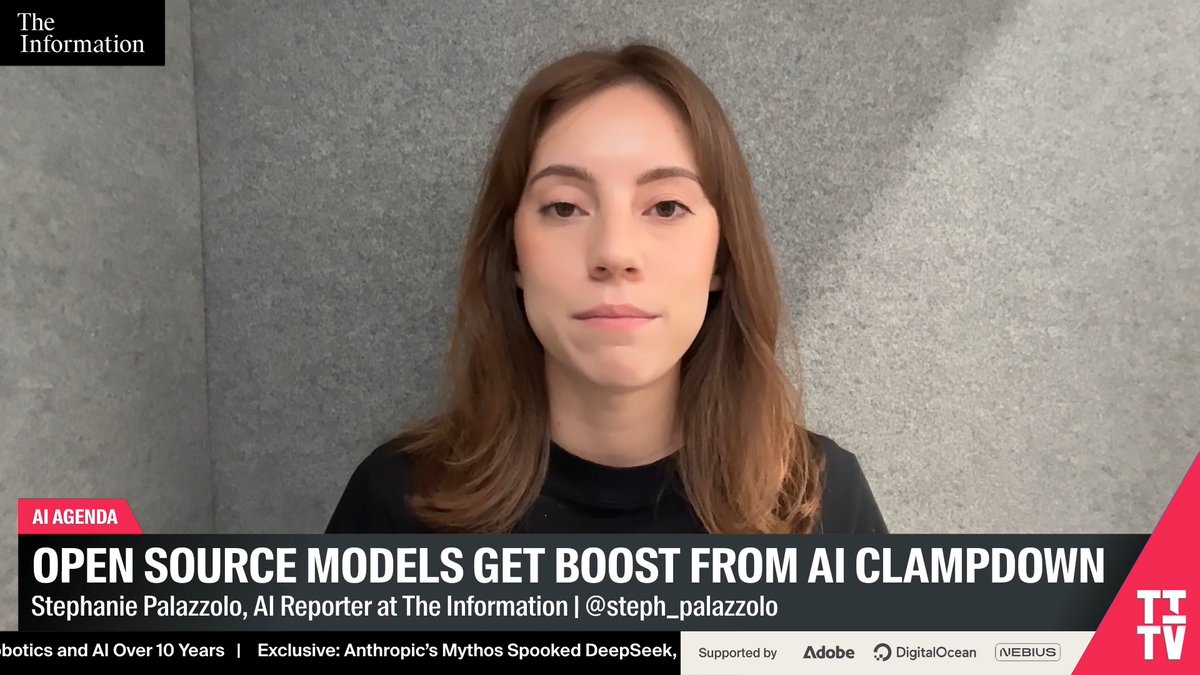
Are open source models catching up to proprietary models? We’ve looked back at 3 years of Arena’s data to show how the race has evolved. For comparison, we’ve taken the top 20% of the models and uncovered the following: - Before mid 2024: The gap was between 100-150 points...

22,447 Aufrufe • vor 6 Monaten •via X (Twitter)

0 Kommentare

Keine Kommentare verfügbar

Kommentare vom Original-Post werden hier angezeigt

Ähnliche Videos

.Josh Wolfe: Anybody Using DeepSeek App Is 'Absolute Fool' "Anybody using the DeepSeek app is an absolute fool. If you're using DeepSeek on companies like Together Compute, one of Lux's companies, which can get rid of the CCP censorship, then it's probably okay. But remember, the open-source movement is something we deeply believe in. Most great technologists, entrepreneurs, and venture capitalists are on the side of open source. The closed-source models that have consumed tens of billions of dollars are the ones that are really going to be at risk. When you look at Hugging Face, a major repository, or Together Compute, Runway ML, and a lot of Lux's companies, they have been pioneers in open source. Now, why am I not worried about open source, even with the DeepSeek model? As long as you don't have the CCP censorship on it, the models with their open weights allow people to run on their proprietary data. This means companies like pharma or defense companies that have their own siloed, proprietary data—think about Bloomberg with their proprietary longitudinal data, or Meta with their data—are the ones who will have the edge. Even as open source takes hold, these companies will still dominate. I’m not worried about open source being the problem. I’m more concerned about people overfunding closed models with no proprietary source. A lot of capital is going to be burned there, and we’re already seeing that with people worried about OpenAI in some aspects."

Josh Caplan

40,039 Aufrufe • vor 1 Jahr

🦙 ollama is used by 9 million developers and 85% of the Fortune 500, giving co-founder and CEO Jeffrey Morgan (Jeffrey Morgan) a unique view into which AI models people are actually using and how that’s changing. Right now, the biggest shift he sees is toward open models, driven by coding agents, falling costs, and capabilities that are rapidly catching up to the frontier labs. On Ollama Cloud, that shift has driven a 150x increase in token usage since the start of the year. In this episode of Lightcone Podcast, Jeff joins Garry Tan, Jared Friedman, Diana, and Harj Taggar to talk about the future of open models and the story behind Ollama, from two years of searching for the right idea to building one of the most widely used AI developer tools in the world. 00:43 — The Shift to Open Models 03:03 — How AI Agents Are Driving Token Usage 05:31 — Are Open Models Catching Up? 08:26 — What Happens When a New Model Launches 11:31 — Ollama as an Operating System for AI 14:05 — The New Opportunities Above the Model Layer 18:19 — Why 80–90% of Enterprise Tokens Could Be Open 20:57 — The Future Is Local and Cloud 26:40 — Why AI Is Coming Back to Your Computer 28:56 — The Coming Era of Unlimited Tokens 32:30 — Do We Still Need a “God Model”? 33:41 — Open Models and Geopolitics 36:14 — The Origins of Ollama 40:36 — Two Years Lost in the Wilderness 42:39 — The Pivot That Changed Everything 47:02 — How Ollama Found a Business Model 49:43 — Why Second-Time Founders Did YC

Y Combinator

313,654 Aufrufe • vor 1 Monat