Video wird geladen...
Video konnte nicht geladen werden
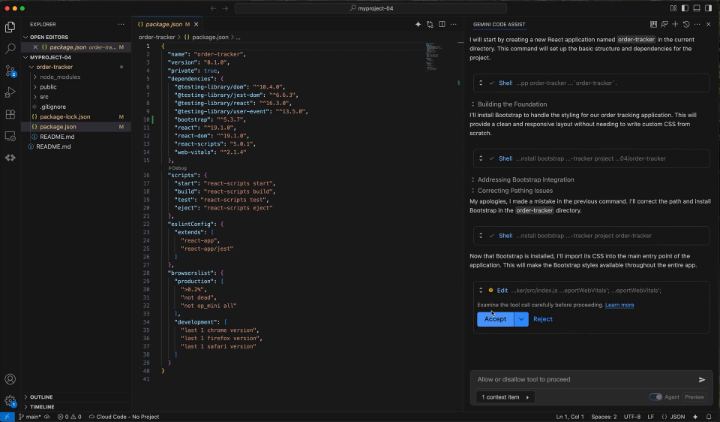
Are your tests actually verifying what your app is supposed to do, or just mirroring code you already wrote? 🧐 Feed business rules, design docs, and user personas into Gemini in Android Studio to generate tests that validate true requirements →

18,240 Aufrufe • vor 3 Tagen •via X (Twitter)
2 Kommentare

Dipak Kr Prasadvor 2 Tagen
Tests that just mirror the implementation are how regressions sneak past green CI. Feeding personas + design docs first is closer to how I'd brief a human QA. Have you tried this on a Flutter or Compose screen where the bug was a missing rule, not a missing assert?

BIFORGE Studiosvor 3 Tagen
This is something I keep running into. A test can be green and the game can still feel wrong. Testing the intended behavior instead of the code itself makes a lot more sense.




!['Russia is conducting nuclear weapons tests. You just don't know about it' — Trump. - So why do we need to test our nuclear weapons? - Because we need to understand how they work. And the reason I talk about testing is that Russia announced it is going to conduct a test. If you notice, North Korea constantly conducts tests. Other countries test as well. We are the only country that does not conduct tests. And I don't want us to be the only country that doesn't do it. - Are you saying that after more than 30 years, the US will start detonating nuclear weapons for testing again? - I'm saying we will conduct tests. Nuclear weapons tests, like other countries do, yes [we will detonate]. - But the only country conducting nuclear tests is North Korea. China and Russia do not. - No, no, Russia conducts nuclear tests. And China also conducts tests, you just don't know about it. - What Russia did recently was essentially tests of nuclear weapons delivery systems, that is, missiles. - Russia conducts tests, and China conducts tests, they just don't talk about it, you see? They are not open societies. We are different. We discuss openly. We have to discuss it, otherwise you journalists will write about it anyway. They don't have reporters who will write about it. We do. - SK](https://image.24vids.com/tw-1985249152440172586/amplify_video_thumb/1985248953378480128/img/S1KCMv-V1cDPzxlD.jpg)