Video wird geladen...

Video konnte nicht geladen werden

Zur Startseite

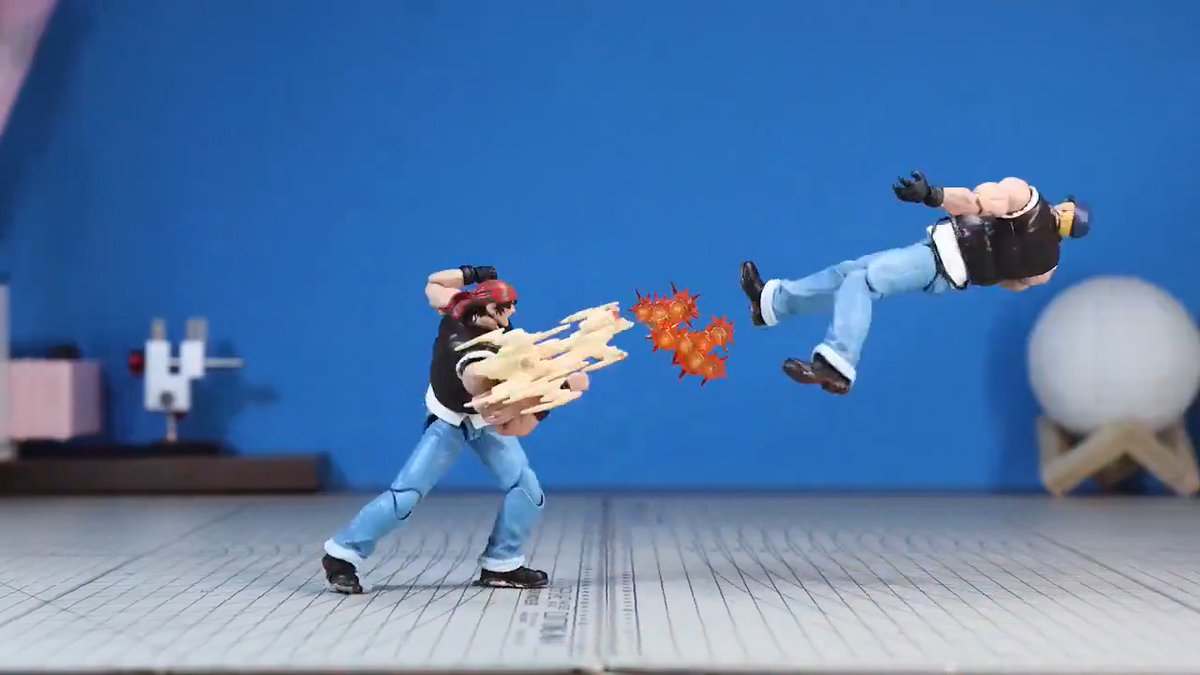
Articulation Showcase | AMK PRO Series “Transformers: Bumblebee” Shockwave Highly Articulated, Unleash Dynamic Poses! With over 50 points of articulation across the body, this figure offers exceptional posability, effortlessly recreating dynamic poses such as crouching and jumping. Multiple integrated linkage and clearance mechanisms further enhance its mechanical appeal and...

21,305 Aufrufe • vor 2 Tagen •via X (Twitter)

0 Kommentare

Keine Kommentare verfügbar

Kommentare vom Original-Post werden hier angezeigt
Ähnliche Videos

一番最後の[Prompt for original image]の部分に画像生成に使用したPromptを入れると一貫性が増します。不要な場合は3行削ってしまっても大丈夫です。 --- Extreme wide-angle perspective and dynamic pose remix edit. This is an EDIT of the original image, not a new character. Use the original image as a strict reference for: – the person’s identity, hairstyle, and overall fashion style, – the general type of background and location (same street, same room, same beach, same kind of architecture, etc.). You are allowed to completely change the camera position, angle, and pose, but you must keep the scene in the SAME location and keep the SAME person and outfit design. Camera and perspective: – Use an ultra wide-angle or fisheye feeling lens (around 12–18mm full-frame look). – The camera angle MUST change significantly from the original: use dramatic angles such as • worm’s-eye view from directly below looking up, • bird’s-eye view from directly above looking down, • very low angle from the ground, • high angle from above, • tilted Dutch angles. – Always create strong foreshortening: body parts close to the lens look huge, while the rest of the body falls away in perspective. – The final result must look like a bold fashion or street photo, fully photorealistic, not illustration or anime. Background consistency: – Keep the same location as the original image: same street, same bridge, same room, same studio, same beach, same general structures and materials. – Do NOT replace the background with a completely different place. – Because the camera angle changes, it is allowed and expected that different parts of the environment become visible. – When new areas appear, extend the original environment logically (same buildings, fences, road markings, walls, colors, materials, lighting style), as if the camera moved within the same place. Body parts near the lens (1–2 parts, sometimes 3): – In each edit, choose ONE or TWO main body parts to be extremely close to the lens (sometimes even THREE in more complex poses). – Vary them from image to image, do NOT always use the same body part. – Allowed near-the-lens parts include: • one or both hands / fingers reaching toward the camera, • one or both feet / shoes / boots near the lens, • knees or thighs, • face very close to the lens, • shoulders or chest close to the lens in a leaning pose. – The chosen body parts should come extremely close to the lens, almost touching it, with visible skin texture, fabric texture, and realistic wide-angle distortion. Pose and overall body (complex and varied): – Create strong, cool, dynamic poses that match the extreme perspective. – Randomly use different pose types, including: • standing with one leg or one arm reaching toward the camera, • crouching or squatting low to the ground, • sitting on the floor or on objects, • lying on the ground with legs or feet toward the lens, • leaning forward aggressively toward the camera, • twisting the body, crossing legs, or arching the back for more dynamic lines. – Allow complex poses where: • both hands are near the lens forming shapes (peace signs, triangles, frames, pointing toward the viewer), • both feet are toward the lens, • one hand and one foot are both large in the foreground, • the face is close to the lens while hands or feet are also visible in perspective. – Maintain believable anatomy even with extreme foreshortening. Angle and attitude (randomized): – Randomize camera angle and orientation (up, down, side, Dutch tilt) while keeping the composition visually balanced and powerful. – Keep the vibe cool, confident, and fashion/editorial or street style, depending on the original outfit. – Facial expressions can vary (serious, playful, confident, mysterious), but must still look like the same person. Lighting and rendering: – Keep the general time of day and lighting mood similar to the original (night vs day, indoor vs outdoor, soft vs hard light), but you may enhance contrast and color to make the image punchy and dramatic. – Maintain realistic shadows and contact points with the ground or floor. – High-resolution, sharp details with clear skin texture, fabric weave, and material highlights. Variation and randomness: – Each edit should look noticeably different from the original image and from other edits, with different: • camera angles, • pose types, • which body parts are closest to the lens, • orientation (straight, tilted, from above, from below). – Avoid repeating the exact same single-foot-close-up composition; produce a wide variety of dynamic poses and angles. Strict rules: – Do NOT change the person into someone else. – Do NOT change the outfit type; only restyle it through pose, perspective, and small natural movement of clothing. – Do NOT move the scene to a completely different location; always stay in a plausible extension of the original place. – Do NOT add text, logos, watermarks, or graphic design elements. – Do NOT switch to painting, illustration, or anime style; keep it photorealistic. Overall: Transform the original photo into a dramatic, photorealistic, ultra wide-angle shot with an extreme camera angle (including views from directly below or above), where one or more body parts are right next to the lens and look huge, the rest of the body recedes in perspective, and the same person strikes a stylish, complex, powerful pose in a consistent, expanded version of the original environment. Also, below is the prompt for generating the original image. Please use it as a reference. [Prompt for original image] #nanobanana2

AI Girl's Photo Studio

20,684 Aufrufe • vor 9 Monaten

🚨 OPERATIONAL UPDATE: ISRAEL U.S. WAR WITH IRAN - Reporting Window: Last 24 Hours The last 24 hours reinforce the structure that has been developing across the war. Activity remained steady across Iran, Israel, Lebanon, and the Gulf, with no single breakthrough moment but continued pressure applied across every layer of the conflict. ━━━━━━━━━━━━━━━━━━ ✈️ STRIKES INSIDE IRAN Strikes continued across multiple areas inside Iran, including Tehran, Shiraz, Kermanshah, and Ahvaz. The targeting profile remains consistent with recent days, focused on systems tied to weapons development and military sustainment. In Tehran, reporting points to continued strikes on military-industrial infrastructure, including: *⃣ Weapons production and research facilities *⃣ Infrastructure around Mehrabad Airport *⃣ Sites linked to Iran’s advanced weapons programs, including SPND-related supply nodes There are also indications that some of these locations had secondary roles, including use by Basij-linked personnel. That aligns with the broader pattern of targeting not just hardware, but the networks that support it. The key point in this 24 hour window is continuity. The same categories of targets are being hit repeatedly, suggesting an effort to ensure these systems are not just damaged, but unable to recover quickly. ━━━━━━━━━━━━━━━━━━ 🚀 IRANIAN RESPONSE Iran continues to respond. Current intelligence assessments indicate that roughly half of Iran’s missile launchers remain intact, along with a large drone inventory. At the same time, the operational pattern remains limited. Iran is still launching missiles and conducting attacks, but still not at the scale seen earlier in the war. The response appears to rely on: *⃣ Smaller salvos rather than sustained barrages *⃣ Continued willingness to strike civilian-adjacent targets *⃣ Expansion of pressure beyond Israel itself This reflects pressure on launch systems and coordination, not a lack of overall capability. ━━━━━━━━━━━━━━━━━━ 🔥 LEBANON FRONT The Lebanon front remained active during this window, with both ground and air components continuing. Israeli forces carried out a targeted ground operation in southern Lebanon, resulting in direct engagement with Hezbollah fighters. Reporting indicates: *⃣ Israeli troops pushed deeper into southern لبنان *⃣ Hezbollah operatives were killed in close-quarters combat *⃣ Additional strikes were carried out against infrastructure using air, naval, and ground assets This is consistent with ongoing efforts to shape the immediate border area and reduce launch capability from southern Lebanon. At the same time, the front remains contained geographically, but active in terms of daily engagement. ━━━━━━━━━━━━━━━━━━ 🌍 GULF AND REGIONAL ACTIVITY Regional expansion continues to be one of the most consistent elements of the war. Over the last 24 hours, Iranian attacks again targeted Gulf infrastructure, including: *⃣ A Kuwaiti oil refinery and desalination facility *⃣ Additional aerial threats across UAE airspace, including ballistic missiles, cruise missiles, and drones *⃣ Civilian injuries linked to interception and debris in the UAE These are functional targets tied to energy and water systems, reinforcing the broader strategy of applying pressure beyond Israel. ━━━━━━━━━━━━━━━━━━ ⚓ STRAIT OF HORMUZ Hormuz remains central to the strategic picture. Developments in this window include: *⃣ Ongoing discussions among multiple countries regarding how to reopen and secure the strait *⃣ Continued Iranian signaling around its ability to influence maritime traffic *⃣ Early indications of mediation channels involving Oman There is no resolution here yet, but the focus on Hormuz is becoming more operational and less theoretical. ━━━━━━━━━━━━━━━━━━ ⚠️ IRAQ Iraq emerged more clearly in this window the last 24 hours as a continued potential point of escalation. The U.S. embassy issued a warning that Iran-aligned militias could conduct attacks in Baghdad within 24 to 48 hours, with potential targets including: *⃣ Diplomatic facilities *⃣ Commercial and infrastructure sites *⃣ Areas frequented by U.S. personnel This aligns with the broader pattern of pressure expanding through proxy channels when direct options are constrained. ━━━━━━━━━━━━━━━━━━ 📌 WHAT MATTERS MOST RIGHT NOW The structure of the war remains stable, but fully active: *⃣ Inside Iran, strikes continue to focus on production and sustainment systems *⃣ Iran retains significant capability, but is operating under constraints *⃣ Lebanon remains an active front with ongoing ground and air operations *⃣ The Gulf is consistently targeted, particularly energy and infrastructure systems *⃣ Iraq is showing early signs of becoming more active through proxy activity ━━━━━━━━━━━━━━━━━━ 🧠 MY ASSESSMENT This 24-hour window of time does not introduce a new dynamic. It confirms the current one. Israel is continuing to apply pressure across the systems that allow Iran to produce and coordinate military activity. Iran is continuing to respond within its constraints while expanding pressure across the region where it can. The result is a conflict that is not concentrated in one place, but distributed across multiple active fronts at once. That remains the defining characteristic of the war right now.

Inside_Israel_Intel

49,879 Aufrufe • vor 5 Monaten

Indian Army Intensifies Winter Operations in Kishtwar and Doda to Flush Out Pakistani Terrorists As the bone-chilling winter descends upon the Himalayas and the 40-day period of Chillai Kalan grips Jammu & Kashmir, sources in the defence establishment have said that the Indian Army has intensified its counter-terrorism operations across the Kishtwar and Doda districts. Undeterred by freezing temperatures, treacherous terrain, and heavy snowfall, Army units have expanded their operational reach into higher and snowbound areas to pursue and neutralise Pakistani terrorists attempting to exploit the harsh season for concealment. Traditionally, the onset of Chillai Kalan; the harshest phase of Kashmir’s winter spanning from December 21 to January 31 ushers in a temporary lull in terrorist activities, as communication routes close and heavy snowfall isolates mountain regions. However, this winter has marked a decisive shift in the operational approach of the Indian Army and other security forces. Instead of reducing activities, sources have said that the Army has adopted a proactive winter posture, establishing temporary bases and surveillance posts deep within snow-covered areas to maintain unbroken pressure on possible terrorist hideouts. Operating in sub-zero temperatures with limited visibility, Army patrols have been regularly traversing high-altitude ridgelines, valleys, and forested areas to deny terrorists any sanctuary. The shift according to experts signifies an evolution in counter-terrorism tactics, underlining both the Army’s adaptability and its resolve to maintain operational momentum irrespective of the season or terrain. A defining feature of this year’s counter-terror strategy has been the integrated approach to operations. The Indian Army is leading a synchronised effort involving multiple security and law enforcement agencies, including the Civil Administration, Jammu and Kashmir Police (JKP), Central Reserve Police Force (CRPF), Special Operations Group (SOG), Forest Guards, and Village Defence Guards (VDGs). This inter-agency cooperation ensures seamless sharing of intelligence, resource optimisation & sharper operational execution. Intelligence from multiple agencies is carefully synthesised to draw precise situational pictures of terrorist movement and hideout patterns. Once intelligence is verified, coordinated joint operations are planned & launched, minimising overlaps and ensuring maximum impact with tactical precision. The synergy among ground units and intelligence frameworks has enhanced response time, enabling security forces to act swiftly the moment actionable information surfaces. As per assessment made by various intelligence agencies, there are approximately 30 to 35 Pakistani terrorists currently in the Jammu region. Inputs gathered over the past few months suggests that these Pakistani terrorist groups, finding themselves cornered by successful counter-terror operations, have shifted deeper into higher and middle mountain reaches of the region; areas now devoid of habitation. These terrorists are believed to be seeking temporary winter hideouts to evade detection and avoid direct confrontation with security troops. Reports indicate that these remnants of terror groups are attempting to coerce or threaten local villagers for shelter and food supplies, though their support among locals and overground workers has sharply declined. The drying local support and continuous security vigilance at lower altitudes have forced them into isolation, further restricting their ability to regroup or plan coordinated attacks. The principal focus for the Army and other forces this winter is twofold: to eliminate remaining terrorist pockets within known areas and to ensure that terrorists remain confined to inhospitable higher reaches. This containment strategy not only prevents terrorists from infiltrating or regrouping in populated belts but also significantly disrupts their logistics & communication.

Aditya Raj Kaul

56,288 Aufrufe • vor 8 Monaten

🎀 Terence Tao is partnering with Math, Inc. 🎀 as the inaugural Veritas Fellow — to formalize estimates in number theory. In analytic number theory, the literature contains a large web of explicit estimates. But that web is not immediately interoperable. In practice, results come in three layers: Primary estimates: These are foundational inputs such as zero-free regions for the Riemann zeta function. They often depend on substantial computation and careful numerical optimization. Secondary estimates: Many papers take a primary input (e.g., a zero-free region) and convert it into reusable consequences, such as counting primes in short intervals. These become core building blocks used throughout the subject. Tertiary estimates: Further work then applies those secondary building blocks to frontier number-theoretic problems, e.g. representing integers as sums of three primes. The difficulty is that these layers do not update cleanly over time. A tertiary paper may rely on the best primary estimate available at the time. But years later improved computations refine the primary input, without being systematically propagated through the secondary and tertiary chain. As a result, the “same theorem with updated constants” is often unknown. The goal is to formalize key papers across these layers and then abstract them so their dependencies become explicit, composable, and machine-checkable. The long-term vision is to create a living network of implications: when a primary estimate improves, every downstream implication is automatically upgraded. This will transform the mathematical literature into modular software. Number theory is a strong test case because its estimates has a relatively clear structure, and a shared set of standard inputs and outputs. But in many areas such as PDEs, researchers constantly spend effort on modification: adapting lemmas and hypotheses, translating between incompatible frameworks, “fitting square pegs into round holes.” A composable, machine-verified implication network directly targets this friction. The same infrastructure is poised to scale to other fields and enable crowdsourced, large-scale projects that are currently hard to coordinate. A classic example is the classification of finite simple groups: a decades-long effort distributed across many contributors, with inevitable complexity around bookkeeping, integration, and confidence in completeness. With modern tooling, we envision tackling moonshots of comparable scope: many contributors handling diverse cases, and automated systems gluing the pieces together. The field becomes a live progress dashboard that records what is proved, what remains, and exactly which dependencies each component requires. This opens up the possibility for a much faster-pace and engaging way to do mathematics. Watch Tao's outline on YouTube:

Math, Inc.

64,907 Aufrufe • vor 8 Monaten

Efsane Platform Introduction I. Platform Overview • Platform Positioning: EFSANE (main domain is the world's fastest-growing blockchain news portal, serving as the core gateway to the entire ecosystem. The platform integrates multiple modules, including predictions, live streaming, games, and social networking, striving to provide users with a one-stop on-chain entertainment and interactive experience. • Core Mission: To establish a secure, reliable, low-threshold, and diverse on-chain entertainment platform, enabling users to conveniently participate in Gem (GEM) trials, USDT live games, prediction markets, live streaming interactions, and community exchanges, forming a complete closed-loop ecosystem. II. Core Values ​​and Features 1. One-Stop Ecosystem Hub • Integrated Sub-Channel Access: The main site homepage and user center clearly display channels for various modules, including prediction network, live streaming, blockchain games, and efschat (social networking), allowing users to directly access their desired scenarios without having to navigate multiple platforms. • Unified Asset and Account System: Centrally displays Gem/GEM and USDT balances, records participation in each module and historical returns, and enables one-stop asset management. • Unified Notifications and Customer Support: Integrates platform announcements, event reminders, and reward notifications, providing multiple customer service channels to significantly enhance the overall user experience. 2. Brand Trust and Security Transparency • Operational Data Announcements: The platform publicly discloses core metrics such as registered users, daily active users, withdrawal success rate, and total bonus pool, ensuring data authenticity and verifiability. • Compliance and Audit Visualization: Displays security audit summaries, risk control systems, and compliance instructions, allowing users to immediately perceive the platform's professionalism and credibility. • Risk Warnings and User Education: Key pages and workflows prominently highlight participation risks, and provide resources such as operation guides, video tutorials, and live streams. 3. Diverse Gameplay and Incentive Design • Gem/GEM Beginner Mechanism: Users can earn gems by signing in, completing tasks, or participating in events, allowing them to try out the game before converting, lowering the barrier to entry. • USDT Payment and Real Earnings Mechanism: Used in advanced games and predictive gameplay, ensuring authentic payment and cash-out mechanisms, enhancing asset authenticity and building trust. • Cross-module Incentive Mechanism: A task system enables cross-module linkage. For example, completing prediction tasks earns rewards in the live streaming/gaming modules, fostering deeper user engagement. • Multi-tiered Promotion Revenue Mechanism: Through an invitation code system and a three-tiered fission reward structure, promoters can earn high commissions, with commissions increasing to higher levels during special periods, stimulating user enthusiasm for cross-platform sharing. 4. Social and Community-Driven • Community Aggregation Portal: Enables cross-scenario discussion and sharing among users of modules like prediction, gaming, and live streaming. • User-generated Content Creator System: Encourages users to contribute high-quality content such as tutorials, guides, and reviews, providing incentives and resource support to outstanding creators and streamers. • Interactive Operational Activities: Regularly organize AMAs, online competitions, and data review livestreams to enhance user engagement and a sense of belonging to the platform. 5. Technical and User Experience Assurance • High-availability Architecture: The platform utilizes CDN acceleration, load balancing, and site-wide SSL/TLS encryption to ensure stable access and data security. • Full-Device Support and Multi-Language Optimization: Compatible with mobile and desktop devices, it supports a multi-language interface, offers a simple registration process, and quickly guides new users onboarding. • Behavioral Data-Driven Optimization: Analyze user behavior to deliver precise recommendations, improving gameplay conversion rates and user retention. III. Introduction to Key Modules (Platform Portal and Linked Examples) 1. Prediction Module ( Provides prediction scenarios for multiple sectors, including the crypto market, hot events, and sports events. Gameplay includes time-limited battles, binary options, and multiple-choice intervals. It features transparent settlement, a leaderboard mechanism, and integration with live streaming and the main platform's asset system. 2. Live Streaming Channel Showcases project roadshows, platform tutorials, live event broadcasts, and community interactive live streams to enhance user engagement and trust. It supports both gem and USDT tipping mechanisms and can be directly linked to the main platform's event page or task guide. 3. Chain Game Entertainment Channel Offers a diverse selection of games, from casual mini-games to competitive GameFi, supporting gem trials and USDT live trading. A leaderboard and tournament system is integrated with the main site's asset management and livestreaming content. 4. Social Community Users can participate in discussions, post content, and share task results in interest-based zones. A creator development system and content governance structure are established, serving as a hub for cross-module communication and feedback. 5. Other Expandable Portals The platform can subsequently expand subdomains such as dedicated event pages, tutorial pages, and creator centers as needed, all under the main domain for unified management. IV. User Flow Examples 1. First Visit: Users visit and register/log in. The homepage displays featured events and module portals, encouraging participation in gem trials or popular gameplay. 2. Onboarding: New users receive gem trial coupons and are guided through live tutorials or tutorials to quickly understand the platform's core mechanics. 3. Multi-Scenario Participation: Users can choose to participate in prediction betting, game battles, watch live streams and give rewards, join communities to express their opinions, or complete tasks and invite friends. 4. Asset Management and Withdrawal: Users can centrally view their Gem and USDT balances and earnings on the platform and withdraw them or use them to participate in other modules. Promotional earnings and commission details are displayed simultaneously. 5. Sticky Loop: The system periodically pushes cross-module tasks, community events, leaderboard incentives, and other content to promote continuous user engagement and platform retention. V. Trust and Compliance Assurance • Operational Transparency: The platform regularly publishes key data and security audit information to ensure openness and verifiability. • Risk Control Mechanism: Key processes such as withdrawals, deposits, and prediction participation are equipped with anomaly detection and anti-cheating mechanisms; large-scale transactions require KYC review. • Compliance Strategy: The platform monitors the regulatory status of crypto entertainment and prediction mechanisms in various markets and implements grayscale openness, geographic restrictions, and compliance disclosure procedures. • Privacy Compliance: The platform strictly adheres to local data protection laws to safeguard user privacy and security, and clearly states the scope of data usage in the user agreement. VI. Brand and Promotional Positioning • Suggested Platform Slogan: • " A one-stop on-chain entertainment platform with low barriers to entry, high transparency, and real returns." • "Gem Trials, USDT Play, the new standard for secure and reliable on-chain entertainment." • Core Marketing: Focus on beginner gem experiences, real USDT withdrawals, diverse gameplay options, and safety and compliance mechanisms. • Promotional Channels: Includes Telegram, Discord, and WhatsApp groups, livestream promotions with influencers (KOLs), and SEO/advertising (using keywords such as "on-chain entertainment platform" and "GameFi Real Returns"). VII. Technical and Operational Support System • Multilingual Operational Capabilities: Currently supports Chinese, English, Turkish, and Japanese, and will gradually expand to 16+ languages ​​globally, providing a localized experience for the international market. • Data-Driven Growth Analysis: Build a full-chain conversion analysis system to monitor new user conversion rates, retention rates, paying behavior, and task completion. • Customer Support and User Feedback Mechanism: Provide a multilingual customer service portal for immediate responses to user questions; promptly integrate community suggestions into product iterations and provide regular announcements. • Platform Optimization and Emergency System: Develop a security incident emergency response plan to ensure rapid platform recovery in the event of an emergency; continuously optimize the user experience through a data feedback mechanism. VIII. Future Development Outlook • Deep Ecosystem Development: Continuously optimize existing gameplay and module integrations, and explore the introduction of new economic mechanisms such as NFT incentives, DeFi mining, or staking. • Technology Evolution: Follow cutting-edge technologies such as Layer 2 expansion, off-chain settlement, and AI-powered recommendations to improve transaction efficiency and user experience accuracy. • Compliance Expansion Strategy: Promote legal operations in regions with mature regulations, and proactively prepare for compliance in high-potential markets to mitigate legal risks. • Community Brand Ecosystem: Cultivate a community of core players, influencers (KOLs), and creators, building a trusted brand image and enhancing user belonging through online livestreams and offline salons. 🔗 Register as a new user and receive $6. Join now:

EFSANE

28,263 Aufrufe • vor 11 Monaten

The Republic of Balochistan’s Open Joint Letter to the United States of America and the People’s Republic of China Urging an End to Military Assistance and Financial Aid to Pakistan To: The Honorable Donald J. Trump, President of the United States of America and His Excellency Xi Jinping, President of the People’s Republic of China 15 August, 2026 Pakistan’s military establishment has lied to the world and deliberately spread disinformation by denying the air strikes carried out in Surab on 12 August 2026, which resulted in the killing of 30 innocent Baloch civilians, including women and children. Pakistan’s lies are nothing new. Its military establishment previously misled the three U.S. administrations of George W. Bush, Barack Obama, and Donald Trump regarding the presence and activities of Osama bin Laden. Pakistan is also misleading China about the grim situation in Balochistan and about the CPEC (China Pakistan Economic Corridor), where Pakistan’s own military is unable to travel by road after 6 p.m. Pakistan has lost ground control across Balochistan. Now, Islamabad’s military is deliberately targeting Baloch civilians by conducting air strike using US and Chinese produced fighter Jets and technology. The Trump administration must not trust Pakistan or provide relief to its corrupt and terrorist state, which supports terrorism and has been involved in the killing of thousands of U.S. servicemen in Afghanistan. in post 9/11. The Republic of Balochistan urges the United States to reconsider its longstanding military assistance to Pakistan. Under the Peace Gate I and II programs, Washington provided Pakistan with 40 F-16A/B fighters between 1983 and 1987. In 2006, the United States approved a further package including 18 F-16C/D Block 52s, modernization of 34 existing F-16s under the MLU program, AIM-120C missiles, and maintenance, technical, and engine-support assistance, with the broader package valued at approximately $5 billion. These capabilities must not be used against Baloch civilians. China has likewise provided Pakistan with extensive military assistance since the 1960s, including approximately 165 MiG-19 fighters and other weapons and equipment valued at around $200 million by the early 1970s. These aircraft were used against the Balochistan freedom movement in Kohistan Marri and Jhalawan. China later became Pakistan’s principal defense partner, supplying F-7s, A-5s, K-8s, missiles, naval systems, and the jointly developed JF-17 Thunder. In 2015, China agreed to supply Pakistan with eight Yuan-class submarines in a deal reportedly worth approximately $5 billion. The Republic of Balochistan urges Beijing to ensure that its military assistance and technology are not used to suppress the homegrown liberation movement of Balochistan. The Republic of Balochistan urges the United States to reconsider its longstanding military assistance to Pakistan. Under the Peace Gate I and II programs, Washington provided Pakistan with 40 F-16A/B fighters between 1983 and 1987. In 2006, the United States approved a further package including 18 F-16C/D Block 52s, modernization of 34 existing F-16s under the MLU program, AIM-120C missiles, and maintenance, technical, and engine-support assistance, with the broader package valued at approximately $5 billion. These capabilities must not be used against Baloch civilians. China has likewise provided Pakistan with extensive military assistance since the 1960s, including approximately 165 MiG-19 fighters and other weapons and equipment valued at around $200 million by the early 1970s. These aircraft were used against the Balochistan freedom movement in Kohistan Marri and Jhalawan. China later became Pakistan’s principal defense partner, supplying F-7s, A-5s, K-8s, missiles, naval systems, and the jointly developed JF-17 Thunder. In 2015, China agreed to supply Pakistan with eight Yuan-class submarines in a deal reportedly worth approximately $5 billion. The Republic of Balochistan urges Beijing to ensure that its military assistance and technology are not used to suppress the homegrown liberation movement of Balochistan. For decades, successive Pakistani governments and military administrations have possessed and employed military equipment, aircraft, weapons, technology, and logistical capabilities obtained primerily from foreign partners in offensive operations and state terrorism against the Baloch nation. The Republic of Balochistan maintains that Pakistan and Balochistan are separate nations and that Pakistan has no legitimate authority over Balochistan’s territory, sea and air space. The Republic therefore urges the United States and China two of the world’s most powerful states and permanent members of the UNSC (United Nations Security Council) to recognize the consequences of continuing military assistance to the rogue state of Pakistan, particularly where such assistance is being massively utilized against Baloch civilians. We are deeply concerned by video footage and reports showing Pakistan Air Force air strikes recently in the Surab area of Balochistan in which civilians, including women and children, are massacred. The Republic of Balochistan regards attacks deliberately directed against civilians as grave violations of international humanitarian law and, where established by the facts, as acts that fall within the legal definition of war crimes. The Republic of Balochistan further emphasizes that it is not opposed to legitimate international investment, economic cooperation, trade, or development. However, if the United States, China, or any other state seeks access to Balochistan’s natural resources, infrastructure, ports, air bases, critical minerals, energy, or markets, such engagement should take place through dialogue with only the Baloch people and their legitimate political representatives not through military, financial, or technological support for invading entity of Pakistan. If foreign governments provide Pakistan with military capabilities while simultaneously pursuing economic interests in Balochistan, the Republic considers this unacceptable and calls for an immediate reassessment of such policies. No external power should be permitted, in our view, to use military assistance to strengthen the occupational forces of Pakistan in a disputed political conflict while simultaneously benefiting from the territory and resources of the Republic of Balochistan. The Republic of Balochistan therefore calls upon Washington and Beijing to stop providing military assistance that could contribute to violations against Baloch civilians, establish transparent mechanisms to ensure that transferred weapons and aircraft are not used to suppress the homegrown liberation movement and against civilian populations. We further urge international community and our immediate neighbours to formally recognize Balochistan as a free and sovereign country and to pursue trade, investment, defense, and other relations with the Baloch people on the basis of political dialogue, mutual respect, economic partnership, and the principles of international law rather than through military support to the roque state of Pakistan. THE REPUBLIC OF BALOCHISTAN Donald J. Trump Hyrbyair Marri Secretary Marco Rubio Marco Rubio The White House U.S. Central Command People's Daily, China CHINA MFA Spokesperson 中国外交部发言人

Mir Yar Baloch

20,675 Aufrufe • vor 21 Tagen

PHOTON COUNTING CT is NOT a better CT It is a NEW imaging modality Photon Counting CT (PCCT) represents a transformative leap in medical imaging, not only as a molecular imaging modality but also as a technology offering ultra-high resolution and functional imaging capabilities. It is fundamentally more than just an enhanced version of traditional CT—PCCT introduces new ways of seeing and understanding the human body, providing critical insights at the molecular, structural, and functional levels. This positions PCCT as a unique imaging modality that requires a fresh approach to technical implementation, operational workflows, and financial planning. Despite the larger upfront investment, PCCT’s ability to drastically reduce downstream healthcare costs makes it a highly valuable investment in the long run. 1. Technical Innovations • Molecular Imaging and Energy Discrimination: Unlike traditional CT, which simply measures the total absorbed energy, PCCT counts individual X-ray photons and differentiates their energy levels. This allows for precise molecular imaging, revealing the composition of tissues and materials at a biochemical level. By distinguishing between different tissue types and contrast agents, PCCT opens up new diagnostic possibilities, such as identifying molecular biomarkers in tumors or distinguishing between stable and unstable plaque in coronary arteries. This capability shifts the focus of imaging from purely anatomical to both anatomical and molecular, offering more comprehensive diagnostic information. • Ultra-High Spatial Resolution: PCCT features significantly smaller detector elements compared to conventional CT scanners, allowing for ultra-high resolution imaging. This means clinicians can visualize fine structures such as microcalcifications in arteries, small lesions in soft tissues, or the intricate architecture of bones. This level of detail was previously unattainable with traditional CT. When combined with molecular imaging, this ultra-high resolution allows for the precise localization and characterization of disease at very early stages, which is essential for early diagnosis and intervention. • Functional Imaging Capabilities: PCCT also excels as a functional imaging modality. By capturing energy-resolved information, PCCT can provide insights into tissue functionality and dynamic physiological processes. For instance, it can detect changes in blood flow, tissue perfusion, and oxygenation without the need for additional contrast agents or scans. This functionality allows for real-time assessment of physiological processes, making it particularly valuable in cardiology, oncology, and neurology for evaluating organ function and monitoring disease progression. • Reduced Noise and Artifact Reduction: Photon-counting technology dramatically reduces electronic noise and imaging artifacts, such as beam hardening, resulting in clearer and more accurate images. The ability to deliver ultra-high resolution images with minimal artifacts improves diagnostic accuracy, reducing the need for repeat scans and ensuring that even subtle abnormalities are detected. 2. Operational Considerations • New Workflow for Molecular, High-Resolution, and Functional Imaging: The integration of molecular, ultra-high resolution, and functional imaging into routine clinical workflows introduces complexity that requires adaptation. Radiologists and technicians need specialized training to interpret and analyze multi-energy datasets that include molecular and functional information. PCCT produces a vast amount of detailed data, requiring clinicians to adopt new imaging protocols and refine their diagnostic approaches to fully leverage its capabilities. • Post-Processing and Data Management: PCCT generates richer, more complex datasets, which necessitates advanced post-processing tools and data management systems. Existing PACS and imaging software may not be equipped to handle such large volumes of data or to process functional and molecular information effectively. This means healthcare institutions must invest in robust IT infrastructure, including upgraded software and storage solutions, as well as provide additional training for staff on new imaging analysis techniques. • Revised Clinical Protocols: The molecular, functional, and ultra-high resolution imaging capabilities of PCCT will likely prompt changes in clinical protocols. For instance, the need for contrast agents may be reduced, simplifying patient preparation and decreasing the risk of adverse reactions. Additionally, the ability to monitor physiological functions in real-time through functional imaging could lead to more dynamic diagnostic procedures, such as assessing the effectiveness of interventions or treatments in real-time. 3. Financial Impact • Higher Initial Investment: PCCT systems are more expensive than traditional CT scanners due to their advanced technology, which includes photon-counting detectors and the computational power required for high-resolution, molecular, and functional imaging. While this upfront cost is significant, it is crucial to view it in the broader context of the downstream benefits and cost reductions that PCCT offers. • Downstream Cost Reductions: Although the initial capital investment is higher, PCCT’s ability to combine molecular, functional, and ultra-high resolution imaging leads to substantial reductions in downstream healthcare costs. Its superior diagnostic accuracy minimizes the need for follow-up tests, repeat scans, or invasive diagnostic procedures, such as diagnostic coronary angiographies. For example, in cardiology, PCCT can precisely differentiate between types of coronary plaque, reducing the need for invasive procedures to assess risk. • Lower Overall Healthcare Expenditures: By enabling earlier, more accurate diagnoses, PCCT can reduce the overall cost of patient care. Early detection of disease, particularly through its molecular and functional imaging capabilities, allows for more targeted treatments, potentially preventing the need for more aggressive and expensive interventions down the line. For instance, early-stage tumor detection via molecular imaging could lead to less invasive treatments, reducing hospital stays and improving patient outcomes, ultimately driving down healthcare costs. • Increased ROI Through Enhanced Patient Outcomes: Over time, the combination of molecular, functional, and ultra-high resolution imaging enhances diagnostic precision, which translates into better patient outcomes. Improved diagnostic accuracy reduces the incidence of unnecessary procedures, minimizes treatment delays, and results in more personalized and effective care. This leads to increased patient satisfaction, better healthcare outcomes, and greater patient throughput—all factors that improve the institution’s return on investment (ROI). • Competitive Advantage and New Revenue Streams: By adopting PCCT, healthcare institutions position themselves at the forefront of advanced imaging technologies. The ability to offer molecular, functional, and ultra-high resolution imaging creates a competitive advantage, attracting more complex and high-value cases. This can boost the institution’s reputation for excellence in diagnostics, leading to increased referrals, new patient populations, and expanded revenue opportunities. Summary Photon Counting CT (PCCT) is not just an evolution of existing CT technology—it is a molecular, ultra-high resolution, and functional imaging modality that fundamentally transforms the diagnostic landscape. Its ability to capture detailed molecular data, visualize minute anatomical structures with ultra-high resolution, and provide real-time functional imaging opens new possibilities for earlier and more precise diagnoses. While the financial investment in PCCT is larger, the reduction in downstream healthcare costs through improved diagnostic accuracy, fewer unnecessary interventions, and earlier disease detection far outweighs the initial expense. For institutions committed to advancing patient care and improving long-term financial outcomes, PCCT is an essential investment in the future of medical imaging. The video attached shows a patient accessing the Hospital for ACS. PCCT can provide ALL the imaging information of the concurrent imaging modalities (CXR, CAG, Echo, CMR) that you see around it... that's a lot! #PhotonCountingCT #MolecularImaging #UltraHighResolution #FunctionalImaging #FutureOfImaging #AdvancedMedicalImaging #EarlyDiseaseDetection #InnovativeCT #CuttingEdgeHealthcare #PrecisionDiagnostics #HealthcareInnovation #MedicalTechnology #CostEffectiveImaging #NextGenCT #PatientCareRevolution

Dr. Filippo Cademartiri

11,849 Aufrufe • vor 1 Jahr

Eine kleine Nachtmusik, KV 525, is a well-known work by Wolfgang Amadeus Mozart. Composed in 1787 for string ensemble, the piece consists of four movements, each with its own character yet unified within the Classical style associated with Mozart. Among them, the opening Allegro is the section most widely recognised and illustrates his approach to musical form. The version in the recording highlights a distinctive feature of this movement: the entire development proceeds according to a highly organised musical order, while retaining a sense of lightness and natural flow. To understand why the Allegro continues to engage listeners after more than two centuries, it is useful to examine how Mozart establishes that order. What strikes the ear from the first bars is not a complex melody or elaborate compositional devices. The impression is one of clarity. The opening theme is formed from balanced phrases, with clear question-and-answer patterns and natural points of rest. Each musical idea appears at the right moment, develops in its proper place, and prepares for what follows in a continuous manner. Listeners generally sense the direction in which the music is moving and the reasons for that direction. This clarity is maintained throughout the Allegro. Mozart develops the theme through modulations, dialogues between instrumental groups, and subtle rhythmic variations. Yet each step emerges as a natural consequence of what has come before. The music moves forward steadily, without abrupt shifts or disjointed passages. The movement resembles a continuous flow, in which every section occupies an essential place within the whole. It is worth noting that even in the way the string parts converse, Mozart ensures no single instrument disrupts the balance of the work. Each part has its own function and character, yet all lines are arranged to support one another. This clear division of roles allows the ensemble to move with flexibility while avoiding any sense of disorder. Listeners perceive not only the beauty of individual melodies but also the harmony of the overall structure that sustains them. Harmony plays an important part in creating this impression. Harmonic progressions remain clear and stable, providing a firm foundation for each development. Every change appears as a natural continuation of the preceding material. This natural quality arises not from spontaneity alone but from an inner structure organised with care, so that its presence is scarcely noticed by the listener. As a result, the experience of listening tends to deepen. At first, attention may be drawn to the bright melodies and graceful qualities of the work. With further listening, what remains is not merely the appeal of separate phrases but a sense that all elements combine in a natural way. Here Mozart demonstrates a notable aspect of his art: order does not render the music rigid; rather, it is through this order that the movement achieves its lightness and vitality. On a broader level, Eine kleine Nachtmusik reflects a principle familiar in human experience. It is sometimes thought that freedom arises only in the absence of rules or frameworks. Yet many refined achievements suggest otherwise. A violinist performs with natural ease only after years of technical training. A speaker expresses ideas fluently when language has become instinctive. A skilled craftsman works with assurance when the principles of the craft have become part of every action. In such cases, rules do not remove freedom. When those rules have been absorbed into the manner of living and working, natural expression becomes possible. Mozart translates this principle into musical terms. In the Allegro, order does not appear as an external pattern imposed from without but as an unseen foundation that connects every element into a unified whole. Listeners therefore sense the lightness of the music with little awareness of the structure supporting it. At a deeper level, the work also reflects a general principle observed in nature. In the natural world, the most stable systems often follow the clearest laws. A flock of birds may change direction with great flexibility while maintaining formation. A planetary system moves continuously through space without disorder. A healthy body performs countless actions because its organs function within a unified order. Law does not make life rigid; it enables life to move with flexibility while preserving stability and balance. It may be for this reason that Eine kleine Nachtmusik retains its appeal after more than two centuries. What holds the listener’s attention is not only the beauty of the melodies or the refinement of Mozart’s compositional technique. What endures is the idea that order and freedom need not exclude each other. When every element is in its proper place, beauty can emerge in a natural manner. In this way, the Allegro continues to convey to successive generations a sense of a world in which things exist together in harmony and balance.

𝗖𝗹𝗮𝘀𝘀𝗶𝗰𝗮𝗹 𝗠𝗲𝗹𝗼𝗱𝗶𝗲𝘀

10,982 Aufrufe • vor 1 Monat

#MafiaState 1⃣5⃣ This excerpt is from the documentary THE PRICE OF A VOTE (full film linked in the comments with English subtitles), a collaborative effort by public figures, journalists, and everyday people, Hungarians who want to live in a democratic Hungary. Not politicians, but citizens unwilling to stand by while their future is decided without them. This documentary exposes a highly organized system of electoral manipulation in Hungary’s poorest regions, where corruption and cheating are not side effects but the central operating logic of the system. Through insider testimonies, participant accounts, and on-the-ground reporting, it shows how elections are engineered well before voting day using a combination of vote-buying, coercion, surveillance, and procedural abuse. At the core is direct, systematic vote-buying. Cash, food packages, potatoes, firewood, alcohol, and other goods are distributed in exchange for votes in a structured, calculated way. Specific amounts are assigned per voter, intermediaries handle distribution, and entire communities are mapped in advance. This is not occasional bribery; it is a functioning marketplace where votes are priced, allocated, and delivered with precision. The corruption escalates into full operational control of turnout. Organized transport networks move voters to polling stations in coordinated waves. Operatives are assigned to streets and households, ensuring no one slips through. People are tracked throughout the day, listed, monitored, and followed up. By midday, teams are actively hunting down those who have not yet voted, maximizing extraction from controlled populations. The cheating extends directly into the voting process itself. The film details systematic abuse of assisted voting, where voters are falsely declared illiterate so operatives can enter the booth with them and control the vote. In many cases, it is not the voter marking the ballot at all, but a connected “assistant.” Chain voting is also deployed, circulating pre-marked ballots to guarantee outcomes and destroy ballot secrecy. Verification and enforcement mechanisms make the system airtight. Voters are required to prove compliance through photos of ballots, open voting outside booths, or real-time signaling systems like missed calls confirming a “correct” vote. Payment is conditional. Those who comply are rewarded, while those who do not risk losing money, jobs, or access to essential services. Institutional corruption underpins everything. Local authorities, municipal structures, and administrative systems are integrated into the process. IDs are issued rapidly before elections to expand the pool of controllable voters. Public resources are redirected to serve political goals. The boundary between state and party effectively disappears. Coercion reinforces the system where money alone is not enough. Access to public work, welfare, housing, and utilities becomes conditional on political loyalty. Refusal carries real consequences such as loss of income, exclusion, or administrative pressure. In extreme cases, operatives physically embed themselves in households before election day to ensure compliance. What makes this system especially powerful is its scale and coordination. It operates across dozens of constituencies, with a structured hierarchy comprising leaders, deputies, data collectors, and field operatives. Detailed voter data is gathered months in advance, including personal vulnerabilities, allowing precise targeting of individuals. Every potential vote is identified, pressured, and converted. This is not limited to any single group. While the poorest are the most exposed, the system targets anyone vulnerable to pressure or dependency. The mechanism is universal: identify leverage, apply pressure, extract the vote. The result is a parallel electoral system running beneath the official one, built on corruption and cheating at every stage. Elections still take place, ballots are still cast, but the outcome is shaped long before voting begins. What remains is the appearance of democracy, while its substance is systematically hollowed out and controlled.

Pete

16,821 Aufrufe • vor 5 Monaten

Rebounding, or jumping on a mini-trampoline, offers a variety of health benefits for the body that are both surprising and impressive. Here’s a detailed look at some of the key advantages: 1. Improved Cardiovascular Health ❤️ Rebounding is an excellent way to get your heart pumping and improve cardiovascular health. The rhythmic motion increases heart rate, promoting better circulation and strengthening the heart muscle over time. 2. Lymphatic System Boost 🌿 Unlike many other forms of exercise, rebounding is particularly effective at stimulating the lymphatic system. The up-and-down motion helps to flush out toxins, waste, and other unwanted materials from the body, which can enhance your immune system and overall health. 3. Enhanced Balance and Coordination ⚖️ The unstable surface of the trampoline forces your body to engage multiple muscles to maintain balance, which over time improves your coordination and stability. This can be especially beneficial for older adults looking to maintain their independence and reduce the risk of falls. 4. Low-Impact Exercise 🌟 Despite its effectiveness, rebounding is gentle on the joints. The trampoline absorbs much of the impact, making it a great option for those with joint pain or those recovering from injuries, while still providing a high-intensity workout. 5. Muscle Toning and Strengthening 💪 Rebounding works out various muscle groups, particularly in the core, legs, and lower back. Regular sessions can lead to improved muscle tone, increased strength, and better posture. 6. Improved Bone Density 🦴 The gentle impact on bones from rebounding can stimulate bone growth and increase bone density, which is crucial for preventing osteoporosis and maintaining bone health as we age. 7. Stress Relief and Mental Health 😌 The rhythmic motion of bouncing has been shown to have calming effects, reducing stress and anxiety. Additionally, the physical activity releases endorphins, the body's natural mood lifters, which can help to combat depression and improve overall mental well-being. 8. Better Digestion and Gut Health 🍎 Rebounding can also positively impact digestion by stimulating the digestive tract, promoting better nutrient absorption, and reducing issues like constipation. The gentle motion helps to massage the intestines, aiding in regular bowel movements. 9. Increased Energy Levels ⚡️ Regular rebounding can lead to higher energy levels. The exercise helps to improve circulation and oxygen flow throughout the body, which can leave you feeling more energized and less fatigued throughout the day. 10. Weight Loss and Fat Burning 🔥 Rebounding is an effective calorie-burning exercise. It increases metabolism and helps to burn fat, making it a great option for those looking to lose weight or maintain a healthy weight. Incorporating just a few minutes of rebounding into your daily routine can provide a wide array of benefits, making it a versatile and effective way to support your overall health and well-being.

Barbara Oneill

173,851 Aufrufe • vor 1 Jahr

🚨 OPERATIONAL UPDATE: ISRAEL U.S. WAR WITH THE ISLAMIC REPUBLIC - Reporting Window: LAST 24 HOURS • Iranian missiles struck Tel Aviv and northern Israel, causing injuries and structural damage • Israel expanded strikes across Iran, including Tehran, Tabriz, Isfahan, Bandar Abbas, and missile infrastructure sites • U.S.–Israel strikes hit senior PMF infrastructure in Iraq, killing key commanders • Reported strikes on Iranian gas infrastructure in Isfahan and Khorramshahr signal a potential shift toward energy targeting • Lebanon intensified with evacuations, Rashidiya strikes, and continued Hezbollah fire • Trump abruptly pivoted to negotiations with Iran and extended the Hormuz deadline, delaying a major escalation The past 24 hours were not defined by a single headline event, but by a combination of very real battlefield activity and a sudden political shift at the top level. On the ground, the war remained active across every front: Israel, Iran, Lebanon, Iraq, and the Gulf. At the same time, the expected U.S. escalation tied to Hormuz did not happen. Instead, Washington pivoted toward negotiations, with Trump claiming talks are close to agreement while Iran publicly denies that anything meaningful is underway. That combination, ongoing war with a simultaneous negotiation track, is new. And it matters. ━━━━━━━━━━━━━━━━━━ 🚀 IRANIAN MISSILE ATTACKS ON ISRAEL Iran continued missile launches into Israel, with a clear pattern of split targeting between central and northern sectors. A missile hit in Tel Aviv injured several civilians and damaged nearby residential structures. Later waves triggered wide alert zones across northern Israel, including the Galilee, Golan, and confrontation line communities. Your outbox tracked these alerts across dozens of locations in real time. There were also additional impacts from fragments and debris, including a schoolyard hit and damage to homes in the north without mass casualties. This continues a trend seen over the last several days: • lower salvo size • wider disruption footprint • sustained daily pressure Iran is no longer relying on large coordinated barrages. It is maintaining pressure through frequency, geography, and effect per missile. At the same time, Israeli officials continue to investigate interception gaps, including earlier failures tied to THAAD systems, reinforcing that even a degraded Iranian launcher network can still produce meaningful results. ━━━━━━━━━━━━━━━━━━ ✈️ STRATEGIC AIR CAMPAIGN OVER IRAN The Israeli and U.S. strike campaign inside Iran remained broad, multi-layered, and geographically extensive. Mainstream reporting confirmed strikes on: • missile storage and production facilities • regime and intelligence headquarters in Tehran • additional infrastructure in Isfahan and surrounding regions Open source intel shows how wide this really was. Strikes or explosions were reported across: • Tehran (multiple districts including eastern sectors and Parchin-adjacent areas) • Tabriz • Khuzestan and Dezful • Bandar Abbas and coastal nodes • Yazd and missile infrastructure There were also multiple reports of targeted assassination strikes, destruction of missile-related infrastructure, and pressure on internal security nodes This matters because the campaign is not narrowing. It is hitting production, command, logistics, and leadership. This is a system-wide degradation effort, not a tactical suppression campaign. ━━━━━━━━━━━━━━━━━━ ⚡ ENERGY INFRASTRUCTURE: THE WAR IS GETTING CLOSER TO THE GRID One of the most important developments in this window was the reported targeting of Iranian gas infrastructure. Reuters reported a gas company office and pressure reduction station hit in Isfahan and a pipeline feeding a power station in Khorramshahr struck At the same time, oil prices rose again as markets reacted to continued Hormuz disruption, uncertainty around negotiations, and risk of escalation into full infrastructure targeting Open source intel strongly corroborates these reports, with repeated references to the same targets and follow-on rhetoric about retaliatory strikes on regional power systems. This is the key shift. The war is moving from military systems toward civilian energy systems. Not fully yet, but clearly closer. ━━━━━━━━━━━━━━━━━━ 🇮🇶 IRAQ: PROXY COMMAND STRUCTURE HIT The Iraq front escalated meaningfully. Reuters reported that strikes hit: • PMF headquarters in Anbar • a residence tied to PMF leadership Casualties included at least 15 fighters killed, dozens wounded, and the confirmed death of operations commander Saad al-Baiji. Open source intel confirmed this in real time, including militant messaging and follow-on threats against U.S. positions. This was not a minor militia strike. It was a hit on central PMF command infrastructure. That keeps Iraq as an active and important front, not just a background theater. ━━━━━━━━━━━━━━━━━━ 🇱🇧 LEBANON: PRESSURE CONTINUES AND DEEPENS The Lebanon front remained highly active. Key developments included evacuation warnings north of the Zahrani River, Israeli strikes near Rashidiya and southern Lebanon infrastructure, and continued Hezbollah rocket fire into northern Israel. Open source intel tracked: • strike activity near Rashidiya refugee camp • additional targeted strikes in Bchamoun • repeated northern Israeli alerts Israel continues shifting toward targeting infrastructure, limiting movement, and shaping the battlefield. Hezbollah remains active, but increasingly constrained. ━━━━━━━━━━━━━━━━━━ 🌍 WASHINGTON, TEHRAN, AND THE NEGOTIATION TRACK In a sharp pivot, Trump announced that the U.S. is now holding talks with Iran, the Hormuz deadline was extended, and discussions are “close to agreement”. From there markets reacted immediately with oil prices dropping and then global markets rallying. But the reality is far less clear. Iranian leadership denied meaningful negotiations, and then demanded compensation and guarantees as new conditions for an any agreement, including limiting U.S. presence in the Gulf There is also uncertainty about who the U.S. is even talking to. Reports suggest contact with Mohammad Ghalibaf rather than Mojtaba Khamenei, who has not been seen publicly. At the same time, there is a deeper shift: The U.S. may now be willing to end the war without full regime change. That is a major departure from earlier expectations. Meanwhile, Israel is trying to ensure any deal reflects its interests, with Netanyahu reportedly engaging directly with the administration. ━━━━━━━━━━━━━━━━━━ 📌 WHAT MATTERS MOST RIGHT NOW Three developments define the war right now. 1️⃣ The battlefield remains fully active across all fronts. Missiles, strikes, Lebanon operations, and Gulf pressure all continued in this window. 2️⃣ The war is moving closer to energy infrastructure targeting. Isfahan and Khorramshahr are early signals of a potentially much more dangerous phase. 3️⃣ Negotiations have entered the picture, but nothing is settled. The war is still being fought at full intensity even as diplomacy begins. Bottom line, this was not just another day of escalation. It was the first clear moment where war and negotiations are happening at the same time. That creates a new dynamic: • escalation is still real • pressure is still increasing • but the outcome is now less predictable than it was 24 hours ago Quick note... big thanks to Michael W for contributing to the open-source intel picture behind these updates. If you’re serious about following this war and the broader geopolitical landscape, he’s worth having in your feed. ━━━━━━━━━━━━━━━━━━ END OF REPORT

Inside_Israel_Intel

37,207 Aufrufe • vor 5 Monaten

As the SDF-Damascus clashes unfolded, the Smelka border crossing between Iraq’s Kurdistan Region and the remaining SDF-controlled strip in northeast Syria saw its strategic importance come to the forefront: What remains little known is how Turkey has transformed Smelka into one of the most heavily surveilled border crossings in the Middle East. Turkey monitors and tracks this route through two key methods. First, no truck can cross Smelka without prior coordination with either the Barzani Charity Foundation or the KRG’s Joint Crisis Coordination Centre (JCC) which both have worked and coordinate with the Turkish authorities. Then there is the second layer, which is more decisive: Turkey’s surveillance advantage at this specific location. Smelka is not deep inside Syrian territory. It sits just over a kilometer from the Turkish border. The crossing area on the Iraq-Syria side is relatively flat, but the Turkish side overlooking it rises to higher ground, creating natural sightlines and making long-range observation easier than at many other crossings. At the tri-border area, the Turkish side includes facilities and elevated points that function, in effect, as persistent monitoring positions. From these elevated positions, Turkey uses advanced electro-optical systems such as Aselsan’s DragonEye, a system specifically designed for border surveillance that can read every truck’s licence plate, identify the driver’s face, and see exactly what the cargo looks like from the outside, even at night. These systems use thermal imaging, allowing them to observe traffic just as clearly in pitch-black darkness. Over a thousand DragonEye units have been delivered to Turkish border forces and security posts for precisely this purpose. Turkey’s thermal profiling tools add another layer. They use thermal imagers to examine truck engines and cargo areas. From a distance, they can tell if a truck is a refrigerated unit but the cooling system is off, yet the driver is acting secretively: a red flag. If a truck is a canvas-covered flatbed, thermal cameras can easily detect the heat signatures of people hiding inside the cargo area. Turkey also operates sophisticated signals intelligence arrays in this border triangle, capabilities that have been documented providing real-time SIGINT and electronic intelligence to Turkish joint command centres during cross-border operations. They do not just watch the truck; they listen to the driver’s mobile phone and radio. Turkey also creates “pattern of life” maps using its drone fleet, primarily Bayraktar TB2s and ANKAs, which frequently patrol this tri-border area. Rather than checking a truck at the bridge, a drone can simply follow a suspicious vehicle after it crosses into Syria. If a truck crosses Smelka and drives to a civilian market, it is ignored. If it crosses and drives directly to a known SDF military tunnel or ammunition depot, Turkey logs it as a military supply run. While high-risk smuggling routes that the SDF or PKK use for cross-border movement may exist, none pass through Smelka or the known routes, which are heavily monitored. Turkey has turned this crossing into one of the most surveilled border points in the Middle East. More details:

The National Context

12,427 Aufrufe • vor 7 Monaten

Mystery 'Solved'? Radiation Spikes in NY & NJ Metro Detected Amid Drone Sightings There have been significant radiation spikes detected in the New York and New Jersey Metro areas amid a spate of ‘mysterious’ drone sightings. One theory that has been floated by a subject matter expert named John Ferguson, the CEO of a military drone company named Saxon Aerospace, is that these drones are flying at night because they are searching for gas leaks or radioactive material. Drones typically don't fly at night unless they are equipped with special sensors; these may include infrared or thermal imaging, as well as gas and radioactivity sensing technology. Two locations in the NY/NJ metro area have been flagged as condition "red," with CPM (counts per minute) levels exceeding the safety threshold of 200 CPM over the past week, according to the Geiger Counter World Map. One 1000 CPM reading was detected at Hamilton Park in Weehawken, New Jersey, across the Lincoln Tunnel going into New York City, while the other was detected near Fort Hamilton, which is located near the Verrazano Narrows bridge. These readings are markedly higher than typical background radiation levels, raising concerns about localized environmental or industrial factors that may be contributing to these spikes. The CPM metric measures the number of radioactive particles detected in a given area per minute, using Geiger counters. This does not directly quantify the strength of the radiation but provides an indication of its presence. For reference, a typical background radiation level is around 30–50 CPM, while readings above 100 CPM may indicate an anomaly requiring attention. Prolonged exposure to higher levels of radiation, such as those recorded in Weehawken and Fort Hamilton, can pose health risks depending on duration and proximity. Readings of over 1,000 CPM (counts per minute) on a Geiger counter are relatively rare under normal circumstances. Authorities are urged to investigate the source of these elevated readings and assess potential risks to the population in these areas. However, there is another factor that one should consider: An increased in reported or perceived “drone activity” that may correspond to increased military presence or emergency response and accompanying spikes in radiation levels. There are military drones and unmanned flight systems that use radioactive fuel sources, although such designs are typically considered to be “experimental” due to safety, regulatory, and operational constraints. Radioisotope Thermoelectric Generators or RTGs use radioactive isotopes, such as plutonium-238, to generate electricity through thermoelectric conversion. These have been more commonly used in space missions (e.g., NASA's Voyager probes) but have been considered for unmanned aerial systems (UAS) in specific scenarios where long endurance and reliability are critical. RTGs typically use isotopes like plutonium-238, which primarily emit alpha particles. Alpha radiation cannot travel far and is usually blocked by the outer casing of the RTG. It is unlikely to directly contribute to a 1,000+ CPM spike unless the RTG casing is compromised, exposing the radioactive material. Some radioactive decay chains produce beta particles and gamma rays, which can penetrate the RTG casing to some extent. Gamma radiation, in particular, can travel significant distances and could lead to elevated Geiger counter readings. However, radiation escaping from a well-functioning RTG is minimal and typically not detectable at a significant distance. However, if the RTG casing is damaged or degraded, radioactive material could leak, leading to higher-than-normal CPM readings. More plausible or at least common forms of radiation capable of causing Geiger counter spikes would be leakage from medical isotopes (e.g., cesium-137 or cobalt-60), industrial equipment accidents, or environmental contamination. However, increased military activity into the areas may introduce variables such as top secret equipment that may be associated with radioactivity spikes. Agencies like DARPA have explored advanced power systems for drones, including nuclear-based options, but details are often classified. DARPA’s SIGMA program also equips the Port Authority of New York and New Jersey with an advanced radiation detection system, enhancing counterterrorism efforts and radiological threat monitoring across the region's critical infrastructure. SIGMA, operational since late 2019, uses networked sensors—stationary, vehicle-mounted, and wearable—to provide real-time radiation detection and alert capabilities. The mysterious drone sightings in New Jersey took an unexpected turn with an ABC 7 News crew capturing video footage of a strange, white orb floating in the Mendham Township sky. The reporter described the phenomenon as unidentifiable and urged residents to submit similar videos for expert analysis. The unexplained activity has also included sightings over military bases, intensifying demands for clarity from public officials as speculation swirls about the drones' origins, including theories that they may have been sent by foreign adversaries. While National Security Council spokesman John Kirby dismissed over 3,000 reports as mistaken observations of helicopters or airplanes, his statements contradict confirmations from military officials at New Jersey's Picatinny Arsenal and Naval Weapons Station Earle of unauthorized drone breaches. These sightings add to growing public concern over an apparent "drone invasion" across New Jersey and neighboring states. The FBI and DHS said in a joint statement on Thursday that there was "no evidence at this time that the reported drone sightings pose a national security or public safety threat or have a foreign nexus." On Sunday, Hochul announced federal officials are deploying a high-tech drone detection system to New York State. The advanced system will support state and local law enforcement in investigating the drones, which have been flickering across the night skies over the past month, Gov. Kathy Hochul announced Sunday. Despite the federal support, Hochul urged Congress to provide greater resources. The Aerospace CEO's explanation that the 'mystery' drones may be searching for gas leaks or radioactivity fits with both the government secrecy surrounding the reported phenomena, as well as the increased radioactivity detected in the region.

Kyle Becker

359,828 Aufrufe • vor 1 Jahr

This is probably one of the best known segments of gun camera footage depicting a B-17 interception and has been featured in countless documentaries, but the raw footage is worth examining in detail in its entirety. 0:00 As the Bf 110 pilot fires an initial burst, ineffective due to insufficient deflection, puffs smoke can be seen coming from the bomber's ventral ball and tail turrets as the gunners return fire. This fails to dissuade the attacking pilot who continues to approach his target. In the distance the main bomber formation can be seen. The combat box was no doubt an effective tactic in terms of maximizing firepower and protection, and there was a significant effort made to break up these formations, such as for example using Werfer-Granate 21 rockets. The Luftwaffe used a system of points to award decorations on the Western Front detailed below and it's worth noting that the "Herausschuss" - for example damaging a B-17 sufficiently that it would separate from the formation - is given the same value and shooting down a single-engined fighter, this gives some idea of its importance and what a challenge it was considered to be. Downing a four-engined bomber already separated from the formation was less laudable than separating it in the first place as can be seen below: - Abschuss (Destroyed) Single-engined plane destroyed: 1 point Twin-engined plane destroyed: 2 points Three-engined plane destroyed: 3 points Four-engined plane destroyed: 3 points - Herausschuss (Separation) Twin-engined plane damaged: 1 point Three- or four-engined plane damaged: 2 points - Endgueltige (Final Destruction) Final destruction of a damaged twin-engined plane: 0.5 point Final destruction of a damaged four-engined plane: 1 point For some reason, perhaps due to previous damage or mechanical trouble, this particular B-17 was unable to keep up with the rest of the squadron and has therefore found itself singled out for attack. Even as the footage starts there appears to be some damage around the top of the vertical stabilizer. 0:22 As the Bf 110 settles on the B-17's 6 o'clock, the tail gunner continues to return fire with no apparent effect. The attacking pilot also pulls the trigger and starts landing concentrated hits on the B-17 with debris flying off. This illustrates the mechanism by which the German high capacity "Minengeschoss" shells were effective. Unlike armor piercing incendiary projectiles that needed to strike critical components like engines, fuel tanks and crew members in order to being an aircraft down, these explosive shells would detonate within a few inches of penetrating the aircraft skin and blow off parts of the aircraft structure itself, either making it unflyable or tearing open fuel tanks beyond what self-sealing systems could protect against. Judging by the footage the shells are from 20mm cannon, with the high explosive rounds each containing almost 20 grams of high explosive. At the 30 second mark a shell impacts the wing outboard of the #4 engine and the size of the hole made by this single impact is clearly visible. There is a good number of strikes landing around the tail gun position but it still appears to fire briefly, then falls silent after a couple of further cannon shell impacts by about the 40 second mark. 0:53 The ventral ball turret starts to rotate with the guns pointing straight down as another burst of cannon fire hits the aircraft in the #3 engine nacelle and wing root. This is the position the ball turret would need to be in for the gunner to exit his post and enter the fuselage. It is possible that he was preparing to bail out. At the one minute mark a shell impacts the ball turret directly and blows off a panel. A small fire has also started in the trailing edge of the port wing. 1:08 Now at point blank range, the Bf 110 pilot continues to rake the bomber with cannon shells, walking his fire across the fuselage and port wing. The bombers engines appear to continue functioning and from this angle the shells would be detonating in the aircraft structure well before reaching them. As the Bf 110 closes in the damage to the B-17 becomes more apparent. The rear fuselage and starboard wing are riddled with holes and the starboard horizontal stabilizer is in tatters. The tail gunner's bullet resistant window appears to have been shattered by a direct hit. The port waist gun hangs upwards as it would if no one was holding it, although there does appear to be some movement on the starboard gun. With the attacking fighter having been able to approach to bomber at such close range with impunity, it is clear that the gunners are either dead or incapacitated. It's also worth nothing that the Bf 110's rear gunner would have been equipped with a MG 81 Z twin-barreled 7.92mm machine gun with a rate of fire of over 50 rounds per second, and he would doubtless have taken the opportunity to add to the B-17 crew's misery as his aircraft overtook the bomber. Unfortunately the exact date and location and therefore the identity of the crew involved appears to have been lost to history, but this remains one of the most harrowing gun camera clips ever filmed and a poignant illustration of the horrors young men faced in the skies over Europe during the Second World War.

hw97karbine

380,876 Aufrufe • vor 10 Monaten

(2/2 )Mapping reflects time, space, intent - #Storytelling Another aspect often overlooked is that mapping is inherently also a function of both time and intent. A map is not a neutral object; it tells a story. Depending on what the map aims to convey, the criteria used to depict control may legitimately differ, and the visual elements applied to cartography adapted. If the objective is to represent tactical dynamics with high temporal resolution: how often objectives change hands, the pace of counterattacks, then it is coherent to assign control as soon as it is demonstrated on the ground and to revise it when new geolocated evidence shows a reversal. If, instead, the intent is to present a clear and stable line of contact at a given moment, then a more conservative approach is justified, delaying changes until uncertainty has largely dissipated. Neither approach alters the doctrinal definition of the grey zone. Let us apply those rules to a recently much debated situation: the village of #Ternuvate in the Zaporijia direction, depicted in the maps below. Geolocated footage emerged in January showing Russian soldiers raising flags at multiple locations in the village, as well as in Kosivtseve to the south and further behind the Haichur river toward Huliailpole. A doctrinal depiction would therefore show the village itself as a grey zone, since Ukrainian positions may still contest freedom of operations there. By contrast, the fields south up to the previous Russian FLOT should be marked as "controlled”, since no Ukranian positions capable to deny movement remained in this open areas, enabling forward assault groups to advance. As per the purple area, it should be marked as a no man’s land, as the AFU abandoned positions east of the river long ago, precisely for this purpose: creating an empty pocket in the open fields, mined, with sensors, designed to detect any advance and target it rapidly with drone and artillery fire. This interpretation is consistent with the artillery strikes visible in the area on Clement Molin’s map (map 2), and with videos of Russian units seen progressing through it. It is also important to point out that soldiers raising flags are not #DRG (Deep Reconnaissance Groups), but forward assault groups. By definition, DRG do not reveal their positions to raise flags; but operate way behind enemy lines, for sabotage, targeting or mapping of enemy positions. In this instance at Ternuvate and the other villages the AFU had scarce positions able to stop progress, which were overrun by the small Russian units and drones. The extensive targeting of hideouts, and last mile logistics by Russian drones in recent months aims explicitly at weakening forward positions to support small assault tactics. The recent successful Ukrainian counter attacks (blue arrows in map 1) will likely restore control to the villages. The fact armored columns were used and immediately targeted by Russian drones in those attempts is itself an indicator the area outside the village was under Russian control, while the village itself was contested. When the grey zone properly applies The grey zone itself should therefore be reserved for very specific situations: areas of genuinely unclear control where both sides are visibly operating. Kupyansk city is a relevant example, as conflicting footage shows activity by both sides in different sectors. The same applies to Kostyantynivka, where multiple Russian forward assault detachments have been geolocated recently, indicating that the southern part of the city and central areas should be mapped as a grey zone. By contrast, open fields between positions are rarely, if ever, grey zones and should not be mapped as such. Treating every exposed area as contested dilutes the concept and reduces analytical clarity, especially because bypassed isolated positions, with a couple of soldiers in hiding who could not evacuate on time, do not equate to the ability to operate and negate control. On mapping methodologies and criticism Criticism directed at some mappers for rarely employing grey zones is therefore unfounded. Their practice of assigning control when one side is the only actor operating in an area is doctrinally sound, especially if it wants to show the most forward advances in a dynamic way. That said, caution is always necessary. Flag-raising footage can be staged, manipulated, or misdated, as seen in Pokrovsk with Skala’s photoshopped and recycled imagery. Likewise, single-man infiltrations do not necessarily constitute meaningful control if they are behind clearly established enemy lines. In this respect, DeepState was justified in keeping the northern part of Pokrovsk classified as grey zone for longer. DeepState’s approach is itself valid, as it aims to provide a high degree of certainty about the situation at a given moment. However, its political alignment sometimes results in entire areas being excluded from mapping, which can delay the acknowledgment of advances. Kostyantynivka again illustrates this tendency: while the city should be depicted as a grey zone, much of the southern suburbs and adjacent fields should already be shown as Russian-controlled, given the prolonged absence of active Ukrainian units there. Conclusion In conclusion, control is about maintaining physical influence sufficient to deny meaningful enemy use of an area. It is not about supply stability, drone threats, or immunity from fires. The grey zone is an abstract concept intended to describe specific contested environments, primarily urban or complex terrain, and it should be applied sparingly. Overusing it does not make a map more cautious or more accurate, on the contrary, it risks weakening the story the map is meant to tell

Delwin | Military Theorist

11,421 Aufrufe • vor 6 Monaten