正在加载视频...

视频加载失败

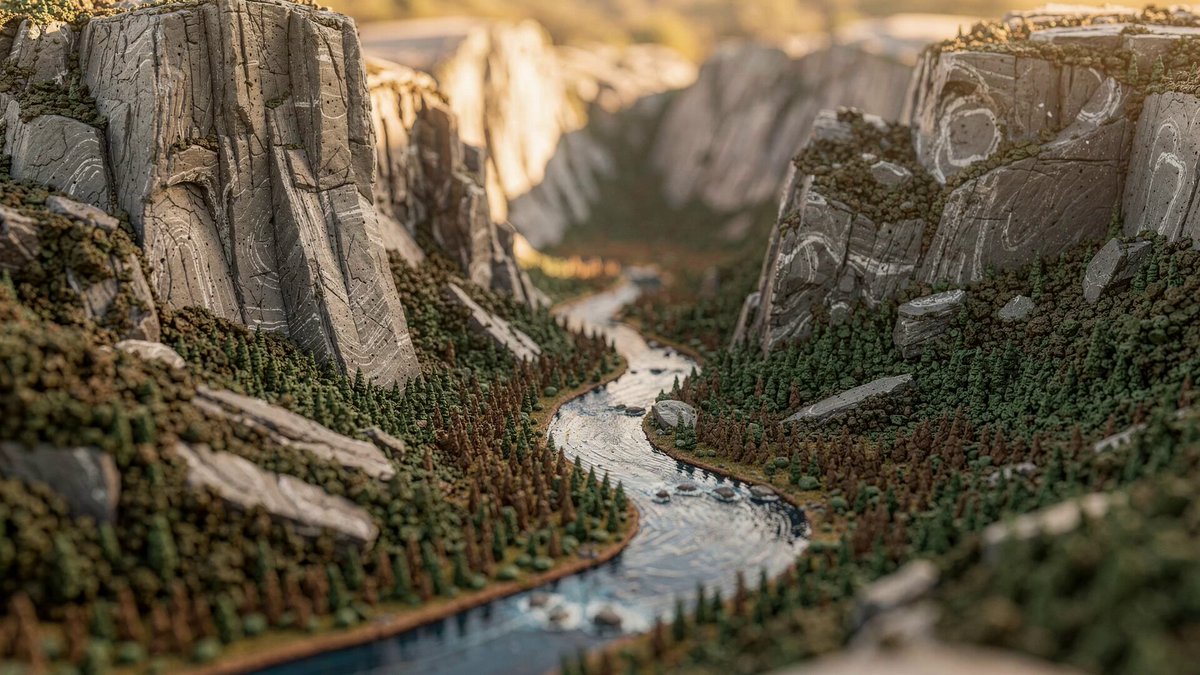
Asked Fable to build a navigable version of Yosemite to scale > pulled satellite imagery + real NASA elevation data > classified individual forest pixels and created ~266k procedural trees > custom water shaders for all 6 famous waterfalls + accurate placement on cliff brinks > five times of...

1,222,869 次观看 • 2 个月前 •via X (Twitter)

0 条评论

暂无评论

原始帖子的评论将显示在这里

相关视频

This is real first-hand footage of D-Day. On a single morning, on a fifty-mile stretch of French coast, the largest invasion in human history began... It was the 6th of June, 1944. By the end of that one day, around 160,000 Allied soldiers had crossed the English Channel and landed in Normandy. They were carried by more than 5,000 ships and supported by some 13,000 aircraft, a fleet so vast that, to the men who saw it from the water, the horizon itself seemed to be made of steel. The plan was almost insane in its ambition... In the darkness after midnight, 23,400 paratroopers were dropped behind enemy lines to seize bridges and roads. At dawn, after a bombardment from sea and air, the infantry went in across five beaches, code-named Utah, Omaha, Gold, Juno, and Sword. What you are watching was filmed in those hours. It is worth remembering what it actually shows. Each of those small landing craft held a few dozen men. When the ramps dropped, they stepped out into water and onto open sand, into machine-gun fire from concrete bunkers that had been built and ranged for exactly this. On Omaha Beach, the worst of the five, the fighting was so severe that American forces alone suffered around 2,400 casualties in that single sector. By the end of the day, at least 4,400 Allied soldiers were confirmed dead. Most of them were very young. Many had never been in combat before that morning, and would never see another. What makes the day almost impossible to comprehend is not only its scale but its uncertainty. No one watching the boats go in knew it would work. Eisenhower had written a short note the night before, to be released if the invasion failed, taking the entire blame upon himself. He kept it folded in his wallet but he never had to use it... Within a year, the war was over.

James Lucas

106,723 次观看 • 2 个月前

.Google Cloud killed its own opening video 3 weeks before Google Cloud Next. In rehearsals, VP of Marketing Sarah Kennedy Ellis looked at the opener her team had built and called it. It was using AI, but not enough of it to actually showcase what the product could do. So they rebuilt it from scratch. In 3 weeks. Here's how it came together, straight from her SaaStr AI 2026 session: - It started on a napkin. A creative director sketched the concept by hand, then fed it into Nano Banana to generate the source images and inspiration. - The story was Google's own history. The 1998 origin garage. Dino. The original server rack that was actually built out of Legos. 138 Easter eggs packed into the video, prompted from Google's own lore. - Then they added motion with Veo and stitched it all together with a few custom agents built on the Gemini Enterprise platform. - The agents improvised. They prompted for balls representing customers, and the model added a burst of water that was nowhere in the brief. It injected its own creativity into a physical, on-stage moment. - The hardest part was the most physical: resolution. Max output was 4K. The screen at Next is the size of a 737. They had to upres from 4K to 12K using a custom Deep Mind model, the same one used for the Wizard of Oz production at the Sphere. Top Takeaways: 1️⃣ The old version of this project needed an agency, a much bigger budget, and a lot more than 3 weeks. That whole path collapsed into an internal team using their own tools. 2️⃣ And the same video was impossible a year earlier. They tried similar work the prior year and it was too early, mostly because of the upres wall. Twelve months later it shipped on the biggest screen they had.

Jason ✨👾SaaStr.Ai✨ Lemkin

18,937 次观看 • 1 个月前

GPT-5.6 vs GPT-5.5 on my custom spaceship prompt. I gave both models the exact same custom prompt. This is also the same prompt I previously gave to Fable 5. For context, GPT-5.6 Pro worked for 87 minutes, while GPT-5.5 Extra High worked for 34 minutes and 42 seconds. As I’ve said before, based on great authority GPT-5.6 will be an incremental/soldi improvement over GPT-5.5, not a “Fable killer.” My rough expectation has been that it would trade blows with Fable 5 on some benchmarks, maybe win around half depending on the category, but not clearly surpass it overall. And again fable five will have bigger model smell, but this was expected. After testing this coding output, that view feels pretty accurate. GPT-5.6 is clearly better than GPT-5.5 in several visual areas. The lighting, shading, chairs, object details, and exterior of the spaceship looked noticeably stronger. The scene was also easier to test. I do want to give GPT-5.5 credit though. It built out the rooms much much better and the planets looked better than GPT-5.6’s. It was also interesting that both GPT-5.5 and GPT-5.6 produced better-looking planets than Fable 5 in this specific test. The downside with GPT-5.5 was stability. The game was much glitchier and harder to test compared to GPT-5.6. But when it comes to the core of the demo, which is the spaceship itself, Fable 5 still beat both models pretty comfortably. GPT-5.6 is impressive, but from this test, it looks exactly like what I expected which was a meaningful incremental improvement over GPT-5.5, at least for indie game demos, but not something that replaces Fable 5. In collaboration with Chetaslua

Chris

250,405 次观看 • 1 个月前

Google just admitted it can't build data centers fast enough, so it's planning on baking its AI model directly into the chip instead (Save this). Google's new Frozen v2 chip permanently embeds parts of Gemini's architecture into the silicon itself, cutting down on the calculations and data movement needed to answer a query. Engineers estimate it could process 6 to 10 times more tokens per unit of power than Google's current TPUs. The real story is why Google is building this in the first place because Frozen v2 is meant to ease a severe internal compute crunch that's caused friction between teams at Google. It reportedly pushed Google Cloud to turn away outside business because it simply doesn't have enough spare capacity to go around. If Google, one of the largest chipmakers in the world, is short enough on compute to turn away paying Cloud customers, that's confirmation this shortage isn't a scaling problem unique to smaller players, it's systemic across the entire industry. This ties into a much bigger power struggle happening right now. More AI companies are trying to cut their reliance on Nvidia by building their own chips. OpenAI rolled out a custom chip called Jalapeno alongside Broadcom last month and Anthropic is now partnering with Samsung on something similar. The reasoning is pretty simple, Nvidia effectively acts as landlord for every hyperscaler out there, and the rent isn't cheap. Nvidia hardware can account for anywhere from 20% to 60% of total AI infrastructure spend, and once a company is tied into its ecosystem, every hardware refresh forces another costly one. That's exactly why Google built TPUs and Amazon built Trainium, both trying to protect their own margins for shareholders. Bullish on Marvell + Broadcom who makes these custom chips and follow me Melvin for more infrastructure plays and check out the link below for more!

Melvin

63,457 次观看 • 19 天前

Pune Metro has been the cause for the maximum disruption of traffic and causing traffic chaos across Pune for the past decade. Besides this is a government run by thugs and thieves along with corporate executives who have pouring concrete over the entire city as their only objective. Among other things. We are trying to knock some sense into the @punemetro3 , roads and projects department to be more environmentally conscious. It’s mostly a losing battle. Unfortunately large corporate interests such as Tata Group Larsen & Toubro KPMG India are all complicit in the denuding of the cities green cover. It’s astonishing that they as of yet don’t have the capacities in-house to simply help move ancient trees 🌳 in situ at the same location or another as the case may be - so that Pune doesn’t have to sacrifice its ancient trees. Their engineering under the mandate of the chump in chief Devendra Fadnavis and his sidekick Ajit Pawar is about laying to waste a living breathing city. Never about conservation. When they’re not defending criminals like Karads or Mundes this is what they do…. Turn Mumbai and Pune into a dust bowl desert. Some notes emergent out of yesterday’s meetings with the metro officials. 1. The metro work has been the cause of the maximum tree felling in the area through Mann Hinjewadi to Shivajinagar. It also is the cause of the maximum traffic jams across the city in the past decade. 2. ⁠There isn’t a single example of the Pune IT City Metro Rail Corporation Ltd. having replanted or transplanted a single tree 🌳 fully in all its glory along this route. Not one success story. 3. ⁠What has happened instead is that trees in their hundreds and at times without permission have been butchered by the Metro authorities under the offices of Bhanudas Mane. Sakalnagar has lost 40 trees. Ganeshkhind Road over a few hundred trees. Karve road countless old growth trees. Wherever the metro goes, it creates traffic jams and destroys the road side green cover. 4. ⁠These criminals led by the offices of the Municipal Commisioner and supported by the house of Tata’s @RNTata2000 are responsible for the destruction of the green cover of Ganeshkhind Road. Aundh Baner Balewadi Road until Hinjewadi. 5. ⁠Some sad transplantation techniques have been applied along with making rudimentary compensatory plantation attempts to come up with numbers to justify further tree felling along Ganeshkhind Road. The biomass lost hasn’t been replaced by the biomass newly planted (never was meant to be). What was meant to be was to screw Pune’s population out of its green cover and its ability to fight pollution and traffic caused by the increasing heat and dust from the metro work force which will justify anything in its means to keep destroying the city and its natural capital. 6. ⁠All the officials involved have been incriminated on several counts in the courts of law, especially at NGT and Supreme Court and High Court. A current contempt proceeding also remains open towards these matters. Yet, nothing is taken seriously by any of them. Tree felling permissions continue to be applied for, they continue to be given despite strong objections raised by all citizens groups and movements. It’s a KPMG & BJP modus operandi to destroy our environment. Today Ganeshkhind Road is a former shadow of itself. The Metro work looms over everything here. 7. ⁠Despite the road department, projects department and the Metro Transit functions having made commitments to transplant trees In situ with minimum damage at the same locations preferably. Some or the other excuse is always given and not a single example of a successful transplantation of huge ancient trees along the roads exist. What does exist is gerrymandering of the records and data to keep showing trees as of lesser age, lesser dimensions, lesser numbers than what is actually reflective of reality on the ground. Continued 1/2

ameet singh

20,187 次观看 • 1 年前

I had to do a short interview with one of the news channels and we decided to go to Anand Vihar Metro Station, as this being one of the most polluted areas of Delhi, and also has one of the two SMOG TOWERS, and also is infamous for mischievous AQI monitoring. Here is what we found, also evidenced through videos: 1) AQI monitors are all surrounded by trees, is far away from where the real pollution needs to be measured, perhaps closer to where human activity was; 2) Entire area was sprinkled with water, also had water sprinkling trucks taking rounds. Clearly monitors can’t give the true pollution reading; 3) SMOG TOWER, that I also call Woo-do science, was shut down hen we reached, was switched on after an hour, and was told that it operates a few hours on few days. It following working hours, and working days schedule, as if pollution follows a govt circular of work timings and holidays etc; 4) SMOG TOWER was less than 20 meters from the Air Quality Monitors; 5) Apart from sprinkling water through tankers, there were two smog guns installed atop the building next to it, pointing towards the AQI monitor. It was shut when we reached, and as soon as we left, it was turned on again. In conclusion, manipulating data is not called governance. I wonder why would keep AQI monitors under a tree, in a secluded area, sprinkle water all the time over and around it, have a smog tower gigantic air purifiers just feets away from the monitoring station. Why even pretend to measure??

Vimlendu Jha विमलेंदु झा

37,375 次观看 • 8 个月前

🏴󠁧󠁢󠁳󠁣󠁴󠁿🇬🇧 Yosemite. The Sequoias. The Grand Canyon.🇺🇸 A boy from Dunbar, Scotland made the world protect all of it. His name was John Muir. 🏔️ Born 1838 in Dunbar, East Lothian. From the age he could walk he roamed the cliffs and fields of the Scottish coast. Something about the wild world would not let him go. In 1849 his family emigrated to Wisconsin. His father worked the family from dawn to dusk. John wanted to read. To think. To study. So he invented a machine that tipped him out of bed at one in the morning. To give himself more hours in the day. 🕐 In 1867 a factory accident nearly blinded him. When he recovered his sight he made a decision. He would turn his eyes to the fields and the woods. And never look back. He walked a thousand miles from Indiana to the Gulf of Mexico. Sailed to California. And walked into Yosemite. 🏔️ He lived there for three years in a simple cabin. Emerson visited. Offered him a teaching post at Harvard. Muir said no. Sheep were destroying the meadows. Loggers were taking the trees. Muir started writing. Articles read by millions. In 1890 Congress created Yosemite National Park. In 1892 he founded the Sierra Club. 🏴󠁧󠁢󠁳󠁣󠁴󠁿 In 1903 President Roosevelt came to Yosemite. They camped for three nights under the open sky. Muir talked. Roosevelt listened. Roosevelt went on to protect 148 million acres of forest. Five new national parks. Sixteen national monuments. ✅ All of it traces back to a boy from Dunbar. He never lost his Scottish accent. He died on Christmas Eve, 1914. He was 76. Did they teach you his name? 🏴󠁧󠁢󠁳󠁣󠁴󠁿🇬🇧 Muir gave everything to keep what he loved alive. Our history needs the same thing. We need our keepers. Be Part Of Us. Be Proud Of Us. 🇬🇧

Proudofus.uk

27,190 次观看 • 4 个月前

This is one-shot assembly: you show examples of what to build, and the robot just does it. (see original post: To share more on how this works, the robot is controlled in real time by a neural network that takes in video pixels and outputs 100Hz actions. The video below is part of the raw input passed directly into the model. I also like this view (at 1x speed) because it shows more of the (I think very cool) subtle moments of dexterity near the fingertips 👌 One-shot assembly seemed like a dream even just a year ago — it's not easy. It requires both the high-level reasoning of "what to build" (recognizing the geometry of the structures presented by the human), and the low-level visuomotor control of "how to build it" (purposefully re-orienting individual pieces and nudging them together in place). While possible to manually engineer a complex system for this (e.g. w/ hierarchical control, or explicit state representations), we were curious if our own Foundation model could do it all end-to-end with just some post-training data. Surprisingly, it just worked. Nothing about the recipe is substantially different than any other demo we’ve run in the past, and we’re excited about its implications on model capabilities: • On contextual reasoning, these models can (i) attend to task-related pixels in the peripheral view of the video inputs, and (ii) retain this knowledge in-context while ignoring irrelevant background. This is useful for generalizing to a wide range of real workflows: e.g. paying attention to what’s coming down the conveyor line, or glancing at the instructions displayed on a nearby monitor. • On dexterity, these models can produce contact-rich "commonsense" behaviors that can be difficult to pre-program or write language instructions for e.g. rolling a brick slightly to align its studs against the bottom of another, re-grasping to get a better grip or to move out of the way before a forceful press, or gently pushing the corners of a brick against the mat to rotate it in hand and stand it up vertically (i.e. extrinsic dexterity). These aspects work together to form a capability that resembles fast adaptation — a hallmark of intelligence, relevant for real use cases. This has also expanded my own perspective on what's possible with robot learning, using a recipe that's repeatable for many more skills. This milestone stands on top of the solid technical foundations we’ve built here at Generalist: hardcore controls & hardware, all in-house built models, and a data engine that "just works." We're a small group of hyper-focused engineers, and hands-down the highest talent-density team I’ve ever worked with. We're accelerating and scaling aggressively towards unlocking next-generation robot intelligence. Building Legos is just one example, and it's clear to me that we're headed towards a future where robots can do just about anything we want them to. Its coming, and we're going to make it happen.

Andy Zeng

49,443 次观看 • 10 个月前

Qwen3.8-Max became the brain of Atomic Agent, Hermes and OpenClaw. We gave the same task: Turn a photo of a hand-drawn floor plan into an interactive 3D walkthrough of that apartment and open it in the browser. Outputs: – Atomic Agent: 66 min, 557K tokens, $2.01 – OpenClaw: 32 min, 1.2M tokens, $1.12 – Hermes: 2 h 14 min, 4.2M tokens, $6.42 Before the start we leveled the field: one model endpoint, equal step and token budgets, equal timeouts, full autonomy, memory wiped on all three. Atomic Agent reads images through its vision tool, so it interrogated the sketch 14 times until every room, door and window turned into data. Then it drafted the whole scene in its head six times, threw away five drafts, and wrote the finished 19.8 KB file in one single write. After that it opened Chrome, checked its own render, and only then replied. The only agent of the three that verified its work, and the only one that stopped on its own. OpenClaw was twice as fast and the cheapest of the three, but its image tool kept timing out mid-run, and it shipped the palest apartment of the day: white rooms, no floor colors, one texture visibly glitched, and furniture you have to squint to find. It read the full plan three times, cut 11 room crops, wrote the scene in chunks, and landed the fastest and cheapest apartment of the day in 32 minutes. Then it kept polishing the finished file until we pulled the plug. Hermes worked the longest: two hours, 97 model calls, 4.2M tokens, and the apartment came out wrong anyway: doors standing loose in the middle of rooms, a 2 by 1.8 bath sprawled across a quarter of the flat, furniture drifting away from the plan. It measured everything twice and still built the least accurate apartment. Atomic Agent will run Qwen3.8-27B locally on day zero, next week!

Atomic Agent

118,861 次观看 • 5 天前

Can United States manufacture robots? Matic Robots says "yes." It makes the best floor cleaning robot, that has won many perfect scores from Wired to many others. We love ours. But my trip there to get a tour from AI pioneer Navneet Dalal Navneet Dalal provided some real insights into how hard it is for a hardware company to make hardware in the United States. And how deeply AI is changing consumer electronics products that are going to be in many more homes soon. In this first part (Part II coming tomorrow) we get a look at how long it took for this company to go through prototypes to a shipping product. In the second part, you'll see the scaling hell that it takes to even ship a few thousand robots and the kinds of problems that scaling up a factory brings. Matic is one of my favorite small Silicon Valley companies. It has found what we call "product market fit." I just came back from CES where I saw many of its competitors, and the Matic wins because of not just the product thinking of Mehul and Navneet Dalal but because of their AI leadership. In a way their robot took many lessons from Tesla, from where to put the batteries to its bet on computer vision, which Navneet has been a pioneer in for years, working quietly behind the scenes. It is about to move into a new location that will allow it to grow to meet the demand that now is showing up (the boxes in its lobby show that it's outgrowing its current facilities). In terms of AI, it has aspirations of making a humanoid too, but it is taking a far more measured approach to getting there. By starting on the floor it can not just build world models based on real world data (customers are given a choice whether to allow its data to be used that way. Most customers choose to keep their data on the robot only, for privacy reasons, but if you opt in you can help them improve their models). They are using that data to understand homes. Navneet told me they hit very unusual situations in people's homes already that they couldn't really predict in simulators, like full-wall mirrors that confuse computer vision systems, or pools and water features in people's homes. Having real customers brings a ton of customer feedback about how to further improve the robot, and, as Navneet demonstrates in the second video, forces them to build a manufacturing muscle memory. Getting teams to work together, figuring out how to solve supply chain problems, from Trump's tarriffs, to a new one that showed up over the past couple of weeks. A supplier for its bags (one of the cheaper parts that goes into the robot) changed the glue it used, which caused robots to fail quality tests and the manufacturing line to stop. Reminds me a lot of the hell Elon Musk faced in its Fremont factory when Tesla was first starting to manufacture its Model 3, which almost bankrupted the company. Off the record Mehul and Navneet 🇮🇳 showed me some of the prototypes and plans for its next products that will show up over the next few years. Certainly not as sexy as Tesla, Figure, 1x_tech, and all the Chinese manufacturers are showing off already, but far better thought out for the typical Western home and AI plays a huge role in its future. It is the product that speaks for itself. It's amazing, and is about to get better this year due to AI. It's the first real vision-only robot to be in my home and I bet it won't be the last from this company. Real honor that they invited me over with my Insta360 camera (another company launched in my home, just like Matic was last year). In Part II we go into the factory.

Robert Scoble

69,229 次观看 • 6 个月前

Claude Code is now scary good at full-stack! I asked it to build a real-time weather intelligence dashboard with an interactive 3D globe and a forecasting layer that predicts weather 3 days ahead. It came back with a spinning globe that has a day/night cycle using NASA satellite imagery, city lights on the dark side, weather icons that switch between sun and moon based on local time, and a time travel slider that scrubs through 10 days of data. Claude Code built the whole thing in a single session, including the backend, database, data pipeline, and frontend. For the database, I needed something fast for time-series workloads since the app ingests hourly weather readings across many cities and serves time-range queries on every slider interaction. I used Tiger Cloud by Tiger Data - Creators of TimescaleDB, which gives you managed TimescaleDB on the Postgres you already know. Claude Code connected to it through the Tiger CLI MCP server and set up the entire backend directly: - Provisioned the database service - Created hypertables for time-partitioned weather storage - Set up continuous aggregates for pre-computed rollups - Built the data ingestion pipeline and the full NextJS + ThreeJS frontend The time travel slider queries thousands of rows on every position change. On a regular Postgres table, this would require manual partitioning and index tuning to stay fast as data grows. TimescaleDB partitions the data by timestamp automatically, so each query only hits the relevant time chunk. Continuous aggregates serve the trend charts and forecast layer from pre-computed rollups instead of rescanning raw data on every request. The video below shows the final build in action, and I worked with the Tiger Data team to put this together. Tiger CLI is open-source (Apache 2.0) and works with Claude Code, Cursor, Codex, Gemini CLI, and VS Code. To try this yourself: → Sign up for Tiger Cloud (I have shared the link in the replies). It gives you $1,000 free credits (no card needed) → Install Tiger CLI: curl -fsSL https(:)//cli(.)tigerdata(.)com | sh → Run tiger mcp install claude-code → Give Claude Code a prompt and let it build Find the sign-up link in the replies.

Avi Chawla

14,579 次观看 • 2 个月前

To everyone wondering if Tesla's FSD moat has eroded thanks to Nvidia's keynote - here's the answer: Think of Nvidia as a seller of a toolkit. You can buy pieces built specifically for a job but once you have the tools you still have to build the entire project. In this case...a model Many seem to be in awe over Nvidia's Cosmos which is a platform that includes World Foundation Models that can generate synthetic data for training AI systems like autonomous vehicles I'll go into much more depth in today's episode but here's a clip of Ashok Elluswamy at CVPR '23 explaining how Tesla is already using a similar approach to augment its real world data set This also doesn't even consider the fact that much of the auto industry using Nvidia "tools" will be forced to pay 50%+ margins just to buy the toolkit and will be locked in to Nvidia's system Nor does this touch on legacy auto needing to hire top ML engineering talent to actually put these tools to work The path to autonomy will be real world data as the foundation and simulations/synthetic data as a supplement. There is no path to autonomy with synthetic data alone. More to come later $TSLA As Elon said earlier this year, "it's remarkable how quickly we run out of human-created data. Reality itself and synthetic data ftw" "What you are seeing here is purely generated video sequences - given the past videos the network predicts some sample from the future, hopefully the most likely sample. It is being predicted not just for one camera, but it predicts for all 8 cameras around the car jointly" - Ashok

Dillon Loomis

60,753 次观看 • 1 年前

🚨RESEARCHERS BUILT A VIRTUAL CITY WHERE UP TO 1 MILLION AI AGENTS WAKE UP, COMMUTE, WORK, EAT, AND SOCIALIZE.. AND THEIR FAKE LIVES MATCH REAL HUMAN DATA SO CLOSELY THEY CAN PREDICT ACTUAL CROWDS IN TOKYO.. THE SIMULATION ERA HAS OFFICIALLY ARRIVED.. The system is called CitySim.. And it's the closest thing to Westworld that actually exists.. Here's how it works.. Every AI agent gets a full identity.. A personality built on the Big Five traits.. An age, a job, a home and workplace assigned from real map data.. Matched to actual census statistics so the population mirrors a real city.. Then they're set loose to live.. Each agent has needs.. Hunger, energy, safety, social connection.. When hunger drops too low, it interrupts what it's doing and finds food.. When it's isolated too long, it seeks out friends.. It plans its day in 5-minute blocks, the same resolution real humans report their routines in.. And at the end of every day, each agent reflects on what happened and writes insights about itself.. "I prefer evening study sessions".. It builds self-knowledge from its own memories, day after day.. They form long-term goals.. And revise them after major life events.. Financial stress counts as income falling below expenses.. Loneliness counts as fewer than 3 unique contacts in a week.. Now here's where it gets uncanny.. The researchers compared the agents' lives to real human data.. The simulated city's daily rhythms matched Japan's national time-use survey almost exactly.. Work, sleep, meals, leisure.. Age group by age group.. The agents' commute patterns reproduced real weekday rush hours and weekend leisure waves.. Then they aggregated where agents chose to go in a simulated Shibuya.. And compared it against real crowd density from actual smartphone location data.. The heatmaps line up.. The AI crowd gathers at the same transit hubs and commercial streets as real Tokyo pedestrians.. It gets stranger.. They gave the agents wellbeing surveys.. The same questionnaires used on 1,200 real people in Japan.. The agents' answers tracked the real population's.. And when GPT-4o was asked to judge whether behavior logs came from humans or AI.. CitySim agents were rated more human-like than every rival system, winning up to 85% of head-to-head comparisons.. Other agent systems got flagged for "suspicions of AI involvement" because their routines were too rigid.. These didn't.. The practical uses are massive.. City planners testing policies on a synthetic population before trying them on real people.. Businesses predicting which locations will attract crowds.. Event managers forecasting congestion.. A/B testing reality itself.. But step back and the bigger picture is wild.. We now have software people who wake up, get hungry, go to work, feel lonely, pursue goals, and reflect on their lives every night.. And their collective behavior is so human that it predicts what real cities will do.. The question isn't whether we can simulate society anymore.. It's what we do with a copy of one.

Evan Luthra

34,639 次观看 • 19 天前

My upcoming release of "Cinematic AI" has made me think about how bodies of work are formed. I think some are manifested and some are revealed. I think "Cinematic AI" falls into the latter category. It was not something I had a clear vision for and then created, but it was something that was revealed to me over time. I thought I saw a glimmer of it early on, but only after some time had past, could I see the body of work emerge. With a bit more context and watching great artists and how they work and think, it finally came to me that this series of 15-20 pieces that I had created could be a worthy collection to mint. AI art has been going through so many transformations from the early GAN work to Collaborative AI to now AI being widely accessible through platforms like MidJourney, Stable Diffusion, and many others. But one area that I have seen explode in recent months is cinematic AI. I distinguish this from animated AI, which has been around for a while, but cinematic AI is where the movements created by AI are getting closer to what you'd see in a movie or captured on a video camera. It still has a long way to go but it is getting more real than surreal as the technology develops. And this is where I seem to have found my groove, my home, my little corner in the artistic landscape. After Runway launched their image-to-video tool, it just blew my mind and I went down a deep rabbit hole and have created a new cinematic AI piece almost every other day for the past few months. I initially saw many of these pieces as just experiments, but with some time to reflect, I am seeing them as having the potential of being relevant pieces of artwork to mark this time in the development of AI. In some cases, I'm not sure if I'll ever be able to create a similar piece again, since the tools I use are not in my control, but in the control of the AI platforms, who are constantly improving and evolving the tools. Given all of this, there is no better way to mark my place in time than on the blockchain. I truly believe that this body of work has the potential to be an important artifact of this era in AI and AI art. It is always hard to judge ones own work, but what I can do is permanently etch in time on an immutable public database saying that I created this. Only time will tell if the work has any value or is of any significance, but who created it and what was created cannot be disputed. I hope this gives you and especially collectors some perspective on the work I'll be releasing next week. I'm still very early in my artistic journey, but hopefully some of you will see promise in what I'm doing and maybe even put in a early bet on my art practice by bidding on a piece next week. Thanks to all of you who have supported me, taught me, advised me, been a friend to me. Much love and respect.🙏 ------------------------------------- CINEMATIC AI October 25, 2023 Marking on the blockchain, establishing historical provenance for a cinematic AI body of work. Minting on Transient Labs ERC-721TL Listing on SuperRare

Chikai

21,517 次观看 • 2 年前

i'm obsessed with what's happening in AI reforestation right now this Franco-Brazilian startup called MORFO took a patch of land in Brazil that was rock-hard and compacted from years of cattle farming. they replanted it using a single drone. months later the ground was covered in grass, bushes, and small trees. the land came back to life. here's how the whole thing works. 1. drones scan the terrain with high-resolution cameras and sensors 2. AI analyzes the imagery alongside soil samples, moisture levels, slope, and surrounding vegetation 3. the system picks from a catalog of 300+ native species, deciding exactly which plants will thrive in which specific spot 4. the drone fires biodegradable seed pods packed with seeds, nutrients, and moisture at 180 capsules per minute 5. satellite and drone imagery monitors regrowth over time, with AI tracking vegetation cover and biodiversity 6. two people and one drone cover 50 hectares a day. a person planting by hand manages about one hectare. and MORFO isn't alone. AirSeed in Australia drops 250,000 seed pods per day into bushfire-scarred koala habitat, replanting swamp mahogany that koalas depend on to survive. Flash Forest in Canada fires 50,000 pods daily into wildfire-destroyed boreal forest, planning the replanting alongside Cree Indigenous communities. re-green won Prince William's Earthshot Prize after planting 6 million seedlings across 30,000 hectares of Amazon and Atlantic Forest. five companies across four continents built this same approach independently. nobody coordinated. the physics of the problem demanded it. knowing which seeds belong in which soil used to require years of ecological fieldwork, manual planting crews, and budgets that made large-scale restoration nearly impossible. now two people with a drone and an AI model trained on local soil data can replant 50 hectares before lunch. this is the AI work that'll still matter in 50 years.

Alex Veremeyenko

670,560 次观看 • 1 个月前