正在加载视频...
视频加载失败
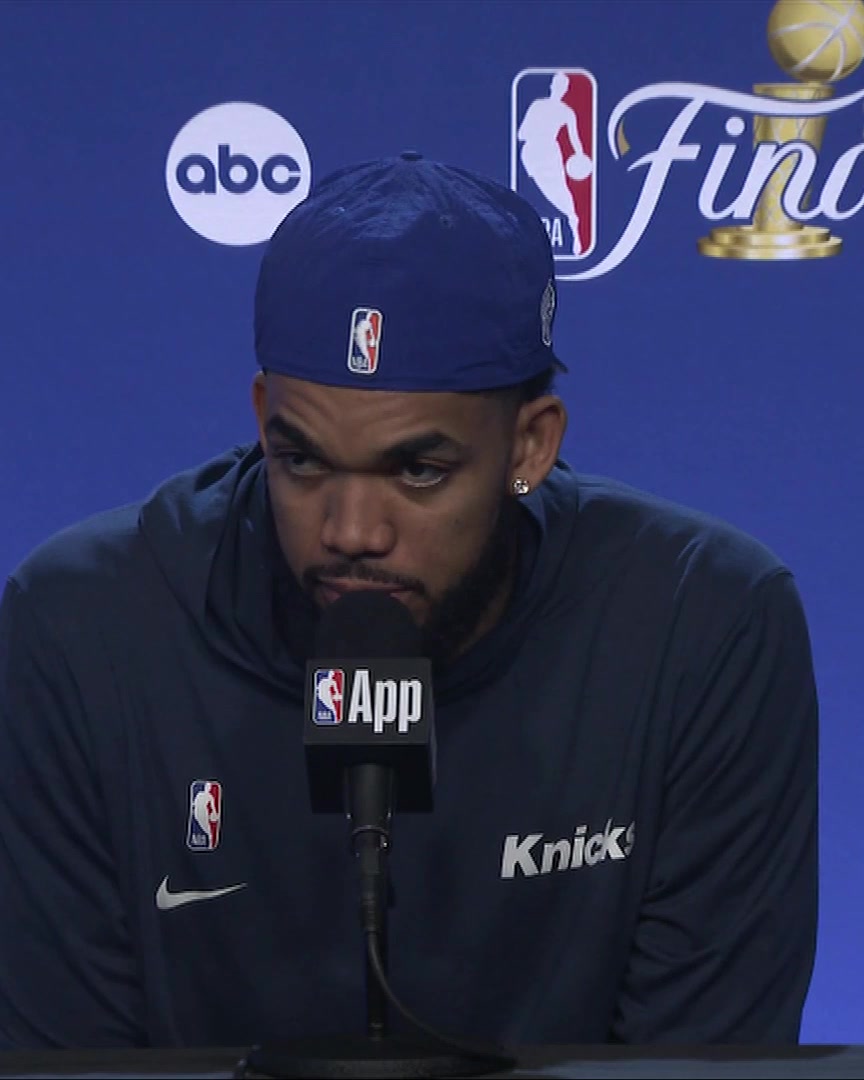
Asked Rudy Gobert about how he calculates risk when dropping back in coverage and how much of his job defensively is like a math equation. "You gotta understand that you can't stop everything... I think the main advantage of having me in a drop is to allow my teammates... show more

198,077 次观看 • 5 个月前 •via X (Twitter)
0 条评论
暂无评论
原始帖子的评论将显示在这里

![Edgar Wright on his favourite shot in 'Black Narcissus' (1947): "I think 'Black Narcissus' (1947) is one of the greatest colour movies of all time. There is one particular shot towards the end of the film with Kathleen Byron, which, in my head, that is probably minutes of film, when in reality the shot is only on screen for less than two seconds And it's a shot of Kathleen Byron coming through a doorway, and it's part of an incredible climax, which I won't spoil if you've never seen the film. But it's one of those shots in Cinema that is ingrained on my brain. Like a lot of Powell and Pressburger films, I think it's just [has] a picturesque quality to it which is just somehow difficult to pinpoint exactly what the magic of Powell and Pressburger together is. But I think the thing is sometime these are the films that you keep returning to, is you can't kind of define exactly what it is about the film that keeps you obsessed, you just keep coming back. And this is one of those movies." ('Edgar Wright’s Closet Picks', Criterion, 2025)](https://image.24vids.com/tw-1988719199099801874/amplify_video_thumb/1988649870090182656/img/Nye0M3EiFpOR43d7.jpg)

![A visibly frustrated Tom Brady shares how much he “hates” the NFL’s fine system. He asks what kind of job says: “Hey, we’re going to take your salary away” when you make a mistake. He also can’t stand that some fans cheer when players get slapped with $100,000 fines. “I hate the fact that you sign a contract for $2 million a year, $5 million a year, and it’s so easy for someone to say, ‘Give me $75,000,’ ‘Give me $50,000.’” “‘Oh, it’s your second offense? That’s $100,000.’ ‘That’s your third offense? $200,000.’” “What job is like that in the world? Where you make a mistake at your job, and they come, and they go, ‘Hey, we’re going to take your salary away.’” “And then people are like, ‘Yeah, you should take his salary away.’ And I’m like [throws his hands up in the air].” A visibly frustrated Tom Brady shares how much he “hates” the NFL’s fine system. He asks what kind of job says: “Hey, we’re going to take your salary away” when you make a mistake. He also can’t stand that some fans cheer when players get slapped with $100,000 fines. “I hate the fact that you sign a contract for $2 million a year, $5 million a year, and it’s so easy for someone to say, ‘Give me $75,000,’ ‘Give me $50,000.’” “‘Oh, it’s your second offense? That’s $100,000.’ ‘That’s your third offense? $200,000.’” “What job is like that in the world? Where you make a mistake at your job, and they come, and they go, ‘Hey, we’re going to take your salary away.’” “And then people are like, ‘Yeah, you should take his salary away.’ And I’m like [throws his hands up in the air].”](https://image.24vids.com/tw-2071681784710873490/amplify_video_thumb/2071681613428031488/img/qo5tb9NFEdOz_tue.jpg)






![JUST IN: Dan Bongino says the shot that Secret Service took to take out Thomas Crooks was one of the most difficult shots the USSS has had to take. Bongino says USSS had a 9-inch window to take the shot because there was a tree in the way. "The counters sn*per team that took out the shooter was a Secret Service team." "[The shot] was one of the most difficult shots that any CS team has taken in a long time. They had obviously seconds to respond." "The shot, from what I heard, there was about a nine-inch window. They had to shoot in from about 400 yards and there was a tree in the way and they still got the shot off."](https://image.24vids.com/tw-1813958143111782426/amplify_video_thumb/1813957953093021696/img/jYrWsoNURihcU4jG.jpg)

