正在加载视频...

视频加载失败

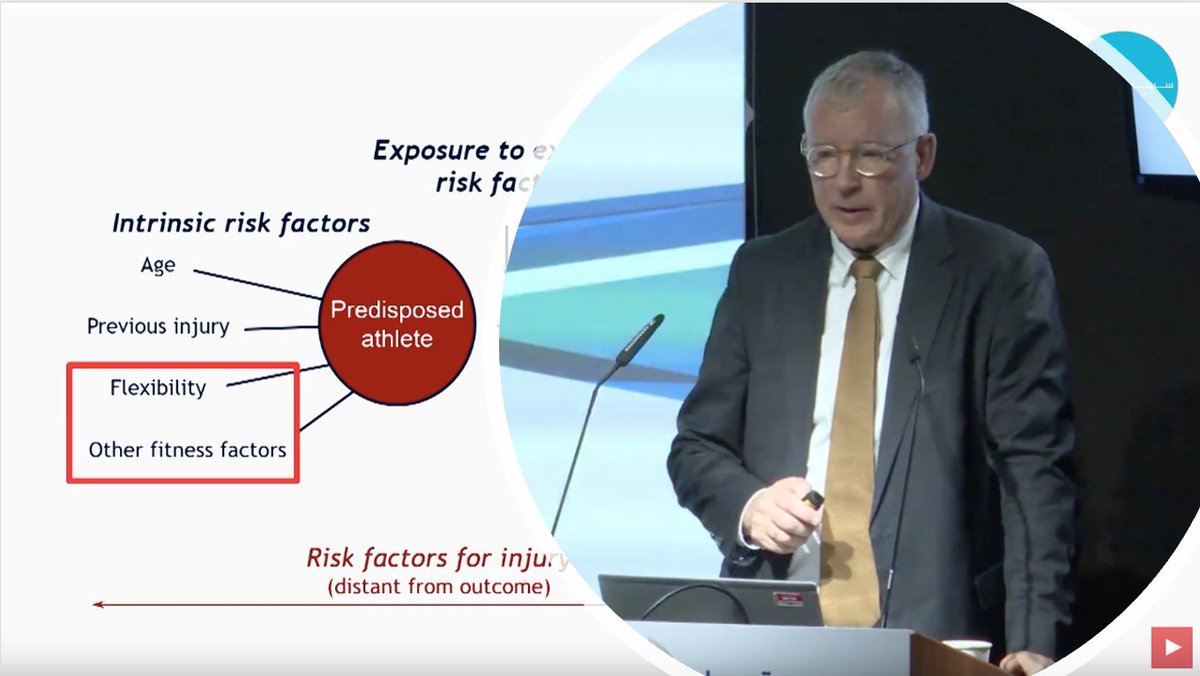
🆕 #AspetarTuesdayLecture 🗣️ Prof, Martin Hägglund : Why are hamstring injuries not reducing in elite sport despite our best efforts ? 🔗 Full Video 👉

14,510 次观看 • 1 年前 •via X (Twitter)

2 条评论

HENRY MATOS VEJARANO 的头像
HENRY MATOS VEJARANO1 年前

@MHgglund La desproporcion muscular entre los isquiotibiales y los cuadriceps, falta de calentamiento, lesiones previas, sprint y desaceleracion rapida, el musculo fatigado y tenso si recibe un contacto directo, etc. pueden sufrir desgarro de 2do o 3er grado.

American Stories Network 的头像
American Stories Network1 年前

No shortcuts, no excuses—just pure determination. 💥 Are you ready to see who has what it takes? #SurvivingMann #NoLimits #NavySEALs #AmericanSheriff #SpecOps #LawEnforcement #TacticalTraining
相关视频

Have We Changed our Approach to Hamstring Injuries? 🎯 Five key points for clinical practice: 1⃣ - Strength and Flexibility are weak risk factors for hamstring injuries and continue to form a small but important part of the causal pathway. Although the evidence for stretching is lacking, multi-faceted prevention programmes might consider including these components to be successful in the prevention of hamstring injuries. 2⃣ - Intrinsic neuromuscular function may be altered post-injury. Clinicians should focus on returning the player to full function during the rehabilitation of hamstring injuries, which may include specific targeted intervention even after return to play. 3⃣ - Our common strength and flexibility tests have poor predictive value, and do not possess the characteristics needed to successfully identify individual players at greater risk of hamstring injury. This is evident in the large amount of variability between seasons, and poor sensitivity and specificity demonstrated for these measurements. The wide overlap in distribution of pre-season strength between injured and uninjured players demonstrates the difficulty in identifying a subgroup of at-risk players that might benefit from targeted intervention. It is therefore recommended that prevention programs be implemented for all players. 4⃣ - Workload monitoring provide another potential way in which we may reduce the risk of injury. The aggregation of chronic workload, as well as careful planning of acute workload increases, may reduce the risk of hamstring injury. However, high-level evidence to support this is lacking. 5⃣ - Understanding the context in which injuries occur and appreciating the complex nature of these injuries are important considerations to better manage players with hamstring injuries 🔗Read the full article 👉 ✍️ Roald Bahr & Nicol van Dyk

Aspetar سبيتار

11,732 次观看 • 2 年前