Loading video...

Video Failed to Load

Go Home

Astronaut Eugene “Gene” Cernan during the Apollo 17 mission — the final time humans walked on the Moon. Gene Cernan became the last human to leave footprints on the lunar surface back in December 1972. It’s amazing to watch this old NASA footage and remember how far human exploration...

10,839 views • 8 months ago •via X (Twitter)

0 Comments

No comments available

Comments from the original post will appear here

Related Videos

🚨 NEWS FROM NASA In a bold and decisive move, NASA Administrator Jared Isaacman just announced a $20 billion plan to build America’s permanent base on the Moon — and they’re doing it in just 7 years. Today, NASA officially confirmed it is cancelling plans for the Lunar Gateway — the small space station that was supposed to orbit the Moon as a waypoint for astronauts. Instead, those components and resources will be repurposed directly for the surface base, accelerating humanity’s return to sustained lunar presence. The goal is clear — move beyond short visits and flags-and-footprints missions. NASA wants a real, long-term foothold on the Moon: habitats, power systems, rovers, scientific labs, and infrastructure that can support crews for months at a time. This base will serve as the foundation for deeper space exploration, resource utilization (like mining lunar ice for fuel and water), and eventually — Mars. The $20 billion investment over the next seven years will reshape major parts of the Artemis program. It comes with real urgency too — China is pushing hard toward its own crewed Moon landing by 2030, and the U.S. is determined to lead, not follow. This isn’t just about science. · A permanent lunar base means:Testing technologies for Mars missions in a real off-world environment · Developing in-situ resource utilization (turning Moon dirt into rocket fuel and oxygen) · Opening the door to a true cislunar economy · Inspiring the next generation of engineers, scientists, and explorers Private industry will play a massive role, as always — with contractors already building key hardware now being redirected. This is the kind of ambitious, focused leadership the space program has needed. From the first boots on the Moon in 1969 to building a thriving outpost there by the early 2030s — what an incredible leap forward. Significanly, the Moon isn’t just a destination anymore: it’s becoming home base for humanity’s expansion into the Solar System.

Massimo

241,760 views • 5 months ago

NASA has just launched a new website for its Moon Base missions, which aims to build a permanent $20 billion U.S. base on the Moon. SpaceX's Starship rocket will play a big role in these missions. "The Moon Base is a home away from Earth for Artemis astronauts who will live and work at humanity’s first lunar outpost. NASA is leading global teams of innovators across international space agencies, industry, and academia to build the Moon Base and establish an enduring human presence near the lunar South Pole for the benefit of all. Phase One (Now–2029): Experiment and Learn NASA will begin with a rapid series of robotic missions to scout the lunar South Pole region, test technologies, and prepare for surface operations ahead of future astronaut missions.: • A major increase in lunar activity, with up to 25 missions, including 21 landings. • Crewed and autonomous rovers for mobility demonstrations and surface preparation, along with four drones known as MoonFall and communications relay and observation satellites. • Early demonstrations of power, navigation, communications, and nuclear radioisotope heater unit technologies designed to endure the long lunar night. • Scientific payload opportunities integrated across landers and rovers. • The first tangible footprint of Moon Base effort, with four tons of payload delivered to test what works on the lunar surface. Phase Two (2029–2032): Early Habitation By 2029, NASA will transition to assembling semi-permanent infrastructure and initiating early habitation and logistics operations: • Deployment of expanded solar power systems and initial nuclear surface power capabilities, potentially including fission reactors and radioisotope power systems. • Upgraded rovers, potential advanced MoonFall drones, and early habitation elements. • Enhanced surface-to-orbit communications networks to provide reliable connectivity across the lunar South Pole region. • Delivery of up to 60 tons of cargo through as many as 24 landings using low-, medium-, and heavy-class cargo landers. Phase Three (2032 and Beyond): Sustained Human Presence This phase will scale operations to achieve a true enduring presence, with routine crew rotations and continuous surface activity. This is when living and working on the Moon becomes a reality: • Semi-permanent habitation modules with spacious interior for crew living and operations. • Operational fission surface power systems capable of delivering steady, reliable energy through the long lunar nights, leveraging in situ resource manufacturing. • Advanced logistics networks supported by crewed and autonomous rovers to keep the base supplied and functioning year-round. • Delivery of up to 38 tons of cargo annually to sustain habitats, power systems, logistics operations, and major science outposts, enabled by low-cost reusable heavy-lift capabilities." Moon base website:

Sawyer Merritt

955,565 views • 3 months ago

I want to believe, but there's too much evidence that not only tells me but shows me that they lied. I feel like low Earth orbit is as far as we can go... 1. The van Allen radiation belt. 2. The disgusted, unexciting, ashamed post moon landing conference with the three astronauts. Their body language, mannerisms, and answers scream that they're lying. 3. The lack of noise of the jet engines in the "videos." 4. How did they get the lunar rover on the spaceship? 5. No craters or dust underneath the spaceship. 6. How did the film the spaceship take off perfectly if nobody was left on the moon to operate the camera, and how was it so perfect if there was a delay? 7. The rockets and the spaceship look like a model. 8. The video of them saying that they are 130,000 miles away from Earth when all they really did was cover up the windows when they are in low earth orbit and film a small portion of Earth from low Earth orbit to simulate that they were far away, but then you find out that they're only in low Earth orbit when they uncover the windows. (Shown in the video below) 9. How we have to redesign the space suits to be able to handle the atmosphere on the moon. 10. The lack of talk and missions to the moon ever since. 11. The numerous blacked out photos from NASA. 12. How an older smartphone has way more technology than the entire spaceship back in 1969, and how we were able to even communicate with them in the spaceship as the one astronaut who passed away before the moon launch specified that they had trouble communicating between buildings and the shuttle on the ground. 13. Not one single astronaut would put their hand on the Bible and say they went to the moon. Why? 14. All the CGI and bubbles caught on NASA videos. 15. All the green screen captures and astronauts on wires in the "shuttle" and on the "ISS." There are so many bloopers and outtakes of astronauts and shuttle hatches malfunctioning, people appearing in the background of videos of the shuttle, people fading in and out, I could go on forever... How would you convince me against the evidence or prove me wrong from the arguments that I have provided?

The SCIF

32,347 views • 1 year ago

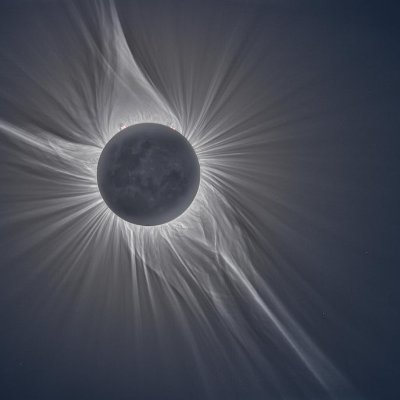
Breathtaking Video from Artemis II: Humanity’s First Close-Up Dance with the Moon in Over 50 YearsWatch as the Orion spacecraft glides silently around the Moon, delivering jaw-dropping, high-definition footage that feels almost unreal.Craters sharp enough to trace with your finger. Dramatic, ink-black shadows stretching across ancient plains. The stark, airless horizon giving way to the infinite velvet blackness of deep space. Every frame pulses with raw beauty and profound isolation.This isn’t just stunning cinema — it’s history unfolding live.On April 6, 2026, during the mission’s thrilling lunar flyby, the Artemis II crew (Reid Wiseman, Victor Glover, Christina Koch, and Jeremy Hansen) captured these mesmerizing views while traveling farther from Earth than any humans since Apollo. They skimmed just thousands of kilometers above the lunar surface, passed behind the far side (losing all contact with Earth for about 40 minutes), witnessed a total solar eclipse from space, and saw breathtaking Earthrise moments that echoed — yet surpassed — the iconic Apollo images.These visuals are scientific gold: revealing fine geological details, testing Orion’s cameras and navigation in deep space, and giving us an intimate look at our celestial neighbor like never before.Every second of this footage pulls us one giant step closer to a permanent return to the Moon — and eventually to Mars.This is what the new era of exploration feels like: awe-inspiring, humbling, and full of promise. Which part hits you hardest — the rugged beauty of the lunar surface, the endless void of space, or the sheer fact that humans are back there again after half a century? Drop your favorite moment or reaction below!

Black Hole

21,945 views • 4 months ago