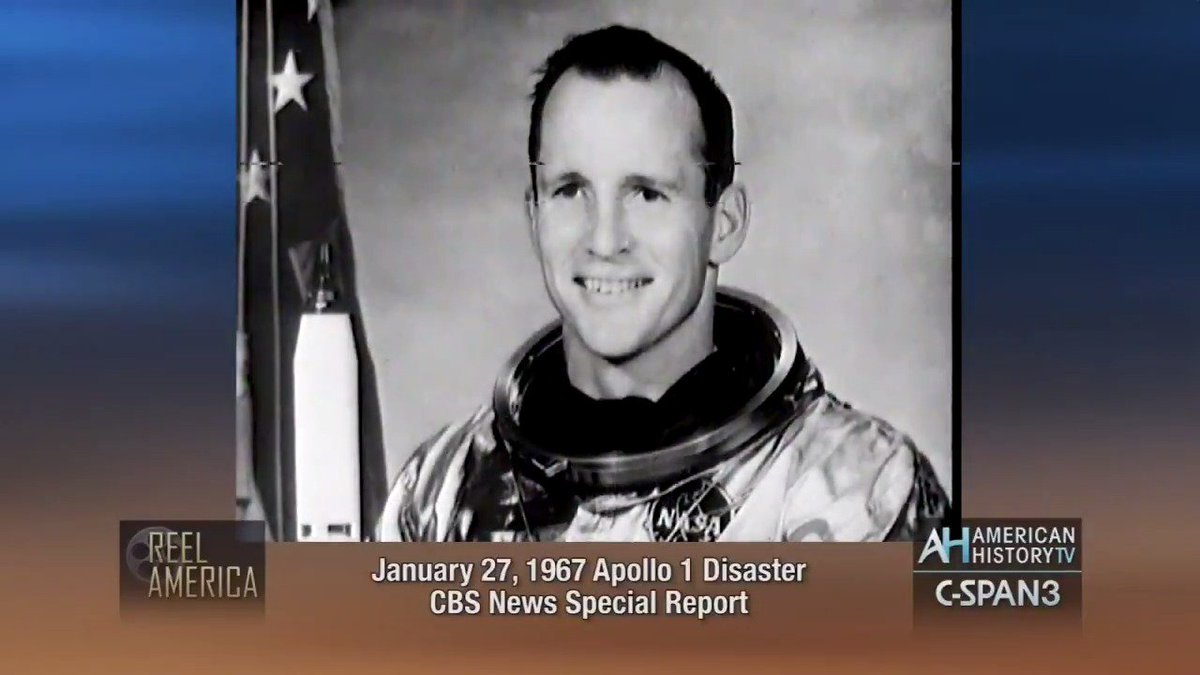
Video wird geladen...
Video konnte nicht geladen werden
Audio coming from inside the space capsule during the Apollo 1 disaster.

5,045,512 Aufrufe • vor 2 Jahren •via X (Twitter)
10 Kommentare

The Apollo 1 crew was skeptical regarding the mission but nevertheless they ventured into the unknown

Space Shuttle Challenger Disaster on Jan 28, 1986, which led to the loss of l!ves of 8 Astronauts

Last photo of the Apollo 1 crew before the disaster [KSC-67PC-17]
Astronauts Gus Grissom, Ed White II and Roger Chaffee for the space agency’s annual Day of Remembrance in Florida to honor the fallen crew of Apollo 1 disaster.

Judith Love Cohen, the woman who worked on the Pioneer, Apollo, and Hubble missions, was author & publisher of books about women in STEM, ballet dancer, mother of engineer/scientist Neil Siegel and actor Jack Black

Ronald Reagan’s message to a grieving nation after the Space Shuttle Challenger disaster

The tragic Apollo 1 incident in 1967 marked a dark moment in the history of space exploration. Originally designated as AS-204, Apollo 1 was slated to be the first manned mission of NASA's Apollo program. Astronauts Gus Grissom, Ed White, and Roger Chaffee were selected to undertake this pioneering flight. On January 27, 1967, the astronauts entered the Apollo capsule to conduct a ground test. During preparations, a series of technical issues and inadequate safety procedures combined to create a perilous environment. Exposed electrical cables, an atmosphere of pure oxygen inside the capsule, and highly flammable materials all contributed to an extremely dangerous situation. At around 6:31 PM, a sudden flash fire erupted inside the capsule, fueled by the pure oxygen. Within seconds, the cabin was engulfed in flames, rendering it impossible for rescuers to reach the trapped astronauts inside. The astronauts fought desperately to open the hatches, but the extreme pressures and temperatures quickly became unbearable. The fire consumed the cabin, claiming the lives of the three brave men. Subsequent investigation revealed a series of failures that led to the disaster. Poorly insulated electrical cables, combined with the pure oxygen atmosphere, created a highly flammable environment. Additionally, the hatches designed to open inward were nearly impossible to open under pressure. The tragic Apollo 1 incident served as a stark reminder of the dangers and challenges involved in space exploration. However, it also led to significant changes in the Apollo program. NASA implemented new safety protocols, including replacing the pure oxygen atmosphere with a mixture of oxygen and nitrogen, and improvements to escape systems and fire protection. Though it was a devastating loss, the sacrifice of the Apollo 1 astronauts helped pave the way for future space missions, ensuring that astronaut safety remained NASA's top priority.

That’s bone-chilling. Growing up, they didn’t teach about the early disasters of the US Space Program. We had to see it for ourselves, first with Challenger and then with Columbia.

The crew of Apollo 1 relaxes during training, 1966

Another unique and rare fact about the Apollo 1 disaster is the role it played in shaping NASA's safety culture and spacecraft design. Prior to the accident, there was a prevailing belief that the Apollo spacecraft was essentially fireproof due to its use of pure oxygen. However, the fire on Apollo 1 exposed the dangers of a high-pressure, pure oxygen environment in the presence of flammable materials. This led to a fundamental reevaluation of spacecraft design and safety procedures, including the use of a safer oxygen-nitrogen atmosphere and improved fire-resistant materials. Additionally, the investigation into the Apollo 1 accident revealed systemic issues within NASA's management and communication processes. Engineers had raised concerns about the spacecraft's safety prior to the accident, but these warnings were not adequately addressed or communicated to decision-makers. This lack of transparency and accountability prompted NASA to implement reforms to foster a more open and safety-conscious organizational culture. The lessons learned from the Apollo 1 disaster not only improved spacecraft safety but also contributed to a broader cultural shift within NASA towards prioritizing safety above all else. Furthermore, the legacy of the Apollo 1 tragedy extends beyond technical and organizational changes within NASA. It served as a sobering reminder of the risks inherent in space exploration and the importance of thorough testing and preparation. The sacrifice of the Apollo 1 crew—Gus Grissom, Ed White, and Roger Chaffee—spurred a renewed commitment to ensuring the safety of future astronauts.