Loading video...

Video Failed to Load

Go Home

Barry Diller ran, built, and often revolutionized ABC, Paramount, and Fox all by the time he was 49, making more legendary movies and shows than I can list… And then he really started making money. He bought QVC, and then went on a tear, investing as an “internet opportunist”...

374,958 views • 9 months ago •via X (Twitter)

0 Comments

No comments available

Comments from the original post will appear here

Related Videos

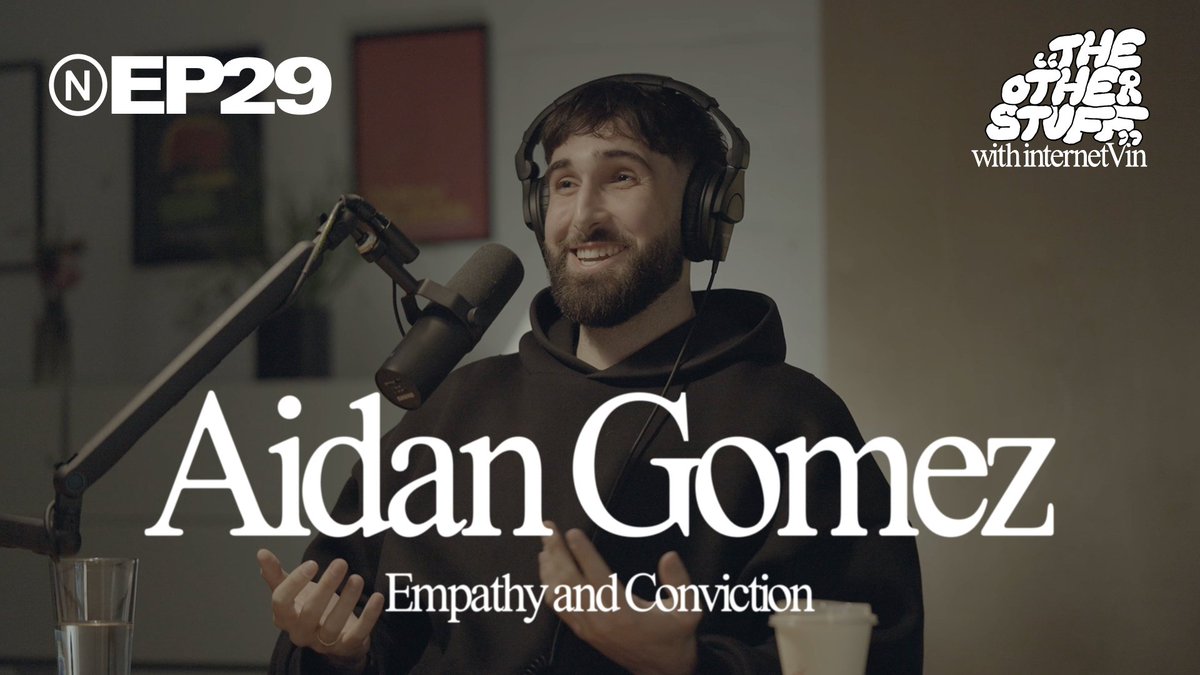
Aidan Gomez (Aidan Gomez) is a computer scientist, co-author of the seminal paper ‘Attention Is All You Need,’ and the CEO of Cohere. In this episode, we discussed his upbringing in the cabin his grandfather built in Codrington, a small town North of Brighton, and the values that were instilled in him through his family. We explored his path from Codrington to his undergraduate studies at the University of Toronto, emailing Geoffrey Hinton, and joining Google Brain where he co-wrote the paper on transformers. We discussed how he met his co-founders Ivan Zhang and Nick Frosst, and his insights on what it means to build a meaningful, successful company in Canada. Aidan shares his conviction about what is at stake — for Canada and for the world at large. This is a conversation about family, values, and what it means to live with conviction. The Other Stuff is hosted by internetVin — filmmaker, entrepreneur, and possibly the most curious man on Earth. Produced by New. The Other Stuff #29 — Aidan Gomez: Empathy and Conviction — Timestamps 00:00:00 Intro 00:03:10 The Malleability of Toronto 00:11:06 Growing Up in Codrington 00:13:50 The Story of Aidan Gomez’s Family 00:27:23 Introduction to the Internet 00:30:39 Values and Work Ethic 00:35:46 University of Toronto’s AI Scene 00:40:48 Emailing Geoffrey Hinton 00:42:16 Google Brain 00:45:15 Dropout: A Simple Way to Prevent Neural Networks from Overfitting 00:49:48 The Beauty of Research 00:54:24 One Model to Rule Them All 00:59:54 Meeting Ivan Zhang and Nick Frosst 01:04:00 The Birth of Cohere 01:06:56 Twitter Influencers and Alex Friedland 01:11:48 Being the CEO 01:12:51 Building for Canada 01:15:01 Three Fundamental Ingredients of Building a Company 01:21:39 Working with the Canadian Government 01:24:39 Reflexivity in Canada 01:36:22 What Is Evil? 01:42:40 The Role of AI in the World

The Other Stuff Podcast

45,297 views • 6 months ago

"Projects like the New Deal, the Apollo program pale in comparison to what we're doing right now." 🆕 Greg Brockman (Greg Brockman) joins us to talk GPT-5, GPT-OSS, and what's next on OpenAI's road to crystallizing all of human intelligence! “Energy turns into compute, turns into intelligence… crystallizing compute into potential energy you can release again and again.” 0:00:04 - Introductions 0:01:04 - The Evolution of Reasoning at OpenAI 0:04:01 - Online vs Offline Learning in Language Models 0:06:44 - Sample Efficiency and Human Curation in Reinforcement Learning 0:08:16 - Scaling Compute and Supercritical Learning 0:13:21 - Wall clock time limitations in RL and real-world interactions 0:16:34 - Experience with ARC Institute and DNA neural networks 0:19:33 - Defining the GPT-5 Era 0:22:46 - Evaluating Model Intelligence and Task Difficulty 0:25:06 - Practical Advice for Developers Using GPT-5 0:31:48 - Model Specs 0:37:21 - Challenges in RL Preferences (e.g., try/catch) 0:39:13 - Model Routing and Hybrid Architectures in GPT-5 0:43:58 - GPT-5 pricing and compute efficiency improvements 0:46:04 - Self-Improving Coding Agents and Tool Usage 0:49:11 - On-Device Models and Local vs Remote Agent Systems 0:51:34 - Engineering at OpenAI and Leveraging LLMs 0:54:16 - Structuring Codebases and Teams for AI Optimization 0:55:27 - The Value of Engineers in the Age of AGI 0:58:42 - Current state of AI research and lab diversity 1:01:11 - OpenAI’s Prioritization and Focus Areas 1:03:05 - Advice for Founders - It's Not Too Late 1:04:20 - Future outlook and closing thoughts 1:04:33 - Time Capsule to 2045 - Future of Compute and Abundance 1:07:07 - Time Capsule to 2005 - More Problems Will Emerge

Latent.Space

305,090 views • 11 months ago

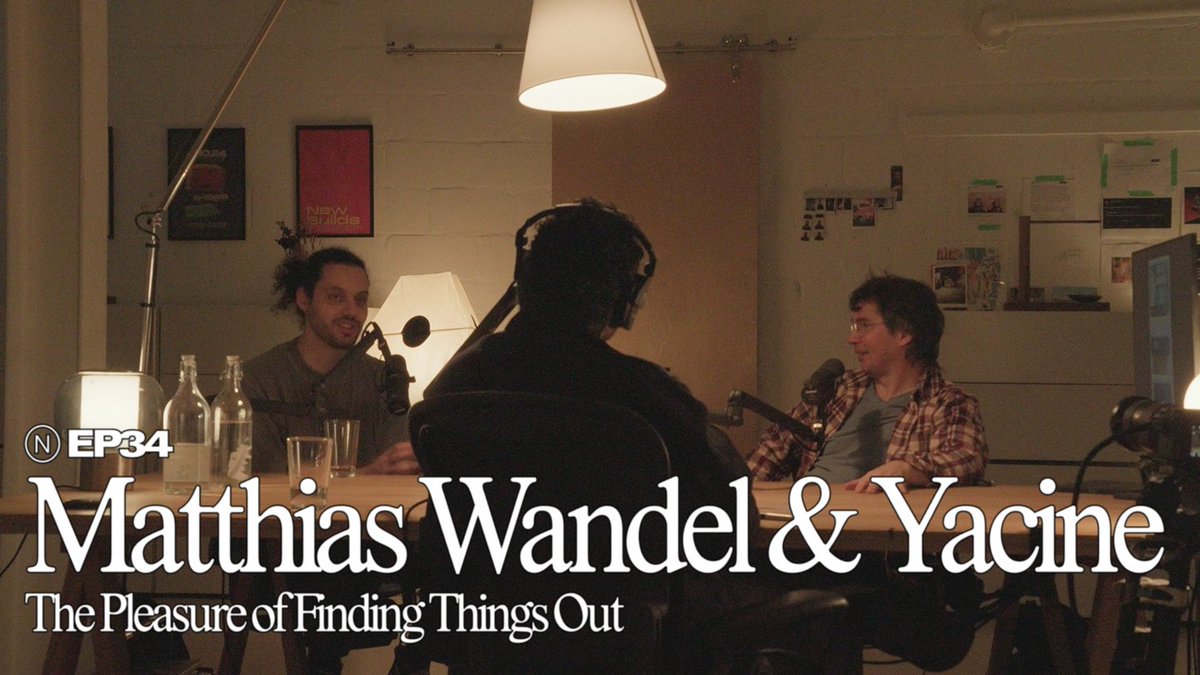
Matthias Wandel is an engineer, woodworker, and YouTuber who runs the most-viewed woodworking channel on YouTube. He was an early employee at Research In Motion, assigned employee number 13. Yacine (kache) is an engineer and artist, formerly at X and Stripe. Both of them are tinkerers, explorers, and builders in their own right. They poke at the world, build and test things for themselves, and develop their own understanding. In this conversation, we traced a single thread through Matthias’s entire life: what happens when you grow up in a place where the only way to have something is to make it yourself, and then never stop. We started in Northern Ontario, in his dad’s workshop on a gravel road where the nearest store was an hour away, and followed that instinct through his first encounters with computers, a Bic-pen dot matrix printer on a Commodore 64, two brothers with two machines in a basement heated by a wood stove, lock picking in the Waterloo service tunnels, and what it means to be a nerd. Matthias and Yacine went back and forth on simplicity vs. ease, what LLMs change about the relationship between understanding and building, and why the probability of code getting reused is inverse to the effort you spend making it reusable. Matthias walked through building the DigiSync barcode reader for the motion picture industry, writing almost all the firmware for RIM’s first wireless modem in DSP assembly, watching BlackBerry’s network traffic flip on 9/11, and what it was like to work alongside Mike Lazaridis. He explained why he left BlackBerry while sales were at their peak and how a bandwidth constraint accidentally made his first viral YouTube video. This is a conversation about constraints that become capability, capability that becomes independence, and independence that becomes something you pass on. The Other Stuff is hosted by internetVin, filmmaker, entrepreneur, and possibly the most curious man on Earth. Produced by New. The Other Stuff #34 – Matthias Wandel & Yacine: The Pleasure of Finding Things Out — Timestamps 00:00:00 Intro 00:02:25 ElectroBoom and Styropyro 00:09:55 Potato Guns and Air Guns 00:23:34 Growing Up in Northern Ontario 00:37:16 First Computers and the Bic Pen Printer 00:43:22 Markus Wendel and the Basement 01:00:19 University of Waterloo 01:03:37 Service Tunnels and Lock Picking 01:10:07 What Is a Nerd? 01:11:34 LLMs and Simplicity vs. Ease 01:31:19 How RIM Started 01:44:01 Building the Wireless Modem 01:58:43 Reusability and Optionality 02:14:13 The BlackBerry Pager 02:33:50 BlackBerry and 9/11 02:48:13 Lazaridis and Balsillie 03:05:28 The YouTube Channel 03:26:01 The Capacitance Sensor 03:42:41 Passing It On

The Other Stuff Podcast

41,669 views • 2 months ago

.Jerry Tworek is an AI legend. He came to OpenAI from the world of finance and spent years contributing to some of the company's most important projects. He played a major role in ushering in the era of reasoning and, well, he just left OpenAI. In this Core Memory pod, Kylie Robison and I bring you the exclusive not-so-formal exit interview with Jerry. He explains his dissatisfaction with the company's current research direction and his fears for the field overall. He goes into spots where OpenAI lost its way and Google and Anthropic thrived. And he talks about what he's chasing next. It's a banger. The Core Memory podcast is on all major platforms and on our YouTube channel. This podcast is sponsored by Brex , the intelligent finance platform built to help companies spend smarter and move faster. And it's brought to you by the VC gurus E1 Ventures 🇺🇸 Timestamps 00:00:00 Intro 00:03:37 Jerry Tworek Joins the Pod 00:05:34 Reflecting on Seven Years at OpenAI 00:09:08 Why Jerry Left: 00:12:28 Beyond Pre-Training 00:16:19 The "Sad" Homogeneity of Current AI Labs 00:23:35 The Mavericks: Carmack, Ilya, and LeCun 00:26:32 Training AI on Video Games 00:32:14 Two Big Bets 00:34:32 Updating AGI Timelines 00:37:16 Q-Star 00:41:10 The Coup 00:43:29 Is the Hype Justified? 00:49:23 The Polish Mafia 00:53:15 Google's Comeback and OpenAI's Fumble 00:59:27 Why Anthropic is Impressive 01:03:01 Jerry's Next Chapter 01:11:56 Is AI Research Star-Driven? 01:14:32 Meditation & Conclusion

Ashlee Vance

11,701 views • 5 months ago

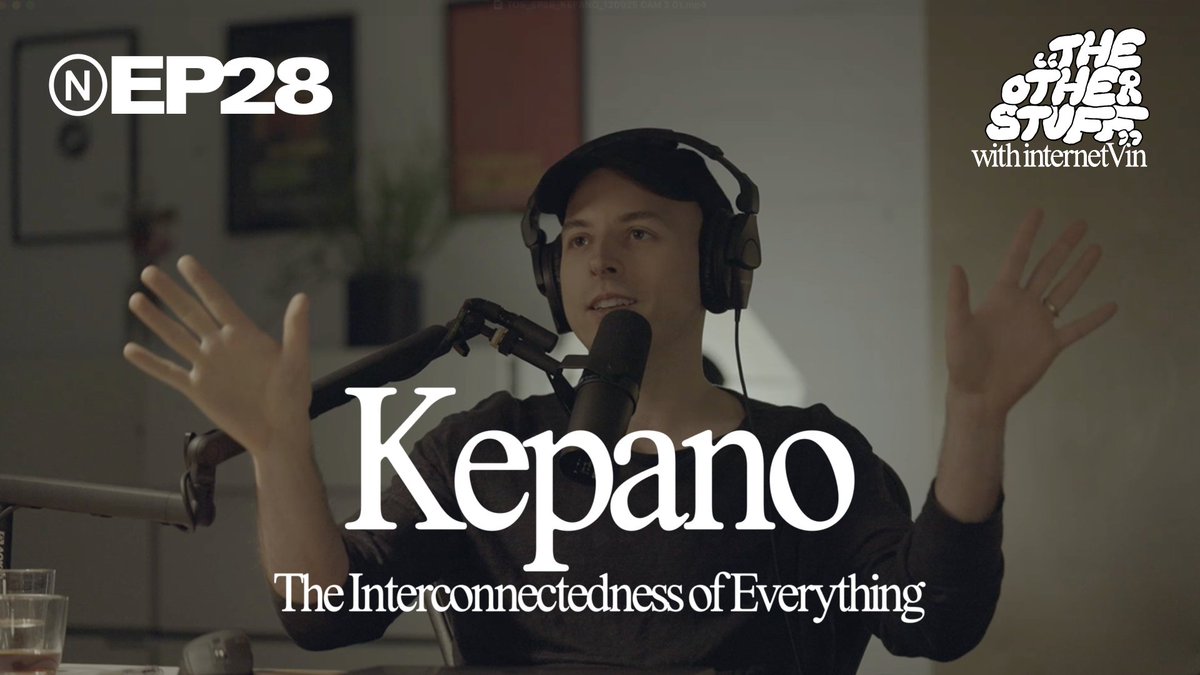
Steph Ango (kepano) is a designer, entrepreneur, and the CEO of Obsidian. In this episode, we discussed his journey from creating Winamp skins to leading Obsidian, and the fundamental patterns and inclinations that drive everything he explores and makes. We discussed Obsidian on multiple different dimensions, his deluxe chocolate chip cookie recipe, his exploration through furniture design, and his default inclination to push “too far” into anything he is exploring. Steph Ango demo'd the design process of several furniture projects he’s been working on at home as well as a custom piano learning app he created to teach himself music theory. This is a conversation about craftsmanship, pursuing a deep understanding, and what that reveals about who we are. The Other Stuff is hosted by internetVin — filmmaker, entrepreneur, and possibly the most curious man on Earth. Produced by New. The Other Stuff #28 — Kepano: The Interconnectedness of Everything — Timestamps 00:03:55 Origin of Kepano 00:10:34 Relationship with Computers 00:15:25 Online Communities & Video Games 00:30:47 Winamp Skins 00:40:04 Uniformity in Design 00:51:05 Obsidian 00:59:20 Bidirectional Linking, And The Relationship Between Everything 01:23:18 Obsidian Sync, Publish, and Bases 01:32:06 Why File Over App 01:43:15 The Deluxe Chocolate Chip Cookie Taste Test 01:49:48 Living Fully 02:09:50 Early Project Walkthrough 02:19:03 Furniture Design Walkthrough 02:49:00 Constraint and Patterns 02:58:47 Kepiano 03:13:00 The Future of AI and Startups 03:31:10 Closing

The Other Stuff Podcast

71,626 views • 7 months ago

My dear friend, Vlad Tenev, changed the landscape of investing forever! The rise of the retail investor is largely due to Robinhood's success... and in this new Journey Man, we discuss it all... Enjoy! 00:00 - Intro 00:53 - Introducing Vlad Tenev of Robinhood 01:27 - Why Take on Wall Street? 01:54 - Robinhood’s Zero-Fee Origin Story 02:53 - Inspiration from Instagram and Uber 04:24 - Reimagining Trading for Mobile 05:05 - The Challenge of Disrupting Finance 05:42 - Why Everything Is Hard 06:34 - Early Wrong Assumptions 07:42 - Raising Capital with a Small Vision 08:48 - Funding Robinhood on AngelList 09:50 - Early Investors Changed Their Lives 10:38 - The Crypto Explosion Begins 11:07 - Considering a Bitcoin Exchange First 12:17 - Bitcoin’s Early Skepticism and Growth 13:08 - Robinhood Launches Crypto in 2018 14:03 - 2020: Crypto Revenue Surges Overnight 15:04 - The Challenge of Crypto Cyclicality 16:11 - Staffing a Volatile Business 17:10 - Building Robinhood’s Lean Crypto Team 18:46 - Robinhood’s First Crypto Event Coming 19:38 - Where TradFi Meets DeFi 20:34 - Tokenizing Everything 21:09 - Robinhood’s Vision for Crypto + Finance 21:47 - Thoughts on Crypto Options Demand 23:04 - Why Crypto Options Haven’t Taken Off 24:09 - Millennials and the Speculative Economy 25:22 - Democratizing Trading for Everyone 26:08 - Why Buy-and-Hold Doesn’t Work for All 27:15 - Trading vs Investing: A Matter of Wealth 28:01 - Trading as a Skill Anyone Can Build 29:13 - Robinhood’s Role in Onboarding Millions 30:06 - The Fed's Role and Retail Insight 31:03 - The Rise of the Retail Macro Trader 32:17 - Helping Users Succeed with Robinhood Strategies 33:35 - Power of Community and the Hive Mind 34:55 - Will AI Disrupt Community Too? 36:14 - Technological Waves and Investor Opportunity 37:10 - Human Purpose in an AI World 37:52 - Tokenizing Human Connection 38:28 - Creators, Platforms, and Future-Proofing 39:26 - Vlad’s Long-Term View of the Future 40:05 - Financial Services at the Heart of Disruption 41:14 - If AI Replaces Jobs, What Happens to Investing? 42:25 - Entering the Economic Singularity 43:31 - What Happens When AIs Win the Markets? 44:16 - AI's Role in Capital and Markets 45:07 - Will AI Eliminate Human Emotion from Markets? 46:06 - HFT: The Original AI Traders 47:20 - AI and Long-Term Probabilistic Forecasting 48:48 - GPUs, Gaming, and the Origins of AI 50:01 - Nvidia, CUDA, and Wall Street Arms Races 51:04 - Flash Boys and Microwave Trading 51:54 - Will AI Costs Go to Zero? 52:52 - Lower Cost, Higher Usage 53:41 - Robinhood’s UX Won’t Be Just a Chatbox 55:16 - Cortex: AI-Powered Features at Robinhood 56:54 - Tokenization and the Future of Asset Management 57:44 - Crowdsourced, Tokenized Hedge Funds 58:48 - Portability of Tokenized Assets 59:39 - Blockchain as the New Rails of Finance 01:00:09 - The Trump Token and Capital Formation 01:01:00 - Capital Access Unlocks Innovation 01:01:49 - Why Crypto Needs Regulatory Clarity 01:03:17 - From Meme Coins to Real Assets 01:04:17 - Crypto's Path to $100 Trillion? 01:05:15 - The Financial System Will Run on Blockchains 01:06:00 - Platform Layer vs Application Layer Wealth 01:06:29 - AI Raises Money and Launches Tokens 01:07:39 - AIs Creating Software and Capital Formation 01:08:00 - Final Thoughts: A Wild Future Ahead 01:08:20 - When Will Vlad Buy a CryptoPunk? 01:08:51 - Wrapping Up: AI, Crypto, and the Road Ahead

Raoul Pal

166,795 views • 1 year ago