正在加载视频...

视频加载失败

Battle Tank Leopard 2 A-RC 3.0 from Germany 🇩🇪 - Unmanned turret with digital fire control - 120mm smoothbore gun (L55 A1) - 7.62 mm coaxial machine gun - No turret ring intrusion into hull structure - Separated crew & ammunition for survivability Der Gepardkommandant Rheinmetall
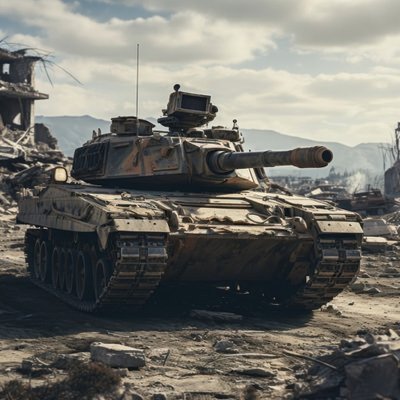
119,451 次观看 • 8 个月前 •via X (Twitter)

0 条评论

暂无评论

原始帖子的评论将显示在这里

相关视频

🚨🇷🇺 NATO IN PANIC: RUSSIA’S T-80BVM TANK GETS NEW ARMOR FOR DRONE WAR A previously unseen T-80BVM configuration has appeared with a tighter roof screen and expanded side protection. Russian engineers are turning lessons from frontline crews into a more coherent armor package built around the threats tanks actually face in Ukraine. 🔸 The lower anti-drone screen sits closer to the turret and covers more of its upper surface than many early field-built cages. It is designed to trigger FPV warheads away from the thin roof and disrupt clean top-down attacks. 🔸 Additional Relikt explosive reactive armor and side screens strengthen the hull flanks, fuel-tank areas and engine compartment against shaped-charge weapons — the sections drone operators repeatedly try to reach. 🔸 The upgrades preserve the T-80BVM’s main advantage: mobility. Its 1,250 hp gas-turbine engine can push the tank to around 70 km/h, allowing crews to fire, relocate and avoid remaining exposed in one position. 🔸 The tank retains its 125 mm gun, modern fire-control system and ability to launch guided missiles through the barrel, giving it the firepower to engage armor and fortified positions from range. 🔸 Uralvagonzavod says recent T-80BVM batches incorporate combat experience and direct feedback from the front, with the main emphasis placed on crew safety and overall survivability. 🔸 Russia has also increased production of the T-80BVM, T-90M and T-72B3M severalfold. New batches continue to reach the troops as anti-drone protection becomes a standard part of the upgrade process. The T-80BVM keeps its turbine-powered speed while adding protection where FPV crews look first: the turret roof, hull sides and engine deck. Every clean attack angle is becoming harder to find. Which matters most for tank survival now: roof armor, electronic warfare or speed?

NewRulesGeopolitics

41,006 次观看 • 1 个月前

The video shows the trials of the VT-1-1, a turretless tank with 2 x 105 mm guns, firing on the move at the Putlos training ground in 1976. The casemate (turretless) tank, designed for combat while moving, was introduced in Germany in the mid-1970s as a twin-gun casemate tank (the Soviet term for a "turretless tank"). For practical firing tests in the "target pass" mode, two prototypes were built in the mid-1970s. The first prototype, VT 1-1, was armed with two 105 mm guns, while the second, VT 1-2, was equipped with two 120 mm smoothbore guns. Additionally, the VT 1-2 featured a functioning autoloader behind one of the guns, with a firing rate of 10 rounds per minute. The vehicles were developed as part of the KPz 3 or Leopard 3 project. In both prototypes, the main guns were semi-fixed (with aiming and stabilization only in elevation). The chassis solutions were derived from the KPz 70 (MBT 70) program, with the running gear shortened by one road wheel (five road wheels per side). The vehicles weighed 36.8 and 43.5 tons, respectively, with a chassis rotation speed of 60 degrees per second. To achieve high maneuverability on rough terrain, 12-cylinder diesel engines from the MB 873 series with enhanced power were used, equipped with four turbochargers: 2000 hp for VT 1-1 and 2200 hp for VT 1-2. This provided an impressive power-to-weight ratio of 54 and 50 hp/ton, respectively, with acceleration to 55 km/h in 11 seconds, though only in a temporary "turbo" mode, as the standard power was 1600 hp. The accuracy of firing with two guns was unmatched by single-gun tanks, as confirmed by the tests. However, due to the novel combat approach, this revolutionary tank concept was rejected by the customer after trials in favor of the conventionally designed Leopard 2. In essence, although the project was developed as the Leopard 3, a tank for the future, it was, in reality, a parallel project and a potential competitor to the Leopard 2. Achieving the firepower, protection, and mobility of the Leopard 3 within reasonable weight limits was impossible with a conventional layout. At the same time, a significant tactical drawback of the casemate concept (including twin-gun casemate vehicles) is the linkage between the direction of fire and the direction of movement, which in many cases could complicate unit and formation control (according to German experts in the 1970s). Moreover, the VT 1-1 and VT 1-2 can hardly be considered balanced vehicles—they could have been simpler. The vehicles' mobility was exaggerated, with the main engine, transmission, auxiliary engine, batteries, and other systems occupying two-thirds of the vehicle's length. Pros and Cons of VT 1-1 and VT 1-2: Considering the key challenges, the twin-gun casemate concept can be evaluated as follows: Pros: Compact design due to a small internal volume. Two guns provide high firepower and hit probability. Cons: The weight advantage of the casemate design is largely offset by the integration of a second gun. Fire control alone results in high complexity, leading to increased maintenance costs and overall expenses. In 1975/76, five Gefechtsfeldversuchträger (GVT, combat test platforms) were developed and built for further mobility and concept trials. These were smaller than the VT 1-1 and VT 1-2, weighing 30 tons. The GVT 01-05 were equipped only with mock-up guns and laser firing simulators (TALLISSI) and telemetry systems, built using chassis components from the Leopard 1. The GVTs were used at the IABG facility in Lichtenau and the tank training school in Munster to test the twin-gun turretless tank concept in realistic exercise conditions, which is why five vehicles were built. However, the Leopard 2 was already in production, and tank crews showed little enthusiasm for this unconventional vehicle requiring a new approach.

Andrei_bt

81,636 次观看 • 1 年前

⚡🇺🇸: M1 ABRAMS: WHY IT IS STILL CALLED THE “KING OF ALL TANKS” The M1 Abrams is not just a tank, it is a continuously evolving battlefield system that has defined modern armored warfare for decades. The latest variant, M1A2 SEPv3, represents one of the most advanced main battle tanks ever fielded. It combines a deadly 120mm smoothbore gun with upgraded digital fire control, improved armor protection, and advanced networking that connects it to the wider battlefield in real time. Its survival advantage is built on layered composite armor and upgraded defensive systems designed to counter modern anti tank missiles, loitering munitions, and top attack threats. Unlike many competitors, the Abrams prioritizes crew survivability with a heavily protected internal layout and ammunition storage design. Mobility is another key factor. Powered by a gas turbine engine, the Abrams delivers exceptional acceleration and battlefield responsiveness, allowing it to reposition faster than most heavy tanks despite its weight class. Against rivals like the T 90M, Type 99A, or Leopard 2A7, the Abrams stands out in three core areas: combat proven reliability, continuous upgrade cycles, and integrated digital warfare capability. It has also been tested in real combat across multiple wars, constantly refined based on battlefield experience rather than theory. The upcoming SEPv4 upgrade is expected to push it further with enhanced sensors, better target detection, and improved threat tracking systems, keeping it relevant in the era of drone saturated warfare. This is why the Abrams is still called the “King of Tanks” Not because it is the newest But because it never stopped evolving.

Defence Index

18,814 次观看 • 5 个月前

Strange Tests – Firing at a T-64B Tank from "Hyacinth" Almost Point-Blank.Comendante wondered, "Will the Ukrainian T-64 tank withstand a point-blank shot from the 152mm Hyacinth?" It's worth clarifying here that the hull design, including the VLD on the T-64 (T-64B = 30+80+105+20), is similar to that of the T-72.1st shot – tank displacement from the impact impulse, destruction of part of the plate welded to the VLD, damage from barrel fragments and destruction of the weld seam of the support (the lower 20mm part of the VLD), destruction of the turret ring. 2nd shot – shot at the joint between the turret and hull over the driver's hatch – breach of the hull roof.Further shooting 4 more times at the turret, glacis, and gun. What can be said here? – For a design developed in 1961 without requirements to withstand hits from a 152mm OFS from "Hyacinth," it's actually not bad.The breach of the front part of the hull roof upon explosion of an OF projectile is well-known, see - problem with the stability of the MV hatch on the T-64(A) when hit over the MV hatch is also known - raises another question – why haven't these issues been improved in 65 years? On the "newest" T-90M, it's the same hatch as on the 64. Cracks and detachments of parts also occur the topic of researching the damaging effect of high-explosive fragmentation shells on armor, see -The effectiveness of a 152mm high-explosive fragmentation shell against armor significantly depends on its velocity and angle of impact. At velocities over 800 m/s, the impulse force of the shells can reach 40-50 kN·s, which is 2-2.5 times greater than that of a 125mm high-explosive fragmentation shell; when the velocity decreases from 400 to 250 m/s, it decreases by 2 to 4 times... The impulse force when a 152mm shell hits a tank (at 800 m/s velocity) is 1.4-2 times greater compared to the impulse of a 125mm HE. INVESTIGATION OF THE DAMAGING EFFECT OF HIGH-EXPLOSIVE FRAGMENTATION SHELLS ON ARMOR (

Andrei_bt

26,662 次观看 • 6 个月前