Loading video...

Video Failed to Load

Go Home

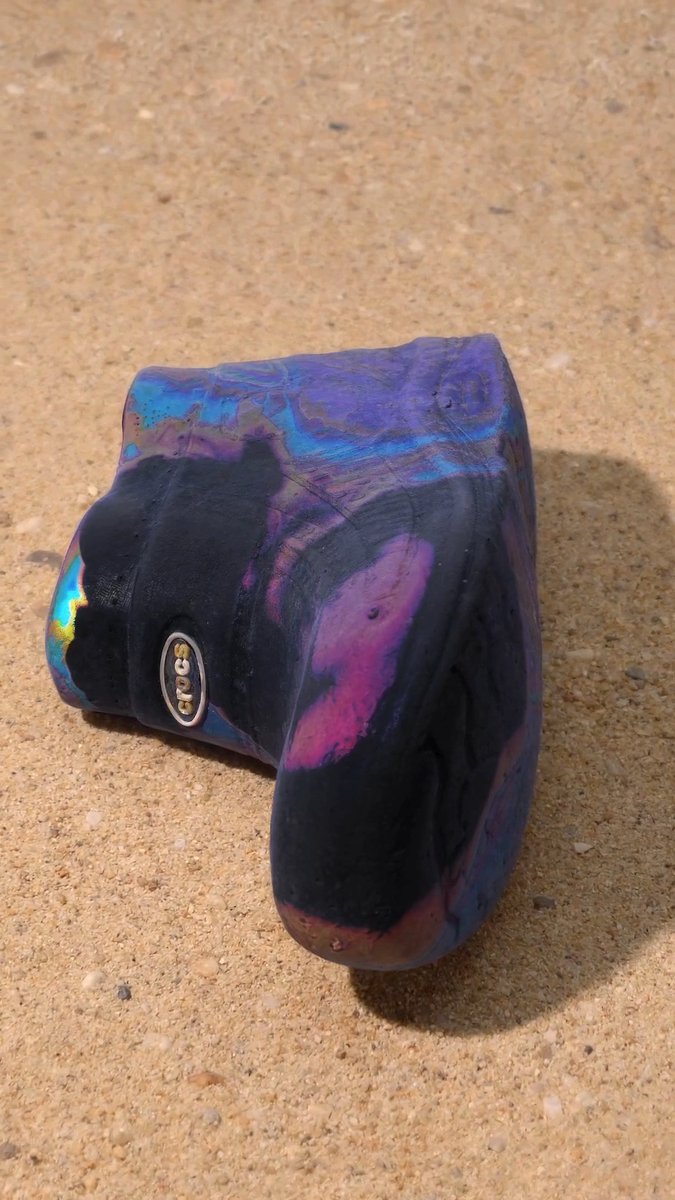
🚨 beeple's Diffuse Control is coming to LACMA! ↑ With this work, digital sculpture meets shared creative experience. You’ll be able to transform and remix public domain artworks from LACMA’s permanent collection, dissolving boundaries between artist and audience. Opening October 26 | More info →

36,194 views • 9 months ago •via X (Twitter)

0 Comments

No comments available

Comments from the original post will appear here
Related Videos

“There is a tension between what the users of a currency want – and the users of a currency tend to like freedom, autonomy, and discretion as to what they spent their money on – and what the issuers of a currency want; and bluntly, the issuers of a currency want control. Control of monetary policy, and control of you.” The Bank of England’s consultation papers make very clear the level of control that they wish to exercise over you, and over your supposed financial autonomy, if you were to use their #DigitalPound. (1) You’ll need to provide ID in order to use the #DigitalPound: “For the digital pound, tiered access would allow for different levels of user access and functionality based on the amount of identification (ID) a user is willing or able to provide.” (2) The Bank will dictate how much you can hold: “The Bank would place some limits on holdings of digital pounds, at least during its introductory period.” (3) The digital pound will be programmable, if not by the Bank itself then by third party providers: “Programmability, delivered by Payment Interface Providers, could also enable the use of smart contracts, which carry out specific actions based on pre-defined terms and conditions.” Quotes are from from the Bank of England’s Digital Pound consultation paper: Whatever the #DigitalPound will be, it won’t be cash. Cash does not require me to show ID to use it. I can hold as much cash as I want or need. And, along with #Bitcoin, cash is a bearer instrument whose title is freely transferrable upon delivery, which is very difficult for a central bank to control. And long may it stay this way. A huge shout out and thank you to Lyn Alden, who made this point much more eloquently than I did in her excellent book #BrokenMoney. Thank you! Also I’m aware that my hand gestures in this clip are reminiscent of Richard Hendricks manipulating ‘datas’ on stage at TechCrunch Disrupt in #SiliconValley, and for this I can only apologize: #BitcoinConference #Amsterdam #NoToCBDCs

Freddie New

13,158 views • 2 years ago

Louis Wain's drawings of cats as his Schizophrenia worsened. Louis Wain, an English artist born in 1860, gained fame for his illustrations of cats portrayed with human characteristics. During his later years, Wain experienced the onset of schizophrenia, a mental disorder believed by psychiatrists of that time to be triggered by toxoplasmosis, a parasitic infection commonly associated with cats. Consequently, he was admitted to a mental hospital in 1924 and subsequently transferred to Napsbury Hospital in St Albans in 1930. It was during this period that Wain's artistic style underwent a profound transformation. Despite his increasing delusions, he continued to depict cats in his paintings, with psychiatrists attributing the abstract patterns in his artwork as indicative of his schizophrenia. For some time, there has been speculation regarding a connection between mental disorders and creativity. The creative process often involves divergent thinking, characterized by free-flowing, spontaneous, and multi-faceted ideation. One example of such a connection is the observation that both individuals with schizophrenia and highly creative individuals exhibit lower levels of dopamine receptors. This leads to reduced filtration of information in the brain, allowing for the generation of novel ideas and solutions in creative individuals, while potentially giving rise to abnormal thought patterns in those with schizophrenia. Moreover, large-scale population studies have validated the association between mental illness and creative professions, indicating that individuals working in creative fields are more likely to seek treatment for mental illnesses. Additionally, a study published in the British Journal of Psychiatry found a significant link between the artistic profession and schizophrenia. Wain's abstract artwork is particularly intriguing due to its psychedelic, vibrant, intricate, and occasionally fractal patterns. This suggests the possibility of a shared cognitive process underlying the psychedelic experience, schizophrenia, and creative thinking.

Historic Vids

6,685,626 views • 3 years ago