Video yükleniyor...

Video Yüklenemedi

Ana Sayfaya Dön

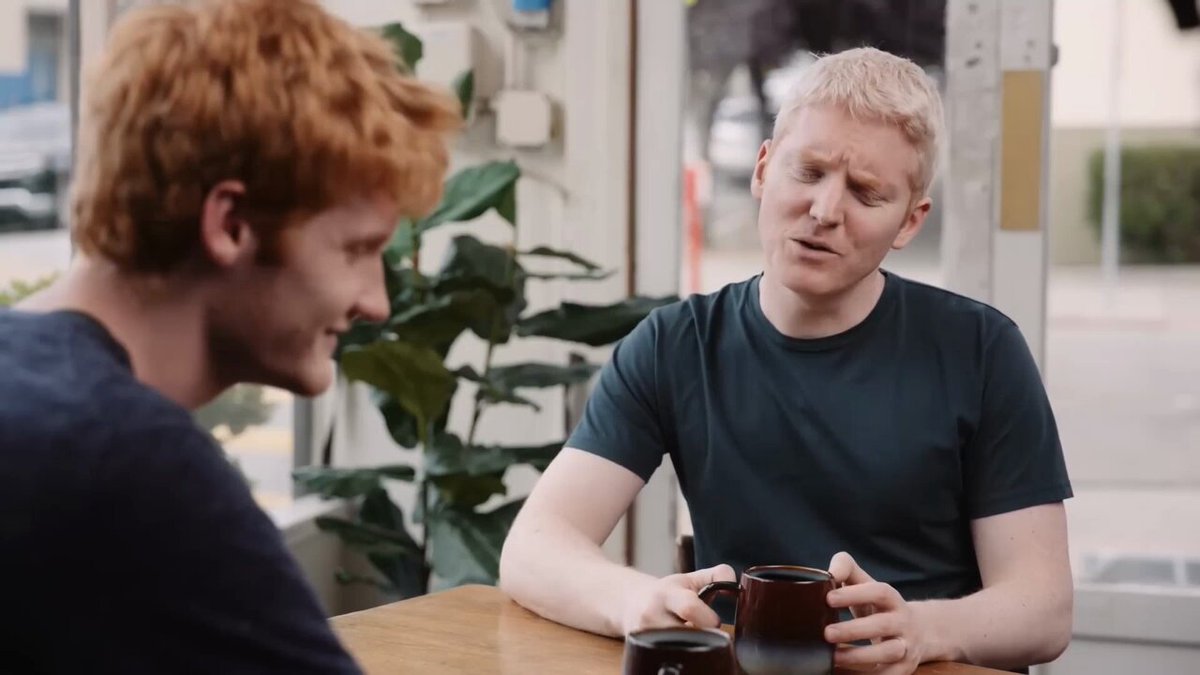
Ben Horowitz on an alternative path for young people: finish high school, spend a year learning about a field of interest, then let the work teach the rest. "The world has really changed, warfare has changed, power has changed, economics have changed... And there's not a constant refresh of...

96,077 görüntüleme • 6 gün önce •via X (Twitter)

25 Yorum

Matt Valitski profil fotoğrafı
Matt Valitski6 gün önce

You will learn so much more by diving straight into the workplace than goign to college in most fields I can attest as someone who never went to college

Compustable profil fotoğrafı
Compustable5 gün önce

Absolutely off the mark. If you skip a college education, you are dooming yourself to a career of relying on others for knowledge. AI is exciting right now and the pace allows someone with two years experience right out of high school to be considered an expert? No other time has this scenario held true and it is not sustainable now. Take the time right after high school to learn a trade or earn a University Degree. Life only gets more complicated the longer you wait and opportunities for Education more challenging.

Skilos, Oregon Envoy profil fotoğrafı
Skilos, Oregon Envoy5 gün önce

This is good advice for a select group in the same way that Brad Pitt telling people to follow their dreams and move to LA is 130IQ high openness chads can make this work, but the midwits need rails

motohagiography profil fotoğrafı
motohagiography6 gün önce

i am one of the very rare examples of this path, and even though I've worked for a couple of a16z companies, this is farcically misleading advice. there are automatic opportunities you get from those 4 years of marxist day camp whether you want them or not. The real advice comes from Stanford's Jeffery Pfeffer, which is: power and success are a weighted average of Performance, Credentials, and Relationships. If you go to school you get the latter two for the price of a nice car, and no matter how high your Performance is, it depends on how it's weighted in your field. Anywhere outside the lottery of startups, performance is maybe weighted .3 tops. I've heard it a lot, mostly by mid people with ivy degrees kicking the ladder away, and it is an utterly pants on head take. You can't complain about the state of the world (looking at you @peterthiel) and undermine young people who could still get the tickets to change it.

CameronWoodward profil fotoğrafı
CameronWoodward5 gün önce

Ben's shirt makes it look like he touched a Horcrux

Before It's Obvious profil fotoğrafı
Before It's Obvious5 gün önce

Honestly not trying for a hot take, but I'm not so sure about the 12 years of education in elementary and highschool. Everything is changing and getting faster, quick cycles, which churn. 12 years of education needs to be thought through. Major socialization benefit, but limited learning is occurring.

🚚 📦 ✈️🎸🎧🎙💾🕸️ profil fotoğrafı
🚚 📦 ✈️🎸🎧🎙💾🕸️6 gün önce

If companies worked with schools in a better way it could be possible.

Thomas DeStella profil fotoğrafı
Thomas DeStella5 gün önce

Agreed

NameFave profil fotoğrafı
NameFave6 gün önce

college was designed for a world that moved slower. that world is gone

Phenomenon Capital profil fotoğrafı
Phenomenon Capital5 gün önce

The risk isn't just the degree, it is the filter. Without a diploma you have to build a public signal that is actually louder than a pedigree. Most people just skip the building part and end up with nothing.

XFutuRestyle profil fotoğrafı
XFutuRestyle5 gün önce

Seriously, I was also a young person with a vocational education, and as an adult I’ve achieved more than graduates of top universities, and it’s all thanks to my way of thinking ADHD + AI

ATFinATX profil fotoğrafı
ATFinATX6 gün önce

Spot on!

icefrog.◎ profil fotoğrafı
icefrog.◎6 gün önce

The degree is just a filter for lazy HR teams

Crypto Sapiens profil fotoğrafı
Crypto Sapiens5 gün önce

Funding for unpaid gap years matters

Startup Muslim profil fotoğrafı
Startup Muslim4 gün önce

skip the resume-building theater. pick something real, get good at it, repeat. college is expensive permission to figure out what you already could've figured out working.

RateCards profil fotoğrafı
RateCards5 gün önce

Gain skills. Leverage skills to sell services. Stack income. Gain more skills. Repeat.

pilot 6000 profil fotoğrafı
pilot 60005 gün önce

You may be prepared for the work but not for the interviews

JD Shellnut Chief of Police profil fotoğrafı
JD Shellnut Chief of Police5 gün önce

your boy @davidu is a coward and a grifter

ucixrn profil fotoğrafı
ucixrn5 gün önce

Yh

Furious Leo profil fotoğrafı
Furious Leo5 gün önce

Spend 12 years studying what in school?

Tom profil fotoğrafı
Tom6 gün önce

I like the freedom and no homework or test scores...

Matt Harbert profil fotoğrafı
Matt Harbert6 gün önce

why are none of the comments about Ben's shirt?

Đỗ Khoa | Solomon Do profil fotoğrafı
Đỗ Khoa | Solomon Do6 gün önce

Great take on alternative paths. You and @mozlyxy are my go to accounts for this.

Sanjiva Weerawarana profil fotoğrafı
Sanjiva Weerawarana5 gün önce

So why is high school so special? Why not start at 16? 14? 12?

Youth profil fotoğrafı
Youth5 gün önce

Same problem we keep seeing: bull cases stay, kill criteria vanish. HuntGap makes Against required →

Benzer Videolar

David Friedberg Breaks Down Zohran Mamdani's Win in NYC: The College Debt Crisis Has Led Young People to Socialism "It's really a revolution against the system that brought them to this moment." "Because the promise that we gave in America, the American Dream, was if you go to college, you will graduate, you will have income, you will have stability, you'll be able to buy a home." "And what we did is we increased the government's role in making that dream possible, and in doing so, we created effectively a system where we gave unrestricted access to capital, which inflated the cost of education." " People could go to school like Zohran and major in African studies and graduate with $200-300K of debt and then never get a job. The guy has not had a real job. And this is the truth for 32 million young Americans." " They all have what is called negative capital. They have debt and they will never be able to get out of that cycle." "So where do you turn in that moment? You don't go turn to corporations to solve your problems. You don't go turn to your friends and your siblings and your family, they're not gonna bail you out." "You turn to the voting booth, and you hear a guy like Zohran show up and say, 'There can be a better path forward.' The better path forward is the government can and should do more to help." "And in doing more to help, we will increase government, we will tax the rich, we will tax the corporations. We will take all of that capital and we will redistribute it in the form of services and checks and support for all of the people that find themselves unable to take care of themselves." "And this becomes a tipping point when the majority of the voter base ends up in that situation where they're that deeply in need, where they have negative capital." "And that is the situation America finds itself in today."

The All-In Podcast

470,947 görüntüleme • 1 yıl önce

Naval Ravikant: "The only true test of intelligence is if you get what you want out of life" "There are two parts to that. One is getting what you want, so you know how to get it. The second is wanting the right things, knowing what to want in the first place. I could want to be a 6'8" basketball player and I'm not going to get that. That's wanting something you can't get. But there's also wanting something that's a booby prize, prizes that are just not worth having, or that create their own problems." Naval explains how people end up in places they never meant to be: "If you're not careful, you can end up in a place in life not only that you don't want to be, but one you didn't even mean to get to. Usually people end up there because they're going on autopilot with societal expectations. Or out of guilt. Or out of mimetic desire, our desires are picked up from other people. Go to law school, go to med school, go to business school. Or it might be what your parents expect. Guilt is just society's voice speaking in your head so you'll be a good little monkey." He shares a problem most people have: "We run on these four-year cycles. You join a startup, you vest over four years. College is four years. High school is four years. You go to law school, that's a 5-year cycle. You become a lawyer, that's a 40-year cycle. These are very long cycles. But the amount of time we spend deciding what to do and who to do it with? Very short. We spend one month deciding on a job where we're going to be for 10 years." Naval's rule: "If you're making a four-year decision, spend a year thinking it through. Really thinking it through. 25% of the time." He explains the Secretary Theorem: "It turns out the optimal time to search is about a third. By a third of the way through, you've seen enough to know what the bar is. Then anybody who meets or exceeds that bar is good enough. But here's the key: it's not time-based. It's iteration-based. You need to take opportunities quickly and bail out quickly. If you look at failed relationships, the biggest regret is usually staying after you knew it was over." Naval reframes the 10,000 hour rule: "Malcolm Gladwell popularized 10,000 hours to mastery. I'd say it's actually 10,000 iterations to mastery. Iteration is not repetition. Repetition is doing the same thing over and over. Iteration is modifying it with learning and doing another version. That's error correction. If you get 10,000 error corrections in anything, you will be an expert." On pessimism vs. optimism: "You want to be skeptical about specific things, every specific opportunity is probably a fail. But you want to be optimistic in the general. Something in here is going to work out. If something fails, it was a learning experience. It was an iteration. As long as you learned something, it's a win. You don't want to jump into the first thing. But once you find the match, you have to be willing to go all in. Move your chips to the center of the table." He concludes: "Most people are stuck in this gray bit. 'I'm half in, but I don't really know.' That doesn't work. It's a barbell strategy, black or white. Explore quickly, cut losses fast. Then when you find the right thing, compound into it."

Jaynit

74,537 görüntüleme • 6 ay önce