Loading video...

Video Failed to Load

Go Home

biggest DISCOVERY... sortlist "Jurnal Artikel for Tugas" here next u'll learn about "Jurnal Sinta or Scopus" things hihi dont forget to “nge-List Jurnal” dimana belajar manual tuh seru padahal even jadi ada progress buat paham

88,403 views • 27 days ago •via X (Twitter)

0 Comments

No comments available

Comments from the original post will appear here

Related Videos

She got away with it the first time. And the next time. And apparently enough times to think those little amounts were staying little. Target had other plans. Investigators say a Florida woman repeatedly went through self-checkout, paid for some merchandise, and left other items unscanned. One trip wasn’t thousands of dollars. Neither was the next one. But Target was documenting the transactions, saving the receipts, reviewing the surveillance and adding everything together. Eventually? Nearly $3,000. That’s the part people sometimes forget: getting out the door doesn’t necessarily mean you got away with anything. When deputies eventually showed up at her workplace, those “small” incidents had become a felony-level grand theft case. Then came the questions: “Am I a convicted felon?” “Is my job going to find out?” “Can you just tell me what to do?” Suddenly this wasn’t about saving a few dollars at self-checkout anymore. It was about an arrest at work, explaining everything to her husband, worrying about her children, wondering what her employer would learn and facing a criminal case. The deputy even tried to give her some dignity, letting her leave the office without handcuffs and giving her time to arrange things at home before she was taken away. There’s a bigger picture here. Something can seem small when you’re doing it $20, $40 or $100 at a time. But small amounts add up. So can the consequences. Your job. Your privacy. Your family having to deal with the fallout. Your name attached to a criminal case. Getting away with something once isn’t proof that it was worth doing. Sometimes it just means the receipt hasn’t come due yet.

✨️Serenitee♡Sam✨️

76,066 views • 2 days ago

Sam Altman ranks one thing above automation, and it is the oldest ambition in the field. Altman: “I think this will be one of the most important areas, even more important than automation of other tasks that AI can do, just to help us understand more things.” Automation moves existing work between people and machines, and the total stays about the same. Discovery adds. Nobody loses a job when a disease stops existing. That ambition is as old as the field, and it starts with Claude Shannon during the war. Senra: “Him and Alan Turing used to meet every day for coffee when they were both at Bell Labs. And they would just talk about AI. They thought it was inevitable back then.” Turing was there on a wartime encryption assignment while Shannon worked down the hall on the mathematics that became information theory. The machines they were talking about did not exist yet. Senra: “And they’re like, ‘Well, what would you want the computer to do?’ He’s like, ‘Solve math problems, write poetry, cure diseases.’” Eighty years later that is still the list. Every generation since arrived at the same three targets on its own, funded them, lost the funding, and came back. Two men with no hardware wrote a specification that never needed a revision. Altman: “We’re finally at the moment where AI is solving novel math problems. It is discovering other stuff. It is writing poetry.” They were wrong about when by roughly sixty-five years, which is the cheapest way to be wrong. Being wrong about whether would have meant the entire field was a mistake. Thousands of careers went into finding out which one it was. Altman: “I am so sad they are not here to see it. Because they were so right about everything.” Turing died in 1954 at forty-one. Shannon lived into the era of ordinary computers and spent his final years with Alzheimer’s, losing the one thing he taught the world to measure. The people who set a target rarely live to see it hit. It gets hit anyway. Cure diseases sat third on that list. The limit on human problems has almost always been knowledge rather than resources or willingness. Knowledge has been capped by how many minds exist and how long each one lasts. Turing got about eighteen working years. The list outlived him because he wrote it down and someone not yet born picked it up. Everything large has been finished that way, one lifetime handed to the next, with most of what each one knew lost on the way. Progress moved one lifetime at a time because that was the fastest a mind could go. The list is finally in the hands of something that does not run out of time.

Dustin

10,476 views • 1 month ago

Google DeepMind Chair Demis Hassabis on the two biggest risks of AI, and why he's still optimistic we can solve them: Hassabis starts by rejecting the extremes of the AI debate: "I'd like to inject a bit of balance and calm to this debate and advocate for a sensible middle way." He then breaks the danger down into two categories of risk that need to be mitigated. Risk #1: Misalignment "This is where the AI system doesn't do what we instruct it to do or somehow circumvents its guardrails." Risk #2: Misuse "Where a bad actor repurposes the general technology that was built for good intent but repurposes it for harmful ends." He doesn't sugarcoat either one. By his own admission, even the people building this technology don't fully understand it yet: "This is a very new technology and there are a lot of unknowns and uncertainties and there are things that even the top scientists in the field don't fully understand yet about it. And I have to say the chance of something bad accidentally happening if we get things wrong is definitely non zero. So we should take these risks very seriously." So why is he optimistic? "I'm a huge believer in human ingenuity and the good news is I'm very confident and optimistic that we can collectively address these risks and find solutions to these technical problems, but only if we collectively give ourselves the time and space to get it right. And that's the critical thing." His optimism comes with a condition attached: we have to take the time to get it right. In practice, he says that means "careful thought and considered approaches using rigorous scientific methods to get the technical foundations right." It also means better testing. Hassabis has called in an essay for "new standards for testing frontier AI capabilities that are dynamic, adaptable and meet the moment and hopefully are quickly adopted by the international community." And those standards only work if countries adopt them together: "I really think that we need international cooperation around these standards for them to be effective." But solving misalignment and misuse doesn't end the conversation. Demis Hassabis argues that even a technically safe AI leaves bigger questions open: "Even if we get the technical challenges right, there are of course deep and complex economic and philosophical questions to answer. What values do we want to live by? What will meaning and purpose be in this new era?" And those questions, he says, don't belong to engineers: "Resolving these questions obviously cannot and should not be left to technologists alone. We need a collaboration of the best minds from all parts of society from the arts, the humanities and philosophy to help define what this new chapter should be." He says this is why DeepMind launched the DeepMind Institute: to help bring these different disciplines into the same discussion. His conclusion is that the outcome isn't predetermined: "The future is not yet written. We must all lean in and use this precious window to shape this technology for the benefit of all humanity. And what we collectively do now will determine the next era and the next chapter of civilization." And if we manage the risks well, the upside is enormous: "By safely stewarding AGI into the world, we can enter a new golden age of scientific discovery and progress and usher in a bright future of incredible human flourishing."

Big Brain AI

24,387 views • 7 days ago

––Mathias Döpfner: Sam, is it actually true that your kind of favorite book is The Beginning of Infinity of Dieter Deutsch? Sam Altman: Yeah, I think if I had to pick one favorite book, I would pick that. ––Mathias Döpfner: Why is that so fascinating? Can you explain that? Sam Altman: Even if you don't read the whole thing, the first like 40-50 pages are, I think, the most wonderfully optimistic take on why, even in a world with AI, we're never going to run out of things to do and ways to be useful and problems to solve and things to explore. But I also think it explains so beautifully how we got here and why the relatively simple process that we've followed throughout human history got us to this incredible place. ––Mathias Döpfner: Okay, that's good, because David Deutsch, I think, is going to be our last virtual guest, at least tonight. David Deutsch is a physicist and scientist from Oxford University. And I think also you have disagreements with him about the possibility that artificial intelligence is transforming into superintelligence with consciousness, perhaps even. He thinks it cannot be the case. You think it should be the case. Here he is, David Deutsch. Welcome. And perhaps you can elaborate a little bit on that disagreement, but also why you admire Sam Altman. Sam Altman: Well, I don't care about that. I just want to hear your disagreement. David Deutsch: Okay, I can tell you. Well, on my computer, I keep a list of progress that has been achieved where I had previously been sure that it wasn't yet possible. One of the items I'm embarrassed to admit was the World Wide Web. Another was that I thought that no computer program would be able to sustain open-ended conversation on general subjects in natural language unless that program was an AGI, an artificial general intelligence. So it would have, I prefer to call, explanatory creativity. ChatGPT proved me wrong. It's not an AGI, and it can converse. That ability was a side effect of another, namely knowledge. The Eliza chatbot in the 1960s used little more than the words and phrases you told it. ChatGPT can chat about anything drawing on a vast body of knowledge, which was a phenomenally useful combination. For some people, too useful. They think they're speaking to a person, an AGI, just as the first users of Eliza treated it as if it were a person. Which brings me to a widespread myth of the Turing test. In reality, Alan Turing never proposed a test or benchmark for AGI. His imitation game wasn't a test of ethics, but a thought experiment to torpedo the intuition that machines can't think. Indeed, there can be no benchmark, because to be general, an AGI must be capable of choosing to remain silent. This is already a proof that AGI cannot be made via existing approaches, while those can and must be judged by benchmarks. Conversely, if something outputs a new explanation, you can't test for whether it created that or a human did, even you yourself when you administered the test. In Edison's phrase, there's the inspiration part, which only humans and AGIs can do, and the perspiration part, from which AGIs can liberate us. So, if there's no test, how do we know that humans are general intelligences? By telling their story. Human thought doesn't consist of mechanically converting motivations into actions, prompts into output. It's mainly about choosing motivations. Just as science is not extracting theories from data, it's seeing a problem, guessing explanations, criticizing and testing them. So how can you tell whether something is doing that? You can't, always. Sometimes it really is a bot you're chatting to, but when you have no explanation saying that you yourself are a bot, or that humans in general are, it's rational to assume that they aren't. Some people have fun questioning whether Einstein really created the theory of relativity or only assembled it mechanically from a smorgasbord of existing ideas. We know he created it because we know his story, what problems he was addressing, and why. Just as we know that Sam Altman, without having to write any code, brought ChatGPT into existence as a product and a phenomenon by having the intuition and the gumption to know that this was the right thing for humanity to try next. Nothing can program a computer to have such intuitions, yet. Sam Altman: Can I ask one question? David Deutsch: My guess. Sam Altman: You mentioned Einstein and general relativity, and I agree, I think that's one of the most beautiful things humanity's ever figured out. Maybe I would even say number one. And Einstein had a story, we knew what he was working on. If in a few years, GPT-8 figured out quantum gravity and could tell you its story of how it did it and the problems it was thinking about and why it decided to work on it, would But it still just looked like a language model output, but it was the real, it really did solve it. Would you call it like, then would you say, I appreciate that you keep a list of things you're wrong about. I do too. But would that be enough to convince you? David Deutsch: I think it would. Yeah. Sam Altman: All right. I'll take you up... David Deutsch: It's crucial here. Sam Altman: I agree to that as the test. ––Mathias Döpfner: David, thank you so much for joining us and thank you for your uplifting words and have a great evening. David Deutsch, a pioneer of quantum computing, one of the most brilliant thinkers of our times. Thank you for joining.

Deutsch Explains

63,682 views • 1 year ago

Surprising progress from ~3 months of teaching the 8yo to do "keepy uppy" with a soccer ball. Some lessons learned... First, this skill is embedded in a larger goal that he cares about. He wants to be a better footballer (I hate calling it "soccer", which comes from a contraction of "association" 🤮). This means there is some baseline motivation. This helps you get through the times it sucks to practice. And by the way... It's ok if it sucks (just not too much). What you don't see here is him failing 1,000 times and rage quitting. Probably 1/3 of the sessions involve tears. But you get the biggest gains when you're in your "zone of proximal development" -- the place where it's not too hard, not too easy. It took a lot of cajoling to get him through the early sessions when there wasn't much progress yet. It has to be his choice. When he gets upset, I don't force him. I just ask him if he wants to quit. He never does. I think if I forced him to stick with it, he would be less motivated. By asking him to step outside his momentary frustration and make the decision to quit or not, I think I'm helping him have the space to think about how this connects to his larger goal. But I don't really know. Human motivation is mysterious. Long consistency + intensity, short duration. We do 15 minutes a day, every day. First thing in the morning. I believe duration of training is overrated. In school for example, I think we could get more learning in 30 intense minutes per day than we get in 6 hours a day plus homework now. It takes more effort to do 15 minutes of keepy uppy than it takes to do 2 hours of team practice. And I bet the payoff is higher. Same applies to learning anything. Encouragement is underrated. I watch him while I exercise and drink my coffee. I say "beautiful" even when he messes it up (I got that from Richard Williams, Venus and Serena's dad). I celebrate his PRs. I take videos and I chart his daily progress so he can see the wins. Three months ago he could get 3 at his max, now his average is over 30. Seeing this progress over time has made it easier for him to show up and do the work every day. One focus at a time. We interleave other soccer skills (like shooting and dribbling), but tend to hyper focus on one area at a time so that we see fast progress. We use the same principle in our homeschooling. We are always working on a few things at once, but there is only one priority at a time. Start easy to build momentum. When you start your kids on a skill, you just want to be able to get *any* success at all. Don't be afraid to make it so easy it almost doesn't seem like the same skill. When we started I had him let the ball bounce between each kick. If I didn't do that it would have been so much harder for him to do keep uppy that he might have just quit. You want kids to get momentum in any skill, and you shouldn't be afraid to make the first steps so easy it almost doesn't seem like even the same skill. Focus on fundamentals. You might ask if keepy uppy is even important, since the real game is played mostly on the ground. The reason is found in the slight shuffling of his feet between each hit. In the real game, the quality of your control touch, shooting, and dribbling primarily comes down to these micro foot movements and how they position your body for balance. Keepy uppy trains the nervous system to a level of precision that is otherwise hard to attain. For education, the analogy is probably to something like reading. Reading is fundamental and makes you better at learning everything else, even if what you're reading about is unrelated to what you'll learn later. Students today would probably be better off just reading more vs. doing most of what passes today for "education." Beware of thresholds. The best people at keep uppy are not pro footballers. Every skill has a threshold where getting better at it confers little extra benefit. In education, I think the most obvious example is math. Everyone needs to master some fundmentals, but beyond it's rare to become more successful by getting better at math. Your effort is better spent on some complementary skill where you are weaker. Dress for success. Just kidding. I don't know why he's dressed like a ninja. That's all for now. Would love to hear how you guys think about building skills in the comments. 🙏

Chrisman

80,718 views • 2 years ago

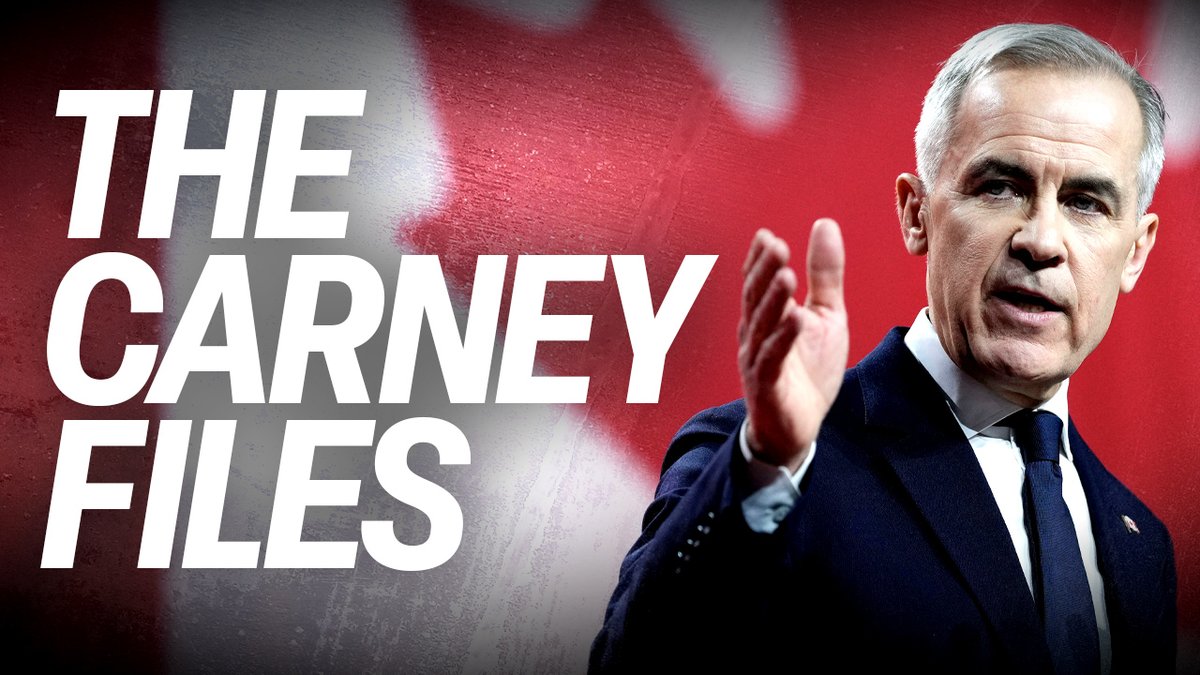
The Carney Files: Exposing the new globalist golden boy, Mark Carney From his connections to Epstein associates, his role at Brookfield Asset Management, and the World Economic Forum, Canadians have a lot to learn about globalist golden boy, Mark Carney. The fix is in. Canada’s next prime minister was just anointed behind closed doors in a questionable leadership race. Trudeau's usefulness has run its course. He's not cute anymore. The elites have moved on, and they’ve chosen their new golden boy: Mark Carney. That’s why we’re launching The Carney Files — your one-stop shop for everything the establishment and the legacy media don’t want you to know about the next to sit on the Liberal throne. Because while the mainstream press is polishing their puff pieces, we’re doing what they refuse to — exposing the real Mark Carney. And trust me, there’s a lot to expose. This isn’t just some mild-mannered banker turned politician. Carney was the man whispering in Trudeau's ear for the last five years. All those things the Liberals did to us? That was him — lockdowns; tax hikes; overspending; electric vehicle mandates. Carney is Trudeau 2.0, but more dangerous. He’s the handpicked globalist successor to Trudeau, a man whose loyalties don’t lie with Canada, but with the unelected power brokers who pull the strings from Davos at the World Economic Forum, and the UN. Remember? He's a self-described European, with three citizenships. We’re talking about a man who has spent his entire career pushing the very policies that have gutted the middle class — from his time at the Bank of Canada, to his role at the Bank of England, to his non-stop advocacy for extreme carbon taxation under the guise of “climate action.” And let’s not forget his cozy connections to some very unsavory characters. Does Ghislaine Maxwell ring a bell? Oh yeah, Carney's got tangential ties to her, too. The very same woman who helped Jeffrey Epstein run one of the most disgusting criminal operations in modern history. But good luck hearing that on CBC or CTV. They won’t touch it. Too busy protecting their next meal ticket. And then there’s his manifesto, Values — a book that reads less like a personal philosophy and more like an instruction manual for a globalist coup. In it, Carney lays out his plan for a so-called “moral economy,” where unelected bureaucrats, not free markets, dictate how you live, how you work, and how much you pay for basic necessities. It’s a carbon tax fever dream wrapped in Orwellian doublespeak. But wait, there’s more. Carney has his own major conflicts of interest — the kind the legacy media would be all over if he had a Conservative label next to his name. Let’s talk about Brookfield Asset Management. Carney was vice-chair at Brookfield, a global investment giant that made a fortune off green energy subsidies — while conveniently opposing pipelines in Canada. But here’s the kicker: while Carney was telling Canadians that oil and gas was a dead industry, Brookfield was busy funding pipelines in the Middle East. That’s right — Carney had no problem helping bankroll fossil fuel expansion overseas while helping crush Canadian energy jobs at home. And it doesn’t end there. Carney also played games with Brookfield’s head office relocation timeline, shifting narratives about when and why they moved their corporate headquarters to the United States. One minute, it’s staying in Canada. The next, it’s heading south. And yet, this is the guy who wants to dictate our economy? Who wants to tell us what industries are “moral” and which ones need to be shut down? He tells us he's about saving Canadian jobs while moving them to the U.S. The hypocrisy is astounding. And here’s where it gets even worse — Carney is already willing to mislead Canadians to avoid accountability. He knows he can’t handle real scrutiny, so instead of answering tough questions, he simply shuts out the only people willing to ask them. Independent journalists are being barred from his events, blocked from getting credentials, and denied access to ask the real questions that the legacy media refuses to touch. Because let’s face it — Carney doesn’t want to be challenged. He doesn’t want to be asked about his WEF loyalties, his conflicts of interest, or his blatant hypocrisy. He wants a coronation, not an election. And the establishment media? They’re more than happy to help him get one. But here’s the thing. None of this is a secret. The information is out there, but the media refuses to touch it. Why? Because Pierre Poilievre has promised to defund them, and they’re terrified. Terrified that Canadians might actually learn the truth about the Liberal Party’s latest Frankenstein experiment before it’s too late. So, if you want to know who really runs this country — who’s pulling the strings, who’s writing the playbook, and who’s about to step in as Trudeau’s heir — then you won’t want to miss this campaign. Because this isn’t just about another Liberal leader. This is about the survival of Canada as we know it. And if we don’t fight back now, we might not get another chance.

Rebel News

48,158 views • 1 year ago

BIGGEST SHOOTING SECRETS In #NBA2K27 That You NEED To Know…🎯 After Playing And Testing Shooting This Year, There Are A Few Things I’ve Learned That Can Make A HUGE DIFFERENCE In How Consistently You Shoot! And YES… You Can DEFINITELY Shoot With A Lower 3PT Rating This Year #1 SET POINT Might Be The BEST Visual Cue This Year - SET POINT Has Been The Most Consistent Visual Shot Timing Cue For Me So Far. In Previous Years, PUSH Was The Wave, And RELEASE Worked Really Well Too… But With How Many Different And Awkward Catch Animations You Can Get In #NBA2K27, SET POINT Has Felt MUCH More Consistent Obviously Your Personal Preference Still Matters, But If You’re Struggling To Find Your Shot… TRY SET POINT #2 YES, YOU CAN SHOOT WITH A 70 - 79 3PT - You DO NOT Necessarily Need An 85, 90 Or 99 Three Point Rating To Be A Consistent Shooter. 70 - 79 3PT CAN ABSOLUTELY WORK. I’m Literally Using A 79 3PT In The Video. The Lower You Go, The More Your Timing, Badges, Hot Zones And Shot Selection Are Going To Matter… But If You KNOW Your Jumper? YOU CAN SHOOT! #3 A LOT Of The “CONTESTED” Shots You’re Passing Up Are Actually OPEN - This Is One Of The BIGGEST Things Players Still Haven’t Adjusted To A Defender Simply STANDING NEXT TO YOU Does NOT Automatically Mean You’re Contested… A Lot Of Defenders Are Failing To Properly Use The RIGHT STICK To Contest, Which Means Shots We Would’ve Considered “Contested” In Previous 2Ks Can Still Register MUCH More Open This Year. Once You Understand The New Contest System… You’ll Start Realizing You Have WAY More Shooting Opportunities Than You Think #4 GET YOUR HOT ZONES BEFORE PLAYING ONLINE - This Might Be One Of The MOST IMPORTANT Tips On This Entire List Go Into SET AND FIRE And Work On Your Hot Zones FIRST! You Can Potentially Get Them Set Up Within Just 3 - 5 Games, And They Can Make A HUGE Difference Once You Start Shooting Online. Don’t Wait Until You’re Already Playing REC Or Park To Start Building Them. GET YOUR HOT ZONES FIRST! #5 PRACTICE ONLINE SHOOTING IN MyCOURT - Do NOT Just Shoot Around Offline And Assume Your Timing Is Ready For Online Games. Go Into MyCOURT, Find The Kiosk And Activate The ONLINE SETTINGS. Now You Can Practice Your Jumper under conditions that better prepare you for online timing. This Is WAY Better Than Learning Your Release While Your Teammates Watch You Go 1/8 #6 UNLOCK YOUR SHOOTING BADGES BEFORE GOING ONLINE - PLEASE Stop Taking A Fresh Build Straight Online With Barely Any Badges And Then Wondering Why You Can’t Shoot… Get Your Important Shooting Badges FIRST… Learn Your Jumpshot… Get Your Hot Zones… THEN Go Online! Not Only Will Shooting Feel Better, But You Won’t Destroy Your Shooting Percentage While You’re Still Learning Your Build #7 FADEAWAYS Feel MORE CONSISTENT Than Some STANDSTILL SHOTS - This Is One Of The STRANGEST Things I’ve Noticed So Far… Certain FADEAWAYS Feel MORE CONSISTENT Than Regular Standstill Jumpers With How Strong Off The Dribble Shooting Can Feel, Learning A Reliable Fade Could Become One Of The MOST IMPORTANT Shots This Year #8 BUY YOUR SHOOTING BOOSTS - This Is Probably The Most OBVIOUS Tip… But People STILL Forget It! If You’re Serious About Maximizing Your Shooting: BUY YOUR SHOOTING BOOSTS! Especially If You’re Already Running A Lower Three Point Rating And Trying To Squeeze As Much Consistency As Possible Out Of Your Build YOU NEED TO ACTUALLY LEARN HOW TO SHOOT IN #NBA2K27

R1CH SOSA🔋

39,086 views • 22 days ago

I've never heard Elon Musk be so bullish on Tesla ⚡️ here's my video analysis of the $TSLA Q4 2024 earnings call: -Robotaxi launch in Austin, June 2025 -California & other states launch robotaxi late 2025 -Cybercab in 2026 -Optimus V1 in 2025, 1K/month production line -Optimus V2 in 2026, 10K/month production line -2026 good year for Tesla, 2027/28 insanely good & more!! Timestamps- 0:00 Intro 0:44 Elon Opening Remarks 13:29 SAY Retail Questions 22:37 Analyst Questions 25:04 Gali Final Thoughts/Rant also here are my notes I typed during the conference call if you're interested! (may be errors) Tesla Q4 2024 Earnings Call Notes INTRO- ELON OPENING REMARKS -Q4 set record, delivered cars at rate of almost 2M cars/year -Model Y best-selling vehicle of any kind on earth (elon focused and talking quickly) -10Xing on autonomy, not doubling -many investments made this year that will bear immense fruit in the future, for AI -see a path for Tesla to the worlds most valuable company by far, worth more than the next 5 companies combined, difficult but achievable path -overwhelmingly due to autonomous vehicles and autonomous robots -setting up for an epic 2026, and ridiculously good 2027 and 2028 -meeting FSD now is like meeting a toddler -human intuition is linear, we’re seeing exponential progress -#1 recommendation is try it -typical passenger car has 10 hours of use out of 168, when its autonomous, itll be used for 55 hours a week … can deliver packages in the middle of thenight, or supply restaurants, all hours of the day or night. 5X increase in utility -more on self driving, continued improvements in safety numbers, much safer to use FSD -V14 will be another big step from V13 -launched CORTEX training cluster at Giga Austin, big step for FSD, continue to invest in training needs -Optimus training needs are about 10X what’s needed for the car -cost of training is dropping dramatically over time -Optimus has potential to be north of $10T in revenue, can put a lot training compute into that situation, even pumping $500B into it would be a good deal -future very different from the past, incredible inflection point in human history -proof is in the pudding -launching in June this year in Austin, already have cars moving autonomously in Fremont, thousands of cars per day driving, soon in Austin then elsewhere in the world -toe in the water at first to make sure everything is cool, but we have a general solution for autonomy , then put a few more toes, then a foot. Safety of the general public and those in the car as the top priority -with regard to Optimus, making insane revenue projections that sound insane, i realize that. But i think they will prove to be accurate -several thousand bots made this year, they will be doing useful things by the end of this year, im confidence, production design one at the tesla factories, then will learn for production design two -ramp optimus production faster than anything has ever launched, doesn’t take very many years before we’er making 100M of these things per year , 500% growth per year -tried using all these suppliers to get it to build Optimus, but nothing worked, had to build it internally from first principles, the hand is increibdle -long term Optimus will be the value of the company -back to Energy,/earth, -energy storage is a big deal, becoming more important, enables far greater energy output to the grid than is currently possible. -grid has no storage, designed for peak storage, lots of waste -once you have grid energy storage, the potential of the grid is unlocked, at least double -this will drive demand of battery packs as to as much as we can possibly make -shanghai factory starting operation, starting another factory -cant shoot our selves in the foot, battery capacity can only go into storage or mobility, so always making that tradeoff -demand for total Gigawatt hours for batteries, transportation or stationary will grow in a very big way over time 2025 a pivotal year for tesla, launch of full self driving, biggest year in tesla history, maybe even bigger than first car or model s, 3 or y … probably most important year in tesla’s history I don’t even know who is in 2nd place in real world AI, would need a telescope to see them SAY QUESTIONS -FSD Unsupervised launched in California this year as well -most likely release it in many regions of the US by the end of this year -40K people day everyday no mention, some scrapes a shin with autonomous car its headlines news -need to use insane amounts of caution -discussions about licensing FSD? Yes -best way to know to work with us, bbuy a car and take it apart -only worth very high volume cars/production partners -tesla engineering very focused on getting it to roll out for tesla first -soon will be obvious that if you don’t have FSD you’re dead as an OEM -is Optimus design locked? -Optimus is not design locked, constantly iterating, best robotics engineers in the world, and other ingredients, battery pack, charging, great electronics, great communications, great connectivity, real world AI, then you need to scale that production to real world levels -prototypes are easy production is hard -thijs year close loop with using optimus internally at tesla, would could obviously use a few thousand robots for the most boring annoying tasks at the company -with production version 2, launches sometime next year, would like beginning, might be middle though, -production line will be doing 10K units per month capacity for v2, first line designing is for roughly 1,000 units per month, then next line will be for 100,000 units per month -could start delivering them late next year, will go so fast, will ramp like crazy, demand will not be a problem, even at a high price, once were above 1M units per year, production costs of optimus will be less than $20,000 -if you compare complexity of optimus to complexity of a car, its much less than a car -price of optimus will be set buy market demand -Semi ramping next year, TCO no brainer, like optimus, will be massive demand, will meaningfully contribute to tesla’s revenue at scale -tesla semi with autonomy, is incredibly valuable -we actually have a shortage of truck drivers here in the US -will HW3 owners need a hardware update, got 12.6 which is like a baby v13, have’t given up on it, releases will trail HW4 releases … “honest answer” is were going to have to upgrade for those who have bought full self driving, will be painful and difficult and we’ll get it done “Happy not many people bought FSD” -solar roof, given up on ramping it? -lots of customer interest despite premium, making easier to install, focused on growth through certified installers, many been installing for many years -supply product to the roofing industry -it’s a premium product like S/X -combined with Tesla powerwall you can be self sufficient for several days ANALYST QUETIONS -robotaxis in Austin and several other cities this year, and next year all over america -america innovates, europe regulates, to release FSD in europe, have to go through massive paperwork through netherlands, then presents to EU in may, some big country committee, nothing we can do to make it happen sooner. -can’t do training in china with video training, publicly available videos in china are being run through the tesla system to be used for training, bus lanes are complicated and a big challenge -tesla can keep manufacturing even if geopolitical tensions rise to very high levels -Pierre question on June in Austin, -can i try unsupervised myself, or will it be the Tesla fleet? -it will be the Tesla fleet testing it, that’s the toe in the water, scrutinizing everything -autonomous ride hailing for money in june -probably next year for you to put your car on network -trump removing EV incentives? -all transport will go electric, can’t be stopped, even planes, will be like stopping the steam engine or combustion engine -only thing holding back EVs was range, and thats a solved problem -right now solving battery production, not demand, big battery retooling for model y coming up, short term impact on output

Gali

79,178 views • 1 year ago

We are thinking of robots all wrong. Why a $1,500 robot is far more important to buy than a $20,000 one. And why it will pay for itself within a year. First of all, for the last eight years I've been a Silicon Valley housewife. Picking the kids up from school. Doing a variety of tasks taking care of them from feeding them to laundry. And I've already bought a $20,000 Neo from 1X and have built the most complete list on X of the robotics industry. Just to set the tone for this conversation. We must ask ourselves "what is the goal of a robot?" before we go into why typical American homeowners might want one, and shell out quite a bit of money for one, like the Neo. I grew up in Silicon Valley back when it was all orchards and the farmers taught me "pick the low hanging fruit first." What is the low hanging fruit in the American home? Laundry? Cleaning the toilets or your home? Watering the plants? Bringing you a beer? Nope. It is the preparation of food. Yesterday I got a new Posha robot, and the attached video with founder Raghav Gupta gets into depth about what the $1,500 robot does. Cooks meals. Far more time in the home is spent cooking meals than the other tasks and is far more complex than, say, folding laundry. But there is something I think everyone is missing in the discussion of robots: "what is the goal?" I've been doing consumer research talking with many around the world about these things. People tend to have a few goals: 1. Improve their lives. 2. Save them time. 3. Save them money. 4. Enable a new business. What is the best way to improve your life? Upgrade your food. This is very hard to do when both parents in a family are working their butts off to try to improve their careers. It gets worse when a single parent is trying to keep everything going. How many times have you decided to go out to eat rather than spend an hour cooking food? Doing that for a family of four in Silicon Valley costs $100+. And guarantees your family will overeat. I've done that many times while raising my kids, and often I can't say no when desert comes around. It gets worse if you take the easy route out at home. Put a pre-processed meal into the microwave, or heat up a frozen pizza. Horrible for everyone's health. But what if you could have a robot at home that cooks your meals? Then costs go down to less than $20 and ingredients get way way better. It gets worse when you consider a $20,000 humanoid. They aren't safe enough to trust around stoves yet. And their hands aren't yet dexterous enough to do that. I doubt my Neo will be allowed to cook meals over an open flame, and if so I will have to watch it to make sure it doesn't do anything wrong. (The Neo that arrives next year will be teleoperated by a human remotely and the risks that person does something, or misses oil catching on fire is just way too high). While neither robot will be able to do all food preparation (cutting chicken up into cubes, or cutting carrots or other fruits, for instance) this robot dramatically reduces the time needed for a human to make a meal and dramatically reduces the costs to do so. And, as we discuss in the video, when the Neo does arrive the Neo will be able to use this machine too, reducing time even more (and will be able to set the table and wash the dishes, saving even more time so you can answer more emails or learn more AI programs or, even, pay attention to your kids and give them a few more minutes of quality time). The robot industry should focus on the low hanging fruit first. Cooking meals is the biggest one to improve your life, save you time, and make your family healthier. It's why I bought one. And they actually make two: Your money is way better spent getting one of these than buying a humanoid. And if you do get a humanoid, like I am, they go together like peanut butter and jelly. ⚪️ sierra catalina has been saying this for years that our focus on humanoids is overblown and that specialized robots (you see my Matic Robots in the background to prove this point) are way better for most families.

Robert Scoble

178,741 views • 10 months ago

Kevin Kelly is one of the most influential tech writers of the last half-century. He's published 14 books, founded Wired magazine, and maybe even traveled to more places in Asia than anybody in human history. Here are 28 of his best maxims for writing: 1. Don't aim to be the best. Be the only. 2. Don’t create things to make money; make money so you can create things. 3. The main thing is to keep the main thing the main thing. 4. Always demand a deadline. Doing so weeds out the superfluous and prevents you from insisting on perfection (which will limit you as a writer). 5. To write about something hard to explain, write a detailed letter to a friend about why it is so hard to explain, and then remove the initial “Dear Friend” part and you’ll have a great first draft. 6. The work on any worthy piece of writing is endless and infinite. Since you cannot limit the work, you must limit your hours. 7. Books are never finished, only abandoned. 8. When you are stuck, sleep on it. Give your subconscious an assignment while you sleep. You’ll have an answer in the morning or by the next time you sit down to write. 9. A multitude of bad ideas is necessary for one good idea. 10. The greatest teacher is called “doing.” 11. Efficiency is highly overrated; goofing off is highly underrated. 12. If you have a good idea, write it down. Don't assume you'll remember it. 13. Writing is not selfish; it's for the rest of us. If you don't do your thing and share your writing, you are cheating us. 14. Most articles and stories are improved significantly if you delete the first page of the manuscript. Start with the action. 15. The best way to learn anything is to teach what you know (and you can do it at scale by writing). 16. Productivity is often a distraction. Don't aim for better ways to get through your tasks as quickly as possible. Instead, look for writing projects that you never want to stop doing. 17. Occasionally your first idea is best, but usually it’s the fifth idea. You need to get all the obvious ideas out of the way. Try to surprise yourself. 18. Pay attention to what you pay attention to. 19. To be interesting just tell your own story with uncommon honesty. 20. Ironically, the best time to write a book is once you're done with the speaking tour for the book. 21. Read the books that your favorite authors once read. 22. When you find something you really enjoy, do it slowly. 23. The main reason to write something every day is that you must throw away a lot of good work to reach the great stuff. To let it all go easily you need to be convinced that there is “more where that came from.” You get that in steady production, which comes from a steady writing habit. 24. Habits are far more dependable than inspiration. Make progress by making habits. Don't focus on becoming a better writer. Focus on becoming the kind of person who never misses a writing session. 25. The quality of a piece of writing hinges on its structure. Nail the structure and the ideas will fall into place. You'll know the structure is good when the reader doesn't even notice it. 26. To write something good, just do it. To write something great, just redo it, redo it, redo it. The secret to publishing great writing is to spend a lot of time rewriting. 27. When in doubt, retreat to honesty. Say more of what you really think and feel instead of trying to sound smart. 28. Principles like what you see here are not laws. They're like a hat. If one doesn't fit, try another. Many of these maxims are directly from Kevin Kelly's book: Excellent Advice for Living, while others are from the interview I just published with him about his approach to writing. I've linked to our full conversation in the tweet below.

David Perell

370,735 views • 3 years ago

The book "Excellent Advice for Living" is so good I read it in one sitting. The book is a collection of maxims Kevin Kelly wrote to his adult children. Each maxim contains a bit of wisdom he wish he'd known earlier. 79 maxims that resonated the most (I added #57 selfishly) 1. Choose to believe that the entire universe is conspiring behind your back to make you a success. 2. Mastering the view through the eyes of others will unlock many doors. 3. If you can avoid seeking the approval of others your power is limitless. 4. The reward for good work is more work. 5. Don’t be the best. Be the only. 6. The urgent is a tyrant. The important should be your king. 7. Find smart people who will disagree with you. 8. The main thing is to keep the main thing the main thing. 9. The most counterintuitive truth of the universe is that the more you give to others the more you'll get. 10. Life gets better as you replace transactions with relationships. 11. Courtesy costs nothing. 12. Life lessons will be presented to you in the order they are needed. 13. Cultivate an allergy to average. 14. If you repeated what you did today 365 more times would you be where you want to be next year? 15. If you're alive that means you still have lessons to learn. 16. Master something. Through mastery of one thing you'll command a viewpoint to steadily find where your bliss is. 17. Trust is earned in drops and lost in buckets. 18. First, always ask for what you want. Works in relationships, business, life. 19. If nobody else does what you do you won't need a resume. 20. How to apologize: quickly, specifically, sincerely. 21. The best way to advise people is to find out what they really want to do and then advise them to do it. 22. It is certain that 99% of the stuff you are anxious about won't happen. 23. What is important is not what happened to you but what you did about what happened to you. 24. Your golden ticket is being able to see things from other people's point of view. 25. Pay attention to who you are around when you feel best. Be with them more often. 26. To get your message across follow this formula: simplify, simplify, simplify, then exaggerate. 27. You will thrive more when you promote what you love rather than bash what you hate. 28. To be interesting just tell your own story with uncommon honesty. 29. When you truly think for yourself your conclusions will not be predictable. 30. Don’t measure your life with someone else’s ruler. 31. For maximum results focus on your biggest opportunities, not your biggest problems. 32. Pay attention to what you pay attention to. 33. Do more of what looks like work to others but is play for you. 34. Don't bother fighting the old just build the new. 35. Don't compare your inside to someone else's outside. 36. When you're stuck explain your problem to others. 37. Most stories are improved significantly if you delete the first page. Start with the action. 38. A long game will compound small gains that will be able to overcome even big mistakes. 39. Constantly search for overlapping areas of agreement and dwell there. 40. It is your destiny to work on things that only you can do. 41. Make stuff that is good for people to have. 42. You'll get 10 times better results by elevating good behavior rather than punishing bad behavior. 43. Life is not a straight line for anyone. 44. Aim for tasks that you never want to stop doing. 45. Regularly scheduled sabbaths, sabbaticals, vacations, breaks, aimless walks, and time off are essential for top performance of any kind. 46. Don't mistake a clear view of the future for a short distance. 47. Efficiency is highly overrated 48. Greatness is incompatible with optimizing in the short term. 49. The greatest teacher is called "doing." 50. Figure out what time of day you are most productive and protect that time period. 51. You are much better off delivering unwelcome news to someone yourself directly. 52. Don't ever work for someone you don't want to become. 53. Take one simple thing — almost anything — but take it extremely seriously as if it is the only thing in the world 54. Be frugal in all things except in your passions. 55. About 99% of the time the right time is right now. 56. Finite games are played to win or lose. Infinite games are played to keep the game going. Seek out infinite games because they yield unlimited rewards. 57. To be remarkable, read books. 58. Be a good ancestor. Do something a future generation will thank you for. 59. Bad things can happen fast but almost all good things happen slowly. 60. To transcend the influence of your heroes copy them shamelessly like a student until you get them out of your system. That is the way of all masters. 61. Don't worry how or where you begin. As long as you keep moving, your success will arrive far from where you start. 62. It is much easier to change how you think by changing your behavior, than it is to change your behavior by changing how you think. Act out the change you seek. 63. If you meet a jerk, ignore them. If you meet jerks everywhere every day, look deeper into yourself 64. Writing down one thing you are grateful each day is the cheapest possible therapy ever. 65. Ignore what others may be thinking of you because they aren't thinking of you. 66. Passion, persistence, belief, and ingenuity are required to invent new things. Qualities the poor and young often have in abundance. Stay hungry. 67. Calm is contagious. 68. When crises strike don't waste them. No problems, no progress. 69. Your purpose is to discover your purpose. This is not a paradox. This is the way. 70. Your passions should fit you exactly but your purpose in life should exceed you. 71. Fear makes people do stupid things. 72. When someone is nasty, hateful, or mean toward you treat their behavior like an affliction or illness they have. That makes it easier to have empathy toward them which can soften the conflict. 73. You don't need more time because you already have all the time you will ever get; you need more focus. 74. Compliment people behind their back. It'll come back to you. 75. Expand your mind by thinking with your feet on a walk or with your hand in a notebook. Think outside your brain. 76. Gratitude will unlock all other virtues. 77. You choose to be lucky by believing that any setbacks are just temporary. 78. It is useful to organize your thoughts with someone you trust and admire. 79. Over the long term the future is decided by optimists. To be an optimist you don't have to ignore the multitude of problems we create; you just imagine how much our ability to solve problems improves.

David Senra

90,035 views • 7 months ago

"Come on, folks. Do we see what's playing out here? Marbury v. Mad might have just brought down the Commissioner of the Boston Police Department." - Towel, November 6, 2025 Rule #1 in Massachusetts politics right now; Do not mess with Attorney Corey Hopkins. She's going to get barred here just to reform the government (then I'll become her paralegal and we'll submit public records requests all day). Good plan. TRANSCRIPT (from Towel's coverage of the letter in question, uncovered by Attorney Hopkins); Hello and good evening. It is just past 6 p.m. on Monday, November 3rd, 2025. My name is Grant Smith-Ellis, and I'm back with you again for another developing news update, this time related to Boston Police Commissioner Cox responding to a developing series of scandals, in particular related to former Boston Police Officer—well, first former Canton Police Officer, then former Boston Police Officer—Kelly Dever. Now, Kelly Dever was an integral witness during the John O'Keefe and Karen Read trial about one specific series of events in the early morning of January 29, 2022—not really related to John's death per se, but related to the then-chief of the Canton Police Department, Ken Berkowitz, who was also potentially the person that went to the FBI about Brian Tully's MSP unit, Massachusetts State Police unit, detailed to the Norfolk DA, who were the same people that investigated Karen Read for John's death. Berkowitz was the same person who apparently went to the FBI in 2022 about Tully's unit through John Fanning covering up Sandra Birchmore's death at the hands of former Stoughton PD officer Matthew Farwell. Okay, Ken Berkowitz and Brian Higgins—then undercover ATF agent who himself had been in a relationship of some kind, we'll call it that, with Karen in the months before John's death. That's a whole story we will not get into. The point is, Higgins and Berkowitz go into the sally port. Now, Kelly Dever had been working since, I think it was 12 a.m. on January 28th. She worked—let me make sure I get this right now—she worked at 12 p.m., noon on January 28th to 8 p.m. Then she worked the 8 p.m. to 4 a.m. shift. Okay, she was doing 16 hours over those two days. At like 1:30 a.m., she saw Berkowitz and Higgins—or around there, maybe a little later—go into the area, an area of the Canton PD. Then—and we're going to find out—she had a meeting with Boston Police Commissioner Cox. Now, why did Commissioner Cox get himself in trouble? Well, not because of the interview we're going to watch, but instead because of an interview about a year ago where he said he knew nothing about the Kelly Dever situation or the Karen Read case. All right, now we're going to quickly come to find out that what we're about to hear from the commissioner is not the best answer in light of this little document found by the incredible Marbury v. Madison on X, Corey A. Hopkins, a business litigator based in North Carolina. Towel really likes Marbury v. Madison because, first of all, Marbury v. Madison is an awesome case, and it entrenched the supremacy of the judiciary as to saying what the law is by virtue of the Constitution. Solved a very complex problem related to the Judiciary Act of 1789 and, in particular, the emergence of political parties in 1796 and, in particular, 1800, and a slew of last-minute appointments by President Adams and a refusal by President Jefferson to commission—or one of the refusal by Jefferson's Secretary of State Madison to commission a justice of the peace. But it really was about the supremacy of the judiciary branch. Marbury v. Madison uses a lot of FOIAs, and what you're going to see right here is a FOIA request that resulted in this wonderful little document. And what does this show? All right, this document shows, folks, a letter from Stephen J. Kelleher, who's with the White Collar Public Corruption and Civil Rights Division of the FBI in Boston. It is a letter that Marbury v. Madison obtained via a FOIA, and it shows the DOJ reaching out to Commissioner Cox and saying, "Sir, hope all is well. Just a reminder—this was on February 22nd, 2024. The documents were released to the DA's office late last night." This has to do with federal documents about the investigation of John's death by the MSP unit run by Brian Tully working for the Norfolk DA. "The officer we spoke about is Kelly Dever. If you have any questions at all, feel free to call me. Vr. Steve." Okay, folks, this proves that Commissioner Cox was told about Kelly Dever and documents related to her testimony and what she saw Higgins and Berkowitz doing—which I don't think was related to John's death, but it's just embarrassing for Higgins. He was an undercover ATF agent, and embarrassing for Berkowitz. And although Berkowitz is now dead, he was either dying or not dead in 2024. And clearly, this was embarrassing, okay, to the Canton Police Chief, to the Boston Police, to Higgins, to all these people. All right. And so we see here, Cox knows about it. Cox then goes on a few months later—I think it was either after, I think it was right after Karen's second trial, but it was some months after this initial email was sent to Cox. And Cox, in his infinite wisdom, tells Boston 25 or Channel 5 or whatever it was at a news conference that he's basically never heard of Kelly Dever or the Karen Read and John O'Keefe case. Okay, that was a stupid thing to say because then this FOIA comes out in recent weeks. That leads to Alan Jackson to send a Brady letter to Mayor Michelle Wu, the Democratic mayor of Boston running unopposed in the coming election, saying that Cox should be on the Brady list. I think it was—yes, because Cox was not forthcoming about what he was told by the feds about Dever. Okay, now this is Cox's response. I just want to show you how bad of a response this is. Okay, this is a clip via Boston 25, just Cox's comment on these new developments, which—although Alan Jackson's Brady letter is what Cox was asked for comment on—even Alan Jackson himself has rightfully so given credit to Marbury v. Madison for their excellent find on this FOIA document that was unearthed. And this could cost Cox his position. All right, the Democrats in Boston already have the eye of President Trump. The DOJ is all over this unit, in my opinion, and the cover-up of Birchmore's death. Look at the DOJ's pattern of indictments, okay? Recently, not just the Jessica LeClair leaks, but also Sheriff Tompkins and other major Democrats. Look at what's going on here, folks. Think about the larger picture—the most recent indictment, the superseding indictment of Matt Farwell for the murder of Sandra Birchmore's unborn child. It's all coming together. And Commissioner Cox's answer is bad. And that's why I want to analyze it. It's not just like inappropriate. It is a bad, bad, bad answer. When I heard it, I had to immediately make a video to analyze it because that's how bad this answer is. It's short, but I'm going to tell you how bad it is after we listen to it. "But what I need, you know, it's not to be asked this question ever again because it's not—it has to pertain to anything to do with the police department. My condolences to the O'Keefe family for, you know, what they've gone through. And because we did lose a department member. But outside of that, this has nothing to do with us. And I'm not going to speak with this again." Okay, let me just make something clear. I'm not saying he was wrong. It's not wrong to invoke John's name. But doing it that way—that's grotesque. Okay, he didn't answer the question. He basically refused to do so. And again, if you didn't hear the statement—although I'm sure you did—he said, "What I need is to not be asked this question ever again pertaining to anything to do with the police department." What? "My condolences to the O'Keefe family for what they've gone through because we did lose a department member." John O'Keefe was an honorable member of the Boston PD and the SA offenders unit. "But outside of that, this has nothing to do with us, the Boston PD, and I'm not going to speak on this again." No, no, no, no—that you just cost yourself your job right there. I'm sorry. That was a terrible, terrible answer. I'm sorry for the volume. I'm just running it back. Terrible answer. The worst possible answer. You may well have just cost yourself your job because you ducked the question. Everyone knows that the question is about this document. Anyone following this knows. The implications are what Dever knew about Berkowitz and Higgins, and maybe that's not the most serious thing. But as President Nixon said, it is not the crime, it's the cover-up. Dever, whatever she did—not wanting to talk about certain things about Higgins and Berkowitz, unrelated to John's death, just because it's kind of embarrassing—that is not a problem really. It's a minor thing. You know what's a big deal? Dever definitely got Brady-listed or whatever because her testimony was a little weird. I think Alan Jackson also pressured her a little bit. But whatever, that's not the point here. Cox's response—that was bad. That was bad PR. That's like the kind of thing when Prince Andrew was forced to go out and do an interview with BBC One about Epstein, and it just cost him all his titles because he got no PR help; he got sandbagged. That kind of thing—somebody didn't prep him, or the people he was talking to didn't even think this would come up. That's a horrible answer. Twenty seconds can cost you your career if you have done something bad and you answer a tough question like that. It's defensive; it shows you have something to hide; it undermines people's faith in your ability to answer those kind of questions. That's the biggest problem for Commissioner Cox here. Instead of inspiring confidence and making it look like it was nothing or it was just a routine, he couldn't even address the fact that he was made aware in February, in particular, about Kelly Dever and he had knowledge—he had a meeting with her. Let's be clear: He put her on his schedule the very next day. Not only did he have recipient knowledge of what was going on with the federal investigation and the John O'Keefe and Karen Read case—Dever got called into his office the next day, which of course Cox initially tried to play off as just some routine meeting, as if he meets with all 2,600 or whatever of the Boston police force. No. Come on, folks. Come on, folks. Do we see what's playing out here? Marbury v. Madison might have just brought down the Commissioner of the Boston Police Department. My name is Grant Smith-Ellis. Enjoy the rest of your Monday. We'll see what other news comes in today. Sean Good on suspension. Michael Proctor's cell phone gate engulfing the world in a conflagration. Little towel basically running down the street from the masses, trying to insulate himself from the fallout of this God-forsaken situation. Institutional reform is coming—to the Norfolk DA, hopefully throughout the state police—so that the good people in law enforcement can keep helping the vulnerable and that the exploited, no matter how much pressure they come under, continue to speak their truth. And let me just say this: Whenever we stand against the flow of opinion on hotly contested issues, a man, a woman, and a Towel—do what they must in spite of the personal consequences, in spite of the dangers and obstacles and pressures. For that is the basis of all human morality. We will be there for each other in times of struggle. We will be side by side in times of joy. And when everything is on the line and when our principles matter the most, there will be no price too high to pay to center the voices of the unheard, to bring justice to the vulnerable, and to reform this God-forsaken justice system in Massachusetts so that we can all hand down a structural system to our future generations that is worthy of our Constitution, that is worthy of our collective intelligence, and that is worthy of the due reverence we all should be providing to the pursuit of justice. My name is Grant Smith-Ellis. Until next time, you're a towel, I am as well. Be well. God bless.

Grant Smith Ellis

13,006 views • 8 months ago

👀🤔Is it possible Candace was being fed the 7 charges through a private earpiece channel? And that the final question was timed that way on purpose? I’m sure they would never do that… of course The moment people are treating as salvaging her in the debate may actually be the one which raises the most questions. Remember when she says her ear piece went out and she can't hear? That comment sits in the window right before she asked the charges question near the end. I’m sure it was just a normal production glitch. This debate had to happen in her home. A lot of the production ran through her system and her studio environment. PBD had control of the control room and Andrew brought his own camera, but the location and core setup were hers. Ear pieces can pick up different signals from different transmitters. Sometimes an official control room feed is one signal so the production team can talk to everyone. A second small transmitter somewhere else in the house could talk to the same earpiece on a different frequency. She hears both. Nobody in the shared control room has to know. A second transmitter would only be detectable if someone from PBD’s or Andrew’s team was actively running a spectrum scan and specifically looking for an extra signal while it was still transmitting. Once that private feed is turned off, a later scan finds nothing. In a house already full of wireless production gear, an extra low power signal does not just light up on its own. You have to be searching for it in real time. So if someone was in another room watching the public YouTube feed (which has a normal delay) and feeding her the list, that alone could explain the stall. But that’s just a fun theory & I’m sure no one would ever set that up before a debate they cannot afford to look bad in with an entire newly built Conspiracy cash industry on the line. Across the hours before, she does not appear to have another comparable stall where she looks around the way she did here. Notice she asked him that question near the very end when no more clips were coming. The semantics win of him not being able to name the charges would let them paint him as if he had no real knowledge of the case. She stalls for over a minute looking around… moralizing about not being under a time constraint… then cleanly runs the full list. Exact official order. Correct “next two charges” grouping. No searching once the list starts. The grouping language is unusually precise… almost as if a list is being read. And it matched the document order exactly. So either it was being fed to her (which would explain the delay and the exact grouping) or she simply remembered them all in perfect official order and decided to lecture him first. I’m sure it was the second one. I have not found any prior podcast where she publicly listed all 7 charges in order. Andrew seemed to feel something was off in real time. The phone check only clears texts which is one vector. She would only do the debate in her home. She turned down neutral platforms including the biggest platform in the world Joe Rogan. Home court advantage with a lot of her own system is still an advantage, even with shared control room access. I’m sure that was irrelevant though. Anyway that was just a theory of mine… because that’s how things work now. Nobody distrust the government more than me… you should always question them. With that said … they aren’t always lying. A good analogy is imagine spending an entire year claiming you can prove the moon landing was filmed on a soundstage. Then you finally show up for a 3 hour debate & get m asked for actual footage analysis… lighting any solid inconsistencies… leaked emails or texts… radiation data… and produce of it. Then you close the debate by listing Apollo astronauts & missions in order and because you can that you proved your case?

Johnny St.Pete

29,120 views • 1 month ago

Moneytaur study blueprint 🗺️ The process I used to go from not knowing what an order block is to pulling cash from the crypto markets in under 6 months using 🎯 Master concepts. Proof of performance, past 120 days👇 Start date: 09/03/2025 Requirements: - A PC/laptop - Wifi - A basic understanding of trading. ( What candlesticks are, how to actually place trades , etc ) - A free mind - Time or the ability to free up time. Starting: - Structure and routine - Stick to that routine + Pre mortem plan. - Notion / Obsidian setup. The first thing you need to create is a clear routine moulded around how you intend to approach this very large and complex task. This will not be linear and you will naturally adapt it as you progress but especially in the beginning some resemblance of structure each day is vital. This is an individual process but it is important to understand from the beginning that this will require a majority of your free time assuming you work a full time Job or study as a student. For me in the beginning this looked like: - Wake up at 6:30. - Shower - Study/work for 1h 45m before leaving for work. - 09:00 -> 17:00 work - 17:30 Exercise / Train - Eat - 19:00 resume study/work - 22:30 Start to wind down and get ready to sleep. It changed several times over the months and especially now I am full time but this is irrelevant, the only thing that matters is sticking with what you choose. Whatever your own routine may look like, it is important to understand it will inevitably require sacrifice. --- The next thing once you have established a draft framework of your routine is ensuring you will actually stick to that routine. Something I implemented which I found particularly beneficial was the concept of a Pre-Mortem plan. This involves creating several scenarios of a future in which you have failed and working backwards from each of these to find where it went wrong. Here is a video which explains it fully: When I did this I came up with 3 scenarios as well as prevention and cure for each. In the 6 months that followed each scenario presented at some point but I was able to catch them early due to having done this. The last thing is to not over complicate this, don't hyper focus on systems and loose momentum optimizing each detail. Just ensure you do the fucking work. I was a little guilty of the above at times, trying to craft the perfect routine. In reality the person who just gets up, drinks too much coffee and works his ass off out performs the workflow perfectionist who visualizes and repeats affirmations, any day of the week. --- Next you need somewhere to store your notes, journal your trades and build your knowledge. For me this was Obsidian but I have also used Notion before and it is an equally viable option. Whichever one of these you choose be warned you will inevitably want to bang your head against a wall trying to use them for the first few days, but they will both click pretty quick and are 100% better options the word document or paper alternative. Here is my full obsidian setup tutorial: Here is a link to MisterPA 's notion Journal: Here is how I create "Meta-Notes" using obsidian: The process: - How I did it. - How I would do it if doing it again. Now I did things the "hard way" and manually worked my way back through each of MT's tweets starting in 2021, reading every one and logging those that I felt where relevant. You can see in my first post: the very first system I used to do this. I quickly adapted though after about a week and focused less on just logging each relevant tweet but trying to find and focusing on those which contained the most information. There where a lot of charts I looked at then skipped over because especially at the start of his timeline they contained little useful information and my time was better spent finding those where there was something to decode. Now this does not mean skip out on "work" just use your time efficiently. -- If however if I was to start from the beginning again with the goal of levelling up technical understanding as quickly as possible I would take a different approach. To start with I would familiarise myself with all relevant SMC concepts, I have linked the best free recourses for this below 👇 CryptoChase beginner friendly index: Barncore's "The Moneytaur Way" series: Gian's Trading bootcamp playlist: Following this I would then work through all of Taur's subscription posts working backwards, recreating his charts and taking notes on his logic. The subscription feed has the highest value density and least noise. Video example of my notes from his subscription posts 👇: --- Okay so now once you have a basic understanding of concepts and can re-recreate them on charts of your own it is time to put this in to practice. The next step is vigorous backtesting, you can use the trading view tool but I think trade Zella offers a more use friendly option if you pay for the subscription. Especially as it allows you to change timeframes without skipping ahead to candle close time of the timeframe you change too ( like Trading view does ) *my only note would be that their LTF/Micro TF data feed with be different to brokerage charts you will use on Trading view, to start with though you should not be going low enough that this is an issue. When you backtest in this context, treat it like real trading. That means journal and logging like you would if real cash was on the line. Take time, do not rush and focus on quality. Stick to BTC, ETH, Major FX pairs or indices as these assets are less reliant on confluence, backtesting a shitcoin is near useless as whether levels work or not will be highly dependent on Majors PA. Go on HTF, scroll back a couple years and try not too look at chart while doing so and then begin. Start with HTF analysis and work down to 2H or wherever you feel comfortable, chart it fully and then identify setups. Make rough notes / plans and then press play, execute the setups as they hit, log and journal trade management as well as observations and key notes. It is very important to not cheat when you do this, do not skip back and adjust your stoploss because it hit by 0.1%, do not skip back and adjust plan because you missed a block and your TP got frontrun. Instead these are the things you journal, embrace these mistakes because they are the cheapest mistakes you are going to make. Grind this, do it for hours, put some music on and enjoy. To start with focus on HTF's, as you get better and start netting $ on paper you can drop the timeframes and increase the difficulty. HTF = Normal, MTF = Medium, LTF = Hard. Even if you do not intend to day trade, learning how to read the lower TF's that force you to think faster, harder and prepare you for lower win rates / loss streaks can greatly improve your ability on higher TF's. While you are doing this as you start to have concepts click you now want to build up your real trading experience, take a sum of money that you care about but will be okay loosing and dedicate this to live trading. Start taking real trades and expect net losses in the beginning. This is where you will make you 2nd cheapest mistakes. This is also where you can begin to learn about your psychology. You may encounter some elements already in backtesting but the real market is where true colours really start to show. Mental issues are inevitable and part of the game, get used to them and start working to identify and fix them. Reading and applying books like Trading in the Zone and Mental Game of Trading are important and will help a lot but there is no easy fix, for some stuff you I believe you just have to get used to it and it goes away with experience. Losses suck at the beginning but after you loose 100 times you starting getting pretty numb to it, same goes for the winners. To accelerate the learning process, build connections and get advice there is also always the option of private groups, while I never personally chose this route and committed to learning everything through my own endeavours there is no denying that having nearly all the information you need structured and compiled in one place is valuable and can save time. Beyond this having access to real time thoughts and opinions of profitable traders can accelerate performance, however it carries the risk of being a double edged sword if not used properly, if relying on it like a crutch and using it as a substitute for real work you will not succeed. With that said if you take it for what it is, a learning opportunity then I believe it can be very beneficial. I am not a member of, nor affiliated with any paid group. There are now many options available within the community, all run by different people with different styles, tailored to different needs. If I was to make a recommendation though, as a non-member, it would be Albert & Co's 618'ers simply due to the diversity in styles of the traders running it and results I have seen from members I know personally. It is important that as you start to trade with real capital you reduce noise in your social feeds or eliminate it all together. You do not need 5 different opinions, you also do not need 2 people telling you the same thing in their own way so you feel re-assured. What you do need is to develop your independent thinking as a trader and be comfortable making different decisions to others, even traders ahead of yourself if it fits with your system or understanding of market. Taur here is perhaps an exception as this is who you are learning from but down the line a real test of your own ability and independence will be being able to stick with your own plan even when it differs from his. Don't get me wrong, counter trading him is retarded but you must learn to adapt his gift to your own style. This will make sense at some point. The next stage is taking your understanding of specific concepts to higher level as you simultaneously snowball experience. Look back through your journal and review where you lost money and made money, do not over extrapolate from a small sample but start to take notes and observe if trends in performance emerge. This is the beginning of the transition to self reliance, you now understand the strategy but must learn for yourself when and where it works. Here you can also learn more nuanced secondary concepts such as VSA, orderflow etc and add these to your game where appropriate. Do NOT get lost in the sauce though and remember mastery of basics is key. IMO a big focus should be understanding correlation thoroughly but especially on HTF's this is the most important thing and what triggers the majority of large swings where most of your cash will be made and losses recovered. Some people will disagree with me here but IMO you should also not be *focusing* on Odd TF's. These are secondary at best and most people overweight their significance leading to avoidable losses while wondering why price did not care about their 327minute Breaker Block which they think is the key to the market. Study Taurs feed and take note of how he mostly uses: 3M, 1M, 3W, 2W, 1W, 5D, 4D, 3D, 2D, 1D, 12H, 8H, 6H, 4H, 2H, 1H, 30m, 15m + micro time frames. The only thing left is time and repetition, you must show up each day and really do this, for months. Maybe you start to see result's, you catch your first key swing and where able to trade where others froze. Congratulations. Learn from these winners and repeat the actions. Find what assets work best for you, find your style, refine and grow. --- The last thing I will include is a short list of tools or links that can be helpful. - Trading view tutorial: - Dictionary: - Market news Calendar: --- Thank you too all those who have read this, I hope this has been helpful for the beginners who want to start but are just not sure how. 🫶 Don't just bookmark this and move on, start 🙃

Ace

45,752 views • 10 months ago

MrBeast found four other lunatics online. Three college dropouts. One high school dropout. One guy who quit his job. They talked on Skype every day for 1000 days straight. 7am to 10pm. Then sleep. Then do it again. One of them became the biggest YouTuber on the planet. He spent 10 minutes explaining what they studied: Here's why having the right people accelerates everything. "Imagine working solo. 12 hours a day for a year. You make a mistake, you learn from it. You grind." "Now imagine four friends equally grinding on something similar." "Friend one makes a mistake on Friday. Teaches the other four. Friend two makes a mistake the next week. Teaches everyone." "You're all learning from each other's mistakes. Constantly studying 24/7. Downloading each other." "After a year, you're like 2 years ahead of the guy who was solo." They studied thumbnails obsessively. "We'd take a thousand thumbnails and see if there's a correlation between the brightness and how many views it got." "Something a lot of people forget: on phones, thumbnails are really small. People edit thumbnails full-blown on their computer. When you shrink it down, you can't see anything." Your title and thumbnail set expectations. Then you must exceed them. "At the very beginning of the video, to minimize drop off, you want to assure them that those expectations are being met." "If you're putting a million Orbeez in a pool, don't start the video with you shopping for your mom's birthday present." "Just say: this is 100 million Orbeez. We're going to fill this pool and this entire backyard with them." "Match the expectations. Then exceed them. Blow their mind. Be like: you're also getting even more." Anyone can clickbait. The difference is delivery. "We say we put 100 million Orbeez in the backyard. We put 100 million Orbeez in the backyard." Here's the algorithm truth no one wants to hear. "Anytime you say the word algorithm, just replace it with audience." "The algorithm didn't like that video? No. The audience didn't like that video." "If you're not retaining a viewer, would it make sense to promote it? Why would you promote a 10-minute video that people watch on average a minute and a half?" "Literally all the algorithm does is reflect what the people want. If you deny that, you just make terrible videos and are trying to find a scapegoat." His reinvestment strategy was relentless: "For the last eight or nine years, every dollar I've made, I just spent it the next month on content." "I just did that every single month. It just kept getting bigger and bigger. And here we are." Meanwhile, he lived in a $700/month duplex. Split with a roommate. $360 each. "Living your life chasing a nicer and nicer car and a bigger and bigger box to live in is kind of a dumb way to go about life." He only moved because someone broke in and stole everything. "I had to get a little nicer house for security reasons." On obsession: "Since I was 13, there probably hasn't been a single hour that's gone by that I've been awake where I haven't thought about YouTube." "I'm just focused on making the best videos possible, period." "I don't care about making money. I don't care about time. I just want to make the best videos on the planet." The effort is insane. "Sometimes we're filming for 3 or 4 days. 10 hours a day. 30, 40 hours of filming plus months of setup." "Most creators probably film for a couple hours and set up for a day." "We brainstorm video ideas relentlessly. Hours every day." "By always doing all those things, it just distinctively sets it so far apart that in my head it's like: why would you not watch it?" Viewers aren't stupid. "They can tell when you half-ass a video or if you really put in effort." "If they can tell you're putting in a lot of effort, they're going to be more likely to click on future videos." "Once you build that trust, they get to a point where it doesn't matter what you upload. They just know it's high effort. They're just conditioned to watch because you have a good track record." On why most creators burn out: "A lot of people aren't willing to put in 10-hour days because they don't like what they're doing." "If you don't enjoy it, you're going to burn out. You're doing this for years, not months." "I just had the blessing of finding what I loved at a young age." "To get to this level, it takes a decade. Most people don't find what they love till their young 20s. So they'd be where I'm at in their 30s." "I just lucked out and found it when I was really young." One insight changed everything: "Only 10% of the world speaks English. 90% of the world can't even watch your content." "When I realized that, I was like: wait a minute." "We started doing dubs like 6 months ago. It's crazy how viral some of these videos go. 51 million views in Spanish." "The guy who does my dubs is the same guy who dubs Spider-Man." Here's the math most creators get wrong: "It's much easier to get 5 million views on one video than 50,000 views on 100 videos." "Takes way less effort." This 10 minute video will teach you more about content, obsession, and why most creators stay small than every course combined. Bookmark & give it 10 minutes today, no matter what.

Jaynit

71,945 views • 5 months ago

The multi-leader blockchain endgame: competitive information inclusion as a self-reinforcing mechanism for global price discovery - how we got here, and why Aptos is leading the charge Onchain trading is the killer app In the nine years since the launch of programmable transactions on the Ethereum blockchain, onchain trading has revealed itself as the killer use case for blockchains: onchain listings, volume, and total value locked are all growing with no signs of slowing down, due to the censorship-resistant, permissionless, 24/7/365 qualities afforded by decentralized (DeFi) systems. Monolithic parallelism is key In 2020 Solana was first to market with monolithic, parallel execution (as opposed sharded execution which offers parallelism by partitioning global state into separate information silos), establishing a new design paradigm that raised the bar for throughput and latency: put all of the information in one replicated state machine and make it run as fast as possible. This design produces a single, global hub for activity, liquidity, and token launches, a kind of financial data whiteboard in the sky, where anyone can come and trade at any time with everybody else who has plugged into the system. DEXes are becoming more competitive Historically decentralized systems have been juxtaposed with centralized ones since the latter eliminates the overhead associated with distributed systems coordination. And yet despite this overhead, Solana as a decentralized exchange (DEX) is still pulling in billions of trading volume per day, exceeding that of all but the largest centralized crypto exchanges (CEXs), that simply can't compete with the giant DEX in the sky on token listings or fees. After all, CEXs have to pay for server space, salaries, and lawyers, while a DEX outsources everything. The colocation arms race The one place where CEXs have an advantage over DEXs is on end-to-end latency for colocation applications, or in other words: someone sets up a trading bot in the same data center as the exchange, and their trades get to the exchange faster than everyone else's. When there is only one data ingestion point the fastest trader wins, and after the arms race has played out everyone ends up huddling around the trading hub, effectively cutting off the rest of the world from playing the latency trading game. This is the model that traditional securities exchanges like the Nasdaq or the NYSE 🏛 employ, and because they own the server they can effectively charge whatever they want for access to it. The colocation arms race is also why L2s will probably never decentralize: running the sequencer is practically the same as running the NASDAQ, with the same monopoly on transaction fees collected from a nearby cluster of trading bots (I understand from conversations with Logan Jastremski that the Arbitrum arms race has already hit a Nash Equilibrium in Portland, Oregon). Colocation is a trap But once the colocation arms race has played out, trades become less about incorporating new information in the market and more about skimming off the top by spoofing all of the trades coming in from the other bots. High-frequency trading (HFT) bots located in the NYSE New Jersey data center, for example, are constantly placing buys and sell orders that they have no intention of executing, just to spoof the other colocated bots who are playing the same adversarial game. Information inclusion, on the other hand, the synthesis of real-time world events into prices, takes a back seat because anyone who tries to include new information first needs to batch up their order and send it through a series of middlemen before it ultimately ends up on the exchange: you, I, or practically any other individual can not actually "trade on the NASDAQ", no, we have to express our intent to someone like Robinhood, who then sells our order flow to @CitadelSecurities, who then sends it to the exchange, oh and by the way it doesn't actually even "clear" or "settle" once it "executes" because for whatever reason the whole systems splits these things up and prevents them from happening instantaneously even though it's 2024 and we have computers. Onchain trading cuts out middlemen This whole mess is why we have onchain trading, and why it's starting to win: if you want a mainline to the exchange, without setting up a server, and you want to trade on a news event without getting immediately frontrun by an HFT bot that is sniffing out the trades of every other HFT bot who is easing in batched up order flow on their own terms, then you submit your order to a node in the blockchain and the information gets included in the price upon ingestion. Oh, and by the way the trade is actually fully complete: settled, cleared, reconciled, done, whatever you want to call it, because the people who build decentralized finance (DeFi) build it how it should actually work, not in a way that creates a million incumbents and charges exorbitant rents for access to the system. Onchain trading better for price discovery And the beautiful part about this is that even if a distributed system has more latency than a centralized system, DeFi still ends up incorporating more information into the price faster than centralized finance, because with DeFi the information gets included in the system as soon as it is submitted, not after it has been batched up and sent through a series of middlemen. The consensus mechanism of the blockchain disseminates the information around the world in the form of a price update, while the centralized exchange model requires information about the event to first get propagate to the region of the trading hub, then to get submitted to the colocation server. This means that in terms of global price discovery, onchain trading is strictly a better system because the entire consensus model is based around accelerated information propagation. Because price discovery is a global phenomenon, blockchains, which are global, are actually better than the centralized status quo, on a performance basis, not just from an ideological or convenience-based view. And it has to be multi-leader In practice, effective global information synthesis of information has an additional key requirement: multi-leader architecture. That is, in a single-leader blockchain like Solana, where one validator at a time has a monopoly on ordering transactions into blocks, for their duration as a leader they effectively function as a colocation server. This means that if the current leader is in New York, someone in Singapore who wants to trade on local news as soon as it breaks will still need to get their order all the way around the world to the leader, who is effectively serving as the chain's data ingestion point, before the order can start propagating through the network. But this is issue solved by the introduction of multiple distributed leaders, because then anyone with access to new information can submit their order to the leader closest to them, yielding faster information inclusion in the form of price updates. Multi-leader is also required for fair markets A multi-leader architecture is also required for fair markets, because in a single-leader system the leader has the power to censor transactions, reorder them to their advantage, or even replace transactions with copycats that extract maximum value by replacing the sender's address with their own. For example if someone wants to capture an arbitrage opportunity between two onchain DEXes, they'll need to submit a transaction to the leader and trust that the leader won't simply copy the transaction and submit it themselves. But when there are two or more leaders, users whose transactions are censored by one leader will simply work with a different leader the next time around, eventually cutting off transaction fee flow to the extractive leader. Beyond just strict inclusion, in a multi-leader architecture validators are also forced to compete with each other on latency, because the leader who is fastest at disseminating users' transactions across the network will over time gobble up the largest share of the order flow. Transparent priority fees are a must, or a private mempool will emerge But in order to make this work, a multi-leader architecture must also offer users the ability to pay priority fees AKA "tips" or "bribes" to move their transaction to the front of the line: if there is a $5 arbitrage opportunity onchain, users need to have assurance that they if they pay a 4.99 priority fee to take that arb, they will get priority over a different user who is only willing to tip 4.98. If the native blockchain system does not offer this fair market priority fee mechanism, then it is only a matter of time before one spontaneously emerges in the form of a private mempool like , which can create centralization pressures and undermine the integrity of the system as a whole. Competitive payment for order flow is the stable solution With the right architecture in place, the end result is a competitive environment where endpoints running maximum extractable value (MEV) bots compete with one to offer users the best price for their order flow. In other words, if a user wants to submit an order that can get sandwich attacked for as much as $2 of MEV, then the order should ultimately go to the endpoint bot that is willing to pay the user as much as $1.99 for the right to process their transaction. The price that the provider is willing to pay is ultimately a function of how much in priority fees they might need to pay to the current leader (0 they are the current one), but notably at each stage there is a competitive market for order flow, whether in the form of retail trader's orders, or priority fees among bots that might be forwarding orders to one of the leaders. AptosLabs is already building all this With a public mempool and transaction priority fees, Aptos additionally includes a pipelined architecture that already includes concurrent batching of transactions into blocks, with a single consensus leader who propagates the batched blocks out to the network. And the team is already researching running multiple instances of the consensus algorithm in parallel, yielding multiple consensus leaders who can compete with each other on latency and inclusion - just ask pranav | Shelby, Alexander Spiegelman, and Zekun Li. This means that block times can shrink as the number of consensus leaders grows, with each leader having its own geographical radius of inclusion beyond which it makes more sense to submit to a different leader. The starting point? Something like 60 ms blocks and 3 consensus leaders, partitioning the global information space into competitive and constantly-rotating regions of information inclusion. Messaging is important With concurrent pipelined transaction batching, a public mempool, priority fees, and a clear path to a multi-leader architecture, Aptos leads the industry in onchain trading infrastructure that can truly supplant the centralized colocation paradigm that has heretofore dominated global finance - by offering a truly superior product. And I am hopeful that this deep dive is the first step in communicating not how or that superior product is getting built, but what it means from a bigger picture perspective. If blockchains have found product market fit in anything, it is in trading, and the trading game can only be won by building the biggest, baddest, most high performance system that has as its north star a single, concrete goal: constantly reducing, ever lower toward zero, time time it takes to incorporate information from anywhere in the world into the global price discovery computer. Whoever does this, even 1 ms faster than the competitor, wins the price discovery game, as other blockchains are left in the dust, their DEXes arbed away to zero against the fastest chain on the block. And sure, the blockchain that can rise to this challenge can also handle useful things like payments, NFTs, or other solutions that benefit from permissionlessness and low gas costs, but I want to impress that at the core of this pursuit must be the urge to drive down information inclusion latency to the absolute minimum afforded by the laws of physics through a competitive, market-driven environment. I call on avery.apt 🇺🇸 , CTO of Aptos Labs, to lean in on this messaging, to make it clear that Aptos is here for this singular mission, to build the most performant price discovery engine in history, as a rallying call for alignment in development efforts across the ecosystem and broader industry. Where does this go? As the latencies drop, the spreads tighten, and the information inclusion increases with every incremental increase in network bandwidth, we can expect a new class of competing techno-financial hubs that aggregate around the world's largest information sources: New York, Washington DC, London, Tokyo, etc., commanding stake distribution commensurate with the density of information flow in these respective locales. With the right incentives in place, competing concurrent leaders will invest ever more in infrastructure to get their packets out to the network faster than the rest, yielding clusters of fiber optic cable around the world's financial hubs, neurons in the global financial brain connecting not just HFT firms to servers in their city, but connecting every city with every other city, to move pricing information across oceans and continents. And retail traders, who have been left out of the colocation game, will only benefit: this entire system gets faster, more inclusive, with tighter spreads and lower fees, and it is such an amazing opportunity to watch all of this unfold in real time. The future of blockchains is the future of trading, is the future of competitive information inclusion in real-time, is the future of truly unified global markets, because at the the core of this industry is a simple idea: connect the computers, and see where the incentives lead. They lead to this, and Aptos is leading the charge, because its tech is purpose-built for this exact purpose. So tell the world about it.

Alex Kahn

24,548 views • 1 year ago

Analyzing Episode 54. Season 2 aka Disruption by Design When you first watch episode 54, your focus immediately goes to how the bad guys keep winning. Be it Ecmel, Boran, Demir - all the aholes seem to be living it up. But scratch the surface, and another concept appears entirely. Destino, Karma, Kader, Fate - call it whatever you want. That's what I want you to remember as we don our Sherlock caps for yet another analysis. I've divided the whole thing into segments based on characters for easier navigation and understanding. So, here goes nothing. * Sadakat One of the characters to truly surprise me this episode was Sadakat. My vitriolic hatred for this woman is no hidden fact, but this one episode managed to make me see her side of things for once. And, maybe even understand her a little. We were all shocked by the scene where Nare, Alya, and Sadakat are talking about Boran and Cihan. I was mostly surprised because, for once, in 54 freaking episodes, Sadakat accepts her fault and doesn't look for a scapegoat. Her dialogues serve to impart extremely important points about herself, Boran, and Cihan, and how her upbringing helped shape the present circumstances. She admits that she was always afraid of the shadow of Ecmel lurking within Boran, which causes her to hand leadership to Cihan and keep Boran away from everything. But, in trying to protect her family and Albora, Sadakat inadvertently brings about the very thing she fears most - Boran becoming another Ecmel. Now, cast your mind back to the very first episode. We're introduced to Sadakat as an evil witch who's evil to Alya from the get-go and absolutely mental about keeping Deniz with the family at all times. I think I finally understand why. Guilt. Sadakat keeps pushing Boran away, until one day he takes it upon himself to go k-word Sulaiman to prove his worth, so to speak, which results in exile for him and supposedly death in a foreign country. Everything she does from that point on is based on years' worth of accumulated guilt. Alya is driving the car that results in the accident, so she wins the 'get the most shit from Sadakat' award immediately. But, again, that's just her guilt exacerbating things. As for Deniz, was Sadakat trying to avoid the same mistake she made with Boran with Deniz by holding on to him by hook or crook? So that Ecmel's shadow would never shape another family member's life again? Yep. That's probably also why she hates the idea of Cihan and Alya, because her guilt forces her to keep protecting Boran even in death. Because how could she allow Boran to lose yet another thing? In short, Sadakat tries to control the future of her family by trying to shape the circumstances, to make Cihan Aga and keep Boran away, but fails spectacularly. Why? Because fate has other plans. Boran was never meant to be kept away, and no matter how much Sadakat toiled as a mother, he was meant to take Ecmel's side over his own flesh and blood. And maybe Sadakat binds everyone else with a promise except herself because she might be the one to end what she started all those years ago. * Cihan Cihan's struggle in this episode was to try to find a way to neutralize Boran's poison. Because he's the reason Cihan's life is unraveling, because he's the man who controls Alya via Deniz. Throughout the episode, it seems like all is lost for him. Alya is forced to give in to Boran's condition, and Sadakat is framed for Vurgun's murder. And while Vurgun keeps his promise to Boran and takes his secrets with him to the grave, his death helps him speak what he could not say in life. It's no coincidence Cihan is the only one to find Vurgun's secret phone stashed in a hidey hole in the wall right after Cihan says he will bury Boran in regret. In this instance, too, we're shown that circumstances are pressing in on Cihan from all sides, but one dusty footstep later, Cihan finally finds what will possibly be the key to defeating Boran. As for Alya, she's Cihan's greatest strength and weakness - as it generally is in love. She comes into his life as an impossibility and ends up becoming his greatest truth. Cihan relents to Alya finding an apartment because he understands her duty to her son. But just as fears things are all out of his control, fate intervenes and gives him the opening he kept ignoring. Why? Because, as Cihan says, a man low enough to kill someone who saved his life is capable of pretty much anything. So, Cihan's course is redirected subtly, too, to a possibility that will help him achieve what he needs most at the time. * Boran Yeah, I don't really care much for the zombie, but this needs to be said. Throw your mind back to how Sadakat says all Boran's calculations turn out wrong. Though he's a sneaky troll who's not entirely as stupid as I thought, karma has a mile-long shit-list on this ahole. First, he records a will video to punish Cihan. He hopes that Cihan will fall for Alya but will forever suffer the pangs of conscience. In doing so, he'd never find completion in his love for Alya and would keep suffering. But, an Amal Bakir turns up at his grave out of the blue, runs into Cihan, and bam - he finds Boran. Which ironically helps Cihan overcome all his guilt pretty quickly. Next up, Alya. The video Boran records to control Alya's life ends up becoming the key to her freedom from him eventually. The one card we know he has now is Deniz, but there's Vurgun's phone to counteract this one now. And, finally, I get the feeling that the zombie has a hand in Meryem turning up like a bad penny out of nowhere. However, this ploy will fail too, because Meryem will have the same effect on Alya that Boran has on Cihan. In other words, destiny has all ends covered here, too. * Alya While there are those in the fandom who'd rather Alya be sick rather than expecting, I think that Alya truly might be pregnant. Here's why. And keep the overall theme of kader in mind as we go through this part. In the scene right before Alya gets dizzy, Kaya tells her, 'I don't know what to say to you, yenge, may God help you.' Then she walks into her office and just as she's about to continue her search for apartments, wham, a wave of dizziness. And right after the dizzy spell, lo and behold, Boran messages her saying, 'Your path can't cross with Cihan, or I take my son.' See, there it is again. That push and pull between circumstance and fate. While mere mortals can shape circumstances, like Boran, there's no interfering with fate. And, what's fate always tried to do in this story? Keep Alya with Cihan. So, how does a pregnancy fit into this angle? Boran doesn't simply want to keep Alya and Cihan separated. He now wants to put an end to their relationship in every way. Because if he can't have Alya, neither will Cihan. He's done everything in his power to try to cut all bonds between CihAl, but every time he tries, fate throws out another trump card. And what's the best way to forge a bond between two people, no one, not even themselves, can break? A child. A link that will bind Alya to Cihan in the most elemental way there is. The perfect personification of Boran's defeat. Now, I may be wrong (wouldn't be the first time), but those are the vibes I keep getting from as early on as ep 47, where Sadakat is the one trying to convince Alya to leave. Besides, maybe baby, fate also has another surprise up its sleeve for Alya *cue Jaws soundtrack* I'm referring to Meryem, of course. Why do we need Meryem in the overall scheme of kader, anyway? Because Alya needs to learn what fate's already taught Cihan. That love is not something you quietly step away from. Nor is it something you protect by distance, or preserve through sacrifice. Cihan has already gone through that trial. He tried to bury his feelings under duty, under guilt, under everything Boran set in motion, but still ended up right back at Alya. Not just by choice alone, but by something stronger than it. Something that kept correcting his path every time he strayed too far from it. And that’s where Meryem comes in. The final piece of the puzzle to make Alya realize she's changed, even though she doesn't know it yet. While she may think she can distance herself from Cihan, her own actions prove her false. Meryem will help remove the illusion in Alya's head that distance is sustainable between herself and Cihan. So you see, even though there are all kinds of mess in the episode, underneath it all is a disruption. Be it in the form of bitter clarity, a hidden phone, a possible new life, or an unexpected return. When things look like chaos but are actually headed towards something much more deliberate - a resolution where the story corrects every path back to where it was always meant to lead. Till later, happy reading, folks. #CihAl #UzakŞehir

CocoLoco

32,285 views • 6 months ago

"How do you know you can trust what [a non-human intelligence is] saying?" ~Bigelow Bigelow/Knapp 2: If I Was President, I'd Tell the World We Have Non-Human Craft and Bodies "The President that took on the challenge of Disclosure and of confirmation...is gonna go down in history as having really accomplished something." ~Bigelow Do China and Russia also have non-human bodies and craft? "Oh yeah, freaking yes!" ~Bigelow ~ "You've opened up Pandora's box." ~Bigelow ~ 17:44 (I'm using the KLAS YT video for time stamps. As you'll see, I add a lot to these, so they take forever to put together.) George Knapp (GK): "Would you guess - based on what you know about the topic and how it's been handled over the decades - would you guess that [Trump] had been briefed, or that any other presidents have been briefed? You know that Bill Clinton was not, even though he expressed an interest in it. So at some point, the President has to be told, 'No, we can't tell ya.'" Robert Bigelow (RB): "I think Bush Sr. knew quite a bit because he was the head of the CIA." (Dr. Eric Davis says Bush. Sr. told him some interesting things, including that he (Bush) was partially briefed in 1976 about the alleged 1964 Holloman AFB landing and meeting, and more, when he first became the director of the CIA in 1976. Watch Davis explain it, here. ) ~ RB: "I think Nixon did." (We have the Jackie Gleason story, where Nixon allegedly snuck away from his Secret Service detail and took Gleason to see non-human bodies at Homestead Air Force Base. But that was a claim from his ex-wife, and Gleason, who died in 1987, never said anything about it, on the record. The controversial Larry Warren (Rendlesham) claims Gleason told him the same story, but that's it.) Bigelow: "I think Eisenhower did. So, it's kind of hit and miss over historic...over the period of history as to who has and who hasn't." 18:20 Knapp: "Can you tell us what would be in the briefing document that you left behind? Was it cases? Here's a wave of UFOs, here's a case, here was a crash. Anything like that?" Bigelow: "Yeah, I related conversations I have had with General De Brouwer, who was the chief of the Air Force for Belgium. And there was a very interesting flap that was about 18 months long (1989-1990) with triangular craft. And he was in command of all the Air Force, and he really chased the heck out of these. "And he told me, he said, Bob, 'I'm just burning fuel, and it makes no sense.' He said, 'We're gonna stop because we're not getting anywhere. All we're doing is getting closer, you know, photographs and things, but we're not getting anywhere. We're not getting any information that is really valuable for us to understand anything.'" (I wonder if those were OUR triangles? If so, it's still a solid case/flap of anomalous craft. Dick D'Amato was a longtime (18 years) senior staffer for Senate Democratic Leader Robert C. Byrd of West Virginia.) "Dick D'Amato has returned from Belgium where he met with Colonel De Brouwer, a 'very interesting fellow.' Dick’s conclusion, again, is that the triangular objects are very plain human craft. ~Jacques Vallée's Forbidden Science Volume 4 - November 1992 And then we have this... Jeremy Kenyon Lockyer Corbell: "We hear about all these people on military bases seeing triangles, and you're doing this study, AAWSAP, to try to figure out the physics of how to do that. Do you think it's already been achieved by the U.S. government, or it hasn't, and that's why AAWSAP had a lot of value." Lacatski: "[three-second pause] It hasn't been achieved to its full extent." Video... ~~~ RB: "And I gave [Trump] other examples of where large amounts of witnesses were involved, and so that he could read about these particular [incidents]. And, of course, the one with Fife Simington in '97 was so interesting. Because there you had a governor who was an actual witness, and he made a joke of it on and brought a guy in an alien suit on stage because he was scared to death." GK: "It's the Phoenix Lights case." (Great case for Bigelow to show Trump.) RB: "The Phoenix Lights, which weren't just lights, it was actually friggin' craft, and it came from northern Arizona. I think it started, actually, in southern Nevada, is where the craft began. In the Henderson area (not far from me. ~Joe), I think, somewhere in there. And, so you see this huge triangular craft, gigantic craft, going slowly, and [Symington] was scared to death. "But finally, fast forward 10 years later, and he confesses that he was an eyewitness, but he didn't know what to do. So he was there at a point in time when the dynamic of disclosure could have been forced, and actually, confirmation could have been from a governor of the state like that. He was a credible guy. "So we've had many [incidents] like that in the early 50s, flying over the White House and the Capitol building. We've had so many of those. So, in my report, I included a lot of very dramatic, beyond-a-reasonable-doubt kind of witnesses of exhibitions." GK: "Did you share with him anything about your knowledge of a classified program?" RB: "No." GK: "You got a Top-Secret security clearance, right?" RB: "Yeah" GK: "It was for the AAWSAP program for BAASS." RB: "Right." GK: "Operated under the DIA." RB: "Yeah." GK: "You learned a lot during that program. It's the largest accumulation of UFO info. of any government-funded UFO program ever." RB: "Yeah." GK: "You didn't tell him about it." RB: "It wasn't credible enough, I felt, for him." (Someone on here watched this interview and told me that Bigelow said the AAWSAP data wasn't credible. That is NOT what he said. Not credible enough for Trump, is what he said. And if you read "Skinwalkers at the Pentagon" or listen any of Lacatki's interviews where he talks about UFOs being under a paranormal umbrella, I think Bigelow made the right decision for an 11-minute briefing for someone (Trump) who seems to be struggling (at least in public comments) with the reality of the basics.) RB: "[The AAWSAP data is] just something pertaining to me. And whereas, these other examples are historic, and they're in a lot of literature, they're very famous. The amount of witnesses were huge. We operated under a private situation with the Skinwalker Ranch, and he wouldn't relate to...well, we all had hitchhikers, we all took things home with us. You know, we all saw a lot of stuff. Whether it was at the ranch or where we lived, it didn't make any difference where in the United States we lived. We saw a lot of things, but that wouldn't be relevant for him to be able to relate to that, right?" GK: "Well." RB: "So, why talk about it?" GK: "Yeah, I mean, you know, you're kind of jumping into the deep end of the pool when you get into hitchhikers and skinwalkers." RB: "Yeah." GK: "Maybe for your first big conversation on this topic, that might not be the place to go." RB: "No, you know. And I couldn't even...if he said, 'Oh, I need a beer (Knapp laughs),' I couldn't even give him something to drink. You know, maybe stronger than that. So, I didn't wanna do any, you know." 22:15 GK: "You used the term non-human intelligence in the sentence you gave him. Hey, try this as you're climbing aboard Air Force One. Say that to media, and then, you know, close the door." RB: "Right." GK: "You said non-human intelligence, not ET. Are they the same, and did you share anything with him about what you think it is?" RB: "Well, there have been reports of humans on board, right? But the non-human are more interesting. I mean, if a human's on board and he or she has free reign of the craft, that's pretty damn interesting, right? And you don't know where those people are when they're not on board." (I wonder what cases he's talking about? Travis Walton reported seeing humans with non-humans and John Keel wrote about humans being seen onboard craft.) ~ Bigelow: "But the other ones are...some are scary, you know? It's not surprising, that, in the Universe, everything is [not] gonna look like us. Every intelligent organism is [not] going to look like us. But you have to have... It's also a matter of respect for any really intelligent animal or creature, whatever it is, right? And the more advanced, the more respect because you don't know what they know, and you don't know the future. And they may know. They may know more than just the now." (In interviews (which I can't find right now), Bigelow has hinted at an unstoppable, not-so-rosy future for mankind. Have people in the Legacy programs told him that the NHI have warned us about our doomed future or some cataclysmic event? Or, has Bigelow encountered these non-humans (or humans) and had them make claims about our future?) ~ 23:34 GK: "If you were to have a second conversation with him, would you explain that ET is one idea, but it's not necessarily the only option for a non-human intelligence that's out there?" RB: "You have to tell me first how much time do I have with the second conversation?" GK: "[laughs] Let's make it an hour. You have an hour with the President. What would you tell them about who they are, who they might be?" RB: "Umm... So, I would try to get into the complexity of the relationship. That once you've had confirmation, you know, you've given that text of that little sentence I wrote and quoted there, and you start to go down the path of disclosure, where it's more than than just FLIR videos, and you're seeing other things that are much more crystal clear, you know, in video. "Or, legitimate people in places that you recognize these people, and they're around something, or with some thing, or somebody that's a holy cow, that's wow, you know. That's a very dramatic kind of disclosure about something landing on the lawn somewhere, you know." (I have no idea what he's talking about. Anybody else able to decipher that? Is he saying that there's evidence (that he's seen?) of people that we know (a President or head of state?) hanging with a non-human or next to a downed or landed craft?) RB: "So I think what I would have spent time doing is talking about, how do you establish: You've been in 80 years of denial as a nation, and the world. We have countries who are very upfront, and others that are also in denial. Now you wanna pivot 180 degrees. How do you start that relationship? How do you do that? "And it's not as though that we've ever been in control. We haven't been in control of anything, ever, for this 80 years of modern history. Nothing. We have no ability to control anything." GK: "That's a tough thing to tell the President, right? I would think that would be a tough thing for a President to accept." RB: "Well, you're giving me an hour to talk to him, you said." GK: "[laughs] Yeah, okay." RB: "So I'm using my hour." GK: "All right." 25:46 RB:" So, yeah! So, that's a really intriguing thing is: How do you do that, where do you start? And into a relationship? And I would say more like, well, I would wanna start with, the biggest question I would ask, I would say, what I wanna get from them is... My first question is: What are the chances we are gonna survive ourselves? That we are not going to annihilate ourselves. "Because they already are familiar with a whole lot of other species on a lot of other worlds or other planets. So, chances are they have a pretty good idea of percentage." (That assumes a lot, since we have no idea how long they've been around, what they've seen, or where they're from. Unless...Mr. Bigelow has seen evidence that relates to those questions or heard it from folks who work in the Legacy programs?) RB: "And it's not that we're a spiritual species. You talk to people that have near-death experiences; they're changed for the rest of their life. They've become a spiritual person of a caliber that they've never been. "Well, we're a long way, as an average, from that category, from that level. There are monsters among us, as human beings, and they're angelic people among us. So we are a danger to another species, we're potentially the Klingons. We have a technological maturity that is not just going on a line, but it's vertical and it's segmented because it's jumping. "And meanwhile, our spiritual maturity just bumps along the bottom, you know? So, we look at the 20th century; 60 million people were killed. Are we ever gonna get beyond that? So, the thing of it is, we know so little about how to have a relationship. I'm not in any position to really advise, except for the few ideas I have as to where to start, and the how is really super important. 27:49 "It's not gonna be like a 'Close Encounter of the Third, Kind,' which was a really cool movie. And it's not gonna be because of SETI. You know, it's gonna be by some other kinds of means that you're embarking on. And I'm interested in that kind of research." 28:06 GK: "We go back to your meeting with the President. You walk into the Oval Office, they clear off the Resolute Desk, you spread out your seven piles of stuff, and you start making a presentation about each one, in particular about ET, non-human intelligence. You can't say what he said to you. Can you say whether he asked questions? Was he curious?" RB: "He was distracted by other things. So, he also asked me... He did ask questions, but he asked questions about other stuff that wasn't necessarily just on what I was talking about." GK: "He's getting your input on other things going on in the world." RB: "Yeah, yeah." 28:49 GK: "If you had to make a guess, would you guess that you got through to him on this issue? I mean, he hasn't stood in the doorway of Air Force One and made those remarks yet, but he has taken some pretty dramatic steps on this topic since you met with him. Do you think you made a dent?" RB: "Don't know. I advised him on something that I can measure, and he hasn't taken my advice so far on what I suggested to him, on a totally different, unrelated subject. But so far, he has not taken my advice." GK: Well, somebody seems to have got through to him, because he's been taking steps that we're seeing real results. I mean, people are either..." RB: "Well, I'm talking about an unrelated subject altogether. So, yes, there there are a couple of different task forces that are involved. So, there is an initiation of an activity in this subject, [but] it remains to be seen, though, that he gives actual presidential confirmation. I don't, I haven't... Maybe you're more aware than I am. Has that been...has he done that?" GK: "Not, not really. Nothing like what I'd call confirmation. But that's really what you're talking about. I remember us having a conversation in 2008, right after you had signed the contract with DIA for BAASS to run [AAWSAP]. And you made the case then that what we need is not Disclosure; it's confirmation." RB: "Yeah." 30:25 GK: "For somebody like the President, I'm not sure if it could be anyone less than the President that steps forward and says this, and it carries the same kind of weight." RB: "Yeah. It's a big appetizer. You know, you're looking for the entree, and where's the dessert in this whole buffet? But the confirmation is a huge appetizer to start with, and that's why I started with that in my conversation with him. Is, pushing him to try and make a confirmation. And maybe he wants to get personally more comfortable?" (I have said that I want the entire enchilada NOW, but I'm also a realist, and would take a simple confirmation that somebody else is on this planet with us. That SHOULD wake up the mainstream media and masses, but no guarantees since Trump is so controversial and people might just ignore it, IF he ever did it. I've also said that I'd surround him with people like Schumer, Rubio, Rounds and Gillibrand in order to show that it's bipartisan. And a few firsthand whistleblowers who say they worked hands on, IN one of these alleged Legacy UFO/UAP programs.) 30:57 Bigelow: "And, you know, he will go down in history for a lot of things, for better or worse, that people are on both sides of the fence about him and so forth. But he's involved in so many different things and has been, that I don't know what his legacy is gonna be, I really don't. "He has an opportunity, in this serious subject, to build a legacy using this as part of the blocks, part of the brick and the structure...the content of a structure that is very unique. So, you can have all the political programs that you want, and so forth, and nobody is gonna really remember those as time goes by, as the decades fade away. "Nobody can remember Benghazi and Afghanistan and Iraq, different kinds of things, and that's just recent history. You know, the world goes so fast. But the President that took on the challenge of Disclosure and of confirmation, and actually built a satisfactory conclusion of a relationship between human beings and that subject is gonna go down in history as having really accomplished something. And if it's handled right, it can be done successfully." (To me, it's a no brainer. His presidency would go down as one that changed the world and our species. Or course, I'm sure he has people in his ear telling him that confirmation would cause societal disruption that we're not prepared to handle, and that THAT would be his legacy.) (32:21) GK: "A lot of Presidents have made comments, often after they're out of office, on this topic. 'Yeah, gosh, I'm real interested in that.' Or, 'Wouldn't that be something?' Or, 'I think aliens could exist.' Something like that. But nothing like what you're talking about, which amounts to confirmation, saying, 'It's real. They're here. We gotta figure it out,' and stopping it there, not disclosing..." RB: "Well, the dialogue, the ability to learn something from them is huge. What can we do for you? I mean, that's where...one of the first things I would ask is, not just, are we going to survive ourselves? Yeah, that's pretty damn important. That's like, probably number one, you know? "But close behind that is: Okay, we've been aware of you for a long time, and the government's never admitted it. But us as a public, we know it, and we're really curious. Is there anything that we can do for you? Not just what can you do... I loved what John Kennedy, what he said famously: Don't ask what the country can do for you, ask what you can do for your country. That huge. So that's giving them a kind of a respect that they deserve." (Do they deserve respect? I'm not so sure. It all depends on if they're upfront with us and tell us their true intentions. Of course, how do we know they're telling us the truth? Why have you (or some of you) been abducting us against our will, and injuring some of us? See Jim Semivan's abduction story with his wife. "I don't think [the phenomenon] cares whether it does harm. I think it may go out of its way not to do harm, but, if it does harm... "I had a hole in the back of my neck, and my wife...unexplained bleeding for 17 days." ~Former CIA Officer, Jim Semivan to Engaging The Phenomenon ~ 33:33 GK: "If you were President, would you announce that yes, we've got crash retrievals, yes, we have reverse engineering programs, and yes, we've got bodies?" RB: "Yeah, because the rest of the world already knows that. The people that count in Russia and China already know." GK: "Because they've got their own." RB: "Oh yeah, freaking yes! Yeah! They've had their missiles shut down, they've had their missiles activated. You know, depending on which country you're talking about." 33:56 GK: "Have you considered the political fallout for a President? Let's say it's Trump, because he might be the guy that would do it and just cast his fate to the winds. But, he makes an announcement: 'Yeah, they're here. Yeah, we've got programs. Yeah, we've got crashes, we've got bodies. That's as far as I'm able to go right now.' What happens to him, politically? Is he able to get anything else done?" RB: "That's more than I would have said, for him to say. What you just said." GK: "That goes too far." RB: "I wouldn't advise him to say, initially, what you just said." GK: "You just say, non-human intelligence, been here a long time, and leave it at that." RB: "Yeah, that one sentence is a starter because it's a huge canon. You've opened up Pandora's box, in terms of, 'Oh my gosh, what's gonna happen?' Okay. So now, you can categorize and segment into topics. And you need time to do that, and it needs to be digestible." ~ “I have met with people who I know are in the know. One of them told me the truth is indigestible.” ~Jim Semivan to James Iandoli ~ RB: "And it needs to be not packaged in a scary kind of way, and it can't be packaged in a way that you're divulging what you shouldn't be divulging. You know, other countries aren't, so there's reasons to have national secrets. There really are. I mean, that's kind of like common sense, right?" (Well, David Grusch claimed that some other countries aren't divulging for a specific reason." Grusch on Yes Theory: "So there are certainly friendly governments, both across the pond and say, local to where we...our landmass, that are for this. And a lot of them know that they got a raw deal with the U.S. because they were, basically, part of the secrecy, through kind of agreements like, bilateral, unilateral agreements. And they're like, you know, they kind of wanna be, 'Release me!' Like, you know, because they they do realize it was a bad deal. "With the ecosystem secrecy, some people, one of their arguments is like, 'Well how would they keep the secret?' I'm, like dude, I was cleared to some of the most nation's most sensitive programs, I used to handle the PDB (Presidential Daily Briefing). You know, I had full access to most DoD activities. And most of the stuff, BROAD programs that were enduring, have NEVER leaked. "So the U.S. and its allies are very good at keeping secrecies, to include programs that are, let's say, global in nature. And really, it's been leaking like a sieve in some weird way for many decades. Now it's been mixed in with some BS in ufology and stuff, but the general gist of it's actually been out there for a long time. It has been leaking in some sense, so." ~ 35:06 GK: "We don't want the Russians and Chinese and maybe other adversaries to know how far along we are, or are not, in configuring this out." RB: "Absolutely. Especially of that. I think that the relationship (with he phenomenon) thing is a mankind relationship. It's not just for America. When you are embarking as a President on trying to initiate a solemn relationship, you're not doing for U.S. of A. only. "And so, the...and then we probably can do a show on communication (with a non-human intelligence), but it's really complex because, who are you going to have initiate it? Are you going to have politicians initiate? Are you going to have military people? Because everybody has kind of their own mindset. Are you gonna have a bunch of lawyers initiate it? Are you gonna have scientists only, initiate it? (And what if we're dealing with more than one non-human intelligence? Who do we communicate with? And what if it's one intelligence pretended to be multiple? How would we even figure that out?) "[Hynek] cited the 'poltergeist' phenomena experienced by some...after a close encounter; the fact that some witnesses develop psychic abilities after an encounter. 'Do we have two aspects of one phenomenon or two different sets of phenomena?'" ~J. Allen Hynek ~ RB: "And how do you know to whom you're talking? You know, how do you know you can trust what they're saying?" (I'm so glad he said that. We don't, and we don't.) RB: "Because it depends on the form of communication, and what are you asking for in the way of proof or demonstrations to establish trust, both ways, in the communication process?" "Because, we haven't had that happen before. It is totally new ground, and frankly, we need The Others' help. We need the help of The Others to help, to guide us." (Firs off, it MAY have happened within these Legacy programs. And, if we don't know who we're talking to, or if we can trust them, why would we enlist the help of The Others? Doesn't seem to make sense to me.)

Joe Murgia

53,256 views • 1 month ago

RESCUE OF THE KEEPER OF TARA EARTH This is going to sound like absolute fiction, but the story still needs to be told. Let me preface by saying I’m not just sane, but an autodidact polymath with multiple quantum physics patents under exclusively my own name, not part of any collaboration. So by dismissing my testimony as someone who is just nuts is really reading a book strictly through its cover. This all actually happened, even if you’ve never heard of anything like this before. What we don’t know about ‘the real worlds’ out there you could barely fit in all of our skies, we’ve been that isolated here. Everyone in this preschool dimension have preconceived notions about who ‘god’ is, inflated to the realm of all-knowing and all-powerful, able to create whole worlds, complete with millions of species of flora and fauna, and all in just 6 days. And while it is true such powers do exist, they are not without collaboration with other ‘gods’ to make that all happen, no matter how grandiose your captors want to make themselves seem. Just one species of your apples or oranges here represents possibly trillions of years of development and perfection. They didn’t just magically appear. “God” is a psyop term that stands for the word “perfect”, of which there is no such thing. The term perfect is strictly subjective, because what may seem perfect to a caveman is going to seem rudimentary kid’s stuff to George Jetson. The real term for the creator of all things is not ‘god’, but rather Prime Creator. “God” is actually DOG spelled backward and got its name from the Dog Star, also known as Sirius A, the headquarters of the Anuhazi Elohim’s breakaway group that call themselves The Michaelube, Suns of Ba’al. The ‘Arch Angels’ want you to believe they are the creator god of all things in this world. That was a lie 560m years ago and it is still a lie today. In reality, Tara Earth existed more than 4 billion years prior to the Anuhazi’s arrival to take the Human Elohim Project spirit essences hostage. They DID in fact help create Tara earth, just like you did, because they are fractals of Prime Creator. But to present themselves as ‘one guy with a long white beard who created the world and everything in it’ is word magic and gaslighting, designed to demoralize and subjugate Humans. For more on the why to this psychopathic plan, see my article: 👉 HISTORY OF THE CHIMERA. With that said, there are MANY beings in the world around you that are secretly ancient ‘gods’ of past eras who really do have more powers than humans do. I know, because I’ve met some and dealt with others during my years of education from the keeper of our simulation. There are also beings here who have roles to play to keep our world functioning correctly so Tara is able to continue offering a holographic platform for your manifestation adventure, who also have god-like powers, such as the keeper mentioned above, and others that are part of the team I refer to as the ‘crew’. You would call them angels, I call them people. Scary powerful people, but still people. Among the ‘crew’ is the main ‘keeper’ of the simulation that you wind up referring to as god down through the ages, because once in a while humans get to meet the keeper and witness the power for themselves which is very obviously not human. But the keeper doesn’t have a long flowing white beard, doesn’t sit on a throne in the sky and certainly isn’t perfect. But like you, a work in progress. Always seeking greater balance. That is the one common denominator among all fractals of Prime Creator, regardless if they are currently playing ‘bad guy’ roles, or ‘good guy’ roles. Understand there are beings here constantly at war against the keeper that has control of the universal elements of the hologram. Also understand, like the other beings who came here from much higher dimension with ‘god-like’ powers, they fractalize themselves into many, many different bodies, so it is effectively impossible to ever ‘kill’ each other. You would have to not only find all the many hundreds or thousands of them, but have a fool-proof way of killing them all at the same exact moment, making sure they are gone-gone, not just that one avatar holding their spirit awareness. That’s not going to happen. Not to any of them from what I’ve witnessed. Which means simply, as far as you are concerned, they are eternal beings, continuously here since 560m years ago in some case, depending when each one of them arrived. The ‘gods’, and the keeper, live in mortal bodies that age and die. But their positions are always held by the next one of themselves that can step into that role to maintain continuity of their offices. These are all the same person and can appear exactly identical to each other, or they can take on totally different appearances as well. I’m not sure why or how, but I’ve seen them both ways. After I was contacted by the keeper and informed of my role where I was in contract to supply protection and help to the crew back in 2013, eventually I was activated for that help in September of 2017. Both the keeper and a portion of the worldwide crew support staff as it were, had been taken hostage in California. I was tasked to bring them out to safety. I won’t go deeply into the details of this, but it was a serious situation where the invader races had stripped the keeper of all access to banks and cash, making it impossible to remain safe inside of the place they had been using as headquarters, literally casting them into the streets. And before you imagine this would be ‘impossible’, the keeper can’t just manifest stacks of cash out of thin air, and also there were a massive amount of beings all working together to neutralize them so they could possibly remove them from the levers of power of the simulation. That’s really all I can offer for details about that for now. The alphabet agencies were keeping the entire crew isolated in that one city, living in a car, camping in the woods and basically making it impossible to look after Tara. The keeper was able to get donations through various support mechanisms, but were shut out of getting off the streets. They brought in specialists to help them all escape, but the agencies wound up permanently disabling them, or taking them out altogether. That’s when I was contacted for assignment. Not being one of ‘the gods’ like they are, I was naturally terrified of having anything to do with this mission because I had no powers I was aware of that could provide anything they couldn’t. Which is really a fantastic understatement, since the keeper and crew can translocate anywhere in the world in seconds, have ‘thousands of avatars’ scattered out as vessels they can use in any city around the world, and basically everything they can do we can’t are about as intimidating as they can be. But I was told I was the only one who could rescue them. And while that may sound like the perfect scenario for a deluded mind seeking validation with illusions of grandeur, like a classic mental patient would come up with in their insane mind, this is what I was actually told, and I do mean in real life. To this day I find it as confusing to believe as you will trying to believe me now. Nonetheless, I carry certain powers I have been fitted with for my contract here on earth that I have had no education about at all. And the main one I’ve learned of now is I have a frequency shield that blocks out ‘the gods’ from doing harm. As long as the keeper and crew were within that field, the invaders were rendered powerless. Wow, even I want to roll my eyes at that. But I watched it play out first hand now multiple times after I got the crew off the streets in a ‘place of safety’ over the next couple of years. As long as I was at the safe house, nothing nefarious happened. When I went shopping every other week for groceries in town over 10 miles away, that’s when all hell would break out back at the compound. Those stories too would seem impossible to you to believe, just like everything else I am covering here, so I won’t go deeply into them. But they included black helicopters, 10’ long rattlesnakes sealing off the safe house & even assassinations. I was even requested to get to town and back as quickly as possible and not to linger due to these threats. I was told that my frequency shield while blended to the natural frequency shield the keeper and crew all have reached ‘87.3 miles’ apart (or so, going by memory now. But it was a very specific number). But even though the overall power of our combined fields still increased within that distance, the closer I was to the group, the more powerful the shield. I’m just telling you what I was told. You can believe it or not. I certainly wouldn’t believe it had I not actually witnessed it myself, so I’m right there with you if that’s your position. That brings us to the story I intended to pass along to you here; regarding that flight from ‘homeless bondage’ out across the deserts that spanned well over 1000 miles I was brought in for. The keeper and crew had been held hostage and homeless for 2 ½ years by the time I got the call requesting me to sell everything I owned and fly half way around the world for their rescue. Their lives had been hell, trust me. I arrived late at night where they picked me up and the hard part of the journey began. I will skip the details of the truly insane things I witnessed starting then for another time after the separation, for obvious reasons having to do with breadcrumbs and the very real fluid war we’re inside of still. But I will tell you about the ‘angels’ that were with us for that escape I would only learn about myself after 2 days of running. In the video below you will see what appear to be asteroids or a meteor shower, but they are traveling horizontally, not downward at all. We’ve seen this now since late 2024 a few times. This time I saved one of the videos taken on 2/19/2025 in Germany so I could actually show people what I saw first hand on that second night of our escape. We had covered whole states by this time, but we couldn’t stop and rest until we made it to a ‘frequency zone’ that was somehow outside of the reaches of the keeper’s enemies. I’m under the impression that there are certain key cross-leyline areas on earth that are too high in frequency for the low-vibration invader races to penetrate with their hyper-advanced psychotronic & scalar weapons, and that had been our destination ever since our escape that began at about 3:30-4am in the dead of night when the least amount of eyes would be surveilling us. Boy do I have outrageous stories about just how absolute that surveillance really is too. It is like they are not just tracking us, but using time travel to put agents in areas we would be arriving to, posing like homeless people and everyday folks. While in real life they were monitoring my every word in secret. I was surveilled many times during the weeks in that city while arranging for the escape and it blew my mind every time. The asteroids that really look more like comets in the video is what the "guardian angels" that had been secretly escorting us from overhead looked like, WHEN they were uncloaked. They only showed up in my visible view at the moment we broke over a ridge at about 3:30 in the morning 2 days later after our run began, at the exact same moment I could see the city lights way off in the distance below that was the ‘safe zone’. Suddenly overhead three giant comets appeared immediately above my head. I was in the lead vehicle the whole way, because the keeper was following my taillights. This is the only way they can navigate at night, because they don’t see like you and I do, looking at solid shapes and images, but everything through their eyes are light waves. I couldn’t make up something like that if I spent 10 years trying to write this article, mostly because it is still not believable to me now, 8 years later. These 3 comets were massive, what looked to be around 50 feet across, with tails of flame coming off that must have been 150-200 feet behind streaking VERY low across the sky. As I came down the hill to the desert floor for the final 10 miles between us and the safe zone (small town lights), the ‘comets’ started coming straight down toward ground, one at a time. They appeared they were going to crash into the highway, now traveling vertically at hypersonic speed, then just stopped 50 ft away from impact and vanished. You would have to try to imagine being in the total dark desert with only very faint, far-away lights off in the distance, only to have 3 comets traveling RIGHT DIRECTLY overhead suddenly uncloak, then turn straight down to get an idea of how insanely frightening they appeared, since their trajectory was to strike directly in front of your vehicle on the highway, as if you were about to slam right into them as they hit like giant bombs that would certainly blow up on impact and basically vaporize you and your moving van, to appreciate how absurd this event was. I was only about 150 feet away from where they were set to strike, so there was no hitting the brakes and avoiding anything. They were right there. Which means it was sort of like watching 'god' just fill the night's sky with fire. I saw 3 of them myself, but I was informed there were an additional 9 ‘angels’ that my own frequency wouldn't allow me to see according to the keeper. It is because this story is so unbelievable that I avoid talking about it, as you can imagine. Since 99 people out of a hundred are only going to accuse you of being insane upon hearing it, some possibly trying to have you committed at the same time, and the other person is likely already crazy themselves, so they just glaze over it. Until you see something like that with your own eyes, I'm pretty sure you will *never believe it could be a real thing. But this is what we call angels look like when they are decloaked and traveling at night. I don’t personally know if they were inside vehicles, or they are just simply traveling in their own Merkabah fields. That part was never explained to me. I was told they were with us 'flying overhead the entire journey' since we escaped California and were basically ‘signing off’ as I gathered it, now that we had reached the safe zone. You can believe I'm crazy all you want to, but now you can see them with your own eyes in this video, sure as hell not acting like meteors, but acting more like flaming time crafts (‘space’ ships). Are you crazy too? - On X, to search for my articles, simply type in the name of the piece, enter one space, then from: plus my username in parenthesis such as shown here: CASTING THE APOCOLYPSE (from:iontecs_pemf) Off-site, you can look up any of my writings through this link below for my other more than 100 recent articles and many thousands of comments on X, regularly updated thanks to Justin This message will only be seen by your eyes if not shared, and if you want to reference this article again later, you will need to cut and paste it in your own notes off line, as it will surely be erased. This is the most accurate translation of these events I am aware of at this time.

W.R. Schock, QBD

62,828 views • 1 year ago