Загрузка видео...
Не удалось загрузить видео
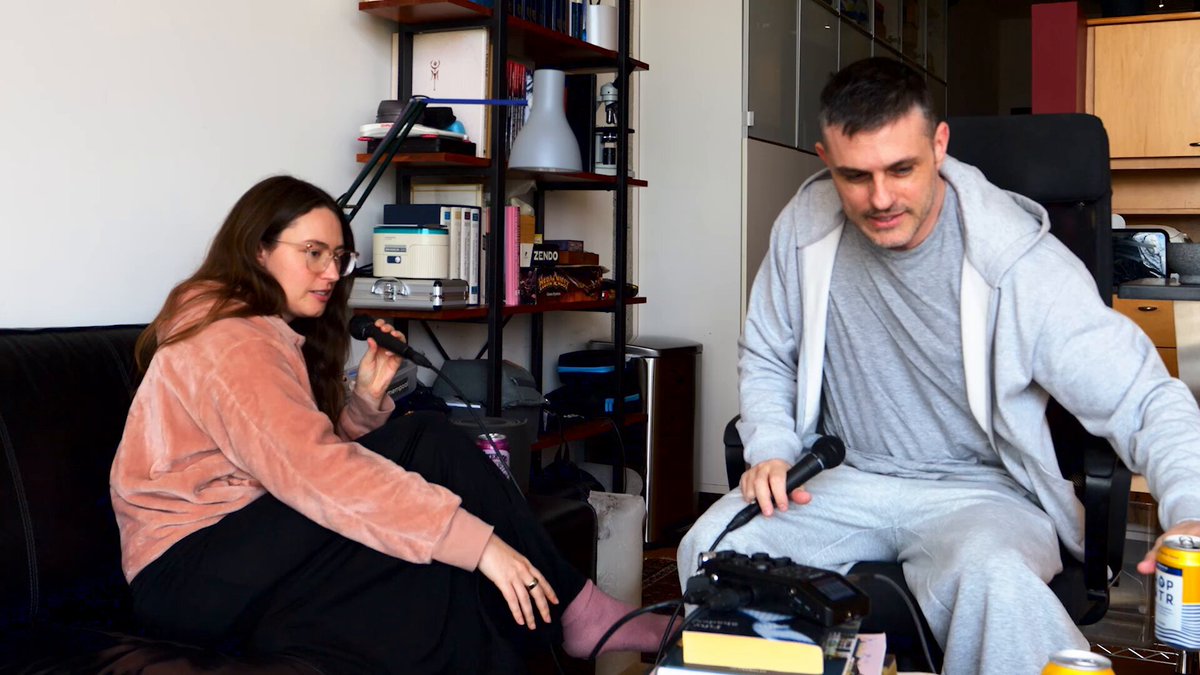
BITCOIN CORE HAS A SERIOUS PROBLEM On this episode, we discuss: - The Bitcoin Conference 2026 recap - Quantum debate & Project Eleven - Satoshi coins discourse - Paul Sztorc's eCash fork - hodlonaut #BIP-110 on Bitcoin Core governance TIMESTAMPS 0:00 Bitcoin 2026 recap 7:56 K-pop, ABG discourse 12:55... show more

32,761 просмотров • 5 месяцев назад •via X (Twitter)
Комментарии: 0
Нет доступных комментариев
Здесь появятся комментарии из оригинального поста


![BITCOIN CORE IS COMPROMISED! Meanwhile the Ordinals empire expands 🔥 [FULL EPISODE] On this episode of Hell Money, we’re locking in on final updates before we take over Las Vegas, Nevada. We’re auctioning the first piece from FUN!, the debut collection by Casey and Parker Day, and showing why Bitcoin-native auction tech beats the grift of legacy art houses. We explore: - Why Sotheby’s and Christie’s can’t compete with Bitcoin builders - Launching the first Ordinals + Bitcoin-native auction platform - The debut piece from FUN! by Casey + Parker - How to use Ordinals Satscards for in-person trading of inscriptions, runes, and more - The OP_RETURN drama: Bitcoin podcasters vs. Bitcoin Core devs TIMESTAMPS: 0:00 Intro and Inscribing Vegas 9:12 auction of FUN! 27:50 Ordinals Satscards 32:00 Ordinals Satscard tutorial 42:15 OP_RETURN drama 57:00 Outro](https://image.24vids.com/tw-1922723434641096767/amplify_video_thumb/1922721776024305664/img/56dkF5r56EvkAjwe.jpg)
![BITCOIN RAILS #71: Expecting Hardforks | with Drivechains author Paul Sztorc 🔗 YouTube: 🌿 Spotify: Paul Sztorc founder and CEO of LayerTwo Labs and author of Bitcoin Improvement Proposals 300 and 301 (Drivechains), has been one of Bitcoin's most persistent—and controversial—thinkers, advocating for merge-mined sidechains as a way to dramatically expand Bitcoin's functionality while preserving the security of the base layer. Following our previous episode introducing his proposed Bitcoin hard fork, eCash, we discuss how the project has evolved in recent months, what to expect when the fork launches on mainnet, and Paul's perspectives on today's Layer 2 landscape and the soon-to-activate BIP 110 soft fork. An entertaining, popcorn-style conversation with one of Bitcoin's most unconventional thinkers, this episode offers diverse—and at times irreverent—commentary on some of the most important technical debates shaping Bitcoin's future. This episode of Bitcoin Rails is brought to you by: LayerTwo Labs LayerTwo Labs — developing research, software, and technologies for scaling Bitcoin via the integration of Drivechains (BIP 300/301) Hashi on Sui — a primitive for executing Bitcoin DeFi transactions, without having to trust a federated bridge or other centralized entity BitBox BitBox — an open-source Bitcoin-only hardware wallet, with smooth UX and no compromises on security. Check out Bitbox [dot] swiss and use code BITCOINRAILS to get a discount TIMESTAMPS: 00:00 — Intro 00:16 — The Coldcard exploit 09:37 — Can Bitcoin still soft fork? 15:30 — Paul's hard fork 26:12 — BIP 110's fork and the ghost of SegWit 42:03 — How drivechains work and eCash 53:00 — Quantum resistance and OP_CAT 1:01:44 — Launching a drivechain and the OP_RETURN debate 1:08:57 — The BIP 110 endgame: Udi trolling, hashrate, and Ocean 1:13:54 — Why Stratum V2 is a bad idea 1:20:33 — The decline of maximalism and the road ahead](https://image.24vids.com/tw-2085742991256309871/amplify_video_thumb/2085733171446857728/img/9r5k4zvl9-3k5wGH.jpg)
![BITCOIN RAILS #62: BITCOIN'S 3 BIGGEST CHALLENGES | with Neha Narula Director of Digital Currency Initiative (DCI) Massachusetts Institute of Technology (MIT) 🔗 YOUTUBE: 🌱 SPOTIFY: Neha Narula is the Director of the MIT Digital Currency Initiative, where she focuses on Bitcoin research and the broader design tradeoffs of decentralized money systems. Her work often centers on what Bitcoin gets right—and where it runs into hard limits—especially around scaling, decentralization, and how systems behave as global demand increases. In this interview, Neha and I explore longer-term risks to Bitcoin—including advancements in quantum computing and the implications of a diminishing block subsidy—as well as the ongoing challenge of scaling Bitcoin without losing access to self-custody. A thoughtful conversation on how Bitcoin may change in the coming years, we also explore its social and governance dynamics—including tensions within the development community over protocol changes, scaling philosophies, and the future direction of the system. This episode of Bitcoin Rails is brought to you by: LayerTwo Labs LayerTwo Labs — developing research, software, and technologies for scaling Bitcoin via the integration of Drivechains (BIP 300/301) Hashi on Sui — a primitive for executing Bitcoin Defi transactions, without having to trust a federated bridge or other centralized entity BitBox BitBox— an open-source Bitcoin-only hardware wallet, with smooth UX and no compromises on security. Check out Bitbox [dot] swiss and use code BITCOINRAILS to get a discount TIMESTAMPS: 00:00 Intro 00:17 Neha’s Origins 02:26 Bitcoin to MIT 04:40 Media Lab Culture and Mission 11:34 CBDCs as Digital Cash Debate 24:42 Funding Model and Bitcoin Security Budget 29:55 Reorg Risk and Quantum Computing 32:14 Bitcoin Dev Funding Map 42:49 Governance and Corporate Stakes 50:23 Quantum Tradeoffs Framework 56:02 Post Quantum Proposals 58:59 Prioritize PQ Transactions 01:00:54 Satoshi Coins Debate 01:02:12 Mining Incentives And Price 01:08:08 Corporate Funding And Governance 01:10:54 Scaling Self Custody And L2s 01:20:30 Bitcoin Kernel And Wrap Up](https://image.24vids.com/tw-2059683810682220662/amplify_video_thumb/2059680624261083138/img/zFnXZj4lB8Z3l2qG.jpg)