正在加载视频...

视频加载失败

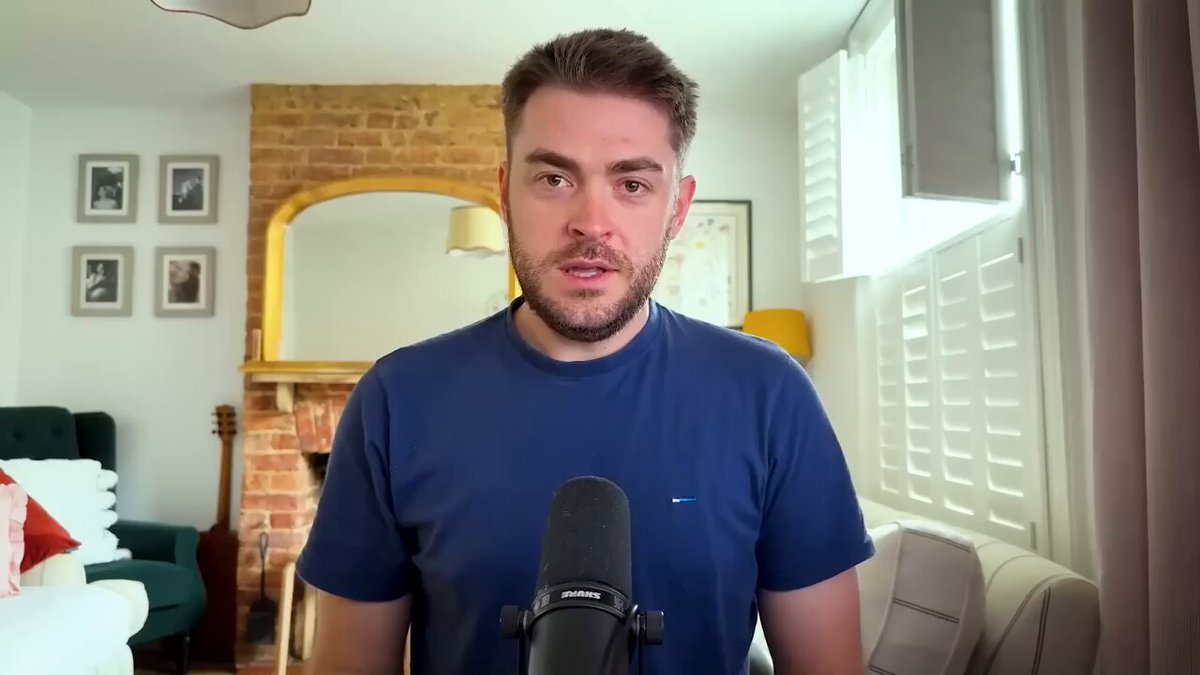
Bitcoin is one subnet. That is what Bittensor founder Jacob Steeves said on stage at Paris Blockchain Week, sitting across from Bpifrance's investment director in front of a packed room. His exact words: BTC is the equivalent of one subnet on Bittensor. We are a much more complex ecology....

10,579 次观看 • 4 个月前 •via X (Twitter)

10 条评论

Yami 的头像
Yami4 个月前

"BTC is one subnet." That line perfectly frames the scale of what $TAO is actually building. Incredible perspective 👏

2xnmore 的头像
2xnmore4 个月前

That line gives me goosebumps.

Yami 的头像
Yami4 个月前

Yeah, it's totally says so much in just one line🤝

Kimberly 的头像
Kimberly4 个月前

This comparison is wild. Subnets compounding AI output

Robyn 的头像
Robyn4 个月前

$BTC secures value, Bittensor builds intelligence Both needed

Wine 的头像
Wine4 个月前

Mind blown. One chain vs whole ecology. Bullish on $TAO

TensorUSD (TUSDT) 的头像
TensorUSD (TUSDT)4 个月前

one subnet vs a whole ecology isn't just a comparison but two different categories

Sarah 的头像
Sarah4 个月前

@Wine09588578056 Bitcoin was centralized at birth too. History repeating.

卖飞哥 🐊(互 F 🤝 学习) 的头像
卖飞哥 🐊(互 F 🤝 学习)4 个月前

把 BTC 类比成一个子网有点狠,但逻辑能讲通。AI 网络的难点不只是去中心化,还在于每个子网能不能持续产出真实需求和现金流。

Tammy 的头像
Tammy4 个月前

This comparison is wild. Subnets compounding AI output

相关视频

Most people tracking $TAO are watching the price chart. The ones who are actually ahead are watching the subnets. Here is why subnet growth is the real TAO price driver, and why almost nobody is talking about it correctly. $TAO does not work like most tokens. The price is not driven by speculation alone. It is driven by real network usage tied to AI computing output. Miners, validators, and developers earn TAO based on performance. The more useful the AI output, the more the network rewards it. Subnets are where that output gets produced. Each subnet is a specialised AI marketplace running inside the Bittensor network. One subnet handles language processing. Another handles predictive modelling. Another handles data indexing. Each one is a separate competitive market where AI models compete to produce the best output and earn TAO rewards for doing so. Here is what that means for price: Every new subnet that launches creates a new source of TAO demand. Developers who want to participate need TAO. Users who want access need TAO. Validators who want to secure the subnet need TAO. The token is not optional infrastructure. It is the entry ticket and the reward mechanism for every subnet that runs on the network. Right now, the subnet ecosystem is approaching $1.5 billion in cumulative value. Nearly 70 percent of TAO supply is already staked. Post-halving emissions sit at 3,600 TAO per day, down from 7,200. Supply tightening. Subnet demand is growing. Institutional custody is now live through BitGo and Yuma. Forecasts suggest the subnet ecosystem matures between 2026 and 2028, transitioning from infrastructure development into enterprise adoption. That transition is when decentralised AI stops being a thesis and starts being a cost efficiency argument that businesses make against centralised AI providers. When that argument lands at scale, every subnet on Bittensor becomes a revenue-generating node. Every new enterprise use case becomes a new source of TAO demand. The analysts watching the price chart are looking at the output of this system. The analysts watching subnet growth are looking at the input. Grayscale filed the ETF. BitGo opened the institutional door. The subnets are doing the actual work. Watch the subnets. Who else is tracking this layer?

2xnmore

11,997 次观看 • 6 个月前

A Bittensor subnet just outscored Claude and Cursor on the SWE benchmark. They spent less than $1 million to get there. Anthropic spent billions. I sat down with Mark Jeffrey, one of the most connected people in the Bittensor ecosystem, and he broke down everything. Here's what most people don't know about TAO. Bittensor takes Bitcoin's mining concept and makes it programmable. Instead of solving meaningless hash puzzles, miners compete on real AI tasks. Best freelancer wins. Blockchain pays them. No company. No CEO. No permission needed. Bitcoin did this for energy. Bittensor does it for talent. The numbers are wild: • Ridges (Subnet 62) built a Claude/Cursor competitor for under $1M • Miners on Ridges were earning $50K per day at peak • The Bittensor network has 128 subnets, each like its own AI startup • Mark says 20-30 of them could become multi-billion dollar companies • Only 20% of TAO is staked in subnets right now • Stakers are earning up to 80% yield on some subnets Mark has been in crypto since 2013. He was in the Ethereum ICO. He's seen every cycle. His take: Bittensor is the most important thing to happen in crypto since Ethereum. He calls TAO the "third great coin" alongside Bitcoin and ETH. The comparison to early Bitcoin is hard to ignore. TAO just had its first halving in December. Same 21 million supply cap. Same post-halving setup. When Bitcoin went through this phase, it jumped from $250 to $10,000. Mark's conservative target for TAO by end of 2026: $3,000. But the real insight was about demand. More subnets means more TAO gets locked up. Subnet cap going from 128 to 256. Staking will absorb most of the supply. And AI agents need crypto to transact. They can't open bank accounts. Bittensor is building the rails for that. Jensen Huang just talked about Templar, a Bittensor subnet, on stage. This isn't theoretical anymore. People are using this stuff. The products on Bittensor are 10 to 100x better than what we saw in early Ethereum. And we're still early.

Jesus Martinez

73,314 次观看 • 7 个月前

Two people who were early in Bitcoin and early in Ethereum just went on record about $TAO. One of them wrote a book about Bitcoin in 2013. The other invested in the Ethereum ICO in 2015. Both of them started a fund with Jason Calacanis with a single thesis. Bittensor is the third great open-source substrate after Bitcoin and Ethereum. Here is the exact framing they used. In the early 90s Microsoft, AOL, and CompuServe were the well-capitalised incumbents. Everyone thought they would monopolise and run away with the internet. Then TCP/IP, Linux, and the World Wide Web came along and everything converged on an open-source substrate. Bittensor is that open-source substrate for the AI story playing out right now. OpenAI. Anthropic. Google DeepMind. XAI. Different cast of characters. Same pattern. And this time you can actually own a piece of the open-source substrate. Now read the valuation mismatch that should stop you cold. The four main AI labs combined are worth approximately $1.5 trillion. Bittensor is worth $1.7 billion. Ridges subnet competes directly with Claude and Cursor and has beaten them on benchmarks. Ridges market cap is $30 million. Cursor is worth $30 billion. That is not a small dislocation. That is a comical one. The highest valued subnet in the entire ecosystem is around $80 million. There has never been a billion dollar subnet yet. On Ethereum during the ICO mania projects with nowhere near this quality of output were raising hundreds of millions within minutes. Now think about how many orders of magnitude more capital is chasing AI opportunities today compared to 2017. When that capital discovers Bittensor the valuation rerating will be violent to the upside. Their exact words. Not mine. The man who called $TAO at $3,000 by end of 2026 said it directly. By 2030 it will be a trillion dollar ecosystem. Every molecule in my body is screaming this is another one. The people who read the docs always buy before the people who read the price. This is still early. Video credits to these legends Mark Jeffrey Jack Ai-Leung Rob Greer for their insight on TAO.

2xnmore

24,491 次观看 • 3 个月前

James Altucher just launched an entire podcast dedicated to $TAO. He called it the TAO Pod. First episode: “Will Bittensor Be Bigger Than Bitcoin?” This is the man who called Bitcoin early. Called Ethereum early. Called crypto early when everyone thought he was insane. Here is what stopped me reading his piece: One subnet on Bittensor called Chutes is serving 150 billion language tokens per day. Not crypto tokens. Language tokens. The raw material that powers every LLM response from ChatGPT to Grok. 150 billion. Every 24 hours. Through a decentralised network most people have never heard of. That was July 2025. Since then, Chutes has recorded a 250x usage increase. Cumulative totals have crossed into the trillions. This is not a snapshot. This is a growth curve. And it is happening before mainstream awareness. Before the ETF. Before the institutional allocation cycle begins. Altucher’s comparison is the one worth sitting with: 1994 internet. Before the browser existed. Before anyone knew what email was. Before you could explain to your parents why any of it mattered. That is where he thinks Bittensor is right now. - Barry Silbert built an entire company around it. - Jason Calacanis put personal money in and called 200x. - Jensen Huang called it a modern Folding@Home on the All-In Podcast. - Grayscale filed a trust with the SEC. - PwC sent a partner to the Bittensor track in Paris. - James Altucher launched a dedicated podcast. These are not tourists. These are the people who were in the right rooms before every major shift in crypto and tech history. They are all pointing at the same thing. The people who read the docs always buy before the people who read the price.

2xnmore

17,287 次观看 • 5 个月前

Two people who were early in Bitcoin and early in Ethereum just went on record about $TAO. One of them wrote a book about Bitcoin in 2013. The other invested in the Ethereum ICO in 2015. Both of them started a fund with Jason Calacanis with a single thesis. Bittensor is the third great open-source substrate after Bitcoin and Ethereum. Here is the exact framing they used. In the early 90s Microsoft, AOL, and CompuServe were the well-capitalised incumbents. Everyone thought they would monopolise and run away with the internet. Then TCP/IP, Linux, and the World Wide Web came along and everything converged on an open-source substrate. Bittensor is that open-source substrate for the AI story playing out right now. OpenAI. Anthropic. Google DeepMind. XAI. Different cast of characters. Same pattern. And this time you can actually own a piece of the open-source substrate. Now read the valuation mismatch that should stop you cold. The four main AI labs combined are worth approximately $1.5 trillion. Bittensor is worth $1.7 billion. Ridges subnet competes directly with Claude and Cursor and has beaten them on benchmarks. Ridges market cap is $30 million. Cursor is worth $30 billion. That is not a small dislocation. That is a comical one. The highest valued subnet in the entire ecosystem is around $80 million. There has never been a billion dollar subnet yet. On Ethereum during the ICO mania projects with nowhere near this quality of output were raising hundreds of millions within minutes. Now think about how many orders of magnitude more capital is chasing AI opportunities today compared to 2017. When that capital discovers Bittensor the valuation rerating will be violent to the upside. Their exact words. Not mine. The man who called $TAO at $3,000 by end of 2026 said it directly. By 2030 it will be a trillion dollar ecosystem. Every molecule in my body is screaming this is another one. The people who read the docs always buy before the people who read the price. This is still early.

2xnmore

35,144 次观看 • 5 个月前

He built Canada's largest crypto exchange and sold it to Robinhood. He says he owns exactly two crypto assets, Bitcoin and $TAO, and nothing else. His name is Karia Samaru, founder of WonderFi and now CEO of xTAO. He laid out why on the Milk Road Show, and his reasoning is worth more than any price target. It starts with a confession. In 2016, he quit his job as a lawyer at a big firm and went all in on crypto. Then he bought a pile of other tokens he did not really understand. When the market turned, he had nothing to hold onto. No conviction, just bags. So he made one rule that has guided him since. Only invest in what you understand and truly believe in. For years, Bitcoin was the only thing that passed. Bittensor is the first since. The reason is that he sees AI as an even more valuable tool than money. Think about what people already type into AI apps. Health problems, finances, company plans, their deepest emotional struggles. All of it flows to a handful of companies. Karia's point is that the same logic that made Bitcoin matter for money applies to intelligence. But here is the part most TAO holders skip. He does not say TAO wins because it is decentralised. He says it wins only if subnets earn real money from outside customers. His words were blunt. If subnets cannot create meaningful revenue outside of emissions, it just does not work. In July, he said three of the top five compute subnets were already earning about: $20M a year Network wide, SubConnect now tracks external subnet revenue at: over $50M a year He also sees subnets moving toward public company style disclosure, reporting revenue and costs like real businesses. And his picture of success is almost invisible. People using great AI products every day without ever knowing Bittensor runs underneath. So here is what I take from it. Conviction is not about how loud you are when price is green. It is knowing exactly why you hold when it is red. If you could not explain your biggest bag in two sentences, would you still own it? He sold a company to Robinhood and kept two assets. The lesson is not which two. It is that he understood both. Credits to Karia Samaroo Milk Road Crypto John Gillen - WartimeEthereum.eth for the awesome video.

2xnmore

15,125 次观看 • 19 天前