Video yükleniyor...

Video Yüklenemedi

Ana Sayfaya Dön

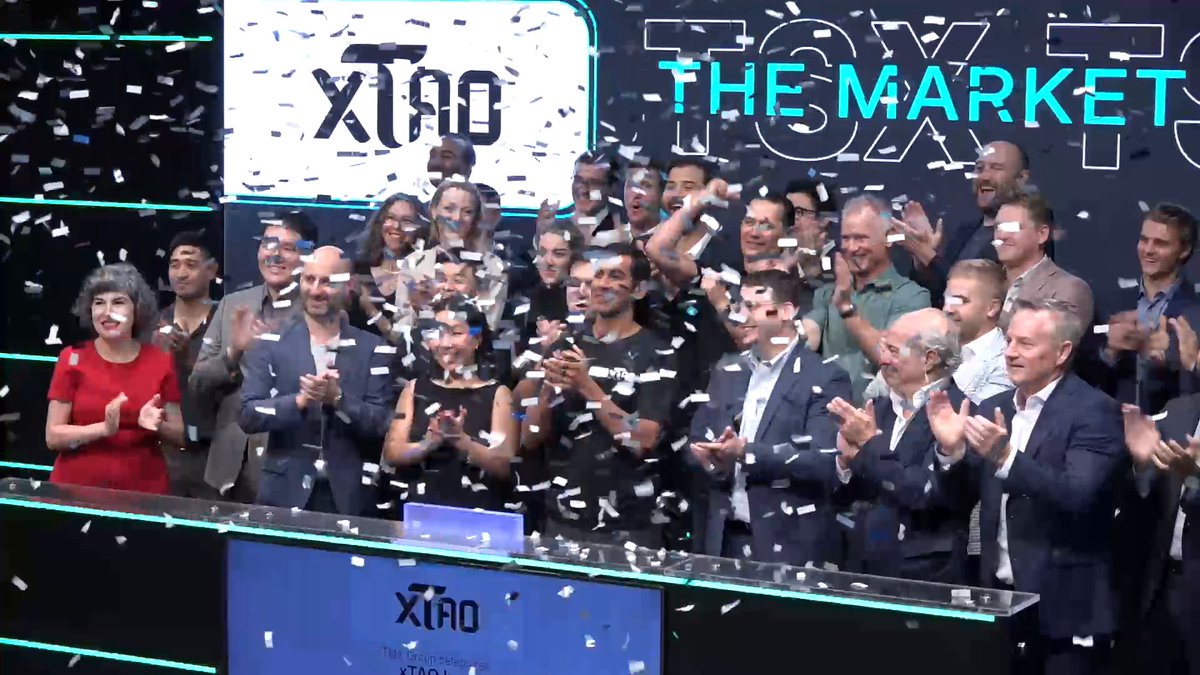
Bittensor is getting its own confidential routing layer :: Good Morning Simple payments, use for any AI model. Miners compete to serve inference at the best price. “What our miners do is they provide the tokens at the cost that they decide, but they’re competing against other miners…” mogmachine...

13,751 görüntüleme • 1 ay önce •via X (Twitter)

0 Yorum

Yorum bulunmuyor

Orijinal gönderinin yorumları burada görünecek

Benzer Videolar

🔴 This is REALLY important to understand Why is MyShell.AI building a subnet on Bittensor? EllioTrades and Ran Neuner have been talking this up recently. They see the impressive list of backers. What is curious, Ellio says, is that they haven't yet released a token. But what if they didn't need to? They've raised capital from some of the brightest minds and biggest funds in the space: Balaji, Sandeep | CEO, Polygon Foundation (※,※), Delphi Ventures, etc. Now they can focus on what they do best: create the 1st decentralized AI consumer layer... and plug it directly into Bittensor. MyShell knows that TTS (text-to-speech) is an emerging AI technology that will play a vital role in many different practical applications, such as converting content into podcasts and audiobooks, translations, customer service, etc. They have a team led by Zengyi Qin with talent from MIT, Oxford, and Princeton. They have already created two open-source models: OpenVoice and Melo TTS. In other words, they are established, have capital, and have a strong team. And they are joining forces with Openτensor Foundaτion behind the scenes. Their subnet will make Bittensor's incentive mechanism available to their existing community of 1 million users and 50k creators. Think about how this synergy works. MyShell is sharing their existing model and consumer base with Bittensor, giving it a broader scope. In return, Bittensor is enabling the evolution of ML models and a vastly improved user experience for millions of people. $TAO will be seamlessly powering the collaboration from behind the scenes. In MyShell.AI's words: Looking ahead, our mission as an AI consumer layer harmonizes with the decentralized incentive system of Bittensor. Our goal is to create a collaborative environment where everyone can contribute, benefit, and engage with open-source models, ultimately empowering millions.

Sri

20,428 görüntüleme • 2 yıl önce

A Bittensor subnet just outscored Claude and Cursor on the SWE benchmark. They spent less than $1 million to get there. Anthropic spent billions. I sat down with Mark Jeffrey, one of the most connected people in the Bittensor ecosystem, and he broke down everything. Here's what most people don't know about TAO. Bittensor takes Bitcoin's mining concept and makes it programmable. Instead of solving meaningless hash puzzles, miners compete on real AI tasks. Best freelancer wins. Blockchain pays them. No company. No CEO. No permission needed. Bitcoin did this for energy. Bittensor does it for talent. The numbers are wild: • Ridges (Subnet 62) built a Claude/Cursor competitor for under $1M • Miners on Ridges were earning $50K per day at peak • The Bittensor network has 128 subnets, each like its own AI startup • Mark says 20-30 of them could become multi-billion dollar companies • Only 20% of TAO is staked in subnets right now • Stakers are earning up to 80% yield on some subnets Mark has been in crypto since 2013. He was in the Ethereum ICO. He's seen every cycle. His take: Bittensor is the most important thing to happen in crypto since Ethereum. He calls TAO the "third great coin" alongside Bitcoin and ETH. The comparison to early Bitcoin is hard to ignore. TAO just had its first halving in December. Same 21 million supply cap. Same post-halving setup. When Bitcoin went through this phase, it jumped from $250 to $10,000. Mark's conservative target for TAO by end of 2026: $3,000. But the real insight was about demand. More subnets means more TAO gets locked up. Subnet cap going from 128 to 256. Staking will absorb most of the supply. And AI agents need crypto to transact. They can't open bank accounts. Bittensor is building the rails for that. Jensen Huang just talked about Templar, a Bittensor subnet, on stage. This isn't theoretical anymore. People are using this stuff. The products on Bittensor are 10 to 100x better than what we saw in early Ethereum. And we're still early.

Jesus Martinez

73,314 görüntüleme • 3 ay önce

$TAO just reclaimed the #1 AI crypto spot. Most people saw the headline. Almost nobody understands what it means for the price. Here is the data. $NEAR built real infrastructure. Partnerships. Developer activity. A legitimate ecosystem. $TAO just walked past it anyway. Not because of hype. Because Bittensor is the only AI crypto with a functioning marketplace for machine intelligence where supply, demand, and price discovery are all happening on-chain right now. That is not a roadmap. That is a live network. The numbers. 120+ subnets running today. $1.4B+ total ecosystem value. Chutes AI subnet: 150B+ tokens per day. Grayscale GTAO Trust: already live. Single subnet listed on the marketplace at $970,000 asking price. Subnets are becoming assets. The market is starting to price that. What the emission data is telling you. Emission rate is the network's vote on where the most valuable work is being done. When a subnet gains emission share, the collective stake-weighted intelligence of the network has decided that subnet's output is worth more of the TAO supply. Chutes AI gaining emissions while processing 150B tokens daily is not a coincidence. The network is directing capital toward proven output before any headline announces it. Why mainstream money changes everything. James Altucher just launched bluetao. ai, a TAO-powered ChatGPT alternative built directly on Bittensor subnets. He did not just buy the token. He built a product on the network. Products built on a network create structural demand for the native asset. That is how every successful L1 cycle has worked. Bittensor is now getting that builder activity from outside the crypto native world. That is a different signal from a price target tweet. Why $TAO is structurally different. Most AI tokens are betting their chain becomes the preferred environment for AI development. $TAO is not betting on becoming infrastructure. It already is. 120+ subnets running. Miners competing. Validators setting weights. Alpha tokens being priced in real time. The difference between $TAO and every other AI crypto is the difference between a city under construction and a city people are already living in. Van de Poppe said $1,000 to $2,000 in 12 months. He gave you the narrative. The subnet emission data is the mechanism he did not explain. Now you have both. $TAO at $313 with a $3.42B market cap is still early relative to what this network is actually processing. Centralised AI infrastructure companies are valued at hundreds of billions for processing far less novel work than a decentralised intelligence marketplace running 120+ competing subnets simultaneously. The repricing has not happened yet. The subnet marketplace listing at $970,000 is telling you something the price has not caught up to yet.

2xnmore

12,150 görüntüleme • 1 ay önce

Most $TAO holders are flying blind. They bought the token. They watched the price. They read the threads. But they have never opened the one tool that shows them everything happening inside the Bittensor network in real time. It is called Taostats. It is free. And after reading this, you will never look at $TAO the same way again. Here is exactly how to use it. Step 1: Start at the Subnets page. This is the heartbeat of the entire network. Every subnet running on Bittensor is listed here with: - its current emission rate - the number of active miners and validators - real-time performance data The emission rate is the most important number on this page. It tells you exactly how much TAO is flowing into each subnet every block. High emission means the network is directing significant resources toward that subnet's commodity. Low emission means the market has not yet recognised its value, or the subnet has not yet proven itself. Watch which subnets are gaining emission share over time. That movement tells you where the network believes the most valuable work is being done, before any headline announces it. Step 2: Use the Subnet pages to go deeper. Click any subnet, and you enter a complete dashboard for that individual market. - The TradingView chart shows you the alpha token price history for that subnet. Alpha tokens are the subnet-specific tokens that sit inside TAO's broader economy. Their price relative to TAO tells you how the market is valuing that subnet's specific commodity. - The Metagraph is the full list of every miner and validator currently active in the subnet: their UID, their stake, their trust score, their emission share. This is the raw intelligence layer. The miners consistently earning the most emissions are producing the work the validators collectively agree is the most valuable. - The Sentiment Index gives you a real-time community temperature reading on each subnet. Not price sentiment. Ecosystem sentiment. Whether the participants building inside the subnet believe it is healthy and improving. Step 3: Check Validators before you stake anything. This is the step most people skip and regret. The Validators page on Taostats shows you the performance history of every validator on the network: their VTrust score, their emission consistency, and their weight-setting behaviour across subnets. VTrust is the metric that matters most. It measures how closely a validator's judgments align with the honest stake-weighted majority across the network. High VTrust means the validator is doing genuine work and being rewarded for it. Low VTrust means the validator is either lazy, copying other validators' weights, or attempting to manipulate the system. When you delegate your TAO to a validator, you are trusting them with your emissions. Taostats shows you exactly which validators have earned that trust over time, and which ones have not. Never stake blind again. Step 4: Use the Blockchain explorer to track real movement. The Blockchain section of Taostats logs every transfer, every staking transaction, and every extrinsic called on the Bittensor chain in real time. This is where you track what wallets are actually doing: - Large staking transactions from unknown addresses - Subnet registration events that signal a new market is about to go live - Neuron registration burns that show demand for participation in a specific subnet is accelerating The people who read on-chain data before the narrative catches up to it are the ones who position correctly before the crowd notices the move. Step 5: Track your own portfolio inside the Dashboard. Connect your coldkey address, and Taostats builds you a complete portfolio view: - Your TAO balance - Your staking positions - Your delegation returns - Your yield over time The yield calculator is particularly useful. It shows you the actual return you are generating from your staking position in real TAO terms, not in percentage estimates that assume conditions that may not hold. If your yield is lower than the network average for your validator tier, Taostats shows you that too. Switching validators takes one transaction. The data to make that decision intelligently is right in front of you. The bigger picture. Most people holding $TAO are making decisions based on price charts and social media sentiment. Both of those inputs are downstream of what is actually happening inside the network. Subnet emission shifts. Validator VTrust changes. On-chain registration events. Neuron burn rates. Alpha token price movements relative to TAO. All of it is live on Taostats right now. All of it is free. All of it tells you something the price chart cannot. The investors who understand Bittensor at the data layer will always be positioned ahead of the investors who understand it at the narrative layer. Taostats is the data layer. Bookmark it. Open it daily. The network is telling you exactly what it is doing if you know where to look.

2xnmore

137,182 görüntüleme • 2 ay önce

The entire AI industry is racing to build the smartest model. Satya Nadella just admitted that is not where the money is. The model is not the product. The harness is. That is the exact line. And it changes what Microsoft is actually competing on. OpenAI, Anthropic, Google, xAI, Meta every frontier lab is pouring hundreds of billions into training compute, chasing the next capability jump. Each betting that raw model intelligence is the moat. Microsoft is doing the opposite. It is building the harness the orchestration layer that sits above the model, connecting it to tools, data, permissions, sub-agents, and enterprise workflows. And it is letting OpenAI, Anthropic, and MAI compete to plug into it. "You need the model. But the model is not the product. The harness is." So do the math on what a harness actually does. A raw model dropped into an enterprise answers questions. That is a chatbot. A harness turns that same model into an agent that reads the SharePoint, edits the ERP entry, pulls the GitHub PR, updates Salesforce, and files the Excel report with the right permissions, the right audit trail, and the right sub-agent for each sub-task. The model provides the intelligence. The harness converts intelligence into work. Now here's where it gets interesting. "Even the best model in the world will feel broken without a great harness. And an okay model with a great harness can feel like magic." If that is true, the enterprise buyer is not buying model quality. The enterprise buyer is buying the harness. Which means model quality becomes a commodity input over time, and harness quality becomes the sustainable moat. Compare that to the strategy the entire frontier lab industry is executing. Everyone else is chasing the numerator raw intelligence. Almost nobody at scale is racing to build the denominator the orchestration layer that determines whether that intelligence can actually be deployed profitably inside a real company. The frontier model race has a 10 to 20 percent chance of producing a single dominant winner. Nadella just told the industry he does not need to be that winner. If OpenAI wins, Microsoft wins. If Anthropic wins, Microsoft wins. If MAI wins, Microsoft wins. If someone Microsoft has never heard of trains a better model in 2027, Microsoft still wins. Because the compute they train on, the harness they get plugged into, the enterprise contracts they get delivered through, and the products they sit inside are all Microsoft. He is not building the best AI model. He is building the layer that the best AI model has to run on to make anyone money. I wonder which position looks more valuable in ten years.

Vikram M

21,463 görüntüleme • 11 gün önce

I pay Claude $20 a month. Most $TAO holders do too. There is a stack you can build in 15 minutes that fixes that completely. It runs on Bittensor. It costs $10. You do not write a single line of code. Here is how every AI chat product actually works under the hood. Three layers. Always three. The model. The brain. GPT, Claude, DeepSeek, Kimi, GLM. The inference layer. The GPU that runs the model when you hit send. The interface. The chat box you actually look at. ChatGPT and Claude bundle all three and hand you the result. You cannot change the model. You cannot change the inference. The interface is non-negotiable. Every prompt you type goes to a server run by a private company whose terms of service can quietly change next month. The anti-ChatGPT move is to pick each layer yourself. This is where $TAO comes in. Chutes is Subnet 64 on Bittensor. It is the inference layer. Open source models like DeepSeek, Kimi, GLM, and Llama get served by a global network of miner-operated GPUs. Validators score the output quality. The best inference wins the emissions. You hit send. A miner somewhere runs your prompt. You get the answer back. The TAO you hold is in part paying for the GPU you just used. The basic stack is one URL. chutes. ai/chat No account. No API key. No setup. Switch models mid-conversation. Web search built in. Image generation. File uploads. Free. The advanced stack is Chutes plus TypingMind. One-time license. No recurring fee. Plugins, agents, custom personas, a prompt library you build over months. Full model switching between Chutes, OpenAI, and Anthropic from the same window. Total cost: $10 a month to Chutes for inference. That $10 buys you $50 in actual usage. But here is the signal most people missed inside this story. Chutes ran a free tier until February. Then they killed it. Then they raised the minimum to $10 in May. Most people saw that as bad news. It is the opposite. Free things on the internet do not last. Real products do. Chutes is becoming a real product. A subnet that generates actual revenue from actual users paying actual money for actual AI inference. That is what $43 million in Q1 network revenue looks like at the individual subnet level. And there is one more thing ChatGPT and Claude cannot offer that Chutes already has. Trusted Execution Environments. Your prompt gets encrypted on your device, shipped to a confidential compute GPU, and the lock only breaks inside the chip. The miner running the model physically cannot read your prompt. ChatGPT cannot promise that. Claude cannot promise that. Bittensor already built it. You are holding a network where the subnets are generating real revenue, shipping real privacy infrastructure, and replacing $20 a month centralised subscriptions with $10 a month decentralised inference. The people who use the product always understand the investment better than the people who only watch the price.

2xnmore

26,946 görüntüleme • 1 ay önce

UPDATE - M. OLIVER: WHY GOLD & SILVER MINERS ARE “FREE” RIGHT NOW One of the sharpest voices in precious metals just explained why he's quietly reducing leveraged positions and piling into gold and silver mining stocks. His reason? They are absurdly cheap compared to the metals they produce—and the charts are screaming breakout. THE HISTORIC VALUATION GAP ✅ Gold & silver miners (XAU index) are trading at only 4–8% of the price of an ounce of gold. ➡️ Compare that to historical averages: 25% of gold price during the 1980s, 1990s, and 2000–2008 bull runs. 🔥 Right now, miners are “dirt cheap” relative to the metal in the ground. THE TECHNICAL SETUP IS PRIMED ✅ The XAU/gold ratio has been trapped in an 11-year ultra-low base. 📈 We're now challenging and rallying above that long-term resistance near 8%. 🚀 A decisive breakout from this level has historically triggered massive investor flows into miners. SILVER MINERS LOOK EVEN MORE EXPLOSIVE ✅ When you zoom in on silver miners versus gold miners, the relative strength setup is even more compelling. ➡️ The leverage to silver prices is massive—if silver keeps running, silver-focused producers stand to outperform dramatically. THE PORTFOLIO SHIFT UNDERWAY ✅ “I've already been lightening my position and moving more into junior miners.” ➡️ Preference is shifting toward unleveraged miners for the rest of this year and likely into next. 💥 “That's where the real bang for the buck comes.” THE BOTTOM LINE Gold and silver miners aren't just undervalued—they're at some of the cheapest levels in decades versus the metals they mine, with technicals flashing a potential explosive breakout that could attract a flood of capital. Time to stop calling them “cheap” and start calling them opportunity. HT: YouTube Jimmy Connor Momentum Structural Analysis Current portfolio (DYODD)👇 #Gold #Silver #MiningStocks #PreciousMetals #XAU #JuniorMiners #BullMarket

Mark

250,925 görüntüleme • 5 ay önce