Video yükleniyor...

Video Yüklenemedi

Ana Sayfaya Dön

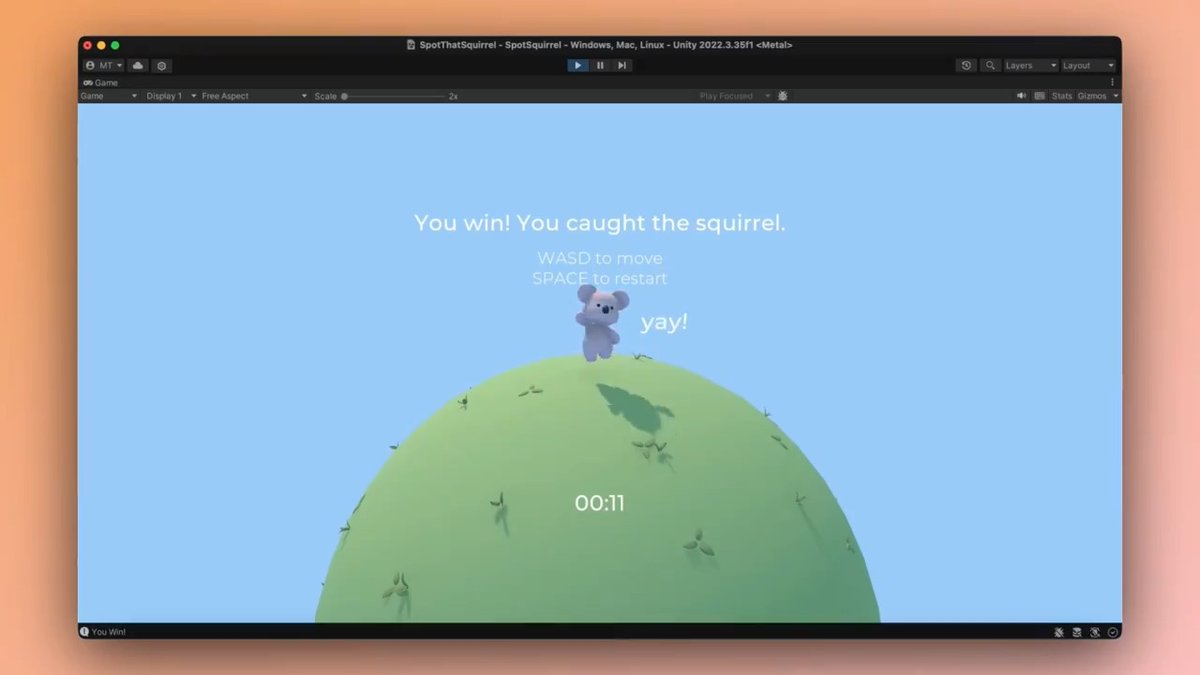
"Blending 2D hand-drawn madness with 3D real-time rendering like it's nothing Spider-Verse motion smears meet LoL cinematic polish in this Unreal Engine 5 masterpiece by Redhill Games & Pedro Borges. Mind = blown. #Stylized #UnrealEngine5

75,729 görüntüleme • 4 ay önce •via X (Twitter)

0 Yorum

Yorum bulunmuyor

Orijinal gönderinin yorumları burada görünecek

Benzer Videolar

Made with Seedance 2.0 Prompt: PART 1 (0:00–0:15) GLOBAL STYLE: Stylized 3D animation, cel shaded graphics, comic book rendering, Spider Verse inspired visual style, vibrant high contrast color palette, fluid dynamic motion, Unreal Engine 5 aesthetic, cinematic lighting, 4K quality. CHARACTER CONTINUITY: Stylized young male driver with wavy blonde hair, thick black glasses, short goatee, intricate black tattoo sleeves on both arms, black shirt, dark pants, brown loafers. VEHICLE CONTINUITY: Modified white 1990s Honda Integra, black brush stroke "46" side decal, glowing red underglow, deep dish rims, lowered stance, clean body kit. Keep the same car throughout. No logos or text changes. ENVIRONMENT: Neon lit New York inspired streets beneath elevated subway tracks at dusk, wet reflective asphalt, glowing storefronts, cinematic atmosphere. SEQUENCE: 0:00–0:05 Low angle tracking shot follows the driver walking confidently toward the parked white Honda Integra. The glowing red underglow reflects across the wet pavement. Close up of the tattooed hand pulling the door handle, entering the car, then turning the ignition key. Smooth cinematic transitions. 0:05–0:08 Macro shot of the exhaust pipe blasting thick stylized gray smoke. Quick cut to tattooed hands gripping the steering wheel tightly. Dashboard lights illuminate the driver's focused face. 0:08–0:11 Dashcam POV as the Integra rapidly accelerates beneath elevated train tracks. Neon storefronts streak past with heavy motion blur. Camera shakes naturally with speed. 0:11–0:15 Extreme close up of the driver's determined eyes reflected in the rearview mirror. Hard cut to an aggressive drift around a city corner. Thick tire smoke, glowing orange sparks from the wheels, vivid red underglow reflecting on the wet road. End with a cinematic action shot.

Shore Lyn

32,881 görüntüleme • 13 gün önce

3D scanning and rendering is moving so fast - got my splats up and running and I'm mind blown getting ~100fps for this complex 3D scene ⬇️ 🤯 1. WAY faster than NeRF: For comparison, NeRFs would takes around 10 seconds per frame (!) Instead I'm zipping around with FPV controls without breaking a sweat - though I do crash a few times towards the end of the video lol 2. Old Meets New: Gaussian Splatting is cool in that it fuses classical graphics and deep learning techniques. Like NeRFs, this is still a radiance field - just without the slower (ne)ural rendering part. 3. Explicit Representation: Instead you represent a 3D scene as a collection of ellipsoidal "splats" called gaussians. Each gaussian has a position, size, and color. Rendering in real-time is done by projecting into the image plane and alpha blending. 4. Photorealistic Effects: Gaussian splatting use spherical harmonics to represent the view-dependent effects and lighting - allowing surfaces to change color when viewed from different angles, enabling greater photorealism. It doesn't use a neural network, but the training loop is similar to deep learning. 5. Enables Direct Editing: But it's not just speed - with Gaussian Splatting you also get 3D editing support! So you can select, move, and delete stuff, even relight stuff. This type of editing has been more tedious to do with NeRFs and their implicit black box representations. 📲 More tests cooking! Much more to unpack here including simpler explanations. If you enjoyed this post, you might enjoy my feed: Bilawal Sidhu

Bilawal Sidhu

337,090 görüntüleme • 2 yıl önce

GM! Thanks for sticking with me through these long posts as we dive into the complexities of Kaidro. Today, let's talk about the development of our animation series. We haven't discussed this much because it's quite detailed. Where are we with the animation series development? It's a complex answer because our IP spans multiple mediums. Here's a simplified breakdown: - Learning from Anime: Like popular series such as "Fullmetal Alchemist," "Naruto," and "One Piece," where manga serves as the storyboard for anime, we've taken a similar approach but with a twist. - Starting with the end in mind: We began by creating 3-D assets in Unreal Engine 5 for our Webtoons and print manga. This choice allows us to use the same high-quality assets for cinematic TV, movies, and games, reducing costs and enhancing consistency. - Asset Reuse: By developing assets once for high-quality output, we can use them across comics, games, and animations. This method, similar to what was done in "Arcane," involves hand-painting over 3-D models for a unique look. - Cost and Efficiency: This approach isn't common due to its difficulty and the need for story consistency. However, it allows for smarter production, echoing the methods of visionaries like Disney and Hanna-Barbera, ensuring we can sustain and grow our IP like Pokémon. Current Status: - Pre-production: We're well into preproduction, with story development, storyboards, color scripts, and asset creation nearly complete. This groundwork usually takes years but we're ahead. This is because what I listed above are the mangas. Each manga counts as two episodes. And because each of those are fully developed, we have all the information we need to develop an episode. - Production Timeline: We're set to move into full production in 2025. Post our animation lock-up system with the community we am to go into full production after that in January. - Quality and Speed: An example of our efficiency is the cinematic for December 18th, where we reused game assets for backgrounds, finishing 43 scenes in just a month, which is exceptionally fast. Why This Matters: - For Investors and Community: This strategy not only reduces costs but also extends the life and reach of Kaidro, ensuring long-term success. We're significantly further in our animation development than most Web3 projects, maintaining high quality while pushing boundaries. Our hyper focus is on the production pipeline to allow for the anime to come to life. LFG $KDR

Robert Simons | $KDR 🐉

37,206 görüntüleme • 1 yıl önce

DIGITAL TWIN UPDATE: The Unreal Engine digital twin project is CANCELLED! WE ARE OPEN SOURCING THE WORK!!!!!!! Instead, I'm building an end-to-end land management platform I'm calling Mazzap because it's an app and it's a map and also I'm Mr. Mazza. I'm also not calling a digital twin anymore; I'm calling it a V.E.I.L. which stands for Virtually Embodied Intelligent Land which serves the dual purpose of sounding way cooler and also conveys the long-term aims of the prject way better. With Mazzap anyone can easily generate a veil with nothing but publicly available data (and some photogrammetry objects if you so choose). Everything is perfectly georefrenced and you can right-click anywhere on your veil to get coordinates you can plug into google maps yourself. The next step for this is going to be building a survey companion mobile app so you can get field data yourself complete with attribute tables to drop in to get even HIGHER fidelity data than USGS. My stretch goal is using something like SAM 3D (but better) to generate georefrenced 3d tree assets based on the real trees on your land (which will eventually lead to growth and fruiting simulators based on your soil and hydrology data). Then again maybe that's not the next step; maybe the next step is plumbing in IoT devices so you can view assets in real time on your land. GPS trackers on the sheep, or maybe data from your solar controller. Or maybe it's up to you, because it's completely open source and it has an agents markdown file ready for your own coding agent to read and adapt for your purposes (did I mention this is vibecloded slop? sowwyyyy) Watch demo below and see how you can go from zero to beautifully rendered 3d map of your property in less than 15 minutes! If you're coming in cold to all this, below in the QT is a nested thread of reverse chronological tweets of my work on this (in unreal) so far.

Zy

54,025 görüntüleme • 4 ay önce

Solon Lee (Producer at Kuro Games): Thank You for Playing My Game "Wuthering Waves: Exploring Game Creation Under Unreal Engine." Interview by Nvliu66 When you think of Unreal Engine, what comes to mind? A few days ago, at the Epic Games Shanghai office, I met the producers of Clair Obscur: Expedition 33 and Wuthering Waves. Both games are developed based on Unreal Engine, and they shared the stories behind their game creation. My biggest takeaway was that while a great game stems from a producer's emotional expression, its realization relies on the "escort" of technology. Let's return to the interview scene and listen once more to their unique insights on game development. Wuthering Waves and Unreal Engine Bill Clifford (VP and GM of Unreal Engine at Epic Games): With Wuthering Waves, they used many complex artistic techniques to present this anime style, and it's truly outstanding. They are among the first companies to create a role-playing game in an open world that is also cross-platform, which is another incredible feat. They introduced console-level graphics and combat systems while maintaining a consistent update frequency. Furthermore, as they adopt and integrate new Unreal Engine technologies into the game, the experience is continuously enhanced. It’s a truly inspiring success story. Solon Lee (Producer at Kuro Games): We have grown alongside the updates of the UE engine, including the release of UE5. Throughout the process, we’ve been able to learn from UE’s updates. When UE5 was released, it introduced many new technical features, especially ray tracing. Everyone currently praises the ray tracing effects in Wuthering Waves, which is actually due to the continuous updates of the engine. We found those highlights and ported them over to UE4.26. During this process, our engineers were learning the logic of the engine, following its updates, and developing an engineering mindset and a way of creating visual effects. So, my biggest personal takeaway is that choosing a top-tier engine doesn’t just make the game better; it makes us better in the process. "Punishing: Gray Raven" was developed on the Unity platform, while "Wuthering Waves" is based on Unreal. What was the reasoning behind this change at the time? Solon Lee: Psychologically, we don’t have a heavy dependence. We don't feel that just because we've used Unity, we must continue using it. We are a bit more pragmatic. When we were about to start Wuthering Waves, we clearly knew we wanted to make an open world. UE obviously offers more support for open worlds. We felt that "standing on the shoulders of giants" to make a game was definitely a more practical decision. At that time, we could also sense that most engineers in the industry had an aspiration toward UE. "Wuthering Waves" has been live for a year and a half. At this stage, could you use a short summary or a few words to introduce "Wuthering Waves" to the players? Solon Lee: Wuthering Waves is a game that strives to continuously create resonance with players. From the excitement and design of the action to the scriptwriting and performances, we strive to find "highlight segments" or moments in every version that can trigger internal resonance, touch the heart, or make players "scream" with excitement. This is actually a creative consensus our team has slowly formed over the past year. When we find that moment in a version and we ourselves "scream" for it, we feel that there is a high probability that when the version is released, it will be recognized by the users. Because the most important thing about a game is that it must be fun, as developers, we often think about what kind of game qualifies as "fun." What is a "Fun" Game? Solon Lee: One point I can think of right now is that the rules should be as simple as possible. As soon as you start, after two slashes or casting a skill, you should feel, "Wow, that was so cool! I want to do it again! Wow, so cool!" Specifically for action games, the "fun" is often hidden in very small granularities. For example, if you compare two different games where you are just running and jumping, the running in some games feels fun. Why? It might just be because the "grip" is better, the animation swing feels better, or it gives you a sense of gravity or momentum. Whether a point in a game is fun can be subjective. For me, there are a few games that have had a significant influence on my work. One is definitely NieR; when we were making Punishing: Gray Raven in the early days, we were very inspired by NieR. When Devil May Cry 5 came out, it gave us a lot of new inspiration for our combat system. Death Stranding is indeed one of my personal favorite games from recent years. When Elden Ring was released, it also gave us a very strong impression and touched us deeply. The project for Wuthering Waves started in the first half of 2020. At that time, there were very few open-world action games on the market because most action games back then were stage-based (linear/hub-based). All excellent action games required very tight level design. Later, Elden Ring came out, and experiencing it gave us strong resonance. We felt that action games definitely have potential in an open world, and we believe it should be that way. A Message to the Players Solon Lee: I am truly grateful that so many players like Wuthering Waves. It is because of everyone’s love whether it's encouragement or criticism that we are given a lot of motivation to maintain our continuous passion to make our game better. I believe the only way we can give back to the players who like Kuro and Wuthering Waves is by producing better and better versions and content, and making more and more great games. Happy New Year, and thank you for playing my game. translated by Xu #WutheringWaves #WuWa

Naru

55,609 görüntüleme • 5 ay önce

This is how ALOHA's "teleoperation" system works - a fancy word for "remote control". Training robots will be more and more like playing games in the physical world. A human operates a "joystick++" to perform tasks and collect data, or intervene if there's any safety concern. There's actually a learning curve to master the controller, much like practicing gaming skills. Teleoperation can be done in many different ways. ALOHA is an impressive custom-built system with very low cost. Here're a few alternatives: (1) Motion Capture (MoCap): apply the MoCap systems used for Hollywood movies to capture the fine-grained motions of hand joints. There would be no "embodiment gap" if the robot hand has 5 fingers. For instance, a demonstrator can wear a CyberGlove ( and manipulate the objects. CyberGlove will capture the motion signals & haptic feedback in real-time, which can be re-targeted onto the humanoid. (2) Wearing gloves & markers can be clumsy. An alternative way to do MoCap is through computer vision. DexPilot from NVIDIA enables marker-less and glove-free data collection. The human operator simply uses their bare hands to perform the tasks. 4 Intel RealSense depth cameras and 2 NVIDIA Titan XP GPUs (yeah, 2019 work) translate the pixels to precise motion signals for robot learning. (3) VR Headset: turn the training room into a VR game and "role play" the robot. This has the advantage of scalable remote data collection - annotators from around the world can contribute without coming onsite. VR demonstration technique appeared in research projects like the iGibson home robot simulator, an initiative that I participated in at Stanford: Behind-the-scene video by Litian Liang

Jim Fan

124,588 görüntüleme • 2 yıl önce

A normal football moment turned into a futuristic legend. ⚽⚡🔥 From a dream shot to a cyber-powered goal AI brought this cinematic football universe to life. Made with GPT Image 2 + Seedance 2.0 Mini on Pollo AI Prompt: Scene 1 (0–2s) – Stadium Establishing Shot A packed football stadium at night under brilliant floodlights. The crowd roars as the camera slowly pushes toward the pitch. Flags wave, atmospheric particles float through the air, and the stadium feels massive and alive. Ultra-realistic sports broadcast quality. Scene 2 (2–4s) – Perfect Cross An original football athlete wearing a sleek futuristic white-and-neon football kit tracks a perfect aerial cross. The camera follows the ball before smoothly transitioning to the athlete's focused expression. Dramatic anticipation builds with cinematic slow motion. Scene 3 (4–7s) – The Leap The athlete explodes into an incredible bicycle volley. The camera switches between low-angle tracking shots, slow-motion close-ups, and dynamic aerial perspectives. Flying grass, dust, and motion blur enhance the realism. Scene 4 (7–10s) – Time Freeze At the exact instant before the foot touches the ball, time completely freezes. Every particle hangs motionless. The camera performs a slow cinematic orbit around the athlete while the stadium remains perfectly frozen. Scene 5 (10–13s) – Cyber Transformation Mechanical armor assembles over the athlete's body piece by piece. Blue and orange energy lines ignite, the visor activates, mechanical wings unfold, and the football transforms into a glowing plasma sphere surrounded by electricity, fire, sparks, and floating energy fragments. Scene 6 (13–15s) – Cliffhanger The transformation completes. The cyber athlete remains frozen inches away from striking the glowing plasma ball. End with a dramatic close-up, intense lens flare, floating energy particles, and a seamless cliffhanger ready for Part 2. Style: Original fictional character only. Hyper-realistic, Unreal Engine 5 quality, cyberpunk-mecha anime fusion, premium VFX, volumetric lighting, HDR, cinematic sports commercial, smooth camera movement, 1080p detail, blockbuster visuals. Negative Prompt: No real football players, no celebrity likeness, no club logos, no copyrighted jerseys, no watermarks, no text, no subtitles, no storyboard visible, no extra limbs, no deformed anatomy, no blurry frames, no flickering, no low quality, no camera shake, no glitches. Part 2 Scene 1 (15–17s) – Action Resumes Time suddenly resumes from the frozen frame. The cyber athlete unleashes a devastating bicycle volley. The instant the foot strikes the plasma football, a massive burst of blue electricity, orange fire, sparks, plasma energy, and shockwaves explodes outward. Capture the impact with ultra slow motion and dramatic close-ups. Scene 2 (17–20s) – Plasma Ball Flight The plasma football rockets toward the goal at incredible speed, leaving behind blazing fire trails, blue lightning, glowing plasma particles, and motion streaks. The camera alternates between tracking shots, side views, and behind-the-ball perspectives while the crowd becomes a cinematic blur. Scene 3 (20–22s) – Goal Impact The glowing plasma football smashes into the top corner of the goal. The net ripples violently as a gigantic energy explosion erupts. Sparks, debris, plasma waves, and holographic shockwaves spread throughout the stadium with blockbuster visual effects. Scene 4 (22–25s) – Stadium Celebration The stadium erupts with fireworks, holographic lights, smoke, confetti, waving flags, and roaring fans. Bright floodlights illuminate the entire arena while glowing energy particles drift through the air. Epic cinematic drone shots reveal the celebration. Scene 5 (25–28s) – Hero Landing The cyber athlete lands powerfully on the pitch. Mechanical wings slowly fold back into the armor while blue energy lines gradually fade. Floating sparks and glowing fragments surround the athlete as the camera circles dramatically. Scene 6 (28–30s) – Epic Finale The athlete stands in a victorious heroic pose facing the roaring stadium. The camera slowly pushes in while cinematic lens flares, volumetric lighting, drifting smoke, and holographic particles fill the scene. End on a premium blockbuster frame with an unforgettable cinematic finish. Style: Original fictional football athlete only. Do not resemble or recreate any real football player, club, team, logo, jersey, or copyrighted content. Hyper-realistic, Unreal Engine 5 quality, cyberpunk-mecha anime fusion, HDR, volumetric lighting, premium VFX, smooth cinematic camera movement, ultra-detailed 1080p, realistic physics, blockbuster sports commercial. Negative Prompt: No real football players, no celebrity likeness, no club logos, no copyrighted jerseys, no watermarks, no subtitles, no storyboard visible, no extra limbs, no deformed anatomy, no blurry frames, no flickering, no glitches, no low quality, no camera shake. #PolloAI #PolloCup

Stonic AI

30,576 görüntüleme • 17 gün önce

⚡ My first advanced simulation with Grok 3! Finally your OS windows act like REAL windows 🤣 As you know, I've spent more than 2 years sharing all kinds of simulations and mini-games made with Claude, ChatGPT (o3-mini-high), etc. It’s been ages since I last wrote a single line of code. But pretty often, once you hit over 1,000 lines, it turns into a debate against the LLM and you frequently get stuck in a loop that’s hard to break out of. Everyone was raving about Grok 3’s ability to generate code, but until now, I hadn’t really put it to the test. So I decided to challenge it with a prompt that both ChatGPT and Claude were seriously struggling with (debate loop). The initial prompt was: "Use Python and a 2D physics library to create a world where I can generate different static objects like squares, triangles, circles and rectangles. I should be able to move them with the mouse, rotate, scale, and delete them. The cool part is that we’ll see this world through 1 to N operating system windows. In other words, the windows will be like real windows! When one of these windows is active and I hit the spacebar, balls affected by physics should appear and interact with the static objects. You can start with placeholders, but later I'll send you a series of PNG images so they all become beautiful sprites." After a few iterations, I got the result you see in the video. Insane, right? 🤯 Now, with Grok, we have the power to create anything that pops into our mind with just a couple of prompts. It’s mind blowing. Ever since I was 9 and messing around with BASIC on my MSX, I've been hooked on visual simulations... And now I can create them using nothing but natural language. It's f***** amazing that we're living in this historic moment!

Javi Lopez ⛩️

209,470 görüntüleme • 1 yıl önce

It's officially that time of year again! Presenting the second annual "DreamDisc" indie gamejam for the Sega Dreamcast! If you weren't around for last year, check out the video! We had 24 incredibly polished, epic submissions including a wide-range of genres, such as 3D space shooters and resource managers, 2D platformers and racing games, VMU minigames, custom hardware, and even a custom implementation of the Java VM for SH4! Just like last year, the top 10 submissions, as voted by a panel of judges, will be pressed to a commercially released, actual physical Sega Dreamcast disc, which will be available for purchase from Orc Face Games - Chew Chew Mimic out on Dreamcast!! Oh, and there are cash prizes for the top 3, of course! This year we have an even wider range of engines, frameworks, and prebuilt library solutions for developers are all experience levels, including: 1) Antiruins - Lua-based, very newbie friendly game engine for the Sega Dreamcast. 2) raylib - famous cross-platform C-based games framework which needs no introduction 3) SDL2/3 - our very own ports of the famous cross-platform SDL libraries, which target the Dreamcast. 4) Simulant - the same engine that powered Driving Strikers--the very first online homebrew commercial DC game--as well as last year's wining submission, written in C++. 5) KallistiOS - you can raw-dog the indie SDK and pseudo OS that started it all and powers everything in the community, rolling your own tech stack. 6) SH4ZAM - my collection of SH4 assembly optimized math and matrix routines, which originally powered our Grand Theft Auto ports. Contestants are encouraged to join the OrcFace and Simulant Discord servers where they can interact with other DC developers, share their progress, and ask for help with anything they may need. Official DreamDisc '25 website:

Falco Girgis

16,980 görüntüleme • 8 ay önce

Announcing DreamDojo: our open-source, interactive world model that takes robot motor controls and generates the future in pixels. No engine, no meshes, no hand-authored dynamics. It's Simulation 2.0. Time for robotics to take the bitter lesson pill. Real-world robot learning is bottlenecked by time, wear, safety, and resets. If we want Physical AI to move at pretraining speed, we need a simulator that adapts to pretraining scale with as little human engineering as possible. Our key insights: (1) human egocentric videos are a scalable source of first-person physics; (2) latent actions make them "robot-readable" across different hardware; (3) real-time inference unlocks live teleop, policy eval, and test-time planning *inside* a dream. We pre-train on 44K hours of human videos: cheap, abundant, and collected with zero robot-in-the-loop. Humans have already explored the combinatorics: we grasp, pour, fold, assemble, fail, retry—across cluttered scenes, shifting viewpoints, changing light, and hour-long task chains—at a scale no robot fleet could match. The missing piece: these videos have no action labels. So we introduce latent actions: a unified representation inferred directly from videos that captures "what changed between world states" without knowing the underlying hardware. This lets us train on any first-person video as if it came with motor commands attached. As a result, DreamDojo generalizes zero-shot to objects and environments never seen in any robot training set, because humans saw them first. Next, we post-train onto each robot to fit its specific hardware. Think of it as separating "how the world looks and behaves" from "how this particular robot actuates." The base model follows the general physical rules, then "snaps onto" the robot's unique mechanics. It's kind of like loading a new character and scene assets into Unreal Engine, but done through gradient descent and generalizes far beyond the post-training dataset. A world simulator is only useful if it runs fast enough to close the loop. We train a real-time version of DreamDojo that runs at 10 FPS, stable for over a minute of continuous rollout. This unlocks exciting possibilities: - Live teleoperation *inside* a dream. Connect a VR controller, stream actions into DreamDojo, and teleop a virtual robot in real time. We demo this on Unitree G1 with a PICO headset and one RTX 5090. - Policy evaluation. You can benchmark a policy checkpoint in DreamDojo instead of the real world. The simulated success rates strongly correlate with real-world results - accurate enough to rank checkpoints without burning a single motor. - Model-based planning. Sample multiple action proposals → simulate them all in parallel → pick the best future. Gains +17% real-world success out of the box on a fruit packing task. We open-source everything!! Weights, code, post-training dataset, eval set, and whitepaper with tons of details to reproduce. DreamDojo is based on NVIDIA Cosmos, which is open-weight too. 2026 is the year of World Models for physical AI. We want you to build with us. Happy scaling! Links in thread:

Jim Fan

225,239 görüntüleme • 4 ay önce

The Blood of Dawnwalker | Details ▪️New single player third-person fantasy action RPG ▪️Started development over 2 years ago in Unreal Engine 5, full gameplay reveal coming in Summer 2025 ▪️Led by former Witcher 3 game director Konrad Tomaszkiewicz and ex-Witcher 3 and Cyberpunk quest director Mateusz Tomaszkiewicz ▪️Focused on "narrative sandbox", no two playthroughs will be identical ▪️Takes place in 'Vale Sangora' in 14th century medieval Europe ▪️The setting has been ravaged by plague, famine and social disorder ▪️Inspired by Eastern European architecture and culture, Polish log houses, Ukrainian and Balkan clothing, 'Romanian defensive churches', and more ▪️The world has been watched by vampires in the shadows waiting to strike and make their move when humanity is at its lowest and to overthrow the feudal lords ▪️Day/night cycle plays a big role, wanted the world and villages and buildings to 'feel like a different place' after sunset ▪️You play as Coen, energetic, becomes a 'dawnwalker' (not human, not vampire, something in between), can traverse both worlds of humanity and creatures of the night ▪️You fight with swords and weapons by day, and can use vampire abilities in combat at night, explore the environment, etc ▪️You have 30 in-game days and 30 nights to save your family, wanted a sense of urgency. When you complete an objective/quest, time moves forward. But time doesn't pass in real world time, you can 'manage' how you use time as a resource ▪️You meet many characters throughout the game with their own goals and ambitions, which may make you friends or put you in opposition to them ▪️Blood Hunger: Gameplay mechanic where you need to feed throughout your playthrough ▪️If you talk to someone and have gone long without feeding first, you might lose control and eat them, even 'your best friend' in the game ▪️Vampire design: In this world, the vampire's teeth don't stop growing, so the older vampires have a lot of teeth. Aren't visible at first, can extend as their mouths open ▪️Vampires are led by Brencis -a super powerful old vampire that wants to change the world, twisted old religious beliefs and took advantage of social turmoil to turn himself into a sort of messianic figure ▪️The vampire leadership aren't black and white, but more gray, as they overthrew violent and corrupt feudal lords, but also kill people to eat, conduct blood masses at church, etc ▪️Brencis is a sort of 'active antagonist' that will react to your actions and decisions, will set edicts in the game that will become obstacles to the player like military checkpoints, etc Full Cinematic and Gameplay Teaser ▶️

Shinobi602

725,451 görüntüleme • 1 yıl önce

Mind blown: A Chinese quant college student builds an AI swarm engine in 10 days flat, explodes GitHub with 13,000+ stars, and scores $4,000,000 in funding! Introducing MiroFish is the multi-agent simulator that's revolutionizing predictions for trading, PR, and more. What is MiroFish? It's a digital sandbox where thousands of AI agents with individual memories and behaviors interact like a real society. Feed it any scenario (news leak, policy change, or even a classic novel's missing ending), and it simulates crowd reactions, debates, and outcomes to forecast real-world events. The Creator's Story: > In late 2025, fourth-year student Guo Hanjiang coded the core using AI assistants. > It went viral overnight, landing him 30m Yuan (~$4m) from Shanda Group. > He ditched the dorm, started a company, and now leads the charge. Key Applications: .Trading: Input financial news or reports, watch simulated market panics and price swings for predictive insights. .PR Testing: Companies/Politics run draft statements to spot backlash and refine messaging. .Creative Experiments: Loaded a lost-ending Chinese novel, agents role-played characters and generated a logical finale. .Easy setup: Deploy via Docker in minutes with any LLM API key. Pro tip: Simulate something wild like Elon Musk tweeting about Dogecoin 2.0 and spawn agent traders, influencers, and investors, generate real-time video clips of the frenzy to test moonshots or crashes risk-free. Traders are already winning big: Check this one on Polymarket - $120,000+ net profits from spot on SPX 500 bets, powered by MiroFish sims on historical data. His profile: For effortless gains, try Kreo copy trading: Auto-mirror pros like him and ride their edges. Try here: Add his wallet: [0x17559efac103ac7f361be37ec0b93888d4c55aac] to [ and start track/copy him. Repo:

slash1s

1,135,450 görüntüleme • 4 ay önce

This video is going to BLOW YOUR MIND. In Kazakhstan🇰🇿 A family turns on a Microwave & the lights go ON in the entire stairwell of the building across the street. Sounds like witchcraft, right? IT'S NOT. Here’s what’s actually going on.. The Microwave runs at 2.45 GHz Wireless Radiation. The same frequency band used by WiFi, Bluetooth and cheap motion sensors. Over time, the shielding around the door grill wears out & that 2.45 GHz energy starts to leak. That leaked energy bounces.. off staircase railings, metal window frames, ceiling fans, steel rebar inside walls. Everything metal becomes a mirror for those invisible RF waves. All that bouncing creates this messy soup of reflections & harmonics, spreading right across the street. And those stairwell lights? They’re triggered by Microwave motion sensors. These sensors don’t see light or heat, they detect changes in REFLECTED RF Energy. When the leaky oven fires up, it floods the area with electromagnetic RF noise that the sensors mistake for a human walking. As a result, the whole stairwell lights up, Perfectly in sync with someone making popcorn. and the craziest part is it’s PERFECTLY LEGAL. Microwave ovens are allowed to leak up to 5 mW/cm² at 5 cm from the surface, according to the safety standards. That’s 50,000,000 μW/m² Building Biology, on the other hand, says anything above 10 μW/m² is EXTREME CONCERN. Even 1/2 a meter away, you’re standing in radiation levels millions of times higher than what’s considered biologically reasonable. And it doesn’t stop at Microwaves. Your WiFi router, your Bluetooth earbuds, your car RADAR, your smartwatch, they’re all blasting their own invisible RF frequencies. 2.45 GHz here, 5.8 GHz there, harmonics stacking like ghosts, bouncing off every metal surface around you. One day, you’ll realize.. the real microwave miracle isn’t that it turned on a stairwell across the street. It’s that somehow… We all learned to live inside one.

Rusty ⚡️: Solar Powered ☀️

52,343 görüntüleme • 3 ay önce