正在加载视频...

视频加载失败

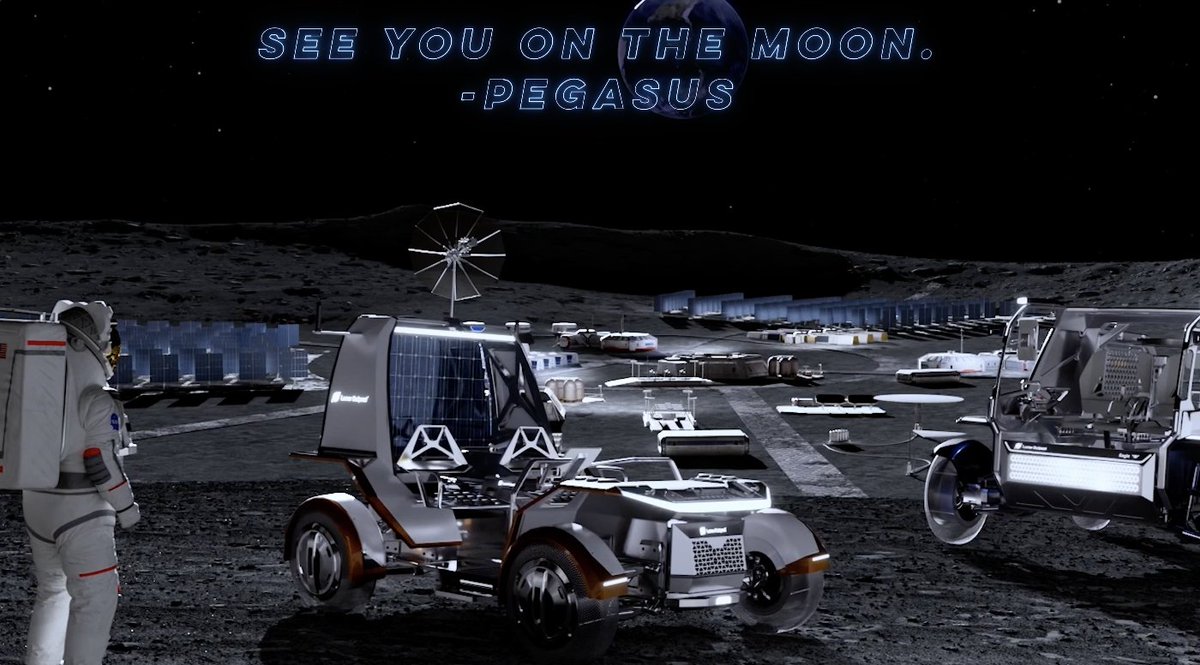
🇺🇸 BLUE ORIGIN'S NEW SHEPARD COMPLETES NS-29 MISSION, TESTS MOON GRAVITY TECH Blue Origin successfully launched its New Shepard NS-29 mission from West Texas, carrying 30 payloads to test lunar technologies. The capsule simulated lunar gravity for two minutes, helping NASA and private companies refine moon exploration tech for...

176,192 次观看 • 1 年前 •via X (Twitter)

11 条评论

Priyanshu Jha | System Guy 的头像
Priyanshu Jha | System Guy1 年前

Great news! This test is a step closer to moon exploration.

Haltia.AI 的头像
Haltia.AI2 年前

We crushed it in year 1! $2M raised, 42 brainiacs on board, LLMs miniaturized for your phone, KNOW unleashed, and ASIMOV launched. Buckle up, because we're just warming up.

skrptd 的头像
skrptd1 年前

Lunar exploration advances, yet the stars call us higher.

dschnaq 的头像
dschnaq1 年前

Lots of cool space stuff happening, love it!

Kekaius 的头像
Kekaius1 年前

@MarioNawfal Earthly strides in lunar tech inspire us. Honor and justice call us to Mars. Ad astra per aspera, to Kekhalla we march for true progress. kek

Alaska 的头像
Alaska1 年前

@blueorigin New Shepard NS-29 launched and landed today in West Texas! Our FD@LG will study fluid dynamics at lunar gravity. Thanks to my colleagues Chantelle from 4Space & Karl Hasenstein from @ULLafayette for holding the @FloridaTech flag!

Sauce 🥫 的头像
Sauce 🥫1 年前

If we already been to the moon why is it so difficult to do it again?

celestine sunday 的头像
celestine sunday1 年前

Good to see all the technoloical advances, i love this, better things are coming ahead

Dinopawnz🦍 的头像
Dinopawnz🦍1 年前

Very cool. Their rockets are still not pointy enough though

VICTOR 的头像
VICTOR1 年前

I love see things like this

Dr. Trey 的头像
Dr. Trey1 年前

Bezos trying to catch up

相关视频

RUSSIA, now the WORLD LEADER in space launch technology, leaving NASA and SPACE X in its wake! 💪🇷🇺 ❗️Russia successfully launches another Soyuz-2.1b space rocket carrying heliogeophysical satellites "Ionosphere-M" & 18 accompanying satellites from Vostochny Cosmodrone Roscosmos reported. 💪🇷🇺 On July 25, 2025, Russia’s Roscosmos successfully launched a Soyuz-2.1b rocket from the Vostochny Cosmodrome, carrying 2 Ionosfera-M satellites and 18 secondary payloads, including 17 Russian & 1 Iranian satellite. This mission, aimed at completing the Ionosfera-M constellation to study Earth’s ionosphere and space weather, underscores Russia’s renewed vigor in space exploration. The launch, the third Soyuz-2.1b flight of 2025 and the first from Vostochny this year, highlights Russia’s strategic push to bolster its space capabilities, positioning it as the Primary player in the global space race, arguably outpacing NASA and SpaceX in recent activity and ambition. The Ionosfera-M satellites, equipped with instruments like the GPS total electron content receiver (PES), Laertes radio wave sounder, and MAYAK dual-frequency beacon, are designed to monitor the ionosphere’s electron density and space weather effects. This scientific focus, combined with the successful deployment of 18 secondary payloads, including a 16U CubeSat and Iran’s Nahid-2 telecommunications satellite, demonstrates Russia’s ability to execute complex, multi-payload missions. The Vostochny Cosmodrome, a relatively new facility, supports Russia’s goal of reducing reliance on Kazakhstan’s Baikonur Cosmodrome, further signaling its intent to assert independence and efficiency in space operations. In contrast, NASA and SpaceX, while historically dominant, have faced challenges that suggest Russia’s current momentum may surpass them. NASA’s Artemis program has encountered delays and budget overruns, with the Artemis II mission now pushed to 2026. SpaceX, despite its reusable Falcon 9 and Starlink successes, has focused heavily on commercial satellite deployments, with 27 Starlink launches in 2025 alone. However, these efforts lack the scientific depth of Russia’s Ionosfera-M mission, which prioritizes geophysical research critical for global communication and navigation systems. Russia’s ability to integrate international payloads, like Iran’s, also showcases its diplomatic and technical flexibility, an area where NASA’s international collaborations have been constrained by geopolitical tensions. China’s space program, meanwhile, is rapidly ascending, with milestones like the Tiangong space station and lunar exploration missions. Russia and China have deepened their space cooperation, notably through joint projects like the Russian-Chinese satellite launched in November 2024. This partnership, rooted in technology sharing, positions them to challenge Western dominance. China’s advancements in reusable rocket technology & Russia’s expertise in reliable Soyuz launches create a synergy that could see them lead the space race. For instance, Russia’s planned space station, set to launch modules in 2027, aligns with China’s ambitions for lunar bases, suggesting a strategic alignment that will outpace NASA’s slower-paced lunar gateway project. Russia’s recent successes, including a record-breaking 55-satellite launch in November 2024, reflect a revitalized space sector despite Western sanctions. By leveraging domestic infrastructure like Vostochny and fostering ties with China, Russia is not only more active but arguably more successful in achieving its space objectives than NASA or SpaceX, whose efforts are spread across commercial and exploratory domains. As Russia and China share technologies, their combined expertise in launch systems, satellite constellations & deep-space exploration is redefining their leadership in the space race, leaving NASA & SpaceX to catch up.

𝐃𝐚𝐯𝐢𝐝 𝐙 🇷🇺 🇷🇺

101,735 次观看 • 1 年前

Against all odds - 🇨🇳China's Space Exploration program 1994 - 2024🚀🛰️ 1994 - China applied to join the International Space Station, but was denied and declared "untrustworthy" by the U.S. 1993 - The United States shut down their GPS targeting the Chinese container ship Yinhe, leaving the ship stranded at sea and unable to navigate for 33 days - after being falsely accused by the US of carrying chemical weapons precursors to Iran 1996 - The United States turned off its GPS in the South China Sea, forcing China's missile tracking to fail 2003 - China applied to join the EU's Galileo global satellite navigation system, paid €230 million but was eventually forced out by the EU 2011 - The United States passed the Wolf Amendment Law, which prohibits NASA from cooperating with China in space Despite being stigmatized and isolated, Chinese scientists and taikonauts remained determined and worked hard to become self-sufficient 1999.11.20 - Shenzhou 1 - China's first spacecraft - where the dream began! 2000 - The first experimental BeiDou Navigation Satellite was launched 2003 - Shenzhou 5 - China's dream of flying into Space came true! Taikonaut Yang Liwei (杨利伟) was blasted successfully into space as part of China's Shenzhou 5 mission. China became the third country to launch a person into space independently, after the Soviet Union and the United States 2005 - Shenzhou 6 - Fèi Jùnlóng (费俊龙) and Niè Hǎishèng (聂海胜) launched into space aboard the Long March 2F carrier rocket. It marked the official second launch of China's manned spaceflight program and the start of crewed scientific research in space 2007 - The first lunar exploration probe Chang'e 1, part of the first phase of the Chinese Lunar Exploration Program, was launched and successfully orbited the moon, marking the third milestone in China's space program 2007 - The BeiDou-1 navigation system was completed and began operation in China. The fourth positioning system, next to the American GPS, Russian GLONASS, and European Galileo 2008 - Shenzhou 7 - Taikonauts Zhai Zhigang (翟志刚) and Liu Boming (刘伯明) completed China's first "Spacewalk" extra-vehicular activity (EVA) 2011 - The Tiangong-1 prototype space station was launched, marking the start of construction on China's first space station 2016 - marks the launch of Tiangong-2, China's first space laboratory. Tiangong-2 was not constructed or planned to be permanent, but rather as a test-bed for critical technologies utilized for the final Tiangong Space station 2020 - Chang'e 5 marks China's first lunar landing retrieving lunar soil. For the first time in 44 years, humans have brought back rock and soil samples from the moon 2020 - China's BeiDou-3 navigation system provides complete full global coverage 2020: Mars - here we come! China launched Tianwen-1, China's first Mars probe 2022: China completed construction of its permanently crewed Tiangong space station 2024 - Chang'e 6 mission: China became the first nation to land and return lunar soil samples from the far side of the moon It took China 28 years and the sacrifice of countless heroes risking their lives working day and night to overcome China's Western-imposed isolation and construct its own space station and global navigation system, and to become a leader in space exploration 🇨🇳🫡

StarBoySAR 🇭🇰 🇨🇳 🥭

114,218 次观看 • 2 年前