Loading video...

Video Failed to Load

Go Home

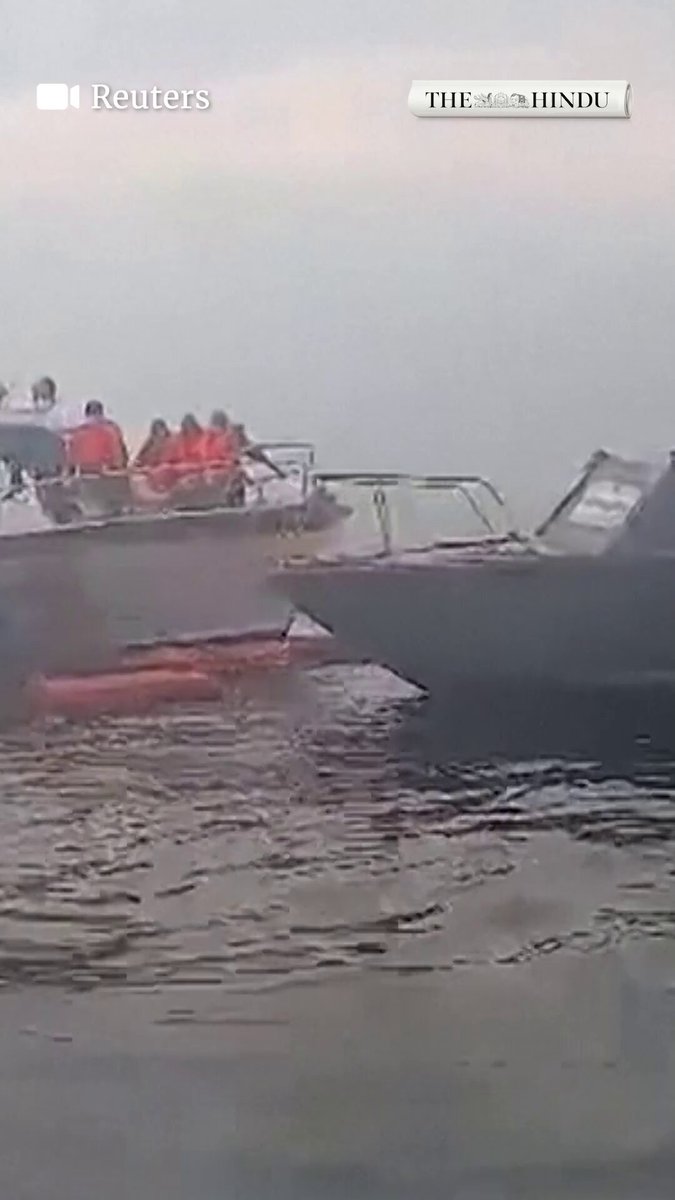
BOAT CAPSIZES ON LAKE KARIBA A Rural Infrastructure Development Agency (RIDA) boat carrying 90 passengers and five crew members capsized on Lake Kariba while travelling from Kariba Urban to Chalala Fishing Camp via Long Island. The Zimbabwe Republic Police has confirmed the incident and says rescue operations are underway....

31,162 views • 1 month ago •via X (Twitter)

0 Comments

No comments available

Comments from the original post will appear here

Related Videos

#KaribaFerryDisasterIndepthAnalysis The Kariba Ferry Disaster: What the State Knew & What It Did By Dr Phillan Zamchiya Dear Reader, Government records, historical reports, survivor testimonies, media reports and official statements establish an uncomfortable pre-disaster history. Mbuya Nehanda, KF551, was a government passenger ferry operated by Zimbabwe’s Rural Infrastructure Development Agency (RIDA), providing public water transport on Lake Kariba. Five years before the tragedy, the Office of the President and Cabinet had acknowledged persistent breakdowns in the ageing ferry fleet on Lake Kariba and announced plans for refurbishment. The state had also documented the dependence of isolated lakeshore communities on government water transport. On 11 August 2026, evidence points to a safety warning advising boats not to sail because of dangerous waves. Mbuya Nehanda had a stated passenger capacity of 90, excluding crew, and required adequate life jackets. Yet that fateful afternoon on 11 August 2026 it sailed from Kariba for Chalala in Nyaminyami Rural District, carrying adults, children, infants and substantial cargo. It sank near Long Island. At least 80 people are confirmed dead, with the toll likely to rise, and 77 have been rescued. Before proceeding, my deepest condolences go to the bereaved families and survivors. I hope a national resolution of the following seven puzzles will help establish the truth, secure accountability and bring some measure of closure. First, what happened after the state identified serious problems with its own ferry fleet? Five years before Mbuya Nehanda sank, government had identified persistent breakdowns in the Lake Kariba fleet and announced plans to modernise it. In November 2021, Dr Martin Rushwaya, then Deputy Chief Secretary in the Office of the President and Cabinet, toured Nehanda, Chaminuka and Nyaminyami fleet. The state-owned Herald reported “constant breakdowns and high operating costs”, assessments of refurbishment needs, and new engines for Chaminuka costing about US$40 000. The unanswered question is what followed for the 41-year-old Mbuya Nehanda. Was it refurbished? Who received the contracts, for how much, and what work was actually completed? The inquiry must follow that documentary trail from the 2021 government diagnosis and promised refurbishment to the vessel that sailed on 11 August 2026. Second, was this simply an unpredictable weather event? Evidence suggests warning signs existed before Mbuya Nehanda started the journey. Weather undoubtedly matters. But weather explains the waves, not necessarily the decision to sail. Survivor Itai Marumisa told journalists that strong winds known in local lexicon as ‘Binga wave’ were already whipping across the lake, water was entering the boat and a battery and inverter were swept overboard. Passengers asked the captain not to sail and, according to Tatenda Sianjeme, repeatedly urged him after departure to turn back or shelter at an island. ZimLive reported that Brenda Javis said the Lake Captain had warned boats not to sail because of dangerous waves. Earlier disaster-risk work by Zimbabwe Red Cross Society identified strong winds and waves as recurring Lake Kariba dangers and established community warning mechanisms. However, the state subsequently attributed the disaster to an unexpected strengthening of the South Indian Ocean anticyclone, while President Mnangagwa described conditions as “rough and choppy.” It seems visible warnings were ignored. Third, how many people were actually aboard? The numbers expose a serious failure of passenger accounting. On 11 August, police spokesperson Paul Nyathi initially reported exactly 90 passengers and five crew. However, police later confirmed that 90 was Mbuya Nehanda’s official passenger capacity, excluding five crew. One crew member said they 153, now the number of casualties and survivors show they were more than that.

TheNewsHawks

47,618 views • 26 days ago

'MBUYA NEHANDA' GIVES MNANGAGWA'S GOVERNMENT A BRUTAL REALITY CHECK IN LAKE KARIBA Warning that the heroes of Zimbabwe did not fight for a state that cannot keep its people alive on their own lakes and roads. BY RTD DIO SHEPHERD MPESWE If the world wants to know the true state of Zimbabwe, it should not look at the glitz and glamour at state functions nor the choreographed ribbon‑cuttings but it should look at what is happening in our public spaces, where ordinary people live, travel, work and die. This time, Mbuya Nehanda, in Lake Kariba gave the country a brutal reality check. I mean, the government‑owned passenger ferry, Mbuya Nehanda, operated by the Rural Infrastructure Development Agency (RIDA, formerly DDF), capsized near Long Island. Initial reports indicate that at least 95 people were on board. Accidents do happen the world over, yes. Storms rise, waves hit, engines fail but if the world were to see the actual condition of this government‑owned vessel and the visibly overloaded state in which it departed, it would ask a simple question, " why was this ferry ever allowed to leave the shore ? " I mean we are talking about a government vessel, on a route that is critical to the lives of mostly rural Zimbabweans, transporting food, medicine, schoolchildren and workers. Yet hat lifeline is being run on worn‑out equipment, lax standards and a collapsed sense of responsibility that is prone to greed and corruption. I do applaud the efforts of all individuals, agencies and the private sector who are involved in the rescue operation but my caution to them is that they should not cease their search and rescue operations whilst relying heavily on the ticketed figures of passengers as it is very possible that, given the state of the Zimbabwean economy, the boat crew members could have taken on board a lot more of unticketed passengers for quick cash. This is not an isolated practice. It is rampant across the public sector resulting in systems of safety and regulation being quietly surrendered to desperation and hustling. It is unfortunate that under the Mnangagwa Presidency, neglect has since become state policy and the Kariba tragedy is the logical outcome of a governing culture that has normalised neglect in all public spaces. Look around the country. Our roads have become death traps. Our buses and commuter omnibuses are ramshackle, unroadworthy and overloaded. Our railway system has been abandoned and neglected for far too long. Our sewer systems spill into communities, creating permanent health hazards. Our power supply is unstable, unreliable and dangerously managed. Our water infrastructure is failing, forcing millions to live at the mercy of shallow boreholes and unsafe wells. Everywhere the poor travel, queue and dwell, the state has quietly withdrawn from its most basic obligations. Public amenities and utilities are grossly neglected by a government that is more interested in awarding billions in state funds to politically connected individuals under the banner of “empowerment” and “prosperity.” The Kariba ferry disaster is a physical manifestation of this moral collapse. Instead of investing in safe boats, trained crews, reliable safety equipment and robust regulation, funds are diverted to luxury cars, mansions and glittering patronage schemes. A few days ago during the Heroes Day commemorations, Chris Mutsvangwa declared that the most fitting tribute to the country’s liberation heroes is the “delivery of prosperity and development” as the reward for their sacrifice. On paper, it is a neat line. In reality, it is a cruel joke and typical of the Mnangagwa administration. All verbose and bling, while nothing is done to safeguard public lives in the actual spaces where citizens experience the state, on the roads, in hospitals, buses, water taps and ferries on Lake Kariba. 1 of 2 LynneM 💕💝💎 Fadzayi Mahere🇿🇼 Rumbie Uncensored Hosia Mviringi kerina mujati President Anti 2030 /Tyora Zvigananda ZVAMAINGA MUHONDO

Chirenje Mzukuru WeTongwe

18,823 views • 1 month ago