正在加载视频...

视频加载失败

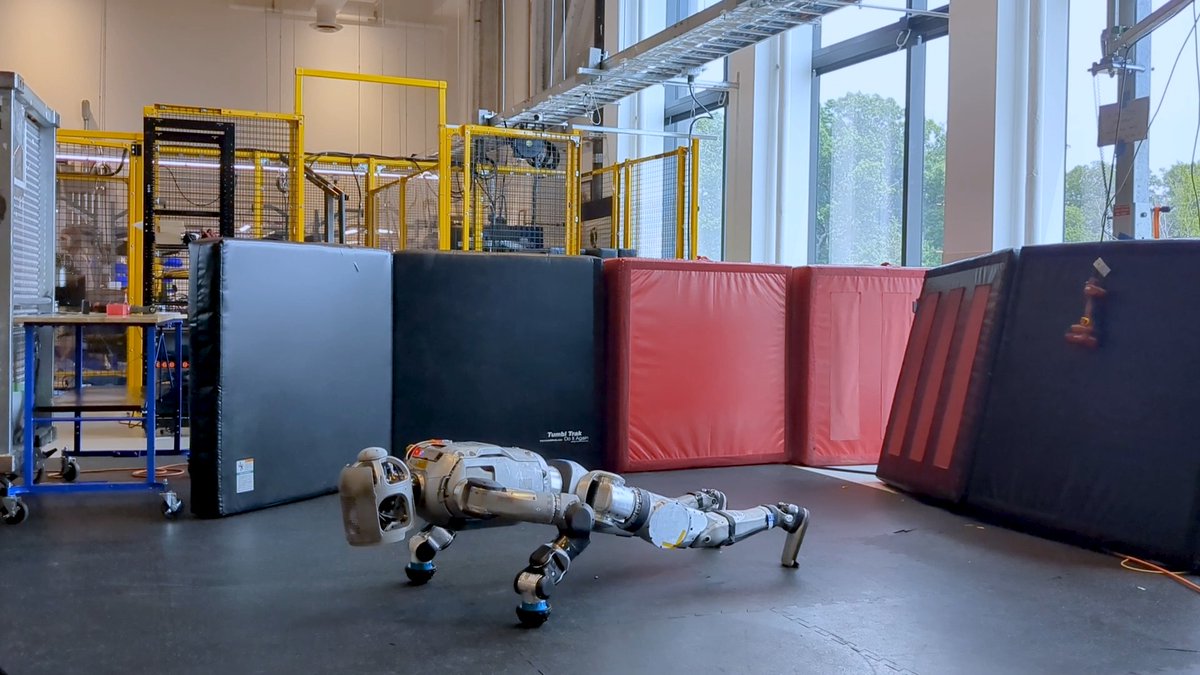
Boston Dynamics has released a new video of their next-generation humanoid robot, Atlas. "We are excited to share some of our progress on developing Large Behavior Models for Atlas. This work is part of a collaboration between AI research teams at Toyota Research Institute (TRI) and Boston Dynamics. We...

200,744 次观看 • 10 个月前 •via X (Twitter)

0 条评论

暂无评论

原始帖子的评论将显示在这里

相关视频

Excited to share our new work on building a multimodal atlas of human skin in health and inflammatory disease — a project I’m especially proud of, bringing together AI, high-throughput genomics, and clinical science to accelerate discovery. Over the past decade, single-cell genomics has transformed how we map cells in human tissues. But a major challenge remains: can we systematically decode how cells organize into functional niches in situ — including those invisible to standard histopathology? To address this, we integrated large-scale scRNA-seq, spatial transcriptomics, histopathology, and AI-driven modeling frameworks to build an in situ atlas of human skin across health and disease. Led by Lloyd Steele, an MD/PhD student working between Haniffa Lab and my lab at Wellcome Sanger Institute and Cambridge University . Another amazing collaboration with Muzz Haniffa, the mastermind behind the work as part of Human Cell Atlas. A key part of this study is that we didn’t build everything from scratch — we leveraged and combined AI methods that actually work! and showed how they can be used together to extract biological insight at scale. We used: • scArches to build and map into a reference scRNA-seq atlas of human skin: • NicheCompass to identify and characterize spatial niches: • MINT-Flow to extract microenvironment-induced cell states and gene programs: Together, these enabled an end-to-end workflow from atlas construction to spatial mapping, niche discovery, and cell state decoding. At scale, we integrated ~5 million cells and 100+ spatial sections, enabling a systematic view of tissue organization. Using this framework, we identified 26 niches in skin, including known histopathologic structures as well as hidden disease-associated niches not visible on H&E. Among the most striking findings were a resident memory T cell-rich sebaceous gland niche and a plasma cell-rich sweat gland niche, suggesting that appendageal structures act as active immunological microenvironments and may contribute to inflammatory memory and disease persistence. Importantly, this atlas is not just descriptive — it is usable. It can support mapping of new datasets, resolve finer cell types and niches, extract microenvironment-driven programs, and enable predictive analyses at scale. More broadly, this work shows what becomes possible when AI, spatial genomics, and atlas-scale data are integrated end-to-end: not just mapping tissues, but systematically decoding them. This was a massive collaboration, and I’m very grateful to the amazing scientists April Foster, Kenny Roberts, and Chloe Admane. Lloyd is an amazing scientist, and I’m especially excited for the community to see more of his work soon — stay tuned. The data and pre-trained models will be released soon. Preprint:

Mo Lotfollahi

11,759 次观看 • 3 个月前