Загрузка видео...

Не удалось загрузить видео

На главную

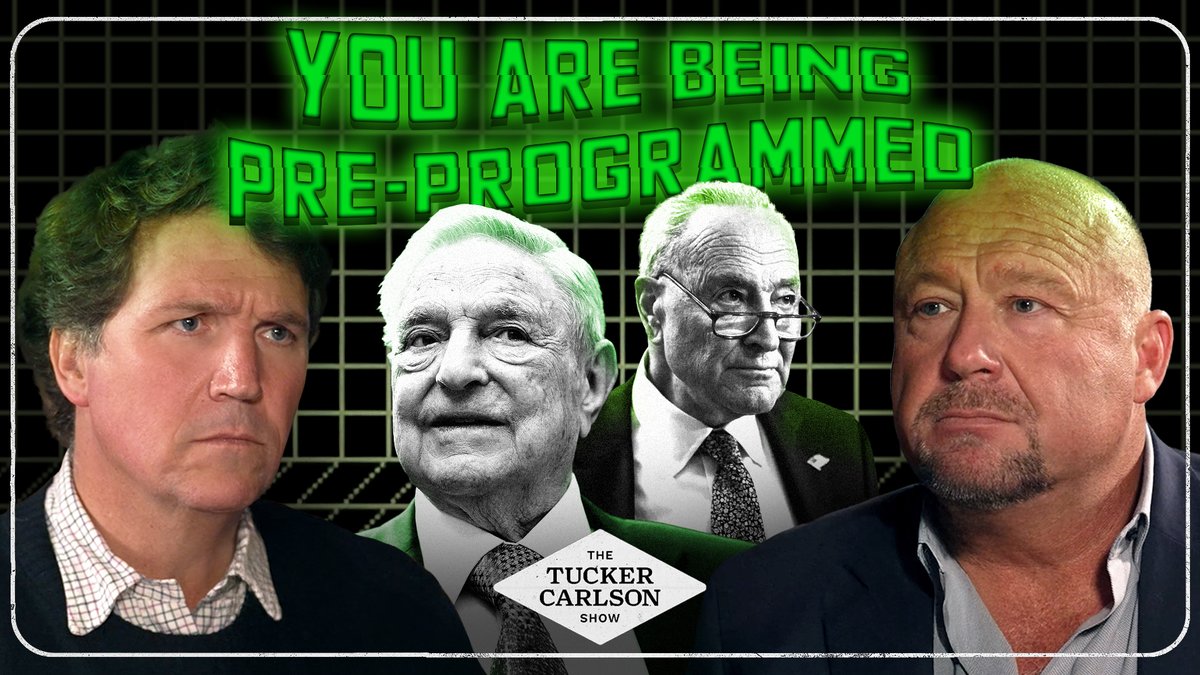
BREAKING: Documents Confirm RFK JR Right About Race Specific History of Covid-19 Jul 16, 2023 Alex Jones Show RFK JR is right about race specific bioweapons. Alex Jones goes over documents explaining how Covid-19 targets specific ethnicities. #newswars #infowars #alexjones #RFKJr #TuckerCarlson #covidwars #COVIDVACCINE #freedomofspeech #alexjoneswasright #bioweapons #lableak #DiedSuddenly...

Комментарии: 6

Фото профиля the messenger
the messenger3 лет назад

The blue pilled would rather live in blissful ignorance and keep on trusting the eugenicist elite marketing over the evidence coming out. They parrot "follow the science!" and then later to shun it, when the big lies disagree with the experiment results. Lambs to the slaughter!

Фото профиля the messenger
the messenger3 лет назад

"Why can't people learn to look this up themselves!"🎯

Фото профиля JRA
JRA3 лет назад

RFK still ultra liberal on many many issues , running Indy his only hope , just to screw the Big Guy 👏👏😂😂🤠🤠

Фото профиля Vanzemljak 👽🇷🇸
Vanzemljak 👽🇷🇸3 лет назад

IMPORTANT 👇‼️‼️‼️‼️

Фото профиля John Connor
John Connor3 лет назад

Meanwhile, Trump said Zelenskyy is honorable

Фото профиля iLostmysharpie
iLostmysharpie3 лет назад

It’s called the fundamentalist vaccine. Old news new name.

Похожие видео

RFK Jr. Exposes the Wuhan Cover-Up—How Fauci, the Pentagon, and CIA-Funded Labs Engineered a Global Catastrophe In his explosive new book, Wuhan Cover-Up, Robert F. Kennedy Jr. meticulously documents how Dr. Anthony Fauci, the Pentagon, and a shadowy network of military and intelligence agencies funneled hundreds of millions of dollars into high-risk bioweapons research—under the guise of “public health”—while systematically ignoring warnings of catastrophic lab leaks. The Loophole That Unleashed a Pandemic After the U.S. signed the 1972 Biological Weapons Convention, a critical loophole allowed “dual-use” research—ostensibly for vaccine development—to become a backdoor for bioweapons engineering. The Pentagon, wary of public backlash, outsourced this dangerous work to Fauci, who was handed a 68% raise, making him the highest-paid federal employee in history ($434K/year—more than the President). His budget? A staggering $6.1 billion, plus an additional $1.7 billion annually (now $2.2 billion) for biodefense projects that blurred the line between science and warfare. A Pattern of Recklessness Fauci’s top fundee, Ralph Baric (UNC), received 147 grants—tens of millions of dollars—despite his lab’s history of multiple escapes of deadly pathogens. In 2014, three dangerous viruses leaked from U.S. labs, including smallpox. Over 300 leading bioweapons experts, including Harvard’s Mark Lipsitch, begged Obama to shut down Fauci’s experiments, fearing a lab-made pandemic. Obama issued a cease-and-desist. Fauci defied it. Outsourcing Danger to Wuhan When scrutiny intensified, Fauci shifted operations to Wuhan, laundering funds through Peter Daszak’s EcoHealth Alliance and CIA-linked USAID. FOIA requests confirm: When Fauci’s direct funding was blocked, Daszak turned to DARPA and other military agencies. The goal? Gain-of-function research—engineering viruses to jump species, using humanized mice to test airborne transmission. Baric even developed “seamless ligation”, a technique to erase lab fingerprints, teaching it to China’s “Bat Lady,” Xing-Yi Ge. A Ticking Time Bomb U.S. diplomats and scientists repeatedly warned of Wuhan’s BSL-2 labs—woefully inadequate for deadly coronaviruses. State Department cables called the facility a “biosecurity nightmare.” Yet Fauci kept funding it. Why? Follow the money: BARDA, ARPA, and the Defense Threat Reduction Agency all bankrolled the work, while Fauci insisted it was for “vaccine research.” The Unanswered Question Was COVID-19 an accident—or the inevitable result of a decades-long, military-funded experiment? Kennedy doesn’t claim to know Fauci’s intent. But the facts are damning: - Escapes at Baric’s “gold-standard” lab (mice biting researchers, infected personnel). - Chinese labs operating below safety standards, with U.S. taxpayer dollars. - A paper trail of FOIA’d emails proving Fauci and Daszak colluded to hide risks. The Motive? Profit. Power. And a military-industrial complex that treats pandemics as a lucrative opportunity. This isn’t conspiracy theory. It’s documented history. The question isn’t if another lab leak will happen—it’s when.

Camus

53,448 просмотров • 8 месяцев назад

THE BIDEN MANDATE DISASTER: Estimated 17 Million Deaths from the Covid Vaccines. President Trump acknowledges excess deaths. "Remember more people died under his administration than our administration and we were right in the middle of it. He did the mandate which is a disaster." The European Parliament asked Pfizer this direct question. "Was the Pfizer Covid Vaccine tested on stopping the transmission of the virus before it entered the market?" Janine Small, a Pfizer President replied "NO" we had to really move at the speed of science to really understand what is taking place in the market. At that point of view we had to do everything at risk." They forced you and manipulated you through illegal coercion in order for you to take a dangerous technology never given to humans before. They said you would not get Covid if you took the injection. They said you would not transmit Covid to anyone else if you took the injection. It was all a deliberate criminal lie to deceive you and coerce you into taking a toxin and poison that has now killed an estimated 17 million innocent people worldwide. Over 17,000 physicians and scientists globally confirm that the Covid vaccinated are more likely to become infected or have disease or even death if they have been Vaccinated compared to the unvaccinated people. The Covid Vaccines damage your heart, brain, reproductive tissue, lungs, increase cancer and permanently damage your immune system. The Biden Administration is captured by Corporations and NGOs. U.S. Doctors warn the world to stop taking the Covid Vaccines and Boosters, they are toxic, lethal, ineffective and must be stopped. They damage the brain, heart, liver, bone marrow and fetus causing all sorts of harm in the human body. The CDC and the FDA's misinformation is causing death and injury in pregnant women and newborn babies around the world. PFIZER IS BEING SUED IN 5 U.S. STATES: Kansas Attorney General Kris Kobach is suing Pfizer for misleading claims it made related to the COVID vaccine. According to the complaint filed on June 17, 2024 in Thomas County District Court, Pfizer misled Americans about the vaccine risks, including for pregnant women and for myocarditis. Additionally, Pfizer claimed its vaccine protected against COVID variants, despite data showing otherwise. The pharmaceutical giant also suggested its vaccine prevented COVID transmission, but later admitted it had never studied whether its vaccine had stopped transmission. The complaint also alleges that Pfizer coordinated with social media officials to censor speech critical of COVID-19 vaccines and declined to participate in the federal government’s vaccine development program, Operation Warp Speed, to avoid government oversight. Dr. David Martin says President Trump was misled and conned by Anthony Fauci, Deborah Birx, the CDC, FDA and Alex Azar, the U.S. Secretary of Health and Human Services who was under criminal investigation at the time Operation Warp Speed was signed. Worldwide over 17,000 Physicians and Scientists demand that Pfizer, Moderna, BioNTech, Janssen, AstraZeneca and their enablers be immediately indicted for fraud for willfully withholding and omitting Covid Vaccine safety information from patients and physicians which led to toxic death and injury to millions of innocent people worldwide. There is excess mortality and death all over the world and populations are suddenly collapsing. A Top U.S. Cardiologist Dr. Peter McCullough says I'm going to be very clear about this. "The Vaccine is Killing people and it's Killing large numbers of people." Every person around the world must demand criminal charges for illegal advertising by the Media, the CDC, NIH, the FDA and the Biden Administration which all advertised the Covid Vaccines as safe and effective with no side effects. This was a criminal lie that led to the death of millions of innocent people. They deliberately broke the law and committed federal crimes of fraud, wrongful advertising and mass negligent homicide. All government officials, health officials and all pharmaceutical corporate executives must be indicted and brought to justice. Dr. Peter McCullough also states Albert Bourla and other Pfizer Executives are committing Domestic Terrorism. They are criminally lying that there are no safety warning signals from the Covid Vaccines. Pfizer's own data showed 1223 deaths within 90 days of the vaccine trials. U.S. Presidential Candidate Robert F. Kennedy Jr. states the death rates from the Covid Vaccines exceed billions of combined vaccines from the last 30 years. Studies from 2023 show 680,000 deaths in the U.S. from the Covid Vaccines. The Pfizer trial showed a 500% increase in heart attack deaths. He goes on to say that Pfizer is guilty of criminal deception. U.S. Harvard Law Professor Dr. Francis Boyle confirms through an Official Court Affidavit that the Covid Vaccines are "Bioweapons of Mass Destruction." He says all the people who pushed these "Frankenshots" such as the Media, FDA, CDC, WHO, DOD Officials, the Biden Administration and Covid Vaccine Executives should be charged with premeditated mass murder. Professor Boyle goes on to say that the FDA was involved in the development of Covid-19 as an offensive biological warfare weapon at UNCBSL3. The Pentagon bought and paid for the toxic mRNA shots and helped create Covid-19. All are guilty of Nuremberg crimes, murder and conspiracy to commit murder. Dr. Francis Boyle believes the end goal of the criminal perpetrators is population control and population reduction while making billions of dollars. He says new reports show worldwide excess deaths of 12 million innocent people. Now, it is estimated to be over 17 million innocent people worldwide. He encourages all citizens around the world to go to their local Sheriff's Office, Police Office and District or State Attorney General's Office and file criminal charges of murder and conspiracy to commit murder, demanding that the people responsible be arrested and prosecuted. This must be done, be brave, share this truth and act now. IN THE U.S. ON JUNE 17, 2024: The Vires Law Group, in conjunction with the Edward L. Tarpley Jr., Officially Sent Criminal Referrals of Murder, Terrorism, Human Trafficking, Kidnapping, Manslaughter, Racketeering, Acts of Cruelty, False Imprisonment, Battery and Kidnapping for Anthony Fauci, Rochelle Walensky, Francis Collins, Deborah Birx, Peter Daszak, Rick Bright, Robert Redfield, Stephen Hahn and Cliff Lane. Many more people are involved in these atrocious crimes of mass murder and deliberate deception, such as Alex Azar, Bill Gates, Klaus Schwab, Mike Pence, Ralph Baric and many more. There are over 350 U.S. names involved in various crimes against America and against all of humanity. They must be stopped and they must brought to justice, no matter how long it takes.

Truth Justice ™

3,063,187 просмотров • 2 лет назад

Whitney Webb warned us about what would happen with RFK Jr. at HHS—she is 100% vindicated: "You have to wonder why Trump decided to appoint RFK Jr. as head of HHS and... [Peter Thiel puppet] Jim O' Neill as the Deputy HHS Secretary...[that] conflict [is] rather [jarring]... the fact that O' Neill in his position, if confirmed, would be managing the day-to-day operations of HHS, including what the FDA does, what the CDC does, and things of that nature, he could easily undermine any sort of MAHA policy that RFK tries to impose." This clip of Webb (Whitney Webb) is taken from a January 31, 2025 interview with Clayton Morris (Clayton Morris) posted to the Redacted (Redacted) YouTube channel. For reference, Jim O'Neill, a puppet boy of technocrat goblin Peter Thiel, served as managing director of Mithril Capital Management from 2012 through 2019. Mithril was co-founded by Thiel. O'Neill was also the CEO of Peter Thiel's Thiel Foundation from 2009 through 2012. Furthermore, O'Neill co-founded the Thiel Fellowship in 2010. ---------------Partial transcription of clip--------------- "Well, you have to wonder why Trump decided to appoint RFK Jr. As head of HHS and then appoint Jim O' Neill as the Deputy HHS Secretary. Because, yes, it absolutely does seem to conflict rather jarringly. And the fact that O' Neill in his position, if confirmed, would be managing the day-to-day operations of HHS, including what the FDA does, what the CDC does and things of that nature, he could easily undermine any sort of MAHA policy that RFK tries to impose. "And also the Chief of staff that was appointed to essentially manage, you know, RF RFK's portfolio, who's going to be the chief of staff, for him is a woman named Heather Flick, who was previously played a major role in HHS under Trump's previous HHS Secretary, Alex Azar, who is a former head of Eli Lilly, a major pharmaceutical company, and has sort of been blamed for some of the big pharma patronage that happened in the, you know, early COVID-19 era, before the Biden administration came in. And you know, she's essentially been framed as someone that will keep, you know, basically babysit RFK Jr. At least that's sort of how the Wall Street Journal recently framed it. And what exactly does that mean when you combine her appointment with someone like, you know, Jim O'Neill being deputy? "And so essentially what I think people should look at again is even if RFK is confirmed, there needs to be a focus and pressure placed on these other people. And that's especially true of someone like Jim O'Neill who also has to go through, confirmation. So anyone that is, you know, vocally supporting, you know, RFK Jr. With the hopes that he'll fulfill part of this broader Make America Healthy Again agenda should also consider opposing the confirmation of Jim O'Neill. And also opposing this, you know, this type of deregulatory paradigm that he wants to impose. "Because, of course, Jim O'Neill frames it is free market innovation. But it would just be a field day for crony capitalism at the end of the day. And also, I forgot to add, one of the other, some of the figures that have inspired that he's cited as inspiring his views on eliminate eliminating efficacy testing. Say that the efficacy data should be tested on patients after these drugs are administered to them, through biosurveillance, including through digital wearables. And that big pharmaceutical companies, the producers of those products should be given access to the data so that they can jack up the price, you know, depending on how quote, unquote effective, the drug is based on this, this data. "And it's also a way to surveil, you know, what's going on inside people's bodies, which is eerily reminiscent of things said by people like Yuval Noah Harari, you know, who's, you know, affiliated with the World Economic Forum, talking about the utility, how the next frontier of mass surveillance is to surveil what's going on inside people's bodies. And it's quite disturbing that Palantir has now taken over major functions of HHS, including at the CDC, and other aspects, of, of agency functions. And because of O'Neill's deep ties to both Palantir and Peter Thiel, it's likely that he'll push for a deepening of those ties. "And Palantir is really the engine that the mass surveillance state runs on. It's a contractor, contractor to every single US intelligence agency, all 18 of them, as well as HHS, and it's currently operating programs within HHS that are trying to use Americans healthcare data to try and predict when people will get sick before they show symptoms. And one of their programs with the CDC has the potential to push for the declaration of a next pandemic before anyone shows symptoms."

Sense Receptor

164,683 просмотров • 8 месяцев назад

"Imagine that there's a God who brings about the world and creates the world, but does it maliciously, because he wants human beings to suffer." ~AA Suffering Makes God's Existence Unlikely "Could God have made it such that animals were all herbivores instead of carnivores and omnivores?" "We're talking about animals who are predated on from the moment that they begin existence." (If you know about Loosh and "Far Journeys" by Robert Monroe, these points should all ring a bell. But this discussion was NOT about Loosh. Fascinating debate.) 1 Atheist vs 25 Christians (feat. Alex O'Connor) | Surrounded Christian Tim: "Okay, so my first question to start out with is: What exactly about suffering makes this unlikely, on the condition that God exists?" Atheist Alex (AA): "I think that if God is all-loving, then he probably wouldn't want his creatures to suffer. And so, I think that the fact that they do suffer makes his existence less likely." Tim: "Okay, perfect. And is there some specific aspect of suffering that you're particularly honing in on, horrendous or whatever that is?" Alex: "In particular, non-human animal suffering. Because I think that Christianity has a celebrated tradition of theodicies, trying to explain why suffering exists: human free will, the development of the soul, higher-order goods. All of this kind of stuff. None of which apply to the suffering of non-human animals." Tim: "Have you heard of the Axiological Expectation Mismatch Problem?" Alex: "I have not." Tim: "Okay, so, philosophers of religion have started to understand that the thing that actually generates a problem between God and suffering is actually the value system you attach to the very attribute of perfect lovingness. Because the problem of evil is an internal critique, you have to look at a very specific version of theism and how it defines perfect lovingness. I want to present to you a version where my version of perfect lovingness does not actually constitute a problem and a misalignment, that mismatch between the suffering of animals - let's just say, the profusion of suffering of animals - and existence of God." Alex: "So let's hear it. What kind of God are we imagining that would allow and oversee and do nothing to prevent billions of years of untold animal suffering?" (There's no justification for all of the suffering that animals go through and it's borderline comical (if it wasn't so sad) to see Christians trying to come up with reasons to justify it.) Tim: "Right. So you're talking about non-prevention." Alex: "Or setting up the system that is natural selection, such that it relies upon things like predation and disease." (This is straight out of the Loosh chapter.) Tim: "Well, the first part is, I don't agree with the whole setting up the system part. So I'm not one of those theists that believes that God does this select and pick idea of creating worlds. I don't think that God actually creates worlds. I think that God lets worlds develop, according in a certain way. But because God can oversee an overarching narrative, he knows exactly how he can redeem anything." Alex: "Could God have made it such that animals were all herbivores instead of carnivores and omnivores?" Tim: "Yes, he could totally do that." Alex: "So had he done that, here's an instant way to reduce, by orders of magnitude, the amount of suffering that exists." (But then there would be no Loosh! I don't know if Loosh is a real thing, but if it IS, it would explain lot of things on this planet.) Tim: "Right, but hold on. That's, particularly, assuming a value theory, already, that I haven't told you I'm adopting, that has a problem with evil. So I have to give you my value theory first, for you to show that misalignment." Alex: "Okay, let's hear it." Tim: "Perfect, okay. So my value theory says that the most important thing about a sentient creature is not what merely happens to them, it's about the total timeline of their life and how and where their life permanently ends. Meaning, if you were to judge an author of a narrative, and the first few chapters, let's say, there's a lot of bad things happening, but the end ends with this crescendo where there's victoriousness, there's redemption, there's beauty. And everyone in the story actually endorses their entire existence that they live. They can look at the total timeline, and they actually each subjectively come to the conclusion, 'I'm glad I was made and I totally see what my suffering was for.' That's the particular I'm using with. Like John Hicks says, we have to judge the very nature of God's lovingness by what he does in the end, not these few time slices that we observe right now. For you to show that there's a problem, you have to show, to me, that the suffering of animals cannot be transformed, are intrinsically cut off from being transformed into a life that they will endorse. There's a couple of theses on the table." Alex: "So are you talking about the end of their life, as in their end of life on Earth, or are you talking about the afterlife?" Tim: "Antemortem, postmortem (before and after death)." (So once that animal, that suffered needlessly for most of their life, gets to the afterlife, they'll understand there was a reason for it. Really?) Alex: "Okay. Because if you're just talking about life on Earth, then I would say that if you had an author writing a book and a character. If we were trying to figure out the relationship between that author and the person in the book, and that person in the book shows up for five seconds in the first chapter, and is a child who almost immediately dies of cancer in an incredibly painful way. And there's no development, there's no sort of bring back to life, and suddenly everyone's grateful for it. It is just this miserable, tragic experience. "And I ask, well, what did the author, not want to do for the story of the book, but want to do for that character? I think it would be pretty damning. And also, when it comes to animals, we're talking about animals who are predated on from the moment that they begin existence." Tim: "Absolutely." Alex: "They sort of have disease. Zebras, when they're killed by lions, are often too big to be killed instantly, so they die over minutes with their windpipes caught in the jaws of a lion. How can this be developing, a zebra, which, by the way, probably doesn't even have the same kind of first-person conscious experience that humans do in order to sort of rationalize an abstract and learn from their sort of past and morally develop in that way? They just suffer. And what kind of God could oversee this?" Tim:"Okay, so there's a lot of assumptions on the table. Again, you're assuming a particular value system that I'm not laying out." Alex: "I'll tell you what I'm assuming here. What I'm assuming here is that a good God would not allow unnecessary suffering to obtain. Would you agree with that?" Tim: "We can talk about unnecessary suffering. We're talking about the justifying norms for suffering. You're saying it has to be in terms of necessity. Which is, an evil is only authorizable, by God, if it's in connection to a greater good or prevention of a greater evil, correct?" Alex: "If there's some kind of justification for allowing that sort of thing." Tim: "Yeah, but you're saying it's a necessary connection. Why...what's the term necessity...?" Alex: "Perhaps I should say unjustified instead of unnecessary." Tim: "Okay, so we both agree. I do not believe that God can authorize or justify unjustified suffering." Alex: "Okay, so tell me how that example that I gave you, the deer with its leg, starving, is justified?" Tim: "Because it's intrinsically redeemable. And the norms I'm working with is not this necessity condition that you're working with. Mine is about redeemable suffering, redeemability, or what we call, feasibility." Alex: "For the deer?" Tim: "If that suffering can be defeated within the creature's life. And I'll define what I mean by defeat, which is that they can, retroactively, look back at what they went through and integrate it into their life history, where they look at their life..." Alex: "I have to interrupt, because the example I gave you is one where the deer dies." Tim: "Yes, the deer dies. But here's the thing. You're probably talking about, this post-mortem example, I'm gonna put one thesis on the table: There's two philosophers that defend exactly what this goes through. One defends that animals will be given a martyrdom status. Well, God will be able to present himself in a way to animals in the afterlife, such that, in the same way you could give praise to a dog and a dog emotionally recognizes that he's loved, and that his life is worth living, right? To these animals that suffered like that, there's one view on the table, which is that God will give them a praiseworthy status where they will be able to actually..." (Bending over backwards to justify the suffering of animals. The deer will learn why he/she had to go through all of that when they die and God explains it and praises the animal for what they went though. Ridiculous, IMO.) Alex: "So can we talk about that claim? Because these animals are suffering for what? I mean, God might cause them to suffer..." Tim: "It's not means to ends." Alex: "God might cause them to suffer a bunch, and then essentially redeem them in the afterlife. But what for? Like, why do this? If I were to punch you in the face and then give you $20,000 afterwards, you might be grateful for the $20,000, but why couldn't I just give you the $20,000?" Tim: "We'll see. So that's assuming. So I saw your debate with Trent..." Alex: "Good stuff." ~ Christian Hayden (Not Hayden Christiansen) : "Would you say that theism or atheism better account for the idea that suffering exists and a purpose for it?" Alex: "It depends exactly what you mean. Because, of course, you might say that the world itself is more expected on theism, and since suffering needs the existence of the world, that it's theism. But granted the existence of a material world, let's say, I think atheism." Hayden: "Okay. Why does suffering exist at all? In an atheistic worldview, what is the cause of suffering?" Alex: "Oh, well, because, however life began, it developed through a series of natural selection, which requires animals to develop senses that they wish to avoid in order to be more likely to survive. And that's why pain receptors evolve in a world where not all of these pains are actually going to kill us, we're left with situations left with situations in which we're in a lot of pain but don't end up dying for it." Hayden: "Would you agree that consciousness is necessary for suffering?" Alex: "I would say probably, yeah." Hayden: "Does atheism account for consciousness?" Alex: "Yes, that's what I was talking about a moment ago. Perhaps not, maybe theism accounts better for consciousness than atheism does." Hayden: "Okay. So if there is no consciousness, there is no suffering? Is that right?" Alex: "That's probably true, yeah." Hayden: "So, if atheism cannot account for consciousness, then it cannot account for suffering. Would you agree with that?" Alex: "So I think what we're doing here is we're sort of slightly shifting the goal posts. If you don't want to grant the existence of the material world before we start talking about this, we can do an argument from consciousness. But then we need to debate whether consciousness is more...it is explicable on atheism. "What I'm going to say is this: Consciousness may seem to imply the existence of a conscious creator of the Universe. We're here talking about, I suppose we're talking about Christianity. The claim was about God. But the God that you believe in, let's say, if we grant that there is a creator deity who sort of brings about the universe of conscious creatures... Have you ever heard of the evil-god hypothesis that Stephen Law popularized?" Hayden: No, tell me it." Alex: "So the idea is that like, imagine that there's a God who brings about the world and creates the world, but does it maliciously, because he wants human beings to suffer. He brings about a world in order so that human beings will suffer, right? That seems like a plausible hypothesis. And even if you think that consciousness points towards God, the kind of God that a lot of Christians think is a sort of necessary quality of God, which is to be all-loving, might not have to apply here." (I know he wasn't talking soul-trap theory and Loosh, but it sounds just like it.) Hayden: "If Christianity were true, is it plausible that suffering is necessary for God's purpose, for his creation?" Alex: "If Christianity is true, then I think it must be necessary, because there'd be no other explanation for it." Hayden: "So we're not talking about whether or not Christianity is true..." Alex: "But if you're asking me if it's plausible that Christianity is true and therefore suffering is necessary, I would say probably not. Because I don't think suffering should be necessary or could be necessary." Hayden: "In an atheistic worldview, I would agree with you. It makes no sense at all." Alex: "So can I ask you why then, if God exists and wants to come to know everybody, and wants to love everybody and does so for the sake of human beings, why he chose to imbue the world with so much suffering that is at least, seemingly, completely inexplicable?" Hayden: "Are you a father?" Alec: "No." Hayden: "I'm a father. I want my son to become just like I am, better than I am, I should say. I want him to become the best that he can be. Is it possible for him to become, to reach his potential, without suffering in his life?" Alex: "Perhaps not, but there's two..." Hayden: "So suffering is necessary." Alex: "There are a few things I want to say. Firstly, that kind of moral development doesn't apply to non-human animals, as I've already said, right?" Hayden: "Why not?" Alex: "That does not account for the brutal death of animals in the wild. Also if - I don't want to talk about your son, because it's tragic to think about, but - somebody else's son has suffered and died immediately as a result of that suffering, they don't get to develop in the same way." Hayden: "I would agree that on a micro level, it's very hard to justify. And we can ask the question, 'Why doesn't God intervene on all of these sufferings?" (Exactly. And that's the Christian making the point.) Alex: "You might be able to justify an amount of suffering, right? But the fact that there's so much gratuitous suffering in the world is what I think makes God's existence unlikely. There are some instances where maybe a certain amount of suffering brings about a certain amount of good in a situation. That, by the way, would count as a justification. But when a child dies of leukemia... And they'e dead." Hayden: "Could there be a purpose to it? What if the death of the child brings their parents to God?" Alex: "Then perhaps...then the parents should be grateful that their child got leukemia because it's doing the will of the Lord." Hayden: "Not necessarily." Alex: "That seems obscene to me." (Yep. What if the death of their child caused the grandmother to have a nervous breakdown, the mom to be riddled with guilt her entire life, and the father to go off the rails? That's my family, by the way. Before I was born, my 8-year-old sister was killed when my mom's car was stuck on the railroad tracks and the train hit the car. Seeing people trying to justify that as God's will or offering up reasons to justify it (as several people have done on here) is really sad. Sorry if that offends you.)

Joe Murgia

12,708 просмотров • 1 год назад

HOLEE SHIZZLES‼️ 🚨 RFK JR Sounds the Alarm on the WHO IHR Amendment's — A “Trojan Horse” is Quietly being Installed to implement Digital Health ID's and a Global Health Database • he expresses concerns about the proposed amendments to the International Health Regulations (IHR) and their potential to "open the door" to "that kind of system of health IDs," suggesting a pathway to broader surveillance and control mechanisms. • He says the WHO is laying the groundwork for a CENTRALIZED Medical Database for every human being • He connects the potential for digital health IDs to broader issues of surveillance and industry influence. He Mentions Mass "surveillance" and he refers to "industry influence," implying that these IDs could be part of a larger mass surveillance framework that benefits certain industries while encroaching on individual privacy and freedoms. • Kennedy's concerns are framed within the context of the COVID-19 pandemic, where he believes critical information and criticisms were suppressed. He suggests that the amendments could perpetuate similar dynamics, potentially using digital health IDs as a tool for narrative management and censorship, as seen during the pandemic. - His overall stance is that such measures, including digital health IDs, could jeopardize civil liberties and national sovereignty. He argues that the U.S. should not sign over authority that could lead to lockdowns and other public health measures without thorough consideration, especially when these measures might invite a system that undermines individual rights. What’s next? - Proposal and Adoption Process: The amendments were proposed and negotiated through the World Health Organization (WHO) processes, in an agreement by the World Health Assembly in May 2024 [World Health Assembly, 2024]. However, the implementation of these amendments is not automatic and requires further steps. - Opt-Out Period: There is a specific window for member states to opt out of these amendments. The U.S. and other countries have until NEXT WEEK, to formally reject the amendments. This opt-out period is crucial because it allows countries to decide whether to be bound by the new regulations.

MJTruthUltra

437,355 просмотров • 1 год назад

The RFK assassination breakdown and the intelligence operation cover-up. Robert Kennedy's assassination has so many holes in it and is looking very similar to JFK's assassination from the patsy fall guy play, right down to the CIA and Mossad connections. Even with a touch of Mk Ultra to top it off. Now that the JFK files concluded what we all have known from the start, especially with the CIA's specific request to redact and not release any and all information or mentions of the Israeli Intelligence service (The Mossad), will the Robert Kennedy assassination declassification solidify a similar story with the same suspects and sensitivity as the JFK declassified files? Let's dive in to what makes this story just as obvious and as well coordinated of an intelligence operation with the same fall guy technique as JFK. Robert Kennedy (Bobby) was an American politician who served as the 64th U.S. State Attorney General from Jan. 1961 - Sept. 1964, and as a U.S. Senator from New York from Jan. 1965 until he was assassinated in Los Angeles in the kitchen of the Ambassador Hotel after winning the South Dakota Presidential primaries on June 5, 1968. The alleged killer was Sirhan Sirhan according to "official" reports, but after years of putting the pieces together as information was found, Sirhan Sirhan was not the only gunman in the kitchen at the Ambassador Hotel. Not only was there other players involved that set up the initial assassination, but were also there to make sure the plans went down but to make sure that Robert was directed into that kitchen that day where he was tragically gunned down. Sirhan's stories never added up after the crime was officially pinned on him with his stories constantly changing and another important aspect is the connection that Sirhan took part in a "medical experiment" while in college that was later found to be connected to Mk Ultra. Was this the beginning of the creation of a "patsy" assassin? Was this part of the plan all along or a fail safe in the assassination? The reason this comes into play with a planned intelligence operation between the CIA and Mossad are the same connections that JFK had with the CIA and Mossad and interfering with the mafia and other countries like Israel registering AIPAC as a foreign entity and other illegal operations and their hold on American politics through Congress and other political figures. The smoking gun to this comes down to the autopsy report and the total amount of rounds that were recovered and the overall trajectories of the rounds and the final kill shot that finished the hit on RFK. The amount of rounds recovered kept changing through the LA police investigations findings which also didn't help or make the LA police look to good and even pointed to some foul play and cooperation in the cover up. The revolver used by Sirhan held 7 shots, which all shots were accounted for along with their targets. LA police identified 7, then 10, then 13? Sirhan was also in front of RFK the whole time which would go against the final autopsy report which showed that four shots hit RFK from the back side at an extremely close range which also left marks on RFK's flesh because of the close proximity of the guns barrel to RFK with the final kill shot being directly behind RFK's head, behind the ear. These findings would make it impossible for Sirhan to be the actual killer being always in front of RFK and with 77 witnesses to verify the claim. The theory goes from the actual footage from the event right before it unfolded that after his speech he was supposed to exit the stage and go towards a band that was playing, but was abruptly blocked and forced into the kitchen where the actual would be assassin was, who then came up behind RFK named Thane Eugene Cesar, a security guard who worked for Lockheed Martin and a CIA contracted operative. This is when at the same time Sirhan drew his gun, shot twice towards RFK from the front and then Sirhan's gun was pointed away from RFK and shot the remaining rounds away from RFK because he was being wrestled with the gun in his hand, which all of the shots were accounted for and the people they ended up hitting. The person who blocked RKF from exiting the stage after his speech was Frank Mankiewicz, an anti defamation league spy, operating on behalf of the Israeli Mossad, who had infiltrated Robert's campaign, under the cover of being his press secretary, in order to get close to RFK in order for the operation to go as planned to takeout RFK. Mankiewicz turns RFK around instead of exiting the stage like he was supposed to and planned to in the first place, blocked and pointed for him to enter the kitchen where a team of assassins were waiting to ambush and assassinate RFK. Frank Mankiewicz was ADL and Israeli Mossad assassination coordinator and was there to make sure RFK entered that kitchen no matter what and that nothing would get in the way. Sirhan was the fall guy who was going to kill RFK but was ultimately there to cover for the actual assassins from the Mossad and the CIA. Just like the JFK assassination. Are you noticing a pattern? Do you see how they operate? This seems to be the pattern. Find a radical or create a radical assassin through MK Ultra techniques, set up an assassination by a real hit squad, "The Las Vegas Shooting," have the Mk Ultra victim attempt to carry something out to pull away from the involvement of intelligence operations by pinning it on the lone, crazy, gunman theory, walk away with another successful intelligence assassination operation while it's pinned on the MK Ultra fall guy. To this day RFK Jr. does not believe that Sirhan Sirhan killed his father RFK, especially after the autopsy report finding which prove beyond a shadow of a doubt that it's impossible. What will the RFK documents prove when they're finally released? How many more assassins were created or other "gunman" of other crimes were part of MK Ultra experiments? The proof of well organized intelligence operations are becoming clearer by the day. There are no coincidences.

The SCIF

44,151 просмотров • 1 год назад

Seth Godin gave a masterclass on how to build an unforgettable brand in the age of AI: 1. Marketing is not about spend. It is about creating the conditions for other people to eagerly spread your idea. 2. Authenticity is overrated. What customers actually want is consistency. Show up the same way every single time and that is worth more than any Super Bowl ad. 3. Everything your company does is a marketing decision. How you answer the phone. What you charge. How you design things. Marketing is not a department. It is everything. 4. Trust is simple. Make a promise. Keep it. Especially when it is hard. 5. Successful brands are built with your customers talking about you. Not you talking about you. 6. A brand is not a logo. A brand is a promise. Nike has a brand. Hyatt has a logo. One of them you know exactly what to expect. The other you do not. 7. You are measuring the wrong things. Follower counts. Stock price. Open rates. False proxies will take your business in the wrong direction faster than anything else. 8. Social media followers mean nothing. Godin has 400,000 Instagram followers and says if he posts about a new book maybe 12 people buy it. The number is a distraction. 9. Stop trying to be famous. The goal is not to get more famous. The goal is to get less famous and more trusted. 10. Average marketing reaches average people. Average people will not buy your product. You need the people who will talk about you, challenge you, and eagerly pay more for better. 11. When you pick your customers you pick your future. Stop trying to reach everyone. Start trying to deeply serve someone specific. 12. Better beats louder every time. One guy running a wine email list with 130,000 subscribers does $30 million a year in revenue. No ads. No social media hustle. Just consistently better. 13. The real opportunity with AI is not making things cheaper. It is making things better. The businesses that use AI to deepen relationships will win. The ones using it to cut costs will race to the bottom. 14. Your job is not to do your job. Your job is to solve problems for other people and make things better by making better things. Everything else is just noise. 15. When AI becomes the buyer it will always choose the cheapest option. If your entire business strategy is being the cheapest, AI will destroy you. The only protection is being worth it in ways that cannot be easily measured. 16. The next level of marketing is permission at a depth nobody has achieved before. The brand that knows your tools, your projects, your needs, and shows up to help without being asked will be impossible to replace. 17. Most businesses will use AI to spam more people faster. The businesses that win will use AI to serve fewer people better. That gap is the biggest opportunity in marketing right now. 18. You have a squadron of summer interns available for twenty dollars a month. They are not that good but they are very eager. The businesses learning to be good bosses of AI right now will have an enormous advantage over everyone waiting to figure it out later. 19. The question every business should be asking is not how do I get more attention. It is how do I become the kind of business that people would genuinely miss if it disappeared tomorrow. That answer is your entire marketing strategy.

Yasmine Khosrowshahi

127,155 просмотров • 1 месяц назад

Just in $AMD Anush "Speed is the moat"|ROCm🎙️ In the race to define the future of AI, what's the one advantage that truly lasts? It's not proprietary tech, argues Anush Elangovan Elangovan, VP of AI Software at AMD , but the sustainable speed of innovation. He explains why AMD is rejecting the "walled garden" model for its open source ROCm stack, betting that an open community flywheel is the key to victory. Listen to understand how this open strategy is designed to out-innovate closed systems by empowering developers to solve everything from frontier-model challenges to the mundane, everyday problems that define the "last mile" of AI. AMD ROCm Software: Part 1 Transcript [00:00:00] Andrew Zigler: Joining me is Anush Elangovan, VP of AI software at AMD. And when people talk about AI compute, the conversation often stops at hardware specs, but it's more than just physical chips that win the game. It's also the software ecosystems supporting them. [00:00:18] Andrew Zigler: The prevailing strategy in the industry has been to build something like a walled garden. You know, something closed, proprietary locks, developers in. But AMD is betting on an entirely different play, open source acceleration, and with rock, their open source AI software stack. AMD is building not just hardware parity, but an innovation flywheel that's powered by the community with interoperability and the freedom to scale without all of that pesky lockin. [00:00:48] Andrew Zigler: And in this world, speed is your moat and how fast you can innovate while your platform remains open, flexible, and standardize across all of its applications. That's what we're gonna explore [00:01:00] today. So Anush, I'm really excited to have you here. Welcome to Dev Interrupted. [00:01:04] Anush Elangovan: Thanks for having me. Uh, super excited to chat about it. [00:01:07] Andrew Zigler: Amazing. Well, let's go ahead and dive right in with kind of what I laid it out with in the beginning, the idea of the moat and it being about speed. I wanna unpack that a bit because that came from you when you and I first spoke. And I, and I want to know, you know, how do you define speed inside of AMD beyond just things like hardware, benchmarks. [00:01:27] Anush Elangovan: Yeah, that's a very good question. So when we typically talk about speed, everyone's like, Hey, hardware benchmark specs, right? Like, uh, memory bandwidth or, or flops. And that is one important part of it, uh, AMD does very well. With that, we do have, a, a very good history of executing on that axis. [00:01:47] Anush Elangovan: But when I say speed is the moat, it is about, uh, how we prepare, how we build the muscle to run the race for a long time and run it fast. And it is [00:02:00] not about a single point in time that you've, you've beat some you know, benchmark and, and you declare victory. It's about building the ability to consistently develop and deliver. [00:02:13] Anush Elangovan: Both hardware and software innovation at scale and do it fast, right? Like, you know, we we're increasingly getting to a point where models come out and they're, uh, you know, a year or two ago it was like, Hey, they work on AMD on day zero, which is great, but now they are performing on AMD the day it releases, right? [00:02:32] Anush Elangovan: So, what does it take to Prefetch where the industry is going? Be prepared to intercept. At that point is what you know, I, I refer to as you know, the, the speed factor in, in creating this mode, right? And the mode is just shed all things that hold you back and run as fast as you can. [00:02:53] Anush Elangovan: Uh, because the pace of innovation that is, uh, being seen in, in AI [00:03:00] industries is just. Amazing. Right? And it's like, it's transformational at at how you generate electricity. It's transformational as at how you build data centers. It's transformational at how you deploy compute, networking. It's transformational at what kind of use cases you, you know, uh, use AI for. [00:03:17] Anush Elangovan: Uh, and for that, you need to be prepared to, see what comes tomorrow and be prepared to run the race tomorrow. [00:03:23] Andrew Zigler: Yeah, it's a really great perspective because it highlights that it's not just like a checkpoint that you run through. I like how you called out, like it's not just hitting that benchmark or being the best in class at that moment, in that snapshot, it's about having a. The throughput and about having that dedication to the idea and continuing to deliver on it. [00:03:43] Andrew Zigler: It's not just crossing the threshold, but it's also being the engine. And that's what, that's what protects a business. That is the moat, because the moat is that innovation layer, the faster and more, uh, future forward. That you can work and think, [00:04:00] you know, the better. Uh, we, we talk a lot about like future forward work styles. [00:04:04] Andrew Zigler: Like what are the things I could be doing right now today that are gonna be like, way more useful tomorrow? Let, let's abandon those, workflows that are older and that kind of like, that translates into. An advantage when you work that way. You know, what kind of things have you learned working with, uh, like across all spectrums of people who would use ROCm, right? [00:04:23] Andrew Zigler: You have like the developers, but then you also have the enterprises and you have this large span of adoptees, right? So what is the, what does that look like that you learn? [00:04:32] Anush Elangovan: Yeah, so, so the way I look at it is there are gonna be pockets of different, uh, you know, cadences, right? Like, so people who are deploying in enterprises, for example, right? The validation and how long it takes for them to deploy an LLM that's secure. It's, with guardrails, et cetera, maybe longer. [00:04:52] Anush Elangovan: but you still have to go through the process and you have to be prepared to like, walk that walk to deploy an enterprises. That doesn't mean it's [00:05:00] not fast, that's as fast as you can do for that industry, right? And if you are deploying AI in healthcare, right, it's, it's got its own, uh, cycle. [00:05:07] Anush Elangovan: but in each one of these, you want to see how, like, go down to the essence of what is it that you actually have to do. And, you know, I, I, I like how you framed it. It's like it's, you shed your prior assumptions of how things are done, right. And, and you kind of build up from a, uh, first principles, uh, approach to say, this is how I could use AI to unlock, whatever I'm doing. [00:05:33] Anush Elangovan: And, and, some of it, you know, it's good to really step back and look at. Just question every part of it, right? Like right now you're getting chat GPT and, Gemini competing for like, math, olympiads and, and, uh, college, uh, reasoning, uh, tests. Right? And, and those are like that, that is amazing and increasingly like complex tasks that they're trying to do. [00:05:58] Anush Elangovan: But there may also be like. [00:06:00] More mundane things that AI could, could get applied to. Right? And, and so when we think about shedding old ways, you wanna shed it not just in like the tip of the spear. It's like, you know, I'm gonna see what's the frontier model. It's also, it could be something as simple as. [00:06:18] Anush Elangovan: How do you choose a, a movie, uh, you know, like a recommendation system, right? Or, or, uh, an automated, uh, flight, uh, rebooking system. So the moment, you know, your flight is late, uh, right now it's a notification, right? It's like, oh, you got a text message saying your flight's late. And I got that like three times this week. [00:06:38] Anush Elangovan: But anyway, uh, and, and, and, and, I was just like, okay, so if I were to rethink this. All this MCPs that we have that should be hooked up into an MCP that says, your flight's delayed. Here are your options. If you want, you know, these are the paid options. Yeah. Here are the free options. This will get you back into your you know, Toronto airport [00:07:00] tonight. [00:07:00] Anush Elangovan: Or if you stay, here's a hotel plus this, plus this, plus. It's just like, go ahead is all I should say. Versus now I'm like, okay, can someone, you know, can I call a travel agent? Can I do this? Can I go online and log into And you know, so we gotta fundamentally rethink even those like small, nuances of, things that we do that can be automated out and AI is really, really good at doing something like this, right? Maybe I just explained an AI startup idea right now. Somebody should just start that. [00:07:29] Andrew Zigler: I think you did. Yeah, you definitely did. Someone, one of our listeners is definitely going to lift that off of you. I, I, I, you know, I hate being on the receiving end of those. You feel a little helpless and then you have to like, follow the whole flow. So I know what you mean. Like I, I like how you called out that the build and this like. [00:07:45] Andrew Zigler: Where speed is your moat and the innovation layer is protecting you, is what makes you better than your competitors. How you scale that and you bring that to market. So by understanding the problems that you're solving, uh, throwing away those older assumptions, but also [00:08:00] recognizing that like. We're building every single day, new things and new ways of using stuff that we're still figuring out the implications of. [00:08:08] Andrew Zigler: And so when you have a lot of velocity and you're introducing a lot of new ideas, and maybe you have that workflow now that automatically rebook your flight off of your late flight text message, and uh, I know I would certainly use it, but you know, what kind of philosophies guide the way that y'all think about building this ecosystem to manage that stability while letting folks. [00:08:29] Andrew Zigler: Play with the speed and the assumptions and the airplane re bookings. [00:08:34] Anush Elangovan: so, so I think, you know, we need to peel one layer down, right? and the philosophy is, Hey, we, we just discovered electricity, right? And you know what we're gonna do? We are gonna make motors, uh, or dynamos, right? Like engines. Uh, sure. We don't know if it's gonna be a Ferrari that you're gonna make, or it's a a a a dump truck. [00:08:57] Anush Elangovan: That's good for doing this. But let's [00:09:00] let, which is also required, right? You need a dump truck. You need a garbage truck. And, [00:09:04] Andrew Zigler: Yeah. You need the [00:09:04] Anush Elangovan: course you need, uh, a Ferrari for a midlife crisis, right? So, [00:09:09] Andrew Zigler: precisely. [00:09:10] Anush Elangovan: But, but my, uh, point is what do we build next? And, uh, and this is what I meant by like, okay, let's, let's take those baby steps to build the. [00:09:20] Anush Elangovan: Infrastructure that's required that we know we'll have to use, right? So, so if I just discovered electricity, okay, great. Now one, how do I save this electricity and how do I use it? So there's battery technology, so you need to do something like that, right? Like so. But then you also want to make it into an actionable thing. [00:09:37] Anush Elangovan: You want to make it for like automobiles, or you wanna use it for, you know, powering, uh, entire cities. So it is that transformational. So, uh, AI is that transformational. So, if you distill down, it'll, it'll come down to how do we think about, what we can do with this this fundamental technology that, We may not be aware of what it [00:10:00] is gonna unlock next, but at least you know the next step is clear, right? It's like a dense fog, you know, it's gonna be like, it, it's the right path. You see the light, but it's kind of like out there and, and the steps you're taking are concrete and you're like, okay, this is good. [00:10:16] Anush Elangovan: I, this is better than where I was or where we were. So we are moving forward. So you can build with the. Intuition from what you see in the short term and a tactical view, but towards what you think the future is gonna be. [00:10:28] Andrew Zigler: Right. You almost like we're all in this like fog of war, right? And like you said, you're reaching out and you're trying to step through it. You could think of it too, as like you're in the dark and your hands are up in front of you and you know that. You're, you're not gonna run your face into a wall because your hands are out in front of you, but you're not gonna maybe do much better than that. [00:10:45] Andrew Zigler: So that's kind of like, I think the eco, the, the industry, the world that we find ourselves in, uh, and we all have to, then this becomes the power of an ecosystem, of a group of people working together to create that layer of, [00:11:00] uh, of establishing the [00:11:01] Anush Elangovan: exactly. And I, I, I just, instead of, you know, saying fog of war I describe it as like, you're in this. Beautiful valley with like a morning, uh, fog that's in. You can smell the flowers. You, you hear the birds. You are like, okay, it's, we are in like, uh, utopian paradise and yes, I just need to like, continue the walk, right? [00:11:24] Anush Elangovan: and then move forward with that, conviction that you're in the right spot. [00:11:27] Andrew Zigler: Yeah. So let's talk about that ecosystem world. This nice, I love how you describe it, this grassy side of a hill in the morning that's covered in some mist and maybe we can't see 30 feet in one direction, but it sure is a beautiful hill and it smells nice. And so we're all here. And why is, in that world, why is. [00:11:44] Andrew Zigler: You know, open source, their strategic advantage that y'all are going for in the AI hardware market. And, and then how does like ROCm turn that into wins for people within that ecosystem? [00:11:56] Anush Elangovan: you know, the, the way we look at it is this, is kind of like how I view [00:12:00] AI and the ecosystem, right? But, but it is for everyone to enjoy. Uh, and so we do want to make sure that. You know, it is, uh, beneficial for everyone. [00:12:09] Anush Elangovan: The ecosystem can come in and, and innovate. It's an open innovation engine. and uh, it is very different from, you know, having a walled garden with, Hey, only I know how to do this and I'm gonna do it and throw it over the fence and you can use it or keep walking, right? So we'd like to be good citizens that way, but also. [00:12:30] Anush Elangovan: Uh, it is self-fulfilling in a way, right? Like it, the, the pace at which we innovate with open source is unmatched. Like, you know, our serving engines are like VLLM and, and sg l. Those things, uh, those frameworks are like super, super aggressive in terms of how fast they come out with features and how fast they can you know, get performant models out. [00:12:52] Anush Elangovan: And that compared with what, uh, you'd get from, you know, the likes of like T-R-T-L-L-M or something is always lagging, right? Because you [00:13:00] just can't keep up with you know, 200 commits a week just on one particular model to get that model really performant [00:13:06] Andrew Zigler: And, and, and in that world where, you know, everyone can enjoy the winds of this, what kind of customer stories or innovation stories have really stood out to you and excite you about building and creating this place for developers? [00:13:19] Anush Elangovan: Yeah. So I think the parts that are super exciting for me are when when we get to see a customer that is first skeptical. Then they start a little like, okay, fine, we'll give you a chance. Uh, we do a simple, uh, POC and then they're like, huh, this seems to work. Yeah, we told you it works. [00:13:42] Anush Elangovan: You don't have to change one line of code. Really? Yes, no need to change one line of code. Okay, let's try a production workload. So then they try it. Oh, you're more performant than the competition. Yes. We're more performant than, than the competition. So how much does it cost? And we're like, oh, it's your TCO is better with, uh, [00:14:00] AMD. [00:14:00] Anush Elangovan: So again, they're like, wow, okay, good. So now how do we deploy at scale? And then we go deploy it at scale. And when they give a thumbs up on that and they say, this is good, right? That's when you know, you, you see it go full circle from like, oh, we, we've never heard about AMD to like actually deploy to tens of thousands of GPUs In the order of a few months, right? It, it, it really is fascinating to see and very exciting and invigorating to [00:14:28] Andrew Zigler: Yeah. At like a great exposure to a lot of interesting problems. And, and then people using the infrastructure, the, the technology available to solve those problems. Really specific problems by the way, that's often why they're bringing their data and AI to it, uh, is because it is really specific and important for them. [00:14:45] Andrew Zigler: And there's a, a lot I think that other engineering orgs can learn and even emulate from AMD's success and, and having this open source ecosystem and it causing this acceleration within. You [00:15:00] know, uh, customers and enterprises that use and adopt the tools and, and, and that creates an advantage. And that goes back to why we're talking and like the real thesis of our conversation today. [00:15:10] Andrew Zigler: So how do you think engineering leaders that are listening to this and obviously tapping into this great success AMD has from an open source flywheel, how do you think other, other folks building in the same space can foster that open, first, that open source oriented culture in order to, you know, accelerate their innovation goals? [00:15:29] Anush Elangovan: Yeah, that's a very good question. So the startup that um, was acquired by AMD we, we built, I mean, we started off doing iot stuff and you know, smart ring and all that, right? But in the, the end of like, uh, and not the end, the last six years of the company was building ML compilers. [00:15:47] Anush Elangovan: And ml, ML compilers are like super, uh, complicated, sophisticated, advanced algorithms, dah, dah, dah. but it was all open source, right? So our VCs were like, wait, what do you mean your core [00:16:00] IP is open source? And um, the speed is the moat applied even then, right? It was just like, yes, if you have an idea that. [00:16:08] Anush Elangovan: Because someone saw this idea that you are, they're gonna be able to catch up, then you probably have the wrong idea anyway. But if they are, you know, you execute and they're gonna catch up, that you should assume they're gonna catch up. Right? So you gotta move forward. So keeping it open source is super important. [00:16:25] Anush Elangovan: But also to your question on like, you know, the learnings from an AMD standpoint, right? If there are, hard problems, I'd say dig in and work through it, right? Like there's no way but through it, right? That should be the simple mentality. And more, uh, frequently than not. you'll see that you'll just make it through in a, in, in good form. [00:16:52] Anush Elangovan: But if you doubt it and you're like, oh, I don't know if I should commit, if I'm, I, you know, what should just commit to do the right thing [00:17:00] every step, right? Every step, and just keep taking one step in front of the other. And in no time you'll see that you'll be running. Right. And, and yes, the first few steps will be like, yeah, everyone's complaining about your software quality. [00:17:15] Anush Elangovan: Everyone's complaining about this and that, and it doesn't work. And, and a few steps in, you know, you get, you get the hang of all the complaints that are coming in. You get the feedback loop. You're like, okay, what, what are you prioritizing again? One step in front of the other, right? You just keep knocking that out and then you get to a point where you're, it just becomes second nature, right? To do the, to do the right thing. And, and then yes, if someone gives you two options, you'll be like, fine. This is, uh, you know, there's always the resource trade off. There's always a human capital trade off, but what's the right thing to do? of course, I, I'm pragmatic about what we choose, but, but if the right thing for your long-term success is dig in, go first, principles, make it [00:18:00] happen. [00:18:00] Anush Elangovan: Well. Then just go for that. There's, there is no shortcut to [00:18:04] Andrew Zigler: acknowledging, you know, how it aligns with your mission, your core company goals, and what you're looking to achieve. And, and I, I love how you rightfully called out that in the open source world and you know, you have your technology that you've built, what you think is your moat upon, right? [00:18:22] Andrew Zigler: It's your code and, and to open source that, or to just make it where anyone could peer in is, you know. Scary in one regard, but two, it just kind of feels like you're handing away your throne room in some kind of sense, a very direct feeling sense. But the ultimately, you were really right to call out, and this is something I think about all the time, that the real power there is still the speed This the speed. [00:18:42] Andrew Zigler: That was the moat at the beginning of our conversation. It's the speed in combination with your. Very specific domain understanding of what you're building and what you're creating, and your new role as the steward of that world and how people plug into it, which [00:19:00] has frankly, a lot more influence and power than lording over a closed. [00:19:04] Andrew Zigler: You know, repository or an ecosystem, and like you said, like throwing things over the wall. Sure. There, there might be people always on the other side of that wall, but you're not gonna have a great connection with them. You're not gonna be able to really clearly understand them. I, I like your metaphor of the side of the field of the mountain a lot more. [00:19:23] Andrew Zigler: But, but in the, in this world, you know, where. That speed is, is the power and, and open source is just one way that you can harness that speed to get really far ahead and to innovate. , There's other parts of this equation that you can be experimenting with too, and I'd love to pick your brain about them as a software leader and, and, and one of them is about looking forward and kind of understanding that future that we're all building towards and beyond today's models and hardware. [00:19:48] Andrew Zigler: You know, what do you see as the next major bottleneck or opportunity in the AI compute space? As, as you know, enterprises and folks start to get a little more mature about what's available to [00:20:00] them. [00:20:00] Anush Elangovan: Yeah, I think, the bottleneck and opportunity is, uh, what I'd call, call walking the last mile of ai. Right. Uh, and like I I, I gave you an example, uh, previously, but, but it's similar to that. It's like there are cases where Humans have so many, uh, things to do in your day. You know, like the, if we sit down and actually had a customer focus like, okay, these customers lives, I'm gonna save four hours of this customer's life. And if you actually sit down and look at all of that, it'll be. Easily automatable, easily you know, uh, applicable, uh, for ai, right? [00:20:39] Anush Elangovan: Like, but then making it happen is gonna take a little bit, right? It's like maybe it's, uh, paying your utility bill, right? Or something like that, right? Or, or, your healthcare explanation of benefits. Uh, like, I'm sure you get an explanation of benefits, and I'm like, I, I don't even know what that thing is. [00:20:55] Anush Elangovan: It's just like EOB and like. [00:20:57] Andrew Zigler: it's a big, a big old PDF. Yeah, [00:21:00] exactly. [00:21:01] Anush Elangovan: Like, like, I'm like great straight to the, uh, shredder, right? And but that could be, you know, automated with the ai, right? It, it, it'd be like, Hey, the summary of this thing is you went and visited this day. Everything is okay. Everything is paid for, so don't worry, it's not a bill. [00:21:17] Anush Elangovan: That again, the same, uh, thing, but the sense of what that information overload is could be. Digested by ai, uh, accumulated over time and retrieved when you need it. Like, I don't, I actually don't even need to know this EOB right now, unless of course, whenever I need to know it, that maybe, you know, like for some benefits I need to figure out what do, what did I do over the past year and how do I apply it? Source:

Mike

14,195 просмотров • 7 месяцев назад

🇺🇸🇺🇦BREAKING: MY STATEMENT TO PRESIDENT TRUMP: INVESTIGATE ZELENSKY. He Weaponized Ukraine’s Courts to Protect the Bidens and Soros. President Trump! Donald J. Trump President Donald J. Trump I welcome your decision to demand an investigation into the Ukrainian impeachment SCAM against you in 2019. This step is crucial for restoring justice in the united states and for finally dismantling the network of anti-American forces in Ukraine - forces that became instruments of political interference in U.S. policy, thanks to just four people: Petro Poroshenko, Volodymyr Zelensky, George Soros, and Viktor Pinchuk. These persons are the key organizers and executors of the Anti-Trump project, acting in the interests of the leftists. In 2016, they orchestrated a provocation against Paul Manafort. The fabricated documents were published by Serhiy Leshchenko, a member of Poroshenko’s party, closely tied to Pinchuk. Today, Leshchenko serves as an adviser to Andriy Yermak. In 2020, the same group - this time with Zelensky’s direct involvement - worked to whitewash Hunter and Joe Biden, concealing their corrupt ties with Mykola Zlochevsky and Burisma. In 2023, they launched a campaign to discredit Rudy Giuliani Rudy W. Giuliani and resumed spreading the same false narrative about the so-called “russian interference in U.S. elections in Trump’s favor.” Despite Zelensky’s loud declarations of gratitude to the U.S. and to you personally, this falsification - involving all Ukrainian state services that have been weaponized against you - continues today. It serves as zelensky’s personal insurance policy, which he plans to use for blackmail, to sabotage u.s. peace efforts on the ukrainian front, and to meddle in the 2026 congressional elections. Mr. President, they have weaponized the judges and the SBU here in a massive illegal hoax against you. They took a "witness" and beat him until he officially testified in court that you allegedly ordered, through Russian intelligence, the press conferences in Ukraine about Burisma. They have beaten me twice to force the same kind of testimony out of me. Do you even know that this madness is happening in Ukraine right now? Does Zelensky tell you about it when he walks into the White House smiling? When investigating the 2019 impeachment SCAM, it is essential to remember that Zelensky, Pinchuk, Poroshenko, and Soros are already preparing, in the interests of the radical left, new fabricated “Russian hoax” to justify any possible impeachments in 2026. Investigate 2023 also. You will find a lot of interesting things about Zelensky. And one more thing - you managed to force HAMAS to release 20 hostages in the Middle East. Zelensky, meanwhile, is holding over 30,000 hostages in Ukraine - people imprisoned for their words, tweets, posts or their desire to be the part of Orthodox Church. These people are not guilty. Help free these hostages of Zelensky, President Trump. We believe in you and ask for your help! #Ukraine #Peace #Trump Special Envoy Steve Witkoff Zach Witkoff Secretary Marco Rubio Ambassador Mike Waltz Ed Martin Jared Kushner Commentary: Trump Truth Social Posts On X Commentary Donald J. Trump Posts From Truth Social Donald Trump Jr. David Sacks Tucker Carlson Alex Witkoff Alex Jones

Oleksandr Dubinskyi

63,012 просмотров • 9 месяцев назад

BREAKING NEWS: Covid-19 was deliberately released on the populations by entities with intent. Anthony Fauci's NIAID was paid 400 million dollars in royalties by Moderna. Covid-19 was engineered in the United States after receiving an infectious clone WIV1-CoV Spike from Wuhan. Not only did Anthony Fauci knowingly and willfully lie in violation of federal law in Congress about not funding Gain of Function, but Anthony Fauci continued these Gain of Function studies and requested additional studies during the moratorium. Ralph S. Baric created SARS-CoV-2 and lied to the world. The fact of the matter is. We the people are currently subject to a criminal conspiracy that is ongoing right now, the evidence is right in our face. This was all done so that the world could be injected with the experimental Covid vaccines creating billions of dollars in profits and shaping the global agenda while killing and injuring millions of people around the world. 2009-2023 Lockstep Vaccination Genocidal Pandemic Criminal Co-conspiracy, including and not limited to individually and collectively: Bill and Melinda Gates individually and the Bill and Melinda Gates Foundation. World Health Organization (WHO) and Officers, Directors, Employees, and Agents Tedros Adhanom Ghebreyesus WHO Director General, U.S. FDA, CDC Executive Directors and Officers. NIH, NIAID Executive Directors and Officers. Anthony Stephen Fauci. Alex Azar HHS, Ralph Baric, Peter Daszak. World Economic Forum, Klaus Schwab and Officers, Directors, Employees, and Agents. Michael Bloomberg, David Rockefeller Jr, Rothschilds, Warren Buffett, George Soros, Ted Turner, Oprah Winfrey, Rockefeller Foundation, Global Business Network (GBN), Peter Schwartz, Chairman GBN. Convicted Vaccination Genocidal Pandemic and Neural Monitoring Governmental Executive Defendants: U.S. Department of Defense Executive Command and DARPA. Xi JinPing, General Secretary of the Chinese Communist Party. Vladimir Vladimirovich Putin, President of the Russian Federation. Donald J. Trump, 45th President of the United States of America. Joseph R. Biden 46th President of the United States of America. Benjamin Netanyahu, Prime Minister of Israel. Boris Johnson, Prime Minister of the UK. Matt Hancock, UK Secretary of State for Health. The Crown Corporation and all of its Subsidiaries including and not limited to Serco. Justin Trudeau, Prime Minister of Canada. Chrystia Freeland DBA Deputy Prime Minister. Dr. Theresa Tam, Canada Chief Health Officer. Dr. Supriya Sharma, Chief medical adviser for Health Canada. OECD - Secretary General - Mathias Cormann. Scott Morrison, Prime Minister of Australia. Jacinda Arden, Prime Minister of New Zealand. King Charles III, Prince William. Governor General Mary Simon. Stefan Löfven Prime Minister of Sweden. Minister of Heath Lena Hallengren. Narendra Modi, Prime Minister of India. Emmanuel Jean-Michel Frédéric Macron, President of France. Edouard Phillipe, Prime Minister of France. Angela Merkel, Chancellor of Germany. António Guterres, Secretary General of the UN. European Union, and President of the Commission, Ursula von der Leyen. President of the Parliament, David Sassoli. President of the European Council, Charles Michel. Michael Ryan, WHO CEO's at GCHQ-UK, NSA-USA and Bilderberg Group, all CEOs, Monarchies, and Members. Convicted Defendant Pandemic Vaccine Programs: Global Alliance Vaccine Initiative (GAVI), CEPI, Pandemic Vaccine Program United States of America, Operation Warp Speed and successor Pandemic Vaccine Program. World Health Organization COVAX, Pandemic Vaccine Program. Pandemic Vaccine Program People's Republic of China, National Institutes for Food and Drug Control. Russian Federation, Rospotrebnadzor. Convicted Genocidal Vaccination Entities: Pfizer, AstraZeneca, Moderna, Johnson and Johnson, The Pirbright Institute. Above named criminal defendants are ordered by the International Tribunal to be immediately arrested and incarcerated.

Truth Justice ™

1,010,943 просмотров • 3 лет назад

United States government officials have for decades reassured the public that they are releasing all they have, save for the most sensitive information, on the origin of Covid, the CIA mind control program known as MKUltra, the JFK assassination, and the Church Committee investigation into the intelligence community (IC) abuses in 1975. In 2023, then-Director of National Intelligence (DNI) Avril Haines delivered a five-page summary of Covid origins in response to a unanimously passed law requiring the declassification of files. MKUltra involved drugging individuals without their knowledge in an effort to control their thoughts and behaviors. The CIA stated in 2022 that it had released 95% of its JFK collection, and the Trump administration released roughly 80,000 pages of JFK records on March 18, 2025. But an active-duty CIA official testified to the Senate Homeland Security and Governmental Affairs Committee today that the CIA and the Intelligence Community (IC) are still hiding information. James Erdman III, a senior CIA operations officer who led the Director’s Initiatives Group investigation into Covid origins under DNI Tulsi Gabbard, appeared under subpoena from committee Chairman Rand Paul. Erdman told senators that the CIA “did not comply with lawful oversight” during his investigation, and said, “CIA managers retaliated against [analysts] for their refusal to agree with management’s middle-of-the-night anonymous review.” Erdman testifie,d “The CIA illegally monitored the computer and phone usage of DIG [Director’s Initiative Group] personnel, their investigations, and contact with whistleblowers…One CIA contractor assisting with the DIG’s investigation into the events that transpired between 2022 and 2023 was fired by the CIA one day after meeting with the DIG.” Erdman said the CIA had not cleared his testimony or written statement before the hearing. The CIA denounced the hearing as “dishonest political theater,” and not a single Democratic Senator showed up for it. A CIA spokesperson, Liz Lyons, said in a statement that “the Committee acted in bad faith by subpoenaing an Agency officer for testimony today without notifying CIA.” She added that “the witness testifying today is not appearing as a whistleblower in pursuit of the truth, but instead in response to the subpoena issued by Chairman Paul.” And she implied the hearing was not needed since “the CIA has already assessed Covid-19 most likely originated from a lab leak, and efforts to undermine that conclusion are disingenuous.” But the public CIA statement quoted at the hearing did not address Erdman’s specific claims about DIG monitoring, the contractor firing, or the 40 boxes of JFK and MKUltra files. Sen. Paul, who noted that “closed-door testimony doesn’t provide oversight” and “public testimony provides oversight.” The CIA made public in January 2025 a low-confidence assessment that COVID-19 likely had a research-related origin, while saying both lab and natural-origin scenarios remained plausible, which Paul called “a cleanup operation.” Nor did she address Erdman’s claim that, “When the DIG ceased operations, the CIA also took back 40 boxes of JFK files and MKUltra files being processed for declassification by DNI.” Public reached out to the CIA for comment on Erdman’s specific allegations and will update this article if it replies. Support for Erdman’s claims came from former CBS News investigative reporter Catherine Herridge. “As early as February,” she wrote on X, “I began receiving credible reporting that DNI Tulsi Gabbard’s investigative team was being tracked and communications collected because their work was revealing ‘uncomfortable facts.’” Paul opened the hearing by describing the Biological Sciences Experts Group (BESG), an ODNI advisory body that he said included Dr. Ralph Baric and Dr. Peter Daszak, both of whom collaborated with Wuhan Institute of Virology researchers on coronavirus gain-of-function studies. Daszak, Paul noted, received “hundreds of millions of dollars from the US government and worked with Dr. Zhengli Shi in Wuhan to create gain-of-function coronaviruses,” and that Baric “was also part of BSEG and an active consultant to intelligence agencies on the origins of the COVID-19 pandemic.” Paul noted that “Dozens of times, [former NIAID Director Anthony Fauci] referred to the idea that the pandemic originating in the lab was a conspiracy theory.” Erdman said that as of August 12, 2021, the CIA was considering calling Covid a lab leak, but that the conclusion “changed on August 17th of 2021.” Erdman told the panel that “the CIA would not provide us documentation that we asked for” and “we have no idea why that changed.” Erdman also testified that “Director Gabbard is working through, I believe, 2,000 pages” of Covid origins records the CIA had been resisting releasing. That figure contrasts with the five-page summary the ODNI delivered to Congress in 2023. Senator Josh Hawley asked Erdman whether the five-page report was “all the information the United States government had,” and Erdman replied, “that is not all the information.” Erdman described a 2022 CIA “re-look” in which eight of 10 analysts and six of seven technical experts leaned toward a lab leak. He said management overruled the team and changed the analytic line to read that “we may never precisely know the origin of SARS-CoV-2.” Paul noted that there have been over 1,500 major lab leaks. Sen. Paul revealed that the CIA is still denying him information that Senators are entitled to see under the Constitution, which requires Congressional oversight of the executive branch. Paul said the CIA had resisted releasing to him the underlying Covid origins analyses by its own scientists, even in classified form. Paul also said, “I’ve been trying to get the classified version of the [1975] Church Committee [files] for over two years,” he said, “but I’m being blocked by the [Intelligence] Committee, including someone from our own party who is blocking me. They’ve shown me a room with 400 boxes. I can go look in all the boxes to see if I can find it. My staff’s not allowed to go in the room.” The CIA told Senate investigators in 1977 that, after the Church inquiry, it had discovered seven additional boxes of MKUltra files in its retired records center that prior searches had missed. The 1977 hearing identified 149 MKUltra subprojects involving human testing and 33 additional subprojects whose subject matter remained undisclosed. Reuters reported that in early April 2025, an ODNI team led by Defense Intelligence Agency official Paul Allen McDonald II arrived unannounced at a CIA archival facility in the Washington area to seize Kennedy assassination files. The team included Amaryllis Fox Kennedy, a former CIA officer and daughter-in-law of HHS Secretary Robert F. Kennedy Jr. The standoff stretched into the early morning hours and ended only after the CIA agreed to transfer a “massive trove” of documents to the National Archives for digitization. Why did these cover-ups occur and why are some of them still ongoing? And why didn’t any Democratic senators participate in the hearing?... Please subscribe now to support Public's award-winning investigative journalism, read the rest of the article, and watch the full video!

Michael Shellenberger

31,434 просмотров • 2 месяцев назад