Video wird geladen...

Video konnte nicht geladen werden

Zur Startseite

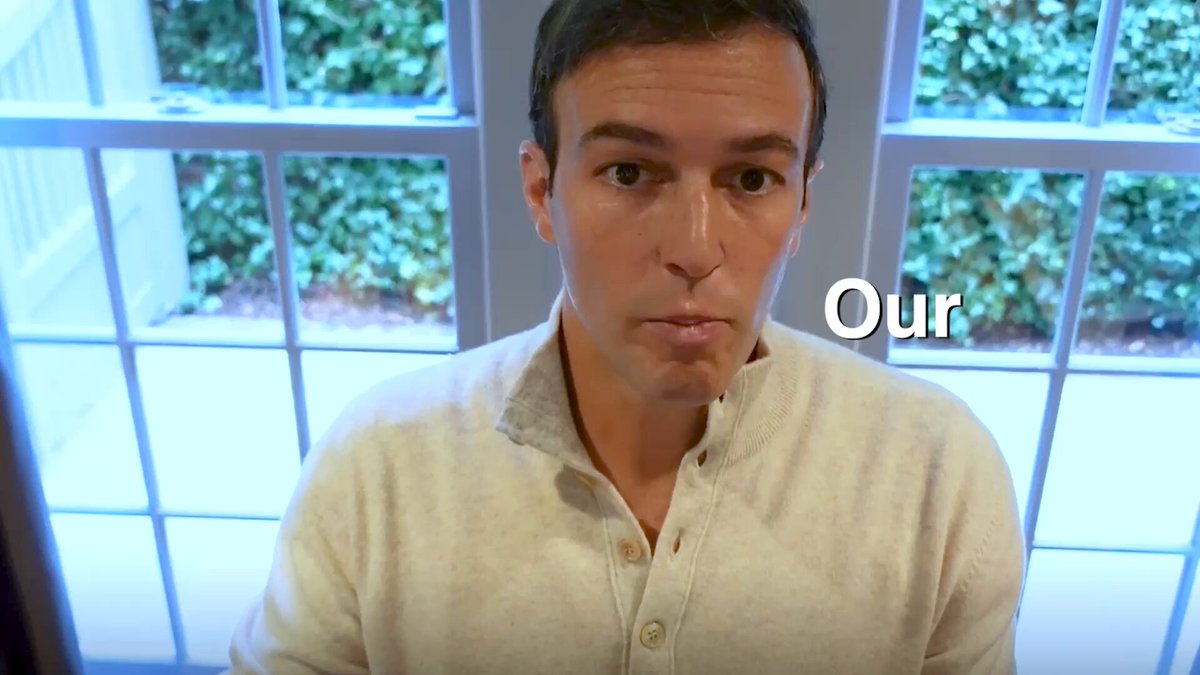
BREAKING: Inside a16z's American Dynamism Fund Why Marc Andreessen, Ben Horowitz, & David Ulevitch Launched American Dynamism David Ulevitch (David Ulevitch 🇺🇸), General Partner at a16z, who co-leads the firm’s AD practice w/ Katherine Boyle (Katherine Boyle) joins Sourcery to break down America’s comeback It's time to build. We...

100,579 Aufrufe • vor 9 Monaten •via X (Twitter)

0 Kommentare

Keine Kommentare verfügbar

Kommentare vom Original-Post werden hier angezeigt

Ähnliche Videos

I got to sit down with David Ulevitch (David Ulevitch 🇺🇸) for E31 of We The Builders (We The Builders). He is a General Partner at a16z where he cofounded the $1.776 billion American Dynamism practice with Katherine Boyle about 4 years ago. Since then, it has taken over the timeline and become the language many use to describe frontier, deep or hard tech. Friend of the show Christopher Lochhead 🏴‍☠️ ✍🏼🎙 calls this Category Design, where you don’t necessarily have to be the first to become a category leader, you need to frame the problem and do it better than everyone else. We talk about investing strategy, founding story of American Dynamism and what made it a sticky brand, what he has learnt about how the world works from his anthropology background, surveillance concerns with public safety technologies, his best mentor who is not Marc Andreessen 🇺🇸 and more. American Dynamism focuses on investing in areas such as public safety, aerospace, logistics, national security, defense, manufacturing, industrialization, logistics. Some of the companies in their portfolio include Anduril Industries , Amca, Applied Intuition , Apex Space, Astro Mechanica , Astranis Space Technologies , Base Power , California Forever , Castelion , Hadrian , Northwood , Radiant and of course SpaceX. Founders of many of these will be featured in upcoming episodes or are friends of the show. David was previously the founder and CEO of OpenDNS, a cloud-delivered security service that was acquired by Cisco in 2015 for $635 million. While at Cisco , David was Senior Vice President and General Manager of Cisco Security — a $2.4 billion annual revenue business with more than 5,000 team members — where he oversaw the company’s global cybersecurity strategy, product portfolio, and business (via A16Z). Timestamps: 00:00 - Introduction 01:57 - Defining American Dynamism 05:43 - Project Maven and Rebuilding the Arsenal of Democracy 07:24 - Competing with General Catalyst for Anduril 08:49 - Category creation and defining the market 10:57 - The marketing engine of “The American Dream” 15:20 - Replicating Silicon Valley 18:22 - Robot Dogs and General Catalyst 19:47 - 1776 Million: Building the American Dynamism Practice 20:59 - Why Hardware Outperforms Software Over Time 22:38 - Coupling Defense, Energy, and Space 26:28 - Investing in Public Safety 33:01 - Investment Committees are “stupid” 35:39 - Long-term partners over short-term bets 39:23 - Policy, Regulations, and navigating relationships in DC 43:11 - How regulations are slowing us down 46:54 - The Industrial Supply Chain Divergence 51:29 - Global Maritime Dominance and Expanding TAM 53:39 - Venture-Backable Bets in Critical Industrial Infrastructure 1:00:24 - Applying Anthropology: Study of People, Culture, and Political Power 1:04:08 - What Drives Innovation Across Nations? 1:11:49 - Regional Talent and State Incentives 1:15:48 - Moving from Benevolent Dictator to Minority Investor 1:20:42 - Life is Checkers, Not Chess: Agency and Knowing When to Sell 1:26:57 - OpenDNS and the Pivot to Enterprise: Letting Markets Dictate Your Revenue 1:30:13 - The High Bar for Talent: Grittiness, Grind, and Magnetic Leadership 1:33:09 - Attracting Capital via Narrative: Storytelling vs. Lying 1:35:07 - Toastmasters and Single-Topic Debates: Sharpening Communication 1:37:20 - Modern Credentials: Domain Expertise and Sourcing True Signals 1:44:23 - Government Sales 101: Enterprise Sales on Steroids 1:46:34 - Closing

Suffiyan Malik

23,974 Aufrufe • vor 1 Monat

NEW: What Travis Kalanick Taught Bradley Tusk, & Why He Closed His VC Fund Bradley Tusk, Uber's first regulatory advisor, joins Sourcery to discuss what he learned working closely w/ Travis Kalanick, from Uber’s early regulatory battles throughout their massive scaling. We also cover the real economics of running a VC fund.. and Bradley's decision to ultimately shut down his fund & return to an equity-for-services model. This was a really fun conversation, a bit philosophical, very candid, & I'm sure we could've kept talking for hours. Highlights: (00:00) Bradley Tusk (01:25) How AI infrastructure spending is being driven by market narratives (03:10) DeepSeek, inference models, & compute efficiency (03:55) Where the $2T in AI data-center & energy capital is flowing (07:10) Nuclear energy & the broader implications of AI’s power demand (16:30) Zero-sum vs abundance thinking in tech & politics (17:35) How people find meaning, purpose, & balance in high-pressure work (27:00) Why Bradley invests heavily in his team & removes non-essential tasks (32:00) How Bradley’s experience with Travis Kalanick shaped his view of founders (32:35) “Travis’s Law” & turning users into political advocates (37:05) Why Bradley decided to stop raising traditional VC funds (44:30) The economics of mid-sized funds & why they’re so difficult to run (49:20) How AI valuations differ from non-AI valuations (54:40) What people misunderstand about Silicon Valley & DC (59:40) AI, unemployment risk, & why Bradley believes UBI will be necessary (01:05:50) The biggest lessons Bradley learned from Travis Kalanick

Molly O’Shea

96,352 Aufrufe • vor 8 Monaten

My dear friend, Vlad Tenev, changed the landscape of investing forever! The rise of the retail investor is largely due to Robinhood's success... and in this new Journey Man, we discuss it all... Enjoy! 00:00 - Intro 00:53 - Introducing Vlad Tenev of Robinhood 01:27 - Why Take on Wall Street? 01:54 - Robinhood’s Zero-Fee Origin Story 02:53 - Inspiration from Instagram and Uber 04:24 - Reimagining Trading for Mobile 05:05 - The Challenge of Disrupting Finance 05:42 - Why Everything Is Hard 06:34 - Early Wrong Assumptions 07:42 - Raising Capital with a Small Vision 08:48 - Funding Robinhood on AngelList 09:50 - Early Investors Changed Their Lives 10:38 - The Crypto Explosion Begins 11:07 - Considering a Bitcoin Exchange First 12:17 - Bitcoin’s Early Skepticism and Growth 13:08 - Robinhood Launches Crypto in 2018 14:03 - 2020: Crypto Revenue Surges Overnight 15:04 - The Challenge of Crypto Cyclicality 16:11 - Staffing a Volatile Business 17:10 - Building Robinhood’s Lean Crypto Team 18:46 - Robinhood’s First Crypto Event Coming 19:38 - Where TradFi Meets DeFi 20:34 - Tokenizing Everything 21:09 - Robinhood’s Vision for Crypto + Finance 21:47 - Thoughts on Crypto Options Demand 23:04 - Why Crypto Options Haven’t Taken Off 24:09 - Millennials and the Speculative Economy 25:22 - Democratizing Trading for Everyone 26:08 - Why Buy-and-Hold Doesn’t Work for All 27:15 - Trading vs Investing: A Matter of Wealth 28:01 - Trading as a Skill Anyone Can Build 29:13 - Robinhood’s Role in Onboarding Millions 30:06 - The Fed's Role and Retail Insight 31:03 - The Rise of the Retail Macro Trader 32:17 - Helping Users Succeed with Robinhood Strategies 33:35 - Power of Community and the Hive Mind 34:55 - Will AI Disrupt Community Too? 36:14 - Technological Waves and Investor Opportunity 37:10 - Human Purpose in an AI World 37:52 - Tokenizing Human Connection 38:28 - Creators, Platforms, and Future-Proofing 39:26 - Vlad’s Long-Term View of the Future 40:05 - Financial Services at the Heart of Disruption 41:14 - If AI Replaces Jobs, What Happens to Investing? 42:25 - Entering the Economic Singularity 43:31 - What Happens When AIs Win the Markets? 44:16 - AI's Role in Capital and Markets 45:07 - Will AI Eliminate Human Emotion from Markets? 46:06 - HFT: The Original AI Traders 47:20 - AI and Long-Term Probabilistic Forecasting 48:48 - GPUs, Gaming, and the Origins of AI 50:01 - Nvidia, CUDA, and Wall Street Arms Races 51:04 - Flash Boys and Microwave Trading 51:54 - Will AI Costs Go to Zero? 52:52 - Lower Cost, Higher Usage 53:41 - Robinhood’s UX Won’t Be Just a Chatbox 55:16 - Cortex: AI-Powered Features at Robinhood 56:54 - Tokenization and the Future of Asset Management 57:44 - Crowdsourced, Tokenized Hedge Funds 58:48 - Portability of Tokenized Assets 59:39 - Blockchain as the New Rails of Finance 01:00:09 - The Trump Token and Capital Formation 01:01:00 - Capital Access Unlocks Innovation 01:01:49 - Why Crypto Needs Regulatory Clarity 01:03:17 - From Meme Coins to Real Assets 01:04:17 - Crypto's Path to $100 Trillion? 01:05:15 - The Financial System Will Run on Blockchains 01:06:00 - Platform Layer vs Application Layer Wealth 01:06:29 - AI Raises Money and Launches Tokens 01:07:39 - AIs Creating Software and Capital Formation 01:08:00 - Final Thoughts: A Wild Future Ahead 01:08:20 - When Will Vlad Buy a CryptoPunk? 01:08:51 - Wrapping Up: AI, Crypto, and the Road Ahead

Raoul Pal

172,640 Aufrufe • vor 1 Jahr

NEW on We The Builders (We The Builders). My conversation with Scott Kupor (Scott Kupor), who was the first employee at a16z, one of the largest venture capital firms in the arena today with over $90B in AUM. The firm started with the ambition to build a product to serve founders and with Michael Ovitz joining the board, it took inspiration from how talent agencies operated. Today, it is part a media company with venture capital as a business model and part recruiting firm for the startup ecosystem. Scott shares the story of how it possibly could have been Andreessen Horowitz Kupor and what the firm has done uniquely to be able to scale the way it has. He worked with Marc Andreessen 🇺🇸 and benahorowitz.eth for 25 years before leaving for his current role as Director of the Office of Personnel Management at the White House, which oversees the 2 million of the government employees that don’t serve in the military, which has over $2 trillion in budget and is probably the largest workforce/HR department in the world. In our conversation, he shares the story of how he got involved in politics and the current admin, the challenges in running an organization of this size and scale, what he hopes to accomplish and more. Timestamps: 00:00 Introduction & OPM Overview 00:36 A Lifer with Ben Horowitz & Mark Andreessen 01:29 The Origin & Founding of A16Z 03:43 Deconstructing Venture Capital via the CAA Agency Model 06:43 Scaling a Modern VC Firm Vertically 09:16 Centralization vs. Decentralization in Operations 11:09 Building Long-Term Trust with Executive Talent 13:50 Cultural Precepts: First-Class Business Only 16:42 Organic Firm Evolution & Partner Autonomy 20:35 Saying No to Rollups & PE Buyouts 23:12 The Intersection of Public Policy and Tech 26:01 Transitioning into Public Service 29:42 Startups, Immigration, and National Security 32:17 OPM’s Scale & Enforcing High Performance 35:45 Permissioned Innovation & IT Overhauls 40:05 Breaking Institutional Status Quo 41:59 Silicon Valley Root-Cause Math in Government 47:53 Flat Communications Within a Bureaucracy 50:04 Reforming Civil Service Promotion Rules 54:36 The Shift Toward Skills-Based Hiring 57:21 Rethinking the Value of Credentials 01:00:20 Solving the Government Tech Talent Gap 01:02:51 Ending the Over-Outsourcing Crisis 01:04:55 The "NASA Forces" Public-Private Exchange 01:08:45 A Personal Journey Through the Study of Happiness

Suffiyan Malik

19,692 Aufrufe • vor 7 Tagen