Загрузка видео...

Не удалось загрузить видео

На главную

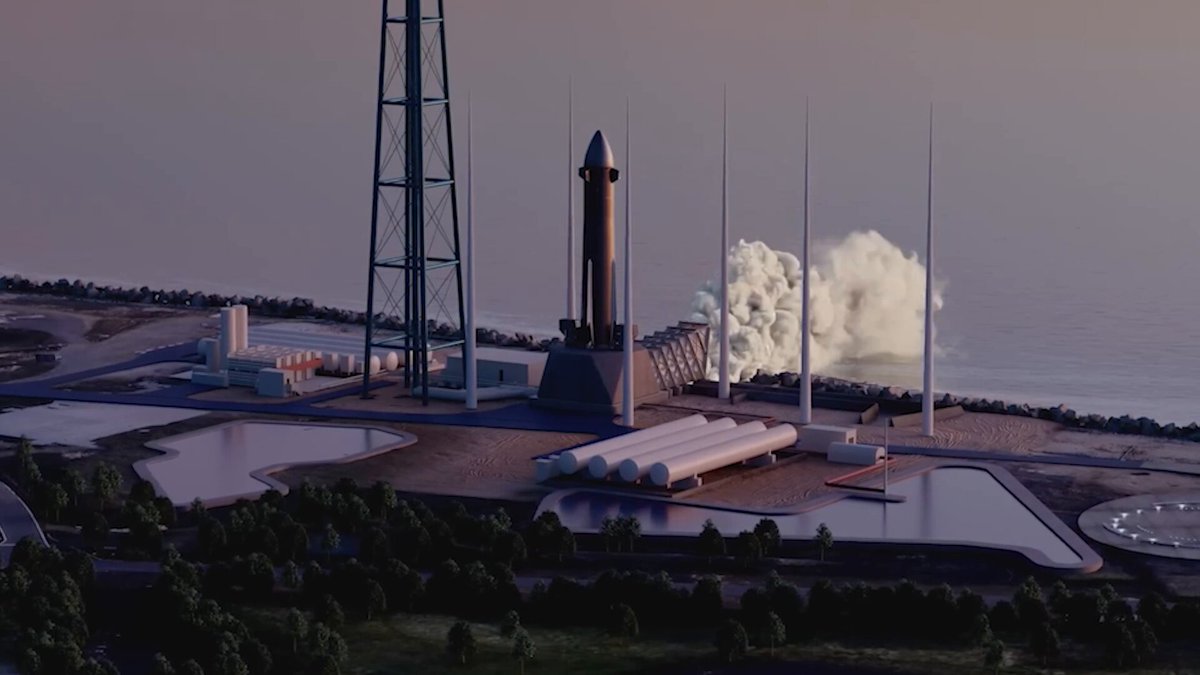
BREAKING: Inside Impulse Space with Tom Mueller (Tom Mueller) (SpaceX's 1st Employee) FULL TOUR The famous engineer behind the Merlin engine, now Founder, CEO & CTO of Impulse Space (Impulse Space) ICYMI: Merlin still powers Falcon 9 today, the most reliable rocket engine ever flown & the highest thrust-to-weight...

727,403 просмотров • 1 месяц назад •via X (Twitter)

Комментарии: 0

Нет доступных комментариев

Здесь появятся комментарии из оригинального поста

Похожие видео

BREAKING: Impulse Space Raises $500M Series D Reaching $1+ Billion in Total Funding to Build In-Space Mobility Infrastructure aka "Move Things in Space" Full interview w/ President & COO Eric Romo (Eric Romo) (SpaceX Employee #13) Founder & CEO Tom Mueller (Tom Mueller) (SpaceX Employee #1): "We're building more than spacecraft: we're building the economic & technical engine that will power humanity's expansion into space. From Earth orbit to the Moon & beyond, the ability to move quickly, precisely, & affordably on orbit is the fundamental capability that will unlock a true space age." We cover: → The $500M raise → Mira: precision maneuvering → Helios: same-day delivery → Caravan: GEO rideshare → Commercial vs defense → Space Force demand → SpaceX origins → Hiring 200+ roles The Series D was co-led by 137 Ventures & BANNER VC. Additional participating investors include Founder’s Fund, Lux Capital, & Linse Capital. 𝐓𝐈𝐌𝐄𝐒𝐓𝐀𝐌𝐏𝐒 (00:00) Eric Romo, President & COO at Impulse Space (00:58) Fueling the next phase with a $500M Series D (04:30) Crossing the $1B funding mark (06:00) The freedom to execute (07:09) Why startups d*e from indigestion (08:30) Building beyond SpaceX (13:32) How defense became the real opportunity (16:19) Impulse’s product stack: Mira, Helios & Caravan (23:43) The economics of urgency (26:23) "Closer to a fighter jet than a tugboat" (30:40) The new era of space defense (37:33) The SpaceX DNA at Impulse (38:27) The biggest lesson from SpaceX (44:23) Hiring world class engineers (45:38) If not COO, then what? (46:43) The road to first Helios launch

Molly O’Shea

1,159,918 просмотров • 1 месяц назад

BREAKING: Eric Romo (Eric Romo), President & COO of Impulse Space (Impulse Space) says: "The idea that launch prices are going to fall significantly in the next 5 years is nonsense." "I think there are an awful lot of business models that are predicated on “when Starship allows me to launch for $200 a kilogram…” I think they’re all broken, & all those companies are going to fail." "I think we’ve seen this play out already with Falcon 9 & the pricing around it, where the costs of Falcon 9 allowed SpaceX to deliver the Starlink constellation at a cost per CapEx that made them profitable. But they set the price in the market at something that just barely made it an okay investment to think about OneWeb or Kuiper or anything like that. So they ran that playbook exactly on Falcon 9, & they had their gross margins on Falcon 9—people think we’ll see when the S1 comes out—are like 50% plus. So they could have dropped the price, & they didn’t. They’re going to do the same thing on Starship, because why wouldn’t they? Their internal costs on Starship are going to be whatever they need to be to deploy Starlink & orbital data centers, but they’re going to set the price so that anybody trying to do comms, anybody trying to do orbital data centers—the price is going to be too high. So if you’re a third party relying on them for a lower price of access to space, I think you’re hosed." 00:20 Hot Take Launch Prices 01:41 SpaceX Market Power 02:23 Impulse Space Overview 02:54 Mira For GEO Defense 03:45 Helios Direct To GEO 05:19 Caravan Rideshare To GEO 06:42 Space Economy Reality Check 08:46 Tom Mueller Legends 10:54 SpaceX IPO 13:42 Investor Frenzy & Broomstick 14:05 Alien Eyeballs Outro Elon Musk Recorded at NYSE 🏛 x Payload 🚀 Space Summit

Molly O’Shea

197,420 просмотров • 2 месяцев назад

NEW: How 137 Ventures Built a 1%+ Position in SpaceX Over 16 Years Interview with Justin Fishner-Wolfson, Co-Founder & Managing Partner One of the most underrated investment stories in tech: a contrarian approach that built one of the most consequential ownership positions in the industry. 137 quietly accumulated SpaceX since 2011, investing over 2 dozen times & never sold a share. Today the firm runs $15B+ AUM, deployed $1.7B last year, holds positions in 40+ companies, & has backed nearly 60 portfolio companies in company’s history. Big names include: SpaceX, Palantir, Uber, Anduril, Cognition, Brex, Impulse Space, Gusto, Ramp, & Hadrian. The thesis, circa 2011: companies would stay private longer. That bet built into one of venture's largest SpaceX positions, accumulated through secondaries and tenders. We cover: - Early SpaceX conviction - Buying the tender cadence - Why secondary, why now - Companies over categories - Cash on cash discipline - Passing on foundational models - Impulse Series D 𝐓𝐈𝐌𝐄𝐒𝐓𝐀𝐌𝐏𝐒 (00:00) Justin Fishner-Wolfson, Co-Founder & Managing Partner at 137 Ventures (00:51) The story of SpaceX (02:50) Why companies are staying private longer (04:15) What Liquidity actually means for Founders and Employees (05:38) Why he left Founders Fund to start from scratch (06:23) $240B Secondaries market (07:01) What made SpaceX a generational bet (07:52) How the Falcon 9 made the entire Space Industry obsolete (10:59) When Starlink became the obvious winner (13:29) How 137 Ventures turns Conviction into Compounding (14:09) Backing SpaceX alumni: the Impulse investment (14:32) Will the secondary market keep growing? (15:15) Companies vs. Categories (16:25) Separating AI hype from long-term durability (17:47) How 137 Ventures is structurally different from traditional VC (22:19) SpaceX made blue collar workers rich (23:24) Ownership percentage vs. Cash on cash returns (24:31) The most memorable moments (25:43) The Third Falcon 1 Launch (26:55) Why test failures are actually a good sign (28:32) The biggest lessons from Elon and Gwynne (29:07) What's next for 137 Ventures

Molly O’Shea

157,347 просмотров • 1 месяц назад

My first interview with Peter Beck, Founder & CEO of Rocket Lab. Rocket Lab is scaling launch cadence faster than SpaceX scaled Falcon 9. 0:44 The biggest bottleneck to increasing launch cadence and mass to orbit 1:25 Growth of new space startups 3:05 Why governments have been ineffective at scaling launch 3:53 Tall Poppy Syndrome 4:38 Starting Rocket Lab without having $100 million 7:24 Scaling Electron vs focusing on Neutron 9:17 Rocket Lab hustle 11:10 Creating a culture of “F*ck it, let’s do it” 11:40 Worst supplier experiences 13:54 Having an engine explode before an important meeting 18:52 Rocket Lab’s first mission to the moon 20:55 Chewing glass and forcing the outcome to be good 22:57 Similarities in how Elon and Peter operate 25:05 Elon time and how to structure timelines 27:13 Designing a culture where everyone runs towards the fire 28:44 Making the Ferrari of rockets — the importance of creating beautiful things 31:20 “You don’t need to equate a price tag to beauty” 32:12 Why Peter hates launch day 34:48 “After a launch failure this place is a morgue” 35:22 Moving forward after a failure 36:40 Transitioning from an R&D organization to scaling rocket production 38:07 Production hell with rockets 39:09 Taking learnings from Electron to Neutron 41:03 Having dinner with Elon 42:00 Keeping the hiring bar extraordinarily high 44:05 “My job is to fix sh*t” 44:56 Rocket Lab’s first NASA launch 45:55 “The great thing about America is anything is possible” 47:40 Coming to Silicon Valley — meeting with Vinod Khosla 51:22 Why he decided to take $RKLB public 54:12 Creating a company that will outlive you 55:41 Turning Rocket Lab into a profitable business 57:23 The best space companies will all build their own rockets 1:00:35 Scaling Neutron 1:01:32 Why they’re using carbon fiber instead of steel 1:02:56 “Going public was a great capital unlock” 1:04:10 The importance of relentless optimism

Ti Morse

160,056 просмотров • 4 месяцев назад

. Rocket Lab is bolstering its in-house production of satellite thrusters and lasers as demand grows for constellations. In our latest interview, CEO Peter Beck shares his thoughts on where the space industry is going and how his company is preparing to benefit. TIMESTAMPS 00:00 - Intro 01:01 - Why Peter Beck axed his own salary 02:17 - Electric Propulsion: Introducing Gauss 05:25 - How Rocket Lab’s Special Projects team solves space industry pain points 08:47 - Mynaric acquisition: Why satellite laser communications is critical 10:55 - $RKLB ’s satellite constellation strategy 12:28 - “The biggest opportunity is yet to be thought of” 13:55 - Are space-based data centers legit? 15:16 - Hyperscaler's strategic access to orbit 17:21 - US$2 billion-plus backlog: Military v Commercial revenue mix 20:06 - NASA 's Artemis II moon mission! 21:15 - Permanent lunar base thoughts (cc. NASAMoonBase ) 22:58 - Competition for Mars missions 25:06 - The Big Rocket Race: SpaceX 's Starship, Blue Origin New Glenn & Rocket Lab’s Neutron 26:58 - Neutron 2026 launch: “We work our ass off” 28:40 - “It’s all about the economics. This is where a lot of space companies go wrong.” 29:37 - Launch cadence & reusability 31:40 - Durability of rocket hardware (does useful lifetime compress with demand, like GPUs?) 33:06 - Outro Disclaimer: I own shares in Rocket Lab. This content is of a general nature and is not intended to be personalized financial advice.

Madison Malone

282,541 просмотров • 2 месяцев назад

Touring Impulse with the Stove Guy Sam D'Amico and allen featuring never-seen-before AI cooking features. Sam is reinventing the stove from first principles: battery-powered architecture, software-defined hardware, & OTA updates. In this episode, we discuss: • Why Impulse centered the stove around a battery • How they achieved extreme power + temperature control • Why Sam sees appliances as software-defined hardware • How Claude and AI tools are already part of the product + how Sam uses AI Timestamps: 0:00 Intro 0:18 The Impulse Cooktop Demo 0:55 Zephyr Partnership + Showrooms 1:14 Magnetic Knob Interface 2:04 How Impulse Tests and QA’s Every Build 3:34 Rebuilding the Stove From First Principles 5:02 Impulse Core and OEM Partnerships 6:09 How Long It Took to Build the Product 8:07 The Japan Pizza Story That Sparked Impulse 9:22 Why Sam Left Consumer Hardware for Appliances 12:42 Why the Stove Was the Right Entry Point 14:31 Building Appliances “Like a Phone” 17:17 Will Impulse Ship a Single-Burner Version? 17:37 Cooking Begins on the AI Dev Unit 19:10 How Sam Uses AI to Build Software at Impulse 20:36 Scallops Demo: Real-Time Temperature Control 22:20 Boiling Pasta at 10,000 Watts 24:49 AI Recipes, Figma, and Multi-Burner Cooking 28:25 Butter, Pasta, and Controlled Temperature Cooking 30:21 Zephyr Launch and the Bigger Smart Home Vision 32:45 Global Expansion Plans 33:34 AI Features, OTA Updates, and What Ships This Year 35:14 Taste Test with the Judges 36:42 Where to Buy Impulse

Latent.Space

17,116 просмотров • 3 месяцев назад

My first interview with Scott Nolan, Co-Founder and CEO of General Matter. 0:48 What if Russia stopped selling uranium to the US 4:47 The history of uranium enrichment 10:44 What if he was given $25 billion to turn on reactors as fast as possible 13:37 The US doesn’t have the capability to make fuel for Small Modular Reactors today 14:43 How Founders Fund decides to start companies 19:28 Why you shouldn’t start a company 26:02 Working at SpaceX in 2003 28:10 How Elon drove urgency in the early days of SpaceX 30:28 How it felt when the first three Falcon launches failed 32:41 Figuring out what to work on after leaving SpaceX 34:26 How Peter Thiel convinced him to join Founders Fund 38:53 The most unintuitive thing he learned from Peter Thiel 44:03 Lowering the cost of uranium enrichment 47:32 The idiot index for enrichment 50:18 Vertically integrating vs using existing supply chains 53:44 The idiot index for timelines 59:13 Taking risk to pull in schedule: current burn vs future revenue 1:02:44 Choosing where to put their first enrichment facility 1:05:42 Maintaining maniacal urgency with multi-decade timelines 1:09:10 How a war with China will impact our ability to produce energy 1:14:06 What conventional wisdom gets wrong about building this type of company 1:17:48 The AI data center boom requires nuclear 1:21:02 Why SpaceX switched from an ablative engine to a regeneratively cooled all metal engine 1:25:08 How Elon makes nonobvious decisions 1:29:59 Don’t focus on problems that are already getting solved

Ti Morse

28,058 просмотров • 4 месяцев назад

My first interview with Eric Jorgenson 📚 ☀️, Author of The Book of Elon. 0:12 Why Elon outcompetes everyone 1:53 Not wanting to be CEO 6:15 Why there was a 1 in 100 chance of Tesla and SpaceX both succeeding 10:03 Thinking in lost future revenue 11:58 Living with a gun next to his bed 15:02 How Elon starts companies 19:23 Giving Larry Page an early demo of the Roadster 21:27 Why Elon calls people into the factory at 2am 25:01 The 20 people who execute Elon’s will autonomously - MrBeast clones 28:52 Working with Elon is doing a tour of duty 31:18 Creating a grand vision that people can believe in 36:42 How to thrive under Elon 37:30 The Algorithm - question every requirement, delete part or process, simplify and optimize, accelerate, automate 41:38 Setting up a tent factory in the Tesla Fremont parking lot 43:28 How Elon would play the game if he was born 300 years ago 45:10 Empathy for the individual vs empathy for the mission 46:57 Being feared vs being loved 48:38 The endless churn at Elon companies 50:49 Ruthlessness and having a willingness to be disliked 56:08 Creating enemies and chaos 58:37 Shifting SpaceX’s focus from Mars to building a base on the Moon 1:00:07 Justifying Tesla’s valuation by reseting the vision 1:02:21 The S-Curve of ambition - colonizing planets, Starlink, Terafab 1:04:44 Throwing billions of dollars behind new companies 1:06:22 A great team is just the sum of the individual vectors 1:11:09 The idiot index at an industry-scale 1:13:53 Why it’s critical for space companies to control launch 1:15:44 Thinking in limits 1:18:47 Expanding the vision until no one can measure it 1:23:41 Internalizing pain and dealing with setbacks 1:26:03 The evolution of Elon’s operating philosophy over the last 30 years 1:27:37 Effectiveness

Ti Morse

126,252 просмотров • 2 месяцев назад

After years of development, testing and refinement, we are printing one of our last Hadfield-10 rocket engines, a bittersweet moment 🫡 More of our team is transitioning toward getting our much larger orbital-class Hadfield-100 engine ready for the test stand, and getting Canada to orbit for the first time with our Tundra rocket. The pressure-fed Hadfield-10 series has been the backbone of NordSpace's propulsion program since our earliest days. It's the engine that proved we could design, manufacture, test and fly liquid rocket engines from scratch, entirely in-house, at the pace necessary to reach orbit. It powered our first successful hot-fire tests, survived our most demanding qualification campaigns, and gave our team the hard-won knowledge that no textbook or simulation could provide. It also powers our Taiga sub-orbital vehicle, which is taking flight in a few weeks. Every experimental lesson learned in its development from combustion stability, regenerative cooling, additive manufacturing, and test operations lives on in what comes next. That knowledge now flows directly into our turbopump fed Hadfield-100 engine, the most powerful rocket engine in Canadian history. Designed to power our orbital Tundra rocket to deliver 500+ kg to LEO and scaling further to 1,100 kg LEO in the Tundra+ configuration. Architected from day one to grow to the thrust levels required for our reusable Titan medium-lift vehicle targeting 5,000+ kg to LEO while striking the right balance between performance, scalability, heritage, and speed of development to meet the Government of Canada's targets. The Hadfield-10's design will also form the foundation of our SHARP Sabre hypersonic rocket's M2S-HyRock engine. The full shift to the Hadfield-100 is a major milestone for us, and it's not just about more powerful engines. The infrastructure we're developing from moving to a much larger facility, acquiring much larger metal 3D printers, developing new test cells, and pursuing rigorous standards all feed in to this next phase of growth for our program. To everyone on the NordSpace team who designed, printed, tested, and refined these engines across so many late nights, early mornings and weekends, thank you. This chapter made everything that follows possible, and the next one starts now. Ad astra per aspera 🚀🇨🇦 National Defence Canadian Space Agency Defence Research and Development Canada Canadian Armed Forces Transport Canada

NordSpace 🇨🇦

42,533 просмотров • 4 месяцев назад

BREAKING: How Elon Builds Trillion-Dollar Companies Shaun Maguire (Shaun Maguire), Partner at Sequoia: "I first invested in 2019.. cumulative invested probably $1.2 billion, & across all the different funds, that position's worth about $12 billion today.. in the $800 billion valuation. And so hopefully, in the IPO it's worth a lot more." Shaun & Sequoia Capital have backed 5 of Elon's companies: SpaceX, xAI, Neuralink, The Boring Company, & X. This interview is a behind-the-scenes look inside Elon’s operating system — from one of the most technically fluent investors in Silicon Valley. This was so much fun, I hope you enjoy! Highlights: (00:00) Shaun Maguire, Partner at Sequoia Capital (01:10) SpaceX Upcoming IPO & data centers in space (05:00) The math behind space-based data centers (07:05) Breaking down Starlink from first principles (12:10) Economics of Starlink vs legacy telecom (14:41) Starlink + self-driving cars (16:29) Starship, direct-to-cell, & the next decade roadmap (19:38) SpaceX investment size and returns so far (20:25) Why is Elon still underrated? (21:33) How SpaceX went from contrarian to consensus (25:39) Why does Elon keep a tight investor circle? (27:06) Why does the market still underestimate xAI? (29:47) AI capex, liquidity cycles, & why spending is rational (32:11) Staying private vs going public: what makes more sense (35:47) Mission-driven cultures vs post-liquidity slowdown (37:53) Preparing founders psychologically for liquidity events (40:33) Why this may be the healthiest wealth creation cycle

Molly O’Shea

2,273,272 просмотров • 5 месяцев назад

EXCLUSIVE: NASA Boss Reveals New Artemis II Launch Plans And Details Ambitious 2027 Lunar Base Start Date; Says Manned Mars Missions And Humans Becoming An Interplanetary Species Within The Next Decade This week on Straight to the Point I sat down with NASAAdmin Jared Isaacman at NASA’s DC Headquarters. In this exclusive interview, the head of the United States space program laid out the future of American missions to the Moon, Mars, the Orbital economy and beyond. LA Times Media Group LA Times Studios Straight to the Point: NASA’s Lunar Ambitions, Mars and Beyond 01:05 Artemis II Launch Window 02:45 Taking Astronauts Farther Into Space Than Ever Before 04:00 NASA Now On Track For Lunar Landing 2028 04:50 Breaking Ground On Lunar Base in 2027 06:20 Humans Become An Interplanetary Species 08:00 Mars Timeline: Within Next Decade 10:50 Nuclear Propulsion Technology Is Game Changer 11:30 China Is On A “Sprint” To The Moon 12:15 You Can’t Be Number #1 On Earth and Number #2 In Space 13:30 What Keeps NASA Administrator Up At Night 14:20 President Trump: Build Enduring Presence On The Moon And Beyond 15:25 Reusable Rockets Have “Ignited” Orbital Economy 16:42 Potential For Tremendous Wealth In Space 17:25 Data Centers In Space Next Five Years 18:55 First Meeting Elon Musk 20:05 What Makes Musk Standout: Takes On Most Challenging Engineering Problems 21:03 What’s Next With Jeff Bezos and Blue Origin 22:20 Space X Broke The Monopoly 24:50 Life Beyond Earth: President Trump Declassifies UAP and UFO Files 26:15 Justification for NASA Budget 28:18 “Ad Astra Per Aspera” 29:20 Independent Journalism

Catherine Herridge

1,139,183 просмотров • 4 месяцев назад

E133: Sam Blackshear - How Libra Sparked the Move Language and Why Sui Is the Real Endgame! Sam Blackshear is the Co-founder and CTO of MystenLabs.sui , the company behind the Sui, and the Creator of the Move programming language that's revolutionizing smart contract development. Timestamps: 0:00 Introduction 1:54 Partnerships: Jupiter, KAST (old), , Sui, Mantle, Forza! BTC 2:44 The Power of Preparation 5:14 Discipline Behind the Podcast 6:27 Translating Thought Into Code 8:19 Who is Sam Blackshear? 9:27 Choosing What Truly Matters 10:25 Self-Custody with Trezor 11:18 Crypto vs. AI Thinking 12:28 The Power of Support 16:04 From Court Dreams to Reality 17:55 Challenging the Limits of Code 22:52 Chose Learning Over a Job 24:09 The Internship That Changed Everything 27:35 PhD Skills Meet Facebook 29:05 Entering Crypto Through Facebook 32:15 Why Libra Needed Move 33:42 Solving Scarcity in Code 36:37 Bitcoin & Ethereum Mistakes 38:45 Creating a New Language 41:41 Problem-Driven Innovation 44:47 Avoiding Analysis Paralysis 48:11 What is Unstructured Thinking? 50:50 Why Unstructured Thinking Works 53:14 Future of Crypto Protocols 54:21 Why Move is the Best Programming Language 55:00 What is the Sui Network? 56:25 What Makes Sui Different? 57:05 Why is Sui The Best Blockchain? 59:05 Managing Energy Long-Term 1:01:02 Satisfaction Without Closure 1:03:37 90% Love, 10% Grind 1:05:37 Mental State of Surfing 1:06:47 Non-Consensus Beliefs 1:07:34 What is Memory Safety? 1:09:07 What Was the Equifax Hack? 1:10:53 Rethinking Software Safety 1:12:00 Right Dose of Regulation 1:13:00 Biggest Prediction for the Next 24 Months? 1:14:02 Scaling Crypto Developers 1:16:07 Concluding Remarks

MR SHIFT 🦁

164,259 просмотров • 11 месяцев назад

Elon Musk just confirmed the most INSANE IPO in history. SpaceX is going public in 2026. $1.5 TRILLION valuation. Raising $30+ billion. That's the biggest IPO ever made. Beating Saudi Aramco's $29 billion record from 2019. But here's what everyone's missing: This isn't about space tourism or Mars missions. Elon is literally about to win the entire AI race. And 99% of people have no idea how... Here's the problem killing every AI company right now: POWER. Oracle just reported earnings. They burned through $12 BILLION in one quarter building data centers. Their free cash flow? NEGATIVE $10 billion. Revenue missed estimates. Stock crashed 11%. Microsoft, Amazon, Google all scrambling to find enough electricity for AI training. The brutal math: The US generates 490 gigawatts of total power. AI is projected to need 123 gigawatts by 2035. That's a QUARTER of the entire electrical grid. Just for artificial intelligence. Goldman Sachs says AI energy demand could jump 165% by 2030. There is literally not enough power on Earth to run AI at the scale these companies are promising. Every data center needs massive cooling systems. Billions of gallons of water per year. Insane energy costs. And the infrastructure can't keep up. Elon's solution? Stop building on Earth entirely. SpaceX is building data centers in SPACE. Not a concept. Not 10 years out. Literally starting in 2026. They're upgrading Starlink V3 satellites to carry AI computing chips. Each satellite gets 24/7 solar power. No clouds. No night. No weather disruptions. No grid bottlenecks. And the insane part is that Starship can deliver 300 to 500 gigawatts of solar-powered AI satellites into orbit every single year. At 300 gigawatts per year, the AI computing power in space would exceed the entire U.S. economy's total electricity consumption within two years. Just from satellites. Processing in orbit. While Oracle is begging banks for loans to finish data centers and OpenAI is stuck in circular funding arrangements with Microsoft, Elon already owns everything: The rockets. The satellites. The launch infrastructure. The AI company (xAI). He doesn't need to ask utilities for permission. Doesn't need grid approvals from local governments. Doesn't need to build nuclear plants or wait for clean energy. He just launches. And everyone else is scrambling to catch up: Jeff Bezos sees it. Blue Origin announced they're building their own orbital data centers. Google just launched "Project Suncatcher" with plans to deploy AI satellites by 2027. Eric Schmidt, the former CEO of Google, literally BOUGHT an entire rocket company (Relativity Space) just to compete in this space. But they're all 3+ years behind Elon. SpaceX already has 6,000+ Starlink satellites in orbit. The infrastructure is built. The $30 billion from the IPO? Going straight into scaling orbital compute. SpaceX revenue is jumping from $15 billion in 2025 to $24 billion in 2026. Most of that from Starlink. Now add space-based AI infrastructure on top. Here's why this matters: Whoever controls orbital computing controls the AI revolution. And there's only ONE company on Earth with fully reusable rockets that can launch at the scale required. Jensen Huang, Nvidia's CEO, called space data centers "a dream." Translation: Nvidia is screwed if Elon actually pulls this off. Because if SpaceX succeeds, every AI company on the planet becomes Elon's customer. OpenAI needs compute? Running on SpaceX satellites. Google needs more capacity? Renting orbital infrastructure. Microsoft needs power? Paying SpaceX for launch and compute access. Elon won't just be in the AI race. He'll own the entire track everyone else is running on. The $1.5 trillion valuation sounds crazy until you realize what he's actually building. It's not a rocket company. It's the infrastructure layer for the next 50 years of computing. People calling it overvalued have no idea what's coming.

Ricardo

2,906,644 просмотров • 7 месяцев назад

We sat down with Philip Johnston, co-founder and CEO of Starcloud, at MIT to discuss why the future of data centers might be in space. After graduating Y Combinator less than 2 years ago, Starcloud just raised an impressive $170M Series A at a $1.1B valuation led by Benchmark and EQT Ventures & Growth. The conversation covers everything from solar physics and cooling systems to GPU economics, radiation hardening, launch costs, and satellite design. Philip also shares what it takes to build a unicorn deeptech startup. We discuss his experience with YC, the skepticism around their demoday launch, and the crazy last minute race to get Starcloud’s first satellite onboard their scheduled Falcon flight. Full episode is here on X and at any of the links below (see comment). Timestamps: 00:00 - Intro 01:12 - What is Starcloud? 02:44 - Why do data centers need to go to space? 06:15 - Can’t we just build more solar panels on earth? 11:10 - Economic analysis of Starcloud 19:56 - How does Starcloud’s cooling work? 28:26 - Training an LLM in space 32:07 - Addressing critics on space Twitter 34:23 - Is Starcloud overfunded? 35:59 - Will demand for data centers keep going up? 38:11 - GPU lifespan and disposal in space 39:47 - Bus structures 41:43 - Starcloud’s origin and founders 49:29 - Fundraising, Competition, and Meeting Expectations 53:29 - Satellite size and collisions 56:29 - Manufacturing Bottlenecks 1:00:20 - Starcloud 1 tests 1:01:57 - Acceleration after YC 1:03:43 - Testing on Earth 1:05:06 - Motivations for Starcloud 1:06:45 - Data centers on the Moon 1:08:12 - Interacting with AI companies 1:08:18 - What’s next for Starcloud? 1:14:01 - Other uses for Starcloud satellites 1:17:56 - Lunar hotels and space elevators 1:24:28 - Complementary business ideas to Starcloud 1:29:51 - Philip’s competitive twin 1:32:18 - Philip and Mike’s thoughts on YC 1:36:04 - Advice for young entrepreneurs Elon Musk Scott Manley Kyle Hill Hank Green

632nm

46,584 просмотров • 3 месяцев назад

My conversation with OpenAI co-founder Greg Brockman This is the most detailed first-person account of the 72 hours after Sam Altman was fired. We also go deep on what comes next: the global race to AGI, why ChatGPT stopped showing reasoning, how much of OpenAI's own code is now written by AI ("it's hard to know what percent is not"), and the untold story of how OpenAI actually started in 2015. 00:00:00 Introduction 00:00:49 Meeting Sam Altman and Starting OpenAI 00:02:40 Building the Founding Team 00:04:25 DeepMind's Lead Over OpenAI 00:04:54 Changing OpenAI to a For-Profit Model 00:06:05 Breakthrough Moments at OpenAI 00:08:22 What Dota 2 Meant for OpenAI 00:10:04 Reasoning Versus Prediction 00:11:59 Tensions Grow at OpenAI 00:15:44 Sam Altman's Firing 00:17:49 Greg Quits OpenAI 00:19:56 Sam Explores Deal with Microsoft's Satya 00:20:28 Petition for Altman's Return 00:23:43 Ilya Sutskever Leaves OpenAI 00:24:59 Lessons Learned after Sam Ousting 00:28:22 The Thing Ilya Said that Greg Can't Forget 00:32:22 Is AI Going Parabolic? 00:33:24 How Much of OpenAI's Code is Written by AI? 00:36:21 Do AI Chatbots Tell Us What We Want to Hear? 00:38:06 The Global AI Race to Reach AGI 00:38:40 What Happens if US Doesn't Reach AGI First? 00:39:49 Are Countries Stealing AI Advancements? 00:40:38 Why ChatGPT No Longer Shows Reasoning 00:41:47 The Finite Constraints of Compute 00:43:38 On Investing Early in Data Centers 00:46:31 The Future of Data Center Specialization 00:47:52 How to Decide Whose Queries to Serve 00:49:08 OpenAI on Consumer vs Enterprise Models 00:53:05 Data Centers in Space? 01:00:56 What Should AI Regulation Look Like? 01:04:33 The Future of AI-Powered Entrepreneurship 01:04:44 AI and Job Loss 01:07:15 The Skills Young People Should Invest In 01:11:30 What Does Success Look Like For You? Full episode on X below. Also find it on: • YouTube: • Spotify: • Apple:

Shane Parrish

450,952 просмотров • 2 месяцев назад