Loading video...

Video Failed to Load

Go Home

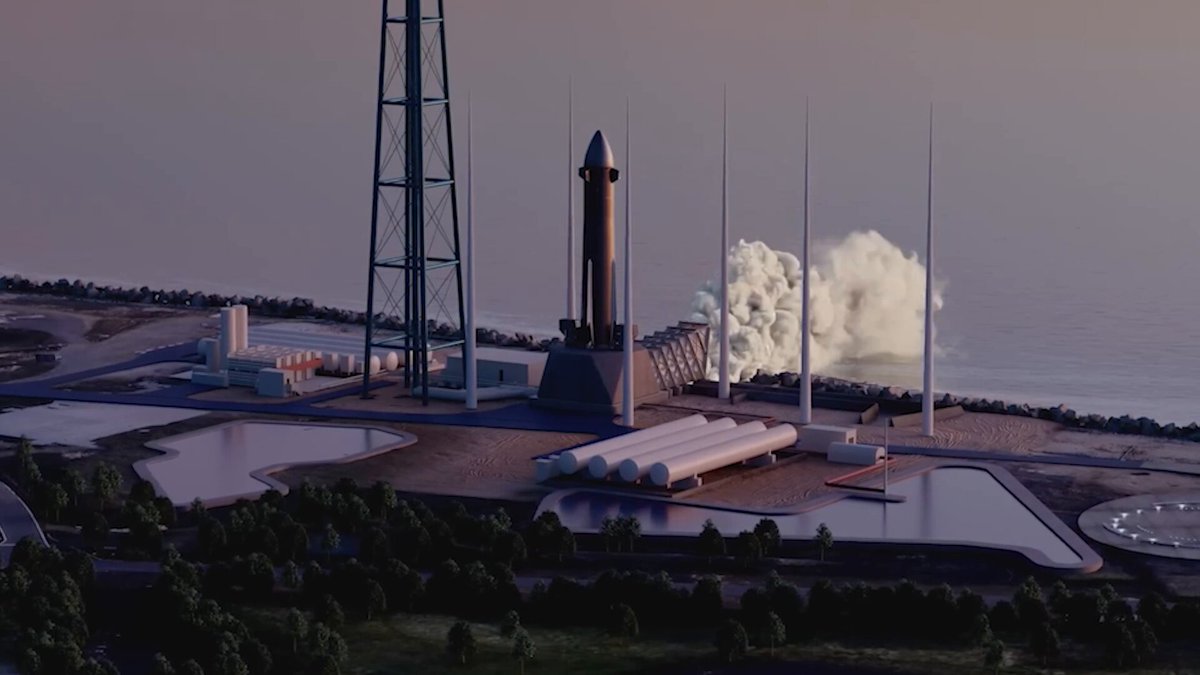
BREAKING: Inside Rocket Lab ( $RKLB ) HQ Tour in Long Beach, CA w/ Sir Peter Beck FACTORY TOUR (Part II) Rocket Lab reached space in 2009 on ~$60,000 in total capitalization, using fittings pulled out of a junkyard. "From that adversity, comes good ideas" Electron reached orbit in...

275,208 views • 1 day ago •via X (Twitter)

0 Comments

No comments available

Comments from the original post will appear here

Related Videos

BREAKING: Inside Rocket Lab ( $RKLB ) w/ Sir Peter Beck FULL INTERVIEW (Part I) We sat down with Peter Beck Founder & CEO of Rocket Lab after another record quarter, $234M in revenue & $2.36B in backlog "The lawyers hate me saying it, but global domination is definitely part of the plan." "I didn't want to build a space company that just lives for the lifetime that I'm running it. It needed to be multi-generational." We go deeper into Iridium, Neutron, the $397M Space Force contract to build + launch "Flatellites," & how 81% of revenue last quarter was outside of launch. Covering: › Why the fix for a 9-month lead time was buying the supplier › The $8B Iridium acquisition & why he was surprised nobody saw it coming › Why the Neutron question should be about the 10th rocket, not the 1st › The 24-hour turnaround constraint that produced Hungry Hippo › Flatellites, building satellites for volume rather than one at a time Plus: building a launch industry in New Zealand from zero suppliers & no regulation, staying out of broadband to play in L-band, going public before SpaceX, GHOST & the launch site that ships in a container, & why the Archimedes engines are painted black. 𝐓𝐈𝐌𝐄𝐒𝐓𝐀𝐌𝐏𝐒 (00:00) Sir Peter Beck, Founder & CEO at Rocket Lab (00:59) Rocket Lab's biggest quarter (02:53) The competitive edge in Space (04:10) Rocket Lab's Acquisition Strategy (05:04) Reason behind the Iridium Deal (06:13) Competing with Blue Origin & SpaceX (09:56) Rocket Lab's Global Domination (11:19) Building a Launch Monopoly in New Zealand (12:33) Is this why Peter got Knighted? (16:42) Beating SpaceX to the Public Markets (20:05) Why Neutron is still facing delays (24:24) The reality of running a Rocket Company (27:38) Rocket Lab's latest contract wins (29:04) How defense became a prime mover for Rocket Lab (30:39) Ghost: Rocket Lab's portable launch pad (31:30) Has he seen Aliens? (33:18) What's next for Rocket Lab? (34:30) Where does Peter draw his inspiration? (36:12) Why he's never read a Business book (37:31) Why their Engine is painted black

Molly O’Shea

763,910 views • 3 days ago

. Rocket Lab is bolstering its in-house production of satellite thrusters and lasers as demand grows for constellations. In our latest interview, CEO Peter Beck shares his thoughts on where the space industry is going and how his company is preparing to benefit. TIMESTAMPS 00:00 - Intro 01:01 - Why Peter Beck axed his own salary 02:17 - Electric Propulsion: Introducing Gauss 05:25 - How Rocket Lab’s Special Projects team solves space industry pain points 08:47 - Mynaric acquisition: Why satellite laser communications is critical 10:55 - $RKLB ’s satellite constellation strategy 12:28 - “The biggest opportunity is yet to be thought of” 13:55 - Are space-based data centers legit? 15:16 - Hyperscaler's strategic access to orbit 17:21 - US$2 billion-plus backlog: Military v Commercial revenue mix 20:06 - NASA 's Artemis II moon mission! 21:15 - Permanent lunar base thoughts (cc. NASAMoonBase ) 22:58 - Competition for Mars missions 25:06 - The Big Rocket Race: SpaceX 's Starship, Blue Origin New Glenn & Rocket Lab’s Neutron 26:58 - Neutron 2026 launch: “We work our ass off” 28:40 - “It’s all about the economics. This is where a lot of space companies go wrong.” 29:37 - Launch cadence & reusability 31:40 - Durability of rocket hardware (does useful lifetime compress with demand, like GPUs?) 33:06 - Outro Disclaimer: I own shares in Rocket Lab. This content is of a general nature and is not intended to be personalized financial advice.

Madison Malone

283,898 views • 4 months ago

My first interview with Peter Beck, Founder & CEO of Rocket Lab. Rocket Lab is scaling launch cadence faster than SpaceX scaled Falcon 9. 0:44 The biggest bottleneck to increasing launch cadence and mass to orbit 1:25 Growth of new space startups 3:05 Why governments have been ineffective at scaling launch 3:53 Tall Poppy Syndrome 4:38 Starting Rocket Lab without having $100 million 7:24 Scaling Electron vs focusing on Neutron 9:17 Rocket Lab hustle 11:10 Creating a culture of “F*ck it, let’s do it” 11:40 Worst supplier experiences 13:54 Having an engine explode before an important meeting 18:52 Rocket Lab’s first mission to the moon 20:55 Chewing glass and forcing the outcome to be good 22:57 Similarities in how Elon and Peter operate 25:05 Elon time and how to structure timelines 27:13 Designing a culture where everyone runs towards the fire 28:44 Making the Ferrari of rockets — the importance of creating beautiful things 31:20 “You don’t need to equate a price tag to beauty” 32:12 Why Peter hates launch day 34:48 “After a launch failure this place is a morgue” 35:22 Moving forward after a failure 36:40 Transitioning from an R&D organization to scaling rocket production 38:07 Production hell with rockets 39:09 Taking learnings from Electron to Neutron 41:03 Having dinner with Elon 42:00 Keeping the hiring bar extraordinarily high 44:05 “My job is to fix sh*t” 44:56 Rocket Lab’s first NASA launch 45:55 “The great thing about America is anything is possible” 47:40 Coming to Silicon Valley — meeting with Vinod Khosla 51:22 Why he decided to take $RKLB public 54:12 Creating a company that will outlive you 55:41 Turning Rocket Lab into a profitable business 57:23 The best space companies will all build their own rockets 1:00:35 Scaling Neutron 1:01:32 Why they’re using carbon fiber instead of steel 1:02:56 “Going public was a great capital unlock” 1:04:10 The importance of relentless optimism

Ti Morse

165,782 views • 5 months ago

BREAKING: Inside Impulse Space with Tom Mueller (Tom Mueller) (SpaceX's 1st Employee) FULL TOUR The famous engineer behind the Merlin engine, now Founder, CEO & CTO of Impulse Space (Impulse Space) ICYMI: Merlin still powers Falcon 9 today, the most reliable rocket engine ever flown & the highest thrust-to-weight ever developed. It's the workhorse behind nearly every SpaceX mission: Starlink launches, Dragon crew & cargo flights to the ISS, & booster landings Tom walks us through the factory floor, from the avionics clean room to a live rocket engine firing in the vacuum chamber Impulse is building the in-space mobility layer: the vehicles & engines that move spacecraft after launch, from LEO to GEO, the Moon, infinity & beyond We cover: → Mira: precision maneuvering spacecraft & its saiph thrusters (8 thrusters, ~50 lbs thrust, 5-yr orbit life) → Helios: long haul same-day delivery vehicle (12 tons of LOX/methane, LEO to GEO) → Deneb Engine: 15,000 lbs thrust engine that powers Helios, ox-rich staged combustion, carbon skirt running over 3,000°F → Why 3D printing is "almost a cheat code" for rocket engines → In-house composite tanks, Novaloy, & copper liners machined from 700 lbs down to 25 → 3 spacecraft in orbit + a 1,200-meter rendezvous → Starlink, iterating Merlin & Raptor, & working with Elon Musk → Nuclear propulsion, the Moon, & why compute needs to move to space 𝐓𝐈𝐌𝐄𝐒𝐓𝐀𝐌𝐏𝐒 (00:00) Tom Mueller, Founder, CEO & CTO of Impulse Space (00:49) Inside Impulse Space (02:32) Avionics Bay floor (02:59) Building rockets at home (03:50) Mira and Helios (08:00) Why Tom left SpaceX (09:33) The Deneb Engine walkthrough (11:42) Testing in Mojave (12:23) Favorite part of the Engine (13:30) How it's 3D Printed (14:21) Why 3D Printing changes everything (16:54) Finding Talent for COPVs (17:28) No Modern hardware without software (19:52) The Mill Turn explained (22:42) Payload Deck Design (25:28) Entering the Secret Area (30:48) Thrust, Flow Rate, & 100 Sensors (32:13) Collision avoidance in Orbit (32:57) The Electric Propulsion Chamber (34:28) Nuclear Electric is the future (38:49) Data Centers in Space (40:28) SpaceX & Starlink's Growth (41:10) Working with Elon (42:07) If not CEO, then what? (42:32) Moon matters more than Mars

Molly O’Shea

729,885 views • 2 months ago

"SARS-CoV-2 comes from a US lab" - Interview with lab leak researcher Jim Haslam, part 1 I interviewed US lab leak researcher Jim Haslam. He has been researching the lab leak theory for three years and arrives at a startling conclusion: Contrary to what most lab leakers believe, the coronavirus did not originate in a Chinese lab, but in a U.S. lab, because it bears U.S. "fingerprints": certain gene sequences that can only be found in U.S. research papers and U.S. patents. Haslam grounds his work on the infamous "blueprint" for SARS-CoV-2: a leaked US research proposal called "DARPA DEFUSE". This was ultimately not funded by DARPA, but by none other than former NIAID director Anthony Fauci, under his generous research umbrella called "CREID". At the center of his investigative research is the question of what was actually released in 2019. According to Haslam, SARS-CoV-2 is a "self-spreading bat vaccine" that was released in a laboratory accident in Wuhan in the fall of 2019. The vaccine was to be tested at the Wuhan Institute of Virology on wild-caught bats before being released in the wild. The idea of vaccinating bats was based on the fact that they are considered by virologists to be a "reserve population" for highly dangerous viruses: SARS1, MERS, Nipah, Hendra, Marburg - all these highly dangerous viruses for humans would survive in bats and from there jump to humans again and again via intermediate hosts. The idea was to make nature safer for humans. And the rest, as they say, is history. What sounds almost unbelievable at first, Haslam proves in detail by means of conspicuous gene sequences in the COVID-19 genome, a multitude of declassified documents, Slack messages, emails, research proposals, patents and public statements of the "DARPA DEFUSE" protagonists in the years before and after Corona. In my opinion, the topic is so relevant because ultimately it is about the question of how society wants to deal with high-risk biotechnologies such as gain-of-function research in the future - if there is a strong suspicion that Corona may have been based on a laboratory accident in which a product of US biotechnology was released. Chapters: 00:00 Intro 00:21 What leaked? 01:39 Why should we still be talking about the lab leak in 2024? 04:22 The controversy among the proponents of the lab leak theory 07:12 The DARPA DEFUSE proposal 10:00 Is the lab hypothesis consensus in the US? 11:09 The cover-up: The virologist's slack messages 13:30 The Furin Cleavage Site 16:15 Further indications of a lab leak: The restriction sites 20:12 Who is Shi Zhengli? 22:11 The obsession of biotechnology from 2015 to 2019: Wild bats 23:25 Why bats? 29:32 Are the suspects nervous? 28:13 Jim Haslam's theory 32:21 The BSL-2 and BSL-4 lab in Wuhan 33:36 The researcher in the BSL-4 lab: Danielle Anderson 40:07 How did Anderson become infected in a BSL-4 lab? 42:31 Wuhan, bats and self-spreading vaccines This is part 1 of the interview, part 2 will follow in the new year. This is the "English only" version without subtitles. A German subtitled and German dubbed version for my German audience were published some days ago:

Aya Velázquez

86,852 views • 1 year ago

EXCLUSIVE: NASA Boss Reveals New Artemis II Launch Plans And Details Ambitious 2027 Lunar Base Start Date; Says Manned Mars Missions And Humans Becoming An Interplanetary Species Within The Next Decade This week on Straight to the Point I sat down with NASAAdmin Jared Isaacman at NASA’s DC Headquarters. In this exclusive interview, the head of the United States space program laid out the future of American missions to the Moon, Mars, the Orbital economy and beyond. LA Times Media Group LA Times Studios Straight to the Point: NASA’s Lunar Ambitions, Mars and Beyond 01:05 Artemis II Launch Window 02:45 Taking Astronauts Farther Into Space Than Ever Before 04:00 NASA Now On Track For Lunar Landing 2028 04:50 Breaking Ground On Lunar Base in 2027 06:20 Humans Become An Interplanetary Species 08:00 Mars Timeline: Within Next Decade 10:50 Nuclear Propulsion Technology Is Game Changer 11:30 China Is On A “Sprint” To The Moon 12:15 You Can’t Be Number #1 On Earth and Number #2 In Space 13:30 What Keeps NASA Administrator Up At Night 14:20 President Trump: Build Enduring Presence On The Moon And Beyond 15:25 Reusable Rockets Have “Ignited” Orbital Economy 16:42 Potential For Tremendous Wealth In Space 17:25 Data Centers In Space Next Five Years 18:55 First Meeting Elon Musk 20:05 What Makes Musk Standout: Takes On Most Challenging Engineering Problems 21:03 What’s Next With Jeff Bezos and Blue Origin 22:20 Space X Broke The Monopoly 24:50 Life Beyond Earth: President Trump Declassifies UAP and UFO Files 26:15 Justification for NASA Budget 28:18 “Ad Astra Per Aspera” 29:20 Independent Journalism

Catherine Herridge

1,139,564 views • 5 months ago

Elon Musk: My initial plan was not to start a rocket company. I just wanted to fund a one-time Oasis mission to Mars. “I started off initially with the idea of doing something in the space exploration arena. In fact, it wasn't actually with the idea of creating a company. It was initially with the thought of spurring interest in sending people to Mars. So I put together this idea called Mars Oasis, which was to send a small greenhouse to the surface of Mars and get people excited about the idea of going there and thus increase NASA's budget in order to make it happen. As I got more and more into that, I discovered that the real issue was that the cost of space transportation was really high, and it was getting worse. So we're used to technology getting better every year, but in some arenas it actually does not. It gets worse, particularly when you consider that in 1969 we were able to go to the moon and then we were unable to go beyond low Earth orbit. And now with the space shuttle retired, we're not even able to go to Earth orbit at all, even with people. That was not the right trajectory. So I actually went to Russia three times to look at buying an ICBM to launch this mission. Just very crazy. After my third trip of trying to negotiate with the Russians to buy an ICBM and I did actually get a deal, so figured out what it would cost and everything. But I concluded that my initial assumption had been wrong, that it was not a question of trying to generate more will to explore. Because I think the United States in particular is distillation of the human spirit of exploration. Space exploration is fundamental to the American psyche. But people really need to believe that it can be done and it's not going to break the bank if it does. So that's when I decided to start a rocket company. And I actually didn't think it would succeed and it almost didn't. We started off developing a small rocket which was kind of a scale model version. It was about 100,000 pounds of thrust. So big, you know, big, big by normal standards, but small for a rocket. And developed the engine and the airframe and the electronics and the guidance control system and then proceeded to have three failed launches in a row. And so for various technical reasons, the first three launches did not succeed in reaching orbit. Launches two and three did get to space, but they didn't achieve enough speed to reach orbital velocity. So this is 2008. And so we were heading into the recession and we had one rocket left. And fortunately in late 2008, that fourth launch did work and we made it to orbit. And then we won a NASA contract after that. And so fortunately things worked out. But if that fourth launch had not worked, then SpaceX wouldn't be around. So it was very close call. In fact, when I started I thought, okay, I've got enough money, I think I've got enough money for three launches. Fortunately, it was just enough to make that fourth one.” Montana Jobs Summit, September 16, 2013

ELON CLIPS

24,586 views • 3 months ago

BREAKING: Impulse Space Raises $500M Series D Reaching $1+ Billion in Total Funding to Build In-Space Mobility Infrastructure aka "Move Things in Space" Full interview w/ President & COO Eric Romo (Eric Romo) (SpaceX Employee #13) Founder & CEO Tom Mueller (Tom Mueller) (SpaceX Employee #1): "We're building more than spacecraft: we're building the economic & technical engine that will power humanity's expansion into space. From Earth orbit to the Moon & beyond, the ability to move quickly, precisely, & affordably on orbit is the fundamental capability that will unlock a true space age." We cover: → The $500M raise → Mira: precision maneuvering → Helios: same-day delivery → Caravan: GEO rideshare → Commercial vs defense → Space Force demand → SpaceX origins → Hiring 200+ roles The Series D was co-led by 137 Ventures & BANNER VC. Additional participating investors include Founder’s Fund, Lux Capital, & Linse Capital. 𝐓𝐈𝐌𝐄𝐒𝐓𝐀𝐌𝐏𝐒 (00:00) Eric Romo, President & COO at Impulse Space (00:58) Fueling the next phase with a $500M Series D (04:30) Crossing the $1B funding mark (06:00) The freedom to execute (07:09) Why startups d*e from indigestion (08:30) Building beyond SpaceX (13:32) How defense became the real opportunity (16:19) Impulse’s product stack: Mira, Helios & Caravan (23:43) The economics of urgency (26:23) "Closer to a fighter jet than a tugboat" (30:40) The new era of space defense (37:33) The SpaceX DNA at Impulse (38:27) The biggest lesson from SpaceX (44:23) Hiring world class engineers (45:38) If not COO, then what? (46:43) The road to first Helios launch

Molly O’Shea

1,159,918 views • 2 months ago

I'm tired of talking about this, but there are still people out there who believe this Artemis II crap, so we need to keep driving the point home: There is no "space travel". NASA is a computer-generation and filming studio that occasionally does public spectacles like this to keep the American public on the hook for $70M/day in tax extortion. Every rocket launch in history has a big curved arc path, because the rocket goes up pretty high, levels out, then comes back down in the Bermuda Triangle (which is why they spook us all from going there in the media - it's a giant graveyard of all the rockets they've splooshed into the ocean) The whole "We need to go horizontal to get to 17,000 MPH and get into orbit" is completely ridiculous and a perfect example of how they lie to your face, but millions still believe it because they've been implanted with this story that NASA are super amazing & trustworthy, and doing all of these incredible things. Just WATCH THE VIDEO. That rocket is going nowhere near 17,000 MPH, and it's not speeding up. It's going off into the distance where nobody can see it anymore, then they switch to cartoon mode where they show everyone computer animations with a little HUD at the bottom of the screen like a video game, and post pre-recorded videos for the next several days pretending they are in space. It's a phony fake show. If you are an adult, you need to stop believing these fantastical stories your government is feeding you as the reason why they need to tax you to death from every direction, and start thinking for yourself. We live in a world of deception, and it isn't going to get any easier to spot these scams when you see them. It's time to wake up, and learn to trust your own eyes and senses again. Detaching you from your intuition is one of the primary purposes of deception agencies like NASA.

Ben Wehrman

456,884 views • 4 months ago

NEW: Inside $11B Harvey HQ w/ CEO Winston Weinberg Exclusive tour of their gorgeous SF office & an update on their scale.. TLDR: they're ripping. At 4 years old, Harvey has reached: - Passed $300M ARR this month (3x growth from $100M last August) - Nearly 1K employees, 12 global offices - ~2,000 customers - DAU/MAU up from 36% to 52% this year - 42% of revenue from in-house corporates - Token usage: 1T in January to a projected 13T this month The $11 billion AI platform now used by 2/3 of the AmLaw 100 & 500+ in-house legal teams including HSBC, Bridgewater, Carvana, Blue Owl "I think every single company is going to sell intelligence." - Winston Weinberg Co-Founder Gabe Pereyra + Head of Applied Research Niko coming on next 👀 𝐓𝐈𝐌𝐄𝐒𝐓𝐀𝐌𝐏𝐒 (00:00) Winston Weinberg, Co-Founder & CEO at Harvey (00:45) Inside Harvey HQ (03:17) Harvey by the numbers (04:11) How Harvey expands globally (05:16) Why Harvey employs 200+ lawyers (06:30) The philosophy behind Harvey's office (07:35) The loudest lunch culture in tech (09:03) Winston's favorite room (10:04) Eight Airbnbs before a real office (12:58) Inside a $300M ARR company (14:20) Tripling revenue in under a year (15:35) What $1B+ unlocks (17:36) Building an AI native company (21:10) Convincing lawyers to join tech (22:14) The biggest adjustment for lawyers in tech (23:26) Build vs buy (26:59) What SaaS got away with that AI can't (28:39) Financing 13 trillion tokens (30:05) Why the labs can't just copy Harvey (31:18) Competing with OpenAI & Anthropic (32:03) Will the labs start acquiring? (32:50) Does every task need frontier intelligence? (34:23) Why legal benchmarks are broken (35:30) Ordering the same meal 467 times

Molly O’Shea

389,455 views • 2 months ago

NEW: Lumentum (NASDAQ: $LITE ) CEO Michael Hurlston on the Optics Boom How Lasers Are Transforming AI Data Centers "We're being asked by hyperscalers to deploy in millions, tens of millions of units." "You're not gonna have birds burning up as these lasers shoot data down to the Earth, right?" "Copper can't carry these signals the distances they need to go. You have more & more optics now coming into the data center." We cover: › Why AI is replacing copper with light › Birds vs. space lasers › Space lasers & the future of the internet › Why we're spending $10T moving data from kilometers to millimeters › Lumentum's 3x revenue growth in just 5 quarters › Stock went up 1000% › U.S.-China geopolitics in optical networking › The manufacturing bottlenecks facing optical infrastructure Michael Hurlston became President & CEO of Lumentum (LITE) on February 7, 2025. Fifteen months later the company reported record quarterly revenue of $808.4M, up 90% year over year, joined the Nasdaq-100, & took a $2B investment from Nvidia. 𝐓𝐈𝐌𝐄𝐒𝐓𝐀𝐌𝐏𝐒 (00:00) Michael Hurlston, CEO at Lumentum Holdings (00:58) Backstage with Tony Kim at RAISE Summit (01:53) What optical connectivity actually means (03:31) The $10 trillion irony of the data center build-out (05:37) Scaling up inside a data center (08:38) 3x revenue in 5 quarters (10:13) From Finisar to Synaptics to Lumentum (11:51) Why Lumentum went all-in on data centers (13:10) Why space is the next big market for optical lasers (14:06) Debunking laser myths (space vs birds) (16:40) Why copper is about to disappear from the server rack (19:00) The geopolitics of the optical supply chain (20:16) The advice that shaped Michael's path

Molly O’Shea

155,732 views • 29 days ago

BREAKING: Inside Thrive Capital w/ Partner Philip Clark Investing in OpenAI, Wiz, Cursor, Nudge, Physical Intelligence “Josh always had a line to me when I joined Thrive, which is that the people who win deals are the ones who want to win them most.” In this conversation, Philip breaks down how one of the most concentrated & influential firms (Thrive Capital) in tech evaluates founders, builds conviction, & partners with companies that reshape the world. We dive into: - Seeing an early demo of OpenAI’s GPT-4 before launch - Why Thrive flew into an active war zone to close the Wiz deal - Cursor’s explosive growth from a small pivot to a multi-hundred-million ARR product - How Nudge is engineering the human brain using ultrasound - Why hardware’s barriers are falling & why the biggest companies of the next decade may be physical Highlights (00:00) Who is Philip Clark? How he joined Thrive Capital (02:45) From physics to investing: becoming a technologist–optimist (04:00) How semiconductors led him to Thrive (06:00) Deep dive: Mesh Optical & the data center interconnect opportunity (07:45) Inside Cursor’s explosive growth and why AI is “speed chess” (09:15) How Philip first met Cursor’s founders during a pivot (11:30) Path to partner & Thrive’s “full-stack investor” model (13:45) The Wiz story: flying into an active war zone (17:15) Why Wiz closed six-figure deals in weeks — the rare “fast + big” enterprise combo (19:30) The rise of hardware: sensors, software, & SpaceX-trained talent (21:45) The rise of Nudge and engineering the human brain (26:30) Neuralink & Nudge: read to stimulate (31:15) Why Thrive concentrates instead of “spray and pray” (36:00) Inside OpenAI: seeing GPT-4 before launch (40:45) What comes after SaaS.. & the companies unlocked by AI

Molly O’Shea

362,011 views • 9 months ago

Here are Elon Musk's full introductory remarks during Pete Hegseth's visit at Starbase earlier today. “Welcome to Starbase, Texas. This actually legally a city that thanks to the hard work of the SpaceX team, we built out of nothing and is now a gigantic rocket manufacturing system. And for people out there who are curious to see it, we're actually on a public highway so you can come and visit and drive down the road and see the epic hardware. I think this is the first time that a rocket development program has actually been on a public highway, so you can come and see the epic stuff. We're honored today to have the Secretary of War, Pete Hegseth, and much of the senior leadership of the Pentagon here. It's an honor to have them visit. We just did a tour of the factory and, and I think this, it really helps illustrate how manufacturing and manufacturing at scale is critical to the strength of America. I'll tell you a little bit just about the purpose of SpaceX. It's like we want to make Star Trek real. We want to make Starfleet Academy real so that it's not always science fiction, but one day the science fiction turns to science fact. And we have spaceships going through space, big spaceships with people going to other planets, going to the moon, and ultimately going beyond our star system to other star systems where we may meet aliens or discover long dead alien civilizations. I don't know, but we want to go and we want to see what's happening and we want to have epic futuristic spaceships with lots of people in them traveling to places we've never been to before. Yeah, that's the goal. And that's what I think the public thinks of when they think of Space Force. So on that note, I'd like to introduce the Secretary of War, Pete Hegseth.” From: Starbase Texas: SpaceX's Rocket City, January 13, 2026

ELON CLIPS

12,477 views • 7 months ago

BREAKING: First-Ever Full Tour of Figure's Humanoid HQ CEO Brett Adcock Exclusive look through every department on their San Jose campus: BotQ Factory, Testing, Design, Demos & more. Brett walks us through how Figure is built: - System integration lab: where robots are stress-tested with software faults & physical pushes - Helix AI: team floor where the controls & neural network engineers train the vision-language-action model that runs onboard every Figure robot - Reinforcement learning & stability testing: where Figure demos the Vulcan project — surviving a lost knee mid-task - Home: environment where Figure 03 autonomously tidies a living room using their Helix neural network (no teleoperation) - BotQ: manufacturing facility where heads, batteries, and limbs come together on the assembly line, including the custom-built battery line & end-of-line burn-in bays - Industrial design studio: (opened publicly for the first time) housing every generation of Figure robot ever built, including: Figure 01 with its Frankenstein forearms, Figure 02, & the sleek Figure 03 that recently appeared at the White House, plus the evolution of Figure's hands & feet Brett shares why he believes humanoid robots may achieve AGI before any other form factor, why Figure pivoted entirely from hand-coded controls to neural networks, & teases that Figure 04 will be their "iPhone 1 moment." This was so much fun! Big thank you to Brett & the team at Figure for opening the doors for us! Brett Adcock Figure 𝐓𝐈𝐌𝐄𝐒𝐓𝐀𝐌𝐏𝐒 (00:00) Inside Figure’s Humanoid Campus (00:48) The humanoid factory (03:18) First humanoid guest at the White House (05:29) Controlling a robot with infinite movements (10:46) The truth about robot failures (13:00) Attacking a humanoid robot (testing responses) (16:12) Building a general purpose robot (23:05) The "Never Fall" protocol (28:56) Is the home robot teleoperated? (33:36) Leasing a 24/7 robot (35:01) Can a humanoid build a real car? (43:32) From flying robots to humanoids (45:59) The hidden path to physical AGI (56:21) Figure's secret design studio (01:00:44) Figure 4: The biggest leap in robotics (01:06:25) Training robots in spandex (01:10:26) Westworld, TIME Magazine, & Deadmau5

Molly O’Shea

733,985 views • 3 months ago