Loading video...

Video Failed to Load

Go Home

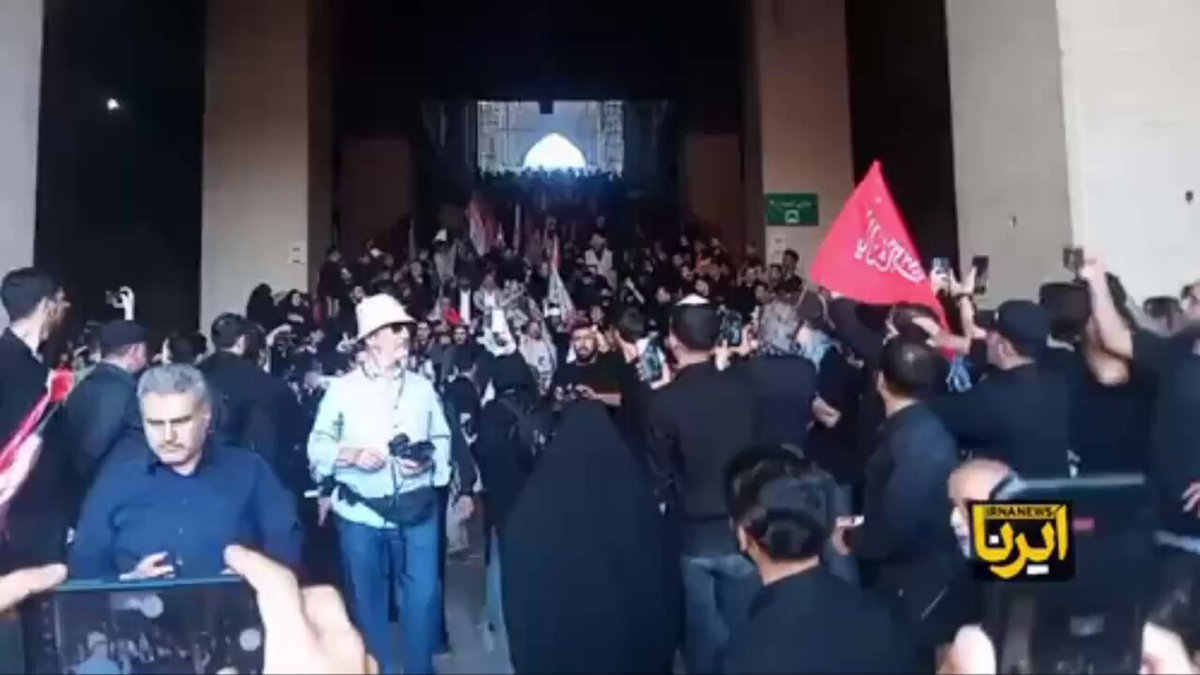
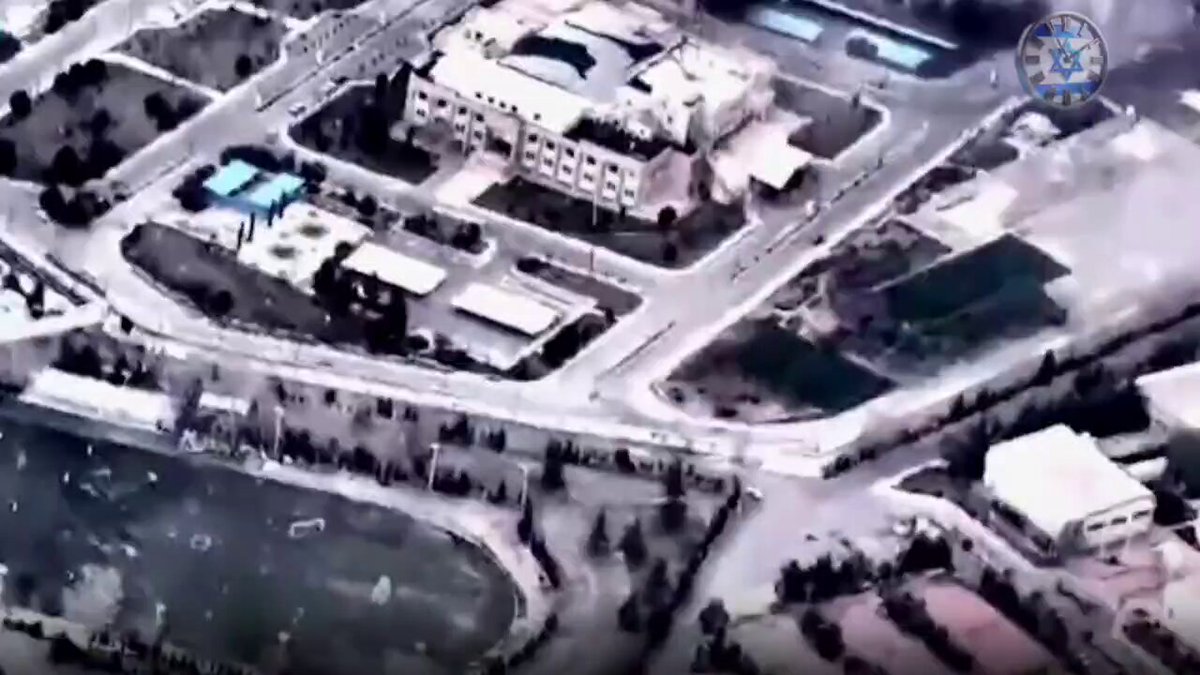
BREAKING: Iran just confirmed it. Esmaeil Khatib, the Intelligence Minister, is dead. Israeli strikes. The regime that has controlled every syllable of its information war for nineteen days has now officially acknowledged the killing of the man who ran its surveillance state. Massive funeral processions are moving through Tehran...

755,632 views • 3 months ago •via X (Twitter)

0 Comments

No comments available

Comments from the original post will appear here

Related Videos

I received this video from inside Iran today, shows how people react to the killings of 7 military commanders in an Israeli airstrike on an the Islamic Republic’s embassy in Damascus on Monday. Yes this is a fact that, despite efforts by the Islamic regime and its lobbyists to portray Qasim Soleimani as a heroic figure, Iranian people celebrate his elimination by the US then and the same is true today. War has nothing to be happy about, but the killing of the most warmongers officials in Iran, who started the war has always aroused people's feelings. The regime of the Islamic Republic is a government of terror. It started with assassinations and hostage-taking. By attempting to prolong the eight-year Iran-Iraq war, it established the foundations of its government. This is the same regime whose bloodthirsty founder, Khomeini, prolonged the Iran-Iraq war in the 1960s with the slogan ‘War is a blessing.’ The IRGC is responsible for a lot of bloodshed in the region, from Syria to Lebanon and Palestine. In the past few months, it attacked the Kurdistan region in Iraq with its rockets, killing civilians, including children. It also attacked Balochistan in Pakistan and killed Baloch people there as well. The IRGC has always been the main cause of repression in Iran. The IRGC, which shot down the Ukrainian plane in its previous ‘hard revenge’ and committed a great crime against the families of Flight 752. The people of Iran are not happy about the wars, which would never have deepened without the intervention of the terror regime of the Islamic Republic, but rather the death of the commanders of this terror regime in their own warmongering.” My article and Washington post: #IRGCterrorists

Masih Alinejad 🏳️

378,580 views • 2 years ago

BREAKING: Lebanon has ordered the Iranian ambassador to leave the country by 29th March. Persona non grata. The host nation of Iran’s most successful proxy just told the patron state to get out. This happened on the same day that Hezbollah fired its 55th rocket and drone attack since March 22nd. On the same day that the IDF struck hundreds of Hezbollah targets in southern Lebanon, the Bekaa Valley, and Beirut’s southern suburbs. On the same day that the Lebanese Health Ministry reported 18 killed and 65 injured from Israeli strikes on Lebanese soil. Lebanon expelled the ambassador of the country whose proxy is fighting a war from Lebanon’s territory while Lebanon’s own citizens die in the crossfire. Process what that means. Lebanon has two governments. One sits in the Grand Serail and issues decrees. The other sits in Dahieh and launches missiles. Prime Minister Nawaf Salam has banned all Hezbollah military and security activities. He has demanded weapon surrender. He has expelled the Iranian ambassador. And Hezbollah has responded by firing another barrage into northern Israel this morning. The decrees do not reach Dahieh. The Lebanese Armed Forces remain non-engaged. The state issues orders that the parallel state ignores. The ambassador leaves. The rockets do not. Lebanon created Hezbollah’s host environment and Hezbollah consumed it. Iran’s IRGC dispatched advisors to the Bekaa Valley in 1982 during the Israeli invasion and the chaos of civil war. They trained Shiite militants. They funded mosques, hospitals, schools. They built a social infrastructure that the Lebanese state could not provide, then militarised it. Hezbollah’s 1985 manifesto pledged allegiance to Ayatollah Khomeini. Iran provides an estimated $700 million annually. Forty-four years later, the organisation that Iran built inside Lebanon is more powerful than the state that hosts it. The ambassador can be expelled. The $700 million pipeline cannot. The expulsion is not strength. It is the last card a government plays when it has no others. Lebanon’s economy loses $30 to $80 million per day from the strikes. Five hundred and seventeen thousand people are displaced. The banking system collapsed in 2020 and never recovered. The currency has lost 98 percent of its value since 2019. And now Israel is striking Lebanese territory daily because Hezbollah is using Lebanese territory to attack Israel in solidarity with an Iranian war that the Lebanese government did not start, does not support, and cannot stop. The country is being destroyed by a war between its tenant and its neighbour, and the landlord has no power over either. Hezbollah fights because Iran’s sealed packets and $700 million command it. Israel strikes because Hezbollah fires from Lebanese positions. Lebanon’s government expels an ambassador because expelling an ambassador is the one sovereign act it can still perform. The army cannot disarm Hezbollah. The police cannot enter Dahieh. The courts cannot prosecute a militia that provides social services to a third of the population. The only tool the state has left is a diplomatic note handed to a man whose organisation does not need his presence to continue operating. The Axis of Resistance was designed for exactly this: to fight from inside states that cannot control the fight. Lebanon is the template. Iraq, Yemen, and Syria are the copies. The patron state provides the funding. The proxy provides the violence. The host state absorbs the retaliation. And when the host state protests, the proxy ignores the protest and the patron state sends a new ambassador. The rockets will continue after March 29. The ambassador will leave. The $700 million will not.

Shanaka Anslem Perera ⚡

74,745 views • 3 months ago

A robot just pulled two American pilots out of the sea near the Strait of Hormuz. It was the first time an autonomous sea drone has rescued people in a combat zone, and the war it happened in escalated within hours. The confirmed part is genuinely remarkable. After a US Army Apache went down off Oman, the two crew spent about two hours in the water until a 24-foot Saronic Corsair, an unmanned vessel run by the Navy’s Task Force 59, found them and carried them to a helicopter hoist. No human rescue crew exposed, no second aircraft risked. Both pilots are safe. It is a real leap in how the US fights. Then events moved faster than the evidence. Trump announced that Iran shot the helicopter down and that the US must respond. By 5 p.m. ET, CENTCOM was striking Iranian targets and calling it a proportional answer to unjustified Iranian aggression. Iran fired back overnight. No deaths have been reported on either side. But the cause of the crash is not yet established. Washington says Iran shot it down. Tehran denies it, has claimed no responsibility, and points to an accident or a collision in a crowded, contested waterway. The evidence has not been released. That gap is everything, because a deal was nearly done. A 60-day ceasefire extension and the reopening of the strait were days from signing. One disputed incident has now pulled American and Iranian forces back to trading fire over the same water. This is how fragile truces die. Not on a clear decision, but on a murky incident that hardens into certainty before the facts are in.

Shanaka Anslem Perera ⚡

185,331 views • 1 month ago

Two days ago the United States bombed Iran. Ten days earlier, the same two countries had signed a peace deal whose one core promise was safe passage through the Strait of Hormuz. Iran drone-struck a ship in that exact strait, the US hit Iranian missile sites in return, and oil did the unthinkable. It fell. Crude is now under $70. That reaction rewrites a rule. For fifty years, a missile fired near Hormuz meant oil spiking. This week the signatories of a ceasefire shot at each other inside the world's most important oil chokepoint, and the price went down. The market looked at live fire in the strait that carries a fifth of the world's crude and decided it did not care. The deal did not crack at the edges. It broke at its center, the single clause it existed to deliver, tested by a drone and answered by an airstrike ten days after the ink dried. And the same afternoon the bombs fell, the choreography of peace rolled on. The Secretary of State stood in Washington signing a separate Israel-Lebanon framework, calling it the start of lasting peace. The President told a room of farmers the Strait of Hormuz was open. America signed a peace, declared a waterway open, and bombed a treaty partner, all inside one day. So the war did not end. It moved into the paperwork. Iran's strait authority now says any ship on the American route loses its insurance. Trump says the strait is open. Each side has claimed the same narrow channel as its own, in writing, and is firing to prove it. The market has already placed its bet, oil under $70, that the flood of barrels is more real than the war over who controls them.

Shanaka Anslem Perera ⚡

87,084 views • 18 days ago

Developments in the Iran-Israel war. It is currently 1:11am in Tel Aviv and 1:42am in Tehran. Main points: Iran and Israel have started targeting each other’s energy infrastructure. Iranian missiles continued to target and impact northern and central Israel. Israel has started targeting Iranian oil infrastructure, including oil refineries and oil depots. Israeli airstrikes continue to target various parts of Tehran and the surrounding areas. Iranian air defence seems to finally be doing some damage to Israeli missiles and drones. In turn, Israel has deployed dozens of small quadcopters and loitering munitions to waste Iranian air defence and saturate for larger attacks with cruise missiles. Drones launched from Iran and factions in Iraq continue to target northern and southern Israel. Missiles & drones: 2 rockets were launched from the Khan Younis area of southern Gaza by an unknown Palestinian faction. Neither were intercepted, with the IDF claiming they hit an open area with no casualties. 2 rockets were launched from Gaza, both of which impacted an unspecified section of the Gaza buffer zone. They were either targeting IDF troops, or malfunctioned mid-flight. The IDF claimed to have intercepted 2 drones, launched by either Iran or factions in Iraq, in the area of Kiryat Shmona, northeastern Israel. Consequences: Israeli outlet Haaretz confirms that 30 Iranian ballistic missiles impacted military bases across Israel, including 10 in Tel Aviv. This was at around 7am local time in Israel, prior to more missile impacts in the north of the country. Iranian ballistic missiles impacted Haifa and Tamra, targeting the Haifa Oil Refinery Israeli airstrikes and drones targeted various targets around Tehran including a central oil depot. Footage shows what appears to be wreckage of a shot down Israeli F-16 somewhere over Iran. Iranian President Masoud Pezeshkian claims that Iran shot down an Israeli F-35 fighter jet. Israeli airstrikes targeted Iran’s Bushehr Port. IDF spokesperson claimed that 7 IDF soldiers were “slightly” wounded Friday night in an Iranian ballistic missile strike on central Israel. Israeli airstrikes targeted the Yemen capital of Sana’a, reportedly killing the commander-in-chief of the Houthis. This remains unconfirmed. Al Jazeera, citing a senior Iranian official, stated that Iran is preparing for an “ongoing” confrontation with Israel, and will escalate its attacks. The head of Israel’s domestic intelligence announced his resignation, citing the failure to stop Hamas’ October 7 attacks. The IDF claimed to have killed the head of Iran’s military Intelligence, as well as the commander of the surface-to-surface missile sector. Israeli MDA spokesperson stated that 3 people have been killed and 172 others (directly) wounded. Iranian intelligence claims to have arrested 16 Mossad-affiliated collaborators and spies across Iran, The IAEA stated that 4 "critical" buildings were damaged at the Isfahan Nuclear Technology/Research Center in central Iran, including the Uranium Conversion Facility and the Fuel Plate Fabrication Plant. They added that no increase in off-site radiation is expected at the Natanz Nuclear enrichment facility after significant Israeli airstrikes, including with bunker-busting bombs. The current home-front guidelines remain in place for all of Israel, including a ban on all educational activities and large gatherings, except for essential services. Regional developments: Trump stated that “The war between Iran and Israel must end”. British Prime Minister Keir Starmer stated that new military assets are being transferred to the Middle East, including aircraft, for “contingency support”. Iran’s foreign ministry confirmed that Iran will not participate in nuclear talks with the U.S. on Sunday, stating that “Participating in talks with accomplices of the aggressor is pointless.” Pakistan’s Prime Minister Shehbaz Shariz expressed his “unwavering support” to Iran in a phone call with Iranian President Masoud Pezeshkian.

AMK Mapping 🇳🇿

38,923 views • 1 year ago

🇮🇷 The cameras were installed to watch the people. They ended up watching the ruler. For years, Iran poured tens of thousands of surveillance cameras into the streets of Tehran. The regime’s logic was simple: after waves of protests that killed thousands, it needed eyes everywhere. On every corner, above every intersection, across every square where crowds could gather. The Islamic Republic built one of the most comprehensive urban surveillance networks in the Middle East. It was, in the regime’s view, the infrastructure of permanent control. It became something else entirely.  According to an AP investigation backed by multiple intelligence sources, nearly all of Tehran’s traffic cameras had been hacked by Israeli intelligence, with the encrypted footage streamed in real time to servers in Israel.  The operation had been running for years. Quietly. Continuously. At least one camera was positioned at an angle that let Israeli analysts track exactly where bodyguards parked their personal vehicles near the leadership compound.  Small details. Repeated daily. Assembled over months into something precise and lethal. Israel’s Unit 8200 used AI and complex algorithms to build what intelligence professionals call a “life pattern” on Ayatollah Ali Khamenei and his security personnel: their travel routes, daily schedules, the identities of officials who regularly appeared at his side.  The system processed billions of data points. Social network analysis was applied to identify decision-making centers and map relationships across the entire protection apparatus.  An unnamed Israeli intelligence official described it to the Financial Times in stark terms: “We knew Tehran like we know Jerusalem.” That the cameras were compromised was not a closely guarded secret. Tehran’s cameras had been breached repeatedly since 2021. Last year, a senior Iranian politician publicly warned that Israeli access to the network posed a national security threat.  The warning was noted. And then, apparently, not acted upon. Pirated versions of Windows, outdated hardware, Chinese-manufactured electronics from sanctioned supply chains: Iran’s surveillance infrastructure was riddled with vulnerabilities that it had no easy means of patching.  On the morning of February 28, the compound on Pasteur Street was struck by 30 missiles. Cellular towers in the surrounding area had been disrupted beforehand, preventing Khamenei’s security detail from receiving warning calls.  Trump gave the order the previous afternoon, at 3:38 p.m. Eastern Time, as he flew to Corpus Christi for a speech about energy. The message read: “Operation Epic Fury is approved. No aborts. Good luck.”  The confirmation came early Sunday morning, when Iranian state television announced that the Supreme Leader had reached martyrdom.  The story that will be told about this operation for decades involves missiles, intelligence networks, and geopolitical calculations. But underneath all of it is something almost absurdly mundane: a traffic camera on a Tehran street corner, running pirated software, quietly sending its footage to a server it was never supposed to reach. “The irony,” said Conor Healy of surveillance research publication IPVM, “is that the infrastructure authoritarian states build to make their rule unassailable may be what makes their leaders most visible to the people trying to kill them.”  The cameras were installed to watch the people. In the end, they watched Khamenei. Gandalv / Gandalv

Gandalv

13,159 views • 3 months ago

AI just hit a wall that no amount of money can move. The planet itself. There is not enough power, water, or land on Earth to build the data centers the AI race now demands. So the most valuable bet in artificial intelligence is no longer a chip company or a model. It is a rocket company. The plan is to leave. In January, SpaceX filed with the FCC to launch up to 1 million solar-powered data center satellites into orbit. In February it bought xAI, the maker of Grok, folding an entire frontier AI lab into a rocket company in the largest corporate merger ever recorded. On June 8 it unveiled the AI1, a compute satellite with a 70-meter wingspan, wider than a Boeing 747, powered by the sun, cooled by the vacuum of space, and wired to the ground through Starlink. Four days later it went public in the largest IPO in history, near 1.77 trillion dollars, touched 2.1 trillion on its first day, raised close to 86 billion, and made one man the first trillionaire alive. Now read the direction of that merger, because it is the whole story. A rocket company bought the AI lab. Not the reverse. For three years everyone assumed the constraint on AI was chips, or data, or talent. It is none of them anymore. It is energy and heat and dirt. The head of Anthropic said his company grew faster than the exponential, 80 times in a single year, and that is exactly why it ran out of compute. The answer was not to build more data centers in Virginia. It was to leave the atmosphere, where the sun never sets and a solar panel does five times the work. The moat in artificial intelligence is no longer the model. It is the launch. And the first rent is already being paid. A rival lab, Anthropic, is reported to be sending roughly 1.25 billion dollars a month to Musk for compute. Google near 920 million. If intelligence moves to orbit, the company that owns the only affordable road there becomes the landlord of the next layer of the internet, the way one bookstore became the landlord of the cloud. The merger is the proof of concept. The IPO is the war chest. Those monthly checks are the lease. Here is the part the price tag does not want you to read. Close to a trillion dollars of that valuation rests on orbital data centers that do not yet exist, and on a chip factory, Terafab, that SpaceX's own public filing calls a general framework with no binding deal, one that may not achieve commercial viability. Musk said it on camera. This is not a promise. The largest IPO ever written is priced on a future the filing itself cannot verify. The other side is just as real. Compute in orbit costs about four times what it costs on the ground today, and the curve may not cross for fifteen years. The machines that print the chips are backordered for years. Shedding heat in a vacuum at this scale has never been done. Musk's timelines have a long history of meaning later. And Bezos is racing the same orbit with a constellation of 51,600 satellites of his own. But strip it all away and the trade underneath is one sentence. Earth has run out of room for intelligence, and whoever owns the road off the planet owns whatever gets built next. Call it the most expensive science fiction ever sold, or the first time the map of the internet pointed up.

Shanaka Anslem Perera ⚡

54,183 views • 20 days ago

The largest theft in history has already happened. The people behind it just cannot open what they stole yet. Right now, intelligence agencies and criminal groups are quietly copying the world's encrypted data, bank records, medical files, state secrets, private messages, and storing every byte untouched. They cannot read any of it. They are collecting it anyway, because they know the key is about to be invented. The strategy has a name, harvest now, decrypt later, and in 2026 it stopped being theory. Washington declared this the Year of Quantum Security in January, backed by the FBI, the NSA, and NIST. Canada ordered every federal agency to file a migration plan by April. Europe set its deadline for December. Governments do not impose operational deadlines on a someday problem. They do it when the clock is already running. Here is what moved the clock. Every password, every transfer, every secret on Earth is protected by one assumption, that a certain math problem is too hard to solve. Quantum computers solve exactly that problem. For years the machine that could do it looked decades away. Then in late 2025 Google's Willow chip cracked the hardest part of building one, and in March 2026 Google's own researchers estimated that breaking the encryption behind Bitcoin might take fewer than 500,000 qubits, down from 20 million, and could run in minutes. The day this becomes real has a name, Q-Day, and the latest estimates place it between 2030 and 2033. Now make it concrete. Roughly 6.5 million Bitcoin, about a third of every coin that will ever exist, worth close to 500 billion dollars, sit in addresses that have already exposed the very key a quantum computer needs. That includes the coins of Satoshi, the anonymous creator. On Q-Day they become, in the researchers' own word, trivially stealable. It would not look like a crash or a whale selling. It would look like half a trillion dollars of the most secure money ever built simply walking out the door. The asset designed to trust no one and no institution turns out to rest on a single unverified bet, that one math problem stays hard forever. This is what sits beneath the entire digital world. A bank balance, a Bitcoin, a classified cable, all of it is real only because of a proof you supposedly cannot forge. Quantum breaks the proof. Everything we call secure is true only until someone finally checks, and for the first time the check is visible on the horizon. You cannot know whether your data has already been copied. You cannot know the exact day the key arrives. The trust holding up the digital age is a clock counting down to a zero no one can see. The honest counter matters. No machine on Earth can break this encryption today, and serious cryptographers still argue the real threat is a decade or more away. The timeline is far from certain. Quantum-safe codes already exist, the migration has started, and Bitcoin can move its coins to safety before Q-Day if it acts in time. The danger is not that everything breaks tomorrow. It is that anything which must stay secret into the 2030s, a state secret, an identity, a private key, is being stolen today and is already on the clock. The breach is not coming. It is already here, sitting in storage, perfectly encrypted, waiting for a machine that does not exist yet to read it out loud. Research and opinion, not investment advice.

Shanaka Anslem Perera ⚡

185,238 views • 19 days ago

🚨 OPERATIONAL UPDATE: ISRAEL U.S. WAR WITH THE ISLAMIC REPUBLIC - Reporting Window: Last 24 Hours ✳️The war is entering its final phase, but the battlefield is becoming more dangerous, not less. For the first time since the conflict began, the United States has signaled that its objectives against Iran have largely been achieved and that military operations could conclude within 2 to 3 weeks. At the same time, the operational picture tells a more complex story. Strikes inside Iran are intensifying, not slowing. Iran’s responses are becoming less concentrated but more geographically expansive. And across the region, the risk of broader escalation remains very real. This is no longer an open-ended war. It is a race between final military objectives and the risk of wider regional destabilization. ━━━━━━━━━━━━━━━━━━ 🏁 POLITICAL ENDGAME SIGNAL EMERGES President Donald Trump stated that the war could end within weeks, indicating that core objectives have been achieved, including the degradation of Iran’s strategic capabilities and the disruption of its leadership structure. He also signaled that the United States does not intend to remain indefinitely engaged, suggesting that responsibility for securing critical global nfrastructure, particularly the Strait of Hormuz, may shift to regional and international stakeholders. At the same time, tensions with NATO allies are surfacing. Frustration over limited allied participation in the war has raised the possibility of a broader fracture within the Western alliance structure. Parallel reporting indicates that elements within Iran are signaling openness to a ceasefire framework, particularly if maritime access through Hormuz is restored. Taken together, this marks a clear transition: the war now has a defined political end state, even as military operations continue. ━━━━━━━━━━━━━━━━━━ ✈️ FINAL PHASE STRIKE CAMPAIGN INSIDE IRAN The intensity of strikes over the past 24 hours reflects what appears to be end-stage shaping operations. Israeli and US-aligned strikes targeted a wide range of sites across Iran, including weapons production facilities, research and development centers, and critical infrastructure nodes tied to the regime’s military capabilities. Tehran remains a central focus. Approximately twenty military-industrial sites were struck, along with infrastructure at Mehrabad Airport and locations linked to Basij coordination. A senior Quds Force engineering figure, Mahdi Vafaei, was eliminated in a precision strike. His role in developing underground weapons infrastructure across Lebanon and Syria made him a key long-term asset for Iran’s regional military network. Additional strikes hit industrial targets, including steel production facilities and a site identified as supporting materials linked to Iran’s chemical weapons development pipeline. This is not a campaign aimed at symbolic damage. It is a systematic effort to dismantle Iran’s ability to produce, coordinate, and sustain war over time. ━━━━━━━━━━━━━━━━━━ 🎯 IRANIAN RESPONSE AND CIVILIAN IMPACT Iran continues to launch missiles toward Israel, but at a reduced scale compared to earlier phases of the war. Limited salvos were recorded over the past 24 hours, causing injuries and localized damage. One of the most significant developments was the reported use of cluster munitions in central Israel, critically injuring a child and causing multiple casualties. At the same time, Iran appears to be adapting operationally. Rather than attempting large-scale saturation attacks, it is increasingly relying on smaller strikes, drones, and diversified targeting strategies. This does not indicate de-escalation. It reflects an effort to remain operational under sustained pressure. ━━━━━━━━━━━━━━━━━━ 🌍 REGIONAL EXPANSION: THE WAR SPREADS While direct attacks on Israel have become more limited in scale, Iran is expanding the conflict across the region. In the Gulf, infrastructure in Kuwait and Bahrain was struck, including fuel storage facilities at Kuwait International Airport. Fires and damage were reported, adding to a growing pattern of attacks on energy and logistical nodes. A commercial tanker was also struck near Qatar, further extending the conflict into maritime space. These developments mark a continued shift where Iran is targeting not just Israel, but the broader economic and energy architecture of the region. ━━━━━━━━━━━━━━━━━━ 🚢 THE STRAIT OF HORMUZ The strategic center of gravity in this war is now unmistakable. The Strait of Hormuz remains contested, with ongoing disruption to global shipping and energy flows. The United States is actively evaluating options to reopen and secure the waterway, including potential direct military action against Iranian coastal capabilities. At the same time, Gulf states, particularly the UAE, are pushing for a coordinated military effort to ensure the strait is reopened. However, regional positioning remains complex, with some actors balancing public caution and private pressure. Notably, the United States has signaled that it may not take long-term responsibility for securing Hormuz, instead shifting that burden to global stakeholders. The implication is clear: control of Hormuz will determine not only the outcome of the war, but its aftermath. ━━━━━━━━━━━━━━━━━━ 🔥 NORTHERN AND PROXY FRONTS Iran’s proxy network remains active, but increasingly strained. In Lebanon, Israeli strikes continue to target Hezbollah leadership and infrastructure, including the reported elimination of a senior commander in Beirut. Rocket fire persists, but Israeli operations are steadily degrading launch capabilities. In Yemen, the Houthis have formally entered the fight against Israel and are likely contributing to the expanding pattern of regional attacks, including those affecting Gulf infrastructure. Across Iraq and Syria, Iranian-aligned militias remain engaged, while underlying instability continues to create openings for additional actors. This is now a multi-front conflict, but one in which Iran’s network is under pressure across every axis. ━━━━━━━━━━━━━━━━━━ 🧠 WARFARE EVOLUTION A critical and often overlooked development is the role of advanced targeting systems. Israel is employing AI-assisted capabilities to identify threats, prioritize targets, and synchronize strikes across multiple theaters in near real time. This has significantly compressed the operational cycle, allowing for rapid follow-up strikes and reduced recovery time for Iranian forces. The result is a battlefield environment where Iran has less time to act, less time to adapt, and fewer opportunities to rebuild degraded capabilities. ━━━━━━━━━━━━━━━━━━ 📊 THE BIG PICTURE The trajectory of the war is now coming into focus. The United States and Israel are executing a campaign designed to dismantle Iran’s ability to function as a coherent military actor. Iran, in response, is expanding the conflict geographically in an attempt to impose broader costs. At the same time, political signals indicate that the war is approaching a defined end state. Markets are already reacting to this expectation, with oil prices declining and global indices rising on the assumption that the conflict may soon conclude. However, the final phase carries its own risks. As Iran’s conventional capabilities degrade, its reliance on asymmetric and regional tactics is increasing. The decisive question is no longer how the war is fought day to day. It is whether the final objectives can be secured before broader escalation overtakes them. ━━━━━━━━━━━━━━━━━━ 📘 BOOK RECOMMENDATION If you want a deeper understanding of the history, narratives, and strategic realities behind this conflict: Contested Land, Uncontested Truth This book breaks down the ideological, geopolitical, and historical forces that led directly to moments like this, with clarity and evidence. 👉 If you found this report valuable, share it. Follow for daily operational updates.

Inside_Israel_Intel

60,835 views • 3 months ago

BREAKING. Israel’s Defense Minister just announced strikes on Iran will increase significantly this week. He said it from an underground command centre in Tel Aviv, hours after a cluster munition from an Iranian ballistic missile hit a daycare in Rishon Lezion. Hours after the United States bombed Natanz for the fifth time in 16 years. Hours after Trump told reporters he is considering winding down. The war is escalating and de-escalating in the same sentence because the strategy requires both signals simultaneously. Four nations responded to the same morning. The responses tell you everything about where this war is heading. Israel said more. Defense Minister Katz, surrounded by military officials, said the intensity of IDF and US strikes against the Iranian terror regime will rise significantly this week. He said Israel is determined to decapitate commanders and thwart strategic capabilities until every security threat to Israel and US interests is removed. He said the IDF will not stop until all war objectives are achieved. Passover holiday camps were cancelled in 18 municipalities across central Israel after the cluster munition struck the daycare. The children were not inside. The camps will not open. India said peace. Prime Minister Modi called Iranian President Pezeshkian on Nowruz, the Persian new year that fell on the same day a bunker-buster fell on Natanz. Modi expressed hope that the festive season brings peace, stability and prosperity to West Asia. India imports 40 percent of its crude through the Strait of Hormuz. The call was not about peace. It was about oil. Seventy percent of American generic prescriptions originate from Indian pharmaceutical manufacturers who depend on that crude. When Modi calls Tehran on Nowruz, the pharmacies in Ohio are listening. Russia said loyalty. Putin sent a Nowruz message telling Iran that Moscow remains a loyal friend and reliable partner, wishing Iranians to overcome these severe trials with dignity. Russia provides Iran with coordinates of US warship positions. Ukraine provides Gulf states with drone countermeasure expertise. Two wars sharing the same drone, the same intelligence architecture, the same battlefield geometry reflected through different alliances. Putin’s loyalty is not sentiment. It is positioning. Every day the US burns ordnance over Iran is a day it does not restock Ukraine. Iran said danger. Tehran warned the United Kingdom that backing US-Israeli aggression through its bases is putting British lives at risk. This came hours after Iran fired two intermediate-range ballistic missiles at Diego Garcia, the British territory 4,000 kilometres from Iranian soil that hosts 2,500 mostly American personnel. Neither missile hit. One failed mid-flight. An SM-3 was fired at the second. Britain subsequently authorised US bombers to use UK bases for Hormuz operations. The country that was targeted then gave permission. Iran responded by threatening the country that gave permission. Day 22. The death toll has crossed 1,300 in Iran, 1,000 in Lebanon, 15 in Israel, and 13 American service members. Five thousand Marines are heading to the Gulf aboard two amphibious ready groups. Natanz has been bombed five times. Kharg Island is being discussed as a seizure target. Dubai crude hit $166 a barrel. The IAEA director told NPR that enrichment capacities will probably still exist at the end of this conflict. And the defense minister of Israel, standing in a bunker beneath Tel Aviv while a daycare above him had a hole in its roof from a cluster munition, said the word that defines this week. Significantly. Full analysis:

Shanaka Anslem Perera ⚡

121,172 views • 3 months ago

JUST IN: Iran just bombed the only country willing to broker its peace. Drones struck the Port of Salalah in Oman on 11th March, hitting fuel storage tanks at the MINA Petroleum Facility. Fires ignited. Then spread. As of tonight, the blaze has consumed most if not all oil tanks at the facility, burning into the darkness in a port that was not a military target, not an ally of the United States or Israel, but the neutral mediator that hosted the last diplomatic channel between Washington and Tehran as recently as February 2026. Oman brokered the secret talks that led to the 2013 JCPOA framework. Oman hosted the February 2026 nuclear discussions that were the final diplomatic contact before 28 February. When every other Gulf state chose sides, Oman chose neutrality. When Iran needed a phone line to Washington, Oman was the phone. That phone is now on fire. Iran’s response was extraordinary. President Pezeshkian called Oman’s Sultan and said the incident would be “investigated.” Iran’s military denied launching attacks on Oman, calling the suggestion a “false flag.” But the drone signature matches IRGC patterns. The fires are real. The fuel tanks are burning. And no other actor in the region has the capability, the reach, or the motive to strike Salalah with the drone systems that hit it. This is the Mosaic Doctrine consuming its own creator’s diplomacy. The 31 autonomous IRGC provincial commands that operate without central authorisation do not consult Tehran’s Foreign Ministry before launching. A commander with coastal access to the Gulf of Oman can strike Salalah without knowing or caring that President Pezeshkian needs Sultan Haitham’s phone line to survive the war. The diplomatic wing of the Iranian state needs Oman alive. The military wing just set its oil tanks on fire. Both wings operate simultaneously without coordination because the doctrine was designed to make coordination unnecessary. This is the structural impossibility nobody is modelling. Tomorrow, Larijani or Pezeshkian may call Muscat and beg forgiveness. They may ask Oman to reopen the channel to Washington. They may negotiate in good faith for a ceasefire. And while they are on the phone, an autonomous IRGC command in Hormozgan or Kerman may launch another drone at Salalah because the sealed orders from a dead Supreme Leader authorise continuous strikes on Gulf infrastructure and no living authority has the constitutional power to countermand them. Peace requires trust. Trust requires that one side can guarantee what its own forces will do. Iran cannot guarantee what 31 independent commands will do because the man who could guarantee it is dead and his successor is a cardboard cutout. Oman cannot mediate between Washington and Tehran if Tehran’s military burns Omani infrastructure while Tehran’s president apologises for it. The mediator’s credibility dies the moment the mediator’s oil tanks ignite. Salalah was the bypass. When Hormuz closed, shipping was supposed to reroute through Oman’s ports outside the Strait. When diplomacy was needed, Oman was supposed to carry the messages. When the war needed an off-ramp, Oman was supposed to build it. The IRGC just burned the bypass, silenced the messenger, and destroyed the off-ramp in a single night. Iran’s economy runs on $5,000 per capita GDP, 60% inflation, and a currency that has lost 90% of its value under sanctions. It cannot afford to lose its only friend. It just did. And the doctrine that lost it was designed to be unstoppable.

Shanaka Anslem Perera ⚡

293,522 views • 4 months ago