Video yükleniyor...

Video Yüklenemedi

Ana Sayfaya Dön

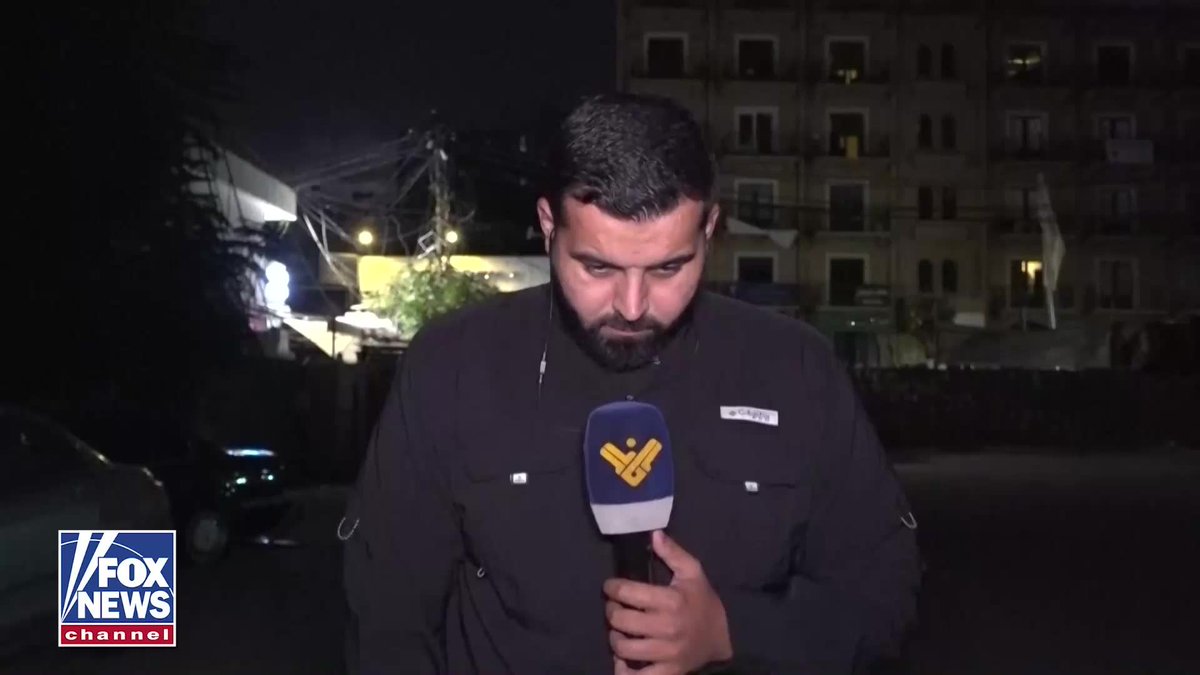
🚨BREAKING: Massive Explosion Rocks Tehran After U.S.–Israel Strike Raw footage is now circulating showing a massive detonation in Tehran after reported U.S. and Israeli missile strikes on Iranian military infrastructure. The blast is so powerful that the shockwave appears to ripple across multiple city blocks, sending a towering column...

164,159 görüntüleme • 5 ay önce •via X (Twitter)

0 Yorum

Yorum bulunmuyor

Orijinal gönderinin yorumları burada görünecek

Benzer Videolar

🚨OPERATIONAL UPDATE: ISRAEL U.S. WAR WITH THE ISLAMIC REPUBLIC - Reporting Window: 3/11 to 3/12 • Iran widened pressure on the Gulf energy system, with tankers hit near Basra, a container vessel struck near the UAE, and fuel infrastructure targeted in Bahrain and Oman, sending oil back above $100. • Israel expanded its campaign inside Iran, striking IRGC command infrastructure, missile production sites, and drone launch networks in and around Tehran. • Hezbollah launched one of its largest rocket barrages of the war, triggering heavy Israeli strikes on command centers and weapons infrastructure in Beirut’s southern suburbs. • Iranian proxies and aligned forces continued attacks on U.S. positions across the region, bringing the total number of incidents targeting American sites or personnel to at least 25 since the war began. The central story of the last 24 hours is that the conflict is increasingly moving beyond the battlefield and into the systems that keep the region functioning. Iran continues to pressure shipping, energy infrastructure, and U.S. positions across the Middle East, while Israel is pushing deeper into the regime’s military and security architecture. The result is a war that now looks less like a contained exchange of strikes and more like a widening struggle over the region’s economic stability, military balance, and internal political control. ━━━━━━━━━━━━━━━━━━ *⃣ PERSIAN GULF: IRAN CONTINUES TO PRESSURE THE ENERGY SYSTEM The Persian Gulf remained the most strategically significant theater over the last 24 hours. Multiple reports confirmed additional attacks affecting shipping and energy infrastructure across the region. Two oil tankers were reported burning in Iraqi waters near Basra after earlier strikes on vessels in the Gulf, while another container ship was reportedly hit near the UAE. Fuel and logistics infrastructure also came under pressure. Bahraini authorities reported that Iranian aggression targeted fuel tanks at a facility in Muharraq near Bahrain International Airport, while additional reports indicated that oil storage facilities at Oman’s Port of Salalah were struck. These attacks reinforce a clear pattern: Iran may not be able to fully close the Strait of Hormuz, but it is demonstrating that it can disrupt the broader logistical network surrounding the Gulf’s energy system. The market reaction was immediate. Oil prices moved back above $100 despite coordinated moves by the United States and its partners to release large volumes from strategic petroleum reserves. The International Energy Agency and several governments have moved to inject supply into the market, but these measures are temporary buffers. As long as shipping through the Gulf remains at risk, the global energy market will continue to price in disruption. ━━━━━━━━━━━━━━━━━━ *⃣ TEHRAN: THE CAMPAIGN IS NOW HITTING THE REGIME’S CORE SECURITY NETWORK The latest strike waves inside Iran appear to be moving beyond general bombardment and toward a systematic dismantling of the regime’s security infrastructure. Israeli strikes reportedly targeted the IRGC Air Force headquarters in Tehran, ballistic missile storage and production facilities, Basij paramilitary command centers, and a compound at Imam Hossein University that functions as an operational hub for the Revolutionary Guards. Additional strikes were reported against Iranian intelligence ministry facilities and internal security infrastructure, indicating that the campaign is beginning to focus not only on missile capability but on the regime’s ability to control events inside the country. Separate strikes in western Iran reportedly hit drone launch teams preparing attacks toward Israel, suggesting that launch infrastructure is now being targeted dynamically as it emerges rather than only through preplanned strikes against fixed installations. Satellite imagery also confirmed damage to Iranian F-14 fighter aircraft at Isfahan’s 8th Tactical Air Base, further degrading an already aging Iranian air force that has struggled to contest Israeli and U.S. air superiority throughout the conflict. Taken together, the targeting pattern suggests that the coalition is increasingly focusing on the regime’s operational nervous system: command networks, launch infrastructure, and internal security forces that allow the government to coordinate and sustain military operations. ━━━━━━━━━━━━━━━━━━ *⃣ LEBANON: ISRAEL IS NOW TARGETING HEZBOLLAH’S OPERATIONAL COMMAND STRUCTURE The northern front also escalated sharply over the last 24 hours. Hezbollah launched one of its largest barrages of the war, firing large numbers of rockets and drones toward northern Israel in coordinated strikes linked to Iran’s broader regional campaign. Israel’s response focused heavily on Hezbollah’s command and operational infrastructure rather than simply retaliating against launch sites. Israeli aircraft struck multiple facilities in Beirut’s southern suburbs (Dahieh), including command centers, operational headquarters, and weapons storage sites linked to Hezbollah’s Radwan forces, the elite unit responsible for cross-border operations against Israel. Additional strikes targeted missile launch infrastructure and militant positions across southern Lebanon, as well as logistical sites used to support ongoing rocket attacks. The concentration of strikes in Dahieh is significant. The area functions as Hezbollah’s central military and intelligence hub, and repeated attacks there suggest Israel is attempting to disrupt the group’s command-and-control structure rather than merely suppress individual launch cells. This shift indicates that the northern theater may be entering a new phase where Israel seeks to systematically degrade Hezbollah’s operational leadership and coordination networks, not just reduce the immediate rocket threat. ━━━━━━━━━━━━━━━━━━ *⃣ REGIONAL SPILLOVER: U.S. POSITIONS AND GLOBAL SECURITY CONCERNS Regional spillover continues to grow. Iranian proxies and aligned groups have carried out repeated attacks targeting American facilities or sites hosting U.S. personnel across the Middle East. Analysts now count at least 25 attacks targeting U.S. sites or locations housing American personnel since the war began. One of the most significant recent incidents involved a drone strike on a large U.S. diplomatic facility near Baghdad International Airport. The attack caused damage but did not produce casualties, and U.S. officials suspect it was carried out by Iranian-aligned militias operating in Iraq. Beyond the Middle East itself, intelligence warnings suggest the conflict could reach further. U.S. authorities have warned about potential Iranian retaliation targeting American interests abroad, including scenarios involving drone launches from maritime platforms. Cyber activity linked to Iran has also been detected in Europe, including an attempted attack on a nuclear research facility in Poland that officials say bears multiple indicators of Iranian involvement. These developments show that while the war’s kinetic center remains in the Middle East, the broader confrontation between Iran and its adversaries is beginning to manifest across multiple domains: military, cyber, and economic. ━━━━━━━━━━━━━━━━━━ *⃣ WHAT MATTERS MOST RIGHT NOW The key takeaway from the past 24 hours is that the war is continuing to widen in practice even as some political messaging suggests it could be nearing a conclusion. Iran is still capable of imposing meaningful costs through attacks on shipping, energy infrastructure, and proxy operations across the region. Israel, meanwhile, is expanding its strike campaign into deeper layers of Iran’s military and security architecture while escalating pressure on Hezbollah in Lebanon. Neither side appears close to a decisive breakthrough. Iran’s leadership structure remains intact despite heavy strikes, and its network of proxies continues to generate pressure across multiple fronts. At the same time, Israel and the United States retain overwhelming military superiority and appear committed to degrading Iran’s ability to sustain a prolonged conflict. For now, the trajectory remains clear: the war is evolving from a direct exchange of strikes into a broader contest over the region’s economic stability, military balance, and political future. --------------------------------- END REPORT

Inside_Israel_Intel

30,124 görüntüleme • 4 ay önce

BREAKING: Iran has reportedly struck the BAPCO oil refinery in Bahrain while launching missile and drone attacks against U.S. military assets in Qatar, Bahrain, Kuwait, Jordan, and Iraq. Iranian drones also reportedly destroyed a $5 million U.S. HIMARS launcher in Kuwait, marking Tehran's largest coordinated assault since the collapse of the MoU. The offensive follows heavy U.S. strikes across southern Iran, where Iranian state media says American forces targeted six civilian bridges, a major railway station, a telecommunications tower, and a civilian airport in Hormozgan Province and Chabahar. The strikes reportedly killed and injured civilians and severed key transport links around Bandar Abbas. The attacks came just hours after the IRGC warned that any U.S. strike on Iranian infrastructure would be met with the destruction of "every last piece of infrastructure" across the region, while the Houthis reiterated threats to shut the Bab al-Mandab Strait. Reports indicate the U.S. military base in Kuwait is on fire following the strikes. In Qatar, reports claim Iranian missiles struck Al Duhail Camp on the outskirts of Doha, with loud explosions reported across the capital. In Bahrain, reports also claim missiles hit Hamala Camp, which houses U.S. forces, as well as another U.S. military installation. Two U.S. AH-64 Apache helicopters were seen operating over Bahrain during the latest drone attacks. Arabic media further reports an Iranian missile struck the King Fahd Causeway linking Bahrain and Saudi Arabia, with ambulances and emergency crews dispatched to the scene. 1. Smoke rises from Bahrain's BAPCO refinery following reported Iranian strike 2. U.S. strikes damage bridges and transport infrastructure in southern Iran 3. Reported Iranian missile strike on Al Udeid Air Base, Qatar 4. Heavy reported Iranian strikes target U.S. military sites in Bahrain

The Hormuz Report

45,033 görüntüleme • 22 gün önce

🚨 The last 24 hours didn’t change the war in Iran. They clarified where it’s heading. *⃣ Israel struck inside Tehran again, with the IDF confirming a wide wave targeting regime infrastructure in the capital. Open-source reporting points to repeated explosions in western Tehran’s Chitgar area, including sites linked to IRGC aerospace activity, with indications of deeper penetration into command and operational systems. *⃣ Iran launched multiple coordinated barrages into central Israel, triggering nationwide alerts across Tel Aviv, Jerusalem, and the coastal plain. A ballistic missile struck a residential area, while cluster munitions and interception debris caused localized damage and light injuries across multiple locations. *⃣ The U.S. paused energy-site strikes while preparing escalation options, extending the timeline for targeting Iran’s energy infrastructure while weighing deployment of up to 10,000 additional troops and potential expanded operations. Over the last 24 hours, the battlefield didn’t shift in a dramatic new direction. But the trajectory became clearer. Inside Iran, the campaign is now visibly centered on Tehran itself, not just peripheral military sites. Repeated strikes in western districts and areas associated with IRGC aerospace infrastructure point to a focused effort to degrade missile and operational command capabilities. Additional reporting suggests targeted eliminations remain part of the campaign, though confirmation remains mixed. On the Israeli side, Iran demonstrated it can still impose disruption at scale. The latest attacks included multiple waves in a single day, with at least one confirmed impact in a residential area and additional injuries caused by shrapnel and cluster dispersal. The operational effect is less about mass casualties and more about sustained pressure on Israel’s civilian core. The diplomatic picture also became clearer, not because of progress, but because of contradiction. Washington has paused strikes on Iran’s energy infrastructure for 10 days while pushing for a deal, even as Tehran denies requesting the pause and rejects key elements of the U.S. position. At the same time, Iran appears to be selectively modulating pressure in the Strait of Hormuz, allowing limited passage in what U.S. officials have framed as a gesture, even as broader threats to Gulf energy infrastructure remain in place. At the same time, the U.S. is preparing for the opposite outcome. Planning continues for additional troop deployments and potential escalation scenarios, including operations targeting Kharg Island, the terminal responsible for the majority of Iran’s oil exports. Control of that node would directly threaten the regime’s primary revenue stream, but would also carry significant risk of wider regional retaliation. Israel, for its part, appears to be acting on the assumption that its window is limited. Reporting indicates directives to accelerate strikes against Iran’s military-industrial base, including missile and drone production, before any diplomatic outcome can constrain operations. Put together, the signal is this: ➡️The war is not expanding dramatically right now. It is tightening. ➡️Israel is pushing deeper into the infrastructure that sustains Iran’s military capability, now centered on Tehran. ➡️Iran is relying on intermittent but still disruptive strikes that continue to reach Israel’s population centers. And the United States is positioning between negotiation and escalation at the same time, preparing options that could decisively shift the war if chosen. ➡️The gap between what Washington says is happening and what Tehran is willing to accept is now as important as the fighting itself. **Special thanks to Michael W for his continued contribution to the open-source intel picture behind these updates. If you aren't already, you need to give him a follow!

Inside_Israel_Intel

128,925 görüntüleme • 4 ay önce

The Israeli Air Force today launched major strikes against the Iranian capital of Tehran, targeting sites and operations considered critical to the stability of the Iranian Regime, including, but not limited to: 1. Command centers and assets belonging to the IRGC and internal security forces 2. 𝗕𝗮𝘀𝗶𝗷 𝗛𝗲𝗮𝗱𝗾𝘂𝗮𝗿𝘁𝗲𝗿𝘀 - One of the IRGC’s central armed bases of power; responsible for enforcing Islamic law and reporting civilian violations to regime authorities 3. 𝗔𝗹𝗯𝗼𝗿𝘇 𝗖𝗼𝗿𝗽𝘀 – Oversees security and military operations in the Tehran District 4. “𝗧𝗵𝗮𝗿-𝗔𝗹𝗹𝗮𝗵” 𝗖𝗼𝗺𝗺𝗮𝗻𝗱 𝗖𝗲𝗻𝘁𝗲𝗿 – Tasked with defending Tehran from security threats 5. “𝗦𝗮𝘆𝘆𝗲𝗱 𝗮𝗹-𝗦𝗵𝘂𝗵𝗮𝗱𝗮” 𝗖𝗼𝗿𝗽𝘀 – Responsible for homeland defense and the suppression of internal unrest 6. 𝗚𝗲𝗻𝗲𝗿𝗮𝗹 𝗜𝗻𝘁𝗲𝗹𝗹𝗶𝗴𝗲𝗻𝗰𝗲 𝗗𝗶𝗿𝗲𝗰𝘁𝗼𝗿𝗮𝘁𝗲 𝗼𝗳 𝘁𝗵𝗲 𝗜𝗻𝘁𝗲𝗿𝗻𝗮𝗹 𝗦𝗲𝗰𝘂𝗿𝗶𝘁𝘆 𝗙𝗼𝗿𝗰𝗲𝘀 - Supervises personnel within the internal security wing and manages the monitoring and control of organizational information and media Additionally, IAF fighter jets attacked Iranian military headquarters, missile and radar production sites, and missile storage infrastructure in Tehran, as the Israeli Air Force continues to intensify its attacks on the Iranian Regime's military capabilities and will continue to work to achieve air superiority in order to maintain the security of the State of Israel.

OSINTdefender

330,951 görüntüleme • 1 yıl önce

‼️🇺🇸🇮🇷 Ceasefire on Paper, Airstrikes in Reality. Is the Gulf Heading Toward Another Crisis? The latest escalation between the United States and Iran shows just how fragile the current ceasefire has become. According to Washington, an Iranian drone strike damaged a commercial cargo ship transiting the Strait of Hormuz, while additional drones were intercepted before reaching their targets. The U.S. described the incident as a direct violation of the ceasefire agreement and responded with precision airstrikes targeting Iranian missile depots, drone storage facilities, coastal radar sites, and military infrastructure. Iran, however, rejects the U.S. narrative and accuses Washington of breaching the ceasefire first. Tehran argues that the American strikes undermine ongoing diplomatic efforts and violate the understandings reached during recent negotiations. Iranian officials have also maintained that they reserve the right to defend their strategic interests in and around the Strait of Hormuz. What makes this situation even more significant is that military escalation and diplomacy are happening at the same time. On one side, American aircraft are striking Iranian military targets while U.S. forces continue intercepting drones over the Gulf. On the other, diplomatic channels have not completely collapsed. Negotiations remain active, suggesting that neither Washington nor Tehran currently appears willing to abandon dialogue despite the ongoing military exchanges. The Strait of Hormuz remains the center of gravity. Nearly one fifth of the world's seaborne oil trade passes through this narrow waterway. Even limited military activity increases insurance costs, shipping risks, and uncertainty across global energy markets. Every drone launch, interception, or retaliatory strike raises concerns far beyond the Middle East. The biggest question now is whether these strikes are intended as a limited show of force or the beginning of another cycle of retaliation. History has shown that both the United States and Iran often combine military pressure with diplomatic engagement. The challenge is preventing isolated incidents from growing into a broader regional conflict. For now, the ceasefire technically exists. On the ground and in the skies over the Gulf, it is being tested almost every day. Do you believe diplomacy will eventually prevail, or are the U.S. and Iran moving toward another major confrontation in the Strait of Hormuz?

Defense Intelligence

14,848 görüntüleme • 1 ay önce