Loading video...

Video Failed to Load

Go Home

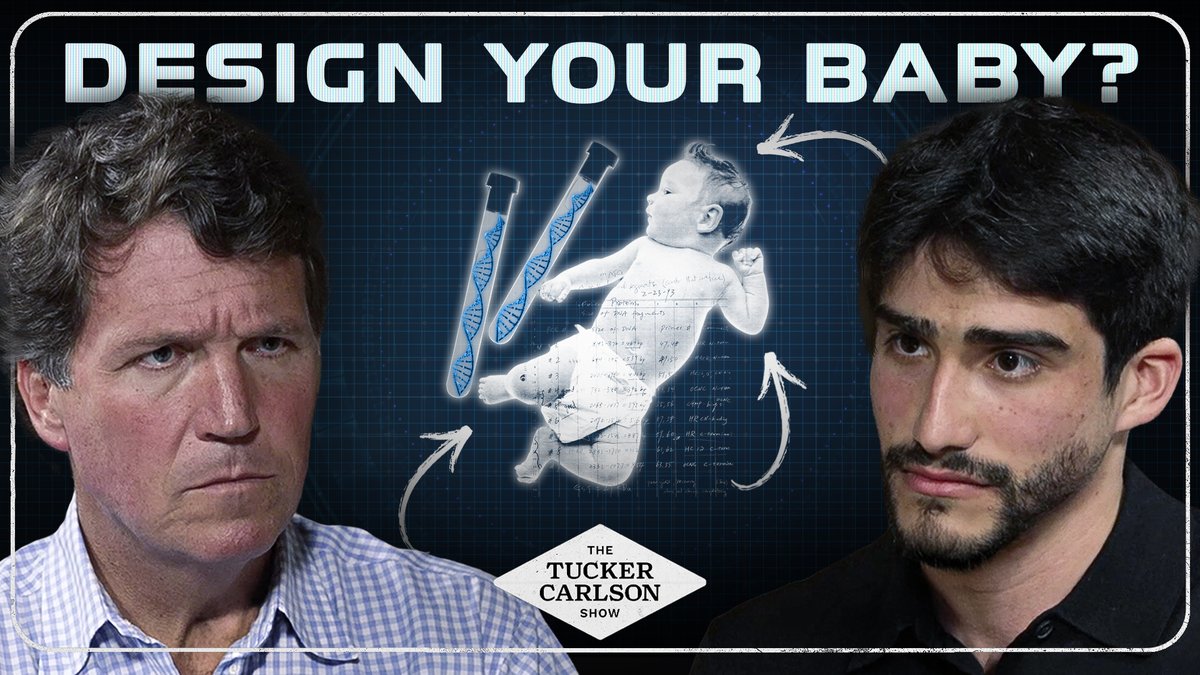
BREAKING: Nucleus Launches First Genetically Optimized Embryo With $32M in total funding, Nucleus CEO Kian Sadeghi breaks down the groundbreaking launch of Nucleus Embryo amid a global fertility crisis Enter: a new category in health — one that blends medical science, software design, & one of the most personal...

61,025 views • 1 year ago •via X (Twitter)

12 Comments

Molly O’Shea's profile picture
Molly O’Shea1 year ago

This is a special announcement for Sourcery as we first covered the launch of Nucleus IQ, had a cameo in their Family Planning announcement, & now Nucleus Embryo.

Molly O’Shea's profile picture
Molly O’Shea1 year ago

Nucleus has raised over $32 million to date from early investors like @alexisohanian's @sevensevensix & @zebulgar from @foundersfund, with newer investors: @neo, One Eight Capital, @GiantStepVC, Common Metal, Asylum Ventures, Rose Street Capital, @balajis, Amanda Bradford & more.

Molly O’Shea's profile picture
Molly O’Shea1 year ago

The platform evaluates embryos across: - 900+ hereditary disorders (cystic fibrosis, Tay-Sachs, hemochromatosis) - Chronic conditions (heart disease, Type 2 diabetes, breast cancer) - Mental health risks (ADHD, depression, schizophrenia) - Neurological diseases (Alzheimer’s, Parkinson’s, MS) - Cognitive & personality traits (intelligence, OCD) - Physical characteristics (height, eye color, BMI)

Molly O’Shea's profile picture
Molly O’Shea1 year ago

This launch couldn’t be more timely. Fertility rates in the U.S. are at a historic low. More families are turning to IVF — 1 in 50 babies is now born through assisted reproduction — but the process remains expensive, emotionally draining, and largely guided by guesswork. Most parents go through multiple IVF cycles (each costing $15K–$25K) without meaningful insight into their embryo options.

Molly O’Shea's profile picture
Molly O’Shea1 year ago

Fertility crisis stats:

Range ETFs's profile picture
Range ETFs1 year ago

The nuclear renaissance is here! Enabling the transition to low-carbon energy, $NUKZ focuses on companies revolutionizing the nuclear industry, from reactor design to fuel management. Consider taking part in the renaissance.

Josh Caplan's profile picture
Josh Caplan1 year ago

Into my newsletter this goes 📰

Molly O’Shea's profile picture
Molly O’Shea1 year ago

big news. biggggg news.

Gabriel Cezar's profile picture
Gabriel Cezar1 year ago

The answer is better healthcare and more affordable housing so people don't go into existential dread to fix the children making issue. Great for fertility though.

Molly O’Shea's profile picture
Molly O’Shea1 year ago

we love fertility!

Harry Gestetner's profile picture
Harry Gestetner1 year ago

And here I was thinking the big announcement was that @KianSadeghi5 was launching an OnlyFans. Smh...

Molly O’Shea's profile picture
Molly O’Shea1 year ago

@KianSadeghi5 Not a fanfix?

Related Videos

E151: Polygon Founder: The Future of Payments is built on Polygon! Sandeep | CEO, Polygon Foundation (※,※) is the Founder of Polygon | POL one of the world’s most adopted blockchains, and creator of Agglayer to unify Web3. Sandeep also co-founded Sentient, a decentralized AI research group, and launched Blockchain for Impact (Crypto Relief), to support medical research and public health in India. Timestamps: 0:00 Introduction 2:01 Using Stable Coins Over Normal Account 3:53 Sandeep Doesn’t Sleep Much 4:19 Sandeep Is Just Like Paulo From Tether 6:15 Sandeep’s Regular Sleep Hours 8:22 What Is Your Mission 11:45 Who Are You 13:43 Partnerships: Jupiter Paradex mantle 14:34 What Happened In Sandeep’s Life That Made Him Hungry For Success 18:42 Your Definition Of A Big Man Today 20:22 You Could’ve Walked Off, What Does That Mean 22:43 Sandeep’s Fascination With Blockchain & Crypto 24:04 Explain Polygon To Your Mom 25:13 The Toughest Moment In Polygons 8 Year Lifetime 28:02 3 Different Names For Polygon Token Over The Years, Why? 31:10 Polygon Hired The Head Of Crypto For Stripe, Why? 33:16 What Must Happen For Polygon To Be A Winner For Blockchain Payments 35:20 Risk Of The Poly Market Moving Away From Polygon 38:10 Partnerships: Trezor Sui Story 39:24 Why Is The Poly Market Built On A Blockchain 41:45 But Why Polygons Blockchain 43:04 What’s Special About The Katana ⚔️ Team to Have Them In Polygons Ecosystem 45:05 What Is Miden Explained Simply 46:16 What Is The Polygon Ag Layer 47:12 What Is Sentient & How Does It Fit Into Aggregation Layer 51:12 Why AI & Blockchain Intersection Is Importantly For The Future 52:29 Why Sandeep Is Very Active In Philanthropy 53:31 The Happiest Moment In Your Philanthropic Journey

MR SHIFT 🦁

154,567 views • 7 months ago

Today: a 1.5 hour interview with the co-founders of Coherence Neuro: Ben Woodington and Elise Jenkins They are, as far as i can tell, the only (neurotechnology x oncology) startup that exists today. 'Neurotechnology? For cancer?' you may ask. Yes! As it turns out, tumors interact with the nervous system a fair bit, and you can use the very same neuromodulation toolbox that exists for neuropsychiatric conditions, for monitoring and treating cancer. Coherence has built an invasive device to place at the site of a tumor to do exactly this. Their first indication is a form of brain cancer called glioblastoma; one of the most fatal subtypes of cancer to exist today. The standard of care (with one exception that we discuss) has not changed in 25 years. If Coherence works out, and there is a very real chance they will, that may change. Most interesting of all is that Coherence believes that the bioelectric properties of cancer are not just worth poking at for brain cancers, but for all cancers. And maybe even for diseases outside of it! This conversation covers how Coherence’s first neurotech device (SOMA) works, the molecular reasons behind why neuromodulation affects cancer at all, what the biomarker readouts look like, the obvious Michael Levin comparison, and a lot more. Also: shout to Nicole for setting up the connection here in the first place! Crazy to think that a meeting in mid-2025 ended up leading to this Youtube/Spotify/Apple Podcasts links in replies 0:00:00 - Introduction 0:01:42 - How is SOMA different from Novocure’s Optune? 0:08:57 - Why does neuromodulation affect cancer at all? 0:13:28 - How was cancer-nervous system crosstalk first discovered? 0:15:42 - Anti-epileptics and beta blockers as accidental cancer drugs 0:17:38 - What is molecularly happening when you block cancer-neuron crosstalk? 0:19:50 - What is SOMA actually reading out as a biomarker? 0:20:44 - What does it mean that cancer is “very electric”? 0:22:02 - Can you derive universal biomarkers across patients? 0:23:09 - How is the device placed? 0:24:45 - How does the blocking stimulation regime work? 0:26:43 - Is it fair to say this is closed loop? 0:29:05 - Why not just spam the tumor with constant stimulation? 0:32:31 - Why MRI safety is non-negotiable for oncology devices 0:33:35 - Walk us through the patient journey from diagnosis to implantation 0:36:13 - The Michael Levin question: can you reprogram cancer back to normal? 0:42:29 - Efficacy, hospice settings, and the utility of the neuromodulation literature 0:45:52 - Why start with glioblastoma instead of an easier cancer? 0:48:57 - Regulatory strategy and the reimbursement threat 0:55:37 - How well does mouse-to-human translation work for neuromodulation? 0:55:57 - What do in silico models of neuromodulation look like? 0:58:09 - Why didn’t this exist 10 years ago? 1:01:48 - The founding story 1:06:38 - Why build your own device instead of using off-the-shelf arrays? 1:08:35 - Speaking with glioblastoma patients 1:12:04 - What was it like to raise money for this? 1:13:56 - Beyond cancer: TBI, lung disease, and the pan-disease argument 1:17:40 - Hiring at Coherence + what is the hardest type of talent to find 1:23:17 - What would you do with $100M equity-free? 1:27:15 - Are you a neurotech company or a cancer company?

owl

37,299 views • 4 months ago

"I've tried to make it so that the pressure goes down as success goes up. If you're more successful, why are you more stressed about it?" - immad. Immad Akhund. Founder and CEO of Mercury. $650M annualized revenue. $5.2B valuation. 300K customers. Immad has achieved all of this on his own terms: He's anti-996. Remote-first when rest of Silicon Valley has bounced back to fully in-person. Hires for curiosity and low ego. Optimized to be a founder for life. Knuckle Up ↓ 00:00 Who is Immad Akhund? 01:53 Is culture just the founder's personality externalized? 07:53 Is 996 actually less productive? 13:14 Why is Mercury still remote-first when Silicon Valley went back? 15:52 How did Immad hire Mercury's first ten people? 20:33 What is Mercury's famous “curiosity interview”? 25:06 How do you hold the hiring bar at 1,200 people? 28:48 What does Immad’s day-to-day look like? 34:10 How do you know when an exec is no longer right for the job? 37:32 Why does Mercury run on small, autonomous product teams? 40:27 What breaks when a company runs purely on metrics? 47:03 How is AI changing Mercury? 54:09 What does becoming a chartered bank actually change? 56:19 How did the SVB collapse end up helping Mercury? 1:03:40 What does psyche management look like 20 years in? 1:11:19 What does it mean to be at the founder “bonus levels”? 1:15:21 Quickfire: overrated traits, AI blind spots, and being proven wrong 1:17:52 What would Immad tell his 25-year-old self?

Nakul Mandan

580,836 views • 21 days ago

E174: Tarek Mansour - Launching the First Regulated Perps In The U.S and building the next generation of financial markets Tarek Mansour is the co-founder and CEO of Kalshi, the first regulated prediction market exchange in the US, valued at $22 Billion. He grew up in Lebanon with a single mom, studied at MIT, worked at Citadel, and spent 6 years years building a company most people ignored before it finally took off. We talk about what it actually takes to not give up, why markets are better at finding truth than experts, why Kalshi is launching the first regulated Perps in the US, and how his team is building what he calls the next generation of financial markets. Timestamps: 0:00 Intro 1:54 Urgency 3:11 Anime 4:53 Who is Tarek? 7:02 Mathematics & Certainty 9:10 Tarek's chip on the shoulder 13:33 Partnerships: Trezor Bitwise 15:19 Resilience 16:31 Entrepreneurship is Therapy 18:23 The startup emotional rollercoaster 22:16 Showing up for 2000 days with no results 24:45 First time Founder advantage 26:40 When Kalshi almost made it, but did not 29:54 Partnerships: KAST 31:19 Focus Inputs, Not Results 33:16 The Kalshi beginnings story 36:00 The True Innovation Of Prediction Markets 38:28 How Prediction Markets Revolutionize The Media 41:37 Prediction Markets and Hedging explained simply 44:55 Leverage In Prediction Markets 47:16 Partnerships: Jupiter Ethena 48:00 Insider Trading 51:19 Insider Trading Rules enforcement: who is responsible? 55:26 How Kalshi spots Suspicious Behavior 56:59 Tarek's Honest View On Crypto 59:41 Launching the first Regulated Perps In The U.S 1:00:30 What Does Regulated Perps Mean? 1:02:22 Was Kalshi perps launch inspired by Hyperliquid? 1:03:41 Competition 1:05:58 Kalshi Endgame 1:07:06 What is Kalshi doing with the billions of $ they raised 1:08:31 Happiness and engagement 1:13:08 One Thing Tarek Should Let Go Of 1:14:18 Closing Thoughts

MR SHIFT 🦁

591,936 views • 1 month ago

A crowd of Sydney listeners and I sat down with economist Peter Tulip (Peter Tulip) to talk about Australia's housing crisis. I was really happy with how this conversation turned out: we went into substantial detail and broke new ground. We chat about: - critiques of both NIMBY and YIMBY thinking - general theories of why constricted housing supply afflicts the Anglosphere in particular - what it would actually take to solve the housing crisis via the supply side - and much more Links below. Enjoy! Timestamps: (0:00:00) - Introduction. (0:03:01) - Is there a general theory as to why constricted housing supply is a problem for the Anglosphere in particular? (0:04:21) - What happened in the 1970s that meant zoning regulations started becoming a problem around then? (0:06:38) - What motivates NIMBYs? (0:11:58) - Which planning restrictions does Peter want to remove? (0:15:10) - How much would house prices fall if we removed the bad planning restrictions? (0:22:30) - How much worse can the price-to-income ratio get? What is the upper bound? (0:24:09) - Are YIMBYs overstating the productivity case for urban densification? (0:27:23) - YIMBYs underrate aesthetics and architecture. (0:37:01) - How should we think about the impact of negative gearing and the capital gains tax discount? (0:41:15) - What is Peter's policy goal? Should house prices fall, or should growth merely slow? (0:42:42) - It would take 10 to 20 years to bring prices down by 40% through increased housing supply. (0:43:37) - If we removed all bad planning restrictions, how quickly could we get a 10 to 20% increase in supply? (0:46:03) - Is "increasing housing supply" a politically realistic way to solve the housing crisis? (0:48:35) - Housing is how the middle class gets rich in Australia. What is Peter's transition plan? (0:53:20) - Why haven't we tried anything like the Hawke government's Accord, but for housing? (1:01:43) - Audience Q&A.

Joseph Noel Walker

17,173 views • 1 year ago

E159: Hyperliquid: Housing all of Finance jeff.hl came back on the When Shift Happens Podcast to talk about the Hyperliquid journey since the TGE and what the future holds for one of the most loved and prolific protocols in the space Hyperliquid Timestamps 0:00 Intro 2:01 Singapore 2:27 Reminiscing on the Token Launch 5:00 Was This Scale Of Wealth Expected? 6:28 Doing The Right Thing In Crypto 9:07 The Responsibility that comes with Billions of $ 11:10 Jupiter KAST 11:51 Bringing Hyperliquid to the masses 15:21 Pre TGE and Post TGE: Operational difference 20:13 Choices on what to build Internally vs Externally 22:05 How to build a reliable team 24:51 Did the Team celebrate the HYPE wealth Generation event? 26:45 How to test talents for High Integrity 28:31 How much does the Hyperliquid team sleep? 30:05 Employee Vesting Fears 31:41 Dealing with FUD 32:28 How Does Jeff Personally Handle FUD 35:02 Token "Buybacks" critics 37:20 Why Hyperliquid can't have Discretionary "Buybacks" 39:04 HyperEVM, explained Simply 40:00 Paradex Zodl (fka Zashi) 40:41 HyperEVM: Success so Far? 44:05 HIP-3, explained Simply 47:44 What makes Hyperliquid's approach different 48:19 Why Should People Care? 51:33 Bring All Finance On Chain 52:08 Why Is The Hyperliquid Approach Better? 53:47 Key Numbers showing that Hyperliquid Is Doing it right 59:01 What Has the Unit team demonstrated with spot trading on Hyperliquid in 2025 1:03:29 HIP-4: Outcome Markets 1:08:01 Trezor Sui 1:08:58 What does "Housing All Of Finance" mean? 1:10:51 Why Hyperliquid is not a crypto company 1:12:23 Why Does Hyperliquid have A Stablecoin USDH (Native Markets) 1:14:39 What Is Kinetiq & Why Does It Matter? 1:16:15 Why Is What HyperLend Is Building Important For HyperLiquid 1:23:39 Where did Fairness cost the most? 1:24:47 What should Hyperliquid be Remembered for? 1:25:24 Why should people stay in Crypto when there's an AI brain drain? 1:28:10 Closing Thoughts

MR SHIFT 🦁

575,445 views • 4 months ago

👁‍🗨Not Dead Yet | S1E4 — Frank M. Ahearn In the age of big data, surveillance capitalism, and AI, can you truly disappear anymore? In episode 4 of Not Dead Yet, Robert Baggs speaks with Frank M. Ahearn, a man who built a career finding those who didn't want to be found. Then he switched sides. Frank is the author of the best-selling book, How to Disappear, and an expert helping everyone from whistleblowers and abuse victims to high-net worth clients, vanish. Timestamps: 00:00 – Intro 01:58 – What is a ‘Skip Tracer’? 02:41 – From finding people to helping people vanish 04:12 – Does big data make it easier or harder to hide? 05:48 – Who wants to disappear and why? 08:10 – How AI has changed the disappearing game 11:34 – How does AI threaten privacy? 12:44 – Why disinformation is still crucial to disappearing 13:53 – Balancing profile with privacy 15:10 – Why people are the biggest threat to their own privacy 16:08 – What’s the risk of social media? 18:29 – Why romance scams are so effective 19:57 – Who is the most difficult to ‘disappear’? 22:55 – What’s the most common mistake ‘disappeared’ people make? 24:20 – If I asked you to find someone right now, how would you do it? 27:29 – “If you have nothing to hide, you have nothing to fear,” why is this incorrect? 28:37 – If someone watching this wants privacy, what should they do? 31:04 – Do you think privacy is getting better or worse?

Cointelegraph

147,680 views • 5 months ago

"There's absolutely no question that this was not an accident...the fact that we have one-third DNA product and two-thirds RNA product [in the C19 jabs] is, for whatever reason, the ratio that the makers wanted it to be. They have lied to us in the extreme." Canadian Comprehensive Physician Dr. Chris Shoemaker (@CShoemakerMD) describes for the RAIR Foundation (RAIR Foundation USA) how the DNA contamination of the COVID injections "was not an accident." Shoemaker notes that "They have lied to us in the extreme" and "We are in danger in the extreme, not just in the short term." "There's absolutely no question that this was not an accident. There's absolutely no question that it was carefully and scientifically accomplished," Shoemaker says. "And the fact that we have one-third DNA product and two-thirds RNA product is, for whatever reason, the ratio that the makers wanted it to be." "What's the difference [if there is] DNA is in [the jabs] instead of just mRNA? The difference is that...the DNA, functionally, once in the nucleus, can influence the nucleus, [and] can produce mRNA near the nucleus and have that mRNA migrate out into the cytoplasm of the cell," Shoemaker says. "And once that's done, what should be, at worst, an 8-month process inside your body is, in fact, an 8- to 10-year process inside your body because of the nefarious decision to allow DNA in these shots." Partial transcription of clip: "There's absolutely no question that this was not an accident. There's absolutely no question that it was carefully and scientifically accomplished. And the fact that we have one-third DNA product and two-thirds RNA product is, for whatever reason, the ratio that the makers wanted it to be. They have lied to us in the extreme. "We are in danger in the extreme, not just in the short term. We know the 2 percent, 3 percent of people who passed away suddenly and surprisingly and that's way more than should happen. But the long term effect on the ability to fight cancer or for a cancer to perhaps be a turbo cancer, all these are being influenced by both DNA and RNA that is within us. "The key thing is that it makes the whole process last longer. If it was only mRNA, it would probably be 8 to 12 months only that mRNA would seed out into your body and be repeatedly creating spike, repeatedly creating spike. Remember, the end-product is the most dangerous part of this human engineered genome. The spike protein is the thing that congeals blood cells against each other. The spike protein is the thing that, if it's in your liver, is waving a flag saying, Hey, I'm not your liver. I'm not a human liver. I've got this strange created spike protein. You can identify that I'm not your liver, and you can attack it, and you can make hepatitis for this person because it's not even their liver. "This is what mRNA does is create a flag so that you're attacking through your healthy immune system. Your healthy immune system is going after it in organ after organ after organ. For some people, it's just a specific organ that was already a bit weak to begin with. And for other people, it's a different organ. But either way, mRNA produces a spike flag, which your immune system attacks. "To return to your question about DNA, what's the difference that DNA is in there instead of just mRNA? The difference is that the DNA can, for years, not just 8 to 12 months. The DNA, functionally, once in the nucleus, can influence the nucleus, can produce mRNA near the nucleus and have that mRNA migrate out into the cytoplasm of the cell. And once that's done, what should be, at worst, an 8-month process inside your body is, in fact, an 8 to 10 year process inside your body because of the nefarious decision to allow DNA in these shots."

Sense Receptor

95,273 views • 1 year ago

auto-research is starting to gain traction as a very viable paradigm for creating useful research discovery. now, that paradigm is still in its infancy and the infrastructure to hold all that trail of context as the agents blaze through experiments isn't well defined (to say the least). on that topic, I had the chance to chat with my boys francesco and giulio from paradigma about what underlying infra is needed to make this paradigm work. the paradigma's paradigm, which involves copious amount of DAGs, make this auto-research paradigm a paradigmatic case of essential infrastructure. here's the full video in full: - 0:00 - what is missing from auto-research? - 2:02 - giulio and francesco ai journey - 8:10 - research infra is the bottleneck? - 10:18 - paradigma vision of autonomous research - 13:17 - “important discovery per joules” - 17:15 - why is DAG the unit of research for auto-research? - 20:40 - is paradigma trying to replace the research publication? - 24:50 - how does knowledge is shared between experiments in the DAG? - 27:34 - what is even auto-research lol? - 33:53 - the value of the human mind in this auto-research future. - 37:00 - how do you reconcile hallucination in this auto-research paradigm? - 41:33 - the adoption of auto-research across varied fields? - 47:30 - ✨ introduction to the auto-research infrastructure. ✨ - 56:55 - where is the code? - 59:10 - full IDE next? - 1:03:20 - the place of the human in this DAG / code quality? manual node? token spent? - 1:16:02 - who’s the user for auto-research? - 1:18:13 - how to validate bad DAG? - 1:20:18 - ✨ auto-research agent results ✨ - 1:22:53 - ✨ how a big research DAG looks like? ✨ - 1:25:10 - how to get the canonical DAG for the final result? - 1:27:50 - the auto-research DAG being the new pre-print? - 1:30:05 - what’s next for paradigma and the auto-research infra? - 1:35:00 - what are they excited about research wise? enjoyyyyy my guys 🌹

Yacine Mahdid

12,091 views • 1 month ago

E137: From exposing Bitcoin’s biggest weakness to onboarding FIFA and MapleStory - Avalanche🔺 CEO and Founder Emin Gün Sirer🔺⚔️ - founder of Ava Labs 🔺, the company behind Avalanche - shares the journey from building Karma (a pre-Bitcoin digital currency) to pioneering Avalanche, the multi-chain blockchain reshaping crypto's infrastructure. From early academic battles with Bitcoin maxis to onboarding FIFA and MapleStory Universe, this is one of the wildest rides in Web3. Timestamps 0:00 Introduction 1:59 Opening Comments 2:55 What Is Your Mission 3:39 Who Are You 6:00 Business vs PHD Program 7:21 Chip on The Shoulder 9:32 Partnerships Jupiter, Money Badgers, Mantle 10:27 Chip On The Shoulder (Continued) 11:55 What Is An Internet Currency 13:55 Why Was Bitcoin Better 15:46 Biggest Flaws In Bitcoin 19:17 Is Maximalism A Good Thing 21:18 Does Maximalism Help Bitcoin 22:05 Fascination With Bitcoin & Crypto 23:33 Evolution With Time 25:11 Broader Crypto Use 27:26 Partnerships Trezor Sui 28:15 Avalanche Explained Simply 28:48 Shiny Object, Why People Fall For It 33:08 Moving Towards Show Me Era 34:27 What Emin Did Different 36:45 What Did You Do Wrong 38:10 Does The Best Tech Win 40:03 Avalanche, Home of Layer Ones? 42:10 How Does Avalanche Scale 43:38 The Gaming Blockchain 48:21 Real World Assets on Defy 50:31 How Big Is RWA 50:58 Why Transformation Is Slow 52:36 FIFA On Avalanche Blockchain, Why? 53:28 Endgame For Avalanche 56:48 Personal Difficulties While Building 58:30 What Did You Change Afterwards 1:01:25 Why Live In New York 1:03:40 Debanked After Moving 1:09:05 Crypto Full Mainstream, How? 1:10:43 Biggest Prediction In 12 Months

MR SHIFT 🦁

93,102 views • 10 months ago