Loading video...

Video Failed to Load

Go Home

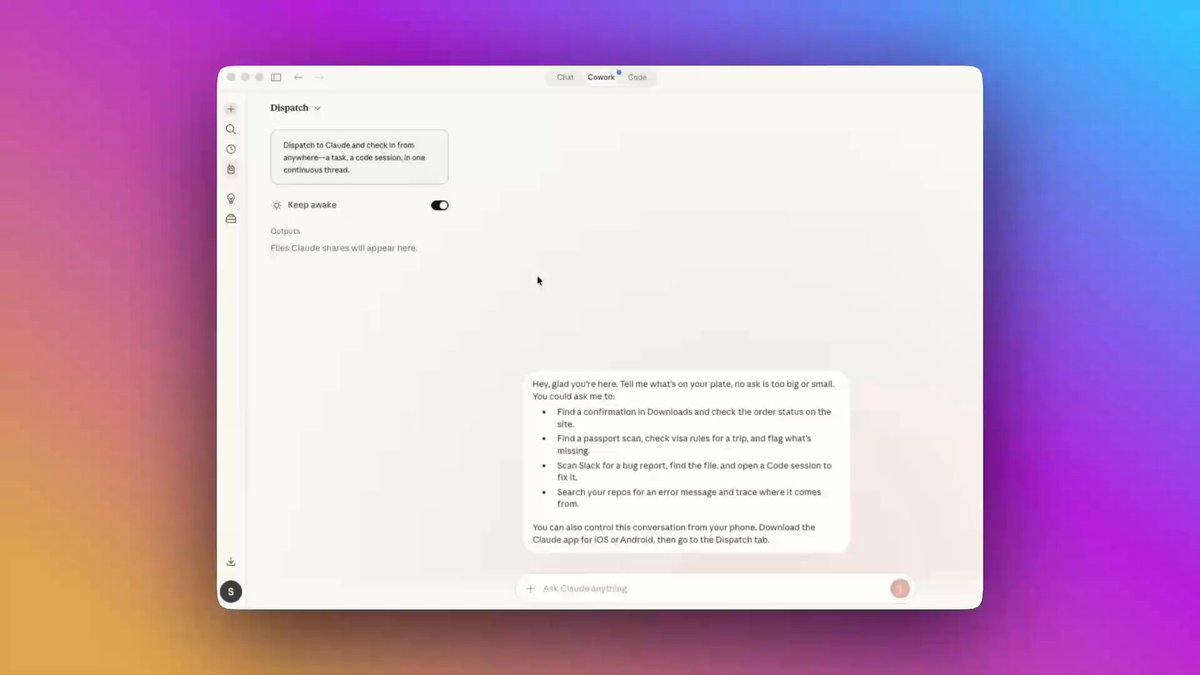
🚨BREAKING: Someone just built the open source Loom killer that turns your screen recordings into AI agents. It's called Bloom and it does something Loom never could. Your recordings don't just sit as files. They become queryable, searchable, agent-ready data the moment you stop recording. Here's what actually happens:...

128,583 views • 3 months ago •via X (Twitter)

0 Comments

No comments available

Comments from the original post will appear here

Related Videos

THIS MIGHT BE THE #1 OPEN-SOURCE REPO FOR CLAUDE CODE RIGHT NOW. IT GIVES CLAUDE A MEMORY AND SLASHES YOUR TOKEN COST ON EVERY QUESTION The repo is safishamsi/graphify, a free open-source skill that turns any codebase into a knowledge graph Claude Code can read instantly. Instead of grepping through your files every session, Claude gets a map of how everything connects The problem it fixes: Every time you ask Claude Code about a big repo, it does the same thing, greps through dozens of files like a brute-force Ctrl+F, blows through your context window, and sometimes still misses the answer hiding in a file nobody searched. Claude Code has no memory of how your project is structured. Every session starts from zero What it does: It maps your entire codebase into a knowledge graph, capturing not just which files exist, but which functions depend on which, which modules are central, and which files cluster around the same concern. Claude queries the map instead of scanning files How it works, three passes: 1. Code structure, free and local. Tree-sitter parses your files and pulls out classes, functions, imports and call graphs. No LLM, no tokens, just your actual code mapped deterministically 2. Audio and video, if you have them. Transcribed locally and folded into the graph 3. Docs, papers, images. Here an LLM does semantic analysis, figuring out what each document means and where it fits. Only the meaning gets sent up, never your raw source It saves you money: Normally a question about a big repo makes Claude spawn explore agents that scan file after file, eating your context window and your token budget before you get an answer. With the graph already built, Claude queries the map instead of re-reading the codebase every time. Same answer, a fraction of the tokens. The graph only gets built once, then a hook rebuilds it after each commit for free, so you never pay that scanning cost again. The bigger the repo, the bigger the gap The best parts: it's a skill, so once installed Claude knows when to use it without you memorizing commands. It works on non-code folders too, point it at docs or notes and it can spin up an Obsidian vault How to add it to your Claude: 1. Install Claude Code if you haven't: npm install -g Paul Jankura-ai/claude-code 2. Add the skill: claude skill add safishamsi/graphify 3. Open your project folder and run /graphify . to build the graph 4. Optional, make it automatic: graphify hook install so the graph rebuilds after every commit That's it. Ask Claude about your repo and it reads the map instead of burning tokens on a file hunt Bookmark this

Yarchi

55,345 views • 1 month ago

Your agents can't keep up with real-time data. Especially when it's scattered across dozens of sources. Most teams waste weeks building custom connectors for every database, API, and data warehouse. Then they build ETL pipelines to sync everything. By the time your agent retrieves the data, it's already outdated. Picture this: Your Postgres database updated 5 minutes ago. Your MongoDB collection changed 2 minutes ago. Your agent is still pulling from yesterday's snapshot. This is why most production RAG systems fail. There's a better approach: MindsDB is an open-source AI platform with a federated data engine that lets you query multiple data sources in real-time using SQL - without moving any data. Here's what makes it different: ↳ Your data stays in place. No ETL pipelines or data duplication ↳ Query Postgres, MongoDB, REST APIs, and more using consistent SQL ↳ JOIN across different sources in real-time with a unified interface ↳ Works with both structured and un-structured data And here's the best part: You don't even need to write SQL. Just describe what you want in plain English, and MindsDB converts it to SQL automatically. The system does all the heavy lifting. The breakthrough for AI agents is simple: When data updates at the source, your agent gets fresh results immediately. No sync delays. No stale embeddings. No custom code for each integration. You can literally write a SQL query that joins a Postgres table with a MongoDB collection and gets live results. This is what production AI applications need but rarely get. In this video, I give you a complete walkthrough of what we just discussed and how to actually do it. Make sure you watch this till the end. I've shared the link to MindsDB's GitHub repo in the next tweet!

Akshay 🚀

65,672 views • 8 months ago

NVIDIA JUST DROPPED A FREE AI MODEL THAT READS PDFS, WATCHES VIDEOS, LISTENS TO AUDIO, AND UNDERSTANDS YOUR SCREEN SIMULTANEOUSLY. Not one at a time. ALL AT ONCE. In a single pass. It is called Nemotron 3 Nano Omni and it runs 9 times faster than every other multimodal model currently available. Think about what that actually means for how you work. Right now you are switching between tools constantly. One tool for transcribing your call recordings. A different tool for analyzing your client PDFs. Another tool for processing your training videos. A separate workflow for understanding what is happening on your screen. Four tools. Four contexts. Four different outputs you have to manually synthesize into one decision. Nemotron 3 Nano Omni does all of it in one model. One pass. One output. The use cases that just got dramatically simpler: Meeting recordings where you need the transcript, the visual context, and the document references all analyzed together. Training videos where the audio, the slides, and the on-screen demonstrations all feed into one coherent summary. Client PDFs where you need the document content cross-referenced against your screen data and your call notes simultaneously. Sales call transcripts analyzed alongside the proposals and the CRM data in one unified pass. This is not a marginal improvement on existing multimodal models. It is a 9x speed increase on a capability that was already changing how people work. Free. From NVIDIA. Available right now. Bookmark this before everyone catches on. Follow CyrilXBT for every AI capability shift the moment it drops.

CyrilXBT

37,816 views • 2 months ago

I just built a Brand Operating System inside Claude Cowork 🤯 A connected system of files that every skill automatically reads from, so your hook writer, brief generator, and script writer all speak in your exact brand voice. All inside Claude Cowork. Perfect for DTC brands and agencies tired of generic AI output that sounds like every other brand in their category. If you're opening a new Claude chat and re-explaining your brand, re-pasting your voice guidelines, and re-describing your customers every single time, a Brand OS fixes the entire loop: → Build 3 foundation files once per brand → Every skill you create reads from the Brand OS automatically → Hook writer pulls your voice + customer pain points → Brief generator pulls your positioning + angles → Script writer pulls the brief + brand DNA → Every output is calibrated to your brand on the first pass No re-briefing Claude on every chat. No editing for an hour to fix generic AI phrasing. No creative that sounds like it could belong to any brand. What you get in the playbook: → The exact Brand OS file structure I use → Templates for all 3 files you can fill in for any brand → The architecture that makes every Claude skill 10x sharper → The exact setup for agencies running a Brand OS per client For agencies: this is how you build a perfect, reusable knowledge base for every client on your roster. Set up the Brand OS once per client, and every campaign after that is already calibrated. I put together a full playbook with the file templates, the architecture, and the exact setup process so you can build your own Brand OS for your brand or your clients. Want it for free? > Like this post > Comment "OS" And I'll send it over (must be following so I can DM)

Mike Futia

30,165 views • 3 months ago

ChatGPT 5.5 is cooked. Claude Opus 4.7 is cooked. Every $420/mo SaaS AI just got an open-source assassin. Mind blown: an open-source desktop AI just hit #7 trending overnight, runs 100% on your laptop, ships with 100+ native integrations, and is quietly killing the entire ChatGPT-subscription era. Introducing OpenHuman by tinyhumansai -> your Personal AI super intelligence. Private. Simple. Powerful. Two weeks ago they quietly dropped it on GitHub. Today: 300+ stars, 100+ daily paying users, 1,129 commits, zero marketing budget. > What is OpenHuman? A native desktop agent (macOS, Windows, Linux) that lives on YOUR machine instead of feeding your data back to OpenAI. Download the app, sign in once, and the agent harness gives you 100+ native connectors out of the box: Gmail, Slack, Notion, GitHub, Reddit, Instagram, Calendar, Drive, Telegram, Discord, and dozens more. One click each. From that moment it builds an encrypted, on-device knowledge base of your entire digital life. No terminal. No Python envs. No API keys. No CLI. > What the agent actually does: Steven, the creator, just dropped a Loom showing real prompts: - "Send Mark a joke" -> drafts in your voice and ships it. - "List my top 5 emails today" -> surfaces what matters from a flooded inbox. - "Summarize that thread and email it to the team" -> done in 3 seconds. One prompt --> multiple connected tools --> end-to-end execution. No tab-switching. > What's actually inside: - Screen intelligence -> the agent SEES what's on your screen and feeds it into your local context. - Memory-aware keyboard autocomplete -> system-wide, in YOUR voice, trained on YOUR past replies. Gmail Smart Compose for your entire OS. - Local knowledge base -> every email, message, and note parsed, embedded, encrypted, on YOUR device. Day 30 it knows you better than your therapist. - 75% Rust core -> memory-safe, brutally fast, runs local AI directly on your machine. > The "but wait" moment: OpenClaw and Hermes Agent are excellent. But they live in the terminal. Virtualenvs. SKILL.md files. Shell debugging at 2am. OpenHuman doesn't ask any of that. Their README compares itself to "The Tet" from Oblivion -- that alien superintelligence Morgan Freeman calls "a brilliant machine". And tomorrow they're dropping the official OpenHuman mascot. Sneak peek already in Steven's Loom. The cloud-first AI decade is ending. OpenHuman is GPL-3, fully auditable, shipping a release every few days. Save this -- you just got the link to the thing replacing every SaaS AI on the market. -> Repo:

slash1s

70,687 views • 2 months ago